Manganese and Bone Formation
Manganese is an essential trace mineral that plays a critical role in skeletal development and bone health. Although required only in small amounts, manganese serves as an indispensable cofactor for several enzymes directly involved in the formation, maintenance, and remodeling of bone tissue. Deficiency of this mineral leads to measurable skeletal abnormalities, underscoring its biological importance in bone metabolism.
Table of Contents
- Key Benefits at a Glance
- Glycosyltransferase Activation
- Proteoglycan Synthesis
- Cartilage Formation
- Collagen Production
- Skeletal Development
- Manganese Deficiency and Bone Abnormalities
- Clinical Relevance
- Dosing and Dietary Sources
- Safety and Manganese Toxicity
- Research Papers
- Connections
- Featured Videos
Key Benefits at a Glance
- Activates glycosyltransferases – Required cofactor for xylosyltransferase and galactosyltransferase in proteoglycan biosynthesis.
- Proteoglycan assembly – Supports synthesis of aggrecan, decorin, and biglycan in cartilage and bone matrix.
- Antioxidant protection – MnSOD in the mitochondrion is the primary defense against superoxide in metabolically active osteoblasts.
- Collagen maintenance – Manganese-dependent prolidase supports proline recovery for collagen synthesis.
- Bone mineral density – Low manganese status has been associated with osteoporosis, especially in postmenopausal women.
- Growth plate function – Endochondral ossification and longitudinal bone growth require manganese-dependent matrix production.
Glycosyltransferase Activation
- Manganese-dependent glycosyltransferases are a family of enzymes that catalyze the transfer of sugar moieties to growing polysaccharide chains. These enzymes are essential for the biosynthesis of glycosaminoglycans (GAGs), the carbohydrate components of proteoglycans found in cartilage and bone matrix.
- Xylosyltransferase, galactosyltransferase, and N-acetylglucosaminyltransferase all require manganese as a divalent cation cofactor. Without adequate manganese, these enzymes cannot function at optimal catalytic rates, resulting in impaired GAG chain elongation.
- Golgi apparatus processing of glycoproteins and proteoglycans is particularly sensitive to manganese availability, as the Golgi lumen concentrates manganese for use by resident glycosyltransferases.
Proteoglycan Synthesis
- Proteoglycans are macromolecules consisting of a core protein with covalently attached GAG side chains such as chondroitin sulfate, keratan sulfate, and heparan sulfate. These molecules are major structural components of the extracellular matrix in bone and cartilage.
- Aggrecan, the primary proteoglycan in cartilage, depends on manganese-activated enzymes for the proper assembly of its chondroitin sulfate chains. Reduced manganese availability leads to shorter, less sulfated GAG chains and compromised aggrecan function.
- Bone matrix proteoglycans such as decorin and biglycan regulate collagen fibril organization and mineral deposition. Manganese deficiency impairs their synthesis, leading to disorganized collagen architecture and weakened mineralization.
Cartilage Formation
- Chondrocyte differentiation and proliferation within the growth plate depend on an adequate supply of manganese. The mineral supports the production of the cartilaginous template upon which endochondral ossification occurs during skeletal development.
- Epiphyseal growth plates in developing bones are particularly vulnerable to manganese depletion, as the rapid rate of matrix synthesis in these regions demands high glycosyltransferase activity.
- Articular cartilage maintenance in adults also requires ongoing manganese-dependent proteoglycan turnover. Suboptimal manganese status may contribute to cartilage degradation and increased susceptibility to osteoarthritis.
Collagen Production
- Manganese superoxide dismutase (MnSOD) protects osteoblasts and chondrocytes from oxidative stress during the metabolically demanding process of collagen synthesis. MnSOD is the primary antioxidant enzyme within mitochondria and requires manganese at its active site.
- Prolidase, an enzyme involved in collagen recycling and proline recovery, is activated by manganese. Proline and hydroxyproline are critical amino acids for the triple-helical structure of collagen fibrils.
- Type I collagen, which constitutes approximately 90% of the organic matrix of bone, requires properly functioning osteoblasts for its secretion. Manganese supports osteoblast viability and synthetic capacity through both enzymatic and antioxidant mechanisms.
Skeletal Development
- Endochondral ossification, the process by which most bones form during embryonic and postnatal development, depends on the orderly progression of chondrocyte proliferation, hypertrophy, and replacement by mineralized bone. Manganese is required at multiple steps in this cascade.
- Intramembranous ossification, responsible for forming the flat bones of the skull and clavicles, also requires manganese for osteoblast function and matrix mineralization.
- Longitudinal bone growth in children and adolescents is sensitive to manganese status. Animal studies have demonstrated stunted growth and shortened limbs in manganese-deficient offspring.
- Bone remodeling throughout life involves coordinated osteoblast and osteoclast activity. Manganese contributes to the osteoblastic side of this balance by supporting new matrix synthesis.
Manganese Deficiency and Bone Abnormalities
- Skeletal malformations are among the most consistent findings in experimental manganese deficiency. Animal models show shortened and thickened limb bones, joint deformities, and abnormal curvature of the spine.
- Reduced bone mineral density has been observed in manganese-depleted animals, reflecting both decreased organic matrix production and impaired mineralization.
- Perosis, a condition characterized by slipped tendons and leg deformities in poultry, was one of the earliest recognized manifestations of manganese deficiency and helped establish the mineral's role in connective tissue formation.
- Human manganese deficiency is rare due to widespread dietary availability, but low serum manganese levels have been associated with osteoporosis in epidemiological studies, particularly in postmenopausal women.
- Impaired wound healing of bone fractures may occur when manganese status is suboptimal, as the repair process recapitulates many of the same developmental pathways that require this mineral.
Clinical Relevance
- Dietary sources of manganese include whole grains, nuts, legumes, leafy green vegetables, and tea. The adequate intake for adults is approximately 1.8 to 2.3 mg per day.
- Osteoporosis prevention research has examined manganese as part of multi-mineral supplementation strategies. Combined supplementation with manganese, calcium, zinc, and copper has shown benefits for bone mineral density in some clinical trials.
- Patients on total parenteral nutrition (TPN) are at risk for manganese deficiency if the mineral is not included in their formulations, and skeletal complications may develop over time.
- Manganese toxicity is also a concern, particularly from occupational exposure or contaminated drinking water. Excess manganese accumulates in the brain rather than bone, causing neurological symptoms (manganism), so supplementation should remain within recommended ranges.
- Assessment of manganese status remains challenging, as serum manganese levels do not reliably reflect tissue stores. Whole blood manganese and MnSOD activity are being investigated as more accurate biomarkers.
Dosing and Dietary Sources
- Adequate Intake (AI, adults) – Men: 2.3 mg/day; Women: 1.8 mg/day; Pregnancy: 2.0 mg/day; Lactation: 2.6 mg/day.
- Whole grains – Brown rice, oats, whole wheat are major contributors.
- Nuts and seeds – Hazelnuts, pecans, pine nuts; pumpkin and sunflower seeds.
- Legumes – Chickpeas, soybeans, lentils.
- Leafy greens – Spinach, kale, Swiss chard.
- Tea – Black and green tea are unusually concentrated dietary sources.
- Typical multi-mineral bone supplements provide 1–5 mg/day.
Safety and Manganese Toxicity
- Tolerable Upper Intake Level (UL) – 11 mg/day for adults.
- Manganism – Chronic inhalational exposure (welders, miners) or contaminated drinking water can cause a Parkinsonian neurological syndrome from manganese accumulation in the basal ganglia.
- Hepatic impairment – Individuals with cirrhosis or biliary obstruction cannot excrete manganese normally and are at risk of CNS accumulation.
- Parenteral nutrition – Long-term TPN formulations with excess manganese can cause neurotoxicity; modern protocols reduce or omit manganese in adult TPN.
- Drug interactions – Antacids, tetracyclines, and quinolone antibiotics may form complexes with manganese; separate doses.
This content is provided for informational purposes only and does not constitute medical advice. Consult a qualified healthcare provider before starting manganese supplementation.
Research Papers
- Freeland-Graves JH, Lin PH. Plasma uptake of manganese as affected by oral loads of manganese, calcium, milk, phosphorus, copper, and zinc. J Am Coll Nutr. 1991;10(1):38-43.
- Leach RM Jr. Role of manganese in mucopolysaccharide metabolism. Fed Proc. 1971;30(3):991-994.
- Strause L, Saltman P, Smith KT, Bracker M, Andon MB. Spinal bone loss in postmenopausal women supplemented with calcium and trace minerals. J Nutr. 1994;124(7):1060-1064.
- Saltman PD, Strause LG. The role of trace minerals in osteoporosis. J Am Coll Nutr. 1993;12(4):384-389.
- Palacios C. The role of nutrients in bone health, from A to Z. Crit Rev Food Sci Nutr. 2006;46(8):621-628.
- Aschner JL, Aschner M. Nutritional aspects of manganese homeostasis. Mol Aspects Med. 2005;26(4-5):353-362.
- Horning KJ, Caito SW, Tipps KG, Bowman AB, Aschner M. Manganese is essential for neuronal health. Annu Rev Nutr. 2015;35:71-108.
- Finley JW, Davis CD. Manganese deficiency and toxicity: are high or low dietary amounts of manganese cause for concern? Biofactors. 1999;10(1):15-24.
- PubMed — manganese + bone + osteoporosis
- PubMed — MnSOD + bone
- NIH Office of Dietary Supplements — Manganese Fact Sheet for Health Professionals
- Linus Pauling Institute — Manganese
Connections
- Manganese
- Osteoporosis
- Arthritis
- Calcium
- Boron
- Silicon
- Silicon and Connective Tissue
- Magnesium
- Vitamin D3
- Vitamin K
- Collagen
- Proline
- Phosphorus
- Zinc
- Copper
- Calcium and Bone Health
- Boron and Bone Density
Featured Videos

Why Manganese Could Be The KEY To VITALITY For Your Body ✨💪🏼

Manganese - Don't Ignore The Key Functions of This Mineral!
7 Vegetable to Improve Bone Health
Rapid Healing from Bone Fractures – Bone Health & Healing Protocol

Manganese Deficiency & Toxicity Explain | Symptoms, Sources & Daily Requirement in Hindi |#Ramuktima
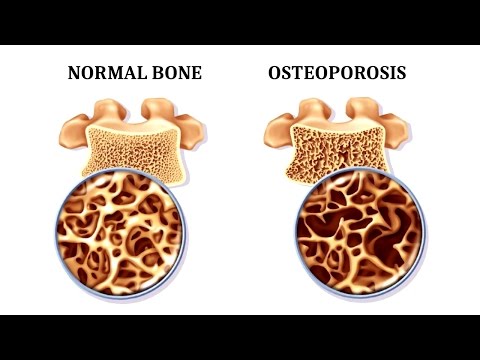
12 Foods That Fight Osteoporosis and Promote Strong Bones

What Can I Do For Arthritis? Prevention and Treatment for Rheumatoid Arthritis or Osteoarthritis