Yarrow — Benefits Deep Dive
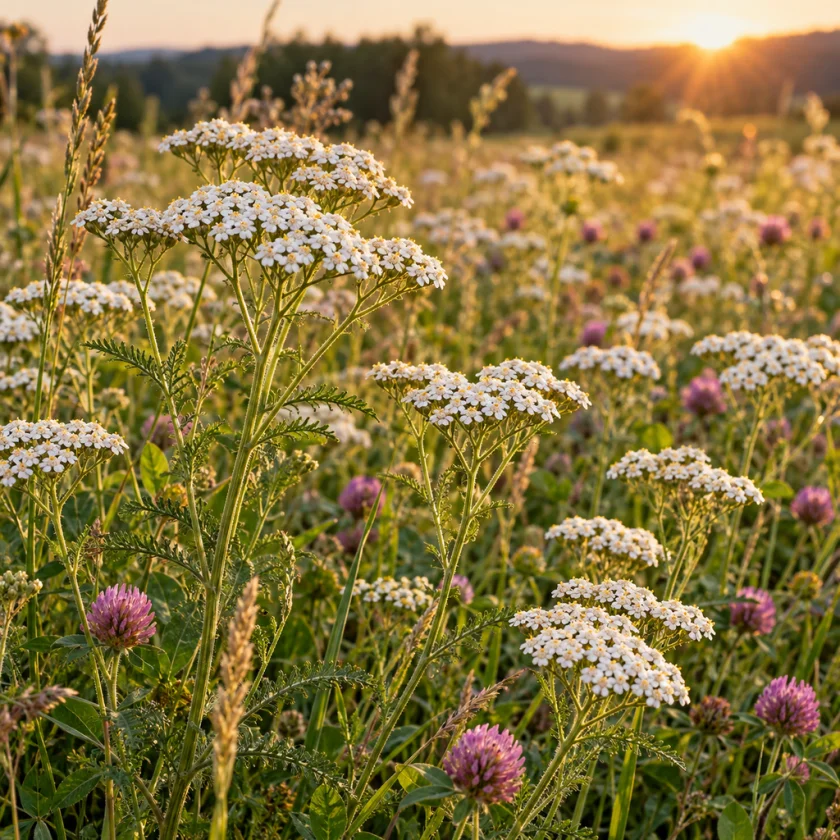
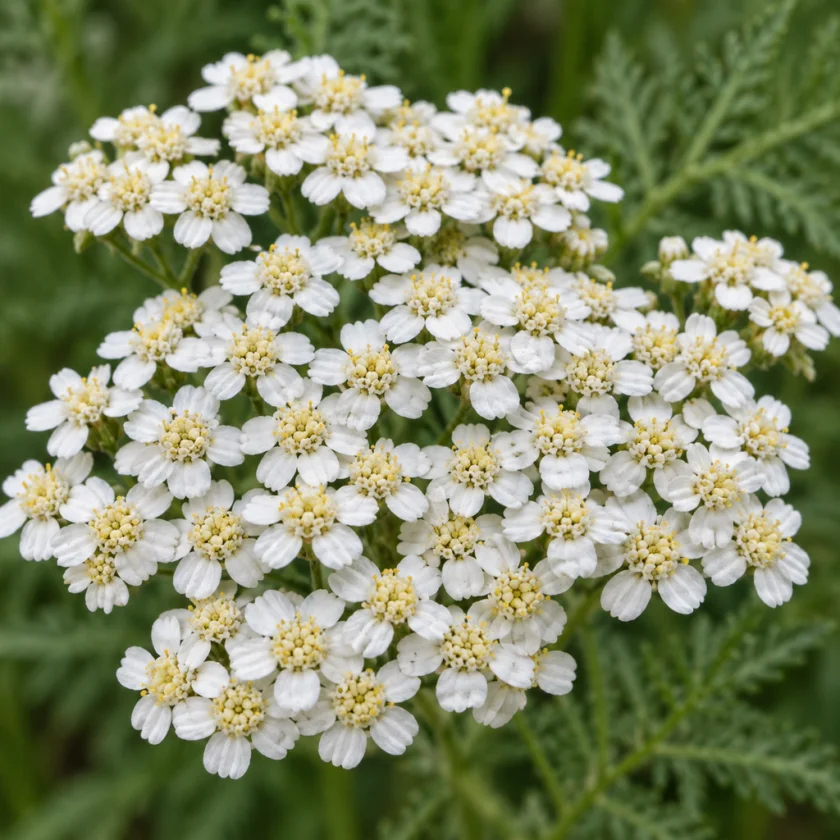
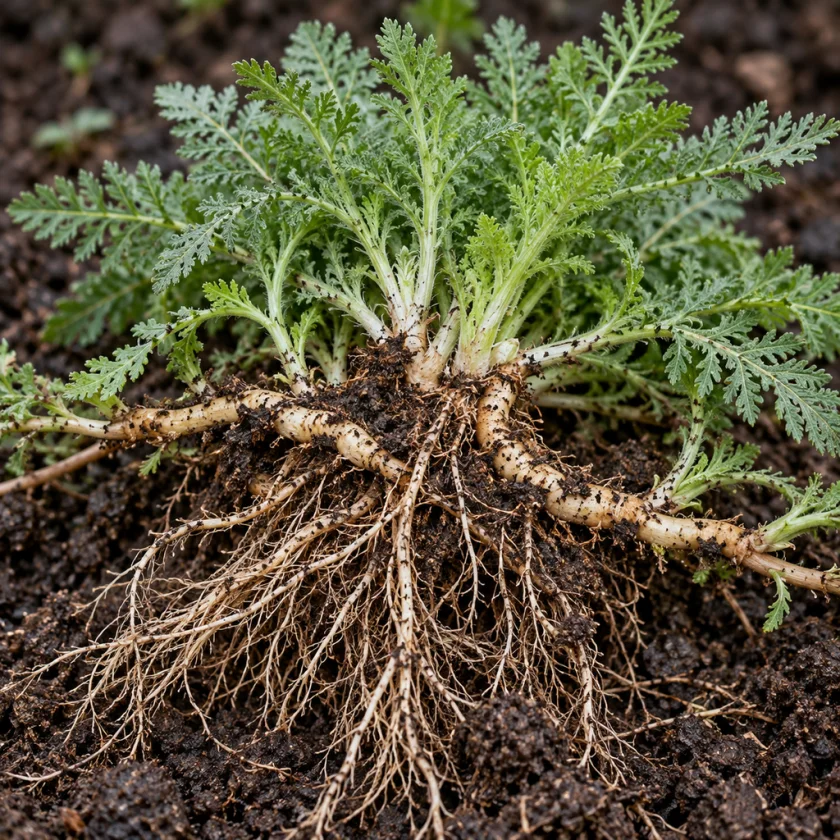
Yarrow (Achillea millefolium) is one of the most heavily documented medicinal plants in the European record and one of the least tested. Its genus name honours Achilles; its folk names — soldier's woundwort, staunchweed, nosebleed plant — all describe a single use; and its traditional indications run to dozens across European and North American ethnobotany. Set that beside the modern literature and the contrast is startling: a handful of small human trials, a scattering of animal studies, and a great deal of test-tube chemistry. Applequist and Moerman put the point in their review's subtitle — "A Neglected Panacea?"
These four pages take yarrow's main claims one at a time and label each one's evidence tier honestly, because the tiers differ far more than most writing about the plant admits. The bleeding claim, its most famous, is the weakest: traditional plus preclinical, with no controlled human trial found. The wound claim now has two small human trials, one of a yarrow ointment on episiotomy wounds and one of yarrow on cracked nipples. The digestive and bitter use has the most coherent mechanism, a plausible physiological route through the cephalic phase of digestion, and a German Commission E monograph — which rests largely on tradition rather than on trial results, and this hub says so. The menstrual use has one small double-blind, placebo-controlled randomized trial, and a year-long placebo-controlled yarrow trial exists in multiple sclerosis (see the evidence list below). And the safety page is the one usually skipped and the one that matters most for anyone already using the plant, because yarrow contains thujone, cross-reacts with ragweed and chamomile allergy, is contraindicated in pregnancy, and carries a bleeding-drug and epilepsy caution.
The tradition is treated here with respect — it is genuinely interesting history and a real body of human knowledge. It is also, on its own, history rather than evidence, and these pages keep those two things in separate columns.
Table of Contents
- Deep-Dive Articles
- Yarrow's Evidence at a Glance
- How to Read an Evidence Tier
- Key Research: Wounds and Bleeding
- Key Research: Bitters and Digestion
- Key Research: Menstrual and Pelvic Use
- Key Research: Thujone, Allergy and Interactions
- Key Research: Chemistry, Chemotypes and Identity
- Key Research: Other Human Trials of Yarrow
- External Resources
- Connections
- Featured Videos
Deep-Dive Articles
Yarrow for Wounds and Bleeding: Tradition and Evidence
The Achilles story, "soldier's woundwort", the Shanidar Cave pollen claim and why it is disputed, the alkaloid achilleine behind the styptic reputation, the animal wound-healing studies — and the human record: no controlled trial found for bleeding control, and two small trials of yarrow on wounds, on episiotomy wounds and on cracked nipples. Includes what a bleeding wound actually needs.
Read the deep dive →Yarrow for Digestion and Its Bitter Action
The most coherent claim in yarrow's dossier. What a bitter is, how the cephalic phase of digestion works, what bitter-receptor research in humans has and has not shown, the antispasmodic and gastroprotective animal findings — and exactly what German Commission E approval does and does not mean.
Read the deep dive →Yarrow for Menstrual and Pelvic Complaints
The randomized, double-blind, placebo-controlled trial of yarrow for primary period pain, read with its limits intact. Also the emmenagogue tradition and why it doubles as a pregnancy warning, the Commission E sitz bath, and why the heavy-bleeding claim fails.
Read the deep dive →Yarrow Safety: Thujone, Asteraceae Allergy and Pregnancy
The page most articles omit. Thujone and the gamma-aminobutyric acid-A mechanism it shares with wormwood and sage; daisy-family cross-reactivity with ragweed, mugwort, chamomile, feverfew and chrysanthemum; documented contact dermatitis; photosensitivity; pregnancy; bleeding drugs; epilepsy; and why garden Achillea is not the medicinal plant.
Read the deep dive →Yarrow's Evidence at a Glance
Ranked from best-supported to worst, which is very nearly the reverse of how popular sources rank them:
- Multiple sclerosis, as an add-on — one triple-blind, placebo-controlled randomized trial: 75 people took a water extract of yarrow (250 or 500 mg a day) or placebo for a year, as an add-on therapy. Both doses lowered the yearly relapse rate, and the mean change in lesion volume on scans significantly decreased at 500 mg. It is one trial, and a literature search for this page found no repeat of it.
- Primary period pain — one randomized, double-blind, placebo-controlled trial reporting reduced pain, unreplicated. Students were given yarrow in tea bags for 3 days in each of 2 menstrual cycles, and pain fell more than on placebo at 1 month and at 2 months.
- Chemotherapy-induced oral mucositis (mouth sores) — one double-blind randomized controlled trial of a yarrow mouthwash reporting reduced severity. In 56 patients the severity score started at 2.39 in both groups; by day 14 it was 0.32 with a gargle of routine solution plus yarrow distillate and 2.89 with the routine solution alone. Specific population, specific condition, but properly controlled.
- Wound healing — traditional and preclinical, plus two human trials: animal and in-vitro results; a double-blind trial of 140 first-time mothers with four separate groups of 35 (no treatment, placebo ointment, St John's wort (Hypericum perforatum) ointment, yarrow ointment), in which pain, redness, swelling and bruising of the episiotomy wound were lower on either herb ointment than in the control groups, with no difference in discharge or in the wound opening; and a trial of 150 breastfeeding women with cracked nipples, in which yarrow, honey and breast milk applied to the skin each reduced severity, with no significant difference between them and no placebo group.
- Liver enzymes and blood fats in type 2 diabetes — one double-blind, placebo-controlled trial (2025): 60 people took 500 mg of yarrow capsules a day or placebo for 3 months. In the yarrow group the liver enzyme alanine aminotransferase fell from 28.79 to 24.41 IU/L, the liver enzyme aspartate aminotransferase from 24.28 to 18.76 IU/L, low-density lipoprotein (LDL) cholesterol from 98.90 to 80.86 mg/dL and total cholesterol from 168.3 to 150.1 mg/dL.
- Vaginal yeast infection — one double-blind randomized trial against a standard drug: 80 women used a yarrow vaginal cream or 1% clotrimazole cream for 7 days. The yeast culture turned negative in 53% on yarrow and 77% on clotrimazole (p<0.05). A quality-of-life score improved in both groups, more on clotrimazole; redness of the vulva improved in both with no significant difference.
- Appetite loss and dyspeptic complaints — traditional use with a plausible, partly human-confirmed bitter mechanism, plus a Commission E monograph resting largely on tradition. No trial of yarrow itself.
- Digestive and menstrual cramping — preliminary: isolated-tissue antispasmodic activity consistent with calcium-channel blockade, plus anti-inflammatory activity in laboratory models.
- Gastroprotection — preliminary, animal: rat antiulcer studies with a reassuring chronic-safety component. Not a treatment for human gastritis or ulcer.
- Fevers and colds — traditional use only. A hot drink and rest are doing recognisable work here.
- Stopping bleeding — traditional, plus a single old animal report on an isolated alkaloid. Contradicted within the same literature by a theoretical antiplatelet effect. No human evidence.
- Heavy menstrual bleeding, endometriosis, fibroids, premenstrual syndrome, pelvic infection — no evidence at any tier, and in several cases a real cost to delaying proper treatment.
The three genuinely well-established facts about yarrow are all on the safety side: it contains thujone, it is a documented contact sensitizer with characterized culprit compounds, and it is contraindicated in pregnancy.
How to Read an Evidence Tier
Every claim across these four pages is labelled with one of four tiers. They are not interchangeable, and collapsing them is how herbal writing goes wrong.
- Randomized clinical trial. Humans, allocated by chance, ideally with neither participant nor assessor knowing who got what. The only tier that reliably separates a treatment effect from natural recovery, expectation and attention.
- Other human study. Uncontrolled series and before-and-after observation. Good for safety signals, weak for efficacy.
- Preliminary — animal or in vitro. Rats, cell cultures, bacterial plates, organ baths. Real science, genuinely informative about mechanism, and routinely over-read. Most positive yarrow findings live here.
- Traditional use only. The historical and ethnobotanical record. Valuable as history and as a source of research leads. Not a measurement of anything.
Two recurring traps are worth naming. A regulatory monograph is not a trial result — Commission E approval and the European "traditional use" registration category both explicitly rest on long use plus acceptable safety, and the European system requires products to say so on the label. And age of tradition does not accumulate into evidence: two thousand years of confident use is two thousand years of uncontrolled observation, which is why the herbs with the longest reputations are often the ones whose trials, when finally run, come out flat.
Key Research: Wounds and Bleeding
Each citation closes with a link to the paper's own PubMed or DOI record. Full discussion on the wounds and bleeding page.
- Applequist WL, Moerman DE. "Yarrow (Achillea millefolium L.): A Neglected Panacea? A Review of Ethnobotany, Bioactivity, and Biomedical Research." Economic Botany, 2011. doi:10.1007/s12231-011-9154-3
- Ghasemi MR, Ranjbar A, Tamri P, et al. "In vitro Antibacterial Activity and Wound Healing Effects of Achillea millefolium Essential Oil in Rat." Journal of Pharmacopuncture, 2023. PubMed PMID: 37405118
- Hajhashemi M, et al. "The effect of Achillea millefolium and Hypericum perforatum ointments on episiotomy wound healing in primiparous women." Journal of Maternal-Fetal & Neonatal Medicine, 2018 — double-blind, 140 first-time mothers, two separate single-herb ointments against no treatment and a placebo ointment. PubMed PMID: 28027682
- Miranzadeh S, Adib-Hajbaghery M, Soleymanpoor L, Ehsani M. "Effect of adding the herb Achillea millefolium on mouthwash on chemotherapy induced oral mucositis in cancer patients: A double-blind randomized controlled trial." European Journal of Oncology Nursing, 2015. PubMed PMID: 25667123
- Dorjsembe B, et al. "Achillea asiatica extract and its active compounds induce cutaneous wound healing." Journal of Ethnopharmacology, 2017. PubMed PMID: 28602757
- Miller FM, Chow LM. "Alkaloids of Achillea millefolium L. I. Isolation and Characterization of Achilleine." Journal of the American Chemical Society, 1954 — the single report behind the haemostatic-alkaloid claim. doi:10.1021/ja01634a048
- Solecki RS. "Shanidar IV, a Neanderthal Flower Burial in Northern Iraq." Science, 1975; with Sommer JD. "The Shanidar IV 'Flower Burial': A Re-evaluation of Neanderthal Burial Ritual." Cambridge Archaeological Journal, 1999 — the claim and the rodent-caching critique. Solecki: doi:10.1126/science.190.4217.880; Sommer: doi:10.1017/s0959774300015249
- Firouzabadi M, Pourramezani N, Balvardi M. "Comparing the Effects of Yarrow, Honey, and Breast Milk for Healing Nipple Fissure." Iranian Journal of Nursing and Midwifery Research, 2020. PubMed PMID: 33014738
Key Research: Bitters and Digestion
Full discussion on the digestion and bitter action page.
- Yaeesh S, Jamal Q, Khan AU, Gilani AH. "Studies on hepatoprotective, antispasmodic and calcium antagonist activities of the aqueous-methanol extract of Achillea millefolium." Phytotherapy Research, 2006. PubMed PMID: 16619341
- Potrich FB, Allemand A, da Silva LM, et al. "Antiulcerogenic activity of hydroalcoholic extract of Achillea millefolium L.: involvement of the antioxidant system." Journal of Ethnopharmacology, 2010. PubMed PMID: 20420892
- Andreozzi P, Sarnelli G, Pesce M, et al. "The bitter taste receptor agonist quinine reduces calorie intake and increases the postprandial release of cholecystokinin in healthy subjects." Journal of Neurogastroenterology and Motility, 2015. PubMed PMID: 26351252
- Rezaie P, Bitarafan V, Horowitz M, Feinle-Bisset C. "Effects of Bitter Substances on GI Function, Energy Intake and Glycaemia-Do Preclinical Findings Translate to Outcomes in Humans?" Nutrients, 2021. PubMed PMID: 33923589
- McMullen MK, Whitehouse JM, Towell A. "Bitters: Time for a New Paradigm." Evidence-Based Complementary and Alternative Medicine, 2015. PubMed PMID: 26074998
- Power ML, Schulkin J. "Anticipatory physiological regulation in feeding biology: cephalic phase responses." Appetite, 2008. PubMed PMID: 18045735
- Behrens M, Meyerhof W. "Bitter taste receptors and human bitter taste perception." Cellular and Molecular Life Sciences, 2006 — the TAS2R family, including extra-oral expression. PubMed PMID: 16732425
Key Research: Menstrual and Pelvic Use
Full discussion on the menstrual and pelvic page.
- Jenabi E, Fereidoony B. "Effect of Achillea millefolium on relief of primary dysmenorrhea: a double-blind randomized clinical trial." Journal of Pediatric and Adolescent Gynecology, 2015 — the period-pain trial. PubMed PMID: 26238568
- Marjoribanks J, Ayeleke RO, Farquhar C, Proctor M. "Nonsteroidal anti-inflammatory drugs for dysmenorrhoea." Cochrane Database of Systematic Reviews, 2015 — the benchmark. PubMed PMID: 26224322
- Pattanittum P, Kunyanone N, Brown J, et al. "Dietary supplements for dysmenorrhoea." Cochrane Database of Systematic Reviews, 2016. PubMed PMID: 27000311
- Daily JW, Zhang X, Kim DS, Park S. "Efficacy of ginger for alleviating the symptoms of primary dysmenorrhea: a systematic review and meta-analysis of randomized clinical trials." Pain Medicine, 2015 — the herb with better data than yarrow. PubMed PMID: 26177393
- Reviews of prostaglandin release and uterine contractility in dysmenorrhoea — the mechanism any cramping remedy has to engage. PubMed: prostaglandins uterine contractility dysmenorrhea
- Literature on local heat application for menstrual pain — relevant because traditional preparations deliver heat too. PubMed: heat therapy menstrual pain randomized
Key Research: Thujone, Allergy and Interactions
Full discussion on the safety page, which is the one to read first.
- Höld KM, Sirisoma NS, Ikeda T, Narahashi T, Casida JE. "α-Thujone (the active component of absinthe): γ-aminobutyric acid type A receptor modulation and metabolic detoxification." Proceedings of the National Academy of Sciences, 2000. PubMed PMID: 10725394
- Lachenmeier DW, Uebelacker M. "Risk assessment of thujone in foods and medicines containing sage and wormwood — evidence for a need of regulatory changes?" Regulatory Toxicology and Pharmacology, 2010. PubMed PMID: 20727933
- Hausen BM, Breuer J, Weglewski J, Rücker G. "α-Peroxyachifolid and other new sensitizing sesquiterpene lactones from yarrow (Achillea millefolium L., Compositae)." Contact Dermatitis, 1991. PubMed PMID: 1868717
- Paulsen E. "Contact sensitization from Compositae-containing herbal remedies and cosmetics." Contact Dermatitis, 2002; and "Compositae dermatitis: a survey." Contact Dermatitis, 1992. 2002: PubMed PMID: 12492516; 1992: doi:10.1111/j.1600-0536.1992.tb00888.x
- Spinella M. "Herbal medicines and epilepsy: the potential for benefit and adverse effects." Epilepsy & Behavior, 2001. PubMed PMID: 12609386
- Izzo AA, Ernst E. "Interactions between herbal medicines and prescribed drugs: an updated systematic review." Drugs, 2009; and Ge B, Zhang Z, Zuo Z. "Updates on the clinical evidenced herb-warfarin interactions." Evidence-Based Complementary and Alternative Medicine, 2014. Izzo: doi:10.2165/11317010-000000000-00000; Ge: PubMed PMID: 24790635
- Cavalcanti AM, Baggio CH, Freitas CS, et al. "Safety and antiulcer efficacy studies of Achillea millefolium L. after chronic treatment in Wistar rats." Journal of Ethnopharmacology, 2006 — a rare chronic-dosing safety assessment. PubMed PMID: 16647233
Key Research: Chemistry, Chemotypes and Identity
Why two samples of "yarrow" are not the same substance — the thread that runs through all four pages.
- Ali SI, Gopalakrishnan B, Venkatesalu V. "Pharmacognosy, Phytochemistry and Pharmacological Properties of Achillea millefolium L.: A Review." Phytotherapy Research, 2017. PubMed PMID: 28618131
- Chandler RF, Hooper SN, Harvey MJ. "Ethnobotany and phytochemistry of yarrow, Achillea millefolium, Compositae." Economic Botany, 1982 — the classic account linking folk use to chemistry. doi:10.1007/BF02858720
- Benedek B, Kopp B. "Achillea millefolium L. s.l. revisited: Recent findings confirm the traditional use." Wiener Medizinische Wochenschrift, 2007 — and the companion paper, Benedek B, Kopp B, Melzig MF, on protease inhibition in the Journal of Ethnopharmacology, 2007. Benedek and Kopp: PubMed PMID: 17704978; Benedek, Kopp and Melzig: PubMed PMID: 17689902
- Candan F, Unlu M, Tepe B, et al. "Antioxidant and antimicrobial activity of the essential oil and methanol extracts of Achillea millefolium subsp. millefolium Afan. (Asteraceae)." Journal of Ethnopharmacology, 2003. PubMed PMID: 12860311
- El-Kalamouni C, Venskutonis PR, Zebib B, et al. "Antioxidant and Antimicrobial Activities of the Essential Oil of Achillea millefolium L. Grown in France." Medicines, 2017 — how much origin changes the oil. PubMed PMID: 28930245
- Nemeth E, Bernath J. "Biological Activities of Yarrow Species (Achillea spp.)" Current Pharmaceutical Design, 2008 — genus-wide survey. PubMed PMID: 19075697
- Work on the Achillea millefolium aggregate, ploidy level and proazulene production — why only some yarrow yields blue chamazulene. PubMed: Achillea millefolium aggregate ploidy proazulene
Key Research: Other Human Trials of Yarrow
- Ayoobi F, Moghadam-Ahmadi A, Amiri H, et al. "Achillea millefolium is beneficial as an add-on therapy in patients with multiple sclerosis: A randomized placebo-controlled clinical trial." Phytomedicine, 2019. PubMed PMID: 30599916
- Daneshvar-Ghahfarokhi S, Ahmadinia H, Sadeghi T, Basirat E, Mohammadi-Shahrokhi V. "Achillea millefolium capsule improved liver enzymes and lipid profile compared to placebo in patients with type 2 diabetes: a double-blind randomized clinical trial." BMC Nutrition, 2025. PubMed PMID: 39856724
- Zakeri S, Esmaeilzadeh S, Gorji N, Memariani Z, Moeini R, Bijani A. "The effect of Achillea Millefolium L. on vulvovaginal candidiasis compared with clotrimazole: A randomized controlled trial." Complementary Therapies in Medicine, 2020. PubMed PMID: 32951733
External Resources
Stable, non-commercial starting points. Deep links inside these sites move; these are the landing pages.
- U.S. National Institutes of Health (NIH) National Center for Complementary and Integrative Health — plain-language, sceptical evidence summaries for herbs and supplements.
- PubMed — the primary biomedical literature. Most citations above link to the paper's own record here.
- European Medicines Agency — the herbal monograph system, the "traditional use" registration category, and the public statement on thujone-containing herbal products.
- U.S. National Institutes of Health Office of Dietary Supplements — how supplements are regulated, and why label quality varies.
- Plants of the World Online (Kew) — authoritative nomenclature for Achillea millefolium and the ornamental hybrids.
- USDA PLANTS Database — distribution and identification of yarrow across North America.
- MedlinePlus — patient-level information on wound care, indigestion and menstrual problems.
- Poison Control (US) — first stop for an essential-oil ingestion.
Connections
- All Herbs
- Yarrow — the main topic page: botany, folklore, compounds, forms
- Yarrow for Wounds and Bleeding — the famous claim, honestly tiered
- Yarrow for Digestion — the best-reasoned use
- Yarrow for Menstrual Complaints — the randomized period-pain trial
- Yarrow Safety — thujone, allergy, pregnancy, epilepsy, drug interactions
- Wormwood — the archetypal thujone bitter
- Wormwood Benefits — same caution class, higher stakes
- Sage — the other everyday thujone herb
- Sage Benefits — thujone in a culinary plant
- Chamomile — daisy-family relative and the other chamazulene source
- Chamomile Benefits — the gentler Asteraceae option
- Calendula — the classic daisy-family skin herb
- Calendula Benefits — better topical evidence than yarrow
- Feverfew — sesquiterpene lactones and the same allergy caution
- Chrysanthemum — classic Compositae contact allergen
- Mugwort — cross-reacting Asteraceae pollen allergen
- Dandelion — bitter Asteraceae digestive herb
- Dandelion Benefits — the bitter and bile claims examined
- Echinacea — daisy-family immune herb, same allergy caution
- Comfrey — traditional bruise herb with a serious internal-use warning
- Plantain — the other roadside first-aid poultice
- Self-Heal — a wound herb whose name makes the same promise
- Agrimony — astringent traditional bleeding-and-wound herb
- Ginger — better dysmenorrhoea and nausea evidence
- Peppermint — the antispasmodic with the strongest trials
- Elderberry & Elderflower — traditional partner in yarrow fever teas
- Milk Thistle — the better-studied liver herb
- Contact Dermatitis — the documented yarrow reaction
- Functional Dyspepsia — the complaint bitters target
- Dysmenorrhea — the physiology behind the cramping claim
- Epilepsy — why thujone matters clinically
- Allergies — how Asteraceae cross-reactivity works
Safety and disclaimer. These pages are educational and are not medical advice. Yarrow's traditional record is long and its clinical evidence is thin: its human trials are small, each result rests on one study, and its most famous use, stopping bleeding, has no controlled human trial behind it that this page found. Yarrow contains thujone and belongs to the same caution class as wormwood and sage: the low-risk pattern described is modest amounts in short courses, and the essential oil is not an internal product. Reference works list internal yarrow as contraindicated in pregnancy, and breastfeeding has not been studied. The concerns are greatest for people with epilepsy, and for people who react to ragweed, mugwort, chamomile, feverfew, chrysanthemum or calendula. Yarrow has theoretical interactions with anticoagulant, antiplatelet, sedative and blood-pressure medication, and herbs like it are conventionally stopped a week or two before surgery. A symptom that is new, severe, worsening or unexplained can be the first sign of a disease with its own diagnosis and treatment.