Yarrow for Menstrual and Pelvic Complaints
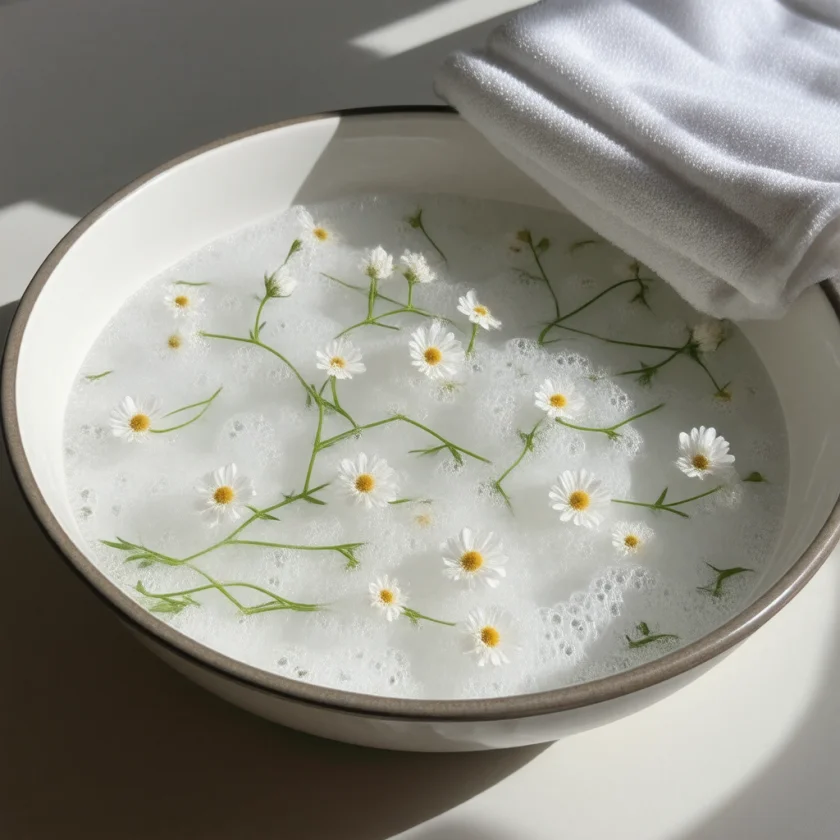

Yarrow occupies an unusual position among traditional women's herbs: it is one of the few yarrow uses with an actual randomized, double-blind, placebo-controlled human trial behind it. That trial is small, single, and unreplicated — so this page is not going to tell you yarrow is proven for period pain. But it does mean the menstrual claim sits one tier above the famous bleeding-stopping (styptic) claim, and it deserves to be described accurately rather than either inflated or dismissed.
The traditional record here is long and consistent. Across European folk medicine, yarrow was used for painful and cramping periods, was described as an emmenagogue (a herb thought to bring on or regulate menstruation), and appears in old texts for a range of pelvic complaints. German Commission E even carries an approved external use — a yarrow sitz bath for cramp-like conditions of the lower female pelvis. That same emmenagogue reputation is also the main reason yarrow is contraindicated in pregnancy, so the tradition contains its own warning. Both halves are covered here.
Table of Contents
- Yarrow in the Women's Herbal Tradition
- "Emmenagogue" — What It Meant and Why It Cuts Both Ways
- What Actually Causes Period Pain
- The One Randomized Period-Pain Trial
- Why the Mechanism Is Plausible
- The Sitz Bath and the Commission E External Approval
- Heavy Bleeding: Where the Claim Breaks Down
- Endometriosis, Fibroids and Chronic Pelvic Pain
- How Yarrow Compares With Better-Studied Options
- Pregnancy, Breastfeeding and Trying to Conceive
- Symptoms That Point Beyond Ordinary Period Pain
- The Honest Summary
- Key Research Papers
- Connections
- Featured Videos
Yarrow in the Women's Herbal Tradition
Yarrow's place in women's herbal medicine is documented across the European written tradition and in a great deal of North American ethnobotany. The recorded uses cluster around four themes: easing painful, cramping periods; "regulating" flow, meaning both encouraging a delayed period and moderating a heavy one; relieving pelvic aching and congestion; and, in some texts, use around childbirth and after. Applequist and Moerman's review in Economic Botany (2011) tabulates the astonishing breadth of yarrow's traditional indications, gynaecological uses included, alongside the observation that almost none of them have been tested. (Evidence tier: traditional use only.)
Two features of this tradition are worth naming plainly. First, it contains contradictory claims — the same herb is described as both promoting and reducing menstrual flow, in the same way it was described as both stopping and starting nosebleeds. Folk pharmacology accumulated uses rather than resolving them, and a plant with a reputation for "acting on" a body system tends to attract claims in both directions. Second, historical women's medicine was often the only medicine available for conditions that were poorly understood and rarely taken seriously, which is part of why the herbal record here is so rich. That deserves respect. It is still not measurement.
Yarrow appears in the tradition alongside a familiar group of companions: chasteberry, black cohosh, motherwort, red raspberry leaf, dong quai and chamomile. Several of those have larger modern literatures than yarrow, and one or two have clearer safety concerns.
"Emmenagogue" — What It Meant and Why It Cuts Both Ways
An emmenagogue, in the vocabulary of historical herbalism, is a plant believed to stimulate or provoke menstrual flow. Yarrow is classed as one in essentially every traditional source. The category matters for two reasons that pull in opposite directions.
The first is the therapeutic claim: an emmenagogue was used when a period was late, scanty or painful, on the theory that helping the flow along relieved the congestion and cramping. In modern terms this is not a coherent mechanism — menstruation is driven by the fall in progesterone at the end of the luteal phase, not by a herb encouraging flow — and there is no human evidence that yarrow alters menstrual timing, duration or volume. The claim is traditional and unverified.
The second is the safety consequence, and it is the one that has real weight. Historically, emmenagogues were used precisely because they were believed to be capable of ending an early pregnancy, and the same plants appear in the historical literature of abortifacients. Whether or not yarrow actually has any such effect — there is no reliable evidence that it does, at any dose a person would sensibly take — the traditional reputation, combined with yarrow's thujone content, is why every serious source lists yarrow as contraindicated in pregnancy. Here the tradition's own warning carries more weight than its therapeutic claim, because the downside of being wrong is asymmetric.
What Actually Causes Period Pain
Understanding the mechanism of dysmenorrhoea makes it possible to judge whether a herbal claim is plausible instead of guessing.
In primary dysmenorrhoea — painful periods with no underlying disease — the falling progesterone of the late luteal phase triggers the endometrium to release prostaglandins, chiefly PGF2-alpha and PGE2. These cause strong, sustained contractions of the uterine muscle. When contraction pressure exceeds arterial pressure, blood flow to the muscle is briefly cut off, producing ischaemic pain of the same general kind as angina or a muscle cramp. Prostaglandins also sensitize pain nerves and act on gut smooth muscle, which is why nausea, diarrhoea, headache and general awfulness travel with the cramps. Women with more severe dysmenorrhoea have been shown to release more prostaglandin.
That mechanism explains why the standard treatment works so well: nonsteroidal anti-inflammatory drugs (NSAIDs) such as ibuprofen, naproxen and mefenamic acid block prostaglandin synthesis at the source. A Cochrane review by Marjoribanks and colleagues found nonsteroidal anti-inflammatory drugs clearly effective for dysmenorrhoea compared with placebo — one of the more solid conclusions in the field. Hormonal contraception works by a different route, thinning the endometrium so less prostaglandin is produced. (Evidence tier: multiple randomized trials, systematic review.)
So for a herb to plausibly help period pain, it would need to be doing one of three things: reducing prostaglandin production or action, relaxing uterine smooth muscle, or modulating pain perception. Yarrow has a reasonable case for the second, and a partial case for the first.
The One Randomized Period-Pain Trial
The study in question is by Jenabi and Fereidoony, published in the Journal of Pediatric and Adolescent Gynecology in 2015 as "Effect of Achillea millefolium on relief of primary dysmenorrhea: a double-blind randomized clinical trial." It was run from July to November 2013 at a university in Toyserkan, western Iran, among female students with primary dysmenorrhoea. They were randomly divided into two equal groups and given either yarrow or a placebo in teabag form for 3 days in each of 2 menstrual cycles, and they rated their pain on a visual analogue scale (a line from no pain to worst pain). The fall in pain score was significantly greater with yarrow than with placebo at 1 month (p = .001) and at 2 months (p < .0001) after treatment. (Evidence tier: randomized, double-blind, placebo-controlled trial — small and unreplicated.)
This is the best evidence yarrow has for period pain; yarrow's other controlled human trials are of a mouthwash for chemotherapy mouth sores and of a combination ointment for episiotomy healing. It is worth understanding its limits precisely, because "there is a randomized controlled trial (RCT)" is exactly the phrase that gets over-read:
- It is a single small trial. Single small positive trials in pain conditions have a poor replication record generally — small studies overestimate effects, and the ones that get published tend to be the positive ones.
- Pain is self-reported and dysmenorrhoea responds strongly to placebo. Blinding was in place, which is what makes the result worth anything at all; but the effect measured is a shift in a subjective score, not an objective marker.
- It has not, as far as the published literature shows, been replicated in an independent, adequately powered trial. Until it is, the finding remains promising rather than established.
- It does not tell you the best preparation or dose for anyone else, and it does not test long-term use.
- It says nothing about secondary dysmenorrhoea — period pain caused by endometriosis, fibroids, adenomyosis or infection. Those need diagnosis and treatment of the cause.
The right summary is the unglamorous one: one small, properly blinded trial suggests yarrow may reduce primary period pain, which is more than most traditional herbal claims can say, and less than proof.
Why the Mechanism Is Plausible
Unusually for a folk remedy, there is a coherent chain of reasoning connecting yarrow's chemistry to uterine cramping.
Smooth-muscle relaxation. Yaeesh and colleagues reported in Phytotherapy Research (2006) that an aqueous-methanol extract of Achillea millefolium showed antispasmodic activity in isolated tissue with a pattern consistent with calcium-channel blockade: in strips of rabbit small intestine (jejunum), the extract relaxed both spontaneous and potassium-induced contractions at 0.3-10 mg/mL and shifted the calcium response curves the same way as the calcium-channel-blocking drug verapamil. The same paper's liver-protection result was in mice. Uterine contraction, like gut contraction, depends on calcium entry into smooth-muscle cells; calcium antagonists relax it. That finding was made in gut tissue rather than uterus, so applying it to the uterus is an inference — but it is a reasonable one, since the underlying contractile machinery is shared. (Evidence tier: preliminary, isolated tissue.)
Anti-inflammatory and anti-prostaglandin activity. Yarrow's flavonoids — apigenin, luteolin, rutin — and its sesquiterpene lactones show anti-inflammatory activity in laboratory models, and Benedek and colleagues proposed protease inhibition as one mechanism in the Journal of Ethnopharmacology (2007). Several plant flavonoids inhibit cyclooxygenase pathways in vitro, which is the same target nonsteroidal anti-inflammatory drugs hit. Whether yarrow reaches concentrations in the endometrium capable of meaningfully suppressing prostaglandin release is entirely unknown, and it is very unlikely to rival ibuprofen. (Evidence tier: preliminary, in vitro.)
Apigenin and pain modulation. Apigenin is one of the flavonoids studied for mild anxiolytic and sedative effects at central receptors, which is part of why chamomile is a traditional evening tea. If yarrow contributes any general calming or pain-threshold effect, that is a plausible route — and it is also indistinguishable from the effect of sitting down with a hot drink.
Heat. Worth stating for honesty's sake: a hot drink and a warm sitz bath relieve cramping on their own. Local heat is one of the better-supported non-drug treatments for period pain. Any traditional preparation that involves hot water is delivering a genuine, physically active intervention alongside the herb, and no traditional observer could separate the two.
The Sitz Bath and the Commission E External Approval
German Commission E's yarrow monograph includes an external indication that is rarely mentioned: yarrow as a sitz bath for painful, cramp-like conditions of the lower female pelvis described as being of psychosomatic origin. The internal approval, discussed on the digestive page, is for appetite loss and dyspeptic complaints.
Three things to understand about that approval. First, the same caveat applies as everywhere: Commission E weighed tradition, plausibility and safety, not trial results, so this is a regulatory judgement resting on long use. Second, the phrase "of psychosomatic origin" is dated language that would not be written today, and it does not mean pelvic pain is imaginary; in modern terms the target is functional pelvic pain with no structural cause found. Third, and most practically, a sitz bath is a warm bath. Sitting in warm water relieves pelvic cramping regardless of what is steeped in it, so it is impossible to say from tradition how much of the benefit belongs to the yarrow.
Traditionally the bath is prepared by steeping a generous quantity of dried yarrow herb in hot water, straining it, and adding the liquid to a shallow bath. It is low-risk for someone without daisy-family allergy; for people who react to ragweed, chamomile, feverfew or chrysanthemum, sitting in yarrow water means whole-body skin exposure to a known sensitizer. (Evidence tier: traditional use with regulatory monograph; no controlled trials.)
Heavy Bleeding: Where the Claim Breaks Down
Because yarrow's most famous reputation is styptic, it is often recommended online for heavy menstrual bleeding. This is the weakest and potentially most harmful claim on the page, and it deserves a direct answer.
As set out on the wound and bleeding page, yarrow's haemostatic reputation rests on tradition plus a single 1950s animal report on the isolated alkaloid achilleine. There is no human evidence whatsoever that yarrow reduces menstrual blood loss. Meanwhile yarrow also appears on standard lists of herbs with a theoretical antiplatelet or anticoagulant interaction — the opposite direction. Nobody knows which, if either, is true in a person. There is no evidence basis for taking a herb for heavy bleeding on the strength of an unresolved contradiction.
The stakes are the real problem. Heavy menstrual bleeding is a common cause of iron-deficiency anaemia, and it can signal fibroids, adenomyosis, polyps, a bleeding disorder, thyroid disease or — less often but importantly — endometrial disease. It also has genuinely effective treatments: tranexamic acid, nonsteroidal anti-inflammatory drugs, the hormonal intrauterine system, and hormonal contraception, alongside iron replacement. Soaking through protection, passing large clots, bleeding for more than a week, or feeling breathless and exhausted are signs of heavy blood loss, which is checked with a blood count, a ferritin (iron store) level and an examination; yarrow tea does not address it. Delay here has a measurable cost.
Endometriosis, Fibroids and Chronic Pelvic Pain
Yarrow is sometimes suggested for endometriosis, fibroids, premenstrual syndrome (PMS) and premenstrual dysphoric disorder (PMDD), pelvic inflammatory disease (PID) and chronic pelvic pain. For every one of these, the honest statement is the same: there is no clinical evidence for yarrow, of any tier, for any of them.
These conditions differ from primary dysmenorrhoea in a way that matters. Endometriosis involves tissue implants, inflammation and often adhesions, and untreated it can progress and affect fertility; diagnosis is frequently delayed by years, and self-treatment with herbs is one of the things that lengthens that delay. Fibroids are structural growths. Pelvic inflammatory disease is an infection requiring antibiotics, and untreated PID causes tubal damage and infertility — treating it with a herb is dangerous, not merely ineffective. An anti-inflammatory herb, however plausible its chemistry, does not address any of these mechanisms.
Where yarrow could reasonably sit is as a comfort measure alongside proper diagnosis and treatment — a warm bath, a cup of tea for cramping — in someone who has been assessed and knows what they are dealing with. That is a modest role, and it is the accurate one.
How Yarrow Compares With Better-Studied Options
Someone with painful periods deciding what to try deserves the comparison rather than just the herb they landed on:
- Nonsteroidal anti-inflammatory drugs — the strongest evidence by a wide margin, supported by a Cochrane review; work best started at the first sign of pain rather than after it is established. Not suitable for everyone, notably with peptic ulcer or certain kidney problems.
- Hormonal contraception — well-evidenced for reducing dysmenorrhoea, with the additional effect of lighter periods.
- Local heat — a heat pack or warm bath has decent supporting evidence, costs nothing, and has no downside. Traditional yarrow preparations quietly include it.
- Exercise — reasonable trial evidence for reduced dysmenorrhoea severity.
- Ginger — the herb with the best dysmenorrhoea data. A systematic review and meta-analysis of randomized trials by Daily and colleagues in Pain Medicine (2015) concluded ginger was effective for primary dysmenorrhoea symptoms. Several individual trials compared it against nonsteroidal anti-inflammatory drugs. Better evidenced than yarrow.
- Fennel — multiple small randomized trials for dysmenorrhoea, with mixed results.
- Dietary supplements — a 2016 Cochrane review by Pattanittum and colleagues (27 randomized trials, 3,101 women) examined fish oil, melatonin, vitamins B1 and E, zinc sulphate and 12 herbs (magnesium was not among them). It judged all the evidence low or very low quality, with very limited evidence of benefit for a few candidates such as vitamin B1 (thiamine), ginger, fenugreek, valerian, zataria and zinc sulphate, and found no high-quality evidence for any dietary supplement.
- Yarrow — one small blinded trial. Sits below ginger, and well below nonsteroidal anti-inflammatory drugs and heat.
Heat now has a large evidence base of its own. A 2025 meta-analysis of 57 randomized trials (5,359 women) found that, compared with no treatment, heat therapy reduced period pain by about 1.9 cm on a 10 cm pain scale after 3 months (and by about 3.5 cm within 24 hours of treatment, in 3 trials). Compared with nonsteroidal anti-inflammatory drugs, heat gave comparable or slightly better pain relief, with fewer side effects (risk ratio 0.30).
This is not an argument against yarrow. It is an argument for putting it in the right place: a low-risk adjunct, not a first-line option, and not a substitute for finding out why the pain is severe.
Pregnancy, Breastfeeding and Trying to Conceive
This section is short because the answer is short. Yarrow is listed as contraindicated in pregnancy. Two independent reasons converge:
- The emmenagogue tradition. Yarrow has a long-standing reputation for acting on the uterus and appears in the historical literature of plants used to interrupt pregnancy. There is no reliable evidence that it does so, and there is also no evidence that it is safe.
- Thujone. Yarrow's essential oil contains thujone, the neuroactive constituent that puts wormwood and sage in a caution class of their own. Thujone-containing herbs are excluded in pregnancy as a matter of course, and this is discussed in full on the safety page.
Because both reasons rest on absence of safety data rather than on demonstrated harm, the standard rule is precautionary: no internal yarrow throughout pregnancy, and no concentrated preparations including the essential oil. Breastfeeding safety is not established either, and the same precaution is applied. For people trying to conceive, the precautionary approach treats any cycle in which conception is possible as a cycle without yarrow — the herb offers nothing that justifies the uncertainty.
For anyone who took yarrow tea before realising they were pregnant, there is no evidence of harm from ordinary culinary or tea-level exposure; the rule above is precautionary.
Symptoms That Point Beyond Ordinary Period Pain
These signs point to a cause beyond ordinary period pain; the ones described as infection or emergencies are signs hospitals treat as urgent:
- period pain severe enough to keep you off work or school, or pain that has clearly worsened over time — a common presentation of endometriosis, and a reason the average diagnostic delay is measured in years;
- pain that starts days before bleeding, or lasts through and beyond the period, or occurs with sex, bowel movements or urination;
- bleeding that soaks through a pad or tampon hourly, lasts longer than about a week, or includes clots larger than a coin;
- bleeding between periods, after sex, or any bleeding after menopause;
- fatigue, breathlessness, pallor or a racing heart — possible anaemia from blood loss;
- fever, foul-smelling discharge or pelvic pain with fever — possible infection needing antibiotics urgently;
- sudden severe one-sided pelvic pain, faintness, or pain with a missed period — possible ectopic pregnancy or ovarian torsion, both emergencies;
- a new absence of periods, or a marked change in your own pattern.
The Honest Summary
For primary period pain, yarrow has among the best evidence of any of its uses: one small, double-blind, placebo-controlled randomized trial reporting reduced pain, supported by isolated-tissue evidence of calcium-antagonist-like smooth-muscle relaxation and by anti-inflammatory activity in laboratory models. That is a real, if slender, foundation. Combined with a hot drink or a warm sitz bath — which help on their own — yarrow is low-risk for a healthy non-pregnant adult without daisy-family allergy.
For everything else in this territory — heavy bleeding, endometriosis, fibroids, PMS, pelvic infection, altering menstrual timing — the evidence is absent, and in the case of heavy bleeding the traditional claim is internally contradictory and the cost of delay is real. And the tradition's own strongest signal is a prohibition rather than an indication: yarrow is not for use in pregnancy.
Key Research Papers
Each paper links to its PubMed record. The Economic Botany review is not indexed in PubMed, so it and the two general entries at the end link to PubMed topic searches.
- Jenabi E, Fereidoony B. "Effect of Achillea millefolium on relief of primary dysmenorrhea: a double-blind randomized clinical trial." Journal of Pediatric and Adolescent Gynecology, 2015 — the single randomized trial behind yarrow's best-supported use. PubMed PMID: 26238568
- Yaeesh S, Jamal Q, Khan AU, Gilani AH. "Studies on hepatoprotective, antispasmodic and calcium antagonist activities of the aqueous-methanol extract of Achillea millefolium." Phytotherapy Research, 2006 — the smooth-muscle mechanism most relevant to cramping. PubMed PMID: 16619341
- Marjoribanks J, Ayeleke RO, Farquhar C, Proctor M. "Nonsteroidal anti-inflammatory drugs for dysmenorrhoea." Cochrane Database of Systematic Reviews — the benchmark any herbal option should be measured against. PubMed PMID: 26224322
- Pattanittum P, Kunyanone N, Brown J, et al. "Dietary supplements for dysmenorrhoea." Cochrane Database of Systematic Reviews — systematic assessment of supplement evidence, mostly low quality. PubMed PMID: 27000311
- Daily JW, Zhang X, Kim DS, Park S. "Efficacy of ginger for alleviating the symptoms of primary dysmenorrhea: a systematic review and meta-analysis of randomized clinical trials." Pain Medicine, 2015 — the herb with better dysmenorrhoea evidence than yarrow. PubMed PMID: 26177393
- Benedek B, Kopp B, Melzig MF. "Achillea millefolium L. s.l. — Is the anti-inflammatory activity mediated by protease inhibition?" Journal of Ethnopharmacology, 2007 — mechanism relevant to inflammatory pain. PubMed PMID: 17689902
- Ali SI, Gopalakrishnan B, Venkatesalu V. "Pharmacognosy, Phytochemistry and Pharmacological Properties of Achillea millefolium L.: A Review." Phytotherapy Research, 2017 — the flavonoid and sesquiterpene-lactone profile. PubMed PMID: 28618131
- Applequist WL, Moerman DE. "Yarrow (Achillea millefolium L.): A Neglected Panacea?" Economic Botany, 2011 — documents the gynaecological traditions and the testing gap. PubMed: Achillea millefolium traditional gynecological use
- Miranzadeh S, Adib-Hajbaghery M, Soleymanpoor L, Ehsani M. "Effect of adding the herb Achillea millefolium on mouthwash on chemotherapy induced oral mucositis in cancer patients: a double-blind randomized controlled trial." European Journal of Oncology Nursing, 2015 — yarrow's other controlled human trial, for context on trial quality. PubMed PMID: 25667123
- Hajhashemi M, Ghanbari Z, Movahedi M, Rafieian M, Keivani A, Haghollahi F. "The effect of Achillea millefolium and Hypericum perforatum ointments on episiotomy wound healing in primiparous women." Journal of Maternal-Fetal & Neonatal Medicine, 2018 — the only obstetric-setting yarrow trial, and a combination product. PubMed PMID: 28027682
- Reviews of prostaglandins and uterine contractility in dysmenorrhoea — the physiological basis for judging any cramping remedy. PubMed: prostaglandins uterine contractility dysmenorrhea
- Yuan D, Liu Y, Chen Z, Hu Z, Li X, Zhang W, Mao K, Ma W, Lan L. "Heat therapy for primary dysmenorrhea: a systematic review and meta-analysis." Frontiers in Medicine, 2025 — 57 randomized trials; heat reduced period pain versus no treatment and matched NSAIDs with fewer side effects. PubMed PMID: 41657584
- Literature on local heat application for menstrual pain — relevant because traditional yarrow preparations deliver heat alongside the herb. PubMed: heat therapy menstrual pain randomized
PubMed Topic Searches
- PubMed: Achillea millefolium menstrual
- PubMed: Herbal medicine heavy menstrual bleeding trial
- PubMed: Emmenagogue herbs pregnancy safety
- PubMed: Endometriosis herbal medicine systematic review
- PubMed: Tranexamic acid heavy menstrual bleeding
- PubMed: Achillea millefolium uterus
External Resources
- NIH National Center for Complementary and Integrative Health — evidence summaries for herbs used in women's health.
- NIH National Institute of Child Health and Human Development — reliable information on menstrual disorders and endometriosis.
- MedlinePlus — patient-level information on period pain and heavy bleeding.
- PubMed — search the primary literature.
Connections
- All Herbs
- Yarrow — the main topic page
- Yarrow Benefits Hub — all four deep dives
- Yarrow Safety — pregnancy, thujone, allergy, bleeding drugs
- Chasteberry — the cycle herb with the largest modern literature
- Chasteberry Benefits — PMS and cycle-regulation claims examined
- Black Cohosh — menopausal symptoms, with its own liver caution
- Motherwort — traditional pelvic and cardiac herb
- Red Raspberry Leaf — the other classic women's tonic tea
- Dong Quai — the Chinese gynaecological herb, also avoided in pregnancy
- Ginger — better dysmenorrhoea evidence than yarrow
- Fennel — several small dysmenorrhoea trials
- Chamomile — apigenin-rich daisy-family calming tea
- Dysmenorrhea — the physiology and standard treatment
- Endometriosis — why diagnostic delay matters
- Uterine Fibroids — a structural cause of heavy bleeding
- PMS and PMDD — no yarrow evidence, but a common reason people look
- Pelvic Inflammatory Disease — an infection that needs antibiotics
- Iron-Deficiency Anemia — the common consequence of heavy periods
Safety and disclaimer. This page is educational and is not medical advice. Yarrow's best evidence for period pain is one small randomized trial; everything else in this area is traditional or absent, and there is no human evidence that yarrow reduces menstrual bleeding or changes cycle timing. Do not use yarrow in pregnancy, and avoid it while breastfeeding. Avoid it if you react to ragweed, chamomile, feverfew or chrysanthemum, and take advice before using it with anticoagulant, antiplatelet, sedative or blood-pressure medication, or if you have epilepsy. Severe or worsening period pain, heavy bleeding, bleeding between periods or after menopause, pelvic pain with fever, and sudden severe one-sided pain all need medical assessment rather than self-treatment.