Yarrow for Wounds and Bleeding: Tradition and Evidence
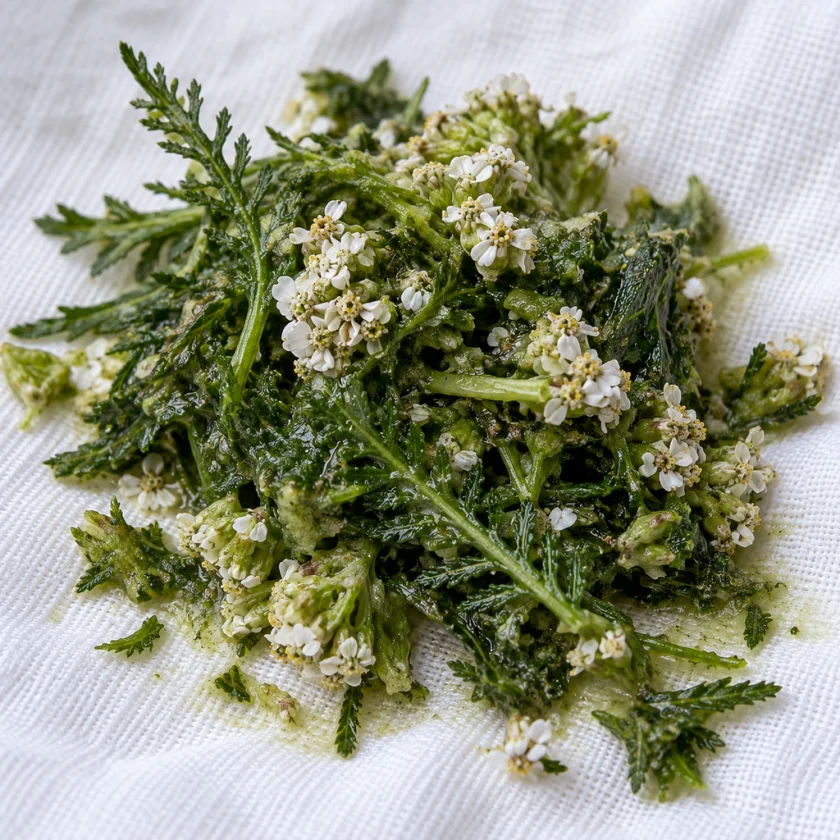
If you had to name the single herb most consistently associated with wounds in the European written record, it would be yarrow. Achillea millefolium carries its reputation in its own botanical name — the genus honors Achilles — and its folk names in English alone include soldier's woundwort, staunchweed, bloodwort, knight's milfoil, carpenter's weed and nosebleed plant. Every one of those names describes the same job: press it on a wound, and the bleeding is supposed to slow. That record runs from Dioscorides through the medieval leech-books to Gerard and Culpeper, and it appears independently in dozens of Native American traditions. It is one of the richest ethnobotanical dossiers attached to any plant.
This page treats that history seriously, because it is genuinely interesting and worth knowing accurately. It also says plainly what the history is not: it is not evidence that yarrow closes wounds or controls bleeding in humans. Two thousand years of confident use tells you what people believed and what they did; it does not tell you whether the plant outperformed doing nothing, which is exactly the question a controlled trial is built to answer — and for yarrow and wounds, only one small randomized trial has tested a yarrow-only ointment, on episiotomy wounds after childbirth. The laboratory and animal work is real, it is interesting, and it is preliminary. Those are two separate stories, and the honest thing is to tell them separately rather than let the age of the tradition borrow authority it has not earned.
Table of Contents
- The Oldest Wound Herb in the European Record
- Shanidar Cave: A Famous Claim, Properly Qualified
- How to Read the Evidence on This Page
- Achilleine and the Styptic Story
- The Constituents That Could Plausibly Matter
- Animal and Laboratory Wound-Healing Studies
- The Handful of Human Topical Studies
- What No Study Has Shown
- A Bleeding Wound Needs Pressure, Not a Poultice
- Traditional Preparations and Their Real Limits
- Why Two Yarrow Samples Are Not the Same Medicine
- Key Research Papers
- Connections
- Featured Videos
The Oldest Wound Herb in the European Record
The Achilles story comes to us secondhand and late. Homer does not name yarrow; the association is developed by later classical and Roman writers, who report that the centaur Chiron taught Achilles the use of a wound herb, and that this plant was afterwards called achilleios. Pliny and Dioscorides both discuss an achilleios, though scholars have long argued about which plant they actually meant — the ancient names do not map cleanly onto modern species. By the time we reach the Latin herbals the identification is settled enough that yarrow travels under the name herba militaris, the military herb, and that is how it enters medieval and early-modern European practice.
The medieval and Renaissance record is dense. Yarrow appears in Anglo-Saxon leechdoms, in the great printed herbals, and in field-surgery manuals. Gerard's Herball (1597) and Culpeper's The English Physitian (1652) both describe it as a wound herb, and Culpeper adds the detail that has amused readers ever since: that the leaf, rolled and put up the nose, would cause a nosebleed, which he regarded as therapeutic for headache. The same plant thus acquired the folk name "nosebleed" for two opposite reasons — stopping bleeding and starting it. That is a useful reminder about folk pharmacology: a plant with a strong reputation accumulates uses in both directions, and internal consistency is not one of the criteria by which the reputation grew.
The North American record is independent and, in volume, even more impressive. Ethnobotanical compilations list yarrow among the most widely used medicinal plants on the continent, employed by a very large number of nations for wounds, burns, bruises, swellings, toothache, colds, fevers and digestive complaints. Applequist and Moerman's review in Economic Botany (2011), pointedly subtitled "A Neglected Panacea?", tabulated this enormous ethnobotanical footprint against the modest biomedical literature and drew the obvious conclusion: yarrow is one of the best-attested traditional medicines and one of the least well-tested. (Evidence tier: traditional and historical record.)
Why would a plant acquire this reputation so widely if it did nothing? Several unglamorous explanations do a lot of work. Yarrow grows on disturbed ground — roadsides, trampled meadows, field edges, campsites — which is precisely where injured people are. It is abundant, easy to identify by its feathery leaf and smell, and available all summer. Its leaves are astringent and it is aromatic, so a fresh poultice feels cooling and drying and smells medicinal. Most minor cuts stop bleeding on their own within minutes and heal without complication, so anything applied to them appears to work. None of that means yarrow is inert — it may well be doing something — but it does mean that "everyone used it" is a weak argument, and it explains how a genuinely inert plant could have acquired an identical reputation.
Shanidar Cave: A Famous Claim, Properly Qualified
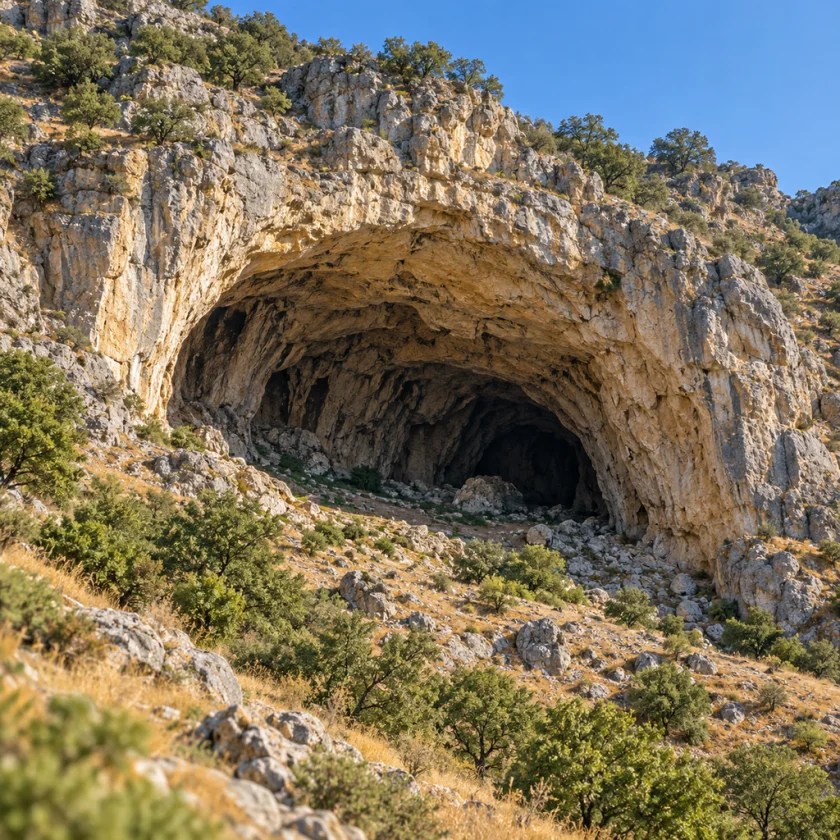
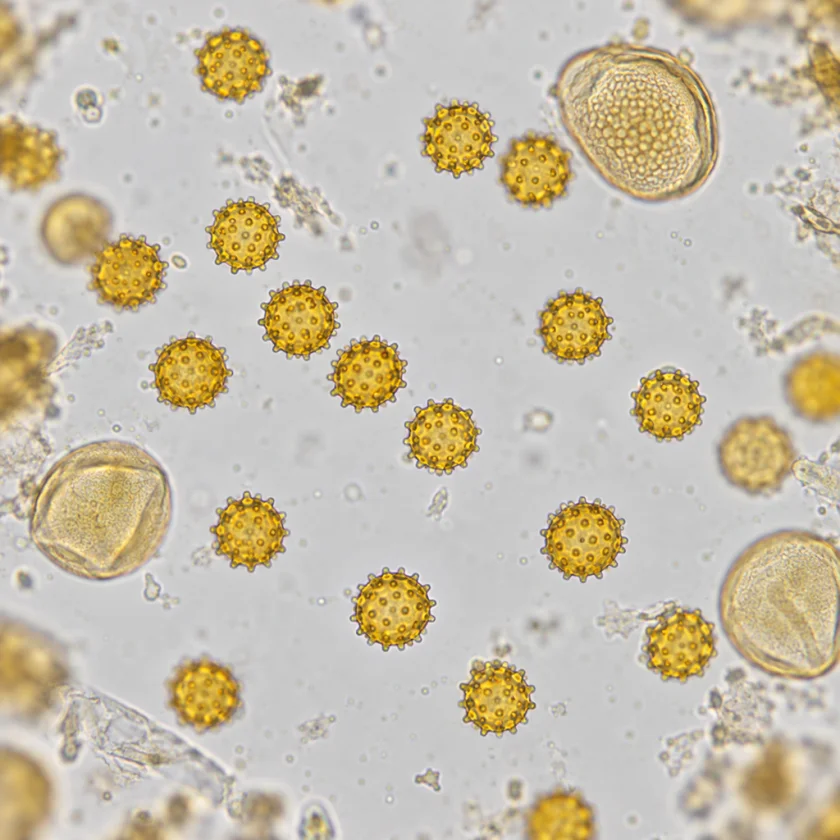
You will often read that yarrow was found in a Neanderthal grave 60,000 years ago, and that this makes it the oldest documented medicinal plant in human history. The underlying find is real. At Shanidar Cave in the Zagros Mountains of Iraqi Kurdistan, Ralph Solecki's excavations identified soil around the burial known as Shanidar IV (the Roman numeral four: the fourth Neanderthal individual numbered at the site) as containing dense clumps of pollen from a number of flowering plants, several of them with medicinal reputations. Solecki published the interpretation as a deliberate "flower burial" in Science in 1975, and the yarrow-in-a-Neanderthal-grave story has been repeated in herbal writing ever since.
The pollen types themselves were listed in a 1992 paper by Lietava in the Journal of Ethnopharmacology, drawing on the earlier pollen analysis: Achillea-type (the yarrow group), Centaurea solstitialis, Senecio-type, Muscari-type, Ephedra altissima and Althea-type (the mallow group). Lietava's theoretical review argued that these flowers have marked medicinal activity, which could have been a reason for choosing them. The labels matter: “Achillea-type” means pollen of the yarrow group, not a plant identified to species, so “yarrow in the grave” really means yarrow-type pollen.
The interpretation, however, is disputed, and that dispute is part of the accurate version of the story. The principal alternative explanation is that the pollen clumps were introduced by burrowing rodents caching flower heads in the sediment — a species of gerbil active at the site is a known candidate — rather than by mourners laying flowers. That critique was set out in detail by Jeffrey Sommer in the Cambridge Archaeological Journal (1999), and it has not been dismissed. Later work at Shanidar, including renewed excavation and re-analysis published in the 2010s and 2020s, has substantially enriched what is known about Neanderthal treatment of the dead at the site without settling the specific question of who or what put those flower heads in that soil.
So the fair statement is this: pollen consistent with yarrow was recovered from the sediments of a Neanderthal burial, the finding is genuine, and whether it represents intentional human placement is unresolved. It is a fascinating piece of archaeology. It is not evidence that Neanderthals used yarrow as medicine, and it is certainly not evidence that yarrow heals wounds. (Evidence tier: contested archaeological inference; not clinical evidence of any kind.)
How to Read the Evidence on This Page
Herbal writing tends to blur four very different kinds of statement into one confident paragraph. This page keeps them apart, and labels each claim:
- Randomized clinical trial (RCT). Humans, allocated by chance to the herb or a control, with the outcome measured by someone who does not know which group a participant was in. This is the tier that can actually tell you whether a treatment works. For yarrow and wound healing, this tier is close to empty.
- Other human study. Uncontrolled series, before-and-after observations, small open studies. Useful for spotting safety signals and generating hypotheses; unable to separate a treatment effect from healing that would have happened anyway.
- Preliminary — animal or in-vitro. Rats with standardized surgical wounds, cell cultures, bacterial plates, isolated tissue. Genuinely informative about mechanism and plausibility. Routinely overinterpreted. Most positive yarrow wound findings live here.
- Traditional use only. The historical and ethnobotanical record. Valuable as history, as a source of leads, and as cultural knowledge. Not a measurement of effect in a person.
Almost everything encouraging that has ever been written about yarrow and wounds belongs to the third and fourth tiers. That is not an insult to the plant — it is the normal state of affairs for herbs that have never attracted commercial trial funding. But it does mean the correct posture is curiosity, not confidence.
Achilleine and the Styptic Story
The specific chemical hook for yarrow's bleeding reputation is an alkaloid usually called achilleine, which is chemically the betaine derivative betonicine (a compound also found in wood betony and other mints, which is why the two names appear interchangeably in older literature). Isolation and characterization of achilleine from Achillea millefolium was reported in the chemical literature in the 1950s, in work by Miller and Chow published in the Journal of the American Chemical Society, and that report included the observation that the isolated alkaloid shortened blood coagulation time when administered to rabbits.
That single observation is, essentially, the entire empirical basis for the modern claim that "yarrow contains a haemostatic alkaloid." It is worth pausing on how thin that is. The work is roughly seventy years old. It was, as far as the published record goes, not replicated with modern coagulation assays. It measured an isolated compound given systemically to an animal, not a crushed leaf pressed on a human cut. And the concentration of achilleine in ordinary yarrow herb is low, which means the amount delivered by a poultice or a cup of tea is nowhere near the amount used in that experiment. (Evidence tier: single, old, animal report on an isolated constituent.)
There is a second, more mundane mechanism that probably deserves more credit than it gets for the styptic impression: yarrow is astringent. It contains tannins and phenolic acids that precipitate surface proteins, which makes tissue feel tighter and drier and can produce visible blanching. Astringency is real, immediate, and easy to mistake for haemostasis. A wad of any tannin-rich leaf pressed firmly onto a small cut will appear to stop the bleeding, and the firm pressure alone would have done it. This is the confound sitting underneath the whole tradition, and no historical source was in a position to control for it.
Notably, the direction of the coagulation story is not even consistent across the literature. Yarrow also appears on every standard list of herbs with a theoretical antiplatelet or anticoagulant interaction, on the strength of its flavonoid and coumarin content — the opposite effect from the styptic claim. Both claims are weakly supported, and they cannot both be strongly true. This is discussed further on the safety page, because the practical consequence — the caution listed for people taking a blood thinner — follows from the uncertainty rather than from resolving it.
The Constituents That Could Plausibly Matter
Set the folklore aside and ask a narrower question: does yarrow contain anything that could reasonably affect a healing wound? The phytochemistry, reviewed in detail by Ali and colleagues in Phytotherapy Research (2017) and earlier by Chandler and co-workers in Economic Botany (1982), says yes — several things.
- Flavonoids — apigenin, luteolin, rutin and their glycosides. These are among the best-studied plant anti-inflammatory and antioxidant compounds, and there is a large general literature on flavonoids modulating inflammatory signalling in cell culture. In a wound, dampening excessive inflammation is plausibly useful. Also relevant to smooth-muscle relaxation, which matters more on the menstrual page.
- Sesquiterpene lactones — achillin, and a range of guaianolides. These are bitter, they show anti-inflammatory activity in laboratory models, and newer phytochemical work has continued to isolate previously undescribed guaianolides from the plant with measurable anti-inflammatory effects in cell assays. They are also, unavoidably, the compound class responsible for daisy-family allergic contact dermatitis — the same chemistry cuts both ways.
- Chamazulene and the essential oil. Chamazulene is the deep-blue anti-inflammatory compound familiar from German chamomile oil. It is not present in the living plant; it forms from proazulene precursors during steam distillation. Whether a given yarrow yields blue oil depends on its genetics — see the section on variability below.
- Tannins and phenolic acids — astringent and antioxidant, and the straightforward explanation for the drying, tightening sensation of a fresh poultice.
- Achilleine (betonicine) — the alkaloid discussed above.
Benedek and Kopp, writing in the Wiener Medizinische Wochenschrift (2007), argued that this constituent profile does genuinely support yarrow's traditional anti-inflammatory reputation, and in a companion paper in the Journal of Ethnopharmacology (2007) they proposed inhibition of inflammatory proteases such as human neutrophil elastase as a specific mechanism. That is a serious, mechanistically specific hypothesis. It is also a laboratory hypothesis: showing that an extract inhibits an enzyme in a cuvette is a long way from showing that a compress changes how a cut heals. (Evidence tier: preliminary, in vitro.)
Animal and Laboratory Wound-Healing Studies
This is where the modern positive findings sit, and there are real ones.
A controlled rat study published in the Journal of Pharmacopuncture (2023) by Ghasemi and colleagues examined Achillea millefolium essential oil both as an antibacterial agent in vitro and as a topical treatment on experimental wounds, and reported improved wound healing alongside inhibition of wound-relevant bacteria. In plain numbers: rats had a 2 cm by 2 cm full-thickness patch of skin removed from the back and were treated twice a day with 1%, 2% or 3% yarrow-oil ointment. The 1% and 2% ointments closed the wounds significantly faster than no treatment and raised the tissue's hydroxyproline (a marker of new collagen), with more collagen fibres and less swelling and inflammation under the microscope; the abstract reports these gains for the 1% and 2% ointments, not for the 3% one. Bacteria tested in the dish were Staphylococcus aureus and Pseudomonas aeruginosa, whose growth the oil held back. Animal wound models of this kind — a standardized excision or incision on shaved skin, treated daily, with wound area traced over time and tissue examined microscopically at the end — are the standard preclinical screen, and a positive result in one is a legitimate reason to look further. It is not evidence that the oil heals human wounds.
Work on related Achillea species points the same way. A study in the Journal of Ethnopharmacology reported that extract of Achillea asiatica and its isolated active compounds promoted cutaneous wound healing, with effects on keratinocyte and fibroblast behaviour in culture consistent with faster re-epithelialization. That is a different species, which matters — the genus is chemically diverse — but it strengthens the general case that Achillea chemistry can influence the cells that close a wound.
The antimicrobial literature is broad and consistent. Candan and colleagues, in a much-cited Journal of Ethnopharmacology paper (2003), reported antioxidant and antimicrobial activity for the essential oil and methanol extracts of A. millefolium subsp. millefolium; El-Kalamouni and co-workers reproduced antioxidant and antimicrobial findings in French-grown material in Medicines (2017); and Nemeth and Bernath surveyed activities across the genus in Current Pharmaceutical Design (2008). Two caveats keep this in proportion. First, in-vitro antimicrobial activity is close to universal among aromatic plants — thyme, oregano, clove, tea tree and rosemary all show it, usually more strongly than yarrow — so it is not a distinguishing property. Second, the concentrations that inhibit bacteria on an agar plate are frequently unreachable in living tissue. (Evidence tier for this whole section: preliminary, animal and in vitro.)
The Handful of Human Topical Studies
Human data on yarrow applied to tissue is scarce, and every study in this section carries a design limitation that belongs alongside its result.
The most relevant is a double-blind randomized trial reported in the Journal of Maternal-Fetal & Neonatal Medicine (2018) by Hajhashemi and colleagues, in 140 first-time mothers with an episiotomy (the cut made to widen the birth opening). The women were split into four groups of 35: no treatment, a placebo ointment, an ointment of Hypericum perforatum (St John's wort), and a separate ointment of Achillea millefolium (yarrow). Compared with the two control groups, the women using either herbal ointment had less perineal pain at days 7, 10 and 14, less redness and swelling at days 7 and 10, and less bruising at day 7. Discharge and wound breakdown (dehiscence) did not differ between the groups. Because yarrow had its own arm, this is the one randomized test of a yarrow-only ointment on a human wound. It is a single, modest trial on one kind of wound, and healing was scored by redness, bruising, swelling, discharge and wound breakdown rather than by time to closure. (Evidence tier: RCT, single small trial.)
A 2026 systematic review by Refaei and colleagues in Current Drug Delivery gathered 73 trials of herbal treatments for episiotomy wounds published from 2000 to 2024. Yarrow ointment was among the most frequently tested herbs, alongside aloe vera gel, lavender oil, olive oil, green tea extract, chamomile cream and St John's wort. Most of the 73 studies reported better healing scores or less pain than placebo, routine care or standard treatment; the authors singled out aloe vera, lavender and olive oil, noted that differences in study design, formulas and outcome measures limit comparison, and called for larger, standardised multicentre trials.
The best-designed yarrow trial on any mucosal surface is not a skin study at all. Miranzadeh and colleagues, in the European Journal of Oncology Nursing (2015), ran a double-blind randomized controlled trial adding Achillea millefolium to a mouthwash for chemotherapy-induced oral mucositis in cancer patients, and reported reduced severity of mouth inflammation. The 56 patients gargled 15 mL of the routine mouth solution four times a day for 14 days, with yarrow distillate mixed in for the treatment group. The mean mucositis severity score started at 2.39 in both groups; in the yarrow group it fell to 1.07 at day 7 and 0.32 at day 14, while in the control group it rose to 2.75 and 2.89 (p < 0.001). That is a real, blinded, controlled human result in inflamed and ulcerated tissue, and it is the strongest single piece of evidence that yarrow does something to damaged tissue in people. It is one modest trial, in a specific population, on a specific condition, using a mouthwash — not a wound dressing. It is a reason for further research rather than a settled answer.
Beyond those, the human literature thins out into small open studies, case reports and traditional-use documentation of the kind that supports European regulatory registration for topical yarrow preparations. Those registrations rest explicitly on long-standing use rather than on trial evidence, which is a legal category, not a scientific verdict.
What No Study Has Shown
Since almost every popular source on yarrow leads with the wound claim, it is worth stating the negative case explicitly. As of this writing there is no adequate randomized controlled trial demonstrating that yarrow, by itself, speeds the closure of an ordinary wound or reduces bleeding in humans. More specifically, there is no controlled human evidence that yarrow:
- stops or measurably slows bleeding from a cut, a nosebleed, or any other haemorrhage;
- shortens the time an ordinary wound takes to close, compared with cleaning and covering it;
- reduces the rate of wound infection;
- improves the healing of chronic wounds — diabetic foot ulcers, venous leg ulcers, pressure injuries — where the outcome actually matters most and where inappropriate self-treatment does real harm;
- is safe to apply to a deep, dirty, or surgically closed wound.
The absence of trials is not proof that yarrow does nothing. It means the question has not been asked properly. Those are different statements, and herbal marketing routinely converts the first into the second. Applequist and Moerman's review makes exactly this point: yarrow's traditional footprint is so large that the gap in modern testing is itself remarkable.
A Bleeding Wound Needs Pressure, Not a Poultice
This section is the practical heart of the page, and it is deliberately blunt. Bleeding is controlled by direct pressure. Firm, continuous pressure with the cleanest available material, held without peeking for several minutes, plus elevation where the anatomy allows, stops the overwhelming majority of bleeding from minor and moderate wounds. That is what works, it works fast, and it works whether or not anything herbal is involved. Reaching for a plant first, or lifting the dressing to check whether the plant is working, delays and undoes the thing that is actually effective.
Wounds that hospitals and first-aid guidance treat as needing medical care rather than home treatment are those that:
- spurts, pulses, or soaks through dressings — this is an emergency;
- will not stop bleeding after ten to fifteen minutes of firm continuous pressure;
- gapes, so that the edges do not sit together, or is deep enough to expose fat, muscle or bone;
- is on the face, or crosses a joint, or involves the hand, eye or genitals;
- is a puncture, a bite, or contaminated with soil, rust, glass or debris — these carry infection and tetanus risk that no herb addresses;
- is a burn larger than a small coin, or any burn that blisters deeply or looks white or charred;
- occurs in someone taking an anticoagulant or antiplatelet drug, or with a bleeding disorder, or with diabetes or poor circulation;
- shows spreading redness, increasing pain after the first day, swelling, pus, a red streak tracking away from it, or fever — these are signs of infection, which first-aid guidance treats as needing medical assessment, not a compress.
For an ordinary shallow scrape or small clean cut, current wound-care practice is unglamorous and well supported: it describes washing the hands, irrigating the wound with clean running water, keeping soap and antiseptics out of the wound itself, drying the surrounding skin, covering it, and keeping the surface from drying out. No study shows yarrow improving on that, and applying plant material to an open wound introduces soil organisms, spores and allergens onto a broken surface. Where yarrow is used in this territory at all, the traditional application with the fewest problems is on intact or nearly intact skin — a bruise, a strain, unbroken inflamed skin — not inside an open wound.
Traditional Preparations and Their Real Limits
Described as history and as traditional practice, not as recommended treatment, the classic external preparations are these:
- Fresh poultice. Clean leaves crushed or chewed and pressed directly onto the injury, held with a cloth. This is the "soldier's woundwort" gesture. It is also the preparation with the highest contamination risk, and the one with the most problems for anything but a scratch on intact skin.
- Cooled infusion as a wash or compress. Dried flowering tops steeped in hot water, covered, then strained and cooled, and used to soak a clean cloth. Weaker and cleaner than a poultice. The traditional use for inflamed but unbroken skin.
- Infused oil and salve. Dried herb steeped in a carrier oil, strained, and thickened with beeswax. Shelf-stable, mild, and the form in which yarrow most often appears in commercial skin products. Traditionally kept off open wounds; wound-care practice does not put occlusive salves over a fresh break in the skin.
- Essential oil. Steam-distilled, sometimes sold as "blue yarrow" for its chamazulene. Extremely concentrated; it is used externally only and diluted, and is not swallowed or applied neat to broken skin.
- Mouth rinse or gargle. The one external use with a controlled human trial behind it, albeit for chemotherapy mucositis rather than for wounds.
Two limits apply to all of them. First, there is no established dose — not for the poultice, not for the wash, not for the salve — because the clinical work that would define one does not exist. Traditional practice favours modest amounts and short courses. Second, people with daisy-family (Asteraceae) allergy are the group the research raises concern for, and traditional practice patch-tests before applying yarrow anywhere. Yarrow's sesquiterpene lactones are documented sensitizers; Hausen and colleagues identified specific sensitizing compounds from yarrow, including α-peroxyachifolid, in Contact Dermatitis (1991). The full picture — Asteraceae cross-reactivity, photosensitivity, thujone, pregnancy, epilepsy and drug interactions — is on the safety page, which covers the hazards all these preparations share.
Why Two Yarrow Samples Are Not the Same Medicine
One reason the yarrow literature is so inconsistent has nothing to do with study quality. Achillea millefolium in the broad sense (written A. millefolium s.l.) is not a single uniform plant but an aggregate of closely related, differently chromosomed populations whose chemistry differs substantially. In particular, whether a plant produces the proazulene precursors that yield blue chamazulene on distillation tracks with its ploidy level: the lower-ploidy members of the group are the reliable proazulene producers, while much of what is collected and sold as A. millefolium yields little or none. Two honest researchers can therefore study "yarrow essential oil" and be working with materially different substances — one blue and rich in chamazulene, one not.
Growing conditions add a second layer of variation: geography, altitude, soil, harvest timing and drying method all shift the essential-oil profile, which is exactly why the antimicrobial papers from different countries report different potencies for the same nominal species.
And there is a third, thoroughly practical trap. The garden ornamental Achillea cultivars — the flat yellow and brick-red plates sold as border perennials — are largely hybrids involving other species such as A. filipendulina, and they are not the medicinal wild type. A "yarrow" supplement may contain wild-collected A. millefolium s.l., a cultivated line, or something less well characterized. Only a botanically identified source settles which plant is in the product, and the plant in the flower bed is often not the plant in the herbal.
Key Research Papers
Each entry links to its PubMed record or, for papers not indexed in PubMed, to its DOI. Live PubMed topic searches follow the list.
- Applequist WL, Moerman DE. "Yarrow (Achillea millefolium L.): A Neglected Panacea? A Review of Ethnobotany, Bioactivity, and Biomedical Research." Economic Botany, 2011;65(2):209–225 — the key review weighing a vast ethnobotanical record against thin biomedical testing. doi:10.1007/s12231-011-9154-3
- Ali SI, Gopalakrishnan B, Venkatesalu V. "Pharmacognosy, Phytochemistry and Pharmacological Properties of Achillea millefolium L.: A Review." Phytotherapy Research, 2017;31(8):1140–1161 — the standard modern constituent-and-activity review. PubMed PMID: 28618131
- Ghasemi MR, Ranjbar A, Tamri P, et al. "In vitro Antibacterial Activity and Wound Healing Effects of Achillea millefolium Essential Oil in Rat." Journal of Pharmacopuncture, 2023;26(2):167–174 — controlled animal wound model plus antibacterial testing. PubMed PMID: 37405118
- Hajhashemi M, et al. "The effect of Achillea millefolium and Hypericum perforatum ointments on episiotomy wound healing in primiparous women." Journal of Maternal-Fetal & Neonatal Medicine, 2018;31(1):63–69 — a four-arm randomized trial in 140 women with separate yarrow and St John's wort ointments. PubMed PMID: 28027682
- Miranzadeh S, Adib-Hajbaghery M, Soleymanpoor L, Ehsani M. "Effect of adding the herb Achillea millefolium on mouthwash on chemotherapy induced oral mucositis in cancer patients: A double-blind randomized controlled trial." European Journal of Oncology Nursing, 2015;19(3):207–213 — the strongest controlled human result on damaged tissue. PubMed PMID: 25667123
- Benedek B, Kopp B, Melzig MF. "Achillea millefolium L. s.l. — Is the anti-inflammatory activity mediated by protease inhibition?" Journal of Ethnopharmacology, 2007;113(2):312–317 — proposes elastase-type protease inhibition as a mechanism. PubMed PMID: 17689902
- Benedek B, Kopp B. "Achillea millefolium L. s.l. revisited: Recent findings confirm the traditional use." Wiener Medizinische Wochenschrift, 2007;157(13–14):312–314 — argues the laboratory data support the anti-inflammatory tradition. PubMed PMID: 17704978
- Candan F, Unlu M, Tepe B, et al. "Antioxidant and antimicrobial activity of the essential oil and methanol extracts of Achillea millefolium subsp. millefolium Afan. (Asteraceae)." Journal of Ethnopharmacology, 2003;87(2–3):215–220 — the widely cited baseline antimicrobial and antioxidant study. PubMed PMID: 12860311
- El-Kalamouni C, Venskutonis PR, Zebib B, et al. "Antioxidant and Antimicrobial Activities of the Essential Oil of Achillea millefolium L. Grown in France." Medicines (Basel), 2017;4(2) — shows how much the oil profile depends on where the plant grew. PubMed PMID: 28930245
- Dorjsembe B, Lee HJ, Kim M, Dulamjav B, Jigjid T, Nho CW. "Achillea asiatica extract and its active compounds induce cutaneous wound healing." Journal of Ethnopharmacology, 2017;206:306–314 — a related-species wound-healing study with cell-level mechanism. PubMed PMID: 28602757
- Hausen BM, Breuer J, Weglewski J, Rücker G. "α-Peroxyachifolid and other new sensitizing sesquiterpene lactones from yarrow (Achillea millefolium L., Compositae)." Contact Dermatitis, 1991;24(4):274–280 — identifies the compounds behind yarrow contact allergy. PubMed PMID: 1868717
- Nemeth E, Bernath J. "Biological Activities of Yarrow Species (Achillea spp.)" Current Pharmaceutical Design, 2008;14(29):3151–3167 — a genus-wide survey of reported activities. PubMed PMID: 19075697
- Solecki RS. "Shanidar IV, a Neanderthal Flower Burial in Northern Iraq." Science, 1975;190(4217):880–881 — the original flower-burial claim. doi:10.1126/science.190.4217.880
- Sommer JD. "The Shanidar IV 'Flower Burial': A Re-evaluation of Neanderthal Burial Ritual." Cambridge Archaeological Journal, 1999;9(1):127–129 — the rodent-caching critique, best read alongside Solecki. doi:10.1017/s0959774300015249
- Lietava J. "Medicinal plants in a Middle Paleolithic grave Shanidar IV?" Journal of Ethnopharmacology, 1992;35(3):263–266 — lists the pollen types reported from the grave and argues for their medicinal activity. PubMed PMID: 1548898
- Miller FM, Chow LM. "Alkaloids of Achillea millefolium L. I. Isolation and Characterization of Achilleine." Journal of the American Chemical Society, 1954;76(5):1353–1354 — the isolation report behind the entire haemostatic-alkaloid claim. doi:10.1021/ja01634a048
- Chandler RF, Hooper SN, Harvey MJ. "Ethnobotany and phytochemistry of yarrow, Achillea millefolium, Compositae." Economic Botany, 1982;36(2):203–223 — the earlier ethnobotany-and-chemistry review cited above. doi:10.1007/bf02858720
- Refaei M, Shayan A, Fatholahi E, Tabesh RA, Arasteh FE, Tiznobaik A. "Herbal Medicine in Episiotomy Wound Healing: A Systematic Review." Current Drug Delivery, 2026 (online ahead of print) — 73 trials of herbal episiotomy treatments, yarrow ointment among the most tested. PubMed PMID: 42817109
PubMed Topic Searches
- PubMed: Achillea millefolium wound healing
- PubMed: Achillea millefolium hemostatic
- PubMed: Yarrow topical randomized controlled trial
- PubMed: Achillea millefolium chamazulene proazulene
- PubMed: Herbal topical wound care systematic review
- PubMed: Achillea millefolium antibacterial activity
External Resources
- NIH National Center for Complementary and Integrative Health — plain-language evidence summaries for herbs and supplements.
- PubMed — the primary biomedical literature database.
- Plants of the World Online (Kew) — authoritative botanical nomenclature for the Achillea group.
- MedlinePlus — consumer health information, including first-aid and wound-care guidance.
Connections
- All Herbs
- Yarrow — the main topic page: botany, folklore, compounds, forms
- Yarrow Benefits Hub — all four deep dives in one place
- Yarrow Safety — thujone, Asteraceae allergy, pregnancy, bleeding-drug caution
- Calendula — the other classic daisy-family skin-and-wound herb
- Calendula Benefits — where the topical evidence is somewhat stronger
- Comfrey — traditional bruise-and-sprain herb with a serious internal-use warning
- Plantain — the other roadside first-aid poultice plant
- Self-Heal — a wound herb whose name makes the same promise
- Agrimony — astringent traditional wound-and-bleeding herb
- Chamomile — the other source of blue chamazulene
- Tea Tree — a topical antimicrobial with better human data
- Manuka Honey — the natural wound dressing that does have clinical trials
- Dermatology — skin and wound conditions
- Contact Dermatitis — the daisy-family reaction yarrow can cause
- Disseminated Intravascular Coagulation — why real clotting disorders are not herb territory
Safety and disclaimer. This page is educational and is not medical advice. Yarrow's wound reputation is traditional and preclinical; no adequate controlled human trial supports it for wound closure or bleeding control. First-aid guidance stops bleeding with firm direct pressure and, when it does not stop or the wound is deep, dirty, gaping, on the face, or in someone on blood thinners, treats it as needing prompt medical care — not a poultice. Yarrow has not been tested on deep, dirty or chronic wounds, or on burns. The research raises concerns about yarrow in pregnancy, for people who react to ragweed, chamomile, feverfew or chrysanthemum (daisy-family cross-reactivity), for people taking anticoagulant or antiplatelet medication, and for people with epilepsy (see the safety page).