⚠ Evidence warning: Clinical trials or other evidence do not support the claims that regular chamomile tea lowers the risk of thyroid disease and cardiovascular events, and that typical tea amounts are unlikely to cause problems with blood-thinning medicines. This page keeps it as a report of what people, websites or other media say.
Chamomile (Matricaria chamomilla)
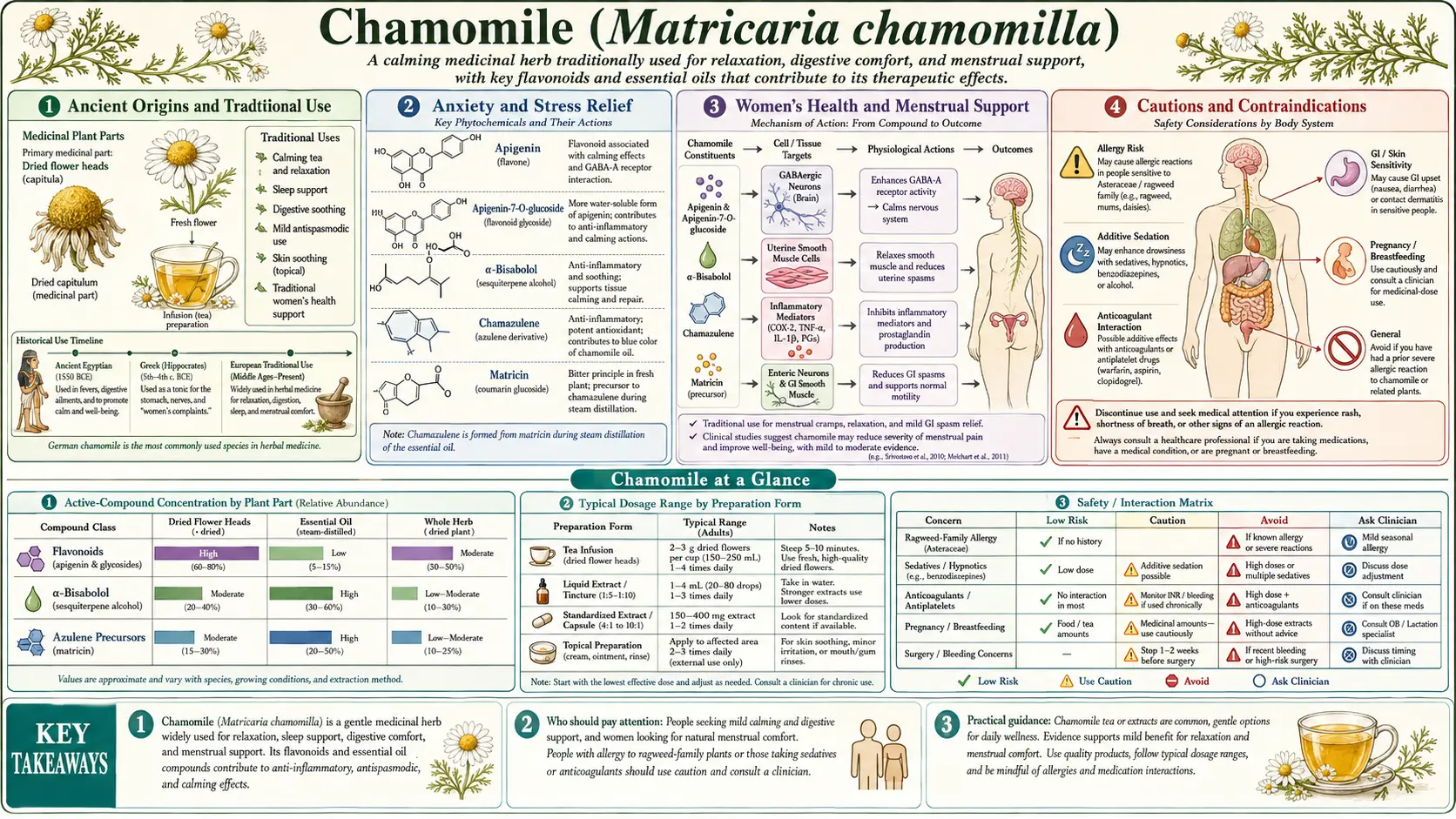
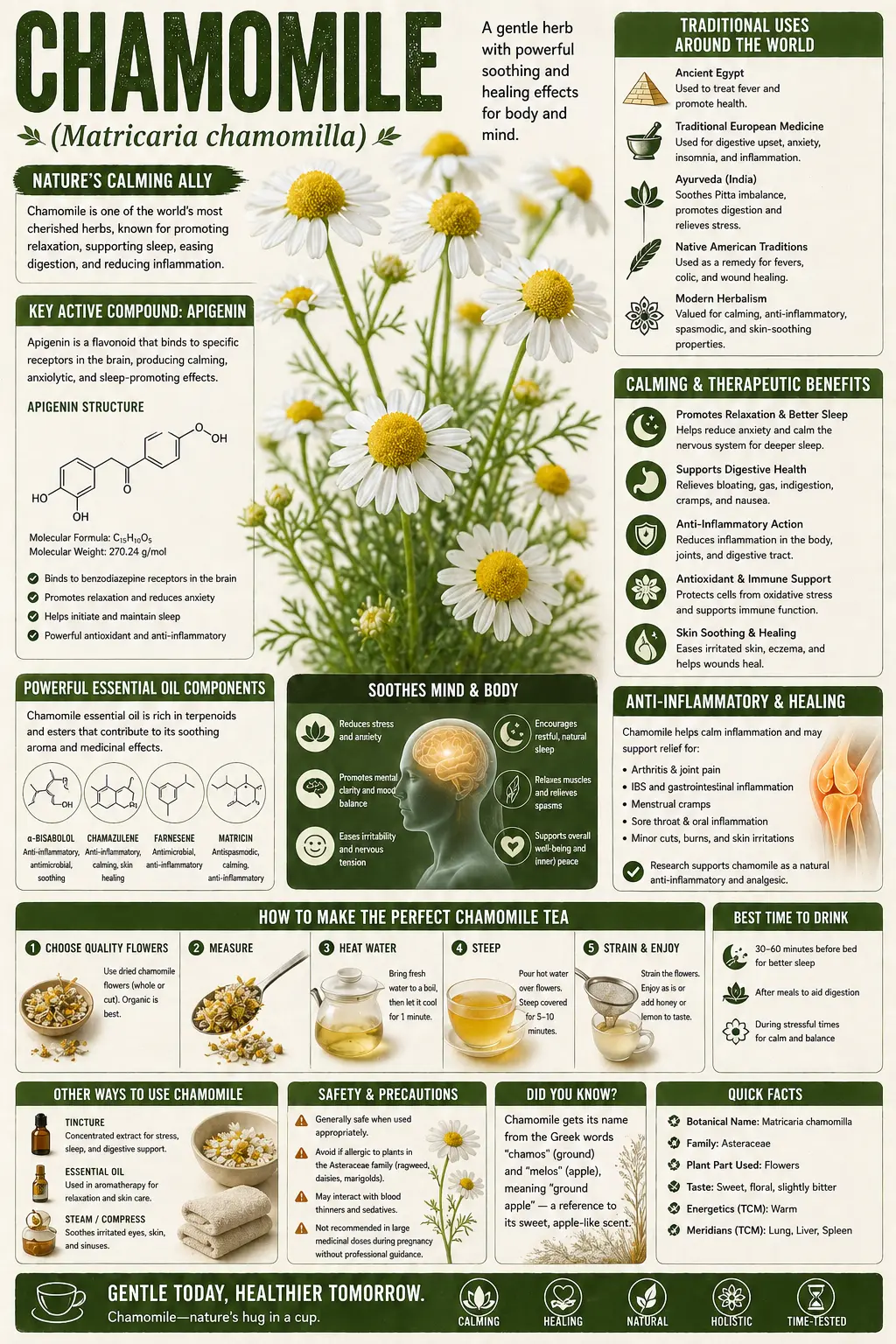
Table of Contents
- Ancient Origins and Traditional Use
- German vs. Roman Chamomile
- Active Compounds
- Digestive Health and Gastrointestinal Support
- Sleep and Relaxation
- Anxiety and Stress Relief
- Anti-Inflammatory Properties
- Skin Health and Wound Healing
- Immune Support and Antimicrobial Activity
- Cardiovascular and Metabolic Health
- Women's Health and Menstrual Support
- Oral Health
- Antioxidant Properties
- Forms and Preparations
- Dosage in Traditional Use and the EMA Monograph
- Cautions and Contraindications
- Featured Videos
Ancient Origins and Traditional Use
Chamomile is one of the oldest and most familiar medicinal herbs, its name descending from the Greek khamaimelon, "earth apple," after the sweet apple-like scent of its flowers. From the classical Mediterranean physicians through the medieval monastery garden and cottage still-room, it has been brewed for centuries as a gentle, calming, anti-inflammatory comfort herb — the cup reached for to settle the stomach, soothe the skin, and ease into sleep. — the fuller story is told in the dedicated History & Traditional Use article.
German vs. Roman Chamomile
Two distinct species are commonly referred to as chamomile, and understanding the differences between them is essential for appropriate therapeutic selection. While they share many properties, their chemical profiles and clinical applications differ in meaningful ways.
German Chamomile (Matricaria chamomilla)
German chamomile, also known as Matricaria recutita or wild chamomile, is the species most extensively studied and most widely used in herbal medicine worldwide. It is an annual plant growing 20 to 60 centimeters tall with finely divided, feathery leaves and characteristic white-petaled flowers with raised, hollow, conical yellow centers. The genus name Matricaria derives from the Latin matrix (womb), reflecting its long history of use in treating women's health conditions.
- Primary active compound: Chamazulene (which gives the essential oil its distinctive deep blue color) and alpha-bisabolol
- Therapeutic strengths: Anti-inflammatory, antispasmodic, wound healing, digestive support
- Most common use: Internal consumption as tea, tincture, or capsule; topical application as cream or compress
Roman Chamomile (Chamaemelum nobile)
Roman chamomile is a low-growing perennial plant native to Western Europe and the Mediterranean. It produces similar daisy-like flowers but is distinguished by its creeping growth habit, thicker foliage, and more intensely bitter taste. Roman chamomile essential oil is pale yellow rather than blue.
- Primary active compounds: Angelic acid esters, pinocarvone, and various terpenoids
- Therapeutic strengths: Calming and sedative effects, aromatic therapy, digestive bitters
- Most common use: Aromatherapy, essential oil applications, and topical use; less commonly consumed as tea due to its more bitter flavor
In clinical practice and research literature, when the term "chamomile" is used without qualification, it almost always refers to German chamomile (Matricaria chamomilla). This article primarily addresses German chamomile unless otherwise specified.
Active Compounds
Chamomile contains over 120 identified chemical constituents, making it one of the most phytochemically complex medicinal herbs. These compounds work synergistically to produce chamomile's broad spectrum of therapeutic effects. The major bioactive groups include:
Terpenoids
- Alpha-bisabolol — The most pharmacologically important terpenoid in chamomile, alpha-bisabolol demonstrates potent anti-inflammatory, antimicrobial, and gastroprotective properties. It also enhances the skin penetration of other compounds, making it valuable in topical formulations
- Bisabolol oxides A and B — Derivatives of alpha-bisabolol that contribute additional anti-inflammatory and antispasmodic activity
- Chamazulene — Formed during steam distillation from the precursor matricin, chamazulene is a powerful anti-inflammatory and antioxidant agent. It is responsible for the distinctive deep blue color of German chamomile essential oil
- Matricin — The naturally occurring precursor to chamazulene, matricin itself possesses anti-inflammatory activity and is converted to chamazulene during extraction
Flavonoids
- Apigenin — The most therapeutically significant flavonoid in chamomile, apigenin is responsible for much of chamomile's anxiolytic and sedative effects. It binds to benzodiazepine receptors in the brain, producing calming effects without the addictive potential of pharmaceutical benzodiazepines
- Quercetin — A powerful antioxidant and anti-inflammatory flavonoid that inhibits histamine release and supports cardiovascular health
- Patuletin and luteolin — Additional flavonoids that contribute antioxidant and anti-inflammatory effects
Coumarins
Chamomile contains herniarin and umbelliferone, coumarins that exhibit antispasmodic, anti-inflammatory, and mild antimicrobial properties. These compounds contribute to chamomile's effectiveness in relieving smooth muscle spasms in the digestive tract.
Digestive Health and Gastrointestinal Support
Chamomile is perhaps best known and most widely used as a digestive remedy, and this traditional application is strongly supported by modern pharmacological research. Its combination of anti-inflammatory, antispasmodic, and carminative properties makes it exceptionally well-suited for a wide range of gastrointestinal complaints.
Key digestive actions include:
- Antispasmodic effects — Chamomile relaxes smooth muscle tissue throughout the gastrointestinal tract, relieving painful cramping, colic, and spasms. This action is mediated primarily by alpha-bisabolol and the flavonoid compounds, which inhibit calcium influx into smooth muscle cells
- Carminative properties — Chamomile helps expel gas from the digestive tract and reduces bloating and flatulence by relaxing the intestinal musculature and promoting the passage of trapped gas
- Anti-inflammatory activity — The terpenoids and flavonoids in chamomile reduce inflammation throughout the gastrointestinal mucosa, making it beneficial for conditions such as gastritis, esophagitis, and inflammatory bowel disease
- Gastroprotective effects — Alpha-bisabolol has been shown to protect the gastric mucosa against damage from alcohol, indomethacin, and stress-induced ulceration in preclinical studies
- Prokinetic activity — Chamomile gently supports healthy digestive motility without causing overstimulation, making it appropriate for both constipation-predominant and diarrhea-predominant conditions
Chamomile tea is a first-line naturopathic recommendation for patients with irritable bowel syndrome (IBS), functional dyspepsia, infant colic, nausea, and post-meal bloating. For infant colic, a 2005 Italian placebo-controlled trial in 93 breastfed babies tested a standardized extract combining chamomile with fennel and lemon balm: after one week, average daily crying time fell from about 201 to 77 minutes with the extract, against about 199 to 170 minutes with placebo.
Sleep and Relaxation
Chamomile tea before bed is among the most time-honored sleep rituals in cultures worldwide, and the science underlying this tradition centers on the flavonoid apigenin. Apigenin binds to specific benzodiazepine receptors (BZD) in the central nervous system, particularly the gamma-aminobutyric acid-A receptors, producing a mild sedative and anxiolytic effect that promotes sleep onset and improves sleep quality.
Unlike pharmaceutical sleep aids, chamomile does not suppress REM sleep, does not produce morning grogginess, and does not carry risk of tolerance, dependence, or withdrawal. This makes it an exceptionally safe option for long-term use in individuals with chronic sleep difficulties.
Research findings on chamomile and sleep:
- A randomized controlled trial published in the Journal of Advanced Nursing in 2016 gave chamomile tea for two weeks to 40 of 80 Taiwanese new mothers with poor sleep; the other 40 received usual postnatal care (there was no placebo). At two weeks the tea group had lower scores for sleep problems linked to physical symptoms and for depression, but by the four-week check the scores were similar in both groups
- A clinical trial in elderly nursing home residents demonstrated that chamomile extract significantly improved sleep quality scores on the Pittsburgh Sleep Quality Index (PSQI) compared to placebo
- A 2019 meta-analysis of 12 randomized trials found that chamomile significantly improved pooled sleep-quality scores and generalized anxiety disorder scores; the only trial in people with insomnia found no significant change in insomnia severity
- Studies in animal models have confirmed that apigenin reduces sleep latency (time to fall asleep) and increases total sleep duration without affecting sleep architecture
For sleep, chamomile tea is traditionally taken 30 to 60 minutes before bedtime. Concentrated chamomile extract capsules standardized for apigenin content may offer more reliable effects for individuals with significant insomnia.
Anxiety and Stress Relief
Chamomile has emerged as one of the most promising herbal anxiolytics in clinical research. Its calming effects are primarily attributed to apigenin's interaction with GABAergic neurotransmission, but the herb's overall phytochemical profile contributes through multiple complementary pathways.
The most rigorous clinical evidence for chamomile as an anxiolytic comes from a series of trials conducted at the University of Pennsylvania. In the first placebo-controlled trial of chamomile extract for generalized anxiety disorder (GAD), published in 2009 in the Journal of Clinical Psychopharmacology, 57 patients with mild to moderate GAD took capsules of 220 mg chamomile extract (standardized to 1.2% apigenin) or placebo for eight weeks, starting at one capsule a day and rising to as many as five (up to 1,100 mg a day). Anxiety scores on the Hamilton Anxiety Rating Scale (HAM-A) fell significantly more on chamomile than on placebo (P = 0.047), and the authors described the effect as modest.
A subsequent long-term trial published in 2016 gave people with moderate to severe GAD 1,500 mg of chamomile extract a day (500 mg three times daily) for 12 weeks, then randomly assigned those who had improved to continue chamomile or switch to placebo for a further 26 weeks (up to 38 weeks in all). Long-term chamomile was safe and kept GAD symptoms significantly lower than placebo, but it did not significantly reduce the rate of relapse, the trial's main measure (hazard ratio 0.52, P = 0.16).
Mechanisms of anxiolytic action:
- Gamma-aminobutyric acid-A receptor modulation — Apigenin acts as a partial agonist at benzodiazepine binding sites on gamma-aminobutyric acid-A receptors, enhancing inhibitory neurotransmission without the full sedation and dependence risk associated with benzodiazepine drugs
- Hypothalamic-pituitary-adrenal (HPA) axis modulation — Chamomile may help regulate the hypothalamic-pituitary-adrenal axis, reducing excessive cortisol release in response to stress
- Monoamine modulation — Emerging evidence suggests chamomile may influence serotonin, dopamine, and norepinephrine signaling, contributing to its mood-stabilizing effects
- Anti-inflammatory effects in the brain — Neuroinflammation is increasingly recognized as a contributor to anxiety and mood disorders; chamomile's anti-inflammatory compounds may address this underlying mechanism
Anti-Inflammatory Properties
Chamomile's anti-inflammatory potency is comparable to that of non-steroidal anti-inflammatory drugs in certain experimental models, yet it achieves this effect without the gastrointestinal and cardiovascular side effects associated with pharmaceutical anti-inflammatory agents.
The anti-inflammatory actions of chamomile operate through multiple molecular pathways:
- Cyclooxygenase-2 (COX-2) and 5-LOX inhibition — Chamazulene and alpha-bisabolol inhibit cyclooxygenase-2 (COX-2) and 5-lipoxygenase (5-LOX), the enzymes responsible for producing pro-inflammatory prostaglandins and leukotrienes
- NF-kB suppression — Chamomile flavonoids, particularly apigenin, inhibit the nuclear factor kappa-B (NF-kB) signaling pathway, a master regulator of inflammatory gene expression
- Cytokine modulation — Chamomile extracts reduce the production of pro-inflammatory cytokines including tumor necrosis factor-alpha, interleukin-1 (IL-1) beta, and interleukin-6 (IL-6), while supporting anti-inflammatory cytokine production
- Nitric oxide regulation — Chamomile inhibits excessive nitric oxide production by inducible nitric oxide synthase (iNOS) in activated macrophages
- Histamine release inhibition — Quercetin and other chamomile flavonoids stabilize mast cells and reduce histamine release, contributing to anti-allergic effects
These properties make chamomile valuable in the management of inflammatory conditions ranging from arthritis and dermatitis to mucositis and inflammatory bowel disease. In naturopathic practice, chamomile is frequently included in anti-inflammatory protocols alongside turmeric, omega-3 fatty acids, and other natural anti-inflammatory agents.
Skin Health and Wound Healing
Chamomile has a long and distinguished history as a topical healing agent, and modern dermatological research has validated many of its traditional uses. The combination of anti-inflammatory, antimicrobial, antioxidant, and tissue-regenerating properties makes chamomile one of the most versatile botanical medicines for skin conditions.
Dermatological applications supported by research:
- Eczema and atopic dermatitis — Topical chamomile preparations have demonstrated efficacy comparable to 0.25% hydrocortisone cream in reducing itching, redness, and scaling in mild to moderate eczema. A 1985 German study in 161 patients found that a chamomile cream used for 3 to 4 weeks of follow-on (maintenance) treatment worked about as well as 0.25% hydrocortisone and better than 5% bufexamac and 0.75% fluocortin butyl ester; a 2000 study of two weeks' treatment in atopic eczema found a mild advantage over 0.5% hydrocortisone and only a marginal difference from a placebo cream
- Wound healing — Chamomile accelerates wound healing through multiple mechanisms: increasing collagen synthesis, promoting angiogenesis (new blood vessel formation), enhancing fibroblast migration, and reducing wound infection. Clinical studies have shown faster healing of surgical wounds and skin abrasions treated with chamomile preparations
- Burns — Chamomile compresses and ointments have been traditionally used for minor burns and are supported by research showing reduced inflammation, pain, and healing time
- Diaper rash — Chamomile cream is widely used in European pediatric practice for diaper dermatitis, with clinical evidence supporting its safety and efficacy in infants
- Radiation dermatitis — Studies in cancer patients undergoing radiation therapy have investigated chamomile for prevention and treatment of radiation-induced skin damage, with some positive results
- Acne — Chamomile's antibacterial and anti-inflammatory properties make it a useful adjunctive treatment for mild to moderate acne
Alpha-bisabolol plays a particularly important role in skin applications because it enhances the percutaneous absorption of other active compounds, effectively acting as a natural penetration enhancer that improves the delivery of chamomile's therapeutic constituents into deeper skin layers.
Immune Support and Antimicrobial Activity
Chamomile supports immune function through both direct antimicrobial activity and modulation of immune system responses. Regular chamomile consumption has been associated with increased hippurate levels in urine, a marker of phenolic compound metabolism that correlates with increased antibacterial activity.
Antimicrobial properties:
- Antibacterial activity — Chamomile essential oil and extracts demonstrate inhibitory activity against a range of pathogenic bacteria including Staphylococcus aureus, Streptococcus mutans, Bacillus subtilis, and Helicobacter pylori
- Antifungal effects — Chamomile shows activity against Candida albicans and other fungal species, supporting its traditional use in treating oral thrush and vaginal yeast infections
- Antiviral potential — Preliminary research suggests chamomile compounds may possess antiviral activity, though this area requires further clinical investigation
Immune-modulating effects:
- Enhancement of macrophage and lymphocyte activity, supporting innate and adaptive immune responses
- Modulation of inflammatory cytokine production, helping to prevent excessive immune reactions while maintaining protective immunity
- A study published in the Journal of Agricultural and Food Chemistry found that regular chamomile tea consumption over a two-week period increased urinary levels of glycine, an amino acid linked to reduced muscle spasms and relaxation of nerve function, as well as hippurate, associated with increased antibacterial activity
Chamomile steam inhalation is a time-tested remedy for upper respiratory infections, sinusitis, and bronchitis. The warm steam delivers antimicrobial volatile oils directly to the respiratory mucosa while simultaneously soothing inflamed tissue and loosening congestion.
Cardiovascular and Metabolic Health
Emerging research has revealed that chamomile offers meaningful benefits for cardiovascular and metabolic health, extending its therapeutic value well beyond its traditional applications for digestion and relaxation.
Blood sugar regulation:
- A clinical trial in patients with type 2 diabetes demonstrated that consuming chamomile tea three times daily with meals for eight weeks significantly reduced hemoglobin A1c (HbA1c) levels, serum insulin, and insulin resistance (homeostatic model assessment of insulin resistance, HOMA-IR) compared to water consumption
- Chamomile extract has been shown to inhibit alpha-glucosidase and alpha-amylase enzymes, slowing carbohydrate digestion and reducing postprandial blood glucose spikes
- Animal studies suggest chamomile may protect pancreatic beta cells from oxidative damage, helping to preserve insulin-producing capacity
Lipid profile improvement:
- Studies have reported significant reductions in total cholesterol, low-density lipoprotein (LDL) cholesterol, and triglyceride levels with regular chamomile consumption
- The antioxidant flavonoids in chamomile help prevent low-density lipoprotein oxidation, a critical step in the development of atherosclerotic plaques
Cardiovascular protection:
- Chamomile's flavonoids, particularly quercetin and apigenin, support endothelial function and promote healthy blood vessel dilation
- The anti-inflammatory effects of chamomile help reduce chronic vascular inflammation, a key driver of cardiovascular disease
- Regular consumption of chamomile tea has been associated with a reduced risk of thyroid disease and cardiovascular events
- A 2015 case-control study in Athens, Greece (113 people with thyroid cancer, 286 with benign thyroid disease and 138 healthy controls) found that drinking chamomile tea two to six times a week was linked to lower odds of thyroid cancer (odds ratio 0.30) and of benign thyroid disease (odds ratio 0.26); it did not measure heart or blood-vessel outcomes
Women's Health and Menstrual Support
Chamomile has been used for centuries in women's health, and its genus name Matricaria (from Latin matrix, meaning womb) directly reflects this historical association. Modern research has begun to validate many of these traditional applications.
Menstrual health:
- Dysmenorrhea (menstrual cramps) — A randomized controlled trial found that chamomile tea consumed during menstruation significantly reduced the severity of menstrual cramps and associated anxiety. The antispasmodic effects of chamomile relax uterine smooth muscle, while its anti-inflammatory compounds reduce prostaglandin-mediated pain
- Menstrual irregularities — Traditional herbalism has long employed chamomile as an emmenagogue (a substance that promotes menstrual flow) for women with delayed or irregular periods
- Premenstrual syndrome (PMS) — Chamomile's calming and antispasmodic properties may help alleviate mood changes, irritability, bloating, and cramping associated with PMS
Pregnancy and postpartum (with appropriate caution):
- The European Medicines Agency's herbal monograph states that safety in pregnancy has been established for chamomile tea made from the dried flower, but not for chamomile extracts (see Cautions below); mild chamomile tea has been traditionally used to relieve pregnancy-related nausea and insomnia
- A 2016 trial in new mothers found lower sleep-problem and depression scores after two weeks of chamomile tea than with usual care alone, but no difference by the four-week check
Menopausal support:
- Chamomile's mild phytoestrogenic activity and calming effects may help ease menopausal symptoms including sleep disturbances, anxiety, and mood changes
- Its bone-protective antioxidant properties may contribute to skeletal health during the postmenopausal period when estrogen decline accelerates bone loss
Oral Health
Chamomile's combined anti-inflammatory, antimicrobial, and wound-healing properties make it an excellent botanical medicine for oral health conditions. It has been used in dentistry and oral medicine for centuries.
- Gingivitis and periodontal disease — Chamomile mouthwash has been shown to reduce gingival inflammation, bleeding, and plaque accumulation. Clinical studies comparing chamomile rinse to chlorhexidine (the standard pharmaceutical mouthwash) have found comparable anti-gingivitis efficacy with superior tolerability
- Aphthous ulcers (canker sores) — Topical application of chamomile extract accelerates healing and reduces pain associated with oral ulcers
- Oral mucositis — Chamomile mouthwash has been studied in cancer patients undergoing chemotherapy and radiation therapy for prevention and treatment of oral mucositis, with several studies reporting reduced severity and duration of symptoms
- Post-extraction healing — Chamomile rinses can support healing after dental extractions and oral surgery
- Teething discomfort — Chamomile preparations have been traditionally used to soothe teething pain in infants, and chamomile is a key ingredient in many commercial infant teething remedies in Europe
Antioxidant Properties
Chamomile is a rich source of dietary antioxidants, and regular consumption contributes meaningfully to the body's defense against oxidative stress. The antioxidant activity of chamomile arises from its diverse phytochemical profile, with flavonoids, terpenoids, and phenolic acids all contributing to free radical scavenging and cellular protection.
Key antioxidant mechanisms:
- Direct free radical scavenging — Apigenin, quercetin, and other chamomile flavonoids directly neutralize reactive oxygen species (ROS) including superoxide anions, hydroxyl radicals, and peroxyl radicals
- Metal chelation — Chamomile compounds bind pro-oxidant metal ions such as iron and copper, preventing them from catalyzing free radical formation through Fenton reactions
- Endogenous antioxidant enhancement — Chamomile upregulates the activity of the body's own antioxidant enzyme systems, including superoxide dismutase (SOD), catalase, and glutathione peroxidase
- Lipid peroxidation inhibition — Chamomile protects cell membrane lipids from oxidative degradation, preserving membrane integrity and function
- Nrf2 pathway activation — Emerging evidence suggests that chamomile compounds may activate the Nrf2 transcription factor, a master regulator of cellular antioxidant defense gene expression
The cumulative antioxidant effects of regular chamomile consumption may contribute to reduced risk of chronic diseases associated with oxidative stress, including neurodegenerative disorders, cardiovascular disease, and certain cancers. A large epidemiological study found that chamomile tea consumption was associated with reduced all-cause mortality in elderly Mexican-American women.
Forms and Preparations
Chamomile is available in numerous forms, each suited to different therapeutic applications. Selecting the appropriate preparation depends on the clinical indication, the desired route of administration, and individual patient preferences.
Chamomile Tea (Infusion)
The most traditional and widely consumed form of chamomile. A standard preparation uses 1 to 2 tablespoons of dried chamomile flowers steeped in 8 ounces of freshly boiled water for 5 to 10 minutes, covered to retain the volatile oils. Longer steeping times (up to 15 minutes) extract more of the bitter and anti-inflammatory compounds. Tea is ideal for digestive complaints, sleep support, mild anxiety, and general wellness.
Standardized Extract (Capsules or Tablets)
Concentrated chamomile extracts standardized to apigenin content (typically 1.2% apigenin) provide more reliable and measurable dosing than tea. This form is preferred for clinical applications targeting anxiety, insomnia, or metabolic conditions where consistent dosing is important. Capsules also suit patients who dislike the taste of chamomile or require higher therapeutic doses.
Essential Oil
German chamomile essential oil (blue chamomile oil) is used in aromatherapy and diluted topical applications. It is prized for its high concentration of chamazulene and alpha-bisabolol. In aromatherapy practice the essential oil is diluted in a carrier oil before it touches the skin, and it is not swallowed.
Topical Preparations
- Creams and ointments — Used for eczema, dermatitis, wound healing, and skin irritation
- Compresses — Warm chamomile tea applied as a compress to inflamed or injured areas
- Poultices — Fresh or reconstituted dried flowers applied directly to the skin
- Bath additive — Chamomile tea or essential oil added to warm baths for full-body relaxation and skin soothing
Tincture
Hydroalcoholic chamomile tinctures (typically 1:5 in 40% ethanol) offer good bioavailability and convenient dosing. Tinctures are particularly useful for acute digestive complaints and can be added to water or taken directly under the tongue for rapid absorption.
Mouthwash
Chamomile infusion or diluted tincture used as a mouth rinse for gingivitis, oral mucositis, aphthous ulcers, and general oral hygiene.
Dosage in Traditional Use and the EMA Monograph
Doses used for chamomile vary with the form and the purpose. The following figures reflect published clinical research and traditional use:
- Tea (dried flowers) — 1 to 4 cups daily, using 1 to 2 tablespoons (approximately 3 grams) of dried flowers per cup, steeped covered for 5 to 15 minutes
- Standardized extract (1.2% apigenin) — 220 mg to 1,100 mg daily, typically divided into two or three doses
- Tincture (1:5 in 40% alcohol) — 1 mL to 4 mL, three times daily
- Essential oil (aromatherapy) — 2 to 4 drops in a diffuser or added to a warm bath
- Essential oil (topical, diluted) — 1% to 3% dilution in a carrier oil (approximately 3 to 9 drops per tablespoon of carrier oil)
- Mouthwash — Rinse with cooled chamomile tea or diluted tincture two to three times daily
Clinical dosing considerations:
- For sleep support, chamomile tea or extract is traditionally taken 30 to 60 minutes before bedtime
- For digestive complaints, chamomile is traditionally taken between meals or 30 minutes before meals
- For anxiety, consistent daily use for at least four to eight weeks is typically needed to achieve full therapeutic benefits
- Chamomile is generally considered safe for long-term daily use and does not appear to lose efficacy over time
- The European Medicines Agency's monograph lists these single doses of dried chamomile flower made as tea in 150 ml of boiling water: adults and teenagers 1.5 to 4 g, 3 to 4 times a day; children aged 6 to 12 years 1.5 to 3.0 g, aged 2 to 6 years 1.0 to 1.5 g, and aged 6 months to 2 years 0.5 to 1.0 g, each 2 to 4 times a day. It states that the tea has not been established for babies under 6 months, because of their nutrition and fluid needs
Cautions and Contraindications
Chamomile has an exceptional safety profile and is generally recognized as safe (GRAS) by the U.S. Food and Drug Administration. Nonetheless, certain populations and circumstances warrant awareness of the following considerations:
Asteraceae (Daisy Family) Allergy
Chamomile belongs to the Asteraceae (Compositae) family, which also includes ragweed, chrysanthemums, marigolds, daisies, and echinacea. Individuals with known allergies to plants in this family may experience cross-reactive allergic responses to chamomile, ranging from mild contact dermatitis to rare cases of anaphylaxis. The European Medicines Agency's monograph lists allergy to chamomile or to other plants of the Asteraceae family as a contraindication (a reason the product is not to be used), and it records severe allergic reactions — difficulty breathing (dyspnoea), swelling of the face and throat (Quincke's oedema, also called angioedema), circulatory collapse and anaphylactic shock — after liquid chamomile preparations came into contact with the mouth or other moist linings of the body; how often these happen is not known.
Blood-Thinning Medications
Chamomile contains coumarin compounds that possess mild anticoagulant properties. While the amounts in typical tea consumption are unlikely to cause problems, concentrated chamomile supplements may theoretically potentiate the effects of anticoagulant and antiplatelet medications such as warfarin, heparin, clopidogrel, or aspirin. Chamomile may theoretically add to the effects of anticoagulant and antiplatelet medications such as warfarin, heparin, clopidogrel, or aspirin. A 2006 case report in the Canadian Medical Association Journal describes a 70-year-old woman taking warfarin who was admitted to hospital with multiple internal bleeds after using chamomile tea and a chamomile body lotion to soothe cold symptoms; the authors wrote that no such case had been reported before.
Pregnancy
Chamomile has traditional use as an emmenagogue (promoting menstrual flow) and uterine stimulant. The European Medicines Agency's herbal monograph (EMA/HMPC/55843/2011, 2015) states that safety during pregnancy and breastfeeding has been established for the chopped dried flower used as tea. For the liquid and dry chamomile extracts it covers, it states that safety in pregnancy and breastfeeding has not been established and, in the absence of sufficient data, the monograph does not recommend their use during pregnancy and breastfeeding. The monograph does not cover chamomile essential oil.
Drug Interactions
- Sedative medications — Chamomile may enhance the effects of benzodiazepines, barbiturates, and other central nervous system depressants due to its GABAergic activity
- Cyclosporine and cytochrome P450 3A4 (CYP3A4) substrates — Chamomile may inhibit cytochrome P450 3A4 enzymes, potentially increasing blood levels of drugs metabolized by this pathway
- Diabetes medications — Chamomile can lower blood glucose, which may add to the blood-sugar-lowering effect of insulin or oral hypoglycemic agents
- Hormonal therapies — Due to mild phytoestrogenic activity, chamomile may theoretically interact with hormone-sensitive conditions or medications
Surgery
Concentrated chamomile supplements are commonly stopped before planned surgery because of their possible effects on blood clotting and possible strengthening of anesthetic agents.
Contamination Risks
Chamomile sourced from unregulated suppliers may be contaminated with heavy metals, pesticides, or adulterated with other plant species. Some suppliers provide third-party testing for purity and potency, and organic certification adds a check against pesticide contamination.
Key Research Papers
The following are topic-level PubMed search links covering the main evidence streams for Chamomile (Matricaria chamomilla / recutita). Each link resolves to a curated PubMed query so that the most current randomized trials, meta-analyses, and mechanistic studies can be reviewed directly from the National Library of Medicine.
- Amsterdam JD, Li Y, Soeller I, Rockwell K, Mao JJ, Shults J. A randomized, double-blind, placebo-controlled trial of oral Matricaria recutita (chamomile) extract therapy for generalized anxiety disorder. J Clin Psychopharmacol. 2009;29(4):378-82. — PubMed PMID: 19593179
- Mao JJ, Xie SX, Keefe JR, Soeller I, Li QS, Amsterdam JD. Long-term chamomile (Matricaria chamomilla L.) treatment for generalized anxiety disorder: A randomized clinical trial. Phytomedicine. 2016;23(14):1735-1742. — PubMed PMID: 27912875
- Chamomile for sleep quality and insomnia. — PubMed PMID: 39545336
- Apigenin: GABA-A receptor binding and anxiolytic activity. — PubMed: chamomile apigenin GABA
- Chamomile in functional GI disorders and IBS. — PubMed: chamomile irritable bowel gastrointestinal
- Savino F, Cresi F, Castagno E, Silvestro L, Oggero R. A randomized double-blind placebo-controlled trial of a standardized extract of Matricariae recutita, Foeniculum vulgare and Melissa officinalis (ColiMil) in the treatment of breastfed colicky infants. Phytother Res. 2005;19(4):335-40. — PubMed PMID: 16041731
- Drugs and Lactation Database (LactMed): Chamomile. Bethesda (MD): National Institute of Child Health and Human Development; 2006–. — PubMed PMID: 30000867
- Chamomile in chemotherapy-induced oral mucositis. — PubMed PMID: 41334853
- Chamomile in eczema and atopic dermatitis. — PubMed: chamomile eczema atopic dermatitis
- Chang SM, Chen CH. Effects of an intervention with drinking chamomile tea on sleep quality and depression in sleep disturbed postnatal women: a randomized controlled trial. J Adv Nurs. 2016;72(2):306-15. — PubMed PMID: 26483209
- Hieu TH, Dibas M, Surya Dila KA, Sherif NA, Hashmi MU, Mahmoud M, et al. Therapeutic efficacy and safety of chamomile for state anxiety, generalized anxiety disorder, insomnia, and sleep quality: A systematic review and meta-analysis of randomized trials and quasi-randomized trials. Phytother Res. 2019;33(6):1604-1615. — PubMed PMID: 31006899
- Aertgeerts P, Albring M, Klaschka F, Nasemann T, Patzelt-Wenczler R, Rauhut K, et al. Comparative testing of Kamillosan cream and steroidal (0.25% hydrocortisone, 0.75% fluocortin butyl ester) and non-steroidal (5% bufexamac) dermatologic agents in maintenance therapy of eczematous diseases [in German]. Z Hautkr. 1985;60(3):270-7. — PubMed PMID: 3158124
- Patzelt-Wenczler R, Ponce-Pöschl E. Proof of efficacy of Kamillosan(R) cream in atopic eczema. Eur J Med Res. 2000;5(4):171-5. — PubMed PMID: 10799352
- Riza E, Linos A, Petralias A, de Martinis L, Duntas L, Linos D. The effect of Greek herbal tea consumption on thyroid cancer: a case-control study. Eur J Public Health. 2015;25(6):1001-5. — PubMed PMID: 25842380
- Segal R, Pilote L. Warfarin interaction with Matricaria chamomilla. CMAJ. 2006;174(9):1281-2. — PubMed PMID: 16636327
- Chamomile in depressive symptoms: trials. — PubMed: chamomile depression
- Chamomile and glycemic control in type 2 diabetes. — PubMed PMID: 26437613
- Alpha-bisabolol and chamazulene: anti-inflammatory pharmacology. — PubMed: chamomile anti-inflammatory bisabolol
- Chamomile allergy and Asteraceae cross-reactivity. — PubMed: chamomile safety allergy Asteraceae
External Authoritative Resources
- NCCIH — Herbs at a Glance
- MedlinePlus — Herbs and Supplements
- European Medicines Agency — European Union herbal monograph on Matricaria recutita L., flos (EMA/HMPC/55843/2011, final 7 July 2015)
- PubMed — All research on Matricaria chamomilla / recutita — Search PubMed
Connections
- All Herbs
- Apigenin
- Luteolin
- Chamomile Benefits Deep Dive
- Anxiety
- Lemon Balm
- Lavender
- Passionflower
- Valerian
- Fennel
- Sleep Hygiene
- Gut Healing
- Insomnia
- Depression
- Eczema
- Irritable Bowel Syndrome
- Bloating
- Quercetin
- Natural Anxiety Relief
- Peppermint
- Peppermint Probiotics and Herbals
- Black Cohosh
- Conditions on this site that reference this page: Contact Dermatitis · Crohn's Disease · Ulcerative Colitis