Yarrow for Digestion and Its Bitter Action

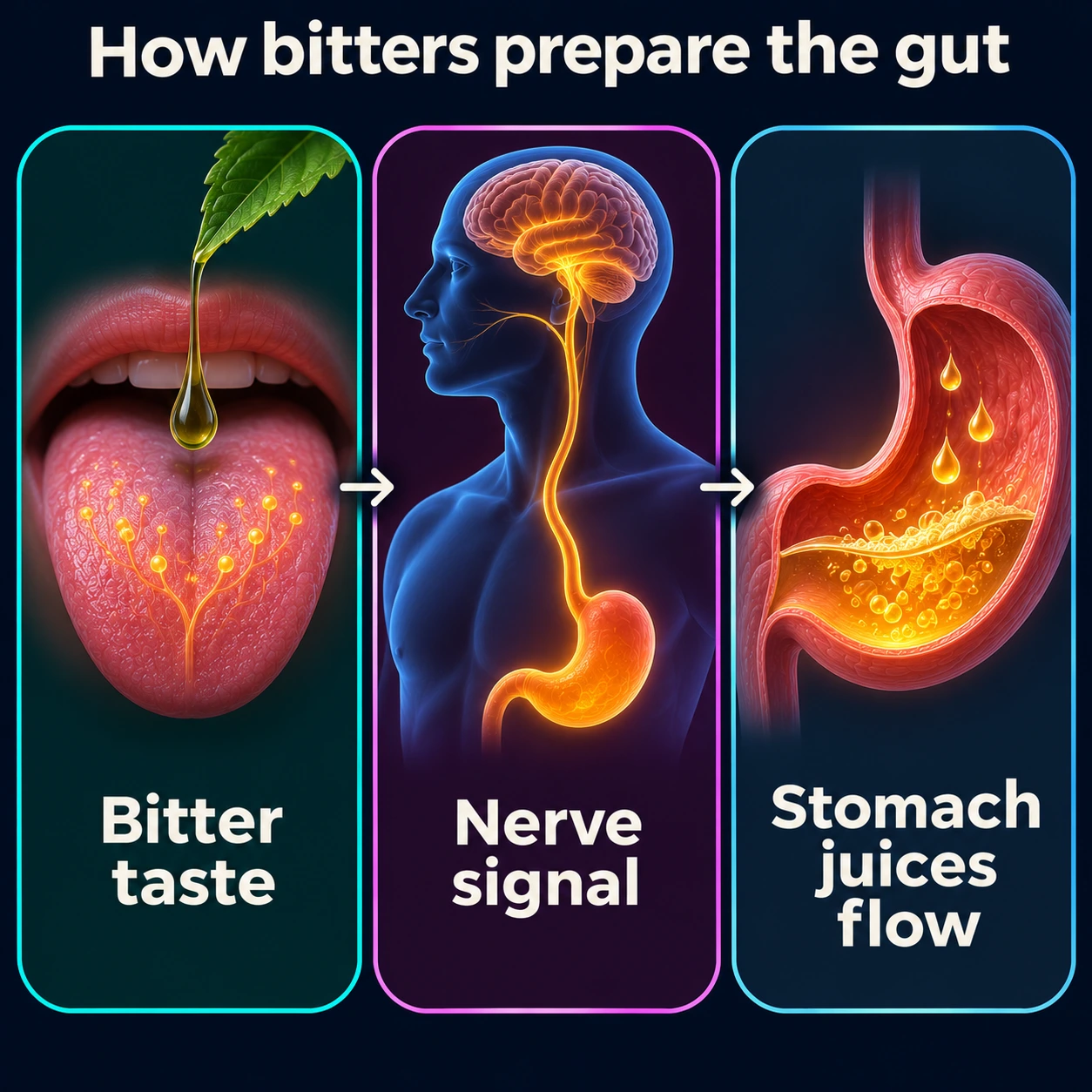
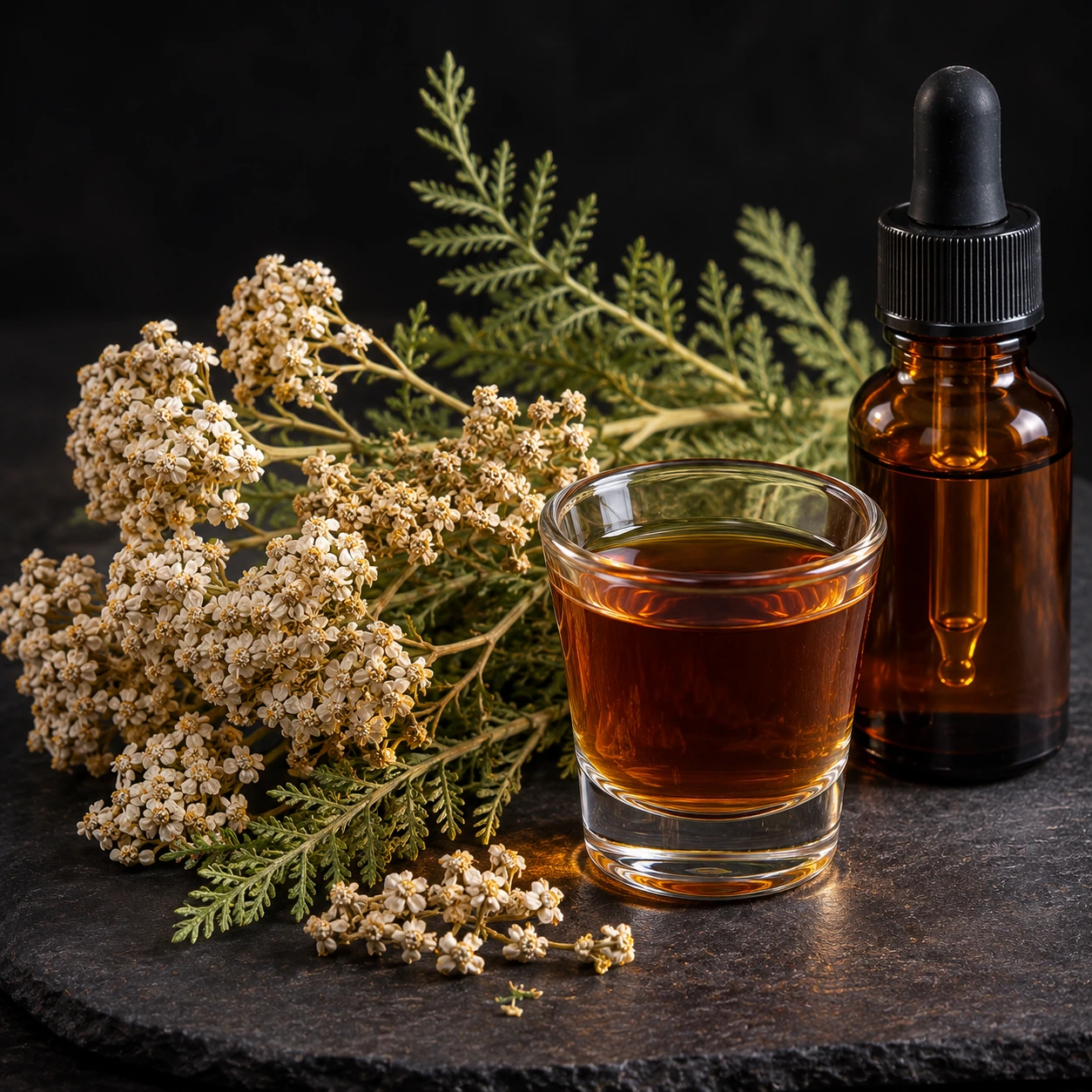
Of everything yarrow has traditionally been used for, the digestive use has the most coherent rationale — and it is also the one people find least exciting, which is a shame, because it is the part of the yarrow story where mechanism and tradition line up best. Yarrow is a genuine bitter. Not "bitter" as a flavour note, but bitter in the pharmacological sense: it contains sesquiterpene lactones intense enough to trigger the body's bitter-taste machinery, and that machinery has a documented job in preparing the gut for food. This is why Achillea millefolium appears in European aperitif and digestive-tonic traditions alongside gentian, wormwood, dandelion root, artichoke leaf and centaury, and why the German Commission E monograph lists it for loss of appetite and dyspeptic complaints.
It is still important to be precise about tiers. "A plausible mechanism plus long traditional use plus a regulatory monograph" is a stronger position than yarrow holds for wound healing — but it is not the same as a demonstrated clinical effect. There is no randomized controlled trial of yarrow for indigestion. The general bitter mechanism has been tested in humans; yarrow specifically has not. This page walks through what is actually known, in that order.
Table of Contents
- What "Bitter" Means in Herbal Practice
- The Cephalic Phase: A Real, Measurable Mechanism
- Bitter Receptors Are Not Only on the Tongue
- Human Studies of Bitters — Encouraging and Mixed
- Commission E and the European Medicines Agency: What Approval Actually Means
- Functional Dyspepsia: The Complaint Being Treated
- Antispasmodic and Smooth-Muscle Effects
- Animal Gastroprotection and Ulcer Studies
- Bile, Liver and the "Cholagogue" Claim
- How Bitters Are Taken — and Why a Capsule Misses the Point
- When Bitters Are the Wrong Idea
- The Honest Summary
- Key Research Papers
- Connections
- Featured Videos
What "Bitter" Means in Herbal Practice
In traditional European herbalism, "bitters" are a functional category rather than a botanical one. Plants as unrelated as gentian root, wormwood, yarrow, dandelion root, artichoke leaf, centaury, hops and orange peel are grouped together because they share a single property: they taste strongly bitter, and they were used before meals to improve appetite and ease the heavy, bloated, slow-digestion feeling that follows eating. European pharmacopoeias even quantified this with a bitterness value — a dilution-based measure of how far an extract can be diluted before the bitterness is no longer detectable. Gentian scores enormously high; yarrow scores moderately. Yarrow is therefore usually classed as an aromatic bitter: bitter enough to count, with a substantial volatile-oil component on top.
The bitterness in yarrow comes chiefly from its sesquiterpene lactones — achillin and a family of related guaianolides. These are the same compound class discussed on the wound page for anti-inflammatory activity and on the safety page as the cause of daisy-family contact allergy. One chemical family, three separate stories. Layered on top are the flavonoids (apigenin, luteolin, rutin), the essential oil, and tannins that add astringency.
The traditional indications for a bitter are worth stating precisely, because they are narrower than modern marketing suggests. Bitters were for poor appetite, for the sensation of food sitting undigested, for fullness after small meals, for mild cramping and gas. They were not a treatment for reflux, ulcers, coeliac disease, inflammatory bowel disease or any structural gut problem. That distinction still holds and is the reason the "when bitters are the wrong idea" section below exists.
The Cephalic Phase: A Real, Measurable Mechanism
Here is why the bitter story is not simply folklore. Digestion does not begin when food reaches the stomach. It begins in the head. The sight, smell and above all the taste of food trigger what physiologists call the cephalic phase of digestion — a vagally mediated anticipatory response in which saliva flows, gastric acid and pepsinogen secretion begin, the stomach adjusts its tone, gut hormones are released, pancreatic enzyme output rises, and the gallbladder starts to contract. This is textbook, well-established physiology, reviewed for a general audience by Power and Schulkin in Appetite (2008) under the heading of anticipatory physiological regulation in feeding biology. (Evidence tier: established human physiology.)
Bitter taste is one of the inputs to that response, and it is a signal the body treats seriously — bitterness is evolutionarily the flavour of plant alkaloids and potential poisons, so a bitter stimulus in the mouth produces a strong reflex reaction. The herbal claim is simply that deliberately delivering an intense bitter stimulus before eating recruits that reflex more strongly than a bland meal would on its own. Stated that way, the mechanism is not fringe at all. It is a plausible, testable extension of accepted physiology.
The step that people skip is the one that matters: a plausible mechanism is not a demonstrated clinical benefit. Cephalic-phase responses are real and measurable; whether amplifying them with yarrow tincture makes a person with indigestion feel better, more than a placebo bitter would, is a separate question that requires a trial. For yarrow, that trial has not been done.
Bitter Receptors Are Not Only on the Tongue
A second strand of modern research adds to the plausibility. Bitter taste is detected by a family of G-protein-coupled receptors known as TAS2Rs (or T2Rs), characterized in humans over the past two decades — Behrens and Meyerhof's work on bitter taste receptors and human bitter perception in Cellular and Molecular Life Sciences (2006) is a standard entry point. What made this field interesting for gastroenterology is that TAS2Rs turned out not to be confined to the tongue. They are expressed in the stomach and intestinal lining, in enteroendocrine cells, in the airway, and elsewhere — so bitter compounds that reach the gut can in principle signal locally, not only through taste.
In the gut, TAS2R activation has been linked in laboratory and animal work to the release of gut peptides including cholecystokinin (CCK), glucagon-like peptide-1 (GLP-1) and PYY, and to suppression of ghrelin, the hunger hormone. Those are exactly the messengers that govern gastric emptying, gallbladder contraction, pancreatic secretion and the sense of fullness. If bitter compounds modulate them, a bitter herb has a route to affecting digestion that does not depend on taste perception at all. (Evidence tier: preliminary mechanistic work, with some human confirmation as described below.)
An interesting consequence, and one that complicates the folk picture: bitter-receptor activation in the gut tends to slow gastric emptying and reduce appetite in short-term human studies — roughly the opposite of the traditional claim that bitters "stimulate appetite." The traditional and the modern accounts may both be describing something real at different timescales and doses, or the traditional appetite claim may simply be wrong. It is an open question, and it is more honest to say so than to quietly pick whichever finding suits the herb.
Human Studies of Bitters — Encouraging and Mixed
Bitters as a class have been tested in humans, generally with isolated bitter compounds rather than herbs, and generally in healthy volunteers rather than patients. A few examples give the flavour of this literature:
- Andreozzi and colleagues reported in the Journal of Neurogastroenterology and Motility (2015) that the bitter-receptor agonist quinine reduced calorie intake and increased postprandial cholecystokinin release in healthy subjects — direct human evidence that a bitter stimulus changes gut hormone signalling and eating behaviour. In this double-blind cross-over study of 20 volunteers, people ate 514 kcal after an acid-resistant quinine capsule against 596 kcal after placebo (P = 0.007). The quinine was released in the gut, not tasted, and the drop was seen in people who can taste the bitter test compound phenylthiocarbamide ("tasters") but not in non-tasters. (Evidence tier: controlled human study, healthy volunteers, isolated compound.)
- Deloose and co-workers, in the American Journal of Clinical Nutrition (2017), reported that intragastric infusion of the intensely bitter compound denatonium benzoate altered interdigestive gastric motility and lowered hunger ratings in healthy women, effects not observed in men; motilin fell, while total and octanoylated ghrelin were not affected — showing that a bitter compound acts in the stomach itself, bypassing the tongue.
- Wicks and colleagues examined the impact of bitter taste on gastric motility in European Journal of Gastroenterology & Hepatology (2005), part of a small body of work that has produced inconsistent results on gastric emptying and secretion. In their study of 16 healthy women, sham feeding a bitter bar delayed stomach emptying compared with a pleasant one: half-emptying took 24.7 versus 17.2 minutes.
- Rezaie and co-authors reviewed this whole area in Nutrients (2021) with a title that captures the state of play honestly: whether preclinical findings on bitter substances translate to outcomes in humans. Their answer is a qualified, partial yes — effects on gut hormones and energy intake are reproducible in short-term studies; durable clinical benefit is not established.
- McMullen, Whitehouse and Towell argued in Evidence-Based Complementary and Alternative Medicine (2015), under the title "Bitters: Time for a New Paradigm," for a new model. They describe herbalists and pharmacologists as split between cephalic vagal responses and purely local ones, then report that gentian and wormwood raise tone in the resistance blood vessels through a sympathetic reflex, so that these bitters "facilitate rather than stimulate digestive activity" when blood flow to the gut after meals is inadequate.
Read together: the bitter mechanism is real, partially confirmed in humans, and does not neatly match the traditional explanation given for it. What none of this literature tests is yarrow. Extrapolating from quinine to a cup of yarrow tea requires assuming that yarrow's bitterness is potent enough, at realistic doses, to produce comparable signalling. That assumption is reasonable and untested.
Commission E and the European Medicines Agency: What Approval Actually Means
Yarrow's digestive use is frequently defended by pointing out that German Commission E approved it. That is true, and it is routinely misrepresented, so it is worth explaining exactly what it means.
Commission E was an expert committee of the former German federal health agency that, through the 1980s and 1990s, produced short monographs on hundreds of herbal drugs, each declaring the herb "approved" or "unapproved" for stated uses. The yarrow monographs cover the herb and flower, and the approved internal indication is loss of appetite and dyspeptic complaints — cramping, mild spasms in the gastrointestinal tract, that family of symptoms. There is also an approved external application as a sitz bath for painful cramp-like conditions in the female pelvis, discussed on the menstrual and pelvic page.
Now the important part. Commission E decisions were made on the basis of the whole body of available information — traditional use, empirical experience, pharmacological plausibility and whatever clinical literature existed, weighed against known risk. For a herb like yarrow, with almost no clinical trials, that means the approval rests largely on tradition and plausibility, not on trial results. It is a judgement that the use is reasonable and the risk acceptable. It is emphatically not a finding that yarrow was shown to work in controlled studies. Citing "Commission E approved" as though it were a positive trial is one of the most common sleights of hand in herbal writing.
The European regulatory system that succeeded it is more explicit about this, and more useful for a reader trying to gauge evidence. The European Medicines Agency's herbal committee assesses herbal substances into two registration categories: "well-established use," which requires clinical evidence, and "traditional use," which requires only documented use over a long period plus acceptable safety, and which carries a mandatory statement that the product's efficacy is based on long-standing use and not on clinical trial data. Yarrow preparations sit in the traditional-use category. That labelling is doing exactly the job this page is doing: telling you the tier. (Evidence tier: regulatory monograph based on traditional use.)
The current EU herbal monograph on yarrow (revision 1, adopted 23 September 2020, replacing the first version of 2011) lists yarrow, "exclusively based upon long-standing use", for temporary loss of appetite and for mild, spasmodic stomach and gut complaints including bloating and flatulence. For loss of appetite it has the liquid preparations taken 30 minutes before meals; herbal tea is listed at 1.5-4 g in 150-250 ml of boiling water, 3 or 4 times daily between meals. Where symptoms persist longer than 2 weeks, the monograph refers people to a doctor or qualified health care practitioner. It does not recommend use under 12 years of age (lack of adequate data) or during pregnancy and breastfeeding (safety not established). Its one listed contraindication is hypersensitivity to yarrow or other plants of the daisy family (Asteraceae). It lists interactions as "None reported" and notes that adequate tests on reproductive toxicity have not been performed.
Functional Dyspepsia: The Complaint Being Treated
It helps to know what "dyspeptic complaints" means in modern terms, because it explains both why bitters remain popular and why they are so hard to study. Functional dyspepsia is persistent upper-abdominal discomfort — fullness after eating small amounts, early satiety, burning or gnawing in the upper abdomen, bloating, nausea — with no ulcer, tumour or other structural cause found on investigation. It is extremely common, it is genuinely unpleasant, and conventional medicine treats it imperfectly: acid suppression helps some people, prokinetics help some, low-dose neuromodulators help some, and a substantial number are left managing symptoms.
Three features of functional dyspepsia matter for interpreting any herbal claim:
- Symptoms fluctuate on their own. Good weeks and bad weeks happen regardless of treatment, which makes personal before-and-after impressions unreliable.
- Placebo response is large. Trials in functional gut disorders routinely report substantial improvement in the placebo arm. Any uncontrolled report of a herb "working" here is close to uninformative.
- Ritual and attention have real effects. Stopping, pouring a bitter tea, sitting down and drinking it slowly before a meal is a behavioural intervention as well as a chemical one — slowing down before eating plausibly helps by itself.
None of this makes yarrow useless. It means that if yarrow tea before meals helps you, that is a real and worthwhile outcome for you, and it is also not evidence about the herb. Both things are true at once.
Antispasmodic and Smooth-Muscle Effects
The traditional use of yarrow for cramping gets support from isolated-tissue pharmacology. Yaeesh and colleagues, working in Gilani's laboratory, reported in Phytotherapy Research (2006) on hepatoprotective, antispasmodic and calcium-antagonist activities of an aqueous-methanol extract of Achillea millefolium, finding that the extract relaxed spontaneous contractions in isolated gut tissue with a pattern consistent with calcium-channel blockade — the same broad mechanism as several conventional antispasmodic drugs.
That is a mechanistically satisfying result, and it fits both the digestive-cramp and the menstrual-cramp traditions, since both involve smooth muscle. It sits squarely in the preliminary tier: isolated organ baths use extract concentrations applied directly to tissue, with no absorption, metabolism or distribution in between. Many, many plant extracts relax isolated gut tissue in a bath. Flavonoids as a class do it, which is why apigenin- and luteolin-containing herbs from chamomile to peppermint all show antispasmodic activity in this kind of preparation. (Evidence tier: preliminary, isolated tissue.)
Animal Gastroprotection and Ulcer Studies
A Brazilian research group produced the most substantial animal work on yarrow and the stomach. Cavalcanti and colleagues published safety and antiulcer efficacy studies of Achillea millefolium after chronic treatment in Wistar rats in the Journal of Ethnopharmacology (2006), and Potrich and co-workers followed with a paper in the same journal (2010) on the antiulcerogenic activity of a hydroalcoholic extract, reporting involvement of the antioxidant system — that is, protection associated with preserved glutathione and reduced oxidative damage in the gastric mucosa rather than with acid suppression. In the Potrich study, the extract given by mouth reduced ethanol-induced stomach lesions in rats by 35, 56 and 81% at 30, 100 and 300 mg/kg, and reduced chronic acetic-acid ulcers by 43 and 65% at 1 and 10 mg/kg.
Two things are worth noting about this pair of studies. First, the Cavalcanti study included chronic-toxicity assessment (0.3-1.2 g/kg/day for 28 or 90 days, reporting no signs of relevant toxicity), which is unusual and welcome; the reassuring safety findings in rats are part of why yarrow is generally regarded as low-risk at traditional doses. The Potrich abstract reports no toxicity assessment. The reassuring picture has one exception: in a separate 90-day study of male rats (Dalsenter 2004), the highest dose (1.2 g/kg/day) significantly increased the percentage of abnormal sperm, with no clinical signs of toxicity and no other important changes in the reproductive measures studied. Second, the mechanism proposed is antioxidant and mucosal-protective, which is a different claim from the bitter/cephalic story — it would apply to swallowed extract regardless of taste.
What these studies do not license is the leap that appears in popular writing: that yarrow "heals ulcers" or "treats gastritis" in people. Rodent ulcer models use chemical or ethanol-induced injury, and dozens of plant extracts protect against them. Human gastritis and peptic ulcer are mostly driven by Helicobacter pylori infection and by nonsteroidal anti-inflammatory drug (NSAID) use, and both have specific, effective treatments. The standard treatments for a diagnosed ulcer are eradication therapy and acid suppression; tea is not among them. (Evidence tier: preliminary, animal.)
Bile, Liver and the "Cholagogue" Claim
Traditional bitters literature describes yarrow as mildly cholagogue and choleretic — encouraging bile flow and bile production. The physiological hook is genuine: gallbladder contraction is part of the cephalic phase and is driven by CCK, and bitter-stimulated CCK release is one of the better-supported findings in the human bitter literature. The Yaeesh paper mentioned above also reported hepatoprotective activity in an animal model, which is the kind of finding that gets summarized in popular sources as "yarrow supports the liver."
Keep the compression honest. "An extract reduced markers of chemically induced liver injury in mice" is a long way from "yarrow supports liver function in humans," and nothing in the literature supports using yarrow for hepatitis, fatty liver, cirrhosis or gallstones. The concern with known gallstones is that deliberately stimulating gallbladder contraction could lodge a stone, and obstructive biliary disease is a standard contraindication for cholagogue herbs. Better-studied plants in this territory include milk thistle and dandelion have larger literatures — not conclusive ones, but larger.
How Bitters Are Taken — and Why a Capsule Misses the Point
If the cephalic-phase mechanism is the main rationale, then how yarrow is taken is not a detail — it is the whole intervention. The traditional practice is internally consistent on this, and modern physiology explains why:
- Taken before the meal, typically ten to thirty minutes ahead, so the anticipatory response is under way when food arrives.
- Tasted, not hidden. Bitters are held in the mouth, sipped slowly, and deliberately experienced. Masking the bitterness with sugar or honey defeats the stated mechanism; a bitter you cannot taste is, on this model, not functioning as a bitter.
- Small amounts. A few drops of tincture in water, or a modest cup of infusion — the stimulus is qualitative, not dose-dependent in the way a drug is.
- As tea (covered), or as tincture. Covering the cup during steeping keeps the volatile oils in rather than letting them leave with the steam. Alcohol tinctures extract both bitter lactones and oil-soluble constituents and store well.
- Short courses. Traditional practice uses bitters around meals and in short runs rather than continuously — which, as it happens, matches the thujone-related caution against prolonged high-dose yarrow use described on the safety page.
Which brings up the most common practical error: yarrow in a swallowed capsule. A capsule bypasses the tongue entirely. On the classical bitter model it cannot work; on the gut-TAS2R model it might still do something once it dissolves. Human studies touch both halves: McMullen and colleagues report that "neither encapsulated gentian nor wormwood elicited cardiovascular responses during the gastric phase", while the same bitters tasted did, although encapsulated caffeine did elicit responses; and the acid-resistant quinine capsule in the Andreozzi study lowered calorie intake without being tasted. Either way, a capsule is the form least connected to the reason yarrow is used for digestion, and the fact that most supplements are sold that way says more about manufacturing convenience than about herbal practice.
Nobody has established an evidence-based dose for yarrow, for the same reason as everywhere else on this site's yarrow pages: the clinical work does not exist. Traditional guidance sits at roughly a teaspoon of dried herb per cup, once to three times daily before meals, or the equivalent drops of tincture — presented here as description of practice, not as a recommendation.
When Bitters Are the Wrong Idea
Bitters are traditionally avoided, not merely optional, in several situations, and modern reasoning agrees:
- Active peptic ulcer or erosive gastritis. Increasing gastric secretion into an already-ulcerated stomach is the wrong direction. Both need proper diagnosis and treatment.
- Reflux and gastroesophageal reflux disease (GERD). Bitters can make heartburn worse in some people. The popular claim that bitters "fix reflux caused by low acid" is not established, and reflux has an anatomical and motility basis that a bitter does not address.
- Gallstones or bile-duct obstruction. The concern is that stimulating gallbladder contraction could lodge a stone.
- Pregnancy. The EU herbal monograph states that safety during pregnancy and breastfeeding has not been established and, in the absence of sufficient data, does not recommend use then; the reasons are unrelated to digestion — see the safety page. This outweighs any digestive rationale.
- Daisy-family allergy. Yarrow is an Asteraceae plant and cross-reacts with ragweed, chamomile, feverfew and chrysanthemum sensitivity.
- Undiagnosed symptoms. Weight loss, difficulty swallowing, vomiting, black or bloody stools, anaemia, persistent pain, or new upper-abdominal symptoms after about age fifty are alarm features. They need investigation, and self-treating them with a bitter herb wastes time that matters. This is the single most important paragraph on the page.
- Epilepsy and concurrent anticoagulant, sedative or antihypertensive medication — again, see the safety page.
The Honest Summary
Yarrow's digestive use is the best-reasoned thing in its dossier. It is a genuine bitter; bitters engage a real, well-documented anticipatory digestive reflex; bitter-receptor signalling in the gut has been confirmed to influence gut hormones and appetite in human studies of isolated bitter compounds; isolated-tissue work shows yarrow extract relaxing gut smooth muscle by a calcium-antagonist-like mechanism; animal work shows gastroprotection with a reassuring chronic-safety profile; and a national expert committee judged the use reasonable enough to approve for appetite loss and dyspeptic complaints.
And still: no randomized controlled trial has tested yarrow for indigestion in humans. The regulatory approval rests on tradition and plausibility. The mechanism is borrowed from studies of other bitter compounds. The condition it targets fluctuates on its own and responds strongly to placebo. So the fair description is that yarrow before meals is a traditional practice with a chemically sensible rationale for mild appetite and dyspeptic complaints, generally regarded as low-risk at traditional doses in a healthy non-pregnant adult without daisy-family allergy — and that when people find it helps, the reasonable interpretation is "this helps me," not "yarrow is proven to aid digestion."
Key Research Papers
Each reference links to its PubMed record or DOI. The topic searches below it stay current.
- Yaeesh S, Jamal Q, Khan AU, Gilani AH. "Studies on hepatoprotective, antispasmodic and calcium antagonist activities of the aqueous-methanol extract of Achillea millefolium." Phytotherapy Research, 2006 — the key antispasmodic and calcium-channel finding. — PubMed PMID: 16619341
- Potrich FB, Allemand A, da Silva LM, et al. "Antiulcerogenic activity of hydroalcoholic extract of Achillea millefolium L.: involvement of the antioxidant system." Journal of Ethnopharmacology, 2010 — gastroprotection linked to antioxidant defences in rats. PubMed PMID: 20420892
- Cavalcanti AM, Baggio CH, Freitas CS, et al. "Safety and antiulcer efficacy studies of Achillea millefolium L. after chronic treatment in Wistar rats." Journal of Ethnopharmacology, 2006 — chronic-dosing safety plus antiulcer activity. PubMed PMID: 16647233
- Andreozzi P, Sarnelli G, Pesce M, et al. "The bitter taste receptor agonist quinine reduces calorie intake and increases the postprandial release of cholecystokinin in healthy subjects." Journal of Neurogastroenterology and Motility, 2015 — human evidence that a bitter changes CCK and intake. PubMed PMID: 26351252
- Deloose E, Janssen P, Corsetti M, et al. "Intragastric infusion of denatonium benzoate attenuates interdigestive gastric motility and hunger scores in healthy female volunteers." The American Journal of Clinical Nutrition, 2017 — bitter signalling from inside the stomach. PubMed PMID: 28148502
- Rezaie P, Bitarafan V, Horowitz M, Feinle-Bisset C. "Effects of Bitter Substances on GI Function, Energy Intake and Glycaemia-Do Preclinical Findings Translate to Outcomes in Humans?" Nutrients, 2021 — the honest translational review. — PubMed PMID: 33923589
- McMullen MK, Whitehouse JM, Towell A. "Bitters: Time for a New Paradigm." Evidence-Based Complementary and Alternative Medicine, 2015 — proposes a new model in which tasted bitters facilitate rather than stimulate digestion through circulation reflexes. PubMed PMID: 26074998
- Wicks D, Wright J, Rayment P, Spiller R. "Impact of bitter taste on gastric motility." European Journal of Gastroenterology & Hepatology, 2005 — part of the mixed human motility literature. PubMed PMID: 16093874
- Behrens M, Meyerhof W. "Bitter taste receptors and human bitter taste perception." Cellular and Molecular Life Sciences, 2006 — foundational work on the TAS2R receptor family. PubMed PMID: 16732425
- Power ML, Schulkin J. "Anticipatory physiological regulation in feeding biology: cephalic phase responses." Appetite, 2008 — the reference account of cephalic-phase digestion. PubMed PMID: 18045735
- Ali SI, Gopalakrishnan B, Venkatesalu V. "Pharmacognosy, Phytochemistry and Pharmacological Properties of Achillea millefolium L.: A Review." Phytotherapy Research, 2017 — constituent profile including the bitter sesquiterpene lactones. PubMed PMID: 28618131
- Applequist WL, Moerman DE. "Yarrow (Achillea millefolium L.): A Neglected Panacea? A Review of Ethnobotany, Bioactivity, and Biomedical Research." Economic Botany, 2011 — documents the digestive use across traditions and the shortage of trials. doi:10.1007/s12231-011-9154-3
- Dalsenter PR, Cavalcanti AM, Andrade AJ, et al. "Reproductive evaluation of aqueous crude extract of Achillea millefolium L. (Asteraceae) in Wistar rats." Reproductive Toxicology, 2004 — 90-day study in male rats. PubMed PMID: 15279880
- Committee on Herbal Medicinal Products, European Medicines Agency. "European Union herbal monograph on Achillea millefolium L., herba," revision 1, EMA/HMPC/376416/2019, adopted 23 September 2020. EMA monograph (PDF)
PubMed Topic Searches
- PubMed: Achillea millefolium dyspepsia
- PubMed: Herbal bitters appetite clinical trial
- PubMed: Functional dyspepsia herbal medicine randomized
- PubMed: Achillea millefolium gastroprotective
- PubMed: Bitter taste receptor GLP-1 PYY secretion
- PubMed: Achillea millefolium smooth muscle relaxant
External Resources
- NIH National Center for Complementary and Integrative Health — evidence summaries for herbs used in digestive complaints.
- European Medicines Agency — home of the herbal monograph system and the "traditional use" registration category.
- NIH National Institute of Diabetes and Digestive and Kidney Diseases — reliable patient information on indigestion, gastritis and ulcers.
- PubMed — search the primary literature yourself.
Connections
- All Herbs
- Yarrow — the main topic page
- Yarrow Benefits Hub — all four deep dives
- Yarrow Safety — the hazards of using yarrow internally
- Wormwood — the classic intense bitter, and the other thujone herb
- Wormwood Benefits — the same bitter rationale, higher risk
- Dandelion — bitter Asteraceae root used the same way
- Dandelion Benefits — bile and digestive claims examined
- Chamomile — the gentler daisy-family digestive herb
- Peppermint — the antispasmodic with the strongest trial evidence
- Ginger — warming digestive with real anti-nausea data
- Fennel — carminative traditionally paired with bitters
- Milk Thistle — the better-studied liver herb
- Gymnema — another taste-mediated herbal mechanism
- Gastroenterology — digestive conditions overview
- Functional Dyspepsia — the complaint bitters target
- Gastritis — mostly driven by infection and painkillers, with specific treatments
- Irritable Bowel Syndrome — cramping, bloating and the placebo problem
Safety and disclaimer. This page is educational and is not medical advice. Yarrow's digestive use is traditional, with a plausible and partly confirmed bitter mechanism, but no randomized controlled trial has tested yarrow for indigestion; German Commission E approval for appetite loss and dyspeptic complaints rests largely on tradition rather than trial data. The EU herbal monograph does not recommend yarrow in pregnancy or breastfeeding and lists allergy to daisy-family plants as its contraindication; people who react to ragweed, chamomile, feverfew or chrysanthemum may react to yarrow. Concerns are also described with active ulcers, reflux, gallstones, epilepsy, and anticoagulant, sedative or blood-pressure medication. New or persistent upper-abdominal symptoms — especially with weight loss, vomiting, difficulty swallowing, black or bloody stools, or onset after about age fifty — are alarm signs that clinics investigate rather than leave to self-treatment.