Sage — Benefits Deep Dive
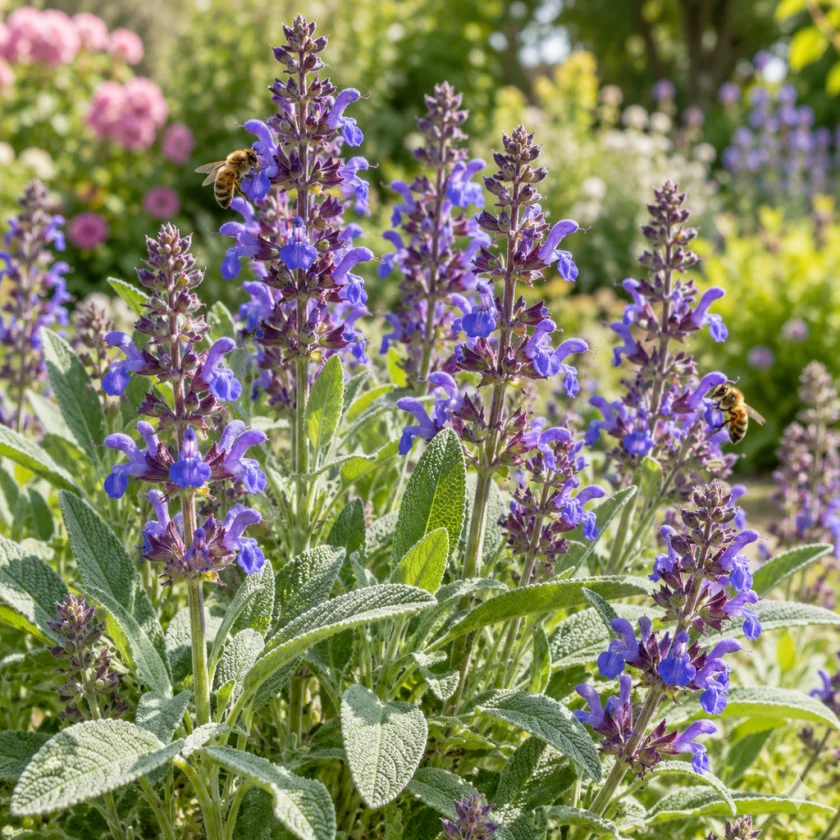
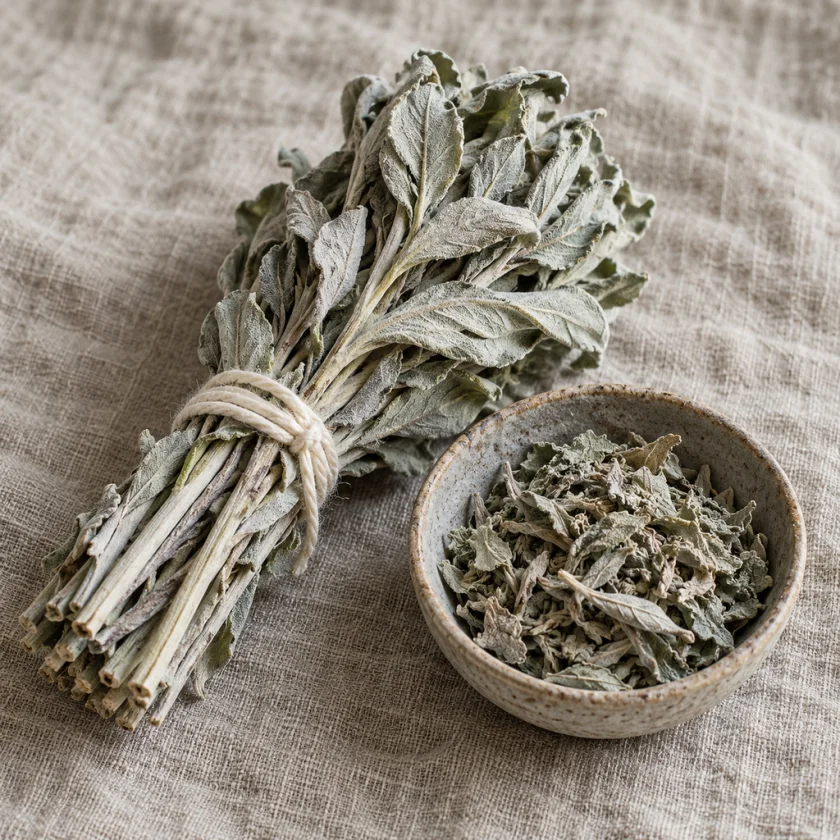
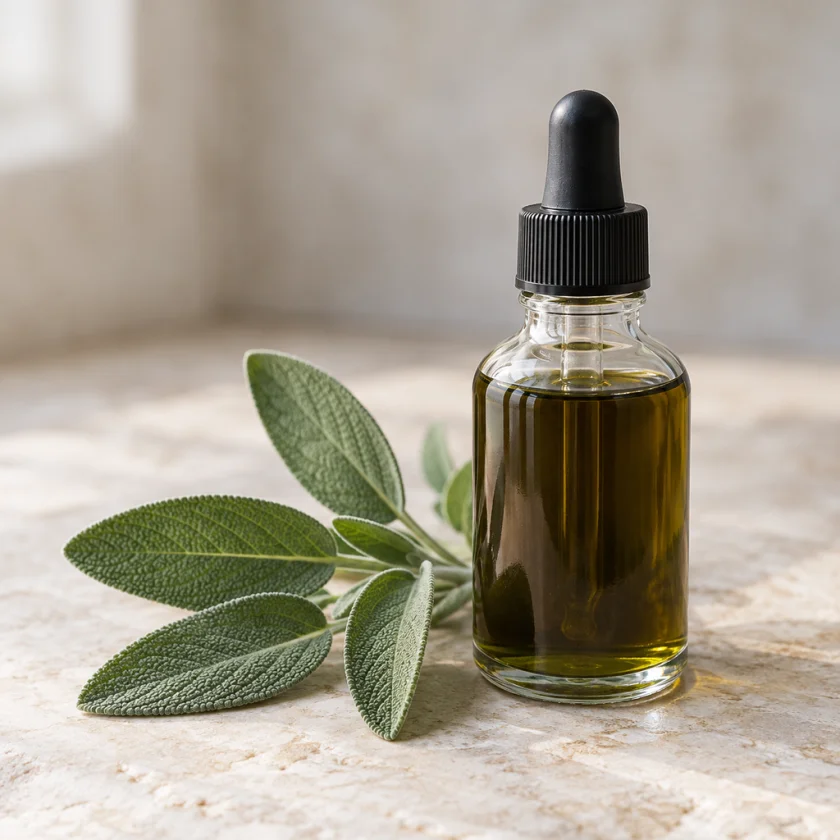
Sage (Salvia officinalis) is the Mediterranean garden sage that medieval European pharmacy honored with the proverb cur moriatur homo cui salvia crescit in horto? — "why should a man die who has sage in his garden?" The Latin genus name Salvia shares a root with salvare (to save) and salvus (whole, safe), and the medieval epithet salvia salvatrix — "sage the savior" — captured a real pharmacological reality. Modern chemistry confirms what the herbalists observed: sage's essential oil delivers 1,8-cineole, thujone, camphor, and alpha-pinene as cholinesterase inhibitors that rival the prescription Alzheimer's drug donepezil at low dose, its leaf preparation was followed by a 50% drop in hot-flash scores within four weeks in an open (uncontrolled) trial, with laboratory work pointing to estrogen-like luteolin flavonoids rather than its rosmarinic and carnosic acids, its broad-spectrum essential oil suppresses oral and pharyngeal bacteria in lozenge trials, and its carnosic acid activates AMP-activated protein kinase (AMPK) to drop fasting glucose and hemoglobin A1c (HbA1c) in type 2 diabetes randomized controlled trials (RCTs). The four sub-articles below cover each benefit cluster, the human clinical trials that established it, and the practical dosing — with one important warning: thujone, the same monoterpene that gives absinthe its reputation, is concentrated in sage essential oil and limits high-dose internal use, especially in pregnancy and epilepsy.
Deep-Dive Articles
Cognitive Function & Memory
The Tildesley 2003 healthy-adults trials (a single 50 µL dose of Spanish sage (Salvia lavandulaefolia) essential oil improved immediate word recall vs placebo in two small crossover studies of 20 and 24 young adults), the Akhondzadeh 2003 four-month Alzheimer's randomized controlled trial (RCT) (sage extract significantly improved ADAS-cog and CDR vs placebo), the acetylcholinesterase (AChE) inhibition mechanism shared with donepezil, the 1,8-cineole + alpha-pinene + thujone monoterpene chemistry behind it, and the centuries-old "sage for wisdom" folk association now grounded in pharmacology.
Read the deep dive →Menopause & Hot Flashes
The Bommer 2011 open trial of standardized fresh-sage extract in 71 menopausal women — mean total hot-flash intensity dropped 50% at 4 weeks and 64% at 8 weeks. The proposed estrogen-like mechanism (laboratory work points to luteolin flavonoids, and the question is not settled), the antihidrotic (sweat-suppressing) action that targets the night-sweat component, and the comparison with black cohosh and hormone replacement therapy.
Read the deep dive →Antimicrobial & Sore Throat
The Hubbert 2006 multicenter randomized trial of a 15% sage spray for acute pharyngitis — significantly faster symptom relief than placebo within two hours of first dose. Broad-spectrum essential-oil activity against Streptococcus pyogenes, Staphylococcus aureus, Candida albicans, and oral biofilm. The traditional sage-and-vinegar gargle, the historic plague-doctor reputation, and modern lozenge and mouthwash formulations.
Read the deep dive →Blood Sugar & Lipids
The Kianbakht 2011 and 2013 Iranian randomized controlled trials — 500 mg sage leaf extract three times daily: the 2011 trial in 67 people with high blood fats (2 months) lowered total cholesterol, triglycerides and low-density lipoprotein (LDL) and raised high-density lipoprotein (HDL); the 2013 trial in 80 people with type 2 diabetes and high blood fats (3 months) also lowered fasting plasma glucose and hemoglobin A1c. The carnosic acid AMP-activated protein kinase-activation mechanism (same target as metformin), insulin sensitization in the liver and muscle, and the practical question of whether culinary sage at typical kitchen doses contributes.
Read the deep dive →Table of Contents
- Deep-Dive Articles
- Why Sage Produces Effects Across So Many Systems
- Research Papers: Cognitive Function
- Research Papers: Menopause & Hormonal
- Research Papers: Antimicrobial & Sore Throat
- Research Papers: Blood Sugar & Lipids
- Research Papers: Cross-Cutting (Chemistry, Safety, Thujone)
- External Authoritative Resources
- Connections
- Featured Videos
Why Sage Produces Effects Across So Many Systems
Most medicinal herbs are explained by a single dominant constituent class — willow bark by salicin, echinacea by alkylamides, milk thistle by silymarin flavonolignans. Sage is unusual because the herbalist's diverse claims — memory, menopause, sore throat, blood sugar — track to four mechanistically distinct molecules in the same plant, each abundant enough to be pharmacologically active at gram-range doses of dried leaf or 100–500 mg of standardized extract. The medieval question "why should a man die who has sage in his garden?" rested on this pluripotency: sage was the village pharmacy in a single perennial bush.
- Monoterpene acetylcholinesterase inhibition (1,8-cineole, alpha-pinene, thujone) — sage essential oil dose-dependently inhibits acetylcholinesterase (AChE), the same enzyme target as the prescription Alzheimer's drugs donepezil, rivastigmine, and galantamine. A King's College London group (Perry 2000) found that the essential oil of Spanish sage (Salvia lavandulaefolia) and its terpenes 1,8-cineole and alpha-pinene inhibit acetylcholinesterase taken from human red blood cells in the test tube; the authors wrote that it remained to be determined whether this applies to the brain after the oil is swallowed. This mechanism is proposed to drive the cognitive and memory effects documented in healthy adults (Tildesley 2003, Spanish sage oil) and Alzheimer's patients (Akhondzadeh 2003).
- Estrogen-like flavonoid activity (luteolin glycosides; mechanism not settled) — a 2013 laboratory study of the sage tincture used against hot flushes (Rahte 2013) found that the whole tincture showed no estrogen-like effect, while one water-alcohol fraction of it did; the active compounds traced were the flavonoids luteolin-7-O-glucuronide and luteolin-7-O-glucoside, which the authors describe as common in many plants. The same tests found no serotonin-reuptake or acetylcholinesterase activity, so how sage eases hot flashes is still not known. Together with sage's antihidrotic (sweat-reducing) action, this is the proposed basis of the ~50% reduction in menopausal hot-flash intensity documented in the Bommer 2011 trial — an open trial with no placebo group, so the figure is a before-and-after change. A placebo-controlled trial followed in 2021: 80 menopausal women took a fresh-sage extract tablet (3,400 mg) or placebo for 4 weeks; the menopause rating score fell 39.2% and the hot-flush severity score fell 55.3%, with the difference from placebo significant from week 3; the study was sponsored by the maker of the tested product. A 2023 meta-analysis of 4 sage trials (310 women) found that all four reported fewer and milder hot flashes; in the pooled analysis the effect on severity was not statistically significant, and the estimate for frequency had a wide confidence interval (effect size −1.12, 95% CI −2.37 to 0.14).
- Essential-oil broad-spectrum antimicrobial action — sage essential oil shows in-vitro activity against Streptococcus pyogenes, Staphylococcus aureus, Candida albicans, Escherichia coli, and oral biofilm species. This translates to clinically meaningful symptom relief in the Hubbert 2006 sore-throat-spray trial and supports the traditional sage gargle for sore throat and gingivitis.
- Carnosic-acid AMP-activated protein kinase activation — carnosic acid, a diterpene phenolic concentrated in the leaf, activates AMP-activated protein kinase (AMPK) in hepatocytes and skeletal muscle, the same pathway through which metformin lowers fasting glucose and improves insulin sensitivity. Two Iranian randomized controlled trials of 500 mg sage leaf extract three times daily found lower blood fats, and in diabetes lower fasting glucose and hemoglobin A1c: the 2011 trial in 67 people with high cholesterol or triglycerides measured lipids only (total cholesterol, triglycerides and LDL fell, HDL rose, over 2 months), and the 2013 trial in 80 people with type 2 diabetes and high blood fats also found lower fasting glucose and hemoglobin A1c after 3 months. A 2022 meta-analysis pooled the three sage trials available in diabetes: fasting blood sugar fell by about 31 mg/dL and hemoglobin A1c by about 0.94 percentage points, total and LDL cholesterol also fell, and triglycerides and HDL did not change significantly; the authors noted that only three trials exist.
The complication that limits all four applications is thujone, a monoterpene ketone concentrated in sage essential oil (typically 30–60% of the oil by mass, depending on chemotype; the European Medicines Agency (EMA) assessment report lists alpha-thujone at 10–60% and beta-thujone at 4–36% of the oil). Thujone is a noncompetitive gamma-aminobutyric acid-A antagonist — the same mechanism that gave absinthe its 19th-century reputation as a neurotoxin and that justifies the EU's 0.5 mg/kg food limit. At culinary doses (a teaspoon of dried sage in a recipe serving four), thujone exposure is trivial. At high doses of sage essential oil internally (multiple grams) or sustained high-dose tea (multiple cups daily for weeks), thujone can lower seizure threshold, induce uterine contractions, and produce hepatic stress. Pregnancy and epilepsy are the two situations most often named against high-dose internal use. The EMA limits the thujone in EU sage-leaf medicines to 6.0 mg a day, and each product must show it stays under that amount at its stated dose. The 2016 EU herbal monograph on sage leaf, which covers its preparations taken by mouth, used in the mouth and throat, and applied to the skin, states that safety in pregnancy and breastfeeding has not been established and does not recommend sage-leaf medicines then, nor under 18 years of age; its only listed contraindication is allergy to sage. Among its four traditional uses the monograph lists relief of excessive sweating, with 2 g of cut leaf in 150 ml of boiling water as a tea, or, for night sweats, 1.5 ml of liquid extract in some liquid 1 hour before bed.
Research Papers: Cognitive Function
- Tildesley NT, Kennedy DO, Perry EK, Ballard CG, Savelev S, Wesnes KA, Scholey AB (2003). Salvia lavandulaefolia (Spanish sage) enhances memory in healthy young volunteers. Pharmacology Biochemistry and Behavior. 2003;75(3):669-74. — PubMed PMID: 12895685
- Akhondzadeh S et al. (2003). Salvia officinalis extract in the treatment of patients with mild to moderate Alzheimer's disease: a double blind, randomized and placebo-controlled trial. Journal of Clinical Pharmacy and Therapeutics. — PubMed: Akhondzadeh 2003
- Perry NS, Houghton PJ, Theobald A, Jenner P, Perry EK (2000). In-vitro inhibition of human erythrocyte acetylcholinesterase by Salvia lavandulaefolia essential oil and constituent terpenes. Journal of Pharmacy and Pharmacology. 2000;52(7):895-902. — PubMed PMID: 10933142
- Kennedy DO et al. (2006). Effects of cholinesterase inhibiting sage on mood, anxiety, and performance on a psychological stressor battery. Neuropsychopharmacology. — PubMed: Kennedy sage mood
- Scholey AB et al. (2008). An extract of Salvia (sage) with anticholinesterase properties improves memory and attention in healthy older volunteers. Psychopharmacology. — PubMed: Scholey older volunteers
- Lopresti AL (2017). Salvia (sage): A review of its potential cognitive-enhancing and protective effects. Drugs in R&D. — PubMed: Lopresti review 2017
- 1,8-cineole acetylcholinesterase inhibition mechanism — PubMed: 1,8-cineole AChE
- Alpha-pinene cognition and AChE inhibition — PubMed: Alpha-pinene AChE
- Rosmarinic acid neuroprotection and anti-amyloid — PubMed: Rosmarinic acid neuroprotection
- Sage essential oil cognition meta-analysis — PubMed: Sage cognition meta-analysis
Research Papers: Menopause & Hormonal
- Bommer S, Klein P, Suter A (2011). First time proof of sage's tolerability and efficacy in menopausal women with hot flushes. Advances in Therapy. 2011;28(6):490-500. — PubMed PMID: 21630133
- Rahte S, Evans R, Eugster PJ, Marcourt L, Wolfender JL, Kortenkamp A, Tasdemir D (2013). Salvia officinalis for hot flushes: towards determination of mechanism of activity and active principles. Planta Medica. 2013;79(9):753-60. — PubMed PMID: 23670626
- Wilfried D, Nina CDG, Silvia B (2021). Effectiveness of Menosan® Salvia officinalis in the treatment of a wide spectrum of menopausal complaints. A double-blind, randomized, placebo-controlled, clinical trial. Heliyon. 2021;7(2):e05910. (Industry-funded.) — PubMed PMID: 33615001
- Moradi M, Ghavami V, Niazi A, Seraj Shirvan F, Rasa S (2023). The effect of Salvia officinalis on hot flashes in postmenopausal women: a systematic review and meta-analysis. International Journal of Community Based Nursing and Midwifery. 2023;11(3):169-178. — PubMed PMID: 37489230
- Carnosic acid and rosmarinic acid binding estrogen receptor — PubMed: Carnosic acid ER binding
- Sage antihidrotic (sweat-suppressing) action — PubMed: Sage antihidrotic
- Menopausal hot flash herbal therapies systematic review — PubMed: Menopausal herbal review
- Phytoestrogen mechanism in herbal medicine — PubMed: Phytoestrogen mechanism
Research Papers: Antimicrobial & Sore Throat
- Hubbert M et al. (2006). Efficacy and tolerability of a spray with Salvia officinalis in the treatment of acute pharyngitis: a randomised double-blind, placebo-controlled study with adaptive design and interim analysis. European Journal of Medical Research. — PubMed: Hubbert 2006
- Schapowal A, Berger D et al. (2009). Echinacea/sage or chlorhexidine/lidocaine for treating acute sore throats: a randomized double-blind trial. European Journal of Medical Research. — PubMed: Schapowal sage vs chlorhexidine
- Sage essential oil broad-spectrum antimicrobial activity — PubMed: Sage essential oil antimicrobial
- Sage and Streptococcus pyogenes inhibition — PubMed: Sage and Strep pyogenes
- Sage essential oil Candida albicans — PubMed: Sage and Candida
- Sage mouthwash gingivitis and oral biofilm — PubMed: Sage mouthwash gingivitis
Research Papers: Blood Sugar & Lipids
- Kianbakht S, Dabaghian FH (2013). Improved glycemic control and lipid profile in hyperlipidemic type 2 diabetic patients consuming Salvia officinalis L. leaf extract: a randomized placebo-controlled clinical trial. Complementary Therapies in Medicine. 2013;21(5):441-6. — PubMed PMID: 24050577
- Kianbakht S, Abasi B, Perham M, Hashem Dabaghian F (2011). Antihyperlipidemic effects of Salvia officinalis L. leaf extract in patients with hyperlipidemia: a randomized double-blind placebo-controlled clinical trial. Phytotherapy Research. 2011;25(12):1849-53. — PubMed PMID: 21506190
- Abdollahi A, Adelibahram F, Ghassab-Abdollahi N, Araj-Khodaei M, Parsian Z, Mirghafourvand M (2022). The effect of Salvia officinalis on blood glycemic indexes and blood lipid profile in diabetic patients: a systematic review and meta-analysis. Journal of Complementary and Integrative Medicine. 2023;20(3):521-529. — PubMed PMID: 35106985
- Carnosic acid AMPK activation in hepatocytes and muscle — PubMed: Carnosic acid AMPK
- Sage and insulin sensitivity meta-analysis — PubMed: Sage insulin sensitivity
- Sage and total cholesterol / LDL reduction — PubMed: Sage cholesterol/LDL
- Carnosic acid and adipocyte differentiation / weight metabolism — PubMed: Carnosic acid adipocyte
Research Papers: Cross-Cutting (Chemistry, Safety, Thujone)
- Thujone as noncompetitive GABA-A antagonist — PubMed: Thujone GABA-A
- EU thujone food limits and toxicology — PubMed: Thujone EU limit
- Sage chemotype variation (Dalmatian, Greek, Turkish) — PubMed: Sage chemotypes
- Sage essential oil composition GC-MS profile — PubMed: Sage GC-MS profile
- Rosmarinic acid pharmacokinetics and bioavailability — PubMed: Rosmarinic acid PK
- Carnosic acid stability in oxidation and processing — PubMed: Carnosic acid stability
- Sage hepatotoxicity case reports (high-dose essential oil) — PubMed: Sage hepatotoxicity
- Sage in pregnancy and uterine contraction — PubMed: Sage in pregnancy
- Sage and epilepsy / seizure threshold — PubMed: Sage and seizure
- Antioxidant capacity of Salvia officinalis extracts — PubMed: Sage antioxidant capacity
External Authoritative Resources
- European Medicines Agency — Salviae officinalis folium (sage leaf) monograph — the official EU herbal monograph with indications, dosing, and safety; all four of its indications (mild indigestion such as heartburn and bloating, excessive sweating, mouth and throat inflammation, minor skin inflammation) are traditional use, based on long-standing use
- LiverTox — Sage (Salvia officinalis) — NIH-NIDDK clinical hepatotoxicity reference
- Natural Medicines Comprehensive Database — Sage — clinician-oriented evidence summary
- WHO Monographs on Selected Medicinal Plants — Folium Salviae
- PubMed — All research on Salvia officinalis (~3,500+ papers)
Connections
- All Herbs
- Sage (Main Page)
- Sage for Cognitive Function
- Sage for Menopause & Hot Flashes
- Sage for Antimicrobial & Throat
- Sage for Blood Sugar & Lipids
- Rosemary (Carnosic Acid Sister Herb)
- Lemon Balm (Rosmarinic Acid)
- Bacopa Monnieri (Cognitive)
- Thyme
- Oregano
- Alzheimer's Disease
- Dementia
- Type 2 Diabetes
- Sinusitis & Throat
- Oxidative Stress
- History