Elderberry (Sambucus nigra)
Interactive Visualization Immune Response — inject a pathogen and watch the defence Innate cells swarm, T cells activate B cells, antibodies rise — then vaccinate and compare the fast, strong secondary response. Launch →
Table of Contents
- Historical and Traditional Use
- Botanical Profile
- Active Compounds and Phytochemistry
- Immune System Effects
- Cold and Influenza Trials
- Antiviral Properties
- Antioxidant Capacity
- Anti-Inflammatory Effects
- Cardiovascular Research
- Respiratory Health
- Blood Sugar Research
- Skin Health
- Digestive Health
- Forms and Preparations
- Doses Used in the Clinical Trials
- Cautions and Contraindications
- Key Research Papers
- Featured Videos
Historical and Traditional Use
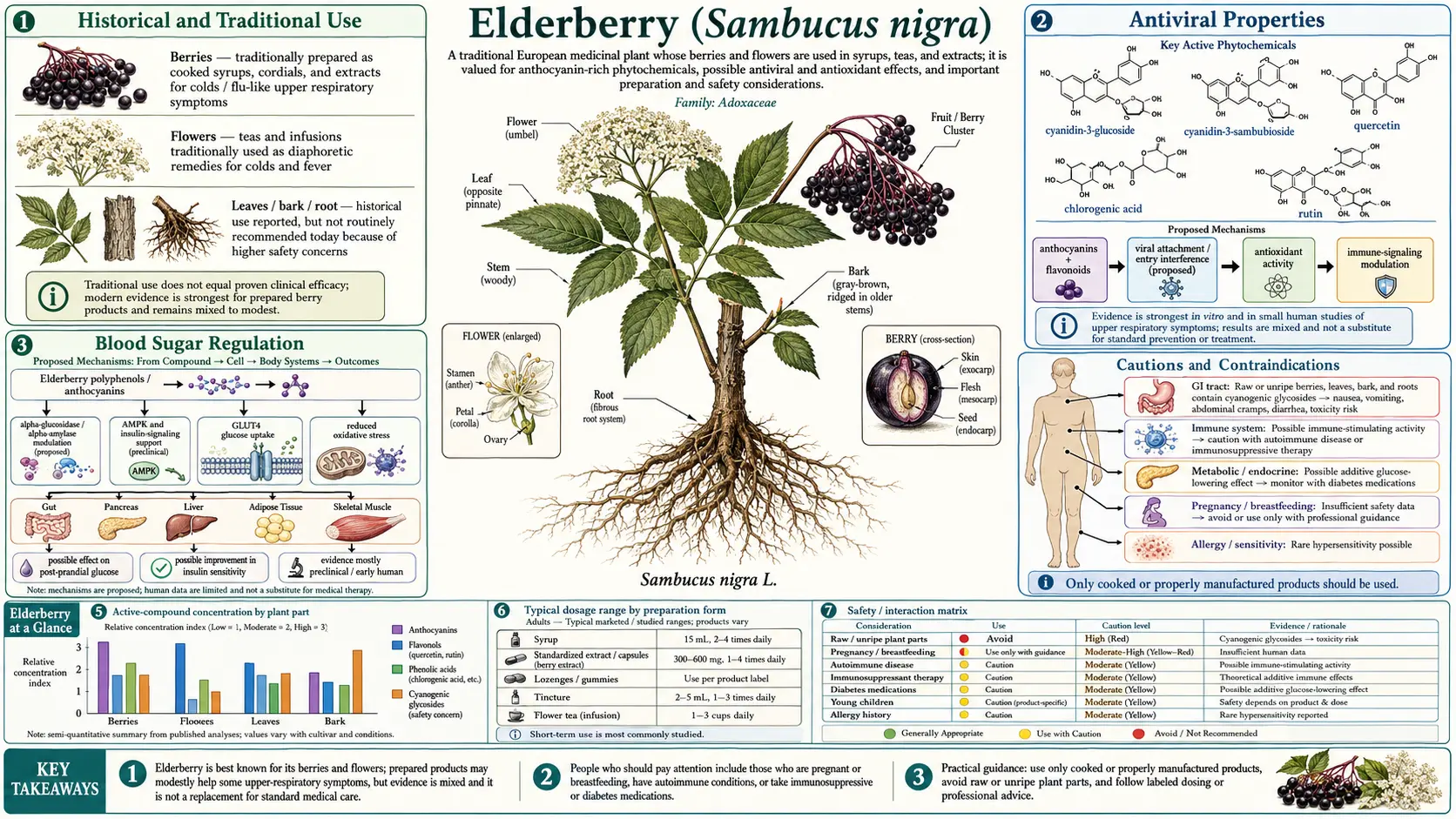
Elderberry has kept human company for thousands of years — gathered as far back as the Stone Age, written up by the ancient physicians Dioscorides and Pliny, and known across medieval Europe as the “medicine chest of the country people,” the tree that supplied a free remedy for nearly every common ailment. It is wrapped in deep folklore, from the guardian spirit known as the Elder Mother to the long-held rule that the berries must always be cooked, and its modern revival as a cold-and-flu remedy began with laboratory research in the 1990s. The fuller story is told in the dedicated History & Traditional Use article.
Botanical Profile
The European elder (Sambucus nigra) is a deciduous shrub or small tree, placed today in the family Adoxaceae and formerly in Caprifoliaceae. The features below are the ones that matter for identification and for the safety findings further down this page.
- Growth and appearance: A multi-stemmed shrub or small tree with grey-brown, furrowed bark on older wood, pithy young stems and pinnate (feather-like) compound leaves with toothed leaflets.
- Flowers: Flat-topped clusters of small, creamy-white, scented flowers in early summer. The flowers are used for elderflower cordials and teas.
- Berries: Small, glossy, dark purple to black berries in drooping clusters in late summer and autumn. The stems, leaves and unripe green berries carry the highest levels of cyanogenic glycosides; levels in the ripe fruit are low (Appenteng 2021; Senica 2017), and heating lowered them by 44–96% in processed products (Senica 2016). Details are on the Preparation and Safety page.
- Species: The influenza and cold trials used extracts of Sambucus nigra. American elder (S. canadensis, now often classed as S. nigra subsp. canadensis) is closely related. The 1983 California poisoning involved S. mexicana, a western US elder (CDC 1984). Red elder (S. racemosa) and dwarf elder (S. ebulus) are separate species that the clinical trials did not study. Elder has look-alike plants, some of them poisonous, so misidentification is a recognized risk in foraging.
- Habitat: Elder grows in temperate regions of Europe, North America and parts of Asia, typically along hedgerows, woodland edges and riverbanks, and is also grown commercially.
Active Compounds and Phytochemistry
The ripe berries are rich in pigmented polyphenols. Which of these compounds, if any, explains a clinical effect has not been established.
- Anthocyanins: Cyanidin-3-sambubioside and cyanidin-3-glucoside are the most abundant anthocyanins in S. nigra fruit; profiles and amounts vary considerably between species and hybrids (Mikulic-Petkovsek 2014). Across 13 cultivars, fresh fruit contained 361–1266 mg/100 g of cyanidin-3-glucoside and 269–656 mg/100 g of cyanidin-3-sambubioside (Kaack 1998).
- Flavonols: Quercetin ranged from 29 to 60 mg/100 g in the same 13 cultivars (Kaack 1998).
- Vitamin C: Ascorbic acid ranged from 6 to 25 mg/100 g of fresh fruit across those cultivars, and in juice processing it protected the anthocyanins from oxidative breakdown (Kaack 1998).
- Phenolics and processing: Total phenolics fell from 958 mg/kg in unprocessed berries to between 114 and 343 mg/kg in juice, tea, spread and liqueur after heating (Senica 2016).
- Polysaccharides (pectins): Pectin fractions purified from elderberries showed dose-dependent complement-fixing and macrophage-stimulating activity in laboratory assays (Ho 2015).
- Other constituents: Elder also contains a lectin, rutin, the triterpenoid lupeol and beta-sitosterol (Gray 2000).
- Cyanogenic glycosides: Sambunigrin was the prevalent cyanogenic glycoside in processed European elderberry products (Senica 2016); these compounds can release hydrogen cyanide, which is why raw plant parts are a hazard (CDC 1984).
Immune System Effects
Most of the immune findings come from cell-culture and animal work. They describe what elderberry preparations did in those systems, not proven effects in people.
- Cytokine production (cell culture): In a 2001 laboratory study, blood monocytes from 12 healthy donors incubated with commercial elderberry preparations produced 2–45-fold more of the inflammatory cytokines IL-1β, TNF-α, IL-6 and IL-8 (Barak 2001). This was a cell-culture result, not a measurement in people.
- Macrophages and complement (laboratory): Elderberry pectins stimulated macrophages and fixed complement in laboratory assays (Ho 2015).
- Mouse study: In influenza-infected mice, oral high-molecular-weight fractions of a concentrated elderberry juice suppressed viral replication in the lungs and raised virus-neutralizing antibodies and secretory IgA; the juice's direct antiviral activity in cell culture was weak (Kinoshita 2012).
- In people: A 2021 systematic review found three studies that measured cytokines outside the body after people took elderberry, with some effect on inflammatory markers that may decline with ongoing supplementation; it found no studies linking elderberry to clinical inflammatory outcomes (Wieland 2021).
The fuller account is on the Immune Modulation page.
Cold and Influenza Trials
Colds and influenza are where elderberry has been tested most in people. The trials are small, each tested one proprietary product, and their results conflict.
- Zakay-Rones 1995: A placebo-controlled, double-blind study during a 1993 influenza B outbreak on an Israeli kibbutz. Symptoms, including fever, improved significantly within 2 days in 93.3% of the elderberry group, while 91.7% of the placebo group improved within 6 days; complete cure came within 2 to 3 days in nearly 90% of the elderberry group and within at least 6 days on placebo (Zakay-Rones 1995). The trial had 27 participants aged 5 to 56; its sponsor was not reported (Wieland 2021).
- Zakay-Rones 2004: 60 patients aged 18–54 with influenza-like symptoms for 48 hours or less, in Norway during the 1999–2000 season. Symptoms were relieved on average 4 days earlier, and rescue medication use was significantly lower, than on placebo (Zakay-Rones 2004). The abstract gives no day-by-day resolution figures. The trial was sponsored by the manufacturer of the tested syrup (Wieland 2021).
- Tiralongo 2016: 312 economy-class air travellers from Australia. Cold episodes did not differ significantly (12 on elderberry vs 17 on placebo, p = 0.4), but the placebo group had more cold-episode days (117 vs 57, p = 0.02) and a higher average symptom score (583 vs 247, p = 0.05). This was a randomized trial, not a meta-analysis (Tiralongo 2016). It was funded by the extract's manufacturer.
- Hawkins 2019 meta-analysis: Pooled randomized trials with a total of 180 participants and reported that elderberry substantially reduced upper respiratory symptoms, with a large mean effect size (Hawkins 2019). It was published before the Macknin trial and does not include it. Funding came from the research department of the authors' own wellness institute.
- Macknin 2020: 87 patients aged 5 and above with laboratory-confirmed influenza in three US emergency departments (2018–2019). Days until all symptoms were none or mild were 5.3 on elderberry vs 4.9 on placebo (p = 0.57). The authors found “no evidence that elderberry benefits the duration or severity of influenza” (Macknin 2020).
- Wieland 2021 systematic review: Across five randomized trials, elderberry may not reduce the risk of developing a cold. It may reduce the duration and severity of colds and the duration of influenza, but the evidence is uncertain (Wieland 2021).
- With oseltamivir: No trial has shown that elderberry adds to the effect of oseltamivir. In the Macknin trial, where patients could also take oseltamivir, a post hoc analysis suggested outcomes with elderberry alone were worse than with placebo alone (Macknin 2020). Post hoc analyses are exploratory.
Each trial is set out in full on the Cold and Flu page.
Antiviral Properties
The antiviral findings come from cell-culture and animal studies. Activity in a dish does not show that an oral dose reaches the airway at an active concentration.
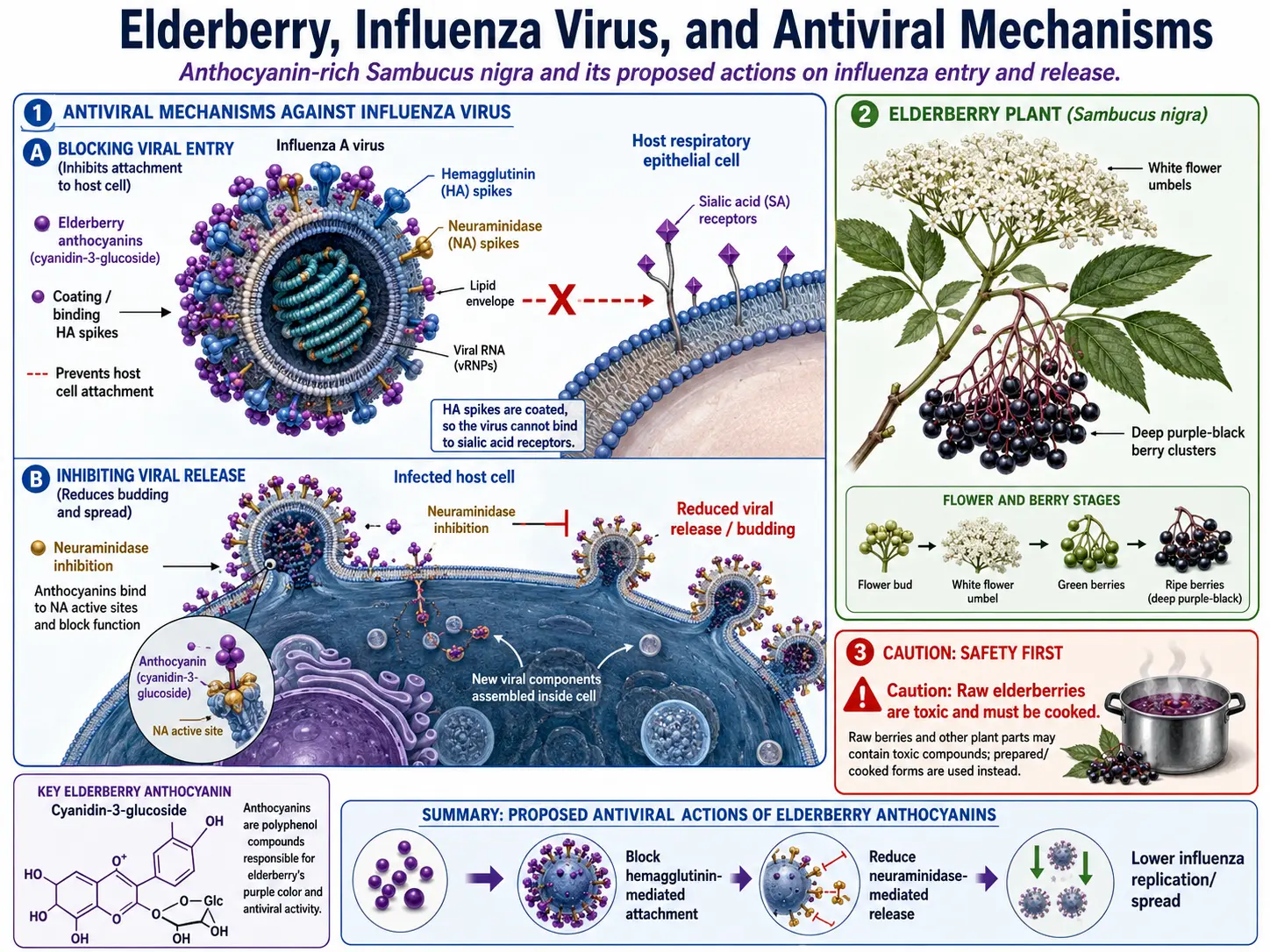
- Influenza strains in cell culture: A standardized elderberry extract reduced hemagglutination and inhibited replication of several influenza A (H1N1 and H3N2) and influenza B strains (Zakay-Rones 1995). A standardized elderberry liquid extract inhibited an H5N1-type influenza A virus isolated from a patient and an influenza B strain, and also showed activity against several respiratory bacteria, including Streptococcus pyogenes (Krawitz 2011). A 2019 study also reported anti-influenza activity in cell culture (Torabian 2019).
- Binding to the virus: Flavonoids from an elderberry extract bound to H1N1 virus particles and blocked them from infecting cells. The two compounds identified were a methylated quercetin and a dihydromyricetin-related flavonoid, not the anthocyanins. The extract itself had an IC50 of 252 µg/mL; the isolated compounds compared favourably with oseltamivir and amantadine in the same laboratory assay (Roschek 2009). The research was carried out by a company that develops botanical extracts.
- Neuraminidase: The sources reviewed for this page do not establish that elderberry inhibits influenza neuraminidase, the target of oseltamivir and zanamivir.
- HIV-1 (cell culture): Flavonoids in elderberry extract, and in cinnamon and green tea extracts, bound to HIV-1 and blocked its entry into a laboratory cell line (Fink 2009). No clinical study has tested this.
- Herpes simplex: The 2004 trial report notes earlier reports of activity against herpes simplex (Zakay-Rones 2004); no study of S. nigra against herpes simplex was found for this page.
- Coronaviruses: A stem extract of a different species, Sambucus formosana, inhibited human coronavirus NL63 in cell culture, with caffeic acid as its most active constituent (Weng 2019). This was not S. nigra berry.
Antioxidant Capacity
Elderberry preparations show antioxidant effects in vitro, and reviews list this among the best-supported laboratory findings (Vlachojannis 2010). The human data are limited:
- LDL oxidation in people: In a randomized, placebo-controlled study of 34 young volunteers, capsules of spray-dried elderberry juice did not change the resistance of LDL to copper-induced oxidation within 3 weeks (Murkovic 2004).
- Antioxidant status: The same study concluded that the low-dose extract had a minor effect on serum lipids and antioxidant capacity (Murkovic 2004).
- Processing: Heating lowered elderberry phenolics as well as cyanogenic glycosides (Senica 2016), and oxygen exposure during juice processing degraded the main anthocyanins (Kaack 1998).
Anti-Inflammatory Effects
The anti-inflammatory evidence is preclinical. A systematic review concluded that antibacterial and anti-inflammatory effects “seem possible, but need further support”; in rats, an ethanol extract of the fruit improved chemically induced colitis, and an aqueous extract produced central depression and analgesia (Vlachojannis 2010).
The cell-culture cytokine finding runs the other way: elderberry preparations raised inflammatory cytokine production by monocytes (Barak 2001). No clinical trial has tested elderberry in arthritis, gout or other inflammatory conditions.
Cardiovascular Research
Two randomized, placebo-controlled human studies have tested elderberry on cardiovascular markers:
- Curtis 2009: 52 healthy postmenopausal women took 500 mg a day of elderberry anthocyanins or placebo for 12 weeks. There was no significant change in biomarkers of cardiovascular risk, including inflammatory markers, platelet reactivity, lipids and glucose; liver and kidney function stayed within clinically acceptable ranges. The authors described the extract as apparently safe but ineffective in altering these markers (Curtis 2009).
- Murkovic 2004: In 34 young volunteers over 2 weeks, cholesterol changed only slightly and not significantly in the elderberry group (from 199 to 190 mg/dl) compared with placebo (from 192 to 196 mg/dl) (Murkovic 2004).
A systematic review counted one animal experiment and one clinical trial as backing a weak lipid-lowering effect (Vlachojannis 2010). No trial has measured heart attacks, strokes or blood pressure outcomes. More detail is on the Antioxidant and Cardiovascular page.
Respiratory Health
Apart from the cold and influenza trials above, the respiratory evidence is thin:
- Sinusitis: No trial of elderberry alone in sinusitis was found. A five-herb combination product that contains elder flower (with gentian root, primula flower, sorrel and verbena) was tested in a 1994 randomized, double-blind trial in acute sinusitis on top of antibiotics and decongestant nasal drops (Neubauer 1994; composition from Glatthaar-Saalmüller 2011). Its results belong to that combination, not to elderberry.
- Respiratory bacteria (laboratory): An elderberry liquid extract inhibited Streptococcus pyogenes, group C and G streptococci and Branhamella catarrhalis in liquid culture (Krawitz 2011).
- Asthma, bronchitis and allergic rhinitis: No clinical trials of elderberry in these conditions were found in the sources reviewed for this page.
Blood Sugar Research
Elder has a traditional use for diabetes, and the evidence for it is laboratory work:
- In vitro: An aqueous extract of elder increased glucose transport, glucose oxidation and glycogen formation in mouse abdominal muscle without added insulin, and stimulated insulin secretion from cultured pancreatic beta cells. The known elder constituents tested (lectin, rutin, lupeol, beta-sitosterol) did not stimulate insulin secretion (Gray 2000).
- In people: In the 12-week trial in postmenopausal women, fasting glucose was among the markers that did not change significantly (Curtis 2009). No trial has tested elderberry in people with diabetes.
- Sugar in syrups: Elderberry syrups are sweetened with sugar or honey; the amount varies by product and is listed on the label.
Skin Health
No clinical trials of elderberry or elderflower for skin conditions, sun protection or skin ageing were found in the sources reviewed for this page. Claims about these uses rest on the berry's antioxidant chemistry and on folk use, not on tested outcomes in people.
Digestive Health
The digestive evidence is from animals: in rats, an ethanol extract of elderberry fruit improved acetic acid-induced colitis (Vlachojannis 2010). No human trials of elderberry for gut conditions, the microbiome or constipation were found in the sources reviewed for this page. On the other side, nausea is the best-documented effect of uncooked berries (CDC 1984).
Forms and Preparations
Elderberry is sold and prepared in several forms. What the research reports about them:
- Syrups: The two Zakay-Rones influenza trials and the Macknin trial tested syrups (Zakay-Rones 1995; Zakay-Rones 2004; Macknin 2020). Homemade syrups are cooked berry preparations, often sweetened with honey, which the CDC advises against giving to children younger than 1 year because of infant botulism.
- Capsules and extracts: The air-traveller trial used capsules of a membrane-filtered elderberry extract (Tiralongo 2016); the cardiovascular trial used capsules providing 500 mg a day of anthocyanins (Curtis 2009).
- Juice, tea, spread and liqueur: In processed products, heating lowered cyanogenic glycosides by 44% in juice, 80% in tea and 96% in liqueur and spread, and also lowered phenolics (Senica 2016). No quantifiable cyanogenic glycosides were found in the commercial American elderberry juice tested in a 2021 analysis (Appenteng 2021).
- Elderflower: The flowers are used for teas and cordials. The European Medicines Agency publishes a herbal monograph on elder flower (sambuci flos).
- Product variation: Dietary supplements in the US do not need pre-market approval, and differences are often found between labelled and actual ingredients, so results for one product may not apply to another (LactMed 2025). Each clinical trial tested a single proprietary product.
Doses Used in the Clinical Trials
The doses below are what the trials used, reported as findings, not as instructions. Each trial tested one proprietary product, so results may not transfer to other products.
- Zakay-Rones 1995: 1 tablespoon of syrup twice daily for children and four times daily for adults (Wieland 2021).
- Zakay-Rones 2004: 15 ml of syrup four times a day for 5 days (Zakay-Rones 2004).
- Macknin 2020: 15 ml twice a day (ages 5–12) or four times a day (over 12) for 5 days; no benefit over placebo was found (Macknin 2020).
- Tiralongo 2016: 300 mg capsules: 600 mg a day from 10 days before travel, then 900 mg a day while travelling and for 4–5 days after arrival (Tiralongo 2016).
- Curtis 2009: 500 mg a day of elderberry anthocyanins for 12 weeks, as 2 capsules twice a day (Curtis 2009).
- Children: The youngest participants in any trial on this page were 5 years old (Wieland 2021; Macknin 2020). No trial studied children younger than 5, and none studied long-term preventive use through a whole season.
Cautions and Contraindications
The safety findings below are reported as findings. Decisions about supplements belong with a clinician.
- Raw berries and plant parts: The CDC report lists the fresh leaves, flowers, bark, young buds and roots as containing a glucoside that can produce hydrocyanic acid, and notes that uncooked berries may produce nausea. In August 1983, juice pressed from wild elderberries crushed together with their leaves and branches made 11 of 25 people at a gathering in California ill; eight were flown to a hospital and one was admitted overnight; all recovered (CDC 1984). Total cyanogenic potential was highest in stems and green berries (Appenteng 2021).
- Heating: Heating lowered cyanogenic glycosides by 44–96% depending on the product (Senica 2016); the sources reviewed give no validated home cooking time or temperature.
- Autoimmune conditions: The concern is theoretical, based on the cell-culture cytokine findings (Barak 2001). No trial has tested elderberry in autoimmune disease. A 2022 case report describes autoimmune hepatitis in a long-term user of elderberry-containing supplements, with an association the authors call “plausible” (Ramachandran 2022); a single case report cannot establish cause.
- Cytokine storm: This concern, raised during the COVID-19 pandemic, is theoretical. A 2021 systematic review found no evidence that elderberry overstimulates the immune system (Wieland 2021); a 2022 review found not yet enough evidence for the claim and called for further research in COVID-19 patients (Asgary 2022).
- Immunosuppressive drugs: A possible interaction with drugs such as cyclosporine, tacrolimus or corticosteroids is theoretical, based on the same cell-culture findings (Barak 2001); no clinical interaction studies were found.
- Diabetes: The blood-sugar findings are from cell and tissue experiments (Gray 2000); no interaction with diabetes medicines has been studied. Syrups add sugar, listed on the label.
- Pregnancy and breastfeeding: A 2014 review found no animal or human studies of elderberry safety in pregnancy (Holst 2014). No data exist on elderberry in breast milk or on safety in nursing mothers or infants, and LactMed states that no recommendations can be made on medicinal doses during breastfeeding (LactMed 2025).
- Allergy: Elderberry preparations have rarely caused allergic reactions (LactMed 2025).
- Adverse events in trials: In the 2018–2019 emergency-room trial, adverse events did not differ significantly between elderberry and placebo (Macknin 2020). In the air-traveller trial, a causal relationship between the few reported adverse events and elderberry could not be established (Tiralongo 2016).
The full safety record, including species differences and the CDC report, is on the Preparation and Safety page.
Key Research Papers
- Centers for Disease Control (CDC) (1984). Poisoning from elderberry juice — California. MMWR Morbidity and Mortality Weekly Report 33(13):173-174. — PubMed PMID: 6422238 (full text: CDC MMWR)
- Senica M, Stampar F, Veberic R, Mikulic-Petkovsek M (2016). Processed elderberry (Sambucus nigra L.) products: A beneficial or harmful food alternative? LWT — Food Science and Technology 72:182-188. — doi:10.1016/j.lwt.2016.04.056
- Senica M, Stampar F, Veberic R, Mikulic-Petkovsek M (2017). The higher the better? Differences in phenolics and cyanogenic glycosides in Sambucus nigra leaves, flowers and berries from different altitudes. Journal of the Science of Food and Agriculture 97(8):2623-2632. — PubMed PMID: 27734518
- Appenteng MK, Krueger R, Johnson MC, Ingold H, Bell R, Thomas AL, Greenlief CM (2021). Cyanogenic glycoside analysis in American elderberry. Molecules 26(5):1384. — PubMed PMID: 33806603
- Mikulic-Petkovsek M, Schmitzer V, Slatnar A, Todorovic B, Veberic R, Stampar F, Ivancic A (2014). Investigation of anthocyanin profile of four elderberry species and interspecific hybrids. Journal of Agricultural and Food Chemistry 62(24):5573-80. — PubMed PMID: 24830391
- Kaack K, Austed T (1998). Interaction of vitamin C and flavonoids in elderberry (Sambucus nigra L.) during juice processing. Plant Foods for Human Nutrition 52(3):187-98. — PubMed PMID: 9950080
- Zakay-Rones Z, Varsano N, Zlotnik M, Manor O, Regev L, Schlesinger M, Mumcuoglu M (1995). Inhibition of several strains of influenza virus in vitro and reduction of symptoms by an elderberry extract (Sambucus nigra L.) during an outbreak of influenza B Panama. Journal of Alternative and Complementary Medicine 1(4):361-369. — PubMed PMID: 9395631
- Zakay-Rones Z, Thom E, Wollan T, Wadstein J (2004). Randomized study of the efficacy and safety of oral elderberry extract in the treatment of influenza A and B virus infections. Journal of International Medical Research 32(2):132-140. — PubMed PMID: 15080016
- Tiralongo E, Wee SS, Lea RA (2016). Elderberry supplementation reduces cold duration and symptoms in air-travellers: a randomized, double-blind placebo-controlled clinical trial. Nutrients 8(4):182. — PubMed PMID: 27023596
- Hawkins J, Baker C, Cherry L, Dunne E (2019). Black elderberry (Sambucus nigra) supplementation effectively treats upper respiratory symptoms: a meta-analysis of randomized, controlled clinical trials. Complementary Therapies in Medicine 42:361-365. — PubMed PMID: 30670267
- Macknin M, Wolski K, Negrey J, Mace S (2020). Elderberry extract outpatient influenza treatment for emergency room patients ages 5 and above: a randomized, double-blind, placebo-controlled trial. Journal of General Internal Medicine 35(11):3271-3277. — PubMed PMID: 32929634
- Wieland LS, Piechotta V, Feinberg T, Ludeman E, Hutton B, Kanji S, Seely D, Garritty C (2021). Elderberry for prevention and treatment of viral respiratory illnesses: a systematic review. BMC Complementary Medicine and Therapies 21(1):112. — PubMed PMID: 33827515
- Vlachojannis JE, Cameron M, Chrubasik S (2010). A systematic review on the sambuci fructus effect and efficacy profiles. Phytotherapy Research 24(1):1-8. — PubMed PMID: 19548290
- Barak V, Halperin T, Kalickman I (2001). The effect of Sambucol, a black elderberry-based, natural product, on the production of human cytokines: I. Inflammatory cytokines. European Cytokine Network 12(2):290-296. — PubMed PMID: 11399518
- Ho GT, Ahmed A, Zou YF, Aslaksen T, Wangensteen H, Barsett H (2015). Structure-activity relationship of immunomodulating pectins from elderberries. Carbohydrate Polymers 125:314-22. — PubMed PMID: 25857988
- Kinoshita E, Hayashi K, Katayama H, Hayashi T, Obata A (2012). Anti-influenza virus effects of elderberry juice and its fractions. Bioscience, Biotechnology, and Biochemistry 76(9):1633-8. — PubMed PMID: 22972323
- Krawitz C, Mraheil MA, Stein M, Imirzalioglu C, Domann E, Pleschka S, Hain T (2011). Inhibitory activity of a standardized elderberry liquid extract against clinically-relevant human respiratory bacterial pathogens and influenza A and B viruses. BMC Complementary and Alternative Medicine 11:16. — PubMed PMID: 21352539
- Roschek B Jr, Fink RC, McMichael MD, Li D, Alberte RS (2009). Elderberry flavonoids bind to and prevent H1N1 infection in vitro. Phytochemistry 70(10):1255-61. — PubMed PMID: 19682714
- Torabian G, Valtchev P, Adil Q, Dehghani F (2019). Anti-influenza activity of elderberry (Sambucus nigra). Journal of Functional Foods 54:353-360. — doi:10.1016/j.jff.2019.01.031
- Fink RC, Roschek B Jr, Alberte RS (2009). HIV type-1 entry inhibitors with a new mode of action. Antiviral Chemistry and Chemotherapy 19(6):243-55. — PubMed PMID: 19641233
- Weng JR, Lin CS, Lai HC, Lin YP, Wang CY, Tsai YC, Wu KC, Huang SH, Lin CW (2019). Antiviral activity of Sambucus FormosanaNakai ethanol extract and related phenolic acid constituents against human coronavirus NL63. Virus Research 273:197767. — PubMed PMID: 31560964
- Curtis PJ, Kroon PA, Hollands WJ, Walls R, Jenkins G, Kay CD, Cassidy A (2009). Cardiovascular disease risk biomarkers and liver and kidney function are not altered in postmenopausal women after ingesting an elderberry extract rich in anthocyanins for 12 weeks. Journal of Nutrition 139(12):2266-71. — PubMed PMID: 19793846
- Murkovic M, Abuja PM, Bergmann AR, Zirngast A, Adam U, Winklhofer-Roob BM, Toplak H (2004). Effects of elderberry juice on fasting and postprandial serum lipids and low-density lipoprotein oxidation in healthy volunteers: a randomized, double-blind, placebo-controlled study. European Journal of Clinical Nutrition 58(2):244-9. — PubMed PMID: 14749743
- Gray AM, Abdel-Wahab YH, Flatt PR (2000). The traditional plant treatment, Sambucus nigra (elder), exhibits insulin-like and insulin-releasing actions in vitro. Journal of Nutrition 130(1):15-20. — PubMed PMID: 10613759
- Neubauer N, März RW (1994). Placebo-controlled, randomized double-blind clinical trial with Sinupret® sugar coated tablets on the basis of a therapy with antibiotics and decongestant nasal drops in acute sinusitis. Phytomedicine 1(3):177-181. — doi:10.1016/s0944-7113(11)80061-9
- Glatthaar-Saalmüller B, Rauchhaus U, Rode S, Haunschild J, Saalmüller A (2011). Antiviral activity in vitro of two preparations of the herbal medicinal product Sinupret® against viruses causing respiratory infections. Phytomedicine 19(1):1-7. — PubMed PMID: 22112724
- Asgary S, Pouramini A (2022). The pros and cons of using elderberry (Sambucus nigra) for prevention and treatment of COVID-19. Advanced Biomedical Research 11:96. — PubMed PMID: 36518861
- Ramachandran A, Antala D, Pudasainee P, Panginikkod S, Gupta H (2022). A plausible association between the use of elderberry and autoimmune hepatitis. Cureus 14(4):e24250. — PubMed PMID: 35602846
- Holst L, Havnen GC, Nordeng H (2014). Echinacea and elderberry — should they be used against upper respiratory tract infections during pregnancy? Frontiers in Pharmacology 5:31. — PubMed PMID: 24624087
- Drugs and Lactation Database (LactMed) (2006–). Elderberry. Bethesda (MD): National Institute of Child Health and Human Development; entry revised April 15, 2025. — PubMed PMID: 30000895
PubMed Topic Searches
The following PubMed topic searches open live queries, so the result set stays current as new research is published.
- PubMed: Influenza
- PubMed: Upper respiratory infection randomized trial
- PubMed: Antiviral mechanism
- PubMed: Anthocyanins and antioxidant activity
- PubMed: Common cold duration
- PubMed: Immune function and cytokines
- PubMed: Rhinovirus
- PubMed: Elderberry syrup clinical trial
- PubMed: Cardiovascular and blood pressure
- PubMed: Systematic review and meta-analysis
- PubMed: Safety and cyanogenic glycosides
Connections
- All Herbs
- Immune Response — interactive animation
- Elderberry Benefits Deep Dive
- Influenza
- Vitamin C
- Garlic
- Zinc
- Immune Boosting
- Vitamin D3
- Echinacea
- Andrographis
- Quercetin
- Allergies
- Asthma
- Oxidative Stress
- Sinusitis
- Honey
- Vitamin A
- Eczema
- Cold Flu Treatments
- Bee Pollen
- Mullein
- Conditions on this site that reference this page: Common Cold · Strep Throat · Sore Throat · Coronary Artery Disease (CAD) · Ulcerative Colitis