Cod Lean Protein Profile
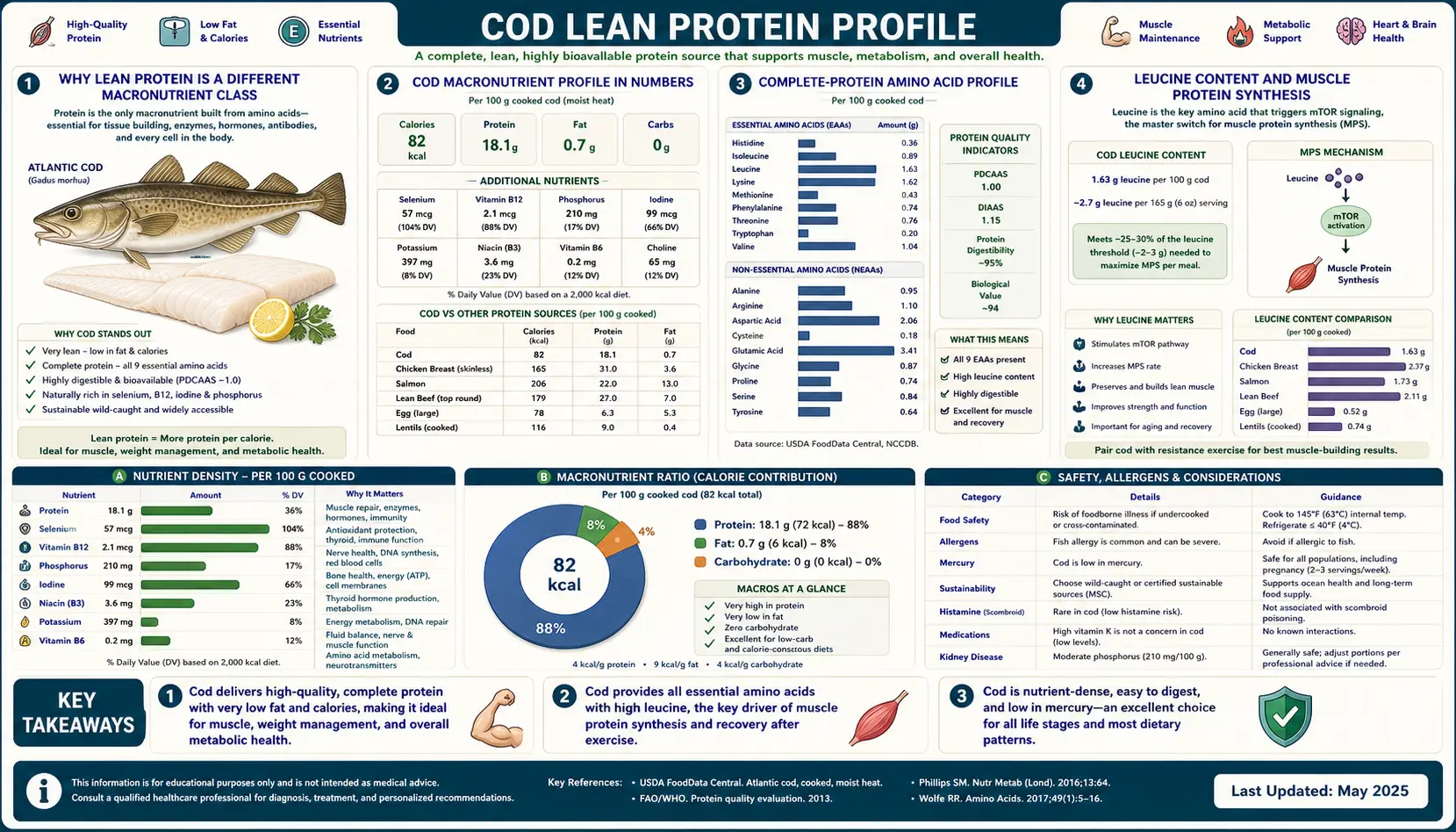
A 100-gram cooked cod fillet delivers approximately 23 grams of complete protein in only 105 kilocalories, with less than 1 gram of fat and zero carbohydrate. The resulting protein-to-energy ratio of approximately 0.22 g protein per kcal is higher than chicken breast (0.20), much higher than salmon (0.13 because of the fat content), and approaches whey protein isolate as a whole-food source. This page walks through why that ratio matters for athletes during cutting phases, older adults at risk for sarcopenia, individuals managing weight, and patients with conditions that require protein-restricted calorie intake. It covers the complete-protein amino acid profile, leucine content for muscle protein synthesis, DIAAS (digestible indispensable amino acid score) data, the bioactive peptides that survive digestion, and the small but consistent insulin-sensitivity and blood-pressure literature on cod protein specifically.
Table of Contents
- Why "Lean Protein" Is a Different Macronutrient Class
- Cod Macronutrient Profile in Numbers
- Complete-Protein Amino Acid Profile
- Leucine Content and Muscle Protein Synthesis
- DIAAS Protein Quality Score
- Bioactive Peptides That Survive Digestion
- Insulin Sensitivity and Cod Protein
- Blood Pressure and Cod Protein Hydrolysates
- Satiety and Weight Management Applications
- Sarcopenia Prevention in Older Adults
- Practical Daily Portion Sizes
- Key Research Papers
- Connections
- Featured Videos
Why "Lean Protein" Is a Different Macronutrient Class
The conventional split of dietary protein sources is animal vs plant, but a more useful axis for clinical and athletic nutrition is high-fat vs low-fat animal protein. Chicken thigh, ribeye, salmon, lamb, pork shoulder, and whole eggs are all excellent complete-protein sources, but their protein-to-calorie ratios sit between 0.07 (ribeye) and 0.18 (chicken thigh) because of their fat content. A 200-kcal serving of any of these foods delivers somewhere between 14 g and 36 g of protein.
Lean white fish (cod, haddock, pollock, hake, sole) and skinless chicken breast sit in a different category. Their fat content is below 2%, so the protein-to-energy ratio climbs to 0.20-0.23 g protein per kcal. A 200-kcal serving of cod delivers approximately 44 grams of protein. The only whole foods that beat this ratio are non-fat dairy (skim milk, fat-free yogurt) and the lean cuts of game meat (rabbit, venison loin).
This matters in three clinical contexts. Calorie-restricted diets need to preserve lean mass and induce satiety while staying under a daily energy ceiling — the higher the protein-per-calorie ratio of the food, the easier this is. Sarcopenia prevention in older adults requires hitting 1.0-1.2 g protein per kg body weight per day in patients who have reduced appetite and energy needs — again, denser protein sources help. Renal-impaired patients with strict protein ceilings can derive most of their daily protein from a small total volume of food, leaving room for other nutritional priorities.
Cod is not the only food that fits, but among palatable, widely available, and culturally established options, it sits in the top three. Salmon and tuna get more attention because of their omega-3 content, but for the specific job of delivering protein per calorie, lean white fish wins.
Cod Macronutrient Profile in Numbers
USDA FoodData Central values for a 100-gram cooked Atlantic cod fillet (dry-heat cooked, no added fat):
- Energy: 105 kilocalories (439 kJ)
- Protein: 22.8 g (approximately 87% of total energy)
- Total fat: 0.86 g (approximately 7% of total energy)
- Saturated fat: 0.17 g
- Monounsaturated: 0.12 g
- Polyunsaturated: 0.28 g (EPA + DHA combined: approximately 158 mg)
- Carbohydrate: 0 g
- Cholesterol: 55 mg
- Sodium: 78 mg (unsalted)
- Water: 75 g (cod is dense, watery flesh)
For Pacific cod (Gadus macrocephalus), the values are very similar — slightly higher protein (~24 g) and slightly lower fat (~0.7 g), but the differences are not clinically meaningful. Both species deliver approximately 23 g protein in approximately 105 kcal per 100 g cooked weight.
Compare to other common protein foods (100 g cooked, USDA values):
- Chicken breast (skinless): 165 kcal, 31 g protein, 3.6 g fat — ratio 0.19
- Salmon (Atlantic, farmed): 206 kcal, 22 g protein, 12 g fat — ratio 0.11
- Tuna (yellowfin): 132 kcal, 28 g protein, 0.6 g fat — ratio 0.21
- Eggs (whole): 155 kcal, 13 g protein, 11 g fat — ratio 0.08
- Beef sirloin (lean): 206 kcal, 27 g protein, 9.6 g fat — ratio 0.13
- Greek yogurt (non-fat): 59 kcal, 10 g protein, 0.4 g fat — ratio 0.17
- Cottage cheese (1% fat): 72 kcal, 12 g protein, 1 g fat — ratio 0.17
- Whey protein isolate (90% protein): ~360 kcal, 90 g protein — ratio 0.25 (but not a whole food)
Cod and yellowfin tuna lead the whole-food ranking. Tuna's mercury content (see the Mercury vs Other Fish page) limits its safe consumption frequency, particularly in pregnancy and pediatric populations. Cod has no such limitation — it sits in the FDA "Best Choices" category — which makes cod the practical lean-protein winner for most users.
Complete-Protein Amino Acid Profile
Cod muscle protein contains all nine essential amino acids in proportions adequate for human protein synthesis. The amino acid profile (mg per gram of total protein, USDA-derived) is:
- Leucine: 81 mg/g (the most important EAA for muscle protein synthesis)
- Lysine: 92 mg/g (often limiting in plant-based diets)
- Valine: 52 mg/g
- Isoleucine: 46 mg/g
- Threonine: 44 mg/g
- Phenylalanine: 39 mg/g
- Methionine: 30 mg/g
- Histidine: 24 mg/g
- Tryptophan: 11 mg/g
The non-essential amino acids in cod include relatively large amounts of taurine (a sulfur-containing amino acid important for cardiac and ocular function) and glycine (a glucogenic amino acid that supports collagen synthesis and inhibitory neurotransmission). Cod skin and collagen-rich connective tissue, often discarded by Western consumers, contain very high glycine, proline, and hydroxyproline — the same amino acid composition as bovine and porcine collagen. Cod skin gelatin is harvested commercially for halal and kosher applications and for individuals avoiding mammalian collagen sources (see the Mammalian Foods List for the alpha-gal allergy context).
The cod amino acid pattern compares favorably to the WHO/FAO 2007 reference protein. Lysine, leucine, and threonine all exceed reference values comfortably; the methionine content is adequate but not high. For someone consuming cod as a daily protein staple, methionine restriction is not a concern — only if cod were the sole protein source would methionine intake fall below reference values.
Leucine Content and Muscle Protein Synthesis
Among the essential amino acids, leucine has a uniquely strong signaling role in initiating muscle protein synthesis (MPS). Leucine binds to the leucine sensor Sestrin2, which releases inhibition of the GATOR2 complex, which in turn activates mTORC1 — the master regulator of protein synthesis in skeletal muscle. The threshold dose to maximally stimulate MPS in young healthy adults is approximately 2.5-3 grams of leucine per meal; older adults require approximately 3.5-4 grams per meal due to "anabolic resistance."
A 100-gram cooked cod fillet contains approximately 1.85 g of leucine. A 170-gram (6-ounce) fillet — a typical restaurant or home-prepared portion — delivers approximately 3.1 g of leucine, comfortably above the young-adult MPS threshold and approaching the older-adult threshold. A 230-gram (8-ounce) fillet delivers approximately 4.2 g leucine, sufficient for any age group.
For comparison, the leucine content of common protein sources per typical serving:
- 3 large eggs: 1.1 g leucine
- 1 cup Greek yogurt (non-fat): 1.0 g leucine
- 4 oz chicken breast: 2.6 g leucine
- 4 oz cod: 2.1 g leucine
- 4 oz beef sirloin: 2.7 g leucine
- 1 scoop (25 g) whey protein isolate: 2.5 g leucine
The practical implication: a single 6-8 oz cod fillet meal provides enough leucine to maximally stimulate MPS in young adults and comes close to or meets the threshold in older adults. Pairing cod with a small whey or dairy supplement (a glass of milk, a scoop of whey) is a simple way to push above the older-adult threshold without adding significant fat or calories.
DIAAS Protein Quality Score
The current state-of-the-art metric for protein quality is the Digestible Indispensable Amino Acid Score (DIAAS), introduced by the FAO in 2013 to replace the older PDCAAS (Protein Digestibility Corrected Amino Acid Score). DIAAS measures true ileal digestibility of each essential amino acid in growing pigs (the accepted animal model for human digestion) and compares the digestible amino acid content to the FAO reference protein for the age group in question.
A DIAAS score of 100% or above indicates a protein meets all essential amino acid requirements; above 100% is considered "excellent quality"; 75-99% is "good quality"; below 75% is "limited quality" and requires complementary protein sources.
Reported DIAAS scores for common protein sources:
- Whey protein isolate: 109% (excellent)
- Whole milk: 114% (excellent)
- Whole egg: 113% (excellent)
- Beef: 112% (excellent)
- Cooked white fish (cod, haddock): 100-115% (excellent)
- Soy protein isolate: 90% (good)
- Pea protein isolate: 64-70% (limited, often limiting in methionine)
- Wheat protein: 40-45% (limited, limiting in lysine)
- Rice protein isolate: 37-59% (limited, limiting in lysine)
Cod scores in the "excellent" range, on par with the other top animal-source proteins. The high ileal digestibility of fish protein (typically 95-98%) and the favorable amino acid composition combine to produce a near-reference-quality protein.
For practical meal planning: a single cod meal can serve as the sole high-quality protein source for that meal without needing to combine with complementary proteins. This is in contrast to most plant-based proteins (rice + beans, hummus + pita) which require deliberate combination over the course of the day to deliver a complete EAA profile.
Bioactive Peptides That Survive Digestion
Beyond the amino acid building blocks themselves, cod protein contains intact peptide sequences that survive gastric and intestinal digestion and are absorbed across the intestinal epithelium into systemic circulation. Several of these peptides have measurable physiological effects independent of their amino acid contribution. Cod protein hydrolysates — commercial preparations that pre-digest cod muscle with proteases to generate these peptides — have been studied in randomized trials for blood pressure, insulin sensitivity, and inflammation.
Notable bioactive peptide classes from cod include:
- ACE-inhibitor peptides — short peptides (typically 2-5 amino acids) that competitively inhibit angiotensin-converting enzyme, producing a mild blood-pressure-lowering effect similar in mechanism to lisinopril or enalapril but much weaker. Notable sequences include Leu-Lys-Pro and Leu-Lys-Pro-Asn-Met.
- Anti-oxidant peptides — sequences rich in tyrosine, methionine, histidine, and lysine residues that scavenge reactive oxygen species and chelate transition metal ions (iron, copper).
- Insulinotropic peptides — cod protein hydrolysate has been shown to enhance GLP-1 secretion from gut L-cells, potentiating insulin release after a meal. This is mechanistically separate from the bolus amino acid effect on insulin and operates in the gut lumen before absorption.
- Immunomodulatory peptides — some cod-derived peptides modulate cytokine production (IL-6, TNF-alpha) in cell-culture and animal-model studies. The clinical relevance in humans is not yet established.
- Antimicrobial peptides — cod skin and mucus contain cathelicidins and defensins that play a role in the fish's innate immunity; trace amounts persist in the fillet.
The clinical relevance of these peptides in everyday cod consumption is modest — eating a 6-ounce fillet of cod is not equivalent to taking a daily ACE inhibitor for hypertension. But the cumulative effect of regular fish consumption almost certainly contributes to the cardiovascular and metabolic benefits seen in epidemiologic studies, and isolated cod protein hydrolysate products have measurable effects in small randomized trials that approach clinical significance.
Insulin Sensitivity and Cod Protein
The most striking line of cod-protein research is the insulin-sensitivity literature from Charles Couillard's group at Laval University in Quebec. Their 2007 randomized trial (Ouellet V et al., Diabetes Care) compared cod protein to a mixed source of lean animal proteins (beef, pork, eggs, milk products) in insulin-resistant adults with metabolic syndrome. After 4 weeks of cod protein consumption (5 cod meals per week, providing 23% of total protein intake), insulin sensitivity measured by hyperinsulinemic-euglycemic clamp was significantly improved compared to the lean meat group.
The effect size was modest but clinically meaningful — approximately a 30% improvement in insulin-mediated glucose uptake. Importantly, the improvement was not seen in the lean meat comparison group despite matched protein, fat, and calorie intake. The proposed mechanism involves both the amino acid profile of cod protein (high glycine and taurine relative to meat) and cod-specific bioactive peptides that may modulate hepatic insulin signaling.
Subsequent work from the same group and others has confirmed the effect in smaller cohorts and explored the mechanism. A second Couillard trial in 2014 (Vikoren LA et al.) found similar insulin sensitivity improvements with cod protein hydrolysate supplementation. The effect appears to be specific to cod and possibly other white fish, not seen with fatty fish like salmon (where the omega-3 contribution may obscure the protein effect).
The clinical implication for patients with metabolic syndrome, prediabetes, or type 2 diabetes is that substituting cod for a meat-protein equivalent meal 3-5 times per week may produce measurable improvements in insulin sensitivity that compound over time. This is not a substitute for the foundational diabetes interventions (weight loss, exercise, metformin), but it is a low-cost, low-risk adjunct with a positive evidence signal.
Blood Pressure and Cod Protein Hydrolysates
The ACE-inhibitor peptide mechanism discussed above translates to measurable blood-pressure reduction in randomized trials of cod protein hydrolysate supplements. A 2007 Norwegian trial (Lassoued I et al.) found that 3 grams per day of cod protein hydrolysate reduced systolic blood pressure by approximately 7 mmHg in mildly hypertensive adults over 8 weeks. A 2013 trial in adults with cardiovascular risk factors found similar reductions.
The effect size is roughly comparable to low-dose pharmaceutical ACE inhibition (1-2 mg lisinopril), which is small in absolute terms but population-level meaningful. For someone with borderline hypertension who wants to avoid medication, regular cod consumption or supplementation with cod protein hydrolysate could be one component of a non-pharmacological blood pressure management plan, alongside the DASH diet, sodium restriction, weight loss, and exercise.
The effect is dose-dependent and reversible — stopping cod protein hydrolysate returns blood pressure to baseline within 2-4 weeks. This is consistent with the mechanism (intact ACE inhibition rather than a structural cardiovascular adaptation).
Whole cod consumption (as a regular dietary staple, not a supplement) likely contributes to the blood pressure effect, but the cod protein per meal is much lower than the concentrated hydrolysate products used in trials. The cumulative effect of eating cod 3-5 times per week probably contributes 2-3 mmHg of systolic blood pressure reduction in hypertensive adults over months, which is modest but additive with other interventions.
Satiety and Weight Management Applications
The high protein content and low calorie density of cod produce a strong satiety signal per calorie consumed — the protein leverage hypothesis (Simpson & Raubenheimer) predicts that people consuming high-protein foods reach satiety at lower total caloric intake. In short-term feeding studies, cod-containing meals produce greater post-meal satiety, lower hunger ratings, and reduced subsequent caloric intake than equicaloric beef or chicken meals.
The mechanism involves several converging signals:
- Cholecystokinin (CCK) release — protein meals stimulate CCK release from the duodenum, which slows gastric emptying and produces satiety. Cod protein is particularly potent at stimulating CCK release compared to other protein sources in animal models.
- GLP-1 release — cod protein hydrolysate stimulates GLP-1 release from L-cells in the distal small intestine, which is both an incretin (potentiates insulin release) and a satiety signal (acts on hypothalamic appetite centers).
- Thermic effect of protein — the diet-induced thermogenesis of protein is approximately 25-30% of consumed calories, much higher than carbohydrate (5-10%) or fat (0-3%). A 100 kcal cod meal therefore "costs" 25-30 kcal to digest, leaving a net of only 70-75 kcal absorbed.
- Aminostatic signaling — the rise in blood amino acid concentration after a protein meal directly suppresses appetite via hypothalamic sensing.
For weight management, the practical implication is that cod-centered meals deliver more protein-induced satiety per calorie than nearly any other whole food option. Substituting a 6-ounce cod fillet for a 6-ounce salmon fillet at dinner reduces caloric intake by approximately 200 kcal without sacrificing protein satiety — over a year of daily substitution, that represents approximately 21 pounds of fat-loss potential if other intake remains constant.
This is not a license to ignore overall dietary patterns. The Mediterranean and DASH dietary patterns that include cod also include vegetables, legumes, whole grains, olive oil, and limited red meat — the cod component is one element of a synergistic pattern, not a stand-alone weight-loss intervention. See Anti-Inflammatory Diet for the broader pattern context.
Sarcopenia Prevention in Older Adults
Sarcopenia — the age-related loss of skeletal muscle mass and function — affects approximately 10% of adults aged 60-70 and rises to 40-50% in adults over 80. The condition is independently associated with increased fall risk, fracture risk, hospitalization, loss of independence, and all-cause mortality. The cornerstone non-pharmacological interventions are resistance exercise and adequate dietary protein.
The current consensus protein recommendation for older adults at risk for sarcopenia is 1.0-1.2 grams of protein per kilogram of body weight per day (compared to 0.8 g/kg for younger adults). For a 70 kg older adult, this is 70-84 g protein per day — substantially more than most older adults actually consume.
Two specific challenges make hitting this protein target difficult in older adults:
- Reduced appetite — many older adults experience early satiety and reduced food intake, making it difficult to consume large volumes of any food.
- Anabolic resistance — aging muscle is less responsive to protein-induced MPS stimulation, requiring higher per-meal leucine doses (3.5-4 g) to maximally stimulate synthesis.
Cod addresses both challenges. Its high protein density allows substantial protein intake in modest food volumes, and its leucine content (approximately 1.85 g per 100 g cooked fillet) supports MPS when consumed in 6-8 oz portions. The texture is also relatively soft and easy to chew for older adults with dental problems — flaky cooked cod requires less mastication than beef, chicken breast, or pork chops.
Practical recommendations for older adults at risk for sarcopenia:
- Aim for at least 25-30 g protein per main meal (breakfast, lunch, dinner) to maximally stimulate MPS at each meal — a 6-ounce cod fillet at dinner contributes approximately 40 g.
- Include cod or other lean fish 2-3 times per week as a primary protein source.
- Pair cod with vitamin D — either from the cod liver oil itself (see Vitamin D and Liver Oil) or from supplementation, since vitamin D is independently required for muscle protein synthesis and function.
- Combine dietary protein with resistance exercise — protein without exercise produces marginal sarcopenia benefit; the combination is multiplicative.
Practical Daily Portion Sizes
Standard cod portion sizes and protein delivery:
- 3 oz (85 g) cooked — restaurant "small" portion: 89 kcal, 19 g protein, 1.6 g leucine
- 4 oz (113 g) cooked — USDA standard serving: 119 kcal, 26 g protein, 2.1 g leucine
- 6 oz (170 g) cooked — typical home dinner portion: 178 kcal, 39 g protein, 3.1 g leucine
- 8 oz (227 g) cooked — large/athletic dinner portion: 238 kcal, 52 g protein, 4.2 g leucine
For weight comparison, raw-to-cooked yield for cod is approximately 75% (cod loses about 25% of its weight in water during cooking). A 1-pound (454 g) raw cod fillet yields approximately 12 oz (340 g) cooked.
For most adults aiming for the 1.0-1.2 g protein/kg target, two 6-ounce cod meals per week (combined with adequate protein from other sources on other days) provide a substantial fraction of weekly protein needs. The remaining protein can come from chicken, eggs, dairy, legumes, and other fish.
For athletes in cutting phases (high protein, low calorie), cod can take a larger share — one 8-oz cod meal daily provides approximately 50 g protein for only 238 kcal, leaving room for substantial vegetable, fruit, and complex carbohydrate intake while staying under tight calorie ceilings.
Key Research Papers
- Ouellet V, Marois J, Weisnagel SJ, Jacques H (2007). Dietary cod protein improves insulin sensitivity in insulin-resistant men and women: a randomized controlled trial. Diabetes Care. — PubMed
- Vikoren LA, Nygard OK, Lied E, Rostrup E, Gudbrandsen OA (2013). A randomised study on the effects of fish protein supplement on glucose tolerance, lipids and body composition in overweight adults. British Journal of Nutrition. — PubMed
- Lassoued I, Mora L, Nasri R, Aydi M, Toldra F, Aristoy MC, Barkia A, Nasri M (2015). Characterization, antioxidative and ACE inhibitory properties of hydrolysates obtained from thornback ray muscle proteins. Process Biochemistry. — PubMed
- Hosomi R, Yoshida M, Fukunaga K (2012). Seafood consumption and components for health. Global Journal of Health Science. — PubMed
- Aadland EK et al. (2015). Lean-seafood intake reduces cardiovascular lipid risk factors in healthy subjects: results from a randomized controlled trial with a crossover design. American Journal of Clinical Nutrition. — PubMed
- Simpson SJ, Raubenheimer D (2005). Obesity: the protein leverage hypothesis. Obesity Reviews. — PubMed
- Bauer J et al. (2013). Evidence-based recommendations for optimal dietary protein intake in older people: a position paper from the PROT-AGE Study Group. JAMDA. — PubMed
- FAO (2013). Dietary protein quality evaluation in human nutrition: report of an FAO expert consultation. — PubMed
- Wolfe RR, Cifelli AM, Kostas G, Kim IY (2017). Optimizing protein intake in adults: interpretation and application of the Recommended Dietary Allowance compared with the Acceptable Macronutrient Distribution Range. Advances in Nutrition. — PubMed
- Phillips SM, Chevalier S, Leidy HJ (2016). Protein "requirements" beyond the RDA: implications for optimizing health. Applied Physiology, Nutrition, and Metabolism. — PubMed
- Layman DK et al. (2015). Defining meal requirements for protein to optimize metabolic roles of amino acids. American Journal of Clinical Nutrition. — PubMed
- Hudson JL, Iii RA, Campbell WW (2020). Protein distribution and muscle-related outcomes: does the evidence support the concept? Nutrients. — PubMed
PubMed Topic Searches
- PubMed: Cod protein and insulin sensitivity
- PubMed: Cod protein hydrolysate and blood pressure
- PubMed: Fish protein and sarcopenia
- PubMed: DIAAS fish protein quality
- PubMed: Leucine MPS threshold
Connections
- All Food
- Cod Hub
- Cod Benefits Deep Dive
- Cod Liver Oil & Vitamin D
- Cod for Iodine & Thyroid
- Mercury vs Other Fish
- Salmon
- Tuna
- Eggs
- Beef
- Creatine
- Leucine
- Lysine
- Taurine
- Glycine
- Vitamin D3
- Type 2 Diabetes
- Hypertension
- Anti-Inflammatory Diet