Hepatitis C
What is Hepatitis C?
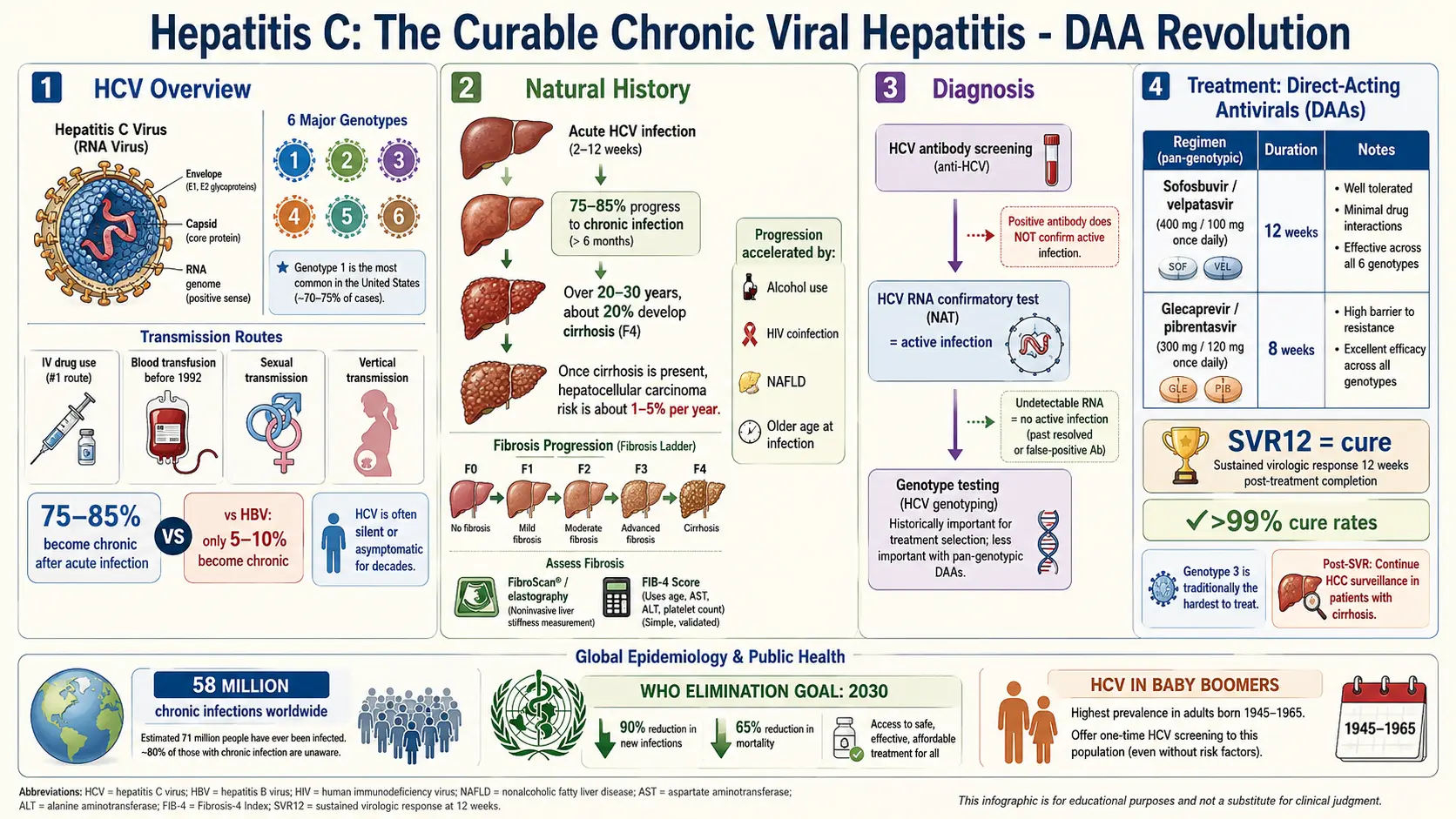
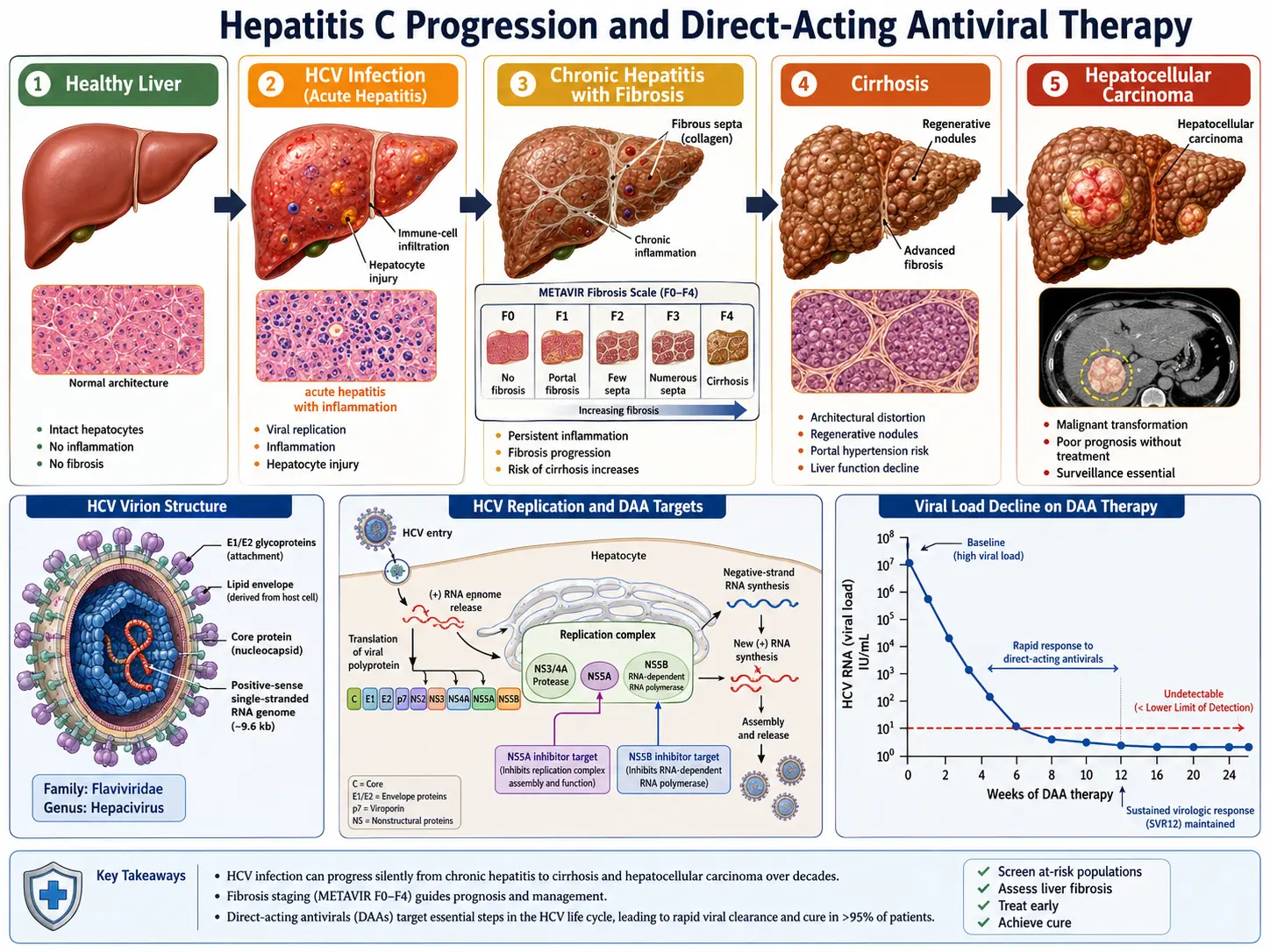
Hepatitis C is a viral infection that primarily affects the liver and is caused by the hepatitis C virus (HCV). It can lead to both acute and chronic infections, with chronic hepatitis C potentially resulting in severe liver damage, cirrhosis, liver failure, or liver cancer.
Transmission of Hepatitis C
- Blood-to-blood contact: HCV is most commonly spread through contact with infected blood.
- Sharing needles: Common among people who use injectable drugs.
- Needle stick injuries: Risk for healthcare workers.
- Blood transfusions and organ transplants: Before 1992, when widespread screening of blood supply began.
- Mother to child: Can be passed during childbirth, although the risk is relatively low.
Symptoms of Hepatitis C
Many people with hepatitis C do not show symptoms, especially in the early stages. If symptoms do appear, they may include:
- Fatigue
- Fever
- Loss of appetite
- Nausea and vomiting
- Abdominal pain, particularly in the upper right side
- Dark urine
- Joint pain
- Jaundice: Yellowing of the skin and eyes
Acute vs. Chronic Hepatitis C
- Acute Hepatitis C:
- Short-term illness that occurs within the first six months of exposure to HCV.
- Can clear on its own without treatment, but often progresses to chronic hepatitis C.
- Chronic Hepatitis C:
- Long-term infection that can last a lifetime if not treated.
- Can lead to serious liver damage, cirrhosis, or liver cancer.
Causes and Risk Factors
- Sharing needles or syringes: Highest risk factor for HCV transmission.
- Receiving blood products: Before widespread screening in 1992.
- HIV-positive status: Increases risk of contracting hepatitis C.
- Being on long-term hemodialysis: Increased risk due to potential exposure to infected blood.
- Born to an infected mother
- Tattoos or body piercings: If done with unsterile equipment.
Diagnosis
- Blood tests:
- Antibody test: Detects antibodies to HCV and indicates past or present infection.
- HCV RNA test: Confirms active infection by detecting the virus in the blood.
- Liver function tests: To assess liver health and potential damage.
- Imaging tests: Ultrasound, CT scan, or MRI to detect liver damage.
- Liver biopsy: In some cases, a sample of liver tissue may be taken to assess the extent of liver damage.
Treatment Options
- Antiviral medications:
- Direct-acting antivirals (DAAs): Highly effective in curing hepatitis C, with a treatment duration of 8-12 weeks.
- Combination therapies: Such as sofosbuvir and ledipasvir (Harvoni) or glecaprevir and pibrentasvir (Mavyret).
- Lifestyle changes:
- Avoid alcohol: To prevent further liver damage.
- Maintain a healthy diet: Supports liver function.
- Monitoring: Regular check-ups to monitor liver function and detect any complications early.
Prevention Strategies
- Avoid sharing needles or syringes
- Practice safe sex: Use of condoms to reduce the risk of transmission.
- Ensure proper sterilization of medical and tattoo equipment.
- Screening blood donations: Ensures blood is free of HCV.
Complications of Hepatitis C
- Cirrhosis: Long-term liver damage that can lead to scarring.
- Liver cancer: Increased risk with chronic infection.
- Liver failure: Severe cases can result in the liver losing its ability to function.
- Other systemic issues: Such as type 2 diabetes, kidney disease, and cryoglobulinemia (a condition that affects blood vessels).
References & Research
Historical Background
Hepatitis C virus was identified in 1989 by Michael Houghton, Qui-Lim Choo, and George Kuo at Chiron Corporation, along with Daniel Bradley at the CDC. Previously known as "non-A, non-B hepatitis," its discovery enabled blood supply screening and ultimately the development of curative direct-acting antiviral therapies. Harvey Alter, Michael Houghton, and Charles Rice were awarded the 2020 Nobel Prize in Physiology or Medicine for the discovery of HCV.
Key Research Papers
- Choo QL, Kuo G, Weiner AJ, et al. Isolation of a cDNA clone derived from a blood-borne non-A, non-B viral hepatitis genome. Science. 1989;244(4902):359-362.
- Feld JJ, Jacobson IM, Hezode C, et al. Sofosbuvir and velpatasvir for HCV genotype 1, 2, 4, 5, and 6 infection. New England Journal of Medicine. 2015;373(27):2599-2607.
- Afdhal N, Zeuzem S, Kwo P, et al. Ledipasvir and sofosbuvir for untreated HCV genotype 1 infection. New England Journal of Medicine. 2014;370(20):1889-1898.
- Zeuzem S, Foster GR, Wang S, et al. Glecaprevir-pibrentasvir for 8 or 12 weeks in HCV genotype 1 or 3 infection. New England Journal of Medicine. 2018;378(4):354-369.
- Ghany MG, Morgan TR; AASLD-IDSA Hepatitis C Guidance Panel. Hepatitis C guidance 2019 update: AASLD-IDSA recommendations for testing, managing, and treating hepatitis C virus infection. Hepatology. 2020;71(2):686-721.
- European Association for the Study of the Liver. EASL recommendations on treatment of hepatitis C: final update of the series. Journal of Hepatology. 2020;73(5):1170-1218.
- Poordad F, McCone J Jr, Bacon BR, et al. Boceprevir for untreated chronic HCV genotype 1 infection. New England Journal of Medicine. 2011;364(13):1195-1206.
- Manns MP, McHutchison JG, Gordon SC, et al. Peginterferon alfa-2b plus ribavirin compared with interferon alfa-2b plus ribavirin for initial treatment of chronic hepatitis C. The Lancet. 2001;358(9286):958-965.
- Mohd Hanafiah K, Groeger J, Flaxman AD, Wiersma ST. Global epidemiology of hepatitis C virus infection: new estimates of age-specific antibody to HCV seroprevalence. Hepatology. 2013;57(4):1333-1342.
- Curry MP, O'Leary JG, Bzowej N, et al. Sofosbuvir and velpatasvir for HCV in patients with decompensated cirrhosis. New England Journal of Medicine. 2015;373(27):2618-2628.
- Falade-Nwulia O, Suarez-Cuervo C, Nelson DR, et al. Oral direct-acting agent therapy for hepatitis C virus infection: a systematic review. Annals of Internal Medicine. 2017;166(9):637-648.
- Liang TJ, Ghany MG. Current and future therapies for hepatitis C virus infection. New England Journal of Medicine. 2013;368(20):1907-1917.
Research Papers
The following PubMed topic searches retrieve current peer-reviewed literature on Hepatitis C. Each link opens a live PubMed query so you always see the most recent publications.
- Hepatitis C virus review
- Sofosbuvir hepatitis C clinical trial
- Ledipasvir sofosbuvir hepatitis C
- Glecaprevir pibrentasvir hepatitis C
- Hepatitis C sustained virological response
- Direct acting antiviral real world hepatitis C
- Hepatitis C cirrhosis hepatocellular carcinoma
- AASLD IDSA hepatitis C guidance
- Hepatitis C injection drug use
- Hepatitis C vaccine development
- WHO hepatitis C elimination
Connections
- Infectious Disease
- Hepatitis
- Cirrhosis
- Hepatitis B
- Liver Disease
- Liver Cleansing
- Turmeric
- NAC
- Vitamin D3
- Milk Thistle
- Cancer
- Fatigue
- Jaundice
- Dark Urine
- Abdominal Pain
- Joint Pain
- Kidney Disease
- Gallbladder Disease
- NAC and Liver Health
- Addiction
- Liver Cancer
- Ochoa & Kornberg — sofosbuvir is a counterfeit nucleotide — the polymerase swallows it and stops