Hepatitis B
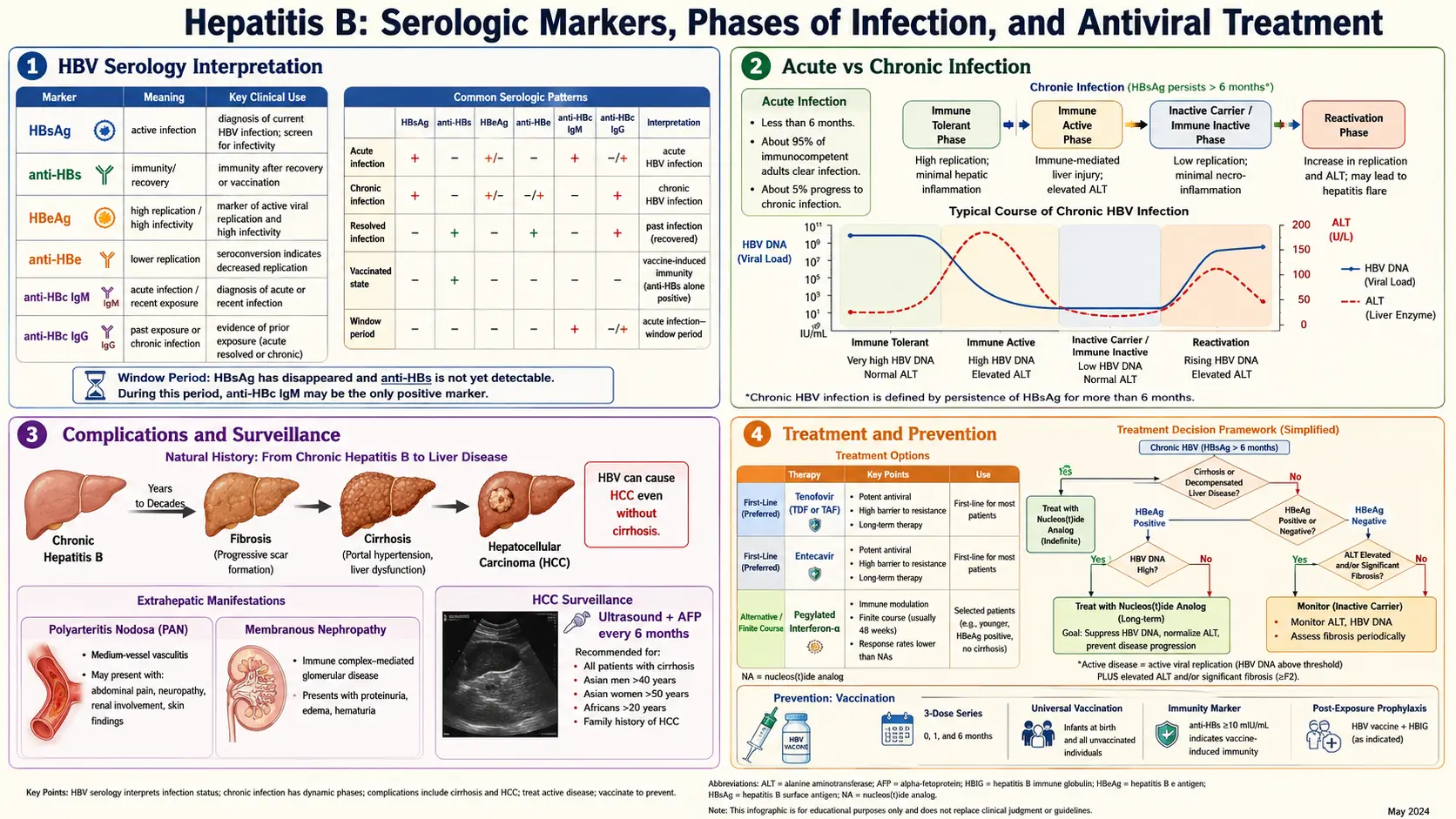
What is Hepatitis B?
Hepatitis B is a viral infection that affects the liver and is caused by the hepatitis B virus (HBV). It can range from a mild, short-term illness (acute hepatitis B) to a serious, lifelong condition (chronic hepatitis B). Chronic hepatitis B can lead to liver damage, cirrhosis, liver failure, or liver cancer.
Transmission of Hepatitis B
- Blood-to-blood contact: HBV can be transmitted through contact with infected blood.
- Sexual contact: The virus can spread through unprotected sex with an infected person.
- Mother to child: HBV can be passed from an infected mother to her baby during childbirth.
- Sharing needles: People who share needles or syringes for drug use are at higher risk.
- Needle stick injuries: Healthcare workers may contract HBV through accidental needle sticks.
Symptoms of Hepatitis B
Many people with hepatitis B do not show symptoms, especially in the early stages. If symptoms do appear, they can include:
- Fatigue
- Fever
- Loss of appetite
- Nausea and vomiting
- Dark urine
- Joint and muscle pain
- Abdominal pain, particularly in the upper right side
- Jaundice: Yellowing of the skin and eyes
Acute vs. Chronic Hepatitis B
- Acute Hepatitis B:
- Short-term infection that lasts less than six months.
- The immune system can often clear the virus on its own.
- Chronic Hepatitis B:
- Long-term infection that lasts six months or longer.
- Can lead to serious liver damage and increase the risk of liver cancer.
- More likely to develop in infants and young children infected with HBV.
Causes and Risk Factors
- Unprotected sex: With someone infected with HBV.
- Sharing needles: Common among people who use injectable drugs.
- Being born to an infected mother
- Living with an infected person
- Traveling to areas where hepatitis B is prevalent.
Diagnosis
- Blood tests: To detect the presence of HBV and determine if the infection is acute or chronic.
- Liver function tests: To assess liver damage or inflammation.
- HBV DNA test: Measures the amount of virus in the blood.
- Liver biopsy: In some cases, a sample of liver tissue may be taken to assess the extent of liver damage.
Treatment Options
- Acute Hepatitis B:
- Usually does not require specific treatment as it often resolves on its own.
- Supportive care: Rest, hydration, and monitoring of liver function.
- Chronic Hepatitis B:
- Antiviral medications: Such as entecavir, tenofovir, or lamivudine to reduce viral load and prevent liver damage.
- Regular monitoring: To check liver function and disease progression.
- Interferon therapy: In some cases, interferon-alpha may be used to boost the immune response.
- Liver transplant: For severe cases of liver damage or failure.
Prevention Strategies
- Safe sex practices: Use of condoms to reduce the risk of transmission.
- Avoid sharing needles: Important for people who use injectable drugs.
- Screening blood products: Ensures that donated blood is free of HBV.
- Hygienic practices: Proper sterilization of medical and dental equipment.
Complications of Hepatitis B
- Cirrhosis: Long-term liver damage can lead to scarring of the liver tissue.
- Liver cancer: Increased risk in individuals with chronic hepatitis B.
- Liver failure: Severe liver damage may result in the inability of the liver to function properly.
- Kidney problems: Chronic hepatitis B can sometimes affect the kidneys.
- Vascular problems: In some cases, HBV infection can contribute to vascular inflammation.
References & Research
Historical Background
Hepatitis B virus was discovered in 1965 by Dr. Baruch Blumberg, who identified the "Australia antigen" (now known as hepatitis B surface antigen) in the blood of an Australian Aboriginal person. Blumberg was awarded the Nobel Prize in Physiology or Medicine in 1976 for this discovery.
Key Research Papers
- Dienstag JL. Hepatitis B virus infection. New England Journal of Medicine. 2008;359(14):1486-1500.
- European Association for the Study of the Liver. EASL 2017 Clinical Practice Guidelines on the management of hepatitis B virus infection. Journal of Hepatology. 2017;67(2):370-398.
- Terrault NA, Lok ASF, McMahon BJ, et al. Update on prevention, diagnosis, and treatment of chronic hepatitis B: AASLD 2018 hepatitis B guidance. Hepatology. 2018;67(4):1560-1599.
- Chang TT, Gish RG, de Man R, et al. A comparison of entecavir and lamivudine for HBeAg-positive chronic hepatitis B. New England Journal of Medicine. 2006;354(10):1001-1010.
- Marcellin P, Heathcote EJ, Buti M, et al. Tenofovir disoproxil fumarate versus adefovir dipivoxil for chronic hepatitis B. New England Journal of Medicine. 2008;359(23):2442-2455.
- Liaw YF, Sung JJY, Chow WC, et al. Lamivudine for patients with chronic hepatitis B and advanced liver disease. New England Journal of Medicine. 2004;351(15):1521-1531.
- Schweitzer A, Horn J, Mikolajczyk RT, et al. Estimations of worldwide prevalence of chronic hepatitis B virus infection: a systematic review of data published between 1965 and 2013. The Lancet. 2015;386(10003):1546-1555.
- Revill PA, Chisari FV, Block JM, et al. A global scientific strategy to cure hepatitis B. The Lancet Gastroenterology & Hepatology. 2019;4(7):545-558.
- Lok ASF, McMahon BJ, Brown RS Jr, et al. Antiviral therapy for chronic hepatitis B viral infection in adults: a systematic review and meta-analysis. Hepatology. 2016;63(1):284-306.
- Blumberg BS. Australia antigen and the biology of hepatitis B. Science. 1977;197(4298):17-25.
Research Papers
The following PubMed topic searches retrieve current peer-reviewed literature on Hepatitis B. Each link opens a live PubMed query so you always see the most recent publications.
- Hepatitis B virus review
- Tenofovir chronic hepatitis B
- Entecavir hepatitis B clinical trial
- Hepatitis B vaccine efficacy
- Hepatitis B mother to child transmission
- HBeAg seroconversion chronic hepatitis B
- Hepatitis B functional cure
- AASLD hepatitis B guideline
- Hepatitis B hepatocellular carcinoma surveillance
- Pegylated interferon hepatitis B
- Hepatitis B reactivation chemotherapy
Connections
- Infectious Disease
- Hepatitis
- Cirrhosis
- Liver Disease
- Hepatitis C
- Liver Cleansing
- NAC
- Vitamin D3
- Milk Thistle
- Cancer
- Fatigue
- Jaundice
- Dark Urine
- Abdominal Pain
- Nausea and Vomiting
- Coffee and Liver Disease
- Gallbladder Disease
- Pale Stool
- Immune Boosting
- Liver Cancer