Coronary Artery Disease (CAD)
Interactive Visualization The Heart & Circulation — watch a blood cell make the loop Trace a blood cell through all four chambers and both circuits, with a live ECG, chamber pressures, and an exercise mode. Launch → Interactive Visualization Cholesterol & the Artery Wall — watch a plaque form Follow LDL particles into the artery wall and see foam cells build plaque — then add a statin and watch the receptors clear them. Launch → Interactive Visualization Nitric Oxide — make an artery relax Watch the endothelium turn L-arginine into nitric oxide and widen the artery — then let oxidative stress uncouple eNOS and stiffen it, or pour in beet nitrate to rescue the flow. Launch → Interactive Visualization How Heart Failure Develops Weaken the pump and watch the ejection fraction fall, fluid back up into the lungs, and the body's own 'fixes' quietly make it worse — then unload it with the right drugs. Launch →
Table of Contents
What is Coronary Artery Disease?
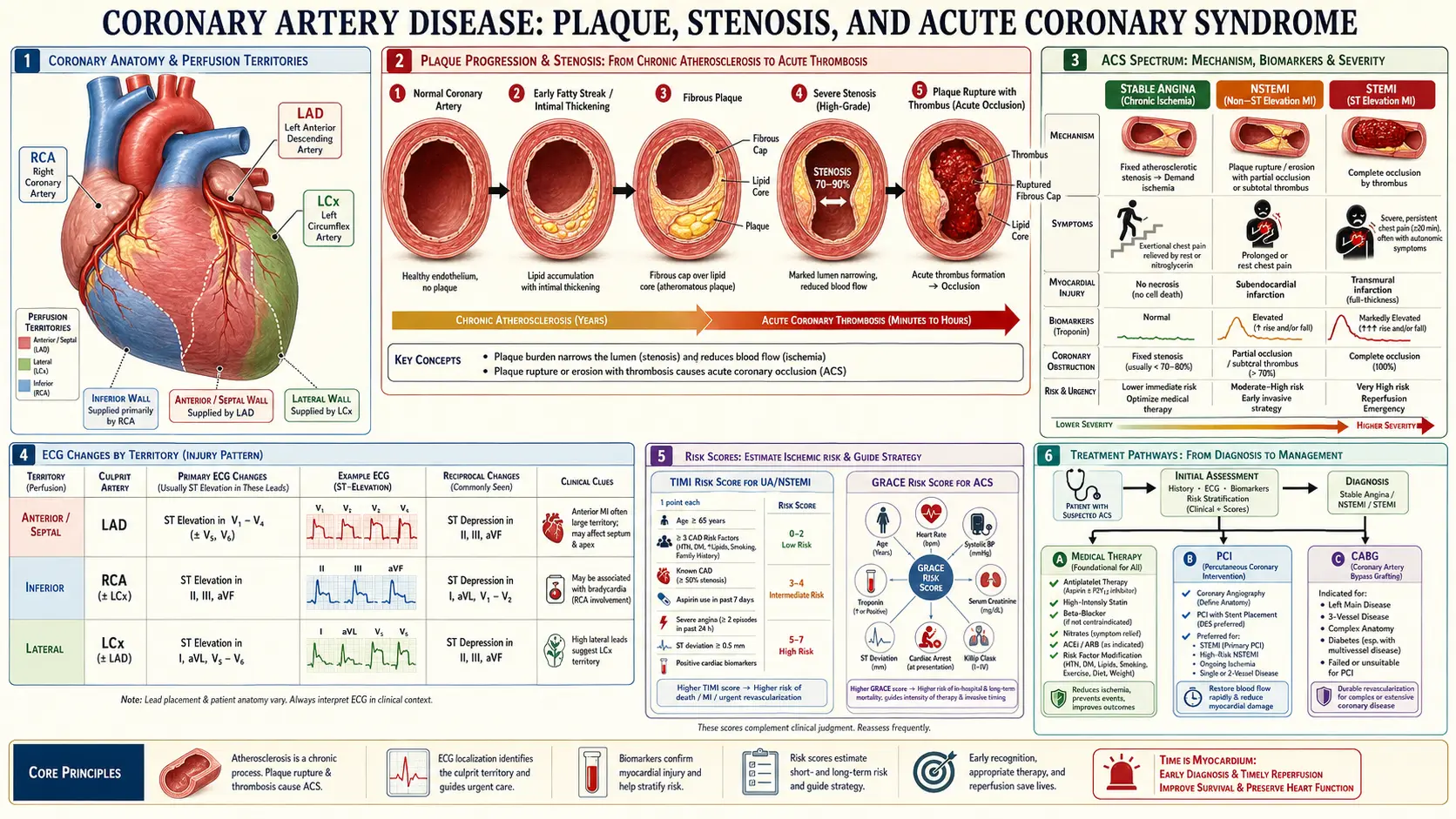
Coronary Artery Disease (CAD) is a condition where the coronary arteries, which supply blood to the heart muscle, become narrowed or blocked due to the buildup of plaque (atherosclerosis). This can reduce blood flow and lead to chest pain (angina) or heart attacks.
Where the plaque actually sits
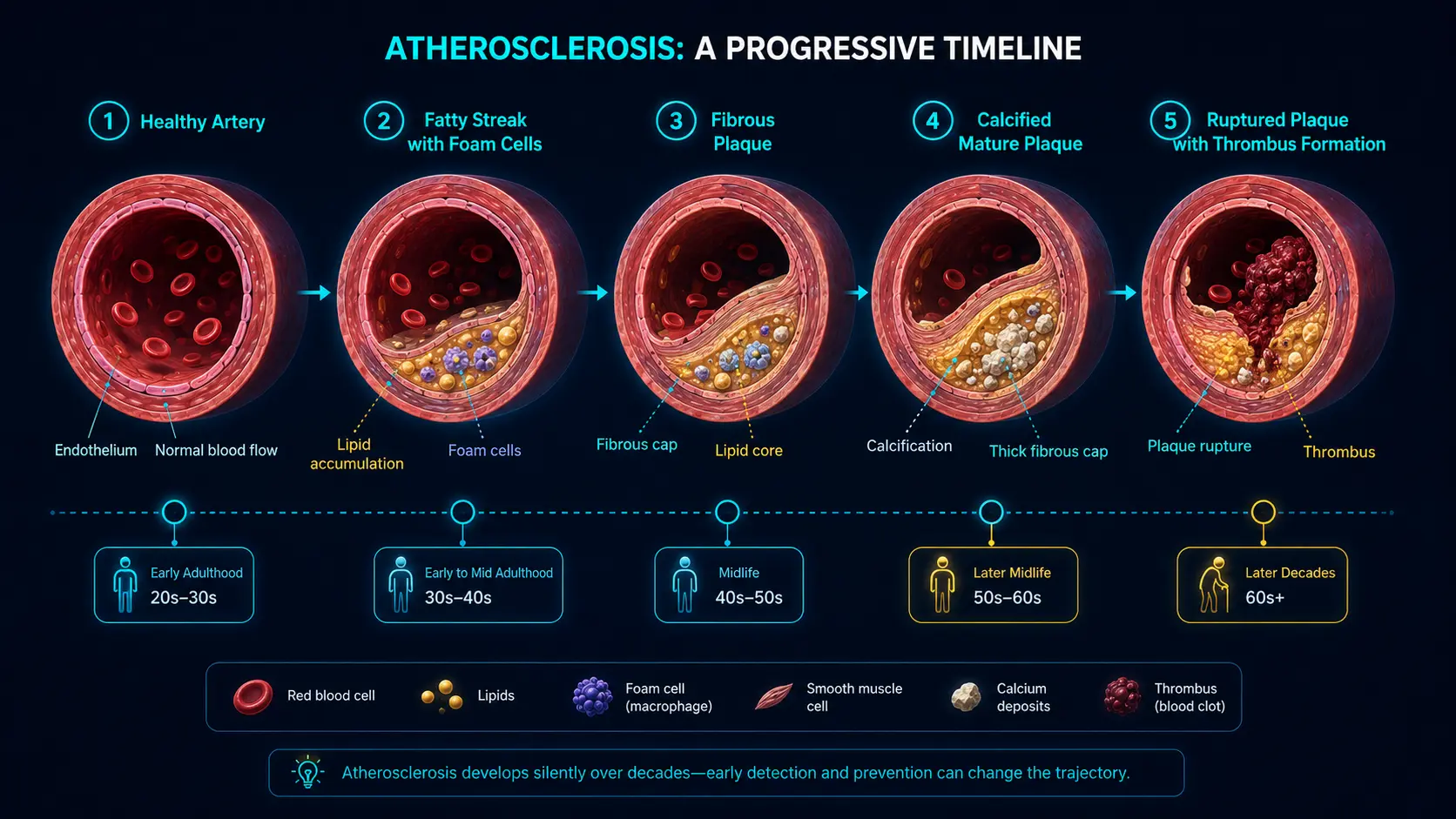
The common mental picture — fat sludging up the inside of a pipe like grease in a drain — is wrong in a way that matters. Atherosclerotic plaque does not sit in the channel; it builds up inside the wall of the artery, underneath the smooth inner lining.
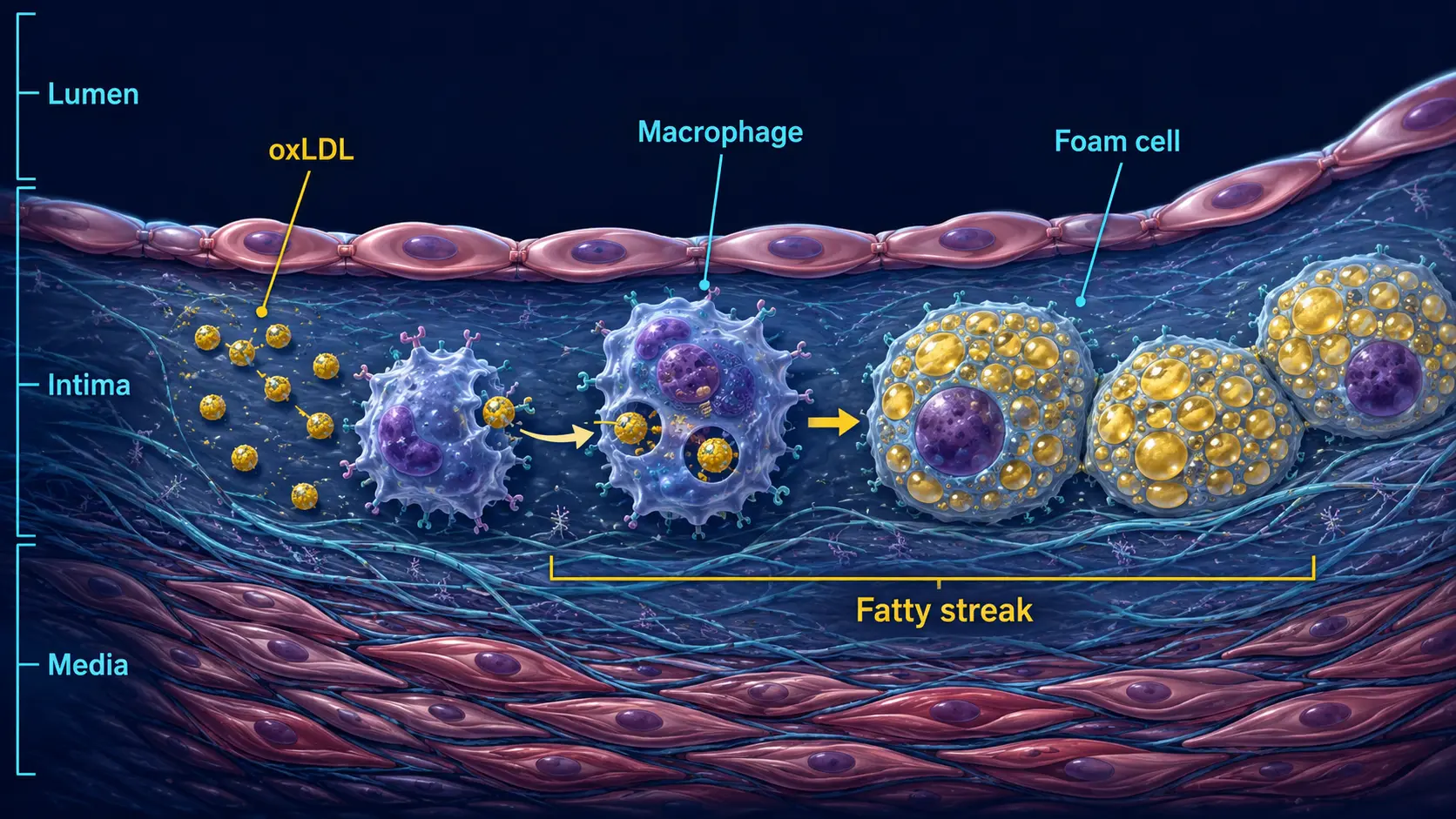
The sequence runs like this. LDL particles carrying cholesterol slip through the artery's inner lining, especially where blood flow is turbulent — at branch points and bends. Once trapped in the wall they become oxidized, which the immune system reads as damage. White cells move in to clean up, gorge on the modified cholesterol, and become foam cells. That accumulation, plus the fibrous cap the artery grows over it to seal it off, is a plaque.
For years the artery compensates by bulging outward, keeping the channel wide open. You can have substantial disease with a completely normal-looking channel and no symptoms at all — which is why the first sign of coronary disease is, for a large number of people, the heart attack itself. See Atherosclerosis for the process in detail.
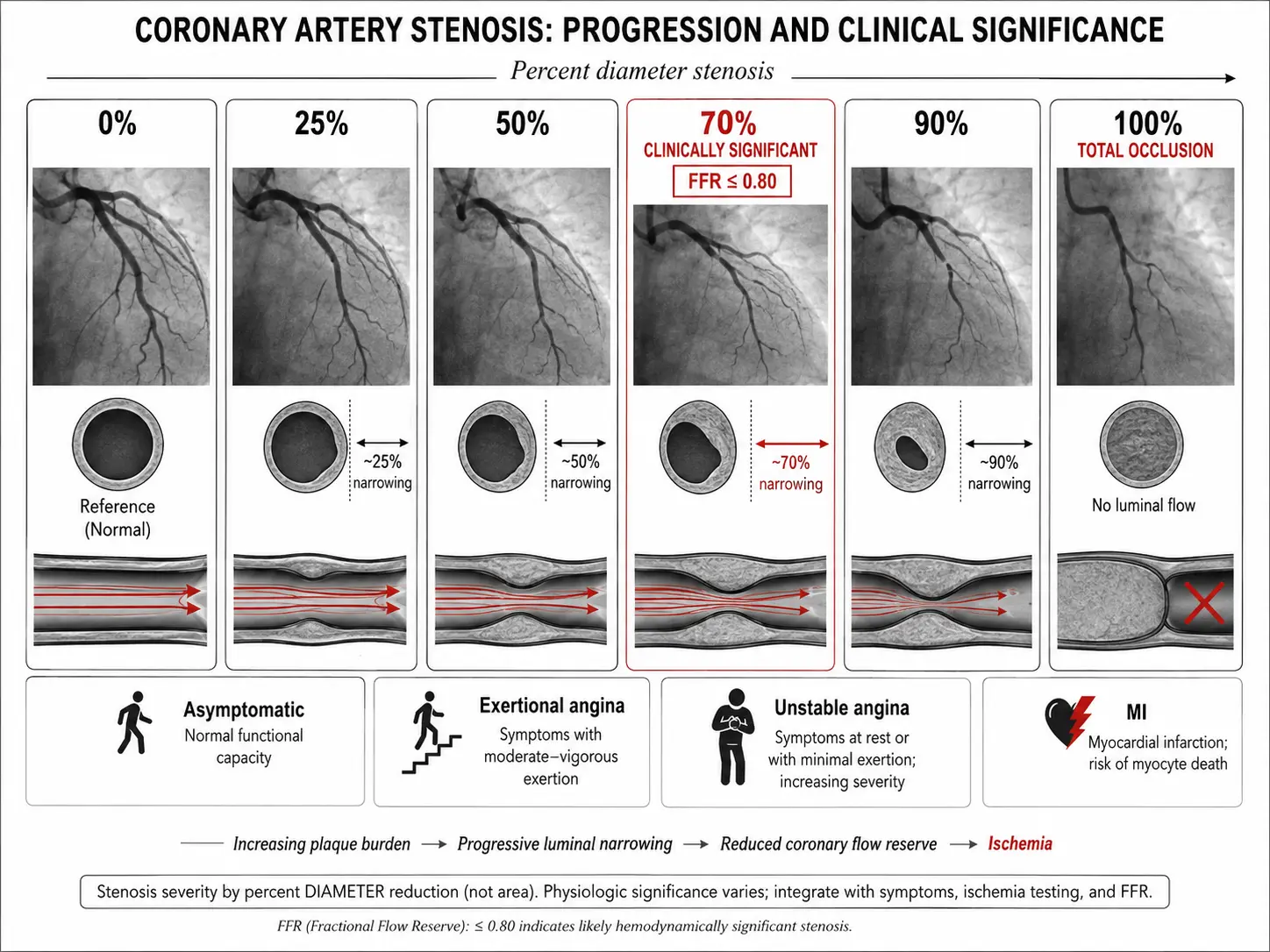
Only once the plaque outgrows that compensation does it start narrowing the channel. When narrowing passes roughly 70%, the artery can still deliver enough blood at rest but not when demand rises — climbing stairs, walking into cold wind, an argument. That mismatch is angina: not damage, but a warning. See Angina.
Stable Plaque vs Rupture: The Idea That Changes Everything
If you take one thing from this page, take this: most heart attacks are not caused by the tightest narrowing. They are caused by a plaque that was never tight enough to cause symptoms, suddenly tearing.
Picture two plaques. The first is old and calcified, with a thick fibrous cap — a hardened scar under the road surface. It may narrow the channel severely and cause predictable angina, but it is structurally solid, and over years the heart has usually grown small collateral vessels around it. The second is smaller, softer, with a large greasy lipid core under a thin, inflamed cap — a blister with skin stretched over it.
The second one is the dangerous one. When that thin cap tears, the contents hit flowing blood, which reacts to the exposed material exactly as it would to a cut: it forms a clot. Within minutes an artery that was 40% narrowed can be 100% blocked, and the muscle downstream begins to die. That is a heart attack, and it explains something patients find genuinely baffling — how a stress test can be normal one month and a heart attack happen the next. The stress test was looking for flow-limiting narrowing. The culprit was not flow-limiting.
Three consequences follow, and they run through everything below:
- Treatment is aimed at the whole arterial tree, not one spot. Statins, blood-pressure control and stopping smoking work by thickening caps, calming inflammation and shrinking lipid cores across every plaque you have. A stent fixes exactly one.
- "How blocked am I?" is the wrong headline question. Better questions are how much plaque there is in total, how inflamed it is, and what your LDL and blood pressure are doing to it.
- Stable disease and a heart attack are different emergencies. Opening an artery during an actual heart attack is unambiguously life-saving and time-critical. Opening a stable narrowing to prevent a future one is a much weaker proposition — see the trial evidence below. Never let the second finding blur the first.
Causes and Risk Factors
- Plaque buildup: Due to cholesterol, fatty deposits, and other substances in the artery walls.
- High blood pressure: Can damage arteries over time and promote plaque formation. See Hypertension.
- Smoking: Damages the lining of arteries and contributes to plaque buildup. It is the single most reversible major risk factor there is — risk falls measurably within the first year of quitting.
- Diabetes: Increases the risk of CAD due to high blood sugar levels, and also blunts the warning pain, so heart attacks are more often silent.
- Family history: A family history of CAD can increase the risk. What counts specifically is a first-degree relative affected early — a father or brother before 55, a mother or sister before 65.
- Elevated LDL cholesterol and apolipoprotein B: The causal driver. ApoB counts the actual number of atherogenic particles and is a better predictor than LDL-C alone, particularly in people with high triglycerides, diabetes or obesity, where LDL-C can look reassuring while particle count is high.
- Lipoprotein(a): An inherited, largely diet-independent particle that raises risk substantially and is not lowered by statins. It should be measured once in a lifetime, and it very often is not. A high result does not change what you can eat — it changes how aggressively everything else should be treated, and it flags blood relatives who should be tested.
- Chronic inflammatory disease: Rheumatoid arthritis, lupus, psoriasis and inflammatory bowel disease all raise cardiovascular risk beyond their traditional risk factors. See Rheumatoid Arthritis.
- Chronic kidney disease: A powerful and frequently underweighted risk multiplier.
- Obstructive sleep apnea: Repeated overnight oxygen dips drive blood pressure and inflammation.
- Risk factors specific to women: Pre-eclampsia, gestational diabetes, pregnancy-induced hypertension, premature menopause and polycystic ovary syndrome are all associated with later cardiovascular disease. These belong on the history and are routinely left off it.
Symptoms of Coronary Artery Disease
Common symptoms include:
- Chest pain or discomfort (angina), especially during physical activity or stress
- Shortness of breath
- Fatigue
- Heart attack symptoms: Such as chest pain, nausea, and sweating
What angina actually feels like
Patients often say "it wasn't really pain", and then apologise for wasting anyone's time. That description is the classic one. Cardiac chest discomfort is usually pressure, heaviness, tightness, squeezing or burning rather than sharp pain; it sits centrally behind the breastbone and is hard to point to with one finger; it may spread to the left arm, both arms, the jaw, the neck, the upper back or the stomach; and it comes with exertion, cold, heavy meals or emotional stress, then settles within minutes of stopping.
Features that make a cardiac cause less likely: pain you can reproduce by pressing on the chest wall, pain that changes sharply with breathing or with position, and pain lasting a few seconds or lasting unchanged for many hours. None of these is a guarantee, but they shift the odds.
Who presents atypically — and it is not a small group
- Women more often present with breathlessness, unusual fatigue, nausea, or discomfort in the jaw, back or between the shoulder blades, without dominant chest pain. Women are also more likely to have disease of the small vessels or coronary spasm, which can cause genuine angina with clean large arteries on an angiogram — a result that is too often reported as "nothing wrong" when it is not.
- People with diabetes may have blunted or absent pain from nerve damage. Unexplained breathlessness or a sudden drop in exercise tolerance should be taken as seriously as chest pain.
- Older adults often present with confusion, weakness, fainting or a fall.
- Anyone can have a genuinely silent heart attack, discovered later as an unexpected finding on an ECG.
Two patterns matter more than the exact words used. Angina that is stable follows a predictable pattern — the same effort brings it on, rest relieves it. Angina that is unstable comes at rest, wakes you, is more severe, lasts longer, or takes progressively less effort to provoke over days or weeks. Unstable angina is an emergency, not a worse version of the same thing.
Diagnosis and Treatment
Diagnostic Tests
To diagnose CAD, doctors may use:
- Electrocardiogram (ECG): To detect abnormalities in the heart's electrical activity.
- Stress test: To monitor heart function during physical exertion.
- Coronary angiography: An imaging test using dye and X-rays to show artery blockages.
- CT scan: To provide detailed images of the coronary arteries.
The two CT scans, which are not the same test
Coronary artery calcium (CAC) score. A fast, low-dose CT with no dye and no needle, counting calcified plaque. It is a risk-stratification test, mainly useful when you and your doctor are undecided about starting a statin. Roughly: 0 means very low short-term risk (the so-called power of zero), 1–99 mild, 100–399 moderate, 400 or above high. The number should be read against your age and sex, since a score of 50 means something very different at 45 than at 75. Two limits worth knowing: a zero score does not exclude soft, non-calcified plaque in a younger person, and once you are already on a statin the score tends to rise, because treatment stabilises plaque partly by calcifying it. A rising CAC on treatment is therefore not evidence of failure.
CT coronary angiography (CCTA). A different test, using contrast dye to image the artery channels directly and see both calcified and soft plaque. The 2021 chest-pain guideline moved CCTA to a first-line option for stable chest pain in people without known coronary disease [1], largely because it can rule the disease out with great confidence and identifies the soft plaque a stress test cannot see.
Blood tests worth having: a full lipid panel, apolipoprotein B, lipoprotein(a) once, HbA1c, kidney function, and high-sensitivity CRP as an inflammation marker.
Medical treatment, ordered by how much it does
Lipid lowering is the backbone. Pooled individual data from 26 randomized trials covering 170,000 people showed that every 1.0 mmol/L (about 39 mg/dL) reduction in LDL cholesterol cut major vascular events by just over a fifth per year (rate ratio 0.78), and reduced all-cause mortality by 10% — with no threshold below which further lowering stopped helping [2]. That is one of the most reliable findings in medicine. Statins (atorvastatin, rosuvastatin) are generic and inexpensive; ezetimibe adds a further reduction; PCSK9 inhibitors such as evolocumab lower LDL dramatically on top of a statin and reduce events, at much higher cost [3].
On muscle aches: they are the commonest reason people stop statins, and blinded trials consistently find that most such symptoms recur on placebo. That does not mean the symptoms are imaginary — it means the drug is often not the cause, and re-challenge, a different statin, or alternate-day dosing usually solves it. Stopping a statin outright after one bad experience is the worst of the available options.
Antiplatelet therapy. Low-dose aspirin for people with established coronary disease. Note the change here: aspirin for primary prevention in people without known disease has largely been abandoned, because the bleeding risk offsets the benefit in low-risk adults. If you started aspirin years ago on your own for general prevention and have no diagnosed coronary disease, that is worth reviewing.
Blood pressure control, and treating diabetes with agents that protect the heart (SGLT2 inhibitors, GLP-1 receptor agonists) both add real benefit.
Anti-inflammatory therapy is the newer arm. In LoDoCo2, colchicine 0.5 mg daily in 5,522 patients with chronic coronary disease reduced the primary composite of cardiovascular death, spontaneous myocardial infarction, ischaemic stroke or ischaemia-driven revascularization from 9.6% to 6.8% (hazard ratio 0.69) [4]. Non-cardiovascular deaths were numerically higher in the colchicine group, which is why it is used selectively rather than universally. Still, it is direct evidence that inflammation — not just cholesterol — drives events.
Stents and bypass: what the trials found, stated honestly
This is the area where patient expectations and evidence diverge most, so it is worth being precise.
ISCHEMIA randomized 5,179 patients with stable coronary disease and moderate-to-severe ischaemia on testing to an initial invasive strategy (angiography, then stenting or bypass) or an initial conservative strategy of medication alone. At five years, the cumulative primary event rate was 16.4% invasive versus 18.2% conservative — not a significant difference — and deaths were 145 versus 144 (hazard ratio 1.05) [5]. Angina relief was better with the invasive strategy, particularly in those who had frequent angina to begin with.
ORBITA went further and used a placebo procedure: 200 patients with a single severe narrowing (mean stenosis 84%) were sedated, taken to the lab, and either had a stent placed or did not, without knowing which. Six weeks later the difference in exercise time between real and placebo procedures was 16.6 seconds, and it was not statistically significant (p = 0.20) [6].
The fair summary for stable disease: stenting relieves angina in many people, but does not appear to prevent heart attacks or extend life, and some of its symptomatic benefit is placebo. That is a reasonable trade if angina is limiting your life — and a poor one if you are being offered it to "fix the blockage" while feeling well. Coronary bypass surgery is a partial exception: it does improve survival in specific anatomies, notably significant left main disease and multi-vessel disease with reduced pumping function.
None of this applies during a heart attack. In an acute coronary syndrome, opening the artery quickly saves heart muscle and lives, and every minute counts.
Questions worth asking before an elective stent: is this to make me feel better, or to make me live longer?; what happens if we maximise medication first and review in three months?; and am I already on the best medical therapy — a high-intensity statin at target LDL, blood pressure controlled, not smoking? ISCHEMIA's conservative arm was not "no treatment"; it was aggressive medical treatment, and that is the comparison being made.
Diet, Lipids and Lifestyle
Diet — the one pattern with randomized evidence
PREDIMED randomized 7,447 people at high cardiovascular risk to a Mediterranean diet supplemented with extra-virgin olive oil, the same diet supplemented with mixed nuts, or a control diet. Major cardiovascular events occurred in 3.8% and 3.4% of the two Mediterranean groups versus 4.4% of controls, giving hazard ratios of 0.69 and 0.72 [7]. That remains the strongest dietary trial evidence in cardiovascular prevention, and note what it was: an addition of good fats, not a removal of fat.
What that looks like on a plate: extra-virgin olive oil as the main added fat; nuts most days — walnuts, almonds, hazelnuts; vegetables at most meals; legumes several times a week — lentils, chickpeas, black beans; fish, especially oily fish, two or more times a week; whole grains rather than refined — oats, barley, whole-grain bread, and brown rice; fruit as the default dessert; and much less processed meat, sugary drinks and refined baked goods. Eggs and full-fat dairy in reasonable amounts are not the problem they were once thought to be. The evidence supports whole foods, not stripped-down substitutes.
Exercise, and the rest
- Physical activity — around 150 minutes a week of moderate activity, plus two sessions of resistance work. After a cardiac event, formal cardiac rehabilitation is one of the most under-used interventions in medicine: it is supervised, it rebuilds confidence, and attendance is associated with better outcomes. Ask for a referral if one is not offered.
- Stopping smoking — the largest single-step reduction available to a smoker, larger than any pill on this page. Combining a stop-smoking medication with behavioural support roughly doubles success rates over willpower alone.
- Sleep and stress — treating sleep apnea, and taking genuine chronic stress seriously, both matter. Depression after a cardiac event is common, under-treated, and independently predicts worse outcomes.
Supplements: what does not hold up
Being straightforward here matters, because these are heavily marketed to exactly this audience. Vitamin E, beta-carotene, folate and vitamin C supplements have all failed to reduce cardiac events in randomized trials. Routine fish-oil capsules have not consistently reduced events at ordinary doses, and high doses raise the risk of atrial fibrillation — eating fish is a better route than the capsule. Coenzyme Q10 has reasonable evidence in heart failure but not in coronary disease; the common claim that it must be taken to offset statin-related muscle symptoms is not well supported by trials. Red yeast rice is genuinely effective — because it contains monacolin K, which is chemically the same as lovastatin — but the dose in a capsule is unregulated and varies enormously between products, so you are taking an unknown quantity of a statin without monitoring. A prescribed statin is the safer version of the same drug. See Magnesium and Omega-3 Fatty Acids for the wider picture on each.
Red Flags: Chest Pain That Cannot Wait
Call emergency services — do not drive yourself, and do not wait to see if it passes — for:
- Chest pressure, tightness or heaviness lasting more than a few minutes, or going away and coming back.
- Discomfort spreading to one or both arms, the jaw, neck, back or stomach.
- Chest discomfort with breathlessness, a cold sweat, nausea or vomiting, or lightheadedness.
- Sudden unexplained severe breathlessness or overwhelming fatigue, particularly with diabetes, in women, or in older adults — the chest pain may never appear.
- Angina that comes at rest, wakes you from sleep, or is triggered by much less effort than last week.
- Chest pain that persists after two doses of your usual glyceryl trinitrate, five minutes apart.
If emergency services are called and there is no reason you cannot take it, chewing a regular (not enteric-coated) aspirin is standard advice while waiting. Chewing matters — it works faster than swallowing whole.
The most common fatal mistake in coronary disease is delay, and the usual reason is not wanting to make a fuss. Heart muscle dies over minutes to hours. A false alarm costs an afternoon; a real one that waits costs muscle you never get back.
Interactions and cautions
- Glyceryl trinitrate with erectile-dysfunction drugs (sildenafil, tadalafil) — a genuinely dangerous combination that can drop blood pressure catastrophically. Wait at least 24 hours after sildenafil and 48 after tadalafil, and tell emergency staff if you have taken either.
- NSAIDs raise cardiovascular risk and blood pressure, and interfere with aspirin's antiplatelet effect if taken close together.
- Grapefruit juice raises blood levels of simvastatin and atorvastatin considerably; rosuvastatin and pravastatin are unaffected.
- St John's wort reduces the effectiveness of several cardiac drugs including some anticoagulants and statins.
- Decongestants and high-dose stimulants raise blood pressure and heart rate and are best avoided.
Prognosis
The prognosis for coronary artery disease depends on the severity of the blockage, the number of affected arteries, and the effectiveness of treatment. With proper lifestyle changes and medical management, many patients can lead active and fulfilling lives.
To make that concrete: stable coronary disease with normal pumping function, treated properly, carries a low annual event rate, and most people who follow the plan die of something else entirely. The strongest predictors of a worse course are reduced ejection fraction, left main or extensive multi-vessel disease, diabetes, kidney disease, continued smoking, and an LDL that never reaches target.
Two ideas are worth holding on to. First, coronary disease is modifiable, not merely progressive. Plaque burden can stabilise and coronary events can fall sharply with intensive lipid lowering, blood-pressure control and stopping smoking — the arithmetic of the LDL trials means the benefit compounds the longer treatment continues [2]. Second, the treatments that extend life are mostly unglamorous and taken daily, while the treatments that feel decisive — the stent, the procedure — largely treat symptoms in stable disease [5]. Getting that the right way round is the difference between a good outcome and a disappointing one.
Key Research Papers
The following PubMed topic searches return current peer-reviewed literature relevant to this condition. Each link opens a live PubMed query.
Key Research Papers
Every citation below was verified against its PubMed record before publication — author list, journal, year and title all checked against the source.
- Gulati M, Levy PD, Mukherjee D, et al. 2021 AHA/ACC/ASE/CHEST/SAEM/SCCT/SCMR Guideline for the Evaluation and Diagnosis of Chest Pain: A Report of the American College of Cardiology/American Heart Association Joint Committee on Clinical Practice Guidelines. Circulation. 2021;144(22):e368-e454 — PubMed PMID: 34709879 · doi:10.1161/CIR.0000000000001029
- Baigent C, Blackwell L, Emberson J, et al. Efficacy and safety of more intensive lowering of LDL cholesterol: a meta-analysis of data from 170,000 participants in 26 randomised trials. Lancet. 2010;376(9753):1670-81 — PubMed PMID: 21067804 · doi:10.1016/S0140-6736(10)61350-5
- Sabatine MS, Giugliano RP, Keech AC, et al. Evolocumab and Clinical Outcomes in Patients with Cardiovascular Disease. N Engl J Med. 2017;376(18):1713-1722 — PubMed PMID: 28304224 · doi:10.1056/NEJMoa1615664
- Nidorf SM, Fiolet ATL, Mosterd A, et al. Colchicine in Patients with Chronic Coronary Disease. N Engl J Med. 2020;383(19):1838-1847 — PubMed PMID: 32865380 · doi:10.1056/NEJMoa2021372
- Maron DJ, Hochman JS, Reynolds HR, et al. Initial Invasive or Conservative Strategy for Stable Coronary Disease. N Engl J Med. 2020;382(15):1395-1407 — PubMed PMID: 32227755 · doi:10.1056/NEJMoa1915922
- Al-Lamee R, Thompson D, Dehbi HM, et al. Percutaneous coronary intervention in stable angina (ORBITA): a double-blind, randomised controlled trial. Lancet. 2018;391(10115):31-40 — PubMed PMID: 29103656 · doi:10.1016/S0140-6736(17)32714-9
- Estruch R, Ros E, Salas-Salvadó J, et al. Primary Prevention of Cardiovascular Disease with a Mediterranean Diet Supplemented with Extra-Virgin Olive Oil or Nuts. N Engl J Med. 2018;378(25):e34 — PubMed PMID: 29897866 · doi:10.1056/NEJMoa1800389
PubMed Topic Searches
Each link opens a live PubMed query returning current peer-reviewed literature on that sub-topic.
- PubMed: Coronary artery disease pathophysiology
- PubMed: Coronary angiography
- PubMed: Percutaneous coronary intervention
- PubMed: Coronary artery bypass grafting
- PubMed: Stable angina management
- PubMed: Acute coronary syndrome
- PubMed: Myocardial infarction
- PubMed: Coronary artery disease guidelines
- PubMed: CT coronary angiography
- PubMed: Coronary artery calcium score
- PubMed: Statin coronary artery disease
- PubMed: Coronary artery disease prevention
Connections
- Cardiology
- How Heart Failure Develops — interactive animation
- Nitric Oxide & Vessel Dilation — interactive animation
- Cholesterol & the Artery Wall — interactive animation
- The Heart & Circulation — interactive animation
- Angina
- Heart Attack (Myocardial Infarction)
- Cardiovascular Disease
- Chest Pain
- Stroke
- Hypertension
- Heart Failure
- Peripheral Artery Disease
- Shortness of Breath
- Atherosclerosis
- Lipid Panel
- Coronary Calcium Score
- ApoB
- Garlic
- Anti-Inflammatory Diet
- Omega-3 Fatty Acids
- Diabetes
- Magnesium
- Aspirin
- Homocysteine
- Herbs covered on this site that discuss this condition: Black Ginger (Kaempferia parviflora) · Elderberry (Sambucus nigra) · Marsh Barbel (Hygrophila auriculata) · Red Clover
- Lipoprotein(a) — the inherited particle statins do not lower — measure it once in a lifetime
- hs-CRP — the inflammation marker behind the colchicine evidence
- Cholesterol Management — how far to lower LDL, and with what
- Obstructive Sleep Apnea — overnight oxygen dips that drive blood pressure and inflammation
Featured Videos