Arginine: The Amino Acid for Cardiovascular Health and Blood Flow
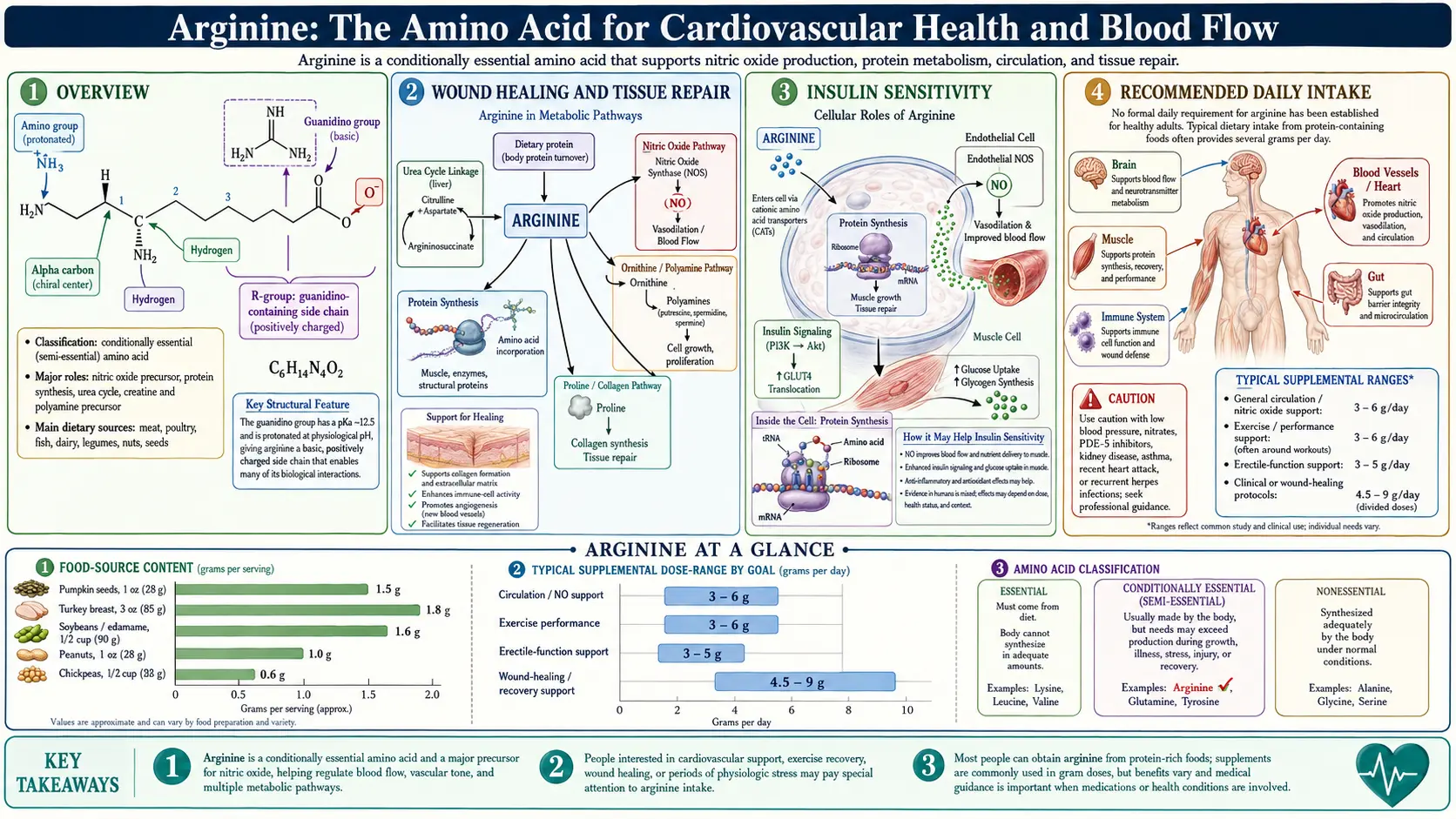
Table of Contents
- Overview
- Nitric Oxide Production and Vasodilation
- Cardiovascular Health and Blood Pressure
- Athletic Performance and Endurance
- Wound Healing and Tissue Repair
- Immune System Enhancement
- Growth Hormone Stimulation
- Erectile Function and Sexual Health
- Kidney Function
- Insulin Sensitivity
- Deficiency Signs
- Food Sources
- Supplementation Guidelines
- Recommended Daily Intake
- Research Papers
- Connections
- Featured Videos
Overview
L-Arginine is a conditionally essential amino acid that plays a central role in numerous physiological processes throughout the body. Under normal circumstances, the body synthesizes adequate amounts of arginine from citrulline in the kidneys. However, during periods of rapid growth, physical stress, illness, injury, or in certain chronic disease states, endogenous production may not meet the body's demands, making dietary or supplemental intake critically important.
First isolated from lupine seedlings in 1886 by the Swiss chemist Ernst Schultze, arginine has since become one of the most extensively studied amino acids in nutritional medicine. It serves as a precursor to nitric oxide, polyamines, proline, glutamate, creatine, and agmatine. Each of these metabolites contributes to essential biological functions ranging from vascular tone regulation to cellular proliferation and neurotransmission.
From a naturopathic perspective, arginine exemplifies the principle that the body possesses an inherent ability to heal itself when provided with the correct building blocks. Rather than suppressing symptoms, supporting the body's arginine pathways addresses root causes of vascular dysfunction, impaired immunity, and sluggish tissue repair. This amino acid stands at the crossroads of cardiovascular health, immune defense, and metabolic regulation, making it one of the most versatile therapeutic nutrients available to the holistic practitioner.
Arginine is classified as a semi-essential or conditionally essential amino acid because while adults can typically produce sufficient quantities, neonates, growing children, and individuals under physiological stress cannot. The kidneys are the primary site of endogenous arginine synthesis, converting citrulline (produced largely in the small intestine) into arginine through the urea cycle enzymes argininosuccinate synthetase and argininosuccinate lyase.
Nitric Oxide Production and Vasodilation
The most celebrated function of arginine is its role as the sole substrate for the enzyme nitric oxide synthase (NOS), which converts arginine into nitric oxide (NO) and citrulline. Nitric oxide is a gaseous signaling molecule that acts as one of the most potent endogenous vasodilators known to science. When released by endothelial cells lining the blood vessels, NO diffuses into the underlying smooth muscle, activating guanylate cyclase and triggering relaxation of the vessel wall.
There are three isoforms of nitric oxide synthase that utilize arginine:
- Endothelial NOS (eNOS) produces NO in the vascular endothelium, regulating blood flow, preventing platelet aggregation, and inhibiting leukocyte adhesion to vessel walls. This isoform is constitutively expressed and calcium-dependent.
- Neuronal NOS (nNOS) generates NO in nerve tissue, where it functions as a neurotransmitter involved in memory formation, gastrointestinal motility, and penile erection.
- Inducible NOS (iNOS) is expressed by immune cells such as macrophages during infection or inflammation, producing large bursts of NO that are cytotoxic to invading pathogens.
The vasodilatory action of arginine-derived nitric oxide is fundamental to maintaining healthy blood pressure, ensuring adequate tissue perfusion, and preventing the development of atherosclerotic plaque. When arginine availability is limited or when the enzyme arginase competes for the substrate, NO production declines, leading to endothelial dysfunction, a condition recognized as the earliest detectable stage of cardiovascular disease.
In naturopathic practice, supporting nitric oxide production through arginine supplementation represents a physiologically elegant approach to vascular health. Rather than pharmacologically forcing vessels to dilate, arginine provides the raw material the body needs to regulate its own vascular tone through natural biochemical pathways.
Cardiovascular Health and Blood Pressure
Arginine's contribution to cardiovascular health extends well beyond simple vasodilation. Clinical research has demonstrated that arginine supplementation can reduce systolic and diastolic blood pressure, improve arterial compliance, decrease markers of oxidative stress, and inhibit the formation of atherosclerotic lesions. These effects are mediated primarily through enhanced nitric oxide bioavailability, but also through arginine's roles in reducing asymmetric dimethylarginine (ADMA), a naturally occurring inhibitor of NOS.
Elevated ADMA levels are strongly associated with endothelial dysfunction, hypertension, coronary artery disease, heart failure, and increased cardiovascular mortality. Arginine supplementation helps restore the arginine-to-ADMA ratio, thereby normalizing endothelial function. This is particularly relevant in patients with established cardiovascular risk factors such as hypercholesterolemia, diabetes, smoking history, or a family history of heart disease.
Arginine also exerts anti-atherogenic effects by:
- Reducing platelet aggregation and adhesion, thereby decreasing the risk of thrombotic events
- Inhibiting smooth muscle cell proliferation in arterial walls, a key step in plaque development
- Decreasing monocyte and leukocyte adhesion to the endothelium, reducing vascular inflammation
- Improving lipid profiles by modestly reducing LDL oxidation and supporting HDL function
- Enhancing fibrinolysis, the body's natural mechanism for dissolving blood clots
A meta-analysis of randomized controlled trials found that oral arginine supplementation at doses of 4 to 24 grams per day significantly reduced both systolic and diastolic blood pressure. The effect was most pronounced in individuals with pre-existing hypertension or metabolic syndrome. For the naturopathic physician, arginine represents a well-researched, physiologically sound intervention that addresses the underlying mechanisms of cardiovascular disease rather than merely managing symptoms.
Athletic Performance and Endurance
Arginine has gained widespread popularity in the sports nutrition community due to its ability to enhance blood flow to working muscles, improve oxygen delivery, support creatine synthesis, and promote the removal of metabolic waste products such as ammonia and lactate. These effects collectively contribute to improved exercise tolerance, reduced fatigue, and faster recovery between training sessions.
The primary mechanism through which arginine benefits athletic performance is the enhancement of nitric oxide production, which increases vasodilation in skeletal muscle vasculature. Greater blood flow during exercise means more efficient delivery of oxygen and glucose to active muscle fibers, as well as more rapid clearance of carbon dioxide and metabolic byproducts that contribute to muscular fatigue.
Arginine also serves as a precursor to creatine, a compound stored in muscle tissue that provides rapid energy during short bursts of high-intensity activity. The body synthesizes creatine from arginine, glycine, and methionine, primarily in the liver and kidneys. Adequate arginine availability supports endogenous creatine production, complementing dietary intake from animal-based foods.
Additional performance-related benefits of arginine include:
- Ammonia detoxification through the urea cycle, reducing the accumulation of this neurotoxic metabolic byproduct during prolonged exercise
- Growth hormone release, which supports muscle protein synthesis and recovery
- Polyamine synthesis, which is essential for cell division and tissue repair following exercise-induced muscle damage
- Enhanced glucose uptake by skeletal muscle through improved insulin sensitivity
Research suggests that arginine supplementation is most effective for untrained or moderately trained individuals, with highly trained athletes showing more variable responses. Combining arginine with citrulline may provide superior results, as citrulline is efficiently converted to arginine in the kidneys and may sustain elevated arginine levels for longer periods.
Wound Healing and Tissue Repair
Arginine is indispensable for proper wound healing and tissue repair, a fact that has been well established in both clinical research and surgical medicine. The amino acid supports every phase of the wound healing cascade, from the initial inflammatory response through collagen deposition and final tissue remodeling.
During the inflammatory phase of wound healing, arginine fuels the activity of macrophages and other immune cells that clear debris and pathogens from the wound site. Through inducible nitric oxide synthase, these cells produce large quantities of nitric oxide that serve as a direct antimicrobial agent, destroying bacteria and other microorganisms that could cause wound infection.
In the proliferative phase, arginine serves as a precursor to proline through the intermediary ornithine. Proline is a critical component of collagen, the structural protein that forms the scaffold of new tissue. Without adequate arginine, collagen synthesis is impaired, leading to weakened wound closure, increased susceptibility to wound dehiscence, and prolonged healing times. Ornithine also serves as a precursor to polyamines, which regulate cell proliferation and are essential for the rapid cell division required during tissue repair.
Clinical studies have demonstrated that arginine supplementation accelerates wound healing in surgical patients, burn victims, and individuals with chronic non-healing wounds such as pressure ulcers and diabetic foot ulcers. Arginine requirements increase substantially during periods of physiological stress, and inadequate intake during recovery from surgery or trauma can significantly delay healing.
In naturopathic wound care, arginine supplementation is often combined with other healing-supportive nutrients such as zinc, vitamin C, and vitamin A to create a comprehensive protocol that addresses the full spectrum of nutritional requirements for optimal tissue repair.
Immune System Enhancement
Arginine plays a multifaceted role in immune function, influencing both innate and adaptive immunity. It is considered an immunonutrient, a term used to describe nutrients that have a measurable impact on immune cell function and host defense mechanisms beyond their basic nutritional value.
The immune-enhancing properties of arginine include:
- T-lymphocyte proliferation and function: Arginine is required for the expression of the T-cell receptor zeta chain, a critical component of the T-cell signaling complex. Arginine depletion leads to T-cell dysfunction and impaired adaptive immunity.
- Macrophage activation: Arginine-derived nitric oxide is a primary effector molecule used by activated macrophages to kill intracellular pathogens including bacteria, fungi, parasites, and viruses.
- Natural killer cell activity: Arginine enhances the cytotoxic capacity of natural killer cells, which provide an important first line of defense against virally infected cells and tumor cells.
- Thymic function: Arginine supports thymic hormone production and thymic cellularity, which are essential for the maturation of T-lymphocytes, particularly in aging individuals where thymic involution progressively impairs adaptive immunity.
The immunological importance of arginine becomes especially apparent during critical illness, sepsis, major surgery, and trauma. Under these conditions, arginine depletion occurs rapidly as immune cells dramatically increase their consumption of this amino acid. Supplementation during these periods has been shown to reduce infectious complications, shorten hospital stays, and improve clinical outcomes in certain patient populations.
From the naturopathic perspective, supporting immune function through arginine and other immunonutrients aligns with the principle of treating the whole person and addressing the terrain rather than focusing solely on the pathogen. A well-nourished immune system is inherently more capable of mounting an effective response to infection.
Growth Hormone Stimulation
One of the well-documented effects of arginine is its ability to stimulate the release of growth hormone (GH) from the anterior pituitary gland. This effect has been recognized since the 1960s and is so reliable that intravenous arginine infusion is used clinically as a provocative test for growth hormone deficiency in both children and adults.
Arginine stimulates growth hormone release primarily by suppressing somatostatin, the hypothalamic hormone that tonically inhibits GH secretion. By reducing somatostatin's inhibitory influence, arginine permits a greater pulse of growth hormone to be released from the somatotroph cells of the pituitary.
The physiological implications of enhanced growth hormone release are wide-ranging:
- Increased protein synthesis and lean muscle mass development
- Enhanced lipolysis, the breakdown of stored fat for energy
- Improved bone mineral density through stimulation of osteoblast activity
- Accelerated tissue repair and recovery from injury
- Support for healthy aging, as growth hormone levels naturally decline with age
Oral arginine supplementation in doses of 5 to 9 grams has been shown to increase resting growth hormone levels, though the magnitude of the response is variable and influenced by factors such as age, body composition, fitness level, and timing of administration. The growth hormone response to arginine tends to be greater when taken on an empty stomach and during periods of rest rather than during exercise.
For the naturopathic practitioner, arginine's ability to naturally support growth hormone secretion offers a safe and physiological approach to addressing age-related decline in anabolic hormone levels, supporting healthy body composition, and promoting recovery and repair processes.
Erectile Function and Sexual Health
Arginine plays a central role in male sexual function, specifically in the physiology of penile erection. Erection is fundamentally a vascular event that depends on the release of nitric oxide from nerve endings and endothelial cells within the corpus cavernosum. Nitric oxide activates guanylate cyclase, leading to the production of cyclic GMP, which causes relaxation of smooth muscle and engorgement of the erectile tissue with blood.
Because arginine is the direct precursor to nitric oxide, inadequate arginine availability can impair the NO-cGMP pathway and contribute to erectile dysfunction (ED). This is particularly relevant in men with cardiovascular risk factors such as hypertension, diabetes, hyperlipidemia, and endothelial dysfunction, conditions in which reduced nitric oxide bioavailability is a common underlying mechanism.
Clinical trials have investigated arginine supplementation for erectile dysfunction with mixed but generally encouraging results. Studies using doses of 3 to 5 grams per day have shown improvements in erectile function, particularly in men with organic ED related to impaired nitric oxide production. The combination of arginine with pycnogenol (pine bark extract) has shown especially promising results, with one study demonstrating restoration of normal erectile function in over 90 percent of participants after three months of combined supplementation.
Beyond erectile function, arginine also supports:
- Sperm production and motility, as arginine is found in high concentrations in seminal fluid and is required for spermatogenesis
- Female sexual arousal, through enhancement of genital blood flow via the same nitric oxide mechanism
- Fertility in both sexes, through its roles in hormone production, blood flow, and cellular function
The naturopathic approach to sexual health recognizes that erectile dysfunction and reduced libido are often symptoms of underlying vascular or metabolic dysfunction. Addressing these root causes through nutrients like arginine, along with lifestyle modifications, represents a holistic alternative to pharmacological interventions.
Kidney Function
The kidneys hold a unique position in arginine metabolism, serving as both the primary site of endogenous arginine synthesis and a major consumer of arginine for nitric oxide production. Renal blood flow and glomerular filtration are heavily dependent on locally produced nitric oxide, which maintains vasodilation of the afferent arterioles and supports optimal kidney perfusion.
Arginine supplementation has been investigated for its potential to protect kidney function in several contexts:
- Chronic kidney disease: As kidney function declines, the capacity for endogenous arginine synthesis is progressively impaired. This creates a state of relative arginine deficiency that may further compromise renal blood flow and accelerate disease progression.
- Contrast-induced nephropathy: Some studies suggest that arginine supplementation prior to contrast dye procedures may help protect the kidneys from acute injury by maintaining adequate nitric oxide levels and renal perfusion.
- Ischemia-reperfusion injury: During kidney transplantation or other situations involving temporary loss of blood flow, arginine-derived NO may help mitigate the oxidative damage that occurs when blood flow is restored.
However, the relationship between arginine and kidney health is complex. In advanced kidney disease, arginine supplementation must be approached cautiously, as impaired renal clearance can lead to accumulation of arginine metabolites and potentially exacerbate uremic toxicity. Naturopathic practitioners should work collaboratively with nephrologists when considering arginine supplementation in patients with significant renal impairment.
In individuals with healthy kidneys, arginine supports optimal renal function by maintaining adequate nitric oxide production, promoting healthy renal blood flow, and supporting the kidneys' role in acid-base balance and ammonia detoxification through the urea cycle.
Insulin Sensitivity
Emerging research has highlighted an important role for arginine in glucose metabolism and insulin sensitivity. Arginine enhances insulin secretion from pancreatic beta cells through both direct depolarization of the beta cell membrane and through nitric oxide-mediated signaling pathways. Additionally, arginine-derived NO improves insulin sensitivity in peripheral tissues by enhancing glucose uptake in skeletal muscle and adipose tissue.
The mechanisms by which arginine supports healthy glucose metabolism include:
- Direct stimulation of insulin secretion: Arginine is a potent insulin secretagogue that depolarizes pancreatic beta cells, triggering calcium influx and insulin granule exocytosis.
- Enhanced glucose transporter expression: Nitric oxide derived from arginine increases the expression and translocation of GLUT4 glucose transporters to the cell surface in skeletal muscle.
- Improved endothelial function: By restoring vascular health, arginine ensures adequate blood flow to insulin-sensitive tissues, facilitating the delivery of both insulin and glucose.
- Reduced inflammation: Chronic low-grade inflammation is a driver of insulin resistance, and arginine's anti-inflammatory properties may help break this cycle.
Clinical studies have demonstrated that arginine supplementation can improve insulin sensitivity, reduce fasting blood glucose, and decrease hemoglobin A1c levels in individuals with type 2 diabetes and metabolic syndrome. These findings suggest that arginine may serve as a valuable adjunctive therapy in the naturopathic management of metabolic disorders, complementing dietary modifications, exercise, and other natural interventions.
Deficiency Signs
Because arginine is classified as conditionally essential, outright deficiency is uncommon in healthy adults consuming a varied diet. However, relative arginine insufficiency can occur in numerous clinical situations and may manifest through a range of signs and symptoms reflecting the diverse roles of this amino acid in human physiology.
Signs and symptoms suggestive of arginine insufficiency include:
- Impaired wound healing and prolonged recovery from injury or surgery
- Elevated blood pressure and poor vascular function
- Frequent infections and reduced immune competence
- Erectile dysfunction and reduced sexual function
- Hair loss and skin changes related to impaired protein synthesis
- Poor exercise tolerance and increased fatigue during physical activity
- Constipation due to reduced nitric oxide in the gastrointestinal tract
- Growth retardation in children
- Impaired glucose tolerance and insulin resistance
Populations at increased risk for arginine insufficiency include premature infants, growing children, elderly individuals with declining kidney function, patients recovering from surgery or burns, individuals with chronic infections or sepsis, those with sickle cell disease, and patients with conditions that increase arginase activity such as asthma and certain cancers.
From a naturopathic diagnostic perspective, evaluating a patient's arginine status involves considering their clinical presentation, dietary habits, health history, and current physiological demands. Plasma arginine levels can be measured but may not always reflect tissue-level availability. A comprehensive functional assessment, including markers of endothelial function and immune competence, often provides a more clinically useful picture.
Food Sources
A whole-foods diet provides the foundation for maintaining adequate arginine status. Arginine is found in a wide variety of both animal and plant-based foods, making it accessible to individuals following diverse dietary patterns. The following foods are among the richest dietary sources of arginine:
- Turkey breast: approximately 16 grams of arginine per 100 grams of protein, making it one of the richest animal sources
- Pumpkin seeds: exceptionally rich in arginine at roughly 5.3 grams per cup, also providing zinc and magnesium
- Soybeans and soy products: providing approximately 4.6 grams per cup of roasted soybeans
- Peanuts: offering about 4.6 grams per cup, along with healthy monounsaturated fats
- Chicken breast: a lean protein source providing substantial arginine alongside other essential amino acids
- Spirulina: an exceptionally nutrient-dense superfood providing arginine along with a broad spectrum of micronutrients
- Lentils and chickpeas: excellent plant-based sources providing approximately 1.3 grams per cup when cooked
- Dairy products: milk, cheese, and yogurt provide moderate amounts of arginine
- Walnuts and almonds: providing both arginine and heart-healthy omega-3 fatty acids
- Fish and seafood: particularly salmon, tuna, and shrimp
- Eggs: providing a complete amino acid profile including arginine
- Whole grains: oats, quinoa, and buckwheat contribute modest amounts
The naturopathic approach emphasizes obtaining arginine primarily through a nutrient-dense, whole-foods diet. A diet rich in diverse protein sources, nuts, seeds, and legumes typically provides between 3.5 and 7.5 grams of arginine daily. For most healthy individuals, this dietary intake, combined with endogenous synthesis, is sufficient to meet physiological needs. Supplementation is reserved for individuals with increased requirements or documented insufficiency.
Supplementation Guidelines
When dietary intake and endogenous production are insufficient to meet the body's needs, supplemental arginine can be a valuable therapeutic tool. L-Arginine supplements are available in several forms, each with specific characteristics that may influence their clinical application:
- L-Arginine free base: the most common and economical form, available as powder or capsules
- L-Arginine hydrochloride: a salt form with good stability and bioavailability
- Arginine alpha-ketoglutarate (AAKG): a form popular in sports nutrition that combines arginine with alpha-ketoglutarate, an intermediate of the Krebs cycle
- L-Citrulline: while not arginine itself, citrulline is efficiently converted to arginine in the kidneys and may provide more sustained elevation of plasma arginine levels with fewer gastrointestinal side effects
General supplementation guidelines for common clinical applications:
- Cardiovascular support and blood pressure: 3 to 6 grams daily, divided into two or three doses
- Erectile dysfunction: 3 to 5 grams daily, often combined with pycnogenol at 80 to 120 milligrams
- Athletic performance: 3 to 6 grams taken 30 to 60 minutes before exercise
- Wound healing: 4.5 to 9 grams daily during the recovery period
- Immune support: 3 to 6 grams daily during periods of increased demand
- Growth hormone enhancement: 5 to 9 grams before bedtime on an empty stomach
Arginine is generally well tolerated, but high doses may cause gastrointestinal discomfort including nausea, diarrhea, abdominal cramping, and bloating. Starting with a low dose and gradually increasing can help minimize these effects. Arginine supplements should be used with caution or avoided in individuals with active herpes simplex infections, as arginine may promote viral replication. Those with a history of herpes should consider concurrent lysine supplementation to maintain a favorable lysine-to-arginine ratio.
Important contraindications and precautions:
- Individuals who have had a recent myocardial infarction should avoid high-dose arginine supplementation, as one clinical trial found increased mortality in this population
- Arginine may lower blood pressure and should be used cautiously alongside antihypertensive medications
- Patients taking nitrate medications or phosphodiesterase inhibitors should consult their healthcare provider before supplementing, as additive vasodilatory effects may occur
- Individuals with guanidinoacetate methyltransferase deficiency should avoid arginine supplementation
- Pregnant and nursing women should consult a qualified healthcare practitioner before supplementing
Recommended Daily Intake
There is no established Recommended Dietary Allowance (RDA) for arginine because it is classified as a conditionally essential amino acid and the body can synthesize it under normal conditions. However, based on available research and clinical experience, the following guidelines provide a reasonable framework for ensuring adequate arginine intake:
- Typical dietary intake: Adults consuming a mixed diet typically obtain 3.5 to 7.5 grams of arginine per day from food sources alone
- Estimated average requirement: Most researchers estimate that healthy adults require approximately 5 to 7 grams per day from all sources combined (diet plus endogenous synthesis)
- Therapeutic doses: Clinical studies have used doses ranging from 1.5 to 24 grams per day, with most therapeutic applications falling in the 3 to 9 gram range
- Upper tolerance: Most individuals tolerate up to 15 grams daily without significant adverse effects, though gastrointestinal discomfort becomes more common above 10 grams per day
The optimal arginine intake for any individual depends on their specific health status, physiological demands, and therapeutic goals. Factors that increase arginine requirements include physical trauma, surgery, burns, infection, rapid growth, intense physical training, cardiovascular disease, and conditions associated with impaired nitric oxide production.
From the naturopathic standpoint, the ideal approach to arginine nutrition begins with a diverse, whole-foods diet emphasizing quality protein sources, nuts, seeds, and legumes. Supplementation is then layered in as needed based on individual clinical assessment, laboratory findings, and treatment goals. This personalized, food-first philosophy ensures that arginine intake is optimized within the context of a comprehensive nutritional strategy that addresses the whole person rather than a single nutrient in isolation.
As with all aspects of naturopathic medicine, the goal is to support the body's innate healing capacity by providing the nutrients and conditions it needs to function optimally. Arginine, through its remarkable versatility and central role in vascular health, immune defense, tissue repair, and metabolic regulation, stands as a powerful example of how a single nutrient can have far-reaching effects on human health and vitality.
Research Papers
The following curated PubMed searches surface the peer-reviewed literature underpinning the claims on this page. Each link opens a live PubMed query for Arginine filtered by topic, so the results stay current as new studies are indexed.
- PubMed search — Arginine: Metabolism and biochemistry (review)
- PubMed search — Arginine: Dietary intake and requirements
- PubMed search — Arginine: Supplementation randomized controlled trials
- PubMed search — Arginine: Plasma levels and clinical outcomes
- PubMed search — Arginine: Muscle protein synthesis and exercise
- PubMed search — Arginine: Deficiency: signs and consequences
- PubMed search — Arginine: Cardiovascular effects
- PubMed search — Arginine: Neurological and cognitive effects
- PubMed search — Arginine: Immune function
- PubMed search — Arginine: Oxidative stress and antioxidant activity
- PubMed search — Arginine: Gastrointestinal and gut health
- PubMed search — Arginine: Safety, toxicity, and upper limit
For a broader literature review, see the full PubMed record for Arginine and the NIH Office of Dietary Supplements Fact Sheets.
This content is provided for informational purposes only and does not constitute medical advice. Consult a qualified healthcare provider before beginning any supplementation regimen.
Connections
- All Amino Acids
- How a Wound Heals: The Four Overlapping Phases — interactive animation
- Nitric Oxide & Vessel Dilation — interactive animation
- Ornithine
- Citrulline
- Arginine Benefits Deep Dive
- Proline
- Lysine
- Methionine
- Glycine
- Taurine
- Glutamine
- Blood Pressure
- Kidney Function
- Creatine
- Hypertension
- Erectile Dysfunction
- Diabetes
- Cardiovascular Disease
- Zinc
- Collagen
- Metabolic Syndrome
- L Lysine
- Isoleucine
- Furchgott, Ignarro & Murad — the nitric-oxide Nobel that explains arginine's claimed benefits