Zinc for Wound Healing
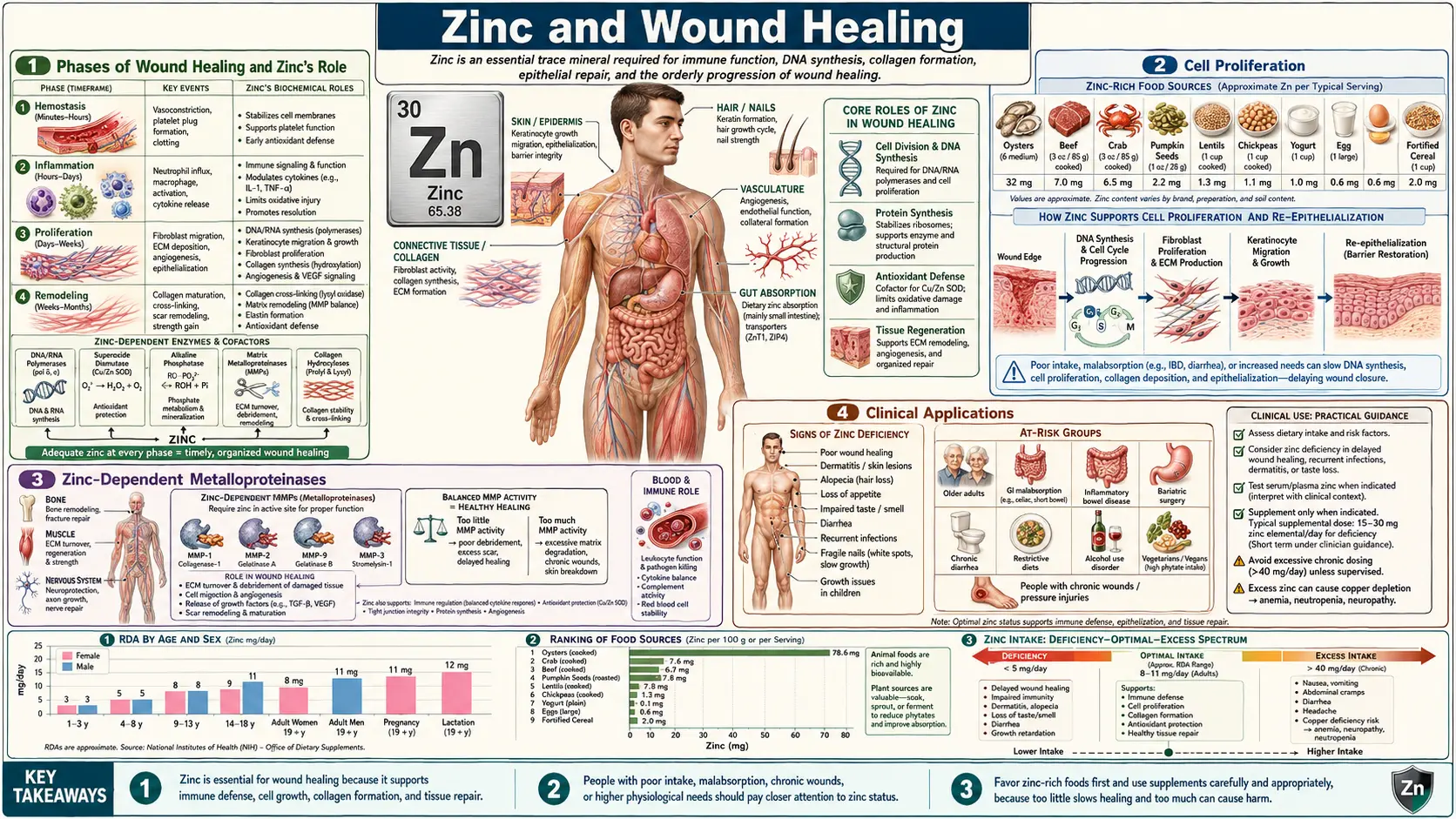
Zinc is one of the most critical micronutrients for wound repair. It participates in every phase of the healing process, from the initial hemostatic and inflammatory responses through the proliferative phase and final tissue remodeling. The skin contains approximately 5% of the body's total zinc, with the epidermis holding five to six times more zinc than the dermis. This high concentration reflects the mineral's central importance in maintaining skin integrity and supporting repair when that integrity is breached. Zinc deficiency is a well-established cause of impaired wound healing, and ensuring adequate zinc status is a fundamental component of wound care management.
Table of Contents
- Phases of Wound Healing and Zinc's Role
- Collagen Synthesis
- Cell Proliferation
- Inflammatory Response Modulation
- Immune Defense at the Wound Site
- Zinc-Dependent Metalloproteinases
- Zinc Deficiency and Delayed Healing
- Clinical Applications
- Key Research Papers
- Connections
- Featured Videos
Phases of Wound Healing and Zinc's Role
Wound healing proceeds through four overlapping phases: hemostasis, inflammation, proliferation, and remodeling. Zinc contributes to each of these phases through distinct biochemical mechanisms.
- Hemostasis (minutes to hours) — Immediately after injury, the body initiates hemostasis to stop bleeding. Platelets aggregate at the wound site and form a clot. Zinc influences platelet aggregation and the coagulation cascade. Zinc ions are released from activated platelets and contribute to clot stability. The fibrin clot also serves as a provisional matrix for the cells that will carry out subsequent repair.
- Inflammation (hours to days) — Neutrophils and macrophages infiltrate the wound to clear debris and combat infection. Zinc supports the antimicrobial functions of these cells, including phagocytosis and the generation of reactive oxygen species. Zinc also modulates the duration and intensity of the inflammatory response, helping to prevent the transition from acute to chronic inflammation, which can stall the healing process.
- Proliferation (days to weeks) — This phase involves the formation of granulation tissue, angiogenesis (new blood vessel growth), re-epithelialization, and wound contraction. Zinc is essential for the rapid cell division that drives all of these processes. Fibroblasts, keratinocytes, and endothelial cells all require zinc for DNA synthesis, protein production, and migration into the wound bed.
- Remodeling (weeks to months) — The final phase involves the maturation and reorganization of collagen within the wound, resulting in a scar with increased tensile strength. Zinc-dependent metalloproteinases are central to this phase, selectively degrading and reorganizing the extracellular matrix to produce a more organized and functional tissue architecture.
Collagen Synthesis
Collagen is the most abundant protein in the human body and the primary structural component of wound repair tissue. Zinc is involved in collagen synthesis at multiple levels.
- Gene transcription — Zinc finger transcription factors regulate the expression of collagen genes (particularly COL1A1 and COL1A2, encoding type I collagen, and COL3A1, encoding type III collagen). Without adequate zinc, the transcriptional activation of these genes is impaired, reducing the production of procollagen molecules.
- Procollagen processing — After procollagen chains are synthesized in the endoplasmic reticulum, they must be processed by procollagen peptidases to form mature collagen molecules. Some of these processing enzymes, including bone morphogenetic protein-1 (BMP-1), are zinc-dependent metalloproteinases.
- Post-translational modification — Collagen undergoes extensive post-translational modifications including hydroxylation of proline and lysine residues, which are essential for proper triple helix formation and cross-linking. While vitamin C is the primary cofactor for prolyl and lysyl hydroxylases, zinc influences the overall cellular environment that supports these modifications.
- Cross-linking and maturation — Lysyl oxidase, a copper-dependent enzyme that catalyzes the cross-linking of collagen and elastin fibers, operates within a broader network of metalloenzymes in which zinc plays a supporting role. Proper cross-linking gives collagen fibers their tensile strength, which is critical for wound integrity.
- Collagen type transition — Early wound healing is characterized by type III collagen deposition, which is gradually replaced by type I collagen during remodeling. This transition is mediated by zinc-dependent metalloproteinases and is essential for the wound to achieve mature tensile strength.
Cell Proliferation
The proliferative phase of wound healing demands rapid cell division to generate the cells needed for tissue repair. Zinc is a rate-limiting factor in this process.
- DNA synthesis — Zinc is a cofactor for DNA polymerase, thymidine kinase, and other enzymes of the DNA replication machinery. Without adequate zinc, cells cannot replicate their DNA efficiently, and the rate of cell division slows. This directly impacts the speed of wound closure.
- Fibroblast proliferation and function — Fibroblasts are the primary cells responsible for producing the extracellular matrix components of granulation tissue, including collagen, fibronectin, and glycosaminoglycans. Zinc promotes fibroblast proliferation, migration into the wound bed, and synthetic activity. In vitro studies have demonstrated that zinc-depleted fibroblasts show reduced proliferation rates and diminished collagen output.
- Keratinocyte migration and proliferation — Re-epithelialization requires keratinocytes at the wound margins to proliferate and migrate across the wound surface. Zinc supports both of these processes. It promotes keratinocyte motility by influencing integrin-mediated cell adhesion and by activating signaling pathways that drive cell migration, including the epidermal growth factor receptor (EGFR) pathway.
- Angiogenesis — The formation of new blood vessels to supply the growing granulation tissue requires endothelial cell proliferation and migration. Zinc supports angiogenesis through its role in vascular endothelial growth factor (VEGF) signaling and by maintaining the activity of endothelial nitric oxide synthase (eNOS), which produces nitric oxide essential for vasodilation and new vessel formation.
- Growth factor signaling — Many growth factors involved in wound healing, including platelet-derived growth factor (PDGF), transforming growth factor-beta (TGF-β), and epidermal growth factor (EGF), signal through receptors and intracellular pathways that are zinc-sensitive. Zinc modulates the activity of receptor tyrosine kinases and downstream signaling cascades, amplifying the proliferative signals that drive wound closure.
Inflammatory Response Modulation
A properly regulated inflammatory response is essential for effective wound healing. Too little inflammation allows infection to take hold, while excessive or prolonged inflammation causes tissue damage and delays repair. Zinc plays a central role in balancing this response.
- Neutrophil recruitment and function — In the first hours after injury, neutrophils are recruited to the wound by chemotactic signals. Zinc supports neutrophil chemotaxis, phagocytosis, and the respiratory burst that generates antimicrobial reactive oxygen species. Zinc deficiency reduces neutrophil antimicrobial activity, increasing the risk of wound infection.
- Macrophage phenotype switching — Macrophages play a dual role in wound healing. In the early inflammatory phase, M1-polarized macrophages produce pro-inflammatory cytokines and clear debris and pathogens. In the later proliferative phase, macrophages switch to an M2-polarized phenotype that promotes tissue repair, angiogenesis, and resolution of inflammation. Zinc influences this M1-to-M2 transition, and zinc deficiency can impair the switch, trapping the wound in a chronic inflammatory state.
- NF-kB pathway regulation — Zinc modulates the NF-κB signaling pathway, which controls the expression of numerous pro-inflammatory genes. Zinc induces the expression of A20 (TNFAIP3), a zinc finger protein that inhibits NF-κB activation, thereby dampening excessive inflammation. This mechanism is particularly important in preventing chronic inflammation in wounds.
- Reactive oxygen species balance — While some ROS production is necessary for antimicrobial defense, excessive ROS cause oxidative damage to wound tissues and impede healing. Zinc's antioxidant functions, including its role in Cu/Zn superoxide dismutase and metallothionein induction, help maintain the ROS balance within the wound environment.
- Resolution of inflammation — Zinc promotes the production of anti-inflammatory mediators including interleukin-10 (IL-10) and specialized pro-resolving lipid mediators. These molecules actively resolve inflammation and signal the transition from the inflammatory to the proliferative phase of healing.
Immune Defense at the Wound Site
Wounds represent a breach in the body's primary defense barrier, creating an entry point for pathogens. Local immune defense at the wound site is critical to prevent infection and support healing.
- Antimicrobial peptide production — Keratinocytes and immune cells at the wound site produce antimicrobial peptides (AMPs) such as human beta-defensins and cathelicidin (LL-37). Zinc supports the expression and function of these peptides, which directly kill bacteria, fungi, and some viruses at the wound surface.
- Nutritional immunity — The concept of nutritional immunity refers to the body's strategy of sequestering essential metals from invading pathogens. At wound sites, the protein calprotectin, released by neutrophils, chelates zinc and manganese in the extracellular space to starve bacteria of these essential nutrients. This zinc-withholding strategy is a key component of host defense against wound infection.
- Biofilm resistance — Chronic wounds are frequently colonized by bacterial biofilms, which are highly resistant to antibiotics and immune clearance. Zinc has been shown to inhibit biofilm formation by certain bacterial species and can enhance the penetration of antimicrobial agents into existing biofilms. Topical zinc preparations may help prevent biofilm establishment in acute wounds.
- Complement activation — The complement system is activated at wound sites and contributes to opsonization, chemotaxis, and direct lysis of pathogens. Zinc supports complement function, enhancing the local immune response against invading microorganisms.
Zinc-Dependent Metalloproteinases
Matrix metalloproteinases (MMPs) are a family of zinc-dependent endopeptidases that play essential roles in wound healing by degrading and remodeling the extracellular matrix.
- Structure and mechanism — All MMPs contain a catalytic domain with a zinc ion at the active site, coordinated by three histidine residues. The zinc ion is essential for the hydrolytic cleavage of peptide bonds in extracellular matrix substrates. A second structural zinc ion and calcium ions provide additional stability to the enzyme.
- MMP-1 (collagenase-1) — Cleaves fibrillar collagens (types I, II, and III) during the remodeling phase. MMP-1 is produced by keratinocytes, fibroblasts, and macrophages and is essential for keratinocyte migration across the collagen-rich wound bed during re-epithelialization.
- MMP-2 (gelatinase A) and MMP-9 (gelatinase B) — These gelatinases degrade type IV collagen (the main component of basement membranes), gelatin, and other matrix components. MMP-2 is constitutively expressed and contributes to baseline matrix turnover, while MMP-9 is induced during inflammation and is critical for leukocyte migration into the wound.
- MMP-3 (stromelysin-1) — Has broad substrate specificity and degrades proteoglycans, laminin, fibronectin, and several collagen types. MMP-3 also activates other pro-MMPs, serving as a regulatory node in the MMP cascade.
- MMP-7 (matrilysin) — Expressed by epithelial cells, MMP-7 processes antimicrobial peptides and contributes to re-epithelialization. It plays a role in both wound defense and tissue repair.
- Tissue inhibitors of metalloproteinases (TIMPs) — The activity of MMPs is tightly regulated by TIMPs, endogenous inhibitors that bind to the zinc-containing active site. The balance between MMPs and TIMPs determines the net proteolytic activity in the wound. In chronic non-healing wounds, this balance is often disrupted, with excessive MMP activity leading to degradation of newly formed matrix and growth factors.
- Clinical implications — Elevated MMP levels in wound fluid are associated with poor healing outcomes in chronic wounds such as diabetic foot ulcers, venous leg ulcers, and pressure injuries. Therapeutic strategies that restore the MMP/TIMP balance, including zinc supplementation, are an active area of wound healing research.
Zinc Deficiency and Delayed Healing
The consequences of zinc deficiency on wound healing are well documented in both clinical observations and controlled experimental studies.
- Clinical signs — Zinc-deficient patients exhibit delayed wound closure, reduced granulation tissue formation, decreased wound breaking strength, and increased susceptibility to wound infection. Surgical patients with low serum zinc levels have longer hospital stays and higher rates of wound complications.
- Acrodermatitis enteropathica — This inherited disorder of zinc absorption provides a clinical model for severe zinc deficiency. Affected individuals develop characteristic perioral and acral dermatitis, diarrhea, alopecia, and severely impaired wound healing. The condition is fully reversible with oral zinc supplementation, demonstrating the essential role of zinc in skin integrity and repair.
- Chronic wounds — Patients with chronic non-healing wounds, including diabetic foot ulcers, venous leg ulcers, and pressure injuries, frequently have lower serum zinc levels compared to age-matched controls. Zinc deficiency may contribute to the persistent inflammatory state and impaired cellular proliferation that characterize these wounds.
- Burns — Burn injuries cause significant zinc losses through wound exudate, increased urinary excretion, and redistribution of zinc from the plasma to the liver (as part of the acute phase response). The resulting zinc depletion impairs wound healing, immune defense, and protein synthesis at a time when demand for all three is greatly increased.
- Surgical healing — Pre-operative zinc deficiency is a risk factor for poor surgical wound healing. Studies have shown that zinc supplementation in zinc-deficient patients prior to surgery can improve wound outcomes, reduce infection rates, and shorten recovery times.
- Populations at risk — Groups at particular risk of zinc deficiency-related wound healing impairment include the elderly (due to reduced dietary intake and absorption), patients with gastrointestinal diseases (Crohn's disease, celiac disease, short bowel syndrome), individuals with chronic liver or kidney disease, patients receiving total parenteral nutrition without adequate zinc supplementation, and people with alcoholism (due to both reduced intake and increased urinary losses).
Clinical Applications
The therapeutic use of zinc to support wound healing encompasses both systemic supplementation and topical application.
- Systemic zinc supplementation — Oral zinc supplementation (typically 15–50 mg of elemental zinc per day) is recommended for patients with documented zinc deficiency or those at high risk of deficiency who are undergoing wound healing. The most robust evidence supports supplementation in zinc-deficient individuals rather than routine supplementation in zinc-replete patients. Common supplemental forms include zinc sulfate (220 mg capsules providing 50 mg of elemental zinc), zinc gluconate, and zinc acetate.
- Topical zinc preparations — Zinc oxide has been used topically in wound care for centuries. It provides a protective barrier, has mild antimicrobial and anti-inflammatory properties, and promotes epithelial cell migration. Zinc oxide is a common ingredient in barrier creams for diaper dermatitis and in medicated bandages (such as Unna boots) used for venous leg ulcers. Calamine lotion, a mixture of zinc oxide and ferric oxide, is used for its soothing and protective properties.
- Zinc in wound dressings — Modern wound dressings incorporating zinc have been developed to provide sustained local zinc delivery. These include zinc-impregnated alginate dressings, zinc-containing hydrogels, and zinc oxide nanoparticle dressings. These products aim to enhance local zinc availability while providing the moist wound environment that supports optimal healing.
- Burn wound management — Zinc supplementation is part of the standard nutritional support protocol for major burn patients. The American Burn Association guidelines recommend increased zinc intake for burn patients, recognizing the significant zinc losses and increased demands associated with burn injury. Typical supplementation regimens provide 25–50 mg of elemental zinc per day for the duration of wound healing.
- Perioperative supplementation — Screening for zinc deficiency and providing supplementation to deficient patients prior to elective surgery represents an opportunity to optimize wound healing outcomes. Some surgical nutrition protocols include zinc as part of a multinutrient approach alongside vitamin C, vitamin A, and protein.
- Assessment of zinc status — Serum or plasma zinc is the most commonly used clinical biomarker of zinc status, although it has limitations. Serum zinc levels decline during acute infection and inflammation (as zinc is redistributed to the liver) and may not accurately reflect tissue zinc stores. Other assessment methods include dietary intake analysis, erythrocyte zinc concentration, and hair zinc content, though none is a perfect indicator. A therapeutic trial of zinc supplementation with monitoring of wound healing progress may be the most practical approach in patients with non-healing wounds and suspected deficiency.
- Safety and monitoring — Zinc supplementation at therapeutic doses is generally well tolerated. The most common side effects are gastrointestinal, including nausea, abdominal cramping, and altered taste, particularly when zinc is taken on an empty stomach. Chronic supplementation above 40 mg/day of elemental zinc (the tolerable upper intake level for adults) requires monitoring for copper deficiency, as zinc induces intestinal metallothionein that sequesters copper and impairs its absorption. Copper status should be assessed periodically in patients on long-term zinc supplementation, and concurrent copper supplementation (1–2 mg/day) may be warranted.
Key Research Papers
- Lin PH, Sermersheim M, Li H, Lee PHU, Steinberg SM, Ma J (2017). Zinc in wound healing modulation. Nutrients 10(1):16. — PubMed
- Lansdown ABG, Mirastschijski U, Stubbs N, Scanlon E, Agren MS (2007). Zinc in wound healing: theoretical, experimental, and clinical aspects. Wound Repair Regen 15(1):2-16. — PubMed
- Agren MS, Soderberg TA, Reuterving CO, Hallmans G, Tengrup I (1991). Effect of topical zinc oxide on bacterial growth and inflammation in full-thickness skin wounds. Eur J Surg 157(2):97-101. — PubMed
- Andrews M, Gallagher-Allred C (1999). The role of zinc in wound healing. Adv Wound Care 12(3):137-138. — PubMed
- Mohammed BM, Fisher BJ, Kraskauskas D, et al. (2016). Vitamin C promotes wound healing through novel pleiotropic mechanisms. Int Wound J 13(4):572-584. — PubMed
- Senapati A, Slavin BM, Thompson RPH (1985). Zinc deficiency and the prolonged accumulation of zinc in wounds. Br J Surg 72(7):583-584. — PubMed
- Maverakis E, Fung MA, Lynch PJ, Draznin M, Michael DJ, Ruben B, Fazel N (2007). Acrodermatitis enteropathica and an overview of zinc metabolism. J Am Acad Dermatol 56(1):116-124. — PubMed
- Schwartz JR, Marsh RG, Draelos ZD (2005). Zinc and skin health: overview of physiology and pharmacology. Dermatol Surg 31(7 Pt 2):837-847. — PubMed
- Vagionas A, Tsoporis JN, Karagiannakis DS, et al. (2024). Zinc supplementation in burn patients: an updated review. Burns. — PubMed
- Wilkinson EAJ (2014). Oral zinc for arterial and venous leg ulcers. Cochrane Database Syst Rev (9):CD001273. — PubMed
- Posthauer ME, Banks M, Dorner B, Schols JM (2015). The role of nutrition for pressure ulcer management: National Pressure Ulcer Advisory Panel guideline. Adv Skin Wound Care 28(4):175-188. — PubMed
- Gammoh NZ, Rink L (2017). Zinc in infection and inflammation. Nutrients 9(6):624. — PubMed
PubMed Topic Searches
- Zinc and wound healing
- Zinc and collagen synthesis
- Zinc and matrix metalloproteinases
- Zinc deficiency and skin
- Topical zinc oxide in wound care
- Zinc supplementation and pressure ulcers
- Zinc and diabetic foot ulcer
- Acrodermatitis enteropathica
- Zinc in burn injury nutrition
- Zinc and keratinocyte migration
- Zinc and fibroblast proliferation
- Calprotectin and nutritional immunity
Connections
- All Minerals
- Zinc Overview
- Zinc Benefits Hub
- Zinc for Immune Function
- Zinc for Testosterone
- Zinc for Skin Health
- Copper (Cofactor)
- Vitamin C
- Vitamin A
- Vitamin D3
- Proline
- Glycine
- Lysine
- Collagen
- Silicon
- Alopecia
- Celiac Disease