Toxic Minerals & Heavy Metals
Classic Heavy Metals
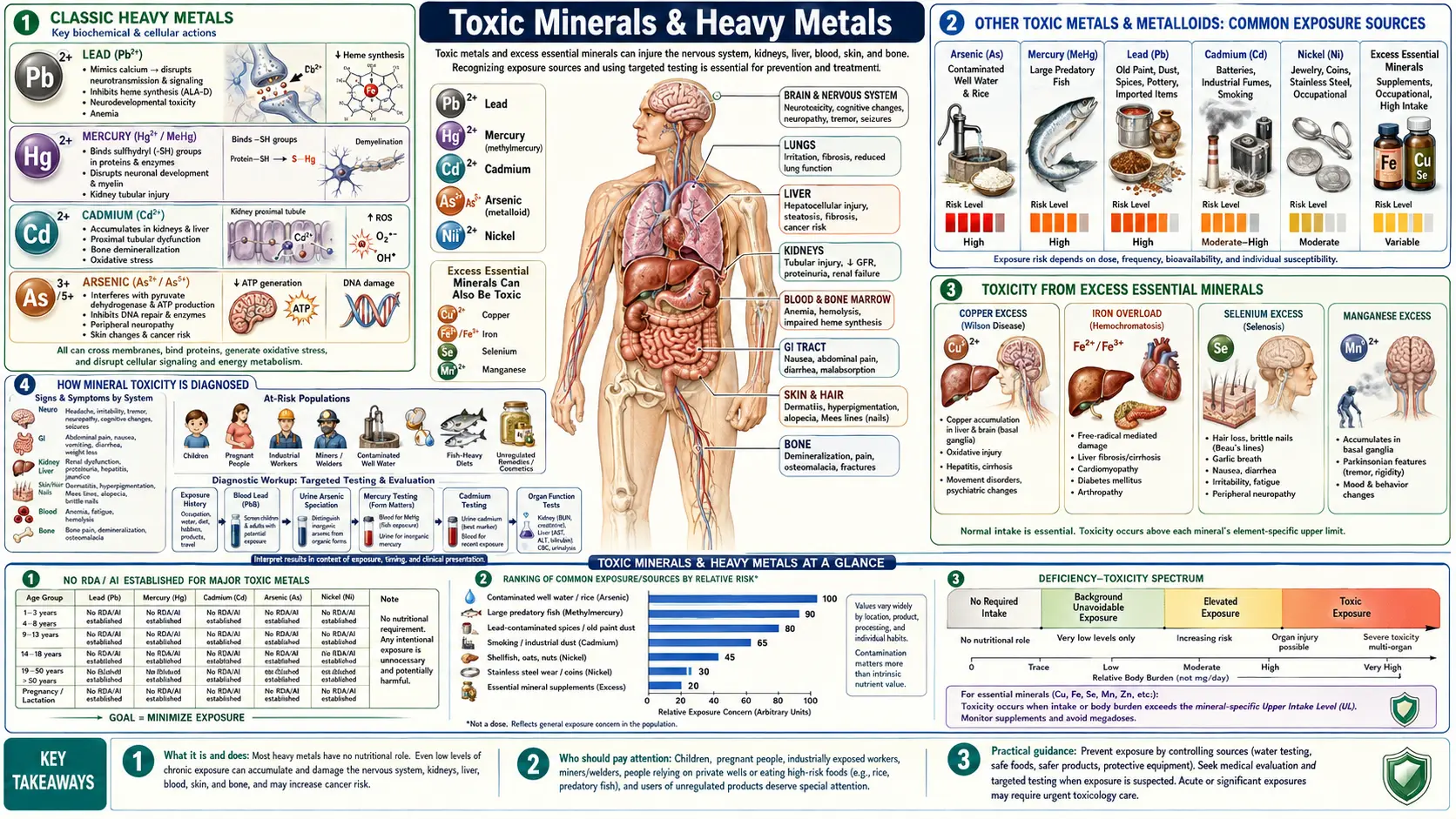
The "big four" toxic heavy metals are the most studied environmental poisons in human history. The World Health Organization lists all of them among its chemicals of major public-health concern.
Lead
No identified safe level — neurodevelopmental harm in children, and cardiovascular and kidney disease in adults.
Read the deep dive →Mercury
Elemental, inorganic, and methylmercury — from fish and dental amalgam to the brain and kidney.
Read the deep dive →Arsenic
Groundwater's silent poison — skin lesions, multiple cancers, and the largest mass poisoning in history.
Read the deep dive →Cadmium
Cigarettes, batteries, and rice; itai-itai disease, kidney damage, and fragile bones.
Read the deep dive →Other Toxic Metals & Metalloids
Beyond the famous four, many other elements are toxic to the human body through industry, medicine, consumer products, or contaminated water.
Aluminum
Antacids, dialysis, and bone — who is genuinely at risk, and the honest verdict on the Alzheimer's question.
Read the deep dive →Antimony
Arsenic's chemical cousin — stibine gas, antimonial drugs, and questions about PET plastic.
Read the deep dive →Barium
Why the radiology "barium swallow" is inert, but soluble barium salts cause paralysis.
Read the deep dive →Beryllium
Chronic beryllium disease — a sarcoidosis look-alike diagnosed by the BeLPT blood test.
Read the deep dive →Hexavalent Chromium
The Erin Brockovich carcinogen — chromium-6 versus the essential, harmless chromium-3.
Read the deep dive →Gadolinium
MRI contrast retention, nephrogenic systemic fibrosis, and "deposition disease."
Read the deep dive →Manganism
An essential mineral that, in excess, produces a Parkinson-like disorder in welders.
Read the deep dive →Nickel
The world's most common skin allergy — plus the deadly gas nickel carbonyl.
Read the deep dive →Thallium
The "poisoner's poison" — hair loss, burning neuropathy, and the Prussian-blue antidote.
Read the deep dive →Tin & Organotins
Nearly harmless in a food can, but organotin compounds are potent neurotoxins.
Read the deep dive →Uranium
A dual hazard — chemical kidney toxicity and radioactivity; depleted-uranium concerns.
Read the deep dive →Toxicity From Excess Essential Minerals
Iron, copper, selenium, and zinc are all essential nutrients — but the dose makes the poison. These pages are the "too much" counterparts to the essential-mineral pages, covering genetic overload, accidental poisoning, and over-supplementation.
Iron Overload
Hereditary hemochromatosis and acute iron poisoning — the dark side of an essential mineral. (Essential Iron →)
Read the deep dive →Copper Toxicity
Wilson's disease and acute copper poisoning; Kayser-Fleischer rings. (Essential Copper →)
Read the deep dive →Selenium Toxicity (Selenosis)
A narrow safety margin — garlic breath, hair loss, and brittle nails. (Essential Selenium →)
Read the deep dive →Zinc Toxicity
Too much zinc quietly causes copper deficiency, anemia, and nerve damage. (Essential Zinc →)
Read the deep dive →Also on this site: Essential Iron · Essential Copper · Essential Selenium · Essential Zinc
Related Topics
Heavy Metals Overview
How toxic metals share mechanisms, testing, and chelation — the best place to start.
Read the deep dive →Fluoride
Dental benefit, dental and skeletal fluorosis, and the water-fluoridation debate. Organ-by-organ evidence in Fluoride Toxicity Removal protocols in Fluoride Chelation.
Read the deep dive →Also on this site: Fluoride Toxicity · Fluoride Chelation
Some elements from the periodic table have no safe biological role — and even minerals your body genuinely needs become poisons in excess. This section covers the toxic metals and metalloids: how they enter the body, the damage they do, the symptoms they cause, how doctors diagnose them with blood, urine, and hair testing, the treatments (including chelation), and the peer-reviewed research behind each. Each page is written for ordinary readers but keeps the real numbers, mechanisms, and named studies.
How Mineral Toxicity Is Diagnosed
No single test fits every metal, because each element distributes and clears from the body differently. Clinicians choose the test that matches the metal and the timing of exposure:
- Blood (serum or whole blood) — best for metals that circulate and reflect recent or ongoing exposure, such as lead (venous blood lead level), mercury, and manganese.
- 24-hour urine — the standard for metals cleared by the kidney, including arsenic, cadmium, thallium, uranium, and chromium, and for monitoring chelation.
- Hair and nails — record a timeline of past exposure for metals like arsenic, thallium, and selenium, though contamination and lab quality vary.
- Specialized tests — the beryllium lymphocyte proliferation test (BeLPT) for chronic beryllium disease, ceruloplasmin and free copper for Wilson's disease, ferritin and transferrin saturation for iron overload, and brain MRI for manganese and copper deposition.
A caution: commercial "provoked" or "challenge" urine tests — in which a chelating drug is given before collecting urine to make metal levels look high — are not validated for diagnosing chronic poisoning and are discouraged by major toxicology societies. Diagnosis should rest on a credible exposure history plus appropriately collected, unprovoked specimens interpreted against laboratory reference ranges.
A Note on Chelation Therapy
Chelation uses drugs that bind a metal so it can be excreted, and it is genuinely life-saving for specific, confirmed heavy-metal poisonings — for example, succimer (DMSA) or calcium-EDTA for lead, dimercaprol for severe arsenic or mercury, Prussian blue for thallium, and deferoxamine for iron. But chelation is a targeted medical treatment with real risks (it can also strip out needed minerals), and it is matched to the specific metal and severity.
It is not a general-purpose "detox." Chelation marketed to the public for vague symptoms, autism, or unproven "heavy-metal cleanses" is ineffective and has caused deaths from dangerous drops in calcium. Each element page below explains when chelation actually helps — and when it does not.
Connections
- All Minerals
- Heavy Metals
- Lead
- Mercury
- Arsenic
- Cadmium
- Iron
- Copper
- Zinc
- Selenium
- Toxins
- Lab Tests
- Kidney Disease
- Parkinson's Disease
- Dangerous Supplements — heavy metals turning up inside supplement bottles.