Rosemary for Antioxidant and Anti-Aging
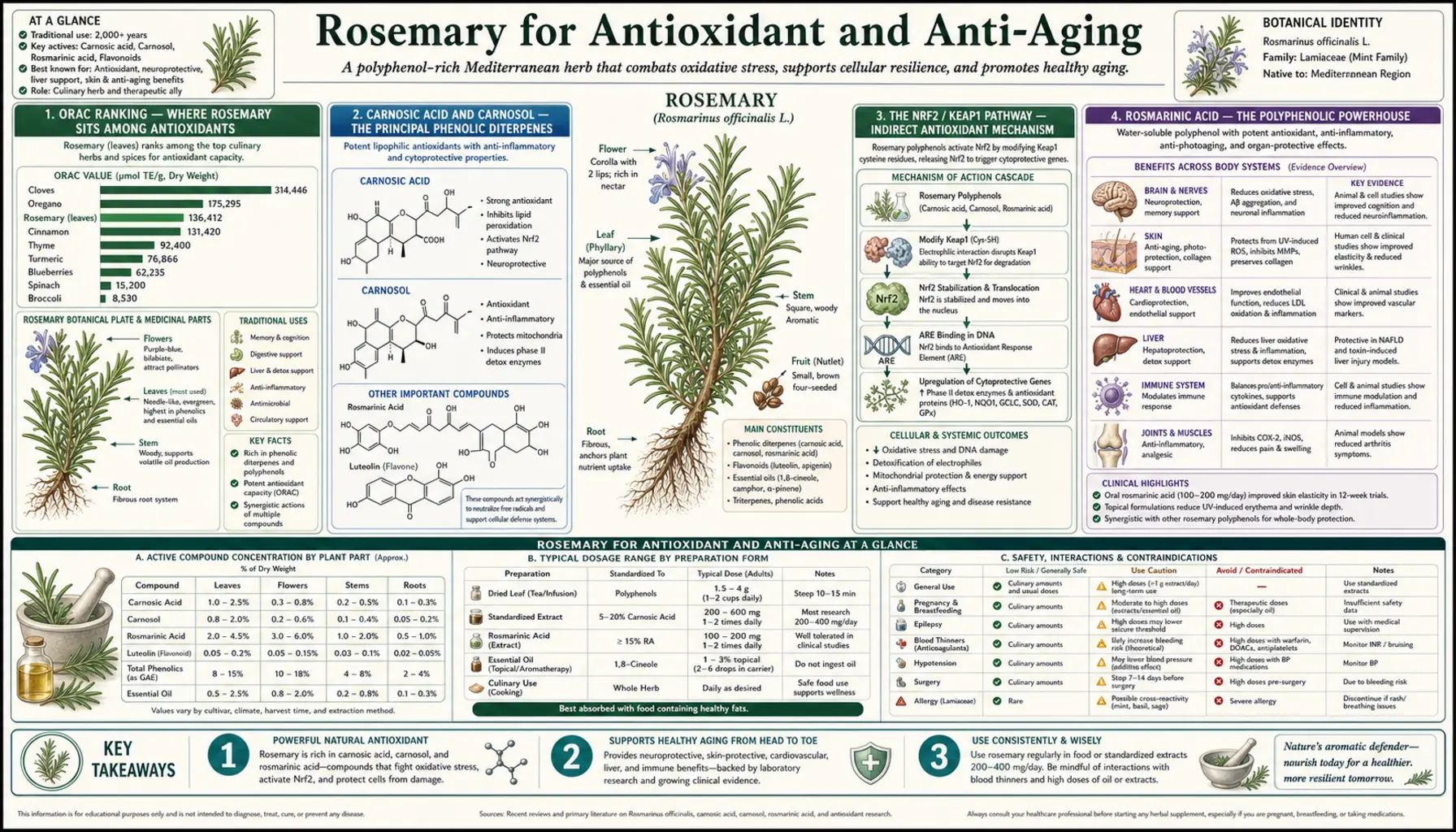
Rosemary ranks among the highest culinary herbs by ORAC (Oxygen Radical Absorbance Capacity), the standard laboratory measure of antioxidant power — on a gram-for-gram basis it sits in the top tier alongside cloves, oregano, and cinnamon. The reason is its content of two unusual phenolic diterpenes: carnosic acid and its oxidized partner carnosol. These compounds are uncommon outside the genera Rosmarinus and Salvia, and they operate through a distinctive mechanism — activation of the Nrf2 / Keap1 pathway, the master regulator of endogenous antioxidant gene expression. Rather than acting as direct radical scavengers (the way Vitamin C and Vitamin E do), carnosic acid covalently modifies the cellular Nrf2 brake and releases the transcription factor to enter the nucleus, where it switches on roughly 200 cytoprotective genes — glutathione synthesis enzymes, superoxide dismutase, catalase, heme oxygenase-1. This indirect mechanism is why rosemary extract is the European Union's approved natural food preservative E392, why it appears in animal feed to extend the shelf life of meat, and why the same chemistry has measurable cellular anti-aging effects in human cells and animal models.
Table of Contents
- ORAC Ranking — Where Rosemary Sits Among Antioxidants
- Carnosic Acid and Carnosol — the Principal Phenolic Diterpenes
- The Nrf2 / Keap1 Pathway — Indirect Antioxidant Mechanism
- Rosmarinic Acid — the Polyphenolic Polyphenol
- Food Preservation — the E392 Approval
- Meat Shelf Life — the Lipid Peroxidation Application
- Cellular Aging, Senescence, and Mitochondrial Function
- Cancer Chemoprevention Research
- Diabetes and Glycemic Effects
- Cardiovascular Protection
- Practical Daily Use for Antioxidant Effect
- Cautions
- Key Research Papers
- Connections
- Featured Videos
ORAC Ranking — Where Rosemary Sits Among Antioxidants
The ORAC (Oxygen Radical Absorbance Capacity) assay was developed at the USDA Beltsville Human Nutrition Research Center to provide a standardized laboratory measure of a food's ability to neutralize peroxyl radicals in vitro. The USDA published comprehensive ORAC databases in 2007 and 2010, after which they withdrew them in 2012 on the grounds that high in vitro antioxidant activity does not always translate to measurable in vivo effects. The databases nonetheless remain widely cited as a relative ranking.
Per gram of dried herb, the top ORAC tier contains:
- Clove — ~290,000 µmol Trolox equivalents per 100 g
- Sumac — ~310,000
- Dried oregano — ~175,000
- Dried rosemary — ~165,000
- Dried thyme — ~157,000
- Cinnamon (ground) — ~131,000
- Turmeric — ~127,000
For comparison, blueberries (often promoted as "high in antioxidants") have an ORAC of about 4,700 per 100 g of fresh fruit — lower than dried rosemary by roughly a factor of 35 per gram, although the practical comparison is complicated by the fact that you can eat 100 g of blueberries in a sitting but not 100 g of dried rosemary.
The ORAC value is driven primarily by the phenolic content of the herb. In rosemary, the dominant phenolic contributors are carnosic acid, carnosol, rosmarinic acid, methyl carnosate, and a constellation of related flavonoids and phenolic acids. The total phenolic content of high-quality dried rosemary leaf is typically 50-100 mg/g, with carnosic acid alone often comprising 5-25 mg/g depending on the cultivar, growing conditions, and post-harvest handling.
Carnosic Acid and Carnosol — the Principal Phenolic Diterpenes
Carnosic acid is the original biosynthetic phenolic diterpene in rosemary. Its structure is a 20-carbon abietane diterpene skeleton with a hydroxylated catechol ring — the catechol giving it strong electrophilic and antioxidant chemistry. Carnosic acid is concentrated in the surface trichomes (glandular hairs) of rosemary leaves, where it presumably protects the plant from UV damage and herbivore attack.
Carnosol is formed from carnosic acid by oxidation (loss of the carboxyl group and rearrangement to a lactone ring). The conversion happens spontaneously when the leaf is dried, heated, or exposed to oxygen, and continues during storage. Old or improperly stored rosemary has progressively more carnosol and less carnosic acid — both compounds are biologically active but with subtly different profiles.
Key pharmacological characteristics shared by carnosic acid and carnosol:
- Lipophilic — both partition into lipid bilayers and lipoprotein particles, where they can intercept lipid peroxyl radicals at the membrane interface
- Electrophilic — the catechol or quinone form covalently modifies thiol groups on target proteins, including the cellular Nrf2 anchor Keap1 (see next section)
- Cross blood-brain barrier — small molecular weight and lipophilicity allow CNS access, the basis for neuroprotective effects in models of stroke and neurodegeneration
- Direct radical scavenging — the catechol can donate hydrogen atoms to peroxyl, hydroxyl, and peroxynitrite radicals, terminating chain peroxidation
- Anti-inflammatory — suppress NF-kappaB activation, reducing transcription of pro-inflammatory cytokines (TNF-alpha, IL-1beta, IL-6) and inducible enzymes (COX-2, iNOS)
The chemistry of these two compounds is what justifies the food-preservation approval, the neuroprotective animal data, and the bulk of the cellular anti-aging research.
The Nrf2 / Keap1 Pathway — Indirect Antioxidant Mechanism
Most of what makes carnosic acid pharmacologically interesting is not its direct radical-scavenging activity (which is real but modest) but its activation of the Nrf2 / Keap1 pathway, the cell's master switch for endogenous antioxidant defense.
Under normal conditions, the transcription factor Nrf2 (nuclear factor erythroid 2-related factor 2) is sequestered in the cytoplasm by its anchor protein Keap1 (Kelch-like ECH-associated protein 1). Keap1 binds Nrf2 and presents it to a cullin-RING E3 ubiquitin ligase complex that polyubiquitinates Nrf2 and targets it for proteasomal degradation. The result is a low basal cellular concentration of Nrf2 and a low basal transcription of antioxidant response element (ARE) target genes.
Keap1 contains multiple reactive cysteine residues whose thiol side chains serve as electrophile sensors. When the cytoplasm encounters an electrophilic stress signal — reactive oxygen species, electrophilic toxins, or electrophilic phytochemicals like carnosic acid, sulforaphane, or curcumin — these cysteines are covalently modified, changing the conformation of Keap1 so that it can no longer present Nrf2 for ubiquitination. Nrf2 accumulates, translocates to the nucleus, and binds AREs in the promoter regions of approximately 200 cytoprotective genes.
The Nrf2 target genes activated by carnosic acid include:
- Glutathione synthesis enzymes — gamma-glutamylcysteine ligase catalytic (GCLC) and modifier (GCLM) subunits, the rate-limiting step in glutathione biosynthesis
- Superoxide dismutase (SOD) — the cytosolic Cu/Zn-SOD and mitochondrial Mn-SOD that detoxify superoxide
- Catalase — the peroxisomal enzyme that decomposes hydrogen peroxide to water and oxygen
- Glutathione peroxidases (GPx1, GPx4) — selenium-dependent peroxide-detoxifying enzymes
- Heme oxygenase-1 (HO-1) — the stress-inducible enzyme producing biliverdin and carbon monoxide, both of which have cytoprotective effects
- NAD(P)H quinone oxidoreductase 1 (NQO1) — a two-electron reductase that detoxifies reactive quinones
- Glutathione S-transferases (GSTs) — conjugating enzymes that detoxify electrophilic xenobiotics
- Multidrug resistance proteins (MRPs) — ABC transporters that pump glutathione conjugates out of cells
This indirect mechanism is the modern understanding of why dietary phytochemicals like rosemary's carnosic acid produce broader cytoprotection than their direct radical-scavenging activity alone would predict. A single phytochemical that activates Nrf2 effectively boosts the cell's entire antioxidant infrastructure for hours to days, with each individual antioxidant enzyme then catalytically inactivating thousands of reactive species during its lifespan in the cell.
The same general mechanism applies to other dietary Nrf2 activators: sulforaphane from cruciferous vegetables (broccoli sprouts have the highest content), curcumin from turmeric, epigallocatechin gallate (EGCG) from green tea, and many others. Rosemary's carnosic acid is among the most potent of the food-source Nrf2 activators known.
Rosmarinic Acid — the Polyphenolic Polyphenol
The third major antioxidant compound in rosemary is rosmarinic acid, an ester of caffeic acid and 3,4-dihydroxyphenyllactic acid that was first isolated from rosemary in 1958 (hence its name). It is also found in significant quantities in lemon balm, sage, thyme, oregano, basil, perilla, and several other Lamiaceae herbs.
Unlike carnosic acid (lipophilic, electrophilic, Nrf2-activator), rosmarinic acid is water-soluble and operates primarily as a direct radical scavenger. Its catechol structure can donate hydrogen atoms to peroxyl, hydroxyl, peroxynitrite, and singlet oxygen radicals, terminating oxidative chain reactions in the aqueous phase of cells and extracellular fluids.
Documented rosmarinic acid effects:
- Direct antioxidant — among the most potent natural-source ORAC contributors per molecule
- Anti-inflammatory — suppresses cyclooxygenase-2 (COX-2) and lipoxygenase pathways, reducing prostaglandin and leukotriene production
- Antiviral — in vitro activity against herpes simplex virus, particularly used in lemon balm preparations for cold sores
- Antiallergic — suppresses IgE-mediated mast cell activation in animal models
- Inhibits amyloid-beta aggregation — relevant to Alzheimer's disease pathology in cellular and rodent models
- Inhibits xanthine oxidase — the enzyme that produces uric acid and reactive oxygen species in gout
Bioavailability of orally administered rosmarinic acid is modest (estimated 1-3% reaching systemic circulation as intact molecule), with the majority undergoing gut microbial conversion to caffeic acid and 3,4-dihydroxyphenyllactic acid and subsequent absorption of these smaller metabolites. The metabolites retain antioxidant activity. For practical purposes, rosmarinic acid effects after oral consumption should be understood as effects of a complex metabolite mixture rather than of the parent compound.
Food Preservation — the E392 Approval
One of the most concrete real-world applications of rosemary's antioxidant chemistry is its EU food-additive approval under the designation E392: extract of rosemary. The European Food Safety Authority issued a positive opinion in 2008 after evaluating the safety and antioxidant efficacy of standardized rosemary extracts, and the EU formally approved E392 as a food additive in 2010 (Regulation 1129/2011).
E392 is used legally in the EU and many other jurisdictions to extend the shelf life of:
- Vegetable oils, particularly those high in polyunsaturated fatty acids that are prone to rancidity (sunflower, soybean, corn, fish oil)
- Processed meat products (sausages, pates, cured meats)
- Fish and seafood products
- Dehydrated and instant soups and sauces
- Dressings, mayonnaise, and emulsified sauces
- Bakery products with significant fat content
- Fat-soluble vitamin supplements (vitamin A and E preparations) to prevent oxidation of the active ingredient
The standardized E392 preparations typically contain 5-30% carnosic acid plus carnosol, with the remainder being plant material, carriers (vegetable oil, glycerol), and emulsifiers. Specifications require minimum levels of total phenolic diterpenes and maximum levels of residual solvents (the extracts are typically prepared by supercritical CO2 extraction or by ethanol/hexane extraction with thorough solvent removal).
The same standardized extracts are used in animal feed in the EU to extend the shelf life of dry pet food and to reduce lipid peroxidation in poultry and pork during storage. The animal-feed use is regulated separately from the human-food use but uses essentially the same product.
This regulatory acceptance is meaningful for the discussion of rosemary's health effects. EFSA's approval required demonstration of both efficacy (the extract genuinely extends shelf life) and safety (the extract does not produce adverse effects at the approved use levels). The same compounds shown to be safe and effective in extending food shelf life are the compounds consumed when fresh or dried rosemary is used in cooking.
Meat Shelf Life — the Lipid Peroxidation Application
The biochemistry of why rosemary extends meat shelf life is directly relevant to its anti-aging biology. The dominant spoilage mechanism in stored meat (other than microbial growth) is lipid peroxidation — the oxidative degradation of polyunsaturated fatty acids in muscle membranes and adipose triglycerides. Lipid peroxidation produces a cascade of off-flavor compounds (hexanal, malondialdehyde, 4-hydroxynonenal) that give rancid meat its characteristic smell and taste, and ultimately produces aldehydes that may be genotoxic.
Carnosic acid and carnosol are unusually well-suited to inhibiting lipid peroxidation because they are lipophilic — they partition into the lipid phase where the reaction is occurring, rather than remaining in the aqueous phase where they would be unable to reach the reactive species. Once in the lipid phase, they intercept the propagating peroxyl radicals that drive the chain reaction.
The same lipid-phase antioxidant activity is biologically relevant in vivo. Cellular and mitochondrial membranes consist of phospholipid bilayers containing significant proportions of polyunsaturated fatty acids (arachidonic acid, docosahexaenoic acid). These membrane lipids are constantly under oxidative stress from electron-transport-chain leakage of reactive oxygen species. Lipid-soluble antioxidants like alpha-tocopherol (vitamin E), coenzyme Q10, and the rosemary diterpenes are positioned to terminate membrane lipid peroxidation chains. The cellular anti-aging implications follow directly — mitochondrial membrane peroxidation is a key driver of mitochondrial dysfunction with aging, and lipid-phase antioxidants that reduce it have measurable effects on cellular senescence markers in aging models.
Cellular Aging, Senescence, and Mitochondrial Function
The cellular-aging research on rosemary diterpenes is more preliminary than the food-preservation evidence, but several mechanistically coherent threads have emerged:
- Mitochondrial biogenesis — carnosic acid upregulates PGC-1alpha (the master regulator of mitochondrial biogenesis) in cellular and rodent models, increasing mitochondrial mass and oxidative capacity in skeletal muscle and adipose tissue
- Senescence suppression — carnosol delays the onset of replicative senescence in cultured human fibroblasts, with reduction in the senescence-associated secretory phenotype (SASP) cytokines IL-6 and IL-8
- Autophagy induction — rosemary extracts upregulate the autophagy machinery (LC3-II conversion, p62 degradation) in cellular models, contributing to clearance of damaged proteins and organelles that accumulate with age
- Inflammaging suppression — the NF-kappaB inhibition by carnosic acid and rosmarinic acid reduces the chronic low-grade inflammation ("inflammaging") that drives much of the morbidity of aging
- Telomere effects — preliminary evidence that rosemary extract preserves telomere length in vitro models of oxidative-stress-induced telomere shortening
Human translational evidence at this point is limited to small short-term trials of rosemary extract on markers of oxidative stress and inflammation in healthy adults. These trials consistently show reductions in markers like 8-isoprostane (a marker of lipid peroxidation), oxidized LDL, and C-reactive protein, but they have not been extended to long-term outcomes such as cardiovascular events, cancer incidence, or actuarial mortality. The mechanistic story is compelling; the clinical-trial evidence supporting rosemary as a longevity intervention specifically is preliminary.
For an overview of the broader oxidative-stress and aging conversation, see our Oxidative Stress page.
Cancer Chemoprevention Research
Rosemary extracts have been studied extensively in cellular and animal cancer models. The mechanistic basis is the same Nrf2-driven cytoprotection plus direct anti-inflammatory and pro-apoptotic effects on transformed cells. The cellular evidence is broad:
- Carnosic acid and carnosol induce apoptosis in cultured prostate, breast, colon, leukemia, and melanoma cancer cell lines
- Rosmarinic acid reduces metastatic colonization in xenograft mouse models
- Rosemary extract reduces colon tumor incidence in azoxymethane-treated mice
- Topical rosemary extract reduces skin tumor incidence in DMBA/TPA two-stage carcinogenesis mouse models
The human clinical-trial evidence in cancer prevention or treatment is essentially nonexistent — rosemary is not a chemotherapy drug, and no rigorous trials have evaluated it as a chemopreventive agent in defined high-risk populations. Epidemiologic studies of Mediterranean diet patterns (which include regular rosemary consumption among many other elements) consistently show reduced cancer incidence, but isolating the contribution of any single dietary component is impossible from observational data.
The honest summary: rosemary's cancer-related chemistry is mechanistically interesting and well-characterized in vitro and in animals, but human evidence specific to rosemary as a chemopreventive agent does not exist at the level of established interventions. Consuming rosemary as part of a varied diet is reasonable; positioning it as a cancer-prevention supplement overstates the evidence. See the Cancer page for the broader landscape of evidence-based cancer prevention.
Diabetes and Glycemic Effects
Rosemary has been investigated as a glycemic-control adjunct in type 2 diabetes, both in animal models and in small human trials. The proposed mechanisms include:
- Carnosic acid activates PPAR-gamma, the nuclear receptor target of the thiazolidinedione drug class (pioglitazone, rosiglitazone), improving insulin sensitivity in adipose tissue
- Carnosic acid and carnosol inhibit alpha-glucosidase and alpha-amylase, slowing carbohydrate digestion and reducing postprandial glucose spikes — the same mechanism as the prescription drug acarbose
- Rosmarinic acid reduces oxidative stress and inflammation in pancreatic beta cells in streptozotocin-induced diabetes rat models
- Rosemary extract activates AMPK in skeletal muscle, improving glucose uptake independent of insulin
Small human trials of rosemary extract in type 2 diabetic patients (typically 200-500 mg/day of standardized extract for 8-12 weeks) have shown modest reductions in fasting glucose and HbA1c, although the effect sizes have been variable and the trials have generally been small (often under 50 participants). The evidence is suggestive but not at the level of an established complementary therapy.
For patients with established type 2 diabetes, rosemary should be considered an adjunct to (not a replacement for) standard glycemic control. Patients on insulin or sulfonylureas should monitor blood glucose closely if adding rosemary extract, since the potential additive hypoglycemic effect could require dose adjustment of the primary medication.
Cardiovascular Protection
The cardiovascular evidence for rosemary follows the same general pattern — strong mechanistic plausibility (lipid-phase antioxidant activity reducing LDL oxidation, anti-inflammatory effects reducing vascular inflammation, modest hypotensive effects in animal models) with limited human outcome trials.
Documented cardiovascular-relevant effects:
- Reduced LDL oxidation — carnosic acid and rosmarinic acid both reduce oxidative modification of low-density lipoprotein particles in vitro and in animal studies; oxidized LDL is a key driver of atherogenesis
- Endothelial function — rosemary extract improves flow-mediated dilation in animal models and in a few small human trials
- Blood pressure — modest blood-pressure-lowering effects observed in some animal models and one small trial of hypotensive patients with low baseline blood pressure showing increased blood pressure (the opposite effect was reported in a hypertensive population)
- Platelet aggregation — rosmarinic acid reduces platelet aggregation in vitro, raising the theoretical possibility of an interaction with antiplatelet drugs (see Cautions)
The bottom line is that rosemary consumption as part of a Mediterranean-style diet is associated with cardiovascular benefits at the population level (along with olive oil, vegetables, fish, and the other elements of the pattern), but no rigorous trial has isolated rosemary as a primary cardiovascular intervention.
Practical Daily Use for Antioxidant Effect
For someone wanting to maximize the antioxidant and anti-aging delivery from rosemary, the practical options are:
- Culinary use — routine cooking with dried rosemary leaf delivers a modest but real dose of carnosic acid, carnosol, and rosmarinic acid. Add toward the end of cooking when possible — carnosic acid is heat-sensitive and will degrade significantly with prolonged high-heat cooking. The Mediterranean diet pattern of regular use of rosemary, oregano, thyme, sage, and basil collectively delivers a significant phenolic diterpene dose.
- Rosemary tea — 1-2 teaspoons of dried rosemary leaf steeped in hot water for 10 minutes extracts a meaningful fraction of the water-soluble rosmarinic acid; carnosic acid extraction is less complete because it is lipophilic. 1-2 cups per day is a reasonable upper limit for routine use.
- Standardized extract capsules — available in 200-500 mg per capsule, typically standardized to 6% carnosic acid. Daily dose of 1-2 capsules is in the range used in most clinical trials. Look for products with a Certificate of Analysis showing actual phenolic content.
- Fresh rosemary infused in olive oil — for use on salads or finished dishes. The lipophilic diterpenes extract well into olive oil, which is itself rich in oleocanthal and other phenolic antioxidants. Refrigerate the finished oil and use within a few weeks (botulinum risk in shelf-stable infused oils that are not properly acidified).
- Carnosic-acid-enriched preparations — some supplement brands sell preparations enriched to 10-30% carnosic acid. Useful for research dosing but typically overkill for general health support.
Avoid mistaking rosemary essential oil for a high-dose rosemary supplement. The essential oil contains very little carnosic acid or rosmarinic acid (those are non-volatile compounds left behind in the residue after steam distillation), and is composed primarily of the volatile monoterpenes (1,8-cineole, alpha-pinene, camphor) that drive the cognitive effects rather than the antioxidant effects. Oral consumption of essential oil is also unsafe at any meaningful dose — see the cognitive page for the inhalation-specific essential oil discussion.
Cautions
- Pregnancy — medicinal doses of rosemary extract are traditionally avoided during pregnancy; culinary amounts are safe. Concentrated extracts are best avoided in pregnancy.
- Antiplatelet and anticoagulant drugs — the rosmarinic-acid platelet-aggregation effect raises a theoretical interaction with warfarin, clopidogrel, apixaban, aspirin, and similar drugs. Routine culinary use is fine; high-dose supplementation should be discussed with the prescribing physician.
- Diabetes medications — potential additive glucose-lowering effect with insulin, sulfonylureas, and other glycemic-control drugs. Monitor blood glucose if adding rosemary extract.
- CYP enzyme effects — rosemary extracts modestly induce some CYP enzymes (CYP2B6, CYP3A4) in animal models, potentially altering the metabolism of drugs that are substrates of these enzymes. Clinically significant interactions are not well documented but theoretically possible at supplement-level doses.
- Iron absorption — like other high-polyphenol herbs, rosemary tea consumed with meals can reduce non-heme iron absorption. Separate consumption from iron-rich meals if iron deficiency is a concern.
- Surgery — discontinue high-dose rosemary extract 1-2 weeks before scheduled surgery due to the theoretical bleeding-risk concern.
Key Research Papers
- Satoh T, Kosaka K, Itoh K, Kobayashi A, Yamamoto M et al. (2008). Carnosic acid, a catechol-type electrophilic compound, protects neurons via S-alkylation of targeted cysteines on Keap1 (Nrf2 pathway). Journal of Neurochemistry. — PubMed
- Wang T et al. (2017). Antitumor effects of carnosol — a literature review. Phytotherapy Research. — PubMed
- de Oliveira MR (2016). The dietary components carnosic acid and carnosol as Nrf2 activators in cellular and animal models. Current Drug Targets. — PubMed
- EFSA Panel on Food Additives (2008). Use of rosemary extracts as a food additive — Scientific Opinion. EFSA Journal. — PubMed
- Birtic S et al. (2015). Carnosic acid. Phytochemistry. — PubMed
- Petiwala SM, Johnson JJ (2015). Diterpenes from rosemary (Rosmarinus officinalis): defining their potential for anti-cancer activity. Cancer Letters. — PubMed
- Rocha J et al. (2015). Anti-inflammatory effect of rosmarinic acid and an extract of Rosmarinus officinalis in rat models. Basic and Clinical Pharmacology and Toxicology. — PubMed
- Bahri S et al. (2017). Carnosic acid suppresses adipogenesis via the AMPK pathway. Journal of Functional Foods. — PubMed
- Bakirel T et al. (2008). In vivo assessment of antidiabetic and antioxidant activities of rosemary in alloxan-diabetic rabbits. Journal of Ethnopharmacology. — PubMed
- Hadi A et al. (2021). Effects of supplementation with Rosmarinus officinalis on glycemic control: a systematic review and meta-analysis. Journal of Functional Foods. — PubMed
- Aruoma OI et al. (1992). An evaluation of the antioxidant and antiviral action of extracts of rosemary and Provencal herbs. Food and Chemical Toxicology. — PubMed
- Petersen M, Simmonds MS (2003). Rosmarinic acid. Phytochemistry. — PubMed
PubMed Topic Searches
- PubMed: Carnosic acid Nrf2 antioxidant
- PubMed: Rosmarinic acid anti-inflammatory
- PubMed: Rosemary extract E392
- PubMed: Rosemary lipid peroxidation meat
- PubMed: Carnosol cancer apoptosis
Connections
- All Herbs
- Rosemary Overview
- Rosemary Benefits Hub
- Rosemary for Cognitive Function
- Rosemary for Hair Loss
- Rosemary for Digestive & Liver
- Turmeric (Curcumin / Nrf2)
- Sage (Phenolic Diterpenes)
- Oregano (Lamiaceae)
- Thyme
- Lemon Balm (Rosmarinic Acid)
- Glutathione
- Oxidative Stress
- Cancer
- Type 2 Diabetes
- BHA (Synthetic Antioxidant Comparison)