Willow Bark — Benefits Deep Dive
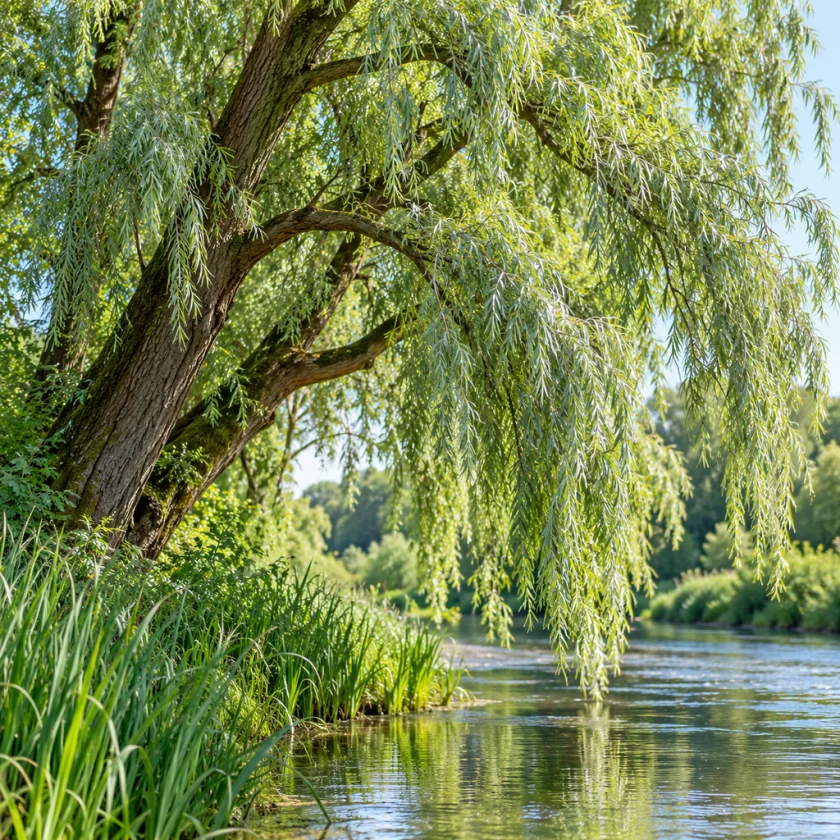
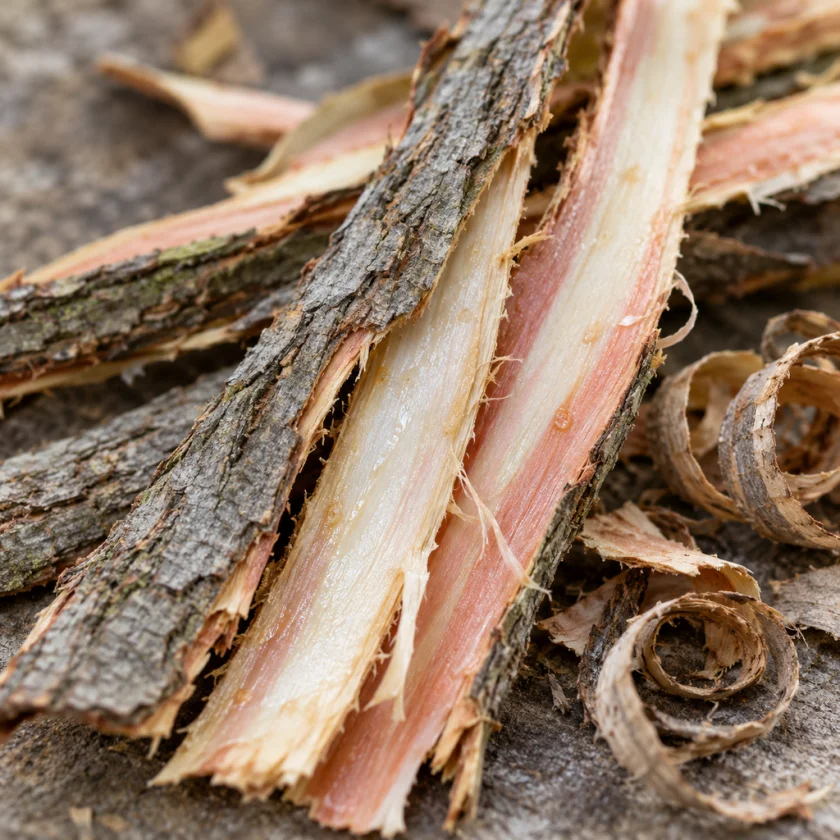
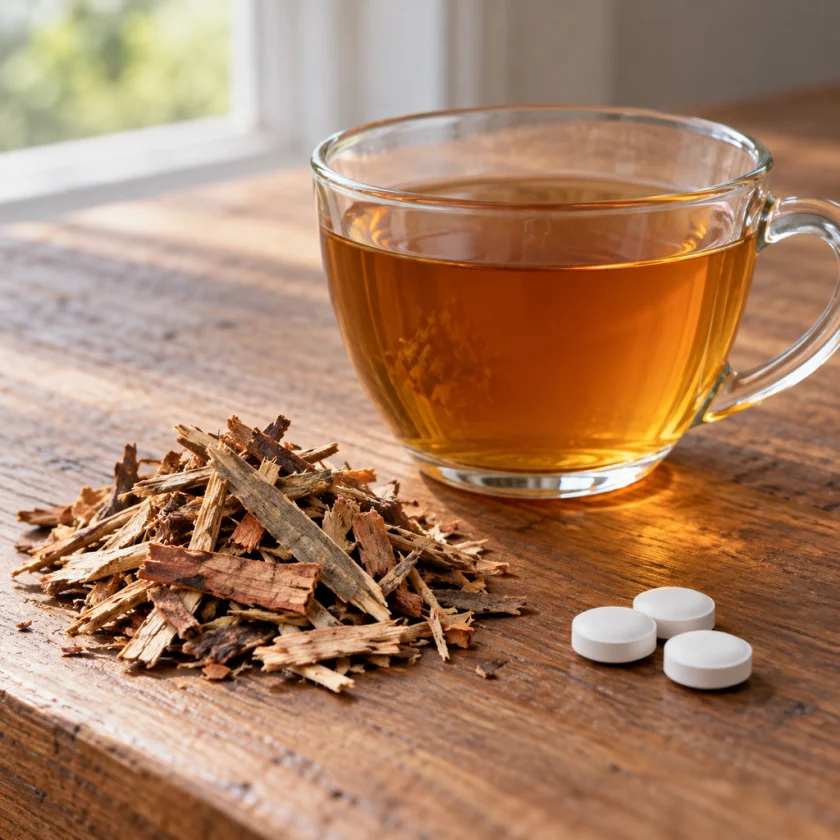
Willow bark (Salix alba, the white willow) is the original natural source of salicylic acid — isolated as the glycoside salicin by Johann Buchner in Munich in 1828, then chemically modified by Felix Hoffmann at Bayer in 1897 into the acetylated, gastric-stable, mass-marketable derivative aspirin. The medicinal history is 2,400 years long: Hippocrates' "powder of willow" is among the oldest documented Western analgesics, and the Cherokee, Iroquois, and Lenape used the inner bark for headache, fever, and arthritis long before the European pharmaceutical industrial revolution. Modern standardized extracts deliver 120-240 mg of salicin per day; for low back pain this dose performed about as well as a low dose of a nonsteroidal anti-inflammatory drug (NSAID) in one comparison trial, while osteoarthritis trials gave conflicting results, with slower onset and substantially lower gastrointestinal toxicity. The four benefit pages below explore where willow bark fits in contemporary pain management, why the whole-plant polyphenol matrix produces broader anti-inflammatory action than salicin alone, how the herb compares to aspirin and acetaminophen for headache, and the critical distinction that willow bark does not provide aspirin's antiplatelet cardioprotection — an essential point for any patient considering willow as an aspirin substitute for cardiovascular indications.
Deep-Dive Articles
Pain Management
How salicin is hydrolyzed in the gut to saligenin and oxidized in the liver to salicylic acid — the same active downstream metabolite produced by aspirin. The Chrubasik 2000 placebo-controlled low-back-pain trial (39% pain-free in the last week on 240 mg salicin daily vs 6% on placebo), the Chrubasik 2001 comparison with the NSAID rofecoxib for low back pain, the Schmid 2001 osteoarthritis trial, the historical context of Felix Hoffmann's 1897 acetylation of salicylic acid into aspirin at Bayer, and where willow bark fits among ibuprofen, naproxen, and aspirin for musculoskeletal pain.
Read the deep dive →Anti-Inflammatory
Why willow bark produces broader anti-inflammatory action than the calculated salicin-to-salicylic-acid conversion alone would predict. The one placebo-controlled rheumatoid arthritis trial (26 patients, no effect on pain), the polyphenol and flavonoid co-constituents (catechins, proanthocyanidins, salicortin, tremulacin) proposed to contribute additional COX-independent anti-inflammatory effects, and the "whole-herb advantage" hypothesis, which proposes that standardized whole-bark extract outperforms equimolar pure salicin in some endpoints.
Read the deep dive →Headache & Migraine
Tension headache traditional use across 2,400 years of Western herbal medicine, the limited but encouraging acute headache pilot data, how willow bark's slower-onset pharmacokinetics compare with aspirin and acetaminophen for headache management, the combination with feverfew, magnesium, and riboflavin for migraine prevention, and why practitioners rarely use willow for severe acute migraine but some use it for mild-to-moderate tension headache.
Read the deep dive →Cardiovascular & Aspirin Comparison
The critical clinical distinction: willow bark does NOT provide aspirin's antiplatelet cardioprotection. Because aspirin's irreversible cyclooxygenase-1 (COX-1) acetylation depends on the acetyl group not present in salicin, willow does not durably inhibit platelet thromboxane synthesis. For people taking low-dose aspirin for secondary prevention of myocardial infarction or stroke, willow bark does not provide the same platelet effect. The pharmacology of acetylation, why the antiplatelet effect uniquely belongs to aspirin and not to other salicylates, and where each is used.
Read the deep dive →Table of Contents
Why Willow Bark Produces Effects
Willow bark is unusual among medicinal herbs in that its primary mechanism of action is well-mapped at the molecular level — in fact, the mechanism is identical at the downstream step to that of one of the most studied pharmaceuticals in history, aspirin. The story is one of two complementary modes acting together:
- Salicin → salicylic acid → cyclooxygenase inhibition. The principal active glycoside, salicin, is enzymatically hydrolyzed by gut beta-glucosidase to saligenin, which is then absorbed and oxidized in the liver to salicylic acid. Salicylic acid is a non-selective inhibitor of cyclooxygenase enzymes (cyclooxygenase-1 and -2, COX-1 and COX-2), reducing prostaglandin synthesis and thereby producing analgesic, antipyretic, and anti-inflammatory effects. This is the same downstream molecule produced by aspirin metabolism — aspirin (acetylsalicylic acid) is hydrolyzed in plasma to acetate + salicylic acid by plasma esterases. The molecular endpoint is the same; only the upstream form differs.
- Polyphenols and flavonoids → COX-independent anti-inflammatory action. Standardized willow bark extracts contain a substantial polyphenol and flavonoid fraction in addition to salicin: catechins, proanthocyanidins, salicortin, tremulacin, and related compounds. These constituents contribute additional anti-inflammatory and antioxidant activity through mechanisms that do not require cyclooxygenase inhibition. This is the proposed "whole-herb advantage" — the suggested reason standardized whole-bark extract sometimes outperforms an equimolar dose of pure salicin in clinical endpoints. The polyphenol fraction is also proposed to contribute to broader anti-inflammatory action in chronic conditions like rheumatoid arthritis than the pure-salicin pharmacokinetic model would predict, although the one placebo-controlled rheumatoid arthritis trial (26 patients, 6 weeks, 240 mg salicin a day) found no meaningful effect on pain.
The most important pharmacological distinction between willow bark and aspirin is the absence of the acetyl group. Aspirin's unique value in cardiovascular prophylaxis comes from its acetyl group covalently acetylating serine-529 on cyclooxygenase-1 in platelets, irreversibly inactivating thromboxane A2 synthesis for the lifetime of those platelets (7-10 days). Salicin has no acetyl group; salicylic acid produced from willow metabolism reversibly competes for the COX active site rather than covalently modifying it. The result is that willow bark does not produce durable platelet inhibition and therefore does not substitute for low-dose aspirin in secondary cardiovascular prevention. In a 2001 trial, arachidonic-acid-triggered platelet clumping (aggregation) reached 61% in people taking willow extract with 240 mg salicin a day, 78% on placebo and 13% in people taking 100 mg of aspirin a day — willow had a small effect, aspirin a large one. This is a frequent point of confusion in popular health writing and an essential distinction for patients.
The other clinically relevant differences both favor willow bark and stem from the same chemistry: because salicin is a glycoside that is converted to salicylic acid only after intestinal absorption, the gastric mucosa is never exposed to free salicylate. The gastrointestinal (GI) bleeding and ulceration risk that limits chronic aspirin use is substantially reduced with willow bark. Onset is slower (salicin must be hydrolyzed and oxidized before the active compound reaches plasma), but duration is smoother and longer than aspirin's. For chronic musculoskeletal pain conditions where daily nonsteroidal anti-inflammatory drug use is being avoided, this is the trade-off: slower relief in exchange for less direct stomach exposure.
Low back pain is where the trial evidence is strongest. In a 4-week trial of 210 people with a flare of chronic low back pain, 39% of those given willow extract with 240 mg salicin a day were pain-free in the last week, compared with 21% on 120 mg and 6% on placebo. A 2009 systematic review rated the evidence for low back pain as moderate, found conflicting results in osteoarthritis, and found no significant effect in a small rheumatoid arthritis trial. A 2023 meta-analysis of six randomized trials in 329 people with arthritis found that willow bark relieved pain and improved physical function more than placebo, with no more side effects overall, but its authors rate the certainty of that evidence as still inadequate because of possible bias in the trials.
Key Research Papers
- Chrubasik S, Eisenberg E, Balan E, Weinberger T, Luzzati R, Conradt C (2000). Treatment of low back pain exacerbations with willow bark extract: a randomized double-blind study. American Journal of Medicine. 2000;109(1):9-14. — PubMed PMID: 10936472
- Chrubasik S, Künzel O, Model A, Conradt C, Black A (2001). Treatment of low back pain with a herbal or synthetic anti-rheumatic: a randomized controlled study. Willow bark extract for low back pain. Rheumatology (Oxford). 2001;40(12):1388-1393. — PubMed PMID: 11752510
- Schmid B, Lüdtke R, Selbmann HK, Kötter I, Tschirdewahn B, Schaffner W, Heide L (2001). Efficacy and tolerability of a standardized willow bark extract in patients with osteoarthritis: randomized placebo-controlled, double blind clinical trial. Phytotherapy Research. 2001;15(4):344-350. — PubMed PMID: 11406860
- Biegert C, Wagner I, Lüdtke R, Kötter I, Lohmüller C, Günaydin I, Taxis K, Heide L (2004). Efficacy and safety of willow bark extract in the treatment of osteoarthritis and rheumatoid arthritis: results of 2 randomized double-blind controlled trials. Journal of Rheumatology. 2004;31(11):2121-2130. — PubMed PMID: 15517622
- Setty AR, Sigal LH (2005). Herbal medications commonly used in the practice of rheumatology: mechanisms of action, efficacy, and side effects. Seminars in Arthritis and Rheumatism. 2005;34(6):773-784. (A narrative review, not a trial.) — PubMed PMID: 15942912
- Vlachojannis JE, Cameron M, Chrubasik S (2009). A systematic review on the effectiveness of willow bark for musculoskeletal pain. Phytotherapy Research. 2009;23(7):897-900. — PubMed PMID: 19140170
- Lin CR, Tsai SHL, Wang C, Lee CL, Hung SW, Ting YT, Hung YC (2023). Willow bark (Salix spp.) used for pain relief in arthritis: a meta-analysis of randomized controlled trials. Life (Basel). 2023;13(10):2058. — PubMed PMID: 37895439
- Krivoy N, Pavlotzky E, Chrubasik S, Eisenberg E, Brook G (2001). Effect of salicis cortex extract on human platelet aggregation. Planta Medica. 2001;67(3):209-212. — PubMed PMID: 11345689
- Mahdi JG (2010). Medicinal potential of willow: a chemical perspective of aspirin discovery. Journal of Saudi Chemical Society. 2010;14(3):317-322. — doi:10.1016/j.jscs.2010.04.010
- Montinari MR, Minelli S, De Caterina R (2019). The first 3500 years of aspirin history from its roots — a concise summary. Vascular Pharmacology. 2019;113:1-8. — PubMed PMID: 30391545
- Belay ED, Bresee JS, Holman RC, Khan AS, Shahriari A, Schonberger LB (1999). Reye's syndrome in the United States from 1981 through 1997. New England Journal of Medicine. 1999;340(18):1377-1382. — PubMed PMID: 10228187
External Authoritative Resources
- U.S. National Center for Complementary and Integrative Health (NCCIH) — Herbs at a Glance — National Center for Complementary and Integrative Health monographs
- MedlinePlus — Willow Bark — consumer reference with drug interaction screening
- Memorial Sloan Kettering — About Herbs: Willow Bark — physician-oriented evidence summary
- European Medicines Agency — Salicis cortex (Willow bark) — official monograph for the European Union
- PubMed — All research on Salix alba, willow bark, and salicin
Important Cautions
- Reye syndrome in children with viral infection — this is the most consequential warning. The same Reye syndrome contraindication that applies to aspirin applies to willow bark and all other salicylate-containing preparations. Salicylates, including willow bark, are linked to Reye syndrome in children and adolescents (under age 18) with a viral illness — particularly influenza, chickenpox, or a febrile viral upper respiratory infection; warnings against salicylates in children with influenza or chickenpox began in 1980. Reye syndrome is a rare but devastating acute liver and brain illness. U.S. surveillance counted 1,207 cases under age 18 from 1981 to 1997, with salicylate detectable in the blood in 82% and a case fatality rate of 31%; cases fell from a peak of 555 in 1980 to no more than 36 a year after 1987, once the warnings took hold. Willow bark's salicin metabolizes to the same salicylic acid that triggers Reye syndrome with aspirin. There is no safe pediatric dose of willow during viral illness.
- Salicylate allergy / aspirin-exacerbated respiratory disease (AERD) — absolute contraindication. Patients with documented aspirin allergy, salicylate sensitivity, or AERD (asthma + nasal polyps + aspirin sensitivity, the Samter triad) will cross-react with willow bark.
- Anticoagulants and antiplatelets — additive bleeding risk with warfarin, clopidogrel, dabigatran, rivaroxaban, apixaban, and aspirin itself. The theoretical risk is smaller than aspirin's but still meaningful, particularly at therapeutic salicin doses (240 mg/day).
- Concurrent nonsteroidal anti-inflammatory drug use — adds risk. Both willow and nonsteroidal anti-inflammatory drugs (NSAIDs) inhibit cyclooxygenase, and the combination meaningfully increases gastrointestinal and renal risk without proportional analgesic benefit.
- Active peptic ulcer disease or gastrointestinal bleeding — contraindicated.
- Pregnancy (especially third trimester) — a known concern. Salicylates can promote premature closure of the fetal ductus arteriosus when taken in late pregnancy, and increase bleeding risk around delivery.
- Severe renal disease — caution; salicylates impair renal blood flow at high doses.
- Pre-surgical use — salicylates add to bleeding risk during surgery; a stop interval of at least one week before a scheduled surgical procedure is the figure commonly cited for willow bark.
- Cardiovascular substitution myth — willow bark is NOT a substitute for low-dose aspirin in patients taking aspirin for secondary cardiovascular prevention. See the Cardiovascular & Aspirin Comparison deep-dive for the pharmacology.
Connections
- All Herbs
- Willow Bark (Main Page)
- Willow Bark for Pain Management
- Willow Bark Anti-Inflammatory
- Willow Bark for Headache & Migraine
- Cardiovascular & Aspirin Comparison
- Aspirin
- Aspirin Health Benefits
- Aspirin Side Effects
- Glycine
- Glycine & Aspirin Metabolism
- Turmeric
- Ginger
- Tart Cherry
- Pain Management
- Arthritis
- Chronic Pain
- Migraine
- Headache
- Joint Pain
- Chronic Low Back Pain
- Gout
- Magnesium
- History