Fenugreek — Benefits Deep Dive
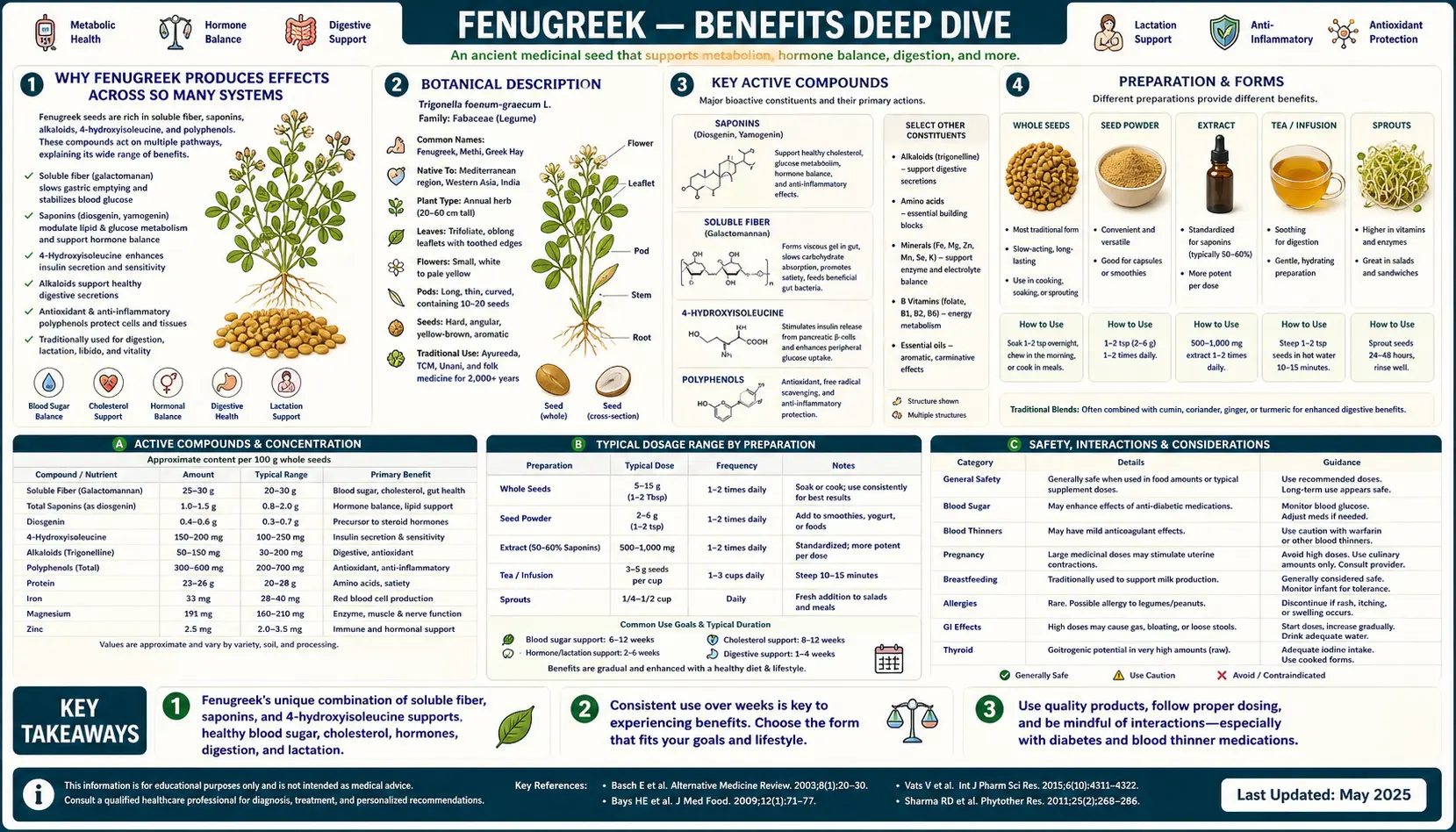
Fenugreek (Trigonella foenum-graecum) is an ancient annual legume cultivated continuously for at least four thousand years across the Mediterranean basin, the Indian subcontinent, and the Nile valley — charred seeds have been recovered from Bronze Age sites in Iraq and from Tutankhamun's tomb. Both the maple-scented golden seeds and the trifoliate methi leaves enter cuisine and medicine, but it is the seeds that carry the unique pharmacology. Fenugreek owns a chemistry no other common spice can match: 4-hydroxyisoleucine, a non-protein amino acid that directly stimulates pancreatic insulin release in a glucose-dependent manner, found in commercially meaningful concentration in essentially no other food. Layered on top of that are two more workhorses — diosgenin, the steroidal sapogenin that pharmaceutical chemists used in the 1940s as the starting material for industrial cortisone and progesterone synthesis, and the soluble galactomannan fiber that binds intestinal bile acids and slows carbohydrate absorption. Four deep-dive pages below trace the four conditions where these compounds have generated the most randomized-trial evidence: type 2 diabetes glycemic control, male testosterone and libido, postpartum milk production, and serum cholesterol reduction.
Deep-Dive Articles
Blood Sugar & Type 2 Diabetes
The landmark Sharma 1990 crossover trial in newly-diagnosed type 2 diabetics (25 g defatted fenugreek twice daily, fasting glucose dropping from 151 to 112 mg/dL in eight weeks), the Gupta 2001 IDDM trial, the 4-hydroxyisoleucine mechanism of glucose-dependent insulin secretion, the soluble galactomannan fiber slowing carbohydrate absorption, the head-to-head comparison with metformin, and the practical 5-25 g/day dose-response curve.
Testosterone & Libido
The Steels 2011 Testofen trial (600 mg standardized saponin extract, +25% libido at 6 weeks), the Rao 2016 Furosap eight-week trial (free testosterone +46% from baseline in healthy men), the Mokhtari 2024 meta-analysis pulling together every trial through 2023 (pooled total testosterone +6 to +15% depending on extract), the proposed aromatase + 5-alpha-reductase inhibition mechanism, and a frank dose comparison of crude seed versus standardized saponin extract.
Lactation (Galactagogue)
The world's single most-used herbal galactagogue, with two thousand years of traditional postpartum use across the Middle East, North Africa, and South Asia. The Bumrungpert 2018 randomized trial showing measurably increased milk volume at week 4, the diosgenin/phytoestrogen mechanism, the canonical 3.5 to 6 g/day dosing window, and the well-documented maple-syrup body odor (sotolone metabolite) that some mothers and infants develop — harmless but worth warning the family about in advance.
Cholesterol & Lipid Profile
The Sharma 1996 hypercholesterolemia trial showing total cholesterol reduction with 100 g daily defatted fenugreek, the soluble galactomannan bile-acid binding mechanism (the same family of mechanism as oat beta-glucan and psyllium), preferential LDL reduction with preserved HDL, head-to-head comparison with oat fiber, and the practical reality that the dose required for cholesterol benefit is substantially higher than the dose required for glycemic benefit.
Table of Contents
- Deep-Dive Articles
- Why Fenugreek Produces Effects Across So Many Systems
- Research Papers: Blood Sugar & Diabetes
- Research Papers: Testosterone & Libido
- Research Papers: Lactation
- Research Papers: Cholesterol
- Research Papers: Cross-Cutting (Mechanism, Safety, Interactions)
- External Authoritative Resources
- Connections
- Featured Videos
Why Fenugreek Produces Effects Across So Many Systems
Most spice-and-seed botanicals work through a single dominant compound (curcumin in turmeric, allicin in garlic, gingerols in ginger). Fenugreek is unusual in that the seed carries three structurally unrelated active classes, and each one explains a different category of clinical effect. That convergence is the reason a single herb can reasonably claim documented benefit across glycemic control, testosterone, lactation, and cholesterol — four endpoints that would normally require four different botanicals.
- 4-hydroxyisoleucine (4-HI) — a non-protein branched-chain amino acid present in fenugreek seeds at roughly 0.55% by weight and in essentially no other common food in pharmacologically meaningful concentration. 4-HI directly stimulates pancreatic beta-cell insulin secretion in a glucose-dependent manner — it amplifies insulin release when blood glucose is elevated but does not provoke hypoglycemia when glucose is normal. This is the mechanism behind the fasting glucose reduction documented in the Sharma 1990 and Gupta 2001 type 2 diabetes trials and explains why fenugreek does not produce the iatrogenic hypoglycemia common with sulfonylureas or with high-dose insulin.
- Diosgenin (a steroidal sapogenin) — the same molecule that Russell Marker isolated from Mexican wild yam in the 1940s and used as the industrial starting material for synthetic cortisone, progesterone, and the first oral contraceptive. In fenugreek, diosgenin and related saponins are the proposed basis of the herb's effects on the hypothalamic-pituitary-gonadal axis — modulating endogenous testosterone synthesis and possibly inhibiting aromatase and 5-alpha-reductase — and of the phytoestrogen-like signaling that supports postpartum milk production. The mechanism is incompletely characterized but is consistent across in-vitro, animal, and human trial data.
- Soluble galactomannan fiber — fenugreek seeds are approximately 25% soluble fiber, dominated by a viscous galactomannan polysaccharide with mechanical properties similar to guar gum and psyllium husk. Galactomannan binds intestinal bile acids and forces the liver to synthesize new bile from circulating cholesterol — the same mechanism by which cholestyramine, colesevelam, oat beta-glucan, and psyllium reduce serum LDL cholesterol. Galactomannan also forms a viscous gel in the stomach and small intestine that slows gastric emptying and carbohydrate absorption, contributing a second mechanism (independent of 4-HI) to the glycemic effect.
The therapeutic ceiling on fenugreek is set primarily by tolerability rather than toxicity: the soluble fiber load that delivers meaningful cholesterol or glycemic benefit (typically 10-25 g/day of whole seed) reliably produces gas, bloating, and a distinct maple-syrup body odor from the volatile lactone sotolone, which is excreted in sweat and urine and (in lactating mothers) in breast milk. The body odor is cosmetic and harmless — it is the same molecule that gives genuine maple syrup, fenugreek-spiced curry, and the rare metabolic disorder maple syrup urine disease their characteristic smell — but it surprises patients who were not warned. The one consequential drug interaction is with warfarin: case reports document INR elevation when fenugreek (likely via its coumarin content) is added to a stable warfarin regimen, so anticoagulated patients should not take fenugreek without checking INR more frequently for the first month.
Research Papers: Blood Sugar & Diabetes
- Sharma RD, Raghuram TC, Rao NS (1990). Effect of fenugreek seeds on blood glucose and serum lipids in type I diabetes. European Journal of Clinical Nutrition. — PubMed: Sharma 1990
- Gupta A, Gupta R, Lal B (2001). Effect of Trigonella foenum-graecum (fenugreek) seeds on glycaemic control and insulin resistance in type 2 diabetes mellitus. Journal of the Association of Physicians of India. — PubMed: Gupta 2001
- 4-hydroxyisoleucine and glucose-dependent insulin secretion (Sauvaire et al., Diabetes 1998) — PubMed: Sauvaire 1998
- Neelakantan N et al. (2014). Effect of fenugreek (Trigonella foenum-graecum) intake on glycemia: a meta-analysis of clinical trials. Nutrition Journal. — PubMed: Neelakantan meta-analysis 2014
- Madar Z et al. (1988). Glucose-lowering effect of fenugreek in non-insulin-dependent diabetics. European Journal of Clinical Nutrition. — PubMed: Madar 1988
- Ranade M, Mudgalkar N (2017). A simple dietary addition of fenugreek seed leads to the reduction in blood glucose levels: a parallel group, randomized single-blind trial. Ayu. — PubMed: Ranade 2017
- Hassani SS et al. (2019). Hypoglycemic and antidiabetic effects of Trigonella foenum-graecum in diabetes: a systematic review. Journal of Diabetes Research. — PubMed: Fenugreek diabetes systematic review
- Gaddam A et al. (2015). Role of fenugreek in the prevention of type 2 diabetes mellitus in prediabetes. Journal of Diabetes and Metabolic Disorders. — PubMed: Gaddam prediabetes trial 2015
- Galactomannan fiber and postprandial glucose attenuation (Ali et al.) — PubMed: Galactomannan postprandial glucose
- Fenugreek vs metformin head-to-head clinical comparison — PubMed: Fenugreek vs metformin
Research Papers: Testosterone & Libido
- Steels E, Rao A, Vitetta L (2011). Physiological aspects of male libido enhanced by standardized Trigonella foenum-graecum extract and mineral formulation. Phytotherapy Research. — PubMed: Steels Testofen 2011
- Rao A et al. (2016). Testofen, a specialised Trigonella foenum-graecum seed extract reduces age-related symptoms of androgen decrease, increases testosterone levels and improves sexual function in healthy aging males in a double-blind randomised clinical study. The Aging Male. — PubMed: Rao Furosap/Testofen 2016
- Maheshwari A et al. (2017). Efficacy of Furosap, a novel Trigonella foenum-graecum seed extract, in enhancing testosterone level and improving sperm profile in male volunteers. International Journal of Medical Sciences. — PubMed: Maheshwari Furosap 2017
- Mokhtari M et al. (2024). The effect of fenugreek (Trigonella foenum-graecum) on testosterone, prolactin, and other parameters: a systematic review and meta-analysis. — PubMed: Mokhtari meta-analysis 2024
- Wankhede S et al. (2016). Beneficial effects of fenugreek glycoside supplementation in male subjects during resistance training. Journal of Sport and Health Science. — PubMed: Wankhede resistance training 2016
- Bushey B et al. (2009). Fenugreek extract supplementation has no effect on the hormonal profile of resistance-trained males. International Journal of Exercise Science. — PubMed: Bushey 2009 (null trial)
- Aromatase and 5-alpha-reductase inhibition by fenugreek saponins — PubMed: Fenugreek aromatase/5-AR
- Effects of a purported aromatase and 5alpha-reductase inhibitor on hormone profiles in college-age men. International Journal of Sport Nutrition and Exercise Metabolism. — PubMed: Aromatase/5-AR sport nutrition trial
- Mansoori A et al. (2020). Effect of fenugreek extract supplement on testosterone levels in male: a meta-analysis of clinical trials. Phytotherapy Research. — PubMed: Mansoori meta-analysis 2020
- Fenugreek seed extract and erectile function clinical trials — PubMed: Fenugreek erectile function
Research Papers: Lactation
- Bumrungpert A et al. (2018). Effects of fenugreek, ginger, and turmeric supplementation on human milk volume and nutrient content in breastfeeding mothers: a randomized double-blind controlled trial. Breastfeeding Medicine. — PubMed: Bumrungpert 2018
- Khan TM et al. (2018). Fenugreek (Trigonella foenum-graecum) as a galactagogue: a systematic review and meta-analysis. Phytotherapy Research. — PubMed: Khan galactagogue meta-analysis 2018
- Reeder C, Legrand A, O'Conner-Von SK (2013). The effect of fenugreek on milk production and prolactin levels in mothers of preterm infants. Clinical Lactation. — PubMed: Reeder preterm milk production
- Turkyilmaz C et al. (2011). The effect of galactagogue herbal tea on breast milk production and short-term catch-up of birth weight in the first week of life. Journal of Alternative and Complementary Medicine. — PubMed: Turkyilmaz 2011
- Diosgenin and lactational mammary gland phytoestrogen activity — PubMed: Diosgenin mammary gland
- Sotolone metabolite and the maple-syrup body odor of fenugreek — PubMed: Sotolone maple syrup odor
- Penagos Tabares F et al. (2014). Pharmacological overview of galactogogues. Veterinary Medicine International. — PubMed: Galactogogue pharmacology
- Damanik R et al. (2006). The use of a putative lactagogue plant on breast milk production in Simalungun, North Sumatra, Indonesia. Asia Pacific Journal of Clinical Nutrition. — PubMed: Damanik lactagogue plant
- Sevrin T et al. (2019). Impact of fenugreek on milk production in rodent models of lactation challenge. Nutrients. — PubMed: Sevrin rodent lactation
- Academy of Breastfeeding Medicine Clinical Protocol #9: use of galactogogues. — PubMed: ABM galactogogue protocol
Research Papers: Cholesterol
- Sharma RD, Sarkar A, Hazra DK et al. (1996). Hypolipidaemic effect of fenugreek seeds: a chronic study in non-insulin dependent diabetic patients. Phytotherapy Research. — PubMed: Sharma 1996
- Sharma RD (1986). Effect of fenugreek seeds and leaves on blood glucose and serum insulin responses in human subjects. Nutrition Research. — PubMed: Sharma 1986
- Galactomannan fiber and bile-acid binding mechanism — PubMed: Galactomannan bile-acid binding
- Khosla P et al. (1995). Effect of Trigonella foenum-graecum on serum lipids in normal and diabetic rats. Indian Journal of Pharmacology. — PubMed: Khosla 1995
- Sowmya P, Rajyalakshmi P (1999). Hypocholesterolemic effect of germinated fenugreek seeds in human subjects. Plant Foods for Human Nutrition. — PubMed: Sowmya germinated 1999
- Bordia A, Verma SK, Srivastava KC (1997). Effect of ginger and fenugreek on blood lipids, blood sugar and platelet aggregation in patients with coronary artery disease. Prostaglandins, Leukotrienes and Essential Fatty Acids. — PubMed: Bordia 1997
- Belguith-Hadriche O et al. (2010). Antihyperlipidemic and antioxidant activities of edible Tunisian Trigonella foenum-graecum. Plant Foods for Human Nutrition. — PubMed: Belguith-Hadriche 2010
- Fenugreek galactomannan versus oat beta-glucan head-to-head — PubMed: Galactomannan vs oat fiber
- Geberemeskel GA et al. (2019). Effect of fenugreek seed powder intake on glycemic control and lipid profile of type 2 diabetic patients. Journal of Diabetes Research. — PubMed: Geberemeskel 2019
- Saxena A, Vikram NK (2004). Role of selected Indian plants in management of type 2 diabetes: a review. Journal of Alternative and Complementary Medicine. — PubMed: Saxena Indian plants review
Research Papers: Cross-Cutting (Mechanism, Safety, Interactions)
- Basch E et al. (2003). Therapeutic applications of fenugreek. Alternative Medicine Review. — PubMed: Basch 2003 comprehensive review
- Wani SA, Kumar P (2018). Fenugreek: a review on its nutraceutical properties and utilization in various food products. Journal of the Saudi Society of Agricultural Sciences. — PubMed: Wani nutraceutical review
- Fenugreek-warfarin interaction case reports and INR elevation — PubMed: Fenugreek-warfarin interaction
- Diosgenin from fenugreek and the Marker degradation in steroid synthesis history — PubMed: Diosgenin Marker degradation
- Yadav UCS, Baquer NZ (2014). Pharmacological effects of Trigonella foenum-graecum L. in health and disease. Pharmaceutical Biology. — PubMed: Yadav pharmacological review 2014
- Fenugreek allergy and chickpea / peanut cross-reactivity (legume family) — PubMed: Fenugreek legume cross-reactivity
- Fenugreek in pregnancy: uterotonic activity and contraindication evidence — PubMed: Fenugreek pregnancy contraindication
- Subclinical hypoglycemia in healthy fenugreek users — PubMed: Fenugreek hypoglycemia healthy subjects
- Khorshidian N et al. (2016). Fenugreek: potential applications as a functional food and nutraceutical. Nutrition and Food Sciences Research. — PubMed: Khorshidian functional food
- Saponin chemistry of Trigonella foenum-graecum and structure-activity relationships — PubMed: Fenugreek saponin chemistry
External Authoritative Resources
- NCCIH (NIH National Center for Complementary and Integrative Health) — Fenugreek — the federal regulator's plain-language summary, useful for what is and is not established
- LactMed (NIH) — Fenugreek — the authoritative source for breastfeeding-medicine clinicians, with dosing windows, infant exposure data, and the maple-syrup-odor literature
- MedlinePlus — Fenugreek — the NIH consumer-facing reference, with drug interaction warnings
- Drugs.com — Fenugreek Natural Products Professional Monograph
- PubMed — All research on fenugreek / Trigonella foenum-graecum (~3,500+ papers)
Connections
- All Herbs
- Fenugreek (Main Page)
- Fenugreek for Blood Sugar
- Fenugreek for Testosterone & Libido
- Fenugreek for Lactation
- Fenugreek for Cholesterol
- Berberine
- Gymnema
- Bitter Melon
- Cinnamon
- Turmeric
- Cumin
- Coriander Seeds
- Fennel
- Blood Sugar Control
- Type 2 Diabetes
- Hemoglobin A1C
- Fasting Insulin
- Testosterone
- Chromium
- Magnesium