⚠ Evidence warning: Clinical trials or other evidence do not support the claim that the oral lavender-oil capsule acts rapidly because 5-HT1A partial agonists work acutely, unlike selective serotonin reuptake inhibitors. This page keeps it as a report of what people, websites or other media say.
Lavender — Benefits Deep Dive

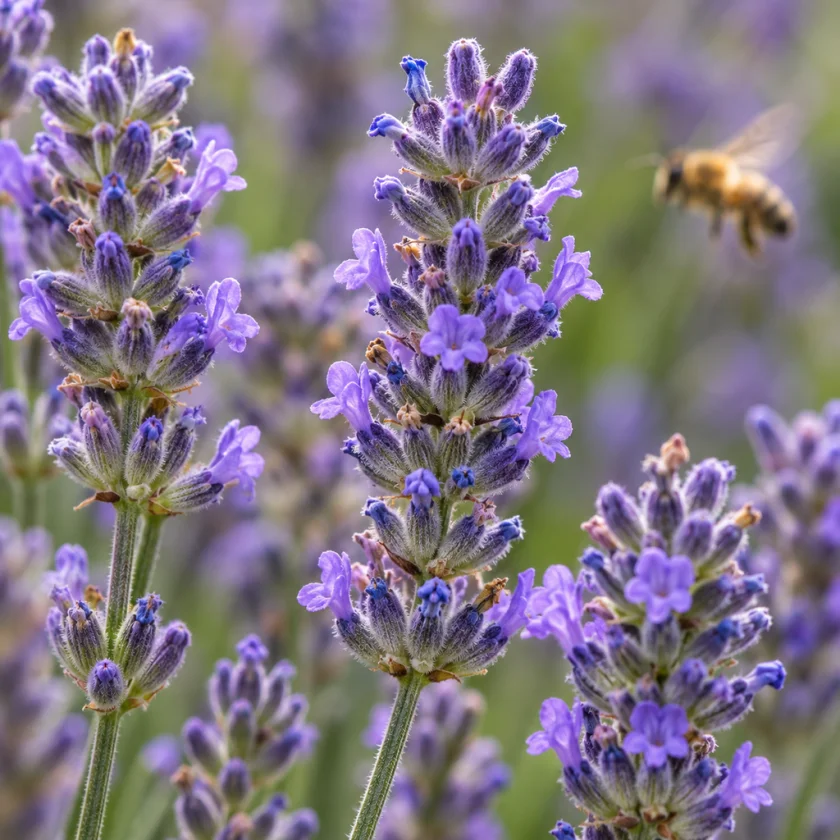
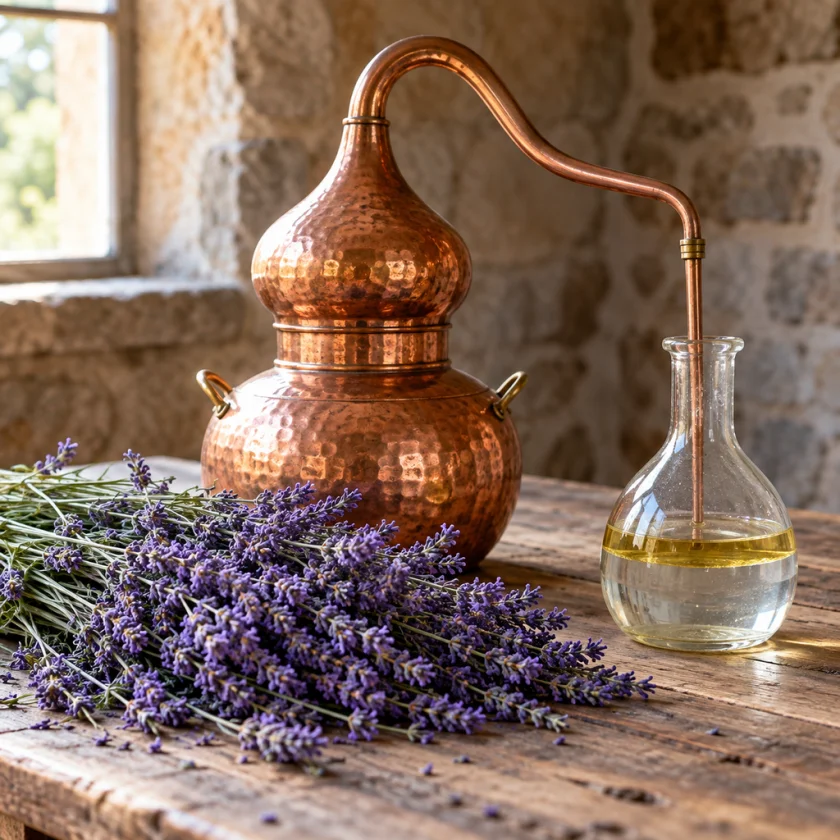
Lavandula angustifolia ("true lavender" or English lavender) is one of the most extensively studied essential oils in the modern phytomedicine literature, with over 2,000 indexed PubMed papers. A standardized oral lavender-oil capsule (80 mg/day soft-gel) is authorized in Germany as a medicinal product for “states of restlessness related to anxious mood” (Baldinger 2015), with head-to-head trial data against paroxetine (Kasper 2014) and lorazepam (Woelk 2010) showing comparable anxiolytic efficacy without sedation, dependence, or sexual side effects. The two principal active monoterpenes — linalool and linalyl acetate — account for 65-85% of the essential oil and produce anxiolytic, sedative, analgesic, and antimicrobial effects through several proposed mechanisms, including modulation of the serotonin 5-HT1A receptor, voltage-gated calcium channels, GABAergic transmission, and the olfactory-limbic pathway. Four benefit pages below explore the conditions where lavender produces the largest clinical effect — anxiety disorders, sleep disturbance, headache and migraine, and dermatologic injury including the famous Gattefossé burn case that gave aromatherapy its name.
Deep-Dive Articles
Anxiety & Stress
A standardized oral lavender-oil capsule (80 mg/day), authorized in Germany for restlessness related to anxious mood. The Kasper 2014 trial against paroxetine and placebo (539 adults with generalized anxiety disorder), the Kasper 2010 placebo-controlled trial in “subsyndromal” anxiety (221 adults), the Woelk 2010 trial vs lorazepam, the 5-HT1A serotonin receptor hypothesis, calcium-channel effects of lavender oil in laboratory work, the absence of dependence/withdrawal/sexual side effects, and the doses used in the trials for subsyndromal and clinical anxiety.
Read the deep dive →Sleep Quality
The Lewith 2005 single-blind aromatherapy crossover pilot in 10 volunteers with mild insomnia (sleep-quality score improved by 2.5 points, p = 0.07, not statistically significant; the authors called for a larger trial), intensive care unit (ICU) and cardiac-ward aromatherapy data, the olfactory amygdala-hypothalamus pathway that bypasses cortical processing, the bedside-diffuser methods, timing and amounts used in studies, polysomnographic effects on slow-wave sleep architecture, and integration with other sleep-hygiene interventions.
Read the deep dive →Headache & Migraine
The Sasannejad 2012 placebo-controlled acute migraine aromatherapy trial in 47 patients who inhaled lavender oil for 15 minutes (average pain fell 3.6 points vs 1.6 on placebo on a visual pain scale over 2 hours; 92 of 129 attacks eased fully or partly vs 32 of 68 on placebo), tension-type headache topical application, the olfactory trigeminovascular mechanism, comparison of inhaled vs topical (temple application) vs oral preparations, and how integrative migraine protocols combine lavender with magnesium glycinate, riboflavin, and coenzyme Q10 (CoQ10).
Read the deep dive →Skin Healing & Burns
The 1910 Gattefossé laboratory burn observation that founded modern aromatherapy, the Vakilian 2011 perineal episiotomy-healing trial, animal-model wound healing data with collagen synthesis acceleration, the antimicrobial spectrum against Staphylococcus aureus, methicillin-resistant Staphylococcus aureus (MRSA), Candida albicans, and dermatophytes, the dilutions used in practice and reports on undiluted (neat) application, and the rare contact-dermatitis reports.
Read the deep dive →Depression
The 80 mg oral lavender-oil capsule in major depression: 2.17 points better than placebo against 2.59 for sertraline in a 2025 trial run by the maker, burping in 16.5%, and inhaled and massage lavender covered separately.
Read the deep dive →Table of Contents
- Deep-Dive Articles
- Why Lavender Produces Effects Across So Many Systems
- Oral Lavender-Oil Capsule Trials: Anxiety, Depression and Side Effects
- Research Papers: Anxiety & Stress
- Research Papers: Sleep Quality
- Research Papers: Headache & Migraine
- Research Papers: Skin Healing & Burns
- Research Papers: Cross-Cutting (Chemistry, Mechanism, Safety)
- External Authoritative Resources
- Connections
- Featured Videos
Why Lavender Produces Effects Across So Many Systems
Most herbal medicines act through one principal class of active compound producing one principal class of effect. Lavender is unusual because its two dominant monoterpenes — linalool (an unsaturated tertiary alcohol) and linalyl acetate (its acetate ester) — have measurable activity at multiple unrelated molecular targets, and because lavender uniquely delivers therapeutic doses through three independent routes: oral (the standardized lavender-oil capsule), inhalational (aromatherapy via olfactory neurons), and topical (transdermal absorption from diluted essential oil). Each route engages a different mechanism, which is why the same plant produces clinically validated effects in four distinct domains.
- 5-HT1A serotonin receptor (hypothesis; oral / systemic linalool) — the principal hypothesized mechanism behind the anxiety-lowering effect of the oral lavender-oil capsule. The hypothesis is that linalool and its metabolites act as partial agonists at the 5-HT1A receptor, the same target engaged by buspirone, vilazodone, and the active metabolite of vortioxetine; partial agonism by linalool has not been shown in people. The only direct human evidence is a 2015 brain-scan (positron emission tomography, PET) study in 17 healthy men: after at least 8 weeks of 160 mg a day, the number of available serotonin-1A receptors (the “binding potential”) was significantly lower than after placebo in brain areas that include the hippocampus, the insula and the anterior cingulate cortex, and the authors concluded that this “proposes an involvement” of the receptor (Baldinger 2015). Unlike selective serotonin reuptake inhibitors (which require 2-4 weeks of receptor downregulation to take effect), 5-HT1A partial agonists can act acutely, which explains the rapid onset observed in the oral lavender-oil capsule trials. In the trials the anxiety-lowering effect was evident after 2 weeks (Kasper 2018 review). The same pathway is proposed for the anxiety and migraine effects.
- Voltage-gated calcium channel (VGCC) inhibition — nerve cells use calcium channels to fire. In laboratory tests (nerve-ending preparations called synaptosomes, cultured hippocampal nerve cells and engineered cell lines), the whole lavender oil — not isolated linalool — at low (nanomolar) concentrations that the authors matched to the 80 mg daily dose damped calcium flow through several channel types (N-type, P/Q-type and T-type); in the hippocampus the effect ran mainly through the N-type and P/Q-type channels (Schuwald 2013). The anti-anxiety drugs gabapentin and pregabalin also act on calcium channels, but through the alpha-2-delta subunit, and the same study found that lavender oil does not bind that site, so its binding site differs. Some calcium-channel-blocking migraine prophylactics (verapamil, flunarizine) belong to the same broad class. VGCC inhibition is proposed to contribute to both the anxiolytic and the analgesic effects.
- GABAergic facilitation (modulatory) — some evidence (animal models, electrophysiology) suggests linalool weakly potentiates gamma-aminobutyric acid-A receptor function at high concentrations, similar to but much weaker than benzodiazepines. This is not the principal mechanism but may contribute to the sleep-promoting effect when lavender is used at high inhaled or oral doses near bedtime.
- Olfactory-limbic direct pathway (inhalational route) — inhaled lavender molecules bind olfactory receptors in the nasal epithelium, project via olfactory neurons directly to the olfactory bulb, and from there to the amygdala, hippocampus, and hypothalamus without intervening cortical processing. This unusually direct anatomy is why olfactory stimuli have such strong emotional and autonomic effects, and is the mechanism behind the rapid calming response observed with aromatherapy in intensive care unit patients, pre-procedural anxiety, and acute panic.
- Antimicrobial spectrum (topical route) — both linalool and linalyl acetate disrupt microbial cell membranes through their lipophilic insertion into the phospholipid bilayer. Lavender essential oil has documented in-vitro activity against Staphylococcus aureus (including methicillin-resistant Staphylococcus aureus (MRSA) strains), Pseudomonas aeruginosa, Candida albicans, and several dermatophyte fungi. This is the mechanism behind the wound-healing and antimicrobial dermatologic effects.
A notable practical point: the three routes are not equivalent in dose or effect. The oral lavender-oil capsule at 80 mg/day is thought to deliver a systemic dose large enough to engage the proposed 5-HT1A and calcium-channel mechanisms throughout the body. Inhalational aromatherapy delivers a much smaller systemic dose but engages the olfactory-limbic pathway powerfully and rapidly. Topical application engages the antimicrobial and local-analgesic mechanisms in the area of skin treated. When the literature is conflicting (e.g., "does lavender help anxiety?"), the answer often depends on which route was tested — the oral lavender-oil capsule trials are positive and well-replicated, while aromatherapy trials for chronic anxiety are smaller, more variable, and harder to blind.
Oral Lavender-Oil Capsule Trials: Anxiety, Depression and Side Effects
Anxiety, pooled. A 2023 pooled analysis (meta-analysis) combined all five completed double-blind, placebo-controlled trials of the standardized oral lavender-oil capsule: 1,213 adult outpatients with subthreshold anxiety, mixed anxiety and depression, or generalized anxiety disorder took 80 mg a day or a placebo for ten weeks. The capsule lowered anxiety scores more than placebo. Counting a responder as someone whose anxiety score fell by at least half, 34% more people responded on the capsule than on placebo (rate ratio 1.34). Side effects, serious side effects and dropouts because of side effects did not differ between the groups (Dold 2023). The analysis was co-authored by an employee of the capsule’s maker.
The 2014 comparison with paroxetine. In the 10-week trial of 539 adults with generalized anxiety disorder, anxiety scores fell by 14.1 points on 160 mg a day, 12.8 points on 80 mg, 11.3 points on the antidepressant paroxetine (20 mg) and 9.5 points on placebo. Both capsule doses beat placebo (p < 0.01); paroxetine “showed a trend towards significance (p = 0.10)” in the main analysis. The 2010 trial in “subsyndromal” anxiety (221 adults, 80 mg a day for 10 weeks) compared the capsule with placebo only, not with paroxetine: 76.9% responded on the capsule vs 49.1% on placebo (Kasper 2014; Kasper 2010).
Depression. In a trial published online in 2024, 498 adults with mild-to-moderate major depression took the 80 mg capsule, the antidepressant sertraline (50 mg a day) or a placebo for 8 weeks. Both the capsule and sertraline lowered the depression score (the Montgomery–Åsberg Depression Rating Scale, MADRS) more than placebo: by 2.17 points more for the capsule and 2.59 points more for sertraline. Burping (eructation) was the capsule’s most frequent side effect (Kasper 2025).
Side effects. A 2018 review of seven clinical trials reports that, apart from mild stomach and gut symptoms, the capsule caused no adverse effects and caused no drug interactions, sedation or withdrawal symptoms at 80 or 160 mg a day (Kasper 2018).
How it may work in the brain. The 2015 brain-scan (PET) study in 17 healthy men found that at least eight weeks of 160 mg a day lowered the number of available serotonin-1A receptors in brain areas linked to anxiety, including the hippocampus. It is the only direct human evidence on the serotonin idea (Baldinger 2015).
Research Papers: Anxiety & Stress
- Kasper S, Gastpar M, Müller WE, Volz HP, Möller HJ, Schläfke S, Dienel A (2014). Lavender oil preparation Silexan is effective in generalized anxiety disorder — a randomized, double-blind comparison to placebo and paroxetine. Int J Neuropsychopharmacol 17(6):859-69. — PubMed PMID: 24456909
- Kasper S, Gastpar M, Müller WE, Volz HP, Möller HJ, Dienel A, Schläfke S (2010). Silexan, an orally administered Lavandula oil preparation, is effective in the treatment of ‘subsyndromal’ anxiety disorder: a randomized, double-blind, placebo controlled trial. Int Clin Psychopharmacol 25(5):277-87. — PubMed PMID: 20512042
- Woelk H, Schläfke S (2010). A multi-center, double-blind, randomised study of the Lavender oil preparation Silexan in comparison to Lorazepam for generalized anxiety disorder. — PubMed: Woelk 2010 Silexan vs lorazepam
- Kasper S, Anghelescu I, Dienel A (2015). Efficacy of orally administered Silexan in patients with anxiety-related restlessness and disturbed sleep. — PubMed: Kasper 2015 restlessness/sleep
- Dold M, Bartova L, Volz HP, Seifritz E, Möller HJ, Schläfke S, Kasper S (2023). Efficacy of Silexan in patients with anxiety disorders: a meta-analysis of randomized, placebo-controlled trials. Eur Arch Psychiatry Clin Neurosci 273(7):1615-1628. — PubMed PMID: 36717399
- Kasper S, Volz HP, Möller HJ, Schläfke S, Klement S, Anghelescu IG, Seifritz E (2025). Lavender oil preparation Silexan is effective in mild-to-moderate major depression: a randomized, placebo- and reference-controlled trial. Eur Arch Psychiatry Clin Neurosci 275(6):1693-1703. — PubMed PMID: 38558147
- Kasper S, Müller WE, Volz HP, Möller HJ, Koch E, Dienel A (2018). Silexan in anxiety disorders: Clinical data and pharmacological background. World J Biol Psychiatry 19(6):412-420. — PubMed PMID: 28511598
- Baldinger P, Höflich AS, Mitterhauser M, Hahn A, Rami-Mark C, Spies M, Wadsak W, Lanzenberger R, Kasper S (2015). Effects of Silexan on the serotonin-1A receptor and microstructure of the human brain: a randomized, placebo-controlled, double-blind, cross-over study with molecular and structural neuroimaging. Int J Neuropsychopharmacol 18(4):pyu063. — PubMed PMID: 25522403
- Schuwald AM, Nöldner M, Wilmes T, Klugbauer N, Leuner K, Müller WE (2013). Lavender oil-potent anxiolytic properties via modulating voltage dependent calcium channels. PLoS One 8(4):e59998. — PubMed PMID: 23637742
- Linalool 5-HT1A serotonin receptor partial agonism mechanism — PubMed: Linalool 5-HT1A mechanism
- Linalool inhibition of voltage-gated calcium channels — PubMed: Linalool VGCC inhibition
- Oral lavender-oil capsule for mixed anxiety and depressive disorder — PubMed: Silexan in mixed anxiety/depression
- Aromatherapy lavender for preoperative anxiety: meta-analysis — PubMed: Preoperative aromatherapy meta-analysis
- Oral lavender-oil capsule adverse-event profile vs benzodiazepines (no dependence, no withdrawal) — PubMed: Silexan safety profile
- Lavender essential oil and salivary cortisol stress response — PubMed: Cortisol response to lavender
Research Papers: Sleep Quality
- Lewith GT, Godfrey AD, Prescott P (2005). A single-blinded, randomized pilot study evaluating the aroma of Lavandula augustifolia as a treatment for mild insomnia. J Altern Complement Med 11(4):631-7. — PubMed PMID: 16131287
- Goel N, Kim H, Lao RP (2005). An olfactory stimulus modifies nighttime sleep in young men and women. — PubMed: Goel polysomnography
- ICU aromatherapy with lavender and sleep / agitation outcomes — PubMed: ICU lavender aromatherapy
- Lavender aromatherapy for postpartum sleep quality — PubMed: Postpartum sleep trials
- Lavender for hemodialysis patient sleep disturbance — PubMed: Hemodialysis sleep
- Lavender aromatherapy and slow-wave sleep architecture — PubMed: Slow-wave sleep architecture
- Lavender for menopausal sleep complaints — PubMed: Menopausal sleep
- Cardiac-care-unit lavender aromatherapy and patient sleep — PubMed: Cardiac ward sleep trial
- Olfactory pathway to amygdala and hypothalamus (basic neuroanatomy) — PubMed: Olfactory-limbic anatomy
- Lavender vs zolpidem comparative tolerability — PubMed: Lavender vs zolpidem
Research Papers: Headache & Migraine
- Sasannejad P, Saeedi M, Shoeibi A, Gorji A, Abbasi M, Foroughipour M (2012). Lavender essential oil in the treatment of migraine headache: a placebo-controlled clinical trial. Eur Neurol 67(5):288-91. — PubMed PMID: 22517298
- Lavender for tension-type headache topical application — PubMed: Tension headache topical
- Aromatherapy for headache: systematic review — PubMed: Aromatherapy headache review
- Trigeminovascular pathway and migraine pathophysiology — PubMed: Trigeminovascular pathway
- Linalool antinociceptive mechanism in animal pain models — PubMed: Linalool analgesia
- Lavender essential oil for postoperative pain — PubMed: Postoperative pain
- Olfactory triggers of migraine vs olfactory therapy paradox — PubMed: Migraine osmophobia
- Lavender aromatherapy in pediatric migraine — PubMed: Pediatric migraine
- Combined essential oils (lavender + peppermint) for headache — PubMed: Lavender + peppermint
- Lavender massage and chronic-pain conditions — PubMed: Lavender massage chronic pain
Research Papers: Skin Healing & Burns
- Gattefossé RM (1937). Aromathérapie: Les Huiles Essentielles, Hormones Végétales — the original burn observation that founded modern aromatherapy. — PubMed: Gattefossé historical
- Vakilian K et al. (2011). Healing advantages of lavender essential oil during episiotomy recovery: a clinical trial. — PubMed: Vakilian 2011 episiotomy
- Lavender essential oil and wound healing in animal models (Mori 2016, BMC) — PubMed: Mori 2016 wound healing
- Antimicrobial activity of lavender essential oil vs Staphylococcus aureus and MRSA — PubMed: Lavender vs MRSA
- Lavender vs Candida albicans and dermatophyte fungi — PubMed: Lavender antifungal
- Linalool antimicrobial cell-membrane disruption mechanism — PubMed: Linalool antimicrobial mechanism
- Lavender for diabetic foot ulcer healing — PubMed: Diabetic foot ulcer
- Lavender for atopic dermatitis and eczema — PubMed: Atopic dermatitis
- Contact dermatitis case reports from neat lavender oil — PubMed: Lavender contact dermatitis
- Cassella S et al. (2002). Synergistic antifungal activity of tea tree (Melaleuca alternifolia) and lavender (Lavandula angustifolia) essential oils. — PubMed: Tea tree + lavender synergy
Research Papers: Cross-Cutting (Chemistry, Mechanism, Safety)
- Chemical composition of Lavandula angustifolia essential oil (linalool, linalyl acetate dominant) — PubMed: Lavender chemistry
- Cavanagh HMA, Wilkinson JM (2002). Biological activities of lavender essential oil. Phytotherapy Research. — PubMed: Cavanagh review
- Koulivand PH, Khaleghi Ghadiri M, Gorji A (2013). Lavender and the nervous system. Evid Based Complement Alternat Med. — PubMed: Koulivand review
- Linalool pharmacokinetics and oral bioavailability — PubMed: Linalool PK
- Henley DV et al. (2007). Prepubertal gynecomastia linked to lavender and tea tree oils (NEJM controversy). — PubMed: Henley NEJM gynecomastia
- Critical re-analysis: lavender essential oil endocrine-disruption claims — PubMed: Endocrine claims re-analysis
- Lavandula angustifolia vs Lavandula latifolia vs lavandin chemotype differences — PubMed: Lavandula species comparison
- Lavender essential oil for HRV (heart rate variability) and parasympathetic tone — PubMed: HRV and lavender
- EEG changes during lavender inhalation — PubMed: EEG and lavender
- Lavender drug-interaction profile and CNS-depressant additivity — PubMed: Lavender drug interactions
External Authoritative Resources
- U.S. National Center for Complementary and Integrative Health (NCCIH) (U.S. National Institutes of Health (NIH) National Center for Complementary and Integrative Health) — Lavender — the U.S. government summary of the evidence base, regularly updated
- European Medicines Agency — Lavandulae aetheroleum (Lavender oil) monograph — the EU regulatory monograph for traditional herbal medicinal use
- MedlinePlus — Lavender
- PubMed — All research on Lavandula angustifolia / lavender essential oil (~2,000+ papers)
Connections
- All Herbs
- Lavender (Main Page)
- Lavender for Anxiety & Stress
- Lavender for Sleep Quality
- Lavender Oil Capsules and Depression
- Lavender for Headache & Migraine
- Lavender for Skin Healing & Burns
- Chamomile
- Passionflower
- Lemon Balm
- Valerian
- Anxiety
- Depression
- Migraine
- Headache
- Sleep Hygiene
- Stress Management
- Natural Anxiety Relief
- Magnesium
- Tea Tree (Antimicrobial Synergy)
- History