⚠ Evidence warning: Clinical trials or other evidence do not support the claim that topical lavender, alone or combined with peppermint, relieves tension-type headache. This page keeps it as a report of what people, websites or other media say.
Lavender for Headache and Migraine
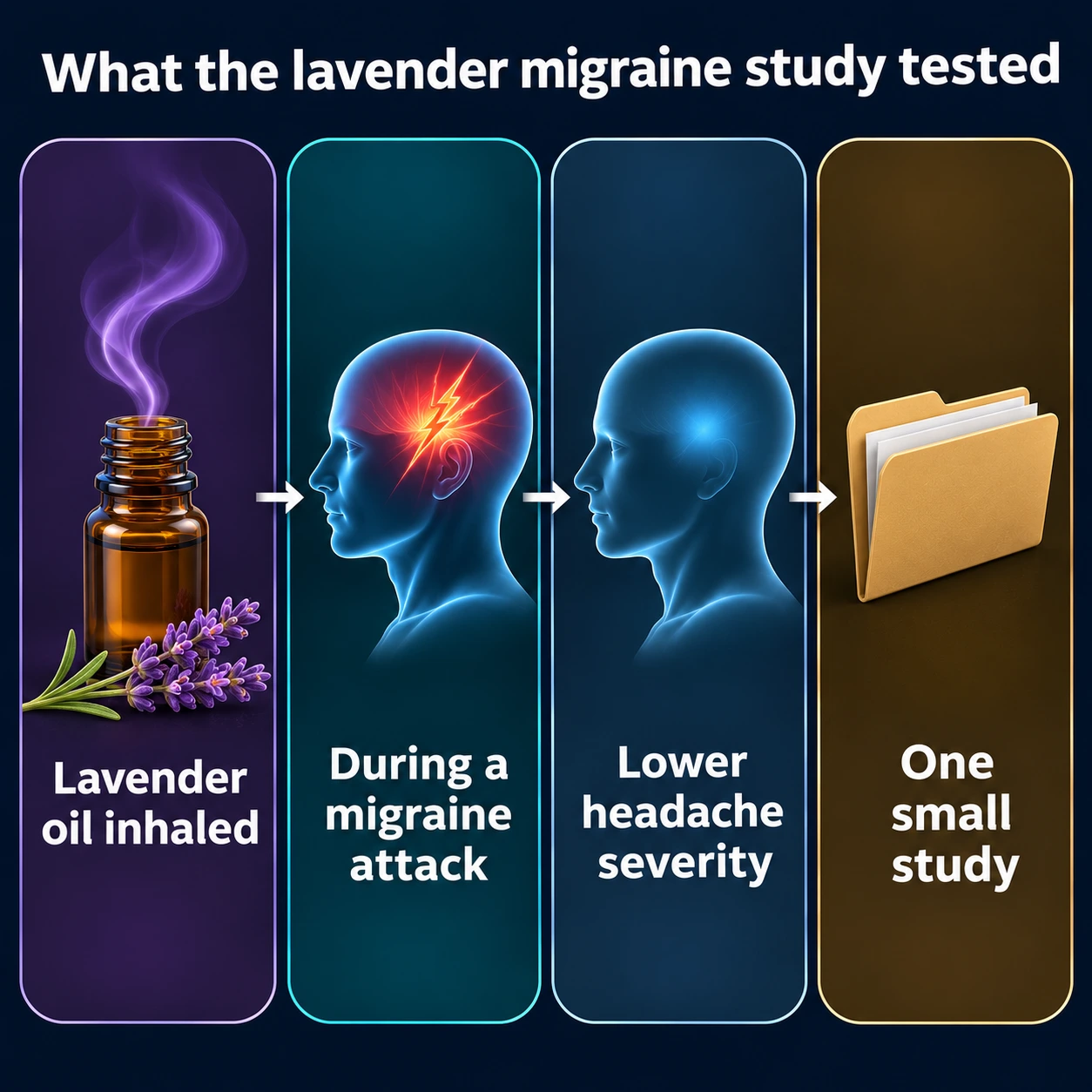
The Sasannejad 2012 trial in European Neurology remains the strongest single-trial evidence for lavender as an acute migraine intervention: 47 patients with migraine inhaled either lavender essential oil or liquid paraffin for 15 minutes during an acute migraine attack, and headache severity fell by 3.6 points on a visual analogue scale with lavender against 1.6 points with paraffin, a statistically significant difference (p < 0.0001). This is a strikingly large acute effect for a non-pharmacologic intervention applied during an active migraine. The mechanism appears to involve a combination of olfactory pathway modulation of the trigeminovascular system (the same pathway through which osmophobia — smell-aversion — can trigger migraines), linalool's antinociceptive activity through voltage-gated calcium channel inhibition and TRPV1 modulation, and the autonomic shift toward parasympathetic tone that opposes the sympathetic activation typical of migraine. This deep-dive walks through the trial, the trigeminovascular mechanism, the comparison of inhaled vs topical vs oral applications, and where lavender fits in an integrative migraine protocol alongside magnesium glycinate, riboflavin, coenzyme Q10 (CoQ10), and the new CGRP-pathway drugs.
Table of Contents
- The Migraine Burden and Treatment Gaps
- The Sasannejad 2012 Acute Migraine Trial
- The Trigeminovascular Mechanism
- The Olfactory Paradox: Trigger or Therapy
- Linalool Antinociceptive Mechanisms
- Tension-Type Headache
- Inhaled vs Topical vs Oral Comparison
- How Lavender Is Used During a Migraine Attack
- Preventive Strategies
- Integrative Migraine Stack
- Key Research Papers
- Connections
- Featured Videos
The Migraine Burden and Treatment Gaps
Migraine affects approximately 12% of the general population and 18% of women, and is the second-leading cause of years lived with disability globally per the Global Burden of Disease Study. Chronic migraine (>15 headache days per month) affects approximately 2% of the population and is associated with substantial loss of work productivity, quality of life, and increased risk of depression, anxiety, and suicidality.
The treatment landscape includes:
- Nonsteroidal anti-inflammatory drugs (NSAIDs) and combination analgesics (acetaminophen-aspirin-caffeine combinations, ibuprofen, naproxen) — first-line for mild-to-moderate attacks but produce medication-overuse headache (MOH) when used >10 days per month and carry gastrointestinal (GI) bleeding and cardiovascular risks at chronic use
- Triptans (sumatriptan, rizatriptan, eletriptan) — effective acute therapy for moderate-to-severe attacks but contraindicated in cardiovascular disease, produce medication-overuse headache at >10 days per month, and produce a "triptan hangover" of fatigue and cognitive dulling in many users
- Gepants (rimegepant, ubrogepant, atogepant) — oral CGRP receptor antagonists, both acute and preventive; well-tolerated; expensive
- Anti-CGRP monoclonal antibodies (erenumab, fremanezumab, galcanezumab, eptinezumab) — injectable preventives; effective; very expensive; insurance gatekeeping is common
- Ditans (lasmiditan) — 5-HT1F agonist; alternative for triptan non-responders; produces driving impairment
- Older preventives (propranolol, topiramate, amitriptyline, valproate) — effective for some patients but with significant side-effect burdens (weight gain, cognitive fog, depression, teratogenicity)
- OnabotulinumtoxinA — U.S. Food and Drug Administration-approved for chronic migraine; effective; requires quarterly injections by trained clinician
- Neuromodulation devices (external trigeminal nerve stimulation, remote electrical neuromodulation and non-invasive vagus nerve stimulation devices) — non-pharmacologic devices for acute and preventive use; safe; modest effect sizes
For all of this therapeutic armamentarium, a large fraction of migraine patients remain inadequately controlled, intolerant of available therapies, unable to afford or access the newer options, or constrained by cardiovascular contraindications. A safe, non-pharmacologic adjunct with measurable acute efficacy is therefore clinically valuable — particularly for mild-to-moderate attacks where the patient would prefer not to use a triptan or where triptans have failed or are contraindicated.
The Sasannejad 2012 Acute Migraine Trial
Sasannejad P, Saeedi M, Shoeibi A, Gorji A, Abbasi M, Foroughipour M (2012). "Lavender essential oil in the treatment of migraine headache: a placebo-controlled clinical trial." Published in European Neurology.
Design. 47 patients with a definite diagnosis of migraine were divided into cases and controls, and the two groups were matched for key confounding factors (the abstract describes matched groups, not randomization). During a migraine attack the cases inhaled lavender essential oil for 15 minutes, while the controls used liquid paraffin for the same time. Patients recorded their headache severity, on a visual analogue scale, and associated symptoms every 30 minutes for a total of 2 hours.
Results. Headache severity fell by a mean of 3.6 ± 2.8 points on the visual analogue scale with lavender, against 1.6 ± 1.6 points with liquid paraffin (placebo); the difference was statistically significant (p < 0.0001). Of 129 headache attacks in the lavender group, 92 (71%) responded entirely or partially, against 32 of 68 attacks (47%) on placebo (p = 0.001). These response figures cover the whole 2-hour recording period, not a single time point. The authors concluded that lavender inhalation “may be an effective and safe treatment modality” in the acute management of migraine.
In plain terms: severity dropped by 3.6 points with lavender and by 1.6 points with the plain oil. The 15 minutes was how long patients inhaled, not how fast the relief came; severity was recorded every 30 minutes over 2 hours, and the abstract gives no figure for how soon relief began, so the result cannot be set beside the onset times of nonsteroidal anti-inflammatory drugs or triptans.
Limitations of the trial: it's small (n=47), single-center, and from a single research group, so confidence is limited until replicated. Also, the blinding is imperfect because lavender has a distinctive smell that patients can identify — though this is a fundamental challenge of all aromatherapy trials. However, the effect size is large enough that even with substantial expectation-effect contamination, a real pharmacologic benefit is plausible.
The wider herbal evidence. A 2020 systematic review of randomised controlled trials of single herbs for migraine (Lopresti, Smith and Drummond, Phytotherapy Research) found 19 studies, covering feverfew, butterbur, curcumin, menthol/peppermint oil, coriander, citron, Damask rose, chamomile and lavender. It found mixed results for feverfew, positive but limited evidence for butterbur, positive preliminary findings for curcumin, citron and coriander for prevention and for menthol and chamomile as acute treatments — and a high risk of bias in many of the studies. The authors called for further high-quality research on the efficacy and safety of these herbs.
The Trigeminovascular Mechanism
Modern understanding of migraine pathophysiology centers on the trigeminovascular system. The trigeminal nerve (cranial nerve V) provides sensory innervation to the face and the meningeal blood vessels of the head. During a migraine attack, the trigeminal afferent fibers innervating the dura mater release the neuropeptide CGRP (calcitonin gene-related peptide), substance P, and neurokinin A. These neuropeptides produce vasodilation of meningeal vessels, sterile neurogenic inflammation, and sensitization of the trigeminal afferents themselves. The sensitized afferents then transmit pain signals through the trigeminocervical complex in the brainstem to the thalamus and somatosensory cortex, producing the characteristic unilateral pulsating headache.
The cortical-spreading-depression wave in the cortex (responsible for migraine aura) appears to be the upstream trigger for the trigeminovascular activation in many patients, though primary brainstem dysfunction may initiate the cascade in others. Modulation of this system at multiple points is the basis for current migraine pharmacology:
- Triptans: 5-HT1B/1D agonists that constrict dilated meningeal vessels and inhibit trigeminal CGRP release
- Gepants: CGRP receptor antagonists that block the downstream effect of CGRP release
- Anti-CGRP antibodies: bind and neutralize CGRP or its receptor
- Ditans (lasmiditan): 5-HT1F agonist with central trigeminal inhibitory action without the vasoconstrictive effect of triptans
How does lavender fit into this scheme? The hypothesized mechanism involves modulation of trigeminal afferent activation through several routes:
- Linalool inhibits voltage-gated calcium channels in primary afferent neurons, including the trigeminal afferents, reducing neuropeptide release
- Linalool has demonstrated TRPV1 (capsaicin receptor) modulating effects, and TRPV1 is heavily expressed in trigeminal afferents and is implicated in migraine sensitization
- The olfactory pathway projects collaterals to the locus coeruleus and the periaqueductal gray, both of which modulate descending pain control through the trigeminocervical complex
- The autonomic shift toward parasympathetic tone opposes the sympathetic activation associated with migraine and may reduce the neurogenic inflammation component
These mechanisms are speculative in detail but biologically plausible, and the clinical data (Sasannejad and others) confirms that something mechanistically real is happening to produce the observed acute migraine response.
A brain route found in mice (2026). A 2026 study in mice (Huang and colleagues, Current Biology) traced one pathway. In mice with a nitroglycerin-induced model of chronic migraine, inhaling lavender essential oil switched on orexin-producing nerve cells in the lateral hypothalamus, through signals from the anterior olfactory nucleus (a smell-processing area). Acting through the orexin-2 receptor, these cells switched on calming (GABA-releasing) cells in the brainstem's lateral parabrachial nucleus, which quieted neighbouring cells carrying calcitonin gene-related peptide (CGRP); this eased the mice's migraine-like pain behaviour. Blocking the orexin-2 receptor with a drug abolished the effect. This is animal work only.
The Olfactory Paradox: Trigger or Therapy
One of the puzzles in the lavender-and-migraine literature is the apparent paradox that certain odors are known migraine triggers (perfumes, gasoline, cleaning products, paint, food smells) and osmophobia (aversion to all odors) is itself a diagnostic feature of acute migraine attack. How can an olfactory intervention possibly help when olfactory stimuli are migraine triggers?
The answer appears to be that not all odors engage the trigeminovascular system equally. Triggering odors (especially synthetic chemicals, strong volatile organic compounds, food aromas in susceptible patients) appear to activate the trigeminovascular system through irritation of trigeminal nasal sensory afferents and through known specific olfactory triggers (the smell of cigarette smoke seems to be uniquely problematic for many patients). Non-triggering odors that engage the olfactory pathway but not the trigeminal irritant pathway can in principle have neutral or beneficial effects.
Lavender appears to fall in the beneficial category for most patients, but not all, and individual patient response varies. Practitioners describe trying lavender first during a mild attack, so that a scent which triggers or worsens the headache is found out before a severe one. For most patients, lavender either helps or has no effect, but for a subset it worsens the attack.
Note that some patients have migraine triggered specifically by floral scents (rose, jasmine, lily, sometimes lavender); for these patients floral aromatherapy can itself be the trigger, and some respond to peppermint instead (which has the menthol cooling effect on trigeminal V1 afferents and a different aromatherapy mechanism). Combined lavender + peppermint applied topically to the temples is a common combination; in people with significant osmophobia, this pair can worsen an attack like any other scent.
Linalool Antinociceptive Mechanisms
Linalool itself has been studied extensively in animal pain models, with consistent demonstration of antinociceptive (pain-reducing) activity through multiple molecular mechanisms:
- Voltage-gated calcium channel inhibition — reduces presynaptic glutamate release from primary afferent neurons in the spinal cord dorsal horn and trigeminal nucleus caudalis. Same general mechanism as gabapentin and pregabalin.
- TRPV1 modulation — the capsaicin receptor expressed on nociceptive afferents; linalool appears to have functionally desensitizing effects on TRPV1 with chronic exposure
- N-methyl-D-aspartate (NMDA) receptor modulation — some animal evidence of weak N-methyl-D-aspartate receptor antagonism, which would reduce central sensitization in chronic pain states
- Cholinergic muscarinic involvement — some of linalool's analgesic effects in animal models are blocked by muscarinic antagonists, suggesting cholinergic involvement
- Opioid system involvement — partial reversal of linalool analgesia by naloxone in some animal models suggests partial opioid-mediated effect, though this is less well-established
The animal pain models in which linalool shows activity include the hot-plate test, the tail-flick test, formalin-induced pain, acetic-acid writhing, carrageenan-induced inflammation, and several neuropathic pain models. The doses required for systemic analgesic effect in animals (typically 100-200 mg/kg orally) scale to oral doses in humans somewhat above what an 80 mg/day oral lavender-oil capsule preparation delivers but in the range achievable with higher doses.
For inhaled lavender, the systemic linalool dose is small but the engagement of the olfactory pathway and the local effects on trigeminal afferents in the nasal cavity may contribute to acute migraine response without requiring high systemic concentrations.
Tension-Type Headache
Tension-type headache (TTH) is the most common primary headache disorder, affecting up to 80% of the population at some point. It is characterized by bilateral, pressing or tightening (non-pulsating) pain of mild-to-moderate intensity, without nausea/vomiting and without significant photophobia or phonophobia. It typically responds to nonsteroidal anti-inflammatory drugs, acetaminophen, and physical interventions (massage, heat, stretching).
The pathophysiology of TTH involves myofascial trigger points in the pericranial musculature (suboccipital, temporalis, trapezius, sternocleidomastoid), central sensitization in chronic TTH, and often a strong stress/anxiety component. The treatment response to lavender is therefore plausibly multimodal — the muscle-relaxing effect of topical application combined with the central anxiolytic effect of inhaled lavender.
The clinical literature for lavender in TTH is smaller than for migraine but generally positive. Topical lavender applied to the temples, base of the skull, and shoulders for tension headache — particularly when combined with light massage — is a low-risk intervention that many patients find helpful. The mechanism likely combines the antinociceptive effects discussed above with relaxation of pericranial muscle tone via the autonomic shift toward parasympathetic dominance.
Combined topical lavender + peppermint applied to the temples and neck is a traditional combination. The laboratory evidence cited on this page is for peppermint, not for the pair: in a 1994 double-blind, placebo-controlled crossover study in 32 healthy volunteers, peppermint oil with ethanol spread on the forehead and temples significantly reduced sensitivity to experimental headache pain, while a peppermint oil, eucalyptus oil and ethanol mixture relaxed the muscles and the mind but had little influence on pain sensitivity (Göbel 1994). No trial of lavender + peppermint for tension headache is cited here. Peppermint provides a cooling sensation through TRPM8 (cold receptor) activation that competes with pain signaling, while lavender provides the antinociceptive and autonomic effects. In traditional use the two oils are diluted in a carrier (jojoba, fractionated coconut oil) at 1-3% concentration and applied 3-4 times per day as a non-pharmacologic adjunct.
Inhaled vs Topical vs Oral Comparison
- Inhaled (aromatherapy) — The Sasannejad trial used this route. Mechanism: olfactory-limbic pathway plus modest systemic absorption. Onset: minutes. Used for: acute migraine and tension headache, situational use. Typical use: a few drops on a tissue or in a personal aromatherapy inhaler held under the nose; or 3-5 drops in a diffuser; or 2-3 drops rubbed onto the upper lip.
- Topical (temples, base of skull, neck) — Mechanism: local antinociceptive effects on trigeminal cutaneous afferents plus inhalational exposure from the volatile oil rising from the skin. Onset: 5-15 minutes. Used for: tension headache, muscle-tension component of migraine. Typical use: 1-3% dilution in jojoba or fractionated coconut oil, applied 1/4-1/2 teaspoon to temples and pericranial musculature.
- Oral (an oral lavender-oil capsule preparation) — Mechanism: systemic linalool achieving therapeutic concentrations in the central nervous system. Onset: weeks for steady-state effect; not for acute use. Used for: preventive use, particularly when migraine is associated with anxiety or stress (which is a large fraction of cases). Typical use: 80 mg once daily, taken continuously.
- Tea / oral preparation other than the capsule preparation — Limited clinical data; mild effect; mostly through the olfactory route (steam carries volatile linalool) plus modest oral absorption. Used mainly as a relaxation ritual.
In practice, people use inhaled or topical lavender for acute attacks (which can be used as needed without medication-overuse headache concerns) and the oral lavender-oil capsule preparation for prevention when anxiety or stress contributes significantly to migraine frequency. The three routes are complementary, not mutually exclusive.
How Lavender Is Used During a Migraine Attack
Practitioners describe the following steps when lavender is used as an adjunct or primary measure for mild-to-moderate attacks. The one trial, by contrast, tested a single 15-minute inhalation (Sasannejad 2012).
- At first prodrome / earliest sign of attack — practitioners regard this as the highest-yield point. Lavender essential oil is applied to the temples (1-2 drops diluted with a few drops of carrier oil) and inhaled from a personal inhaler or directly from the bottle for 30-60 seconds.
- A darkened, quiet room — reduces visual and auditory afferent input contributing to central sensitization
- Cold compress — an ice pack on the affected side of the head/neck, which reduces inflammation and constricts superficial vessels. Some patients prefer heat to the neck instead.
- Fluids, and caffeine where it is tolerated — dehydration and caffeine withdrawal are common precipitants; 100 mg caffeine (one strong cup of coffee) acts as an adenosine receptor antagonist and is part of several over-the-counter migraine combinations (an acetaminophen-aspirin-caffeine combination)
- If pain progresses to moderate-severe — in this approach the patient's pre-determined acute medicine (an NSAID, triptan or gepant) from their migraine action plan is added. Lavender is an adjunct, not a replacement, for moderate-severe attacks.
- Repeated lavender inhalation every 15-30 minutes for the duration of the attack — practitioners report no toxicity concern with repeated inhalation
- Repeated topical application of lavender to temples and base of skull every 2-3 hours during a prolonged attack
For patients who use lavender as their primary acute measure (mild attacks, triptan-contraindicated patients, or those trying to minimize medication-overuse headache risk), the Sasannejad trial gives the only figures: about 71% of attacks (92 of 129) responded entirely or partially to lavender, against 47% (32 of 68) on placebo. Lavender helped most but not all attacks, and people fall back on a medicine for attacks that do not respond.
Preventive Strategies
For preventive migraine management, lavender's role is primarily through the stress and anxiety pathways — for the substantial subset of patients whose migraine frequency is driven by stress, anxiety, and poor sleep. The interventions:
- An oral lavender-oil capsule preparation, 80 mg daily, for anxiety-driven migraine prevention — addresses the upstream anxiety contributor
- Lavender bedtime diffuser — addresses sleep quality, since sleep deprivation is a major migraine trigger
- Lavender bath or massage 2-3 times per week — addresses muscular tension, particularly pericranial and shoulder/neck tension
- Leaving lavender out where it is a personal trigger — small subset of patients
The conventional preventive armamentarium remains the backbone for high-frequency or severe migraine: anti-CGRP monoclonal antibodies (erenumab, fremanezumab, galcanezumab, eptinezumab), oral gepants (atogepant, rimegepant), older preventives (propranolol, topiramate, amitriptyline), onabotulinumtoxinA for chronic migraine. Lavender is a low-risk adjunct that addresses some of the stress, sleep, and anxiety contributors without adding side effects or drug interactions.
Integrative Migraine Stack
The 2012 American Academy of Neurology (AAN) and American Headache Society (AHS) guideline on NSAIDs and complementary treatments for episodic migraine prevention in adults (Holland 2012) rated: Petasites (butterbur) effective (Level A); fenoprofen, ibuprofen, ketoprofen, naproxen, naproxen sodium, MIG-99 (feverfew), magnesium, riboflavin and subcutaneous histamine probably effective (Level B); cyproheptadine, coenzyme Q10, estrogen, mefenamic acid and flurbiprofen possibly effective (Level C). It found the data conflicting or inadequate for aspirin, indomethacin, omega-3 and hyperbaric oxygen, and rated montelukast probably ineffective (Level B).
The non-pharmacologic / nutraceutical interventions with reasonable evidence for migraine prevention, which lavender can layer onto:
- Magnesium glycinate or magnesium L-threonate 400-600 mg/day — the 2012 AAN/AHS guideline rates magnesium Level B (probably effective) for prevention, without naming a form. Particularly important because magnesium deficiency is common (30-50% of migraineurs) and corrects easily. Glycinate is best tolerated; L-threonate may have superior central nervous system penetration.
- Riboflavin (Vitamin B2) 400 mg/day — Level B (probably effective) in the 2012 AAN/AHS guideline; works through improvement of mitochondrial energy metabolism (migraine is increasingly understood as in part a brain mitochondrial energy disorder)
- Coenzyme Q10 100 mg three times daily (300 mg/day total) — Level C (possibly effective) in the 2012 AAN/AHS guideline; same mitochondrial mechanism
- Feverfew 100-300 mg/day standardized extract (0.2-0.4% parthenolides) — traditional herbal preventive; the 2012 AAN/AHS guideline rates the MIG-99 feverfew extract Level B (probably effective); some patients respond well
- Butterbur (Petasites hybridus) 75 mg twice daily — rated Level A (effective) in the 2012 AAN/AHS guideline, but now problematic because of contamination with liver-toxic pyrrolizidine alkaloids (PAs) in many products; only PA-free certified extracts (such as a historical butterbur root extract) are free of that hazard
- Melatonin 3-5 mg at bedtime — modest preventive evidence, also addresses sleep contribution
- Aerobic exercise 30-40 minutes 3-5 days per week — among the highest-evidence preventives, comparable in effect size to many medications
- Personal triggers — commonly reported ones include red wine, aged cheeses, monosodium glutamate (MSG), processed meats with nitrites, artificial sweeteners (aspartame), missed meals, dehydration, sleep deprivation, weather changes, hormonal cycling (menstrual migraine)
- Stress management practices — meditation, yoga, biofeedback all have evidence for migraine reduction
- Lavender — integrated into all three: oral (the capsule preparation) for anxiety-driven prevention, inhalational/topical for acute attacks and tension headaches, bedtime diffuser for sleep quality contribution
Key Research Papers
- Sasannejad P, Saeedi M, Shoeibi A, Gorji A, Abbasi M, Foroughipour M (2012). Lavender essential oil in the treatment of migraine headache: a placebo-controlled clinical trial. European Neurology 67(5):288-91. — PubMed PMID: 22517298
- Niazi M et al. (2017). Efficacy of topical Rose (Rosa damascena Mill.) oil for migraine headache: A randomized double-blinded placebo-controlled cross-over trial. Complementary Therapies in Medicine. — PubMed
- Göbel H, Schmidt G, Soyka D (1994). Effect of peppermint and eucalyptus oil preparations on neurophysiological and experimental algesimetric headache parameters. Cephalalgia 14(3):228-34. — PubMed PMID: 7954745
- Schuwald AM et al. (2013). Lavender oil-potent anxiolytic properties via modulating voltage-dependent calcium channels. PLOS ONE. — PubMed
- Peana AT et al. (2002). Anti-inflammatory activity of linalool and linalyl acetate constituents of essential oils. Phytomedicine. — PubMed
- Peana AT et al. (2003). (-)-Linalool produces antinociception in two experimental models of pain. European Journal of Pharmacology. — PubMed
- Rafie S, Namjoyan F, Golfakhrabadi F, Yousefbeyk F, Hassanzadeh A (2016). Effect of lavender essential oil as a prophylactic therapy for migraine: a randomized controlled clinical trial. Journal of Herbal Medicine 6(1):18-23. — doi:10.1016/j.hermed.2016.01.003
- Diener HC, Pfaffenrath V, Schnitker J, Friede M, Henneicke-von Zepelin HH (2005). Efficacy and safety of 6.25 mg t.i.d. feverfew CO2-extract (MIG-99) in migraine prevention—a randomized, double-blind, multicentre, placebo-controlled study. Cephalalgia 25(11):1031-41. — PubMed PMID: 16232154
- Sándor PS et al. (2005). Efficacy of coenzyme Q10 in migraine prophylaxis. Neurology. — PubMed
- Schoenen J, Jacquy J, Lenaerts M (1998). Effectiveness of high-dose riboflavin in migraine prophylaxis. Neurology. — PubMed
- Holland S, Silberstein SD, Freitag F, Dodick DW, Argoff C, Ashman E; Quality Standards Subcommittee of the American Academy of Neurology and the American Headache Society (2012). Evidence-based guideline update: NSAIDs and other complementary treatments for episodic migraine prevention in adults: report of the Quality Standards Subcommittee of the American Academy of Neurology and the American Headache Society. Neurology 78(17):1346-53. — PubMed PMID: 22529203
- Lopresti AL, Smith SJ, Drummond PD (2020). Herbal treatments for migraine: A systematic review of randomised-controlled studies. Phytotherapy Research 34(10):2493-2517. — PubMed PMID: 32310327
- Huang H, Li Y, Liu A, Zhang M, Wei HR, Wu RJ, Yang Y, Wang X, Zhang Z, Cao P, Tao W (2026). An orexinergic circuit driving migraine relief by lavender essential oil. Current Biology 36(15):3767-3782.e6. — PubMed PMID: 42425080