⚠ Evidence warning: Clinical trials or other evidence do not support the claims that lemon balm extract matches vitamin C as an antioxidant and that 300 mg to 600 mg before a demanding task improves cognitive performance. This page keeps it as a report of what people, websites or other media say.
Lemon Balm (Melissa officinalis)
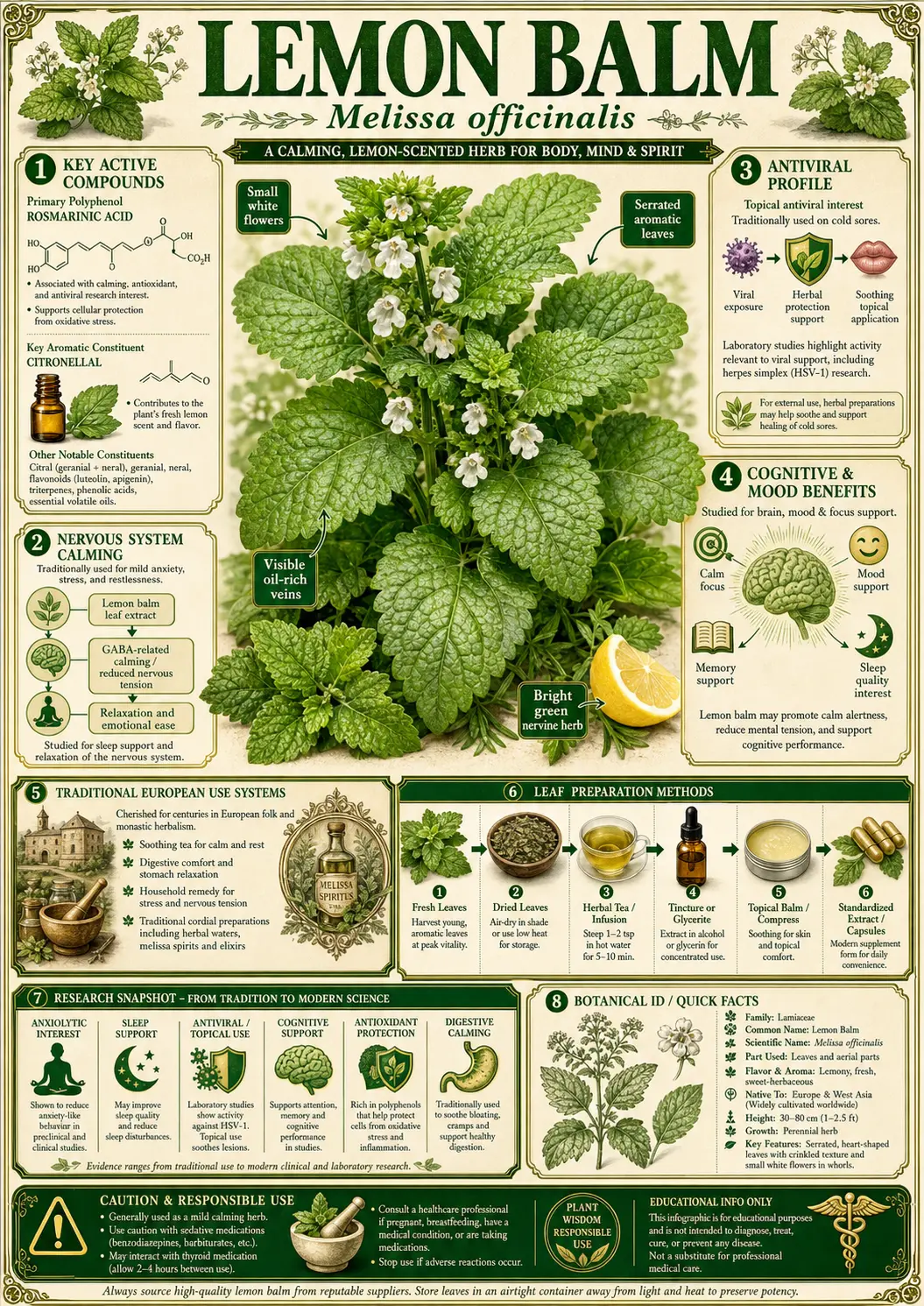
Table of Contents
- History and Traditional Use
- Active Compounds and Phytochemistry
- Anxiety and Stress Relief
- Sleep Support and Insomnia
- Cognitive Function and Memory
- Digestive Health
- Antiviral Properties
- Thyroid Modulation
- Antioxidant and Anti-Inflammatory Effects
- Cardiovascular Support
- Skin and Topical Uses
- Forms and Preparations
- Doses Used in Studies and Tradition
- Cautions and Contraindications
- Featured Videos
History and Traditional Use
Lemon balm (Melissa officinalis) is a perennial herb of the Lamiaceae (mint) family that has been valued for more than 2,000 years — its very name comes from the Greek word for the honeybee. From the beekeepers of ancient Greece and Rome, through the medicine of Avicenna and the Islamic world, the monastic gardens that gave us Carmelite Water, and the herbals of Gerard and Culpeper, lemon balm was prized above all to calm the nerves, ease low spirits, settle the stomach, and (in the old phrase) make the heart merry. These traditional uses are explored in detail — the fuller story is told in the dedicated History & Traditional Use article.
Active Compounds and Phytochemistry
The therapeutic versatility of lemon balm arises from a complex array of bioactive phytochemicals that work synergistically to produce its calming, antiviral, cognitive-enhancing, and digestive effects. Understanding these compounds is essential for appreciating why lemon balm is such a broadly useful medicinal herb.
Volatile oils (essential oil fraction):
- Citral (a mixture of geranial and neral) — the primary aromatic compound responsible for the characteristic lemon scent; possesses antimicrobial, anti-inflammatory, and sedative properties
- Citronellal — contributes to the lemon aroma and exhibits antifungal and insect-repellent activity
- Geraniol and linalool — monoterpene alcohols with calming, anti-inflammatory, and neuroprotective effects
- Beta-caryophyllene — a sesquiterpene that acts as a selective CB2 cannabinoid receptor agonist, contributing to anti-inflammatory and analgesic effects
Polyphenolic compounds:
- Rosmarinic acid — the most abundant and pharmacologically significant polyphenol in lemon balm, accounting for much of its antioxidant, anti-inflammatory, antiviral, and thyroid-modulating activity
- Caffeic acid — a hydroxycinnamic acid with antioxidant and anti-inflammatory properties
- Chlorogenic acid — supports healthy glucose metabolism and provides antioxidant protection
- Protocatechuic acid — exhibits neuroprotective and cardioprotective effects
Flavonoids:
- Luteolin — a potent flavonoid with anti-inflammatory, neuroprotective, and anticancer properties; inhibits NF-kB signaling
- Apigenin — binds to gamma-aminobutyric acid-A benzodiazepine receptors, contributing to anxiolytic and sedative effects
- Quercetin — a broad-spectrum antioxidant and anti-inflammatory flavonoid
Triterpenes:
- Ursolic acid and oleanolic acid — provide hepatoprotective, anti-inflammatory, and antimicrobial activity
The remarkable therapeutic range of lemon balm reflects the combined and synergistic actions of these diverse compound classes. Rosmarinic acid alone has been the subject of hundreds of studies and is now recognized as one of the most bioactive hydroxycinnamic acid derivatives found in any culinary or medicinal herb.
Anxiety and Stress Relief
Lemon balm is one of the most well-established nervine herbs in the Western herbal tradition, and its anxiolytic (anxiety-reducing) properties represent perhaps its most clinically significant application. The calming effects of lemon balm have been validated through both traditional use spanning millennia and a growing body of modern clinical research.
The anxiolytic mechanisms of lemon balm operate through several complementary pathways:
- GABAergic modulation — Lemon balm compounds, particularly rosmarinic acid and the flavonoid apigenin, modulate gamma-aminobutyric acid (GABA) signaling, the brain's primary inhibitory neurotransmitter system. By inhibiting the enzyme gamma-aminobutyric acid transaminase, which breaks down gamma-aminobutyric acid, lemon balm effectively increases gamma-aminobutyric acid availability in the brain, promoting a state of calm without the sedation or dependency risk associated with pharmaceutical gamma-aminobutyric acid-modifying drugs such as benzodiazepines
- Hypothalamic-pituitary-adrenal (HPA) axis regulation — Lemon balm helps modulate the hypothalamic-pituitary-adrenal (HPA) axis, the body's central stress response system, reducing the excessive cortisol output that drives anxiety symptoms
- Serotonergic support — Some research suggests lemon balm may influence serotonin receptor activity, contributing to mood stabilization and emotional resilience
- Autonomic nervous system balance — Lemon balm promotes a shift from sympathetic ("fight or flight") to parasympathetic ("rest and digest") nervous system dominance, reducing physiological stress markers including heart rate and blood pressure
A 2011 pilot study published in the Mediterranean Journal of Nutrition and Metabolism gave a standardized lemon balm extract (300 mg twice daily, 600 mg a day) for 15 days to 20 stressed volunteers with mild-to-moderate anxiety and sleep disturbances. It was open-label, with no placebo group. The authors reported anxiety manifestations reduced by 18%, anxiety-associated symptoms by 15% and insomnia by 42%, and wrote that further studies need to include a placebo.
Another study published in Psychosomatic Medicine demonstrated that a single dose of 600 mg of lemon balm extract significantly increased calmness and reduced laboratory-induced psychological stress in healthy volunteers. These acute effects suggest that lemon balm may be useful not only as a daily supplement but also as an on-demand anxiolytic.
Practitioners describe using lemon balm for mild to moderate anxiety in people who prefer not to take pharmaceutical anxiolytics, or alongside conventional treatment. They describe it as especially suited to anxiety that manifests with digestive symptoms, palpitations, or restlessness, given its simultaneous calming and antispasmodic effects.
Sleep Support and Insomnia
Lemon balm has a long and distinguished history as a gentle sleep-promoting herb, and it remains one of the most widely used botanicals for insomnia and sleep disturbances in European phytotherapy. Its sleep-supporting effects are closely related to its anxiolytic mechanisms but involve additional pathways that specifically promote sleep onset and quality.
The sleep-supporting mechanisms of lemon balm include:
- Gamma-aminobutyric acid enhancement — By increasing gamma-aminobutyric acid availability through inhibition of gamma-aminobutyric acid transaminase, lemon balm promotes the neurochemical conditions necessary for sleep initiation and maintenance
- Melatonin pathway support — Rosmarinic acid has been shown to increase the activity of glutamic acid decarboxylase and influence melatonin pathways, supporting the circadian processes that regulate the sleep-wake cycle
- Cortisol reduction — Evening cortisol elevation is one of the most common causes of difficulty falling asleep; lemon balm's ability to lower cortisol helps remove this barrier to sleep onset
- Muscle relaxation — The antispasmodic properties of lemon balm help relieve the physical tension that often accompanies insomnia
The combination of lemon balm with valerian root is one of the best-studied herbal sleep formulations in clinical research. A 1999 double-blind, placebo-controlled, multicentre study in healthy volunteers, published in Fitoterapia, examined the tolerability and efficacy of a combination of valerian (160 mg) and lemon balm (80 mg). The European Medicines Agency’s herbal committee recognises lemon balm leaf on its own for traditional use as a sleep aid and for mild stress; its lemon balm monograph does not cover the valerian–lemon balm combination.
A 2018 double-blind, placebo-controlled trial published in Clinical Nutrition ESPEN gave 80 patients with chronic stable angina 3 g of lemon balm or placebo daily for 8 weeks; the lemon balm group had significant reductions in depression, anxiety, stress and sleep-disturbance scores compared with placebo. These findings highlight the interconnected nature of cardiovascular health, psychological well-being, and sleep quality.
Lemon balm is particularly well suited as a sleep aid because it promotes relaxation and sleep onset without causing next-day drowsiness or the "hangover" effect associated with many pharmaceutical sleep aids. Practitioners describe it as suited to people whose sleep difficulties stem from racing thoughts, worry, or an overactive mind at bedtime.
Cognitive Function and Memory
One of the most intriguing and well-researched applications of lemon balm is its ability to enhance cognitive performance, particularly memory and attention. This nootropic (cognition-enhancing) property has been recognized since antiquity — the herbalist Gerard wrote that lemon balm was "good for the brain" — and has been substantiated by rigorous modern clinical trials.
The primary mechanism underlying lemon balm's cognitive effects involves the cholinergic system:
- Acetylcholinesterase (AChE) inhibition — It has been proposed that rosmarinic acid and other lemon balm compounds inhibit the enzyme acetylcholinesterase, which breaks down the neurotransmitter acetylcholine, the same target as Alzheimer's drugs such as donepezil and rivastigmine. This is not an established mechanism in people: the 2003 Northumbria University study screened lemon balm samples for this effect and detected no cholinesterase inhibition in the dried leaf it gave to volunteers, whose effects it linked instead to nicotinic and muscarinic receptor binding
- Nicotinic and muscarinic receptor binding — Lemon balm constituents interact with both nicotinic and muscarinic acetylcholine receptors, further supporting cholinergic neurotransmission
- Neuroprotection — The antioxidant and anti-inflammatory properties of rosmarinic acid and luteolin protect neurons from oxidative damage and neuroinflammation, both of which contribute to cognitive decline
- Brain-derived neurotrophic factor (BDNF) support — Emerging evidence suggests lemon balm may support brain-derived neurotrophic factor (BDNF), which is essential for neuroplasticity and the formation of new neural connections
A 2003 study at Northumbria University, published in Neuropsychopharmacology, gave 20 healthy young adults single doses of 600, 1,000 and 1,600 mg of dried lemon balm leaf or placebo. The 1,600 mg dose improved memory performance and increased calmness at every time point measured. At the lower doses the results ran the other way: slowing on timed memory tasks and on a rapid visual information-processing task grew larger as the dose fell, so 600 mg did worst on memory speed. An earlier 2002 study by the same group, in Pharmacology, Biochemistry and Behavior, used 300, 600 and 900 mg of a standardised extract: 600 mg improved accuracy of attention, calmness rose after the lowest dose, alertness fell after the highest dose, and memory scores fell at some doses and times. Lemon balm's profile is often described as "calm alertness" — enhanced cognitive function combined with reduced anxiety.
Research has also explored lemon balm's potential in age-related cognitive decline and dementia. A clinical trial published in the Journal of Neurology, Neurosurgery, and Psychiatry found that lemon balm extract (60 drops per day) significantly improved cognitive function and reduced agitation in patients with mild to moderate Alzheimer's disease over a 16-week period. These results are particularly encouraging given the limited efficacy and significant side effects of conventional Alzheimer's medications.
Practitioners describe lemon balm as used by students, professionals, and older adults for cognitive performance, and describe its combination of mental clarity and reduced anxiety as suited to people who experience test anxiety, performance anxiety, or stress-related cognitive impairment.
Digestive Health
Lemon balm has been used as a digestive remedy throughout its long medicinal history, and it remains one of the most gentle and effective carminative (gas-relieving) and antispasmodic herbs available. Its digestive benefits arise from the synergistic actions of its volatile oils, flavonoids, and polyphenolic compounds on the gastrointestinal tract.
The digestive actions of lemon balm include:
- Antispasmodic effects — Lemon balm relaxes smooth muscle in the gastrointestinal tract, relieving cramping, bloating, and colicky pain. This effect is mediated primarily by the volatile oil compounds citral and citronellal, which act directly on intestinal smooth muscle
- Carminative action — The volatile oils promote the expulsion of intestinal gas and reduce gas formation, providing relief from flatulence and abdominal distension
- Cholagogue activity — Lemon balm mildly stimulates bile production and flow, supporting fat digestion and liver function
- Gut-brain axis modulation — By calming the nervous system, lemon balm addresses the neurological component of functional digestive disorders, which are frequently driven or exacerbated by stress and anxiety
A significant clinical application is in the treatment of functional dyspepsia (chronic indigestion). A nine-herb liquid preparation (STW 5), whose nine extracts include lemon balm and peppermint, has been the subject of extensive clinical research. Multiple randomized controlled trials have demonstrated significant improvements in symptoms of functional dyspepsia and irritable bowel syndrome (IBS), including abdominal pain, bloating, nausea, and altered bowel habits.
A 2006 randomized, placebo-controlled pilot study published in Digestive Diseases and Sciences gave 32 patients with irritable bowel syndrome a three-herb product of lemon balm, spearmint and coriander, or placebo, each alongside loperamide or psyllium, for eight weeks. The severity and frequency of abdominal pain or discomfort, and of bloating, were significantly lower in the herbal group than in the placebo group.
Lemon balm is also valuable for pediatric digestive complaints. Its gentle action and pleasant taste make it well suited for children experiencing colic, nervous stomach, or stress-related digestive upset. A study in Phytotherapy Research found that an extract combining lemon balm, chamomile, and fennel significantly reduced crying time in breastfed infants with colic.
For patients with digestive complaints that worsen under stress — a pattern commonly seen in clinical practice — practitioners describe lemon balm as acting on both the nervous system and the digestive tract at the same time.
Antiviral Properties
Lemon balm possesses potent antiviral properties that have been extensively documented in both laboratory and clinical studies. Its antiviral activity is primarily attributed to rosmarinic acid and other caffeic acid derivatives, which interfere with viral attachment, entry, and replication through multiple mechanisms.
The antiviral mechanisms of lemon balm include:
- Viral attachment inhibition — Rosmarinic acid and other polyphenols bind to viral surface glycoproteins, preventing the virus from attaching to host cell receptors. This is particularly effective against enveloped viruses
- Viral entry blockade — Lemon balm compounds interfere with the fusion process by which viruses penetrate host cell membranes
- Replication inhibition — At the intracellular level, lemon balm constituents can inhibit viral enzymes necessary for replication
- Immune enhancement — By supporting healthy immune function, lemon balm helps the body mount effective antiviral defenses
The most thoroughly studied antiviral application of lemon balm is against herpes simplex virus (HSV), both type 1 (oral herpes) and type 2 (genital herpes). A randomized, double-blind, placebo-controlled trial published in Phytomedicine demonstrated that a topical lemon balm cream (containing 1% dried extract equivalent to 70:1 drug-to-extract ratio) applied four times daily significantly reduced the severity and healing time of herpes labialis (cold sores) compared to placebo. Symptoms including pain, burning, and itching were reduced as early as day two of treatment.
Laboratory studies have demonstrated that lemon balm extracts exhibit significant antiviral activity against a broad range of viruses beyond HSV, including:
- Influenza viruses — Rosmarinic acid has been shown to inhibit influenza viral replication in cell culture studies
- HIV-1 — In vitro studies have demonstrated inhibitory effects on HIV-1 reverse transcriptase
- Enterovirus 71 — A cause of hand, foot, and mouth disease in children
- Newcastle disease virus — Demonstrating broad antiviral potential
From a clinical perspective, lemon balm is most commonly used as a topical treatment for cold sores and as an internal remedy during acute viral illnesses. For patients who experience recurrent herpes outbreaks, daily internal use of lemon balm may help reduce the frequency and severity of episodes, though more research is needed to confirm this prophylactic application.
Thyroid Modulation
Lemon balm has a clinically significant relationship with thyroid function that is important for both practitioners and patients to understand. Unlike many herbs that stimulate the thyroid, lemon balm exerts a mild thyroid-suppressing effect, which can be either therapeutically beneficial or a potential concern depending on the individual's thyroid status.
The thyroid-modulating mechanisms of lemon balm include:
- Thyroid-stimulating hormone (TSH) receptor binding — Rosmarinic acid and other phenolic compounds in lemon balm have been shown to bind to thyroid-stimulating hormone (TSH) receptors on the thyroid gland, partially blocking the stimulatory signal of thyroid-stimulating hormone and reducing thyroid hormone output
- Inhibition of thyroid hormone synthesis — Lemon balm may inhibit the enzyme thyroid peroxidase (TPO), which is essential for the synthesis of thyroid hormones T3 and T4
- Peripheral conversion modulation — There is evidence suggesting that lemon balm may influence the peripheral conversion of T4 to the more active T3
- Anti-TSH antibody activity — In Graves' disease, autoimmune antibodies (thyroid-stimulating immunoglobulins) overstimulate the thyroid; lemon balm's ability to block thyroid-stimulating hormone receptor activation may help mitigate this autoimmune stimulation
These properties make lemon balm a potentially valuable adjunctive therapy for hyperthyroid conditions, particularly Graves' disease. In naturopathic practice, lemon balm is often included in formulations for mild hyperthyroidism alongside other thyroid-calming herbs such as bugleweed (Lycopus virginicus) and motherwort (Leonurus cardiaca). However, lemon balm alone is not described as a sufficient treatment for clinically significant hyperthyroidism.
Conversely, for people with hypothyroidism (underactive thyroid) the concern is that high-dose or prolonged use of concentrated lemon balm extracts could in theory further suppress already-reduced thyroid function: in a 1984 laboratory study published in Endocrinology, freeze-dried lemon balm extracts blocked thyroid-stimulating hormone (TSH) from binding to human thyroid membranes. The thyroid-modulating effects of lemon balm tea in normal dietary quantities are unlikely to be clinically significant; for people taking thyroid replacement medications such as levothyroxine, the theoretical concern with concentrated extracts is a lower thyroid output.
Antioxidant and Anti-Inflammatory Effects
Lemon balm ranks among the most potent antioxidant herbs in the Lamiaceae family, a family already renowned for its antioxidant-rich members including rosemary, sage, oregano, and thyme. The antioxidant and anti-inflammatory properties of lemon balm contribute to its wide-ranging therapeutic effects and provide a foundation for its neuroprotective, cardioprotective, and anti-aging potential.
Antioxidant actions:
- Direct free radical scavenging — Rosmarinic acid, luteolin, quercetin, and other polyphenols directly neutralize reactive oxygen species (ROS) and reactive nitrogen species (RNS), including superoxide anions, hydroxyl radicals, and peroxynitrite
- Metal ion chelation — Lemon balm polyphenols chelate transition metal ions (iron and copper) that catalyze the generation of destructive hydroxyl radicals through Fenton reactions
- Endogenous antioxidant support — Lemon balm upregulates the body's own antioxidant defense systems, including superoxide dismutase (SOD), catalase, glutathione peroxidase, and the master antioxidant glutathione
- Lipid peroxidation inhibition — Lemon balm compounds protect cell membrane lipids from oxidative degradation, preserving membrane integrity and function
Anti-inflammatory actions:
- NF-kB pathway inhibition — Rosmarinic acid and luteolin suppress the NF-kB signaling cascade, reducing the production of pro-inflammatory cytokines including tumor necrosis factor-alpha, interleukin-1 (IL-1) beta, interleukin-6 (IL-6), and IL-8
- COX and LOX enzyme inhibition — Lemon balm compounds inhibit cyclooxygenase (COX) and lipoxygenase (LOX) enzymes, reducing the synthesis of inflammatory prostaglandins and leukotrienes
- Nitric oxide modulation — Lemon balm inhibits inducible nitric oxide synthase (iNOS), reducing excessive nitric oxide production that contributes to inflammatory tissue damage
- Mast cell stabilization — Evidence suggests that lemon balm may help stabilize mast cells, reducing the release of histamine and other inflammatory mediators involved in allergic and inflammatory responses
Lemon balm extract is reported to show antioxidant activity in standard laboratory assays. A study published in Advances in Pharmacological Sciences demonstrated that lemon balm extract exhibited antioxidant activity comparable to ascorbic acid (vitamin C) in several standard assays, confirming its potency as a plant-based antioxidant. These combined antioxidant and anti-inflammatory effects underpin many of lemon balm's specific organ-system benefits and contribute to its potential as a protective agent against chronic diseases driven by oxidative stress and inflammation.
Cardiovascular Support
Emerging research suggests that lemon balm offers meaningful support for cardiovascular health through a combination of its antioxidant, anti-inflammatory, blood pressure-lowering, and lipid-modulating properties. While not traditionally classified as a primary cardiovascular herb, lemon balm's multifaceted pharmacological profile makes it a valuable complementary agent for heart health.
The cardiovascular benefits of lemon balm include:
- Blood pressure reduction — Lemon balm's calming effect on the autonomic nervous system helps reduce sympathetic nervous system overdrive, a common contributor to hypertension. Studies have shown modest but consistent reductions in both systolic and diastolic blood pressure with regular supplementation
- Heart rate modulation — By promoting parasympathetic tone, lemon balm helps normalize heart rate and may reduce palpitations associated with stress and anxiety
- Lipid profile improvement — A 2016 randomized, double-blind, placebo-controlled trial published in Complementary Therapies in Medicine gave 58 people with borderline high blood lipids 1,000 mg of lemon balm leaf powder or placebo three times a day for 2 months. Low-density lipoprotein (LDL) cholesterol fell significantly compared with placebo; total cholesterol, triglycerides and high-density lipoprotein (HDL) cholesterol did not differ significantly between the groups
- Vascular protection — The antioxidant compounds in lemon balm help protect vascular endothelial cells from oxidative damage, reducing the risk of atherosclerotic plaque formation
- Anti-arrhythmic potential — Traditional herbalism has long used lemon balm for heart palpitations, and preliminary research suggests its compounds may have mild anti-arrhythmic properties, possibly through modulation of cardiac ion channels
For patients with cardiovascular risk factors, lemon balm's ability to simultaneously address stress (a major cardiovascular risk factor), inflammation, oxidative stress, and unfavorable lipid profiles makes it a useful component of a comprehensive heart-protective botanical protocol.
Skin and Topical Uses
Beyond its well-documented internal applications, lemon balm has a rich tradition of topical use and offers clinically relevant benefits when applied directly to the skin. Its antiviral, anti-inflammatory, antioxidant, and wound-healing properties make it a versatile topical botanical.
Key topical applications include:
- Cold sore treatment — As discussed in the antiviral section, topical lemon balm cream is one of the most evidence-based natural treatments for herpes labialis. Clinical trials have demonstrated faster healing, reduced symptom severity, and prevention of lesion spread when applied at the first sign of an outbreak
- Wound healing — Lemon balm promotes wound healing through its anti-inflammatory, antimicrobial, and antioxidant properties. It has been used traditionally for cuts, abrasions, and insect bites
- Eczema and dermatitis — The anti-inflammatory and antihistamine-like effects of lemon balm make it useful for calming inflammatory skin conditions. A pilot study found that a cream containing lemon balm extract significantly reduced symptoms of atopic dermatitis
- Insect repellent — The citronellal content of lemon balm essential oil provides natural insect-repellent properties. Traditionally, crushed lemon balm leaves were rubbed on the skin to deter mosquitoes and other biting insects
- Anti-aging — The high antioxidant content of lemon balm helps protect skin from oxidative damage caused by ultraviolet radiation and environmental pollutants, which accelerate skin aging
In aromatherapy, lemon balm essential oil (often called melissa oil) is one of the most prized and expensive essential oils due to the small quantity of volatile oil produced per plant. It is valued for its ability to promote emotional balance, reduce anxiety, and support restful sleep when used in diffusion or diluted for topical application.
Forms and Preparations
Lemon balm is available in a wide variety of forms, each offering distinct advantages depending on the therapeutic goal. Its pleasant lemon flavor and gentle safety profile make it one of the most versatile and accessible medicinal herbs.
Fresh and Dried Leaf Tea
Lemon balm tea is the most traditional and widely consumed preparation. Fresh leaves produce a more aromatic and flavorful tea, while dried leaves offer convenience and longer shelf life. To prepare a therapeutic infusion, steep 1.5 to 4.5 grams of dried leaf (or a generous handful of fresh leaves) in 150 mL of freshly boiled water for 5 to 10 minutes, covered to prevent loss of volatile oils. Tea is an excellent form for digestive complaints, mild anxiety, and general relaxation.
Standardized Extracts
One of the most extensively researched standardized lemon balm extracts is produced from a selected cultivar and standardized to contain a minimum of 7% rosmarinic acid and 15% hydroxycinnamic acid derivatives. Studies using it have reported benefits for anxiety, sleep, and cognitive function. Other standardized extracts may specify rosmarinic acid content, typically ranging from 2% to 10%.
Tinctures
Alcohol-based tinctures (typically 1:5 in 45% ethanol) provide a concentrated and readily absorbable form. Glycerin-based tinctures (glycerites) are available for those who wish to avoid alcohol, including children. Tinctures are convenient for precise dosing and have a longer shelf life than dried herb.
Essential Oil
True melissa essential oil is extremely expensive due to low yields (it takes approximately 3 to 7 tons of plant material to produce 1 kg of oil). It is used primarily in aromatherapy for stress relief, emotional balancing, and mood support. Due to the high cost, adulteration with citronella or lemongrass oil is common, so third-party testing is how genuine oil is told apart from adulterated oil.
Topical Preparations
Lemon balm creams, ointments, and lip balms are used primarily for cold sores and skin conditions. Effective topical products typically contain standardized lemon balm extract at concentrations equivalent to 1% dried extract or higher.
Capsules and Tablets
Encapsulated dried herb or standardized extract provides convenient, pre-measured dosing. This form is preferred for consistent daily supplementation targeting anxiety, sleep, or cognitive benefits.
Doses Used in Studies and Tradition
Doses used for lemon balm vary with the form, the purpose, and the individual. The following ranges come from published clinical research, traditional use, and European Medicines Agency monographs:
- Dried leaf tea — 1.5 to 4.5 grams of dried herb per cup, two to three times daily
- A standardized lemon balm extract — 300 mg to 600 mg daily, in single or divided doses
- General standardized extracts — 300 mg to 1,200 mg daily, depending on concentration and standardization
- Tincture (1:5 in 45% ethanol) — 2 mL to 6 mL, three times daily
- Dried herb in capsules — 500 mg to 1,500 mg daily, divided into two or three doses
- Topical cream (for cold sores) — A thin layer on the affected area two to four times daily from the first sign of symptoms, continued until healing is complete
Timing and dose patterns described in studies and practice:
- For acute anxiety, a single dose of 300 mg to 600 mg of standardized extract can produce calming effects within one to two hours
- For sleep support, the daily dose is traditionally taken 30 to 60 minutes before bedtime; the combination with valerian root is particularly well studied for this purpose
- For cognitive effects, the Northumbria studies found results that depended on dose: 600 mg of a standardised extract improved accuracy of attention, while memory improved only at 1,600 mg of dried leaf and memory speed slowed at lower doses
- For cognitive enhancement, 300 mg to 600 mg taken 60 to 90 minutes before a cognitively demanding task has been shown to improve performance
- For digestive complaints, it is traditionally taken immediately before or after meals, most often as tea
- For cold sores, topical application is typically begun at the earliest sign of a prodromal tingling or burning sensation
- Lemon balm is generally well tolerated at higher doses and can be taken long-term; however, because of the laboratory thyroid-blocking findings, lower doses and thyroid-level checks are described for people with hypothyroidism
Cautions and Contraindications
Lemon balm is widely regarded as one of the safest medicinal herbs, with an exceptional safety profile in both traditional use and modern clinical studies. The European Medicines Agency classifies it as a traditional herbal medicine: its conclusions rest on long-standing use rather than clinical-trial evidence. However, certain populations and situations warrant awareness of the following considerations:
Thyroid Conditions
Because of its mild thyroid-suppressing effects in laboratory work, concentrated lemon balm extracts raise a concern for people with hypothyroidism and those taking thyroid replacement medications (levothyroxine, liothyronine). While moderate tea consumption is unlikely to cause clinically significant thyroid suppression, high-dose supplementation may interfere with thyroid function. In people with hypothyroidism who use concentrated extracts regularly, thyroid blood tests are what would show such an effect. Conversely, this property is described as potentially helpful in mild hyperthyroidism.
Sedative Medication Interactions
Lemon balm may potentiate the effects of sedative and central nervous system depressant medications, including benzodiazepines, barbiturates, and certain antihistamines, due to its GABAergic activity. Serious interactions are uncommon; the reported effect is added drowsiness (excessive sedation) when lemon balm is combined with these medicines.
Glaucoma Considerations
One animal study suggested that lemon balm may increase intraocular pressure. The finding has not been confirmed in people, and it is the reason concentrated lemon balm supplements are flagged for people with glaucoma.
Pregnancy and Lactation
Lemon balm tea has been consumed during pregnancy and lactation throughout history and is generally considered safe in moderate dietary quantities. However, concentrated extracts and therapeutic doses have not been adequately studied in pregnant or nursing women. As a precaution, traditional use during pregnancy is limited to occasional tea; there is no pregnancy safety data for concentrated supplements.
Surgical Considerations
Because of its sedative properties, concentrated lemon balm supplements are commonly stopped at least two weeks before scheduled surgery, because of potential interactions with anesthetic agents.
Additional Considerations
- Blood sugar medications — Limited evidence suggests lemon balm may have mild hypoglycemic effects; combined with diabetes medications, this could add to their glucose-lowering effect (low blood sugar shows as shakiness, sweating and confusion)
- Anticoagulant medications — Some in vitro studies suggest lemon balm may have mild antiplatelet activity; this could add to the effect of blood-thinning medications
- Allergic reactions — While rare, individuals with allergies to other Lamiaceae family plants (mint, basil, oregano, rosemary) may potentially react to lemon balm
- Quality and purity — Lemon balm essential oil is frequently adulterated due to its high cost; verified quality testing is what shows an oil is genuine
Key Research Papers
The following are topic-level PubMed search links covering the main evidence streams for Lemon Balm (Melissa officinalis). Each link resolves to a curated PubMed query so that the most current randomized trials, meta-analyses, and mechanistic studies can be reviewed directly from the National Library of Medicine.
- Anxiolytic effects of Melissa officinalis extract in adults with anxiety. — PubMed: Melissa officinalis anxiety clinical trial
- Melissa officinalis for insomnia and sleep-quality outcomes. — PubMed: Melissa officinalis insomnia sleep
- Effects of lemon balm on cognitive performance and memory in healthy adults. — PubMed: Melissa officinalis cognition memory
- Melissa officinalis extract in mild to moderate Alzheimer's disease. — PubMed: Melissa officinalis Alzheimer dementia
- Rosmarinic acid: antioxidant and anti-inflammatory pharmacology. — PubMed: rosmarinic acid antioxidant
- Topical lemon balm cream in herpes simplex labialis. — PubMed: Melissa officinalis herpes simplex topical
- Antiviral activity of Melissa officinalis extracts. — PubMed: Melissa officinalis antiviral rosmarinic acid
- Lemon balm combinations in functional dyspepsia and IBS. — PubMed: Melissa officinalis irritable bowel syndrome
- Effects of Melissa officinalis on lipid profile and metabolic risk factors. — PubMed: Melissa officinalis lipid profile metabolic
- GABAergic mechanisms of Melissa officinalis constituents. — PubMed: Melissa officinalis GABA mechanism
- Melissa officinalis and thyroid modulation: in vitro and clinical evidence. — PubMed: Melissa officinalis thyroid Graves
- Safety and tolerability of Melissa officinalis: systematic review. — PubMed: Melissa officinalis safety review
External Authoritative Resources
Connections
- All Herbs
- Lemon Balm Benefits Deep Dive
- Anxiety
- Depression
- Valerian
- Chamomile
- Lavender
- Passionflower
- Ashwagandha
- Holy Basil
- Stress Management
- Sleep Hygiene
- Insomnia
- Insomnia Symptom
- Alzheimer's Disease
- Rosemary
- Fennel
- Thyme
- Natural Anxiety Relief
- Peppermint
- Conditions on this site that reference this page: Herpes Simplex · Shingles (Herpes Zoster) · Infectious Disease · Dementia