Vitamin C Toxicity (High-Dose Vitamin C): Symptoms, Causes, and Risks
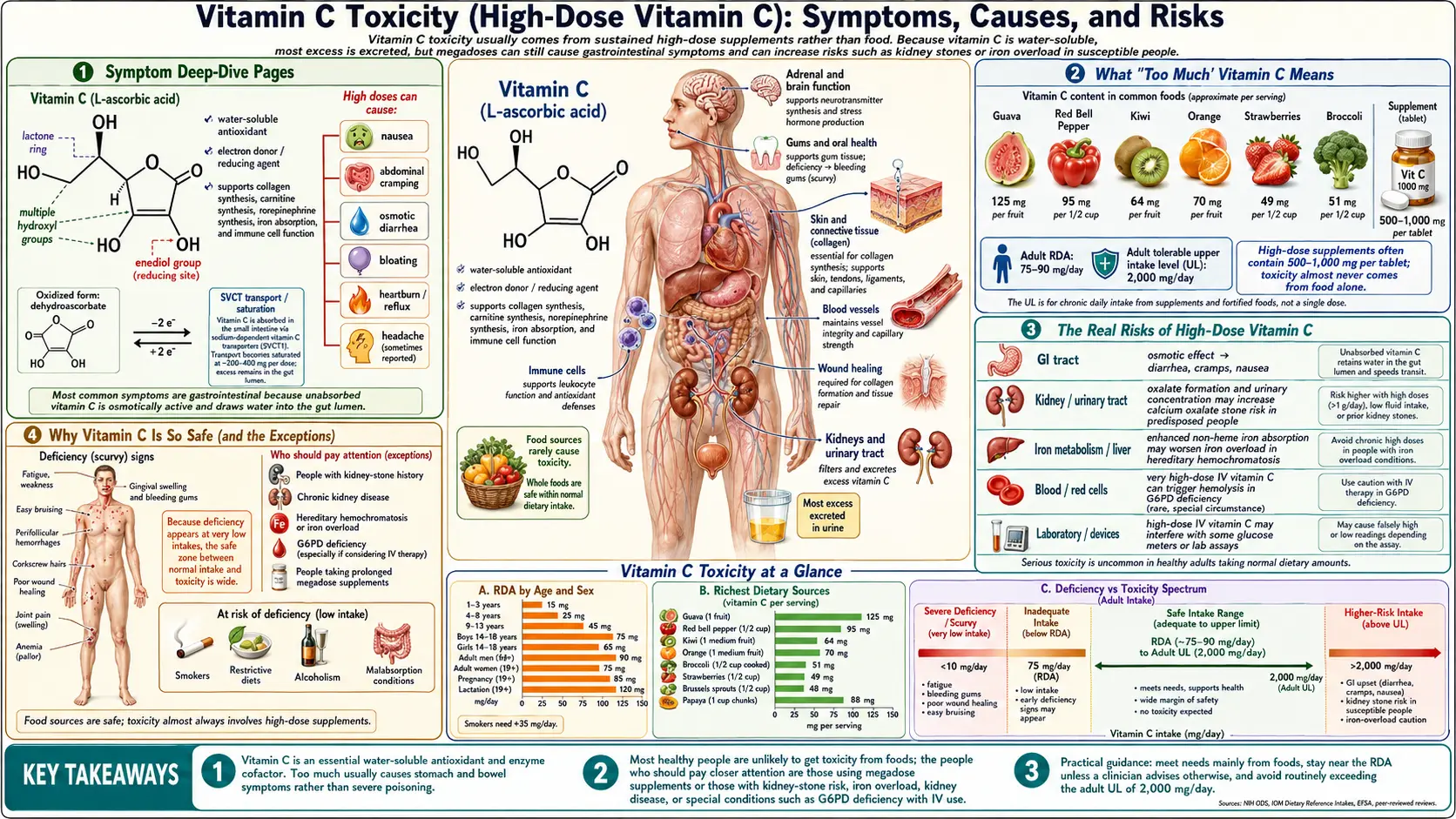
Vitamin C has low toxicity: the NIH Office of Dietary Supplements (ODS) states that it is not believed to cause serious adverse effects at high intakes. It is water-soluble, the fraction absorbed falls as the dose rises, and absorbed surplus is excreted in the urine. The effects described on this page come from high-dose supplements and intravenous infusions rather than from food. What can happen, and what this page covers, are a handful of dose-dependent effects and risks linked to intakes above the 2,000 mg a day Tolerable Upper Intake Level (UL) for adults, or to high supplemental doses. The most common is digestive upset: diarrhea, nausea and abdominal cramps from the osmotic effect of unabsorbed vitamin C in the gut. Because some vitamin C is converted to oxalate, large cohort studies have linked high supplemental intakes to more calcium-oxalate kidney stones in men. Because vitamin C enhances non-heme iron absorption, high doses are a concern for people with iron-overload conditions such as hereditary hemochromatosis. High-dose intravenous vitamin C carries separate, documented risks in people with kidney impairment or G6PD deficiency. This hub explains what counts as "too much," who the research raises concerns for, and how each effect is recognized and managed, with deep-dive pages on each. For most healthy people, the reported effects of high oral doses are mild and gastrointestinal.
Symptom Deep-Dive Pages
Digestive Upset & Diarrhea
The most common and most harmless effect of megadosing vitamin C — how unabsorbed ascorbic acid pulls water into the gut and triggers osmotic diarrhea, cramps, and nausea, and why it resolves when the dose is lowered.
Read the deep dive →Kidney Stones
The modest, real link between very high-dose vitamin C and calcium-oxalate stones — how some excess vitamin C is converted to oxalate, who is actually at risk, and why food sources and ordinary doses are not the problem.
Read the deep dive →Iron Overload Risk
Why vitamin C’s helpful ability to boost iron absorption becomes a genuine caution for the small group with hereditary hemochromatosis or other iron-overload conditions — and why this rarely matters for everyone else.
Read the deep dive →Interactive Visualization Vitamin C, Collagen & Why Sailors Fell Apart Zip three protein chains into the strongest rope in biology — then take the vitamin C away and watch the helix unravel, and old healed scars split back open. Launch →
Table of Contents
- Symptom Deep-Dive Pages
- What "Too Much" Vitamin C Means
- The Real Risks of High-Dose Vitamin C
- Why Vitamin C Is So Safe (and the Exceptions)
- What Causes a Vitamin C Excess
- How a Vitamin C Problem Is Recognized
- How Excess Vitamin C Is Managed
- Warning Signs Described in Clinical Sources
- Key Research Papers
- Connections
- Featured Videos
What "Too Much" Vitamin C Means
Vitamin C (ascorbic acid) is an essential, water-soluble nutrient. That single word — water-soluble — is the key to understanding why it is so hard to overdose on. Unlike the fat-soluble vitamins (A, D, E, and K), which the body can store in fat and the liver and which therefore can build up to toxic levels, water-soluble vitamins dissolve in the watery part of the blood, and absorbed vitamin C beyond what the tissues hold is filtered out by the kidneys and lost in the urine. The body keeps a limited reserve of vitamin C, and absorption has a built-in ceiling.
That ceiling matters. Pharmacokinetic studies show that vitamin C absorption is tightly regulated: the fraction absorbed from an oral dose falls as the dose rises. In a hospital depletion–repletion study of seven volunteers (Levine 1996), bioavailability was complete for a single 200 mg dose; at single doses of 500 mg and higher it declined and the absorbed amount was excreted in the urine, and plasma was fully saturated at 1,000 mg daily. The ODS summarizes absorption as about 70–90% at intakes of 30–180 mg/day, falling to less than 50% above 1 g/day. A second NIH study (Padayatty 2004) found that a 1.25 g oral dose produced a mean peak plasma concentration of about 135 µmol/L, against about 885 µmol/L for the same dose given intravenously, and its modeling predicted a peak of only about 220 µmol/L even for 3 g taken by mouth every 4 hours. Oral doses therefore produce plasma concentrations that the body keeps tightly controlled; only intravenous infusion produces very high blood levels.
So what counts as "too much"? The Food and Nutrition Board sets two useful numbers for adults:
- The Recommended Dietary Allowance (RDA) — about 90 mg/day for men and 75 mg/day for women (people who smoke require 35 mg/day more). This is the amount set to prevent deficiency and keep tissues replete; the ODS notes that five varied servings of fruits and vegetables a day can provide more than 200 mg.
- The Tolerable Upper Intake Level (UL) — 2,000 mg/day for adults. This is not a poison threshold. A UL is the highest daily intake likely to pose no risk of adverse effects for almost everyone; for vitamin C it rests on the gastrointestinal effects — diarrhea, nausea, abdominal cramps — that the ODS attributes to the osmotic effect of unabsorbed vitamin C. For children the UL is lower (400 to 2,000 mg depending on age).
Two points follow. First, the effects on this page are not reported from food. The ODS lists about 70 mg of vitamin C in a medium orange, 49 mg in a half cup of sliced strawberries and 95 mg in a half cup of raw sweet red pepper, and no recognized illness comes from a vitamin-C-rich diet. The issues on this page come almost entirely from high-dose supplements — 1,000 mg "immune support" tablets, effervescent megadose powders, or intravenous infusions used in some alternative-medicine settings. Second, the word "toxicity" overstates the case for oral intake: there is no vitamin C poisoning syndrome comparable to vitamin A or vitamin D toxicity. What exists is a short list of mostly mild and reversible effects, plus situations — oxalate kidney stones, iron overload and high-dose intravenous use — where the research raises specific concerns. The rest of this page covers each of those.
The Real Risks of High-Dose Vitamin C
Because vitamin C does not accumulate to poisonous levels, the genuine concerns are not about the vitamin "building up." They are three specific, dose-dependent effects, each with its own mechanism. It helps to keep them in proportion: the first is the most common and is mild, and the second and third matter chiefly to particular groups of people.
- Digestive upset and diarrhea — common, mild, and the dose-limiting effect. This is the most frequently reported effect of high vitamin C intake and the effect the UL is based on. When more vitamin C is swallowed than the intestine absorbs, the unabsorbed ascorbic acid stays in the gut, where its osmotic effect draws water in. The result is diarrhea, nausea, abdominal cramps and other gastrointestinal disturbances (ODS). It is described as uncomfortable rather than dangerous, and as resolving when the dose is reduced. Some practitioners describe deliberately raising the dose to this point ("bowel tolerance") as a way of finding an individual limit. The deep dive is on the Digestive Upset & Diarrhea page.
- Calcium-oxalate kidney stones — a modest association, clearest in men. When the body metabolizes vitamin C, a portion of it is converted to oxalate, which is excreted in the urine. Oxalate is a component of calcium oxalate, the most common type of kidney stone. In a controlled metabolic-unit crossover trial (Massey 2005), 1,000 mg of vitamin C twice daily raised urinary oxalate and a calcium-oxalate stone-risk index in 40% of participants, both stone-formers and non-stone-formers. In large prospective cohorts, supplemental vitamin C has been linked to more incident kidney stones in men: in the Health Professionals Follow-up Study (40,536 men), supplemental intake of 1,000 mg/day or more carried a hazard ratio of 1.19, while no significant association was found among 156,735 women in the Nurses’ Health Studies, and dietary vitamin C was not associated with stones in either sex (Ferraro 2016); a prospective Swedish cohort of men reported an association with ascorbic acid supplements as well (Thomas 2013). The ODS notes that studies of urinary oxalate have had conflicting results and that the best evidence of a contribution is in people with pre-existing hyperoxaluria. The research raises the clearest concern for men taking high-dose supplements and for people who form calcium-oxalate stones. See the Kidney Stones deep dive and the general Kidney Stones page.
- Increased iron absorption — a concern in iron overload. One of vitamin C’s roles is enhancing absorption of plant (non-heme) iron; it keeps iron in the more absorbable ferrous form. In single-meal studies the effect is pronounced, but across a whole diet it is much smaller: in 12 people eating a complete diet with 51–247 mg/day of vitamin C, mean iron absorption did not differ significantly between dietary periods (Cook & Reddy 2001), which the authors say may explain why prolonged supplementation shows little effect on iron status. In healthy people, the ODS states that excess iron absorption does not appear to be a concern. For people with iron-overload conditions — especially hereditary hemochromatosis — the ODS notes that chronic high doses could exacerbate iron overload and result in tissue damage. The 2011 American Association for the Study of Liver Diseases (AASLD) hemochromatosis guideline states that vitamin C supplements should be avoided during treatment, noting that pharmacological doses can accelerate mobilization of iron to levels that may saturate circulating transferrin; it gives the same advice for secondary iron overload. The deep dive is on the Iron Overload Risk page; see also Hemochromatosis.
A few less-common effects complete the picture. High-dose intravenous vitamin C (used in some integrative settings, and a different exposure from oral pills) has its own documented risks. In a 2010 NIH survey of practitioners, reported side effects were mostly minor, but published reports documented serious adverse events, including two deaths in patients known to be at risk; the authors identify the known complications as occurring in people with renal impairment or G6PD deficiency (Padayatty 2010). Hemolysis (red-cell breakdown) has been reported in G6PD deficiency (Mehta 1990), and acute oxalate nephropathy — calcium-oxalate crystal deposition in the kidney tubules — has been described in case reports, including acute kidney failure after a single 45 g intravenous dose (Lawton 1985) and a case in a person with lupus (Cossey 2013). In people with normal kidney function, less than 0.5% of a very large intravenous dose was recovered as urinary oxalate (Robitaille 2009). Vitamin C can also interfere with laboratory tests: very high intravenous doses caused falsely elevated readings on two of three hospital strip-based glucose meters tested (Katzman 2021), and ascorbic acid ingestion has been reported to cause false-negative stool occult-blood tests (Jaffe 1975).
Why Vitamin C Is So Safe (and the Exceptions)
It is worth dwelling on why a vitamin so many people megadose causes so little trouble, because understanding the biology makes the exceptions easy to remember. The safety of vitamin C rests on three overlapping safeguards, all of which the deficiency-prone fat-soluble vitamins lack.
- Regulated absorption. The transporters that carry vitamin C across the intestinal wall become saturated as the dose climbs. The bigger the dose, the smaller the percentage absorbed — an automatic brake on how much can enter the body at all.
- Efficient kidney excretion. Once plasma is saturated, absorbed vitamin C beyond that point is excreted in the urine (Levine 1996). Plasma concentrations from oral doses therefore stay tightly controlled (Padayatty 2004).
- No meaningful storage. Because the body holds only a modest pool of vitamin C and keeps no large depot, there is no store in which a surplus accumulates.
This is the opposite of how fat-soluble vitamin toxicity works, and it is why safety reviews, including the ODS fact sheet, describe vitamin C as having low toxicity. The body treats a megadose less like a poison and more like a tap that has been turned on too far: it lets through only what it can use and runs the rest down the drain.
But "low toxicity" is not the same as "no consequences at all," and the exceptions are precisely where the body’s safeguards do not help:
- The gut’s response to unabsorbed vitamin C — osmotic diarrhea — happens because absorption is limited. The very safeguard that keeps blood levels safe produces the side effect in the gut.
- Oxalate production sidesteps the safeguards: the small amount of vitamin C the body does metabolize yields oxalate that the kidneys must excrete, and in people prone to oxalate stones that extra oxalate can matter even though plasma vitamin C stays controlled.
- Iron absorption is enhanced at the point of entry in the gut, long before any excretion can occur — so in someone who already absorbs too much iron, vitamin C can add to a pre-existing problem.
In summary: for the general population, the research describes vitamin C as having low toxicity. The groups the research raises specific concerns for are a defined set: men and people who form calcium-oxalate stones who take high-dose supplements, people with hereditary hemochromatosis or other iron-overload states, people with significant kidney disease, and people with G6PD deficiency receiving high-dose intravenous vitamin C. Outside those groups, the most commonly reported effect of a high oral dose is diarrhea.
What Causes a Vitamin C Excess
Because food is not reported to cause excess, an over-intake of vitamin C is almost always a supplement story. The common sources are:
- High-dose oral supplements — the usual source. Vitamin C is sold in 500 mg and 1,000 mg tablets, chewables, gummies, and effervescent powders, often marketed for "immune support" or cold prevention. Taking one or two of these a day routinely pushes intake well past the RDA and, with the larger doses or several products combined, past the 2,000 mg UL. This is the typical setup for the digestive upset described above.
- "Stacking" multiple products. People frequently do not realize how the doses add up. A daily multivitamin, a separate vitamin C tablet, an effervescent "immune" drink, and an electrolyte or "wellness" powder can each contain vitamin C; together they can quietly exceed the UL even though no single product looks excessive.
- Cold-season megadosing. The popular practice of swallowing very large vitamin C doses at the first sign of a cold — sometimes several grams a day — is a common trigger of osmotic diarrhea. A 2013 Cochrane review (Hemilä 2013) found that regular supplementation did not reduce how often colds occur in the general population (risk ratio 0.97), shortened colds by 8% in adults when taken regularly, and showed no consistent effect on duration or severity when started at the onset of symptoms.
- Intravenous (IV) vitamin C. Some integrative and alternative-medicine practices give vitamin C by IV infusion in doses far larger than anything achievable by mouth, bypassing the gut’s absorption limit and producing very high blood levels. This is an entirely different exposure from oral pills, and it carries the specific risks noted earlier (hemolysis in G6PD deficiency, oxalate nephropathy in people with kidney impairment).
- Buffered and combination forms. Some products pair vitamin C with minerals (for example as calcium ascorbate or sodium ascorbate, or in formulas that include iron). These do not make the vitamin C itself more potent, but combination iron-plus-vitamin-C products are worth noting for anyone with an iron-overload concern.
The thread running through all of these is simple: excess vitamin C is something people take, not something they eat. Excess from a diet rich in fruit and vegetables — the pattern nutrition guidance recommends — is not reported. (For where vitamin C actually comes from in food, see the Vitamin C Food Sources page.)
How a Vitamin C Problem Is Recognized
There is no routine "vitamin C level" test ordered to catch an overdose, for the simple reason that blood vitamin C does not climb dangerously and an overdose is not a recognized medical emergency. Instead, a high-dose-vitamin-C problem is almost always recognized the same practical way: by connecting the symptom to the supplement.
- A careful history. The usual first step described is a frank review of everything a person is taking — not just "vitamins," but every tablet, gummy, effervescent drink, and powder, with the milligrams added up. New digestive upset that started after beginning or increasing a vitamin C product, and that eases when the product is paused, is usually all the "diagnosis" needed. The same logic applies to iron-overload concerns: the relevant question is whether someone with hemochromatosis is also taking high-dose vitamin C.
- Tests for the specific consequence, not for vitamin C itself. When a real downstream problem is suspected, the testing targets that problem:
- Kidney stones are evaluated with imaging and, for recurrent stone-formers, a 24-hour urine collection that measures urinary oxalate and other stone-forming chemistries — which can reveal whether high-dose vitamin C is contributing.
- Iron overload is assessed with iron studies — serum ferritin and transferrin saturation — and, for hemochromatosis, genetic testing. (See the Iron Panel.)
- Kidney function is checked with a routine metabolic panel when high-dose or IV vitamin C is used in someone with kidney concerns. (See the Comprehensive Metabolic Panel.)
- Lab interference. High doses of vitamin C can distort other tests. Very high intravenous doses have caused falsely high readings on some strip-based blood-glucose meters (a third meter tested returned error messages instead) (Katzman 2021), and ascorbic acid intake has been linked to falsely negative stool occult-blood tests, which rely on the peroxidase-like activity of heme (Jaffe 1975). In these cases the vitamin, not a disease, may be skewing the result.
In short, the vitamin itself is not usually measured; the pattern is recognized and, if needed, the specific effect is tested for. The link is usually apparent once the supplement list is laid out.
How Excess Vitamin C Is Managed
The reassuring flip side of vitamin C’s safety is that "treatment" is usually simple. Because the vitamin does not accumulate, the effects of excess oral intake are described as resolving once the excess stops. The approach depends on the situation.
- Ordinary digestive upset — a lower dose. The gastrointestinal effects come from unabsorbed vitamin C (ODS) and are described as resolving when intake is reduced, without medication. Absorption is most complete for smaller single doses: Levine 1996 found a single 200 mg dose completely absorbed. The authors of that study concluded that safe doses are less than 1,000 mg daily and that daily doses above 400 mg have no evident value.
- People who form kidney stones. The research summarized above raises a concern about high-dose vitamin C supplements in people who form calcium-oxalate stones, while dietary vitamin C was not associated with stones (Ferraro 2016). Stone-prevention guidance places fluid intake, which dilutes the urine, at its center. The Kidney Stones deep dive covers this in detail.
- Iron overload. The 2011 AASLD guideline states that during hemochromatosis treatment vitamin C supplements and iron supplements should be avoided, and that dietary adjustments are unnecessary. The iron overload itself is treated separately — by therapeutic phlebotomy (scheduled blood removal) or, for secondary iron overload, iron-chelation medication, managed by a clinician. See Hemochromatosis.
- High-dose intravenous vitamin C. The NIH authors who surveyed intravenous use identify renal impairment and G6PD deficiency as the settings of its known complications (Padayatty 2010); screening for G6PD deficiency before infusion is a commonly described precaution, and kidney impairment is the setting of the reported oxalate nephropathy cases.
- Megadoses and lab tests. Because of the interference described above, high-dose vitamin C use is relevant information for whoever interprets blood-glucose or stool occult-blood tests.
For most people taking high oral doses, no antidote or detox is involved: the reported effects are dose-related and resolve when the dose is reduced.
Warning Signs Described in Clinical Sources
Vitamin C excess is, for the vast majority of people, a minor and self-correcting nuisance rather than a medical danger — so the most useful "red flags" are mostly about the downstream conditions it can aggravate, not about the vitamin causing acute harm. Clinical sources list the following situations as reasons for medical evaluation:
- Severe flank or back pain, or blood in the urine — the classic signs of a kidney stone, especially in someone taking high-dose vitamin C with a history of stones. Severe stone pain with fever or vomiting is described as needing prompt care.
- Persistent or severe diarrhea that does not settle after lowering the dose, or that comes with signs of dehydration (dizziness, very dark urine, weakness) — while vitamin C diarrhea is usually mild, dehydration from any cause deserves attention.
- Known iron overload or hemochromatosis — the AASLD guideline advises against vitamin C supplements in this group regardless of symptoms.
- Significant kidney disease, or high-dose IV vitamin C — the published cases of oxalate deposition in the kidneys involve this setting.
- Dark or unusually colored urine, jaundice, or sudden fatigue after IV vitamin C in someone with G6PD deficiency — possible signs of red-cell breakdown (hemolysis), which clinical sources treat as urgent.
For other people, no adverse effects are reported from vitamin C in food, and the reported effects of high supplement doses are mostly temporary stomach upset that resolves with a lower dose. Decisions about supplements belong with a clinician, who can review a full supplement list. For the opposite problem, see the Vitamin C Deficiency (Scurvy) hub.
Key Research Papers
- Levine M, Conry-Cantilena C, Wang Y, et al. (1996). Vitamin C pharmacokinetics in healthy volunteers: evidence for a recommended dietary allowance. Proceedings of the National Academy of Sciences;93(8):3704-3709. — DOI: 10.1073/pnas.93.8.3704. — doi:10.1073/pnas.93.8.3704
- Carr AC, Frei B (1999). Toward a new recommended dietary allowance for vitamin C based on antioxidant and health effects in humans. The American Journal of Clinical Nutrition;69(6):1086-1107. — DOI: 10.1093/ajcn/69.6.1086. — doi:10.1093/ajcn/69.6.1086
- Padayatty SJ, Katz A, Wang Y, et al. (2003). Vitamin C as an Antioxidant: Evaluation of Its Role in Disease Prevention. Journal of the American College of Nutrition;22(1):18-35. — DOI: 10.1080/07315724.2003.10719272. — doi:10.1080/07315724.2003.10719272
- Schlueter AK, Johnston CS (2011). Vitamin C: Overview and Update. Journal of Evidence-Based Complementary & Alternative Medicine;16(1):49-57. — DOI: 10.1177/1533210110392951. — doi:10.1177/1533210110392951
- Lykkesfeldt J, Poulsen HE (2010). Is vitamin C supplementation beneficial? Lessons learned from randomised controlled trials. British Journal of Nutrition;103(9):1251-1259. — DOI: 10.1017/s0007114509993229. — doi:10.1017/s0007114509993229
- Massey LK, Liebman M, Kynast-Gales SA (2005). Ascorbate Increases Human Oxaluria and Kidney Stone Risk. The Journal of Nutrition;135(7):1673-1677. — DOI: 10.1093/jn/135.7.1673. — doi:10.1093/jn/135.7.1673
- Thomas LDK, Elinder CG, Tiselius HG, et al. (2013). Ascorbic Acid Supplements and Kidney Stone Incidence Among Men: A Prospective Study. JAMA Internal Medicine;173(5):386-388. — DOI: 10.1001/jamainternmed.2013.2296. — doi:10.1001/jamainternmed.2013.2296
- Ferraro PM, Curhan GC, Gambaro G, Taylor EN (2016). Total, Dietary, and Supplemental Vitamin C Intake and Risk of Incident Kidney Stones. American Journal of Kidney Diseases;67(3):400-407. — DOI: 10.1053/j.ajkd.2015.09.005. — doi:10.1053/j.ajkd.2015.09.005
- Robitaille L, Mamer OA, Miller WH, et al. (2009). Oxalic acid excretion after intravenous ascorbic acid administration. Metabolism;58(2):263-269. — DOI: 10.1016/j.metabol.2008.09.023. — doi:10.1016/j.metabol.2008.09.023
- Cook JD, Reddy MB (2001). Effect of ascorbic acid intake on nonheme-iron absorption from a complete diet. The American Journal of Clinical Nutrition;73(1):93-98. — DOI: 10.1093/ajcn/73.1.93. — doi:10.1093/ajcn/73.1.93
- Padayatty SJ, Sun AY, Chen Q, et al. (2010). Vitamin C: Intravenous Use by Complementary and Alternative Medicine Practitioners and Adverse Effects. PLoS ONE;5(7):e11414. — DOI: 10.1371/journal.pone.0011414. — doi:10.1371/journal.pone.0011414
- Bacon BR, Adams PC, Kowdley KV, Powell LW, Tavill AS (2011). Diagnosis and management of hemochromatosis: 2011 practice guideline by the American Association for the Study of Liver Diseases. Hepatology;54(1):328-343. — PubMed PMID: 21452290
- Padayatty SJ, Sun H, Wang Y, et al. (2004). Vitamin C pharmacokinetics: implications for oral and intravenous use. Annals of Internal Medicine;140(7):533-537. — PubMed PMID: 15068981
- Hemilä H, Chalker E (2013). Vitamin C for preventing and treating the common cold. Cochrane Database of Systematic Reviews;(1):CD000980. — PubMed PMID: 23440782
- Lawton JM, Conway LT, Crosson JT, et al. (1985). Acute oxalate nephropathy after massive ascorbic acid administration. Archives of Internal Medicine;145(5):950-951. — PubMed PMID: 3994472
- Cossey LN, Rahim F, Larsen CP (2013). Oxalate nephropathy and intravenous vitamin C. American Journal of Kidney Diseases;61(6):1032-1035. — PubMed PMID: 23548555
- Mehta JB, Singhal SB, Mehta BC (1990). Ascorbic-acid-induced haemolysis in G-6-PD deficiency (letter). The Lancet;336(8720):944. — PubMed PMID: 1976956
- Katzman BM, Kelley BR, Deobald GR, et al. (2021). Unintended consequence of high-dose vitamin C therapy for an oncology patient: evaluation of ascorbic acid interference with three hospital-use glucose meters. Journal of Diabetes Science and Technology;15(4):897-900. — PubMed PMID: 32506941
- Jaffe RM, Kasten B, Young DS, MacLowry JD (1975). False-negative stool occult blood tests caused by ingestion of ascorbic acid (vitamin C). Annals of Internal Medicine;83(6):824-826. — PubMed PMID: 1200528
- National Institutes of Health, Office of Dietary Supplements. Vitamin C: Fact Sheet for Health Professionals (agency fact sheet; source of the RDA, UL, food values and absorption figures quoted on this page). — ods.od.nih.gov: Vitamin C fact sheet
PubMed Topic Searches
Connections
- All Vitamins
- Vitamin C, Collagen & Why Sailors Fell Apart — interactive animation
- Vitamin C Toxicity: Digestive Upset & Diarrhea
- Vitamin C Toxicity: Kidney Stones
- Vitamin C Toxicity: Iron Overload Risk
- Vitamin C Overview
- Vitamin C Deficiency (Scurvy) Hub
- Vitamin C Benefits Hub
- Vitamin C Food Sources
- Vitamin C and Iron Absorption
- Kidney Stones
- Hemochromatosis
- Iron
- Iron Toxicity (Overload) Hub
- Iron Panel
- Comprehensive Metabolic Panel