Silver Nanoparticles (AgNPs) Research
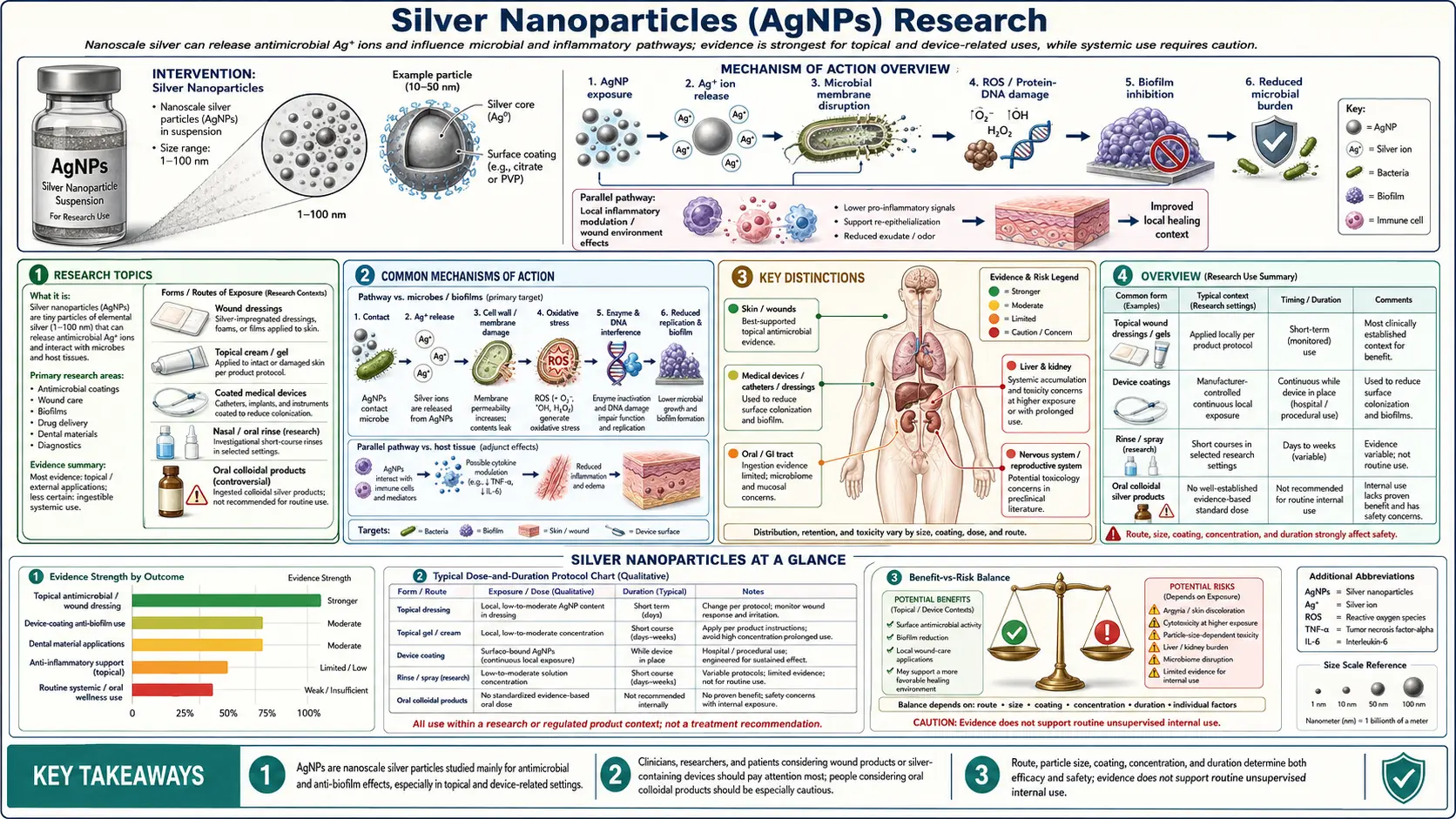
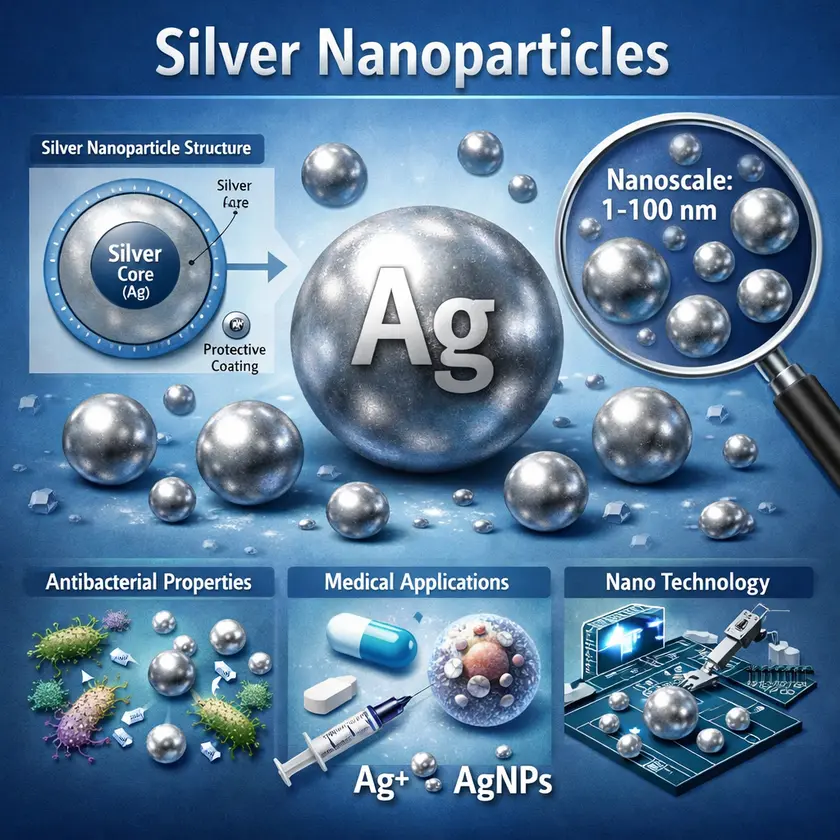
Silver nanoparticles (AgNPs) are engineered particles of silver ranging from 1 to 100 nanometers in diameter. At this nanoscale, silver exhibits dramatically different physical, chemical, and biological properties compared to bulk silver or ionic silver solutions. AgNPs represent one of the most actively researched frontiers in nanomedicine, demonstrating potent antimicrobial, antiviral, and anticancer properties through multiple simultaneous mechanisms — including reactive oxygen species (ROS) generation, direct pathogen destruction, and immune modulation.
Unlike conventional antibiotics or antivirals that typically target a single pathway, silver nanoparticles attack through multiple mechanisms simultaneously, making it significantly harder for pathogens to develop resistance. This multi-target approach has drawn intense research interest for applications ranging from drug-resistant bacterial infections to oncogenic viral diseases.
Research Topics
Silver Nanoparticles & Meningitis
Bacterial meningitis remains one of the most dangerous infectious diseases worldwide, with mortality rates of 20–30% even with prompt antibiotic treatment. With antibiotic resistance rising globally, researchers are investigating how AgNPs could offer new treatment strategies against drug-resistant strains of Streptococcus pneumoniae, Neisseria meningitidis, and Escherichia coli K1. This article covers antimicrobial mechanisms, blood-brain barrier penetration research, antibiotic synergy, green synthesis methods, and the current clinical translation status.
- Multi-target antimicrobial action against meningitis-causing bacteria
- Blood-brain barrier penetration strategies for CNS drug delivery
- Synergy with conventional antibiotics to overcome drug resistance
- Green synthesis methods using plant extracts and microorganisms
- Safety, toxicity profiles, and current clinical applications
Silver Nanoparticles & Epstein-Barr Virus
Epstein-Barr virus (EBV) infects over 90% of adults worldwide and is linked to approximately 200,000 cancer cases annually, including Burkitt lymphoma, nasopharyngeal carcinoma, and Hodgkin lymphoma. With no specific antiviral therapy available, AgNPs have emerged as a promising research area. Studies demonstrate two powerful mechanisms: direct virucidal destruction of viral particles and selective killing of latently infected cancer cells through ROS-induced lytic reactivation.
- Selective cytotoxicity against EBV-infected cells while sparing normal cells
- ROS-mediated lytic reactivation forcing EBV from latency into the vulnerable lytic cycle
- Direct physical destruction of viral particles at sub-cytotoxic concentrations
- Citrate-stabilized AgNPs inhibiting EBV replication by up to 70%
- Context within the broader lytic induction therapy landscape
Common Mechanisms of Action
Across both antibacterial and antiviral applications, silver nanoparticles share several core mechanisms:
- Reactive Oxygen Species (ROS) Generation: AgNPs catalyze production of superoxide, hydrogen peroxide, and hydroxyl radicals that damage pathogen membranes, proteins, and nucleic acids
- Membrane Disruption: Nanoparticles physically interact with and compromise cell membranes (bacteria) or lipid envelopes (viruses)
- Ion Release: Continuous release of Ag+ ions provides sustained antimicrobial and antiviral activity
- Multi-Target Attack: Simultaneous disruption of multiple pathways makes resistance development extremely unlikely
- Size-Dependent Activity: Particles in the 2–25 nm range show optimal antimicrobial and antiviral efficacy due to high surface-area-to-volume ratio
- Surface Functionalization: Coatings (PVP, citrate, tannic acid) can be tuned to enhance biocompatibility, targeting, and therapeutic activity
Key Distinctions
- Silver nanoparticles (AgNPs): Engineered particles 1–100 nm with extremely high surface-area-to-volume ratio, enabling potent activity at low concentrations
- Silver nanoclusters (AgNCs): Ultra-small clusters (<2 nm) with fluorescent properties useful for diagnostic imaging alongside antimicrobial activity
- Colloidal silver: Suspension of larger, uncharacterized silver particles in liquid — less targeted activity and greater toxicity risk compared to engineered nanoparticles
- Ionic silver (Ag+): Dissolved silver ions with antimicrobial action but lacking the sustained-release and targeted delivery capabilities of nanoparticles
Important: Silver nanoparticles used in research are precisely engineered, characterized, and standardized. They are not equivalent to colloidal silver products sold as dietary supplements, which have different particle characteristics, lack quality control, and carry risks including argyria (irreversible skin discoloration).
Colloidal Silver in 1926 Medicine — and an Honest Modern Look
Long before the engineered nanoparticles described above, silver had a place in mainstream medicine. In the United States Dispensatory of the 1920s — the standard American drug reference of its day — silver preparations were listed and used routinely, and silver was widely regarded as a "natural antibiotic." This was the era before penicillin (Alexander Fleming's discovery came in 1928, and it did not reach patients until the early 1940s). With no modern antibiotics available, doctors reached for what worked, and dilute silver solutions were applied topically to clean and dress wounds, to irrigate infected tissue, and — in the form of silver nitrate eye drops (Credé's method, introduced in 1881) — to prevent blinding eye infections in newborns. Used this way, on the surface of the body, silver genuinely helped reduce infection at a time when an infected wound could be fatal.
So the history is real and the topical use was not a superstition. The honest question for today is narrower and more important: does that history justify swallowing colloidal silver? The evidence says no — and the distinction between topical and internal use is the whole story.
Topical silver: still evidence-based, still standard care
The part of silver's history that survived scientific scrutiny is the topical part. Silver is still standard medicine on the skin and in wounds today:
- Silver sulfadiazine cream (brand name Silvadene and others) has been a mainstay of burn care since the 1960s — a genuine pharmaceutical built around silver's antibacterial action.
- Silver-impregnated wound and burn dressings are used in hospitals and wound clinics worldwide to lower the bacterial burden in chronic ulcers, surgical wounds, and burns.
- Silver nitrate is still used by clinicians to cauterize and treat certain wounds and lesions.
It is worth being precise even here: the best evidence shows topical silver is useful but not a cure-all. A Cochrane systematic review of topical silver for preventing wound infection found the evidence did not support routine use of silver dressings or creams for every wound, and that benefits depend on the clinical situation. In other words, topical silver is a real tool with a real evidence base — used appropriately, under guidance, on the outside of the body.
Ingested colloidal silver: no proven benefit, and a real risk
This is where the modern picture diverges sharply from the marketing. Drinking colloidal silver has no proven health benefit. It is not a treatment for colds, flu, infections, "immune support," or any disease. The U.S. Food and Drug Administration addressed this directly: in a 1999 final rule (21 CFR 310.548), the FDA determined that over-the-counter drug products containing colloidal silver or silver salts are not generally recognized as safe and effective for any disease or condition, and are misbranded when sold for such uses. Products still on the market today are sold as unproven "dietary supplements," not as approved medicines — the law that lets them be sold does not mean they have been shown to work.
Ingested silver is not merely useless — it can cause permanent harm. The most distinctive injury is argyria: silver accumulates in the skin and, with sunlight exposure, is reduced to metallic silver and silver sulfide deposits that turn the skin a slate blue-grey color that does not fade. The discoloration is cosmetic but irreversible — there is no reliable way to reverse it once it sets in. Published case reports document argyria developing after months to years of swallowing colloidal silver or silver-protein products. Silver can also interfere with the absorption of some medicines, including certain antibiotics and thyroid medication, and very high or prolonged exposure has been associated with kidney and neurological effects.
The bottom line, stated plainly: silver's place in medicine is on the skin and in wounds, where it has a real, evidence-based role. There is no established benefit to taking colloidal silver by mouth, the FDA does not recognize it as safe or effective for any condition, and it carries a genuine risk of permanent skin discoloration. This page makes no health claims for oral or internal silver use. Anyone facing an infection should seek proper medical care and appropriate antibiotics — the very treatments that, after 1928, gave doctors something far more reliable than the silver tonics of 1926.
Key research and regulatory references for this section:
- Storm-Versloot MN, Vos CG, Ubbink DT, Vermeulen H. Topical silver for preventing wound infection. Cochrane Database of Systematic Reviews, 2010.
- White JML, Powell AM, Brady K, Russell-Jones R. Severe generalized argyria secondary to ingestion of colloidal silver protein. Clinical and Experimental Dermatology, 2003;28(3):254–256.
- Slater K, Sommariva E, Kartono F. A case study of argyria of the nails secondary to colloidal silver ingestion. Cureus, 2022.
- U.S. Food and Drug Administration. Over-the-Counter Drug Products Containing Colloidal Silver Ingredients or Silver Salts; Final Rule. 21 CFR 310.548, 1999 — eCFR §310.548.
Research Papers
Selected PubMed topic searches relevant to silver nanoparticle antimicrobial activity, safety, and biomedical applications.
- PubMed: Silver nanoparticles antimicrobial activity
- PubMed: Silver nanoparticles antiviral activity
- PubMed: Silver nanoparticles and biofilms
- PubMed: Silver nanoparticles and wound healing
- PubMed: Silver nanoparticles cytotoxicity
- PubMed: Colloidal silver and argyria
- PubMed: Green synthesis of silver nanoparticles
- PubMed: AgNPs against S. aureus/MRSA
- PubMed: AgNPs against Candida
- PubMed: AgNPs and Epstein-Barr virus
- PubMed: AgNPs and meningitis pathogens
- PubMed: AgNPs and the blood-brain barrier
Connections
- All Minerals
- Wound Healing — silver dressings in clinical wound care
- Silver Nanoparticles & Meningitis
- Silver Nanoparticles & EBV
- Meningitis
- Garlic
- Zinc
- Vitamin C
- Lysine
- Oral Microbiome
- Escherichia Coli
- Staphylococcus Aureus
- Oregano
- Thyme
- Tea Tree
- Cancer
- Lymphoma
- Sepsis
- Immune Boosting
- Cellulitis
- Conditions on this site that reference this page: Klebsiella pneumoniae · Pseudomonas aeruginosa in Burn Wounds and ICU Infections · Pseudomonas aeruginosa · Salmonella typhimurium · Clostridioides difficile Infection · Shingles (Herpes Zoster) · Ivermectin for Acanthamoeba · Acanthamoeba Treatment