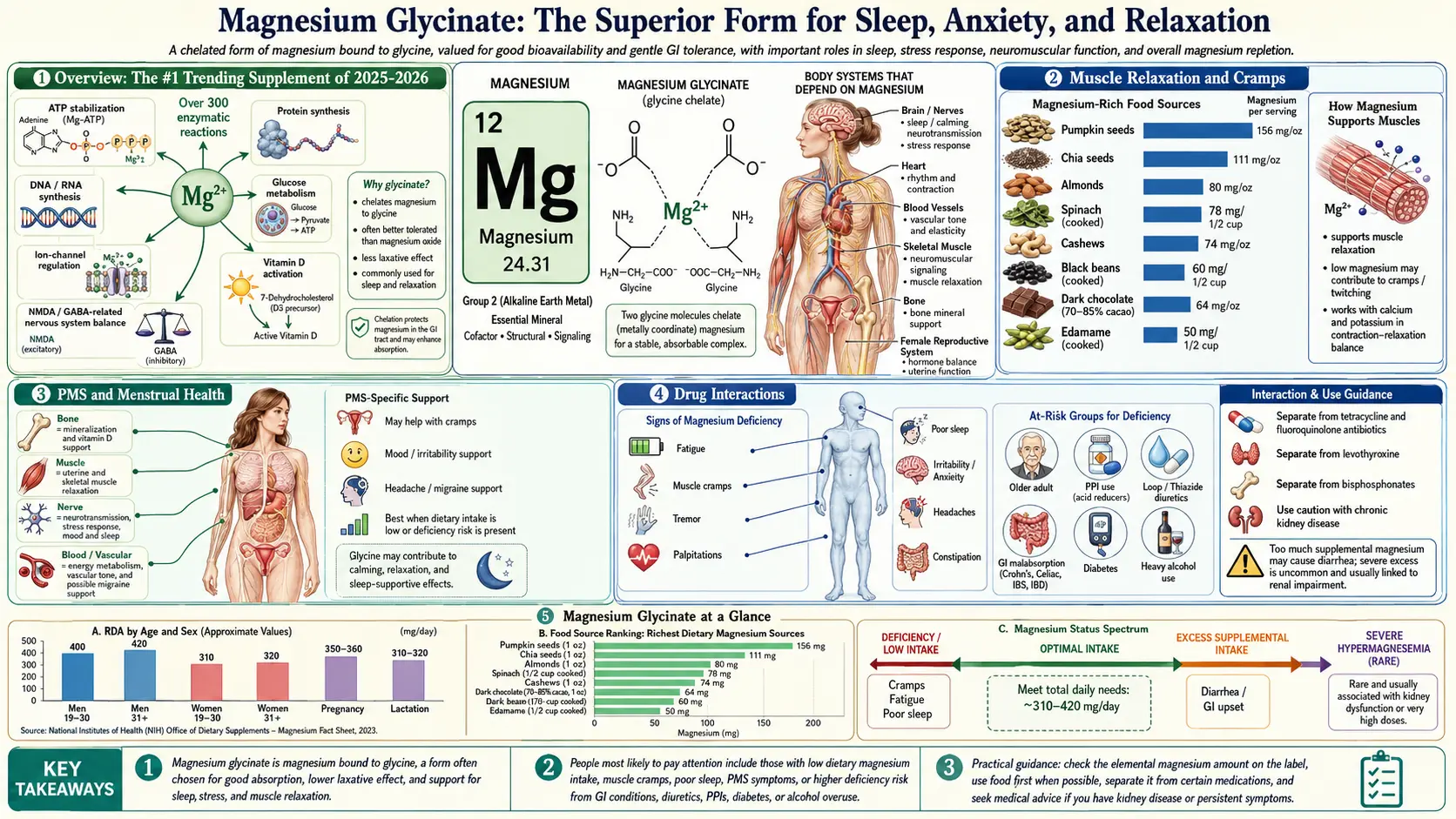
Magnesium Glycinate: Sleep, Anxiety, and Relaxation

Table of Contents
- Overview: What Magnesium Glycinate Is
- How Common Low Magnesium Intake Is
- Magnesium Forms Compared: What Absorption Studies Show
- What Is Claimed for the Glycinate Form
- Sleep Quality and Insomnia
- Anxiety and Stress
- GABA, NMDA and Neurotransmitter Regulation
- Muscle Relaxation and Cramps
- Heart Health and Blood Pressure
- Blood Sugar Regulation and Insulin Sensitivity
- Migraine Prevention
- Bone Health and Mineral Density
- Depression and Mood
- PMS and Menstrual Health
- Nerve Function and Neuropathy
- Glycine's Own Roles: Collagen, Glutathione, and Sleep
- Exercise Performance and Recovery
- Doses Used in Trials and Reference Intakes
- What Labels and Independent Testing Show
- Safety and Side Effects
- Drug Interactions
- Key Research Papers
- Connections
- Featured Videos
Overview: What Magnesium Glycinate Is
Magnesium glycinate (also called magnesium bisglycinate) is a chelated form of magnesium in which the mineral is bound to the amino acid glycine. It is widely sold and widely discussed as a supplement for sleep, stress and muscle relaxation. This page sets out what the research reports about magnesium itself, what is and is not known about the glycinate form specifically, and what glycine on its own has been studied for.
Most of the human trials summarised below gave other forms of magnesium, often magnesium oxide or citrate. Where a trial used magnesium bisglycinate, the page says so. Findings for magnesium in general do not establish that the glycinate form works better than other forms; how the forms compare on absorption is covered on the Magnesium Glycinate Bioavailability page.
Magnesium is the second most abundant cation inside cells after potassium, and a 2015 review describes it as involved in over 600 enzymatic reactions, including energy metabolism and protein synthesis (de Baaij 2015). Glycine, the other half of the compound, is the smallest amino acid and has its own roles in the nervous system and in collagen and glutathione synthesis; those are described in the glycine section below.
How Common Low Magnesium Intake Is
A 2025 review estimates that about 2.4 billion people, roughly 31% of the world's population, fail to meet recommended magnesium intake levels (Zhang 2025). In the United States, a 2012 review reported that almost half (48%) of the population consumed less than the required amount of magnesium from food in 2005-2006, down from 56% in 2001-2002 (Rosanoff 2012). Serum magnesium does not reflect the magnesium inside cells, which makes up more than 99% of total body magnesium, so low status can go undetected by a standard blood test (DiNicolantonio 2018).
The 2025 review lists several contributing factors: modern dietary patterns low in whole grains and vegetables, soil nutrient depletion from intensive agriculture, losses in food processing, ageing populations, chronic diseases and socioeconomic disparities (Zhang 2025). A 2020 modelling study in Plant and Soil estimated how cereal grain processing affects the magnesium supply: at 100% cereal grain processing, dietary magnesium supply was reduced by 56% in 1992 and 51% in 2011, and the authors found noteworthy risks of deficit in populations whose diets involve more than 50% processed cereal grain (Rosanoff and Kumssa 2020).
Certain medicines are known causes of low blood magnesium, including diuretics and proton pump inhibitors (de Baaij 2015). A 2020 review describes a "vicious circle" in which stress increases magnesium loss and low magnesium increases the body's sensitivity to stress (Pickering 2020).
Low magnesium intake and blood levels have been associated in observational research with type 2 diabetes, metabolic syndrome, elevated C-reactive protein, hypertension, atherosclerotic vascular disease, sudden cardiac death, osteoporosis, migraine headache, asthma and colon cancer (Rosanoff 2012). Associations of this kind do not show that magnesium supplements prevent these conditions; the trial evidence for specific outcomes is set out in the sections below.
Magnesium Forms Compared: What Absorption Studies Show
Magnesium supplements differ in how much elemental magnesium they carry and in how well they dissolve. A 2019 study concluded that a supplement's solubility is of greater relevance for absorption than its elemental magnesium loading: inorganic salts such as oxide carry a lot of magnesium but dissolve poorly, while organic salts dissolve well but carry less (Blancquaert 2019).
The human absorption studies measured different things and are not on one scale. In healthy volunteers, magnesium oxide showed relatively poor bioavailability, with a fractional absorption of 4%, while magnesium chloride, lactate and aspartate were significantly and equally better absorbed (Firoz 2001; citrate was not tested). In a 60-day randomised trial in 46 healthy adults comparing an amino-acid chelate, citrate and oxide, both the chelate and citrate gave greater absorption than oxide by 24-hour urinary magnesium, and citrate gave the highest serum magnesium (Walker 2003). In the only isotope trial of magnesium diglycinate against oxide, in 12 patients who had had ileal resections, absorption did not differ overall (23.5% vs 22.8%), and the chelate was better tolerated (Schuette 1994).
Widely circulated single-number absorption percentages for each magnesium form were not found in these studies, and none of them measured magnesium glycinate alongside all the other forms. Magnesium citrate draws water into the intestine and is used as a laxative; magnesium oxide is used as an antacid and laxative. Magnesium L-threonate, malate and taurate are marketed for brain, energy and heart uses respectively; the studies cited on this page did not compare their absorption with glycinate. The studies are described in detail on the Magnesium Glycinate Bioavailability page.
What Is Claimed for the Glycinate Form
Magnesium bisglycinate is one Mg2+ ion bound by two glycine molecules, each forming a ring with the metal. Supplement marketing often claims that this structure protects magnesium from stomach acid, from phytates and oxalates in food and from competition with other minerals, and that the chelate is absorbed intact through amino-acid transporters. The authors of the one human isotope trial concluded that "some portion" of magnesium diglycinate is absorbed intact, probably through a dipeptide transport pathway (Schuette 1994); how large that portion is in people has not been measured. Claims that the chelate is protected from phytates and oxalates, or absorbed equally well regardless of meal composition, were not found in the studies cited here.
On tolerability, the isotope trial found the chelate better tolerated than oxide by all patients (Schuette 1994). Diarrhoea is a known effect of oral magnesium in general, and magnesium citrate and oxide are both used as laxatives.
The glycine in the compound is not inert: glycine acts in both inhibitory and excitatory neurotransmission, through glycine receptors and NMDA receptors (Bannai and Kawai 2012), is a building block of collagen, and is a precursor of glutathione, creatine and haem (Razak 2017; Wang 2013). Whether magnesium and glycine taken together as magnesium glycinate produce a greater effect than either alone has not been tested in the trials cited here. The glycine sleep studies described below used glycine itself, not magnesium glycinate.
Sleep Quality and Insomnia
A 2025 randomised, double-blind, placebo-controlled trial enrolled 155 adults aged 18-65 with self-reported poor sleep and gave magnesium bisglycinate (250 mg elemental magnesium daily, taken as two capsules 30-60 minutes before bedtime) or placebo (Schuster 2025). From baseline to week 4, the Insomnia Severity Index (ISI) fell by 3.9 points with magnesium and 2.3 points with placebo (p = 0.049). The authors described the effect size as small (Cohen's d = 0.2), indicating a modest benefit; no significant differences were seen in other psychological outcomes. Exploratory analyses suggested larger improvements in participants with lower dietary magnesium intake. The trial used questionnaires only, and the authors called for future studies with objective sleep measurements.
An earlier double-blind trial in 46 elderly people with primary insomnia gave 500 mg elemental magnesium a day, as magnesium oxide, or placebo for 8 weeks (Abbasi 2012). Compared with placebo, the magnesium group had a significant decrease in ISI score and sleep onset latency and increases in sleep time and sleep efficiency, together with higher serum melatonin and renin and lower serum cortisol; total sleep time did not differ significantly between groups. The authors describe magnesium as a natural NMDA antagonist and GABA agonist, which is the mechanism usually proposed for its effect on sleep.
Glycine on its own has been studied for sleep in small trials from an amino-acid manufacturer's research group. A review by that group reports that glycine taken before bedtime improved subjective sleep quality in people with insomniac tendencies, and that in rats oral glycine lowered core body temperature with an increase in skin blood flow, a change the authors propose as a mechanism (Bannai and Kawai 2012). In one of their trials, 3 g of glycine before bed reduced next-day fatigue in healthy volunteers after three nights of restricted sleep; in rats, glycine changed neuropeptides in the suprachiasmatic nucleus without altering the circadian clock genes measured (Bannai 2012). These studies tested glycine, not magnesium glycinate.
No trial cited here compared magnesium glycinate with prescription sleep medicines. Insomnia is covered on the Insomnia page linked under Connections.
Anxiety and Stress
A 2017 systematic review of the effects of magnesium supplementation on subjective anxiety and stress included 18 studies, all in groups with an existing vulnerability to anxiety: mildly anxious people, premenstrual syndrome, postpartum women and people with hypertension (Boyle 2017). Four of eight studies in anxious samples, four of seven in premenstrual samples and one of two in hypertensive samples reported positive effects on subjective anxiety; magnesium had no effect on postpartum anxiety, and no study used a validated measure of stress. The authors concluded that the evidence is suggestive of a beneficial effect in anxiety-vulnerable samples but that its quality is poor, and called for well-designed randomised trials. The review did not single out the glycinate form.
Reviews describe the relationship between magnesium and stress as two-way: low magnesium status increases susceptibility to stress, and stress increases magnesium loss (Pickering 2020). The 2020 review states that magnesium plays an inhibitory key role in the regulation of the normal stress response (Pickering 2020), and a 2025 review points to magnesium's influence on glutamate and GABA signalling and on the hypothalamic-pituitary-adrenal (HPA) stress axis (Varga 2025). A 2018 review describes emerging data for a protective effect of magnesium in anxiety (Kirkland 2018). In mice, the anxiolytic-like effect of magnesium in a maze test was blocked by flumazenil, a benzodiazepine-receptor antagonist, which the author took as evidence that benzodiazepine/GABA-A receptors are involved; this is an animal study (Poleszak 2008).
Glycine acts as an inhibitory neurotransmitter through glycine receptors (Bannai and Kawai 2012). No trial cited here tested magnesium glycinate specifically for anxiety. Anxiety disorders are covered on the Anxiety page linked under Connections, and decisions about treatment belong with a clinician.
GABA, NMDA and Neurotransmitter Regulation
Gamma-aminobutyric acid (GABA) is the central nervous system's principal inhibitory neurotransmitter, and glutamate its principal excitatory one. Magnesium's best-known action in this balance is at the NMDA glutamate receptor, which magnesium blocks (Abbasi 2012 describes magnesium as a natural NMDA antagonist). A 2018 review describes magnesium's protective role against excessive excitation that can lead to neuronal cell death (excitotoxicity), and reports strong data for a role of magnesium in migraine and depression and emerging data for chronic pain, anxiety and stroke (Kirkland 2018).
Magnesium is also described as having GABA-agonist activity (Abbasi 2012). The animal evidence for an interaction with GABA-A receptors comes from mouse studies such as the flumazenil experiment described above (Poleszak 2008). How strongly oral magnesium supplements change GABA signalling in people has not been measured in the studies cited here.
Glycine has two roles in this system: it is an inhibitory neurotransmitter at glycine receptors, and it is a co-agonist required for NMDA receptor activation (Bannai and Kawai 2012).
Muscle Relaxation and Cramps
Magnesium is involved in nerve transmission and neuromuscular conduction (Kirkland 2018), and an imbalance in magnesium status, mainly low magnesium, can result in neuromuscular, cardiac or nervous disorders (Jahnen-Dechent 2012).
For the common situation of idiopathic muscle cramps, a 2020 Cochrane review of 11 trials (735 participants) found that, largely in older adults presumed to have nocturnal leg cramps, differences in cramp frequency between magnesium and placebo were small and not statistically significant (Garrison 2020). The reviewers concluded that magnesium supplementation is unlikely to provide clinically meaningful cramp prophylaxis to older adults with skeletal muscle cramps; for pregnancy-associated cramps the evidence was conflicting, and no trials of exercise-associated cramps were found. Oral magnesium was associated mostly with gastrointestinal side effects such as diarrhoea. None of the included trials is reported as using magnesium glycinate.
Claims that magnesium glycinate relieves chronic muscle tension in the neck, shoulders and back within days are made in supplement marketing; no trial testing them was found for this page. Muscle relaxation is covered in more detail on the Benefits pages linked under Connections.
Heart Health and Blood Pressure
A 2024 umbrella meta-analysis pooled ten meta-analyses with 8,610 participants and found that magnesium supplementation reduced systolic blood pressure by 1.25 mmHg and diastolic blood pressure by 1.40 mmHg (Alharran 2024). In subgroup analysis the reduction was larger with doses of 400 mg a day or more (systolic 6.38 mmHg, diastolic 3.71 mmHg); in studies lasting 12 weeks or longer it was 0.42 mmHg systolic and 0.45 mmHg diastolic. A 2016 meta-analysis of 34 double-blind placebo-controlled trials (2,028 participants) found that magnesium at a median dose of 368 mg a day for a median of 3 months reduced systolic blood pressure by 2.00 mmHg and diastolic by 1.78 mmHg, and that 300 mg a day or one month was enough to raise serum magnesium and lower blood pressure (Zhang 2016). The trials in these analyses used various magnesium forms.
Proposed mechanisms include magnesium's effect on vascular smooth muscle and calcium channels and on endothelial function. In people with type 2 diabetes or at risk of it, a 2017 meta-analysis found that magnesium supplementation lowered systolic blood pressure by 3.056 mmHg and improved fasting glucose, HDL, LDL and triglycerides (Verma 2017).
A 2018 review in Open Heart argued that subclinical magnesium deficiency is a principal driver of cardiovascular disease and should be considered a public health crisis (DiNicolantonio 2018); this is the authors' argument in a review, not a trial result. Low magnesium is associated with heart-rhythm disturbances, and magnesium is used in hospitals for some arrhythmias; atrial fibrillation is covered on its own page under Connections.
Blood Sugar Regulation and Insulin Sensitivity
Magnesium is a cofactor for many enzymes in glucose metabolism and is involved in insulin signalling. Low magnesium intake and blood levels have been associated with type 2 diabetes and metabolic syndrome (Rosanoff 2012).
A 2021 meta-analysis of double-blind randomised controlled trials found that, compared with placebo, magnesium supplementation reduced fasting plasma glucose in people with diabetes, and in people at high risk of diabetes improved plasma glucose and 2-hour glucose after an oral glucose tolerance test, along with markers of insulin sensitivity (Veronese 2021). A 2017 meta-analysis reported a reduction in fasting plasma glucose of 4.641 mg/dL with magnesium supplementation, with a more beneficial effect in diabetic subjects with low blood magnesium (Verma 2017). The authors of the 2017 analysis noted that larger trials are needed before robust clinical guidelines can be made.
None of these meta-analyses examined magnesium glycinate separately. Insulin resistance is covered on its own page under Connections.
Migraine Prevention
The 2012 evidence-based guideline of the American Academy of Neurology and the American Headache Society rated magnesium, along with riboflavin and several other treatments, as "probably effective" for episodic migraine prevention (Level B) (Holland 2012).
One of the trials behind that rating gave 81 adults with migraine 600 mg of magnesium a day as trimagnesium dicitrate, or placebo, for 12 weeks (Peikert 1996). In weeks 9-12, attack frequency fell by 41.6% with magnesium and by 15.8% with placebo; the number of migraine days and the use of acute medicines also fell significantly, while the duration and intensity of attacks did not differ significantly. Diarrhoea was reported by 18.6% and gastric irritation by 4.7% of the magnesium group.
A 1998 review states that the available evidence suggests up to 50% of patients during an acute migraine attack have lowered levels of ionized magnesium (Mauskop 1998). A 2022 review describes magnesium deficiency's possible contribution to cortical spreading depression and abnormal glutamate signalling as a likely mechanism, while noting that no reliable publications confirm dietary magnesium deficiency as a cause of migraine attacks; it points to particular interest in migraine with aura (Domitrz 2022). The migraine trials cited here used magnesium citrate forms; no trial of magnesium glycinate for migraine was found for this page.
Bone Health and Mineral Density
A 2012 review states that approximately 50-60% of the body's magnesium resides in bone, as surface substituents of the hydroxyapatite mineral (Jahnen-Dechent 2012).
A 2018 review states that all of the enzymes that metabolise vitamin D seem to require magnesium as a cofactor in the liver and kidneys, so magnesium assists in the activation of vitamin D, which in turn regulates calcium and phosphate balance and bone maintenance (Uwitonze 2018).
Low magnesium intake and blood levels have been associated with osteoporosis in observational research (Rosanoff 2012). No trial of magnesium glycinate for bone density or fractures was found for this page; osteoporosis is covered on its own page under Connections.
Depression and Mood
A 2025 review states that current research suggests magnesium deficiency is associated with the development of depression, through magnesium's influence on glutamate and GABA signalling and on the HPA stress axis, and that magnesium's anti-inflammatory properties may contribute to easing depressive symptoms (Varga 2025). Magnesium acts as an NMDA receptor antagonist (Abbasi 2012), and a 2018 review reports strong data for a role of magnesium in depression (Kirkland 2018).
In a cross-sectional analysis of 8,894 US adults in the National Health and Nutrition Examination Survey, very low magnesium intake was significantly associated with depression after adjustment for confounders (RR 1.16) (Tarleton 2015). The association was seen in adults younger than 65 (RR 1.22), while in older adults low intake appeared protective (RR 0.75), a finding the authors called surprising. A cross-sectional study shows association, not cause.
No trial of magnesium glycinate for depression was found for this page. Depression is covered on its own page under Connections, and decisions about its treatment belong with a clinician.
PMS and Menstrual Health
Several small trials have tested magnesium for premenstrual symptoms, and they used forms other than glycinate. In a randomised, double-blind, placebo-controlled crossover study, 200 mg of magnesium a day as magnesium oxide for two menstrual cycles had no effect in the first month, but in the second month reduced mild premenstrual symptoms of fluid retention (weight gain, swelling of extremities, breast tenderness and abdominal bloating) more than placebo (Walker 1998).
A follow-up crossover study in 44 women found no overall difference between 200 mg magnesium, 50 mg vitamin B6, both together, or placebo for one cycle, but planned comparisons showed a small effect of the magnesium-plus-B6 combination on anxiety-related premenstrual symptoms; the authors stated that further studies are needed before general recommendations can be made (De Souza 2000). An open-label pilot study without a placebo group gave 41 women a modified-release 250 mg magnesium tablet from day 20 of the cycle until menstruation for three cycles, and reported a 35.1% decrease in total PMS score by investigator assessment (Quaranta 2007).
In the 2017 anxiety review, four of seven studies in premenstrual samples reported positive effects of magnesium on subjective anxiety (Boyle 2017). No trial of magnesium glycinate for premenstrual symptoms or menstrual cramps was found for this page.
Nerve Function and Neuropathy
Magnesium is needed for normal nerve and muscle excitability, and low magnesium can result in neuromuscular disorders (Jahnen-Dechent 2012). A 2018 review of magnesium in neurological disorders reports emerging data for a protective effect of magnesium in chronic pain (Kirkland 2018).
Glycine is an inhibitory neurotransmitter acting through glycine receptors (Bannai and Kawai 2012). No trial was found for this page showing that magnesium glycinate, or the glycine it contains, reduces neuropathic pain in people.
Glycine's Own Roles: Collagen, Glutathione, and Sleep
Glycine is the smallest amino acid. It is a building block of collagen, the main structural protein of skin, tendon, cartilage and bone, and it is used to make glutathione, haem, creatine and nucleic acids (Wang 2013; Razak 2017). A 2018 review proposed that dietary glycine can be rate-limiting for glutathione synthesis and called for clinical research on supplemental glycine (McCarty 2018); this is a hypothesis paper, not a trial result. Glycine is also a significant component of bile acids, which are needed for the digestion of dietary fat (Wang 2013).
Glycine's sleep research is described in the sleep section above: small trials from an amino-acid manufacturer's research group reported improved subjective sleep quality with glycine at bedtime, and in one, 3 g before bed reduced next-day fatigue after three nights of restricted sleep (Bannai and Kawai 2012; Bannai 2012). Those trials gave glycine itself; the amount of glycine in a magnesium glycinate supplement depends on the product.
Glycine is involved in NMDA receptor signalling as well as inhibitory glycine receptors (Bannai and Kawai 2012). Reviews describe protective effects of glycine in a range of disease models, much of it animal work (Razak 2017; Wang 2013). Glycine is covered in depth on the Glycine page linked under Connections.
Exercise Performance and Recovery
A 2024 systematic review of magnesium supplementation and muscle soreness screened 960 articles and included 4 studies; these showed that magnesium supplementation reduced muscle soreness, improved performance and recovery and had a protective effect on muscle damage (Tarsitano 2024). The authors concluded that people engaged in intense exercise may have a magnesium requirement 10-20% higher than sedentary people. With only four studies, the evidence base is small, and the review did not examine magnesium glycinate separately.
Magnesium is involved in energy production, and the Mg-ATP complex is the form in which cells use ATP (de Baaij 2015). Exercise-associated muscle cramps were not covered by any trial in the 2020 Cochrane cramp review (Garrison 2020).
Doses Used in Trials and Reference Intakes
The US recommended dietary allowance (RDA) for magnesium is about 420 mg a day for adult men and 320 mg a day for adult women (Zhang 2025). The tolerable upper intake level (UL) for magnesium from supplements, set by the Institute of Medicine (now the National Academy of Medicine), is 350 mg a day for adults; it applies to supplemental magnesium, not to magnesium in food, and in Europe the corresponding figure is 250 mg a day (Blancquaert 2019). The UL is based on diarrhoea as the effect seen at higher supplemental intakes.
Supplement labels in the US state the elemental magnesium content (for example "Magnesium (as magnesium bisglycinate) ... mg"), not the weight of the whole compound. Because glycine makes up most of the weight of magnesium bisglycinate, the compound carries much less magnesium per gram than magnesium oxide, so the elemental figure is the one that matters for comparing products.
Doses used in the trials on this page: 250 mg elemental magnesium as bisglycinate, 30-60 minutes before bedtime, for sleep (Schuster 2025); 500 mg elemental magnesium as oxide for insomnia in elderly people (Abbasi 2012); 600 mg as trimagnesium dicitrate for migraine (Peikert 1996); 200 mg as oxide for premenstrual symptoms (Walker 1998); and a median of 368 mg a day across blood-pressure trials (Zhang 2016). Several of these exceed the UL and were given under trial supervision.
Whether splitting a dose, or taking it with food, changes how much magnesium glycinate is absorbed has not been tested in people in the studies cited here; the share of a magnesium dose that is absorbed falls as the dose rises, as described on the Magnesium Glycinate Bioavailability page. Decisions about supplement doses belong with a clinician.
What Labels and Independent Testing Show
In the US, dietary supplements are not approved by the FDA before they are sold. Some products sold as magnesium glycinate also contain magnesium oxide, often labelled "buffered", and the oxide then appears in the ingredient list. No published analysis of how often products labelled magnesium glycinate contain oxide, or how much, was found for this page.
Several independent programs test or certify supplements: pharmacopeial verification programs, standards-based certification programs (including programs for sport) and retail-testing services. Their scope differs, but they generally check that a product contains the listed ingredients in the listed amounts and that named contaminants such as heavy metals are below set limits. Good Manufacturing Practice (GMP) is a basic regulatory requirement for manufacturing and does not on its own mean that a finished product was independently tested.
Terms such as "fully reacted" and "chelate" describe how an ingredient was made; they are not regulated and are not test results. A batch-specific Certificate of Analysis reports what was measured in one lot. No study cited here links price to chelate content, contaminant levels or absorption. Label terms, testing programs and Certificates of Analysis are described in detail on the Magnesium Glycinate Bioavailability page.
Safety and Side Effects
The most common side effect of oral magnesium is diarrhoea and other gastrointestinal upset. In the 2020 Cochrane cramp review, gastrointestinal adverse events such as diarrhoea were reported by 11% to 37% of participants taking magnesium (versus 10% to 14% on control) (Garrison 2020); in the 600 mg migraine trial, 18.6% reported diarrhoea (Peikert 1996). In the isotope trial, the diglycinate chelate was better tolerated than oxide (Schuette 1994). No large trial measuring side-effect rates specifically for magnesium glycinate was found for this page.
The kidneys excrete excess magnesium, so people with chronic kidney disease or significantly impaired kidney function are at risk of magnesium accumulation (hypermagnesaemia) (Jahnen-Dechent 2012). The review notes that moderately raised serum magnesium may be associated with low blood pressure, flushing, nausea and vomiting, mostly during infusion of magnesium sulphate, and that very high levels can cause profound hypotension and cardiopulmonary arrest.
The tolerable upper intake level of 350 mg a day of supplemental magnesium was set on the basis of diarrhoea. Some trials, such as the migraine trial above, used higher doses under supervision. Magnesium use in pregnancy and with kidney disease involves questions for a clinician.
Drug Interactions
Magnesium, like other multivalent cations, can reduce the absorption of some medicines when taken at the same time. US prescribing information states:
Tetracycline antibiotics (such as doxycycline): absorption is impaired by antacids containing aluminium, calcium or magnesium, according to the doxycycline label. Fluoroquinolone antibiotics: the ciprofloxacin label instructs that it be taken at least 2 hours before or 6 hours after magnesium/aluminium antacids and other products containing multivalent cations. Levothyroxine: the label lists antacids containing aluminium and magnesium hydroxides among products that reduce its absorption, and states that it be taken at least 4 hours before or after such drugs. Bisphosphonates: the alendronate label states that calcium supplements, antacids and oral medicines containing multivalent cations interfere with its absorption, and that it be taken at least 30 minutes before the first food, drink or medicine of the day.
In the other direction, some medicines lower the body's magnesium: diuretics and proton pump inhibitors are among the drugs known to cause hypomagnesaemia (de Baaij 2015). Blood-pressure-lowering medicines and magnesium both lower blood pressure (Alharran 2024). Interactions for a particular medicine are a question for a pharmacist or prescriber.
Key Research Papers
- Schuster J, Cycelskij I, Lopresti A, Hahn A. "Magnesium Bisglycinate Supplementation in Healthy Adults Reporting Poor Sleep: A Randomized, Placebo-Controlled Trial." Nature and Science of Sleep, 2025; 17: 2027-2040. — PubMed PMID: 40918053
- Blancquaert L, Vervaet C, Derave W. "Predicting and Testing Bioavailability of Magnesium Supplements." Nutrients, 2019; 11(7): 1663. — doi:10.3390/nu11071663
- Boyle NB, Lawton C, Dye L. "The Effects of Magnesium Supplementation on Subjective Anxiety and Stress: A Systematic Review." Nutrients, 2017; 9(5): 429. — doi:10.3390/nu9050429
- DiNicolantonio JJ, O'Keefe JH, Wilson W. "Subclinical Magnesium Deficiency: A Principal Driver of Cardiovascular Disease and a Public Health Crisis." Open Heart, 2018; 5(1): e000668. — doi:10.1136/openhrt-2017-000668
- Verma H, Garg R. "Effect of Magnesium Supplementation on Type 2 Diabetes Associated Cardiovascular Risk Factors: A Systematic Review and Meta-Analysis." Journal of Human Nutrition and Dietetics, 2017; 30(5): 621-633. — doi:10.1111/jhn.12454
- Zhang W, Zhao Y. "Global Dietary Magnesium Deficiency: Prevalence, Underlying Causes, Health Consequences, and Strategic Solutions." International Journal of Vitamin and Nutrition Research, 2025; 95(6): 46828. — PubMed PMID: 41504160
- Rosanoff A, Kumssa DB. "Impact of Rising Body Weight and Cereal Grain Food Processing on Human Magnesium Nutrition." Plant and Soil, 2020; 457: 5-23. — doi:10.1007/s11104-020-04483-7
- Pickering G, Mazur A, Trousselard M, et al. "Magnesium Status and Stress: The Vicious Circle Concept Revisited." Nutrients, 2020; 12(12): 3672. — doi:10.3390/nu12123672
- Domitrz I, Cegielska J. "Magnesium as an Important Factor in the Pathogenesis and Treatment of Migraine." Nutrients, 2022; 14(5): 1089. — doi:10.3390/nu14051089
- Holland S, Silberstein SD, Freitag F, et al. "Evidence-Based Guideline Update: NSAIDs and Other Complementary Treatments for Episodic Migraine Prevention in Adults." Neurology, 2012; 78(17): 1346-1353. — doi:10.1212/WNL.0b013e3182535d0c
- Guerrera MP, Volpe SL, Mao JJ. "Therapeutic Uses of Magnesium." American Family Physician, 2009; 80(2): 157-162. — PubMed PMID: 19621856
- Alharran AM, Alzayed MM, Jamilian P, et al. "Impact of Magnesium Supplementation on Blood Pressure: An Umbrella Meta-Analysis of Randomized Controlled Trials." Current Therapeutic Research, Clinical and Experimental, 2024; 101: 100755. — PubMed PMID: 39280209
- Veronese N, Dominguez LJ, Pizzol D, et al. "Oral Magnesium Supplementation for Treating Glucose Metabolism Parameters in People with or at Risk of Diabetes: A Systematic Review and Meta-Analysis of Double-Blind Randomized Controlled Trials." Nutrients, 2021; 13(11): 4074. — doi:10.3390/nu13114074
- Tarleton EK, Littenberg B. "Magnesium Intake and Depression in Adults." Journal of the American Board of Family Medicine, 2015; 28(2): 249-256. — doi:10.3122/jabfm.2015.02.140176
- Quaranta S, et al. "Pilot Study of the Efficacy and Safety of a Modified-Release Magnesium 250 mg Tablet for the Treatment of Premenstrual Syndrome." Clinical Drug Investigation, 2007; 27(1): 51-58. — doi:10.2165/00044011-200727010-00004
- Bannai M, Kawai N. "New Therapeutic Strategy for Amino Acid Medicine: Glycine Improves the Quality of Sleep." Journal of Pharmacological Sciences, 2012; 118(2): 145-148. — doi:10.1254/jphs.11R04FM
- Wang W, et al. "Glycine Metabolism in Animals and Humans: Implications for Nutrition and Health." Amino Acids, 2013; 45(3): 463-477. — doi:10.1007/s00726-013-1493-1
- Razak MA, et al. "Multifarious Beneficial Effect of Nonessential Amino Acid, Glycine: A Review." Oxidative Medicine and Cellular Longevity, 2017; 2017: 1716701. — doi:10.1155/2017/1716701
- Tarsitano MG, Quinzi F, Folino K, et al. "Effects of Magnesium Supplementation on Muscle Soreness in Different Type of Physical Activities: A Systematic Review." Journal of Translational Medicine, 2024; 22: 629. — doi:10.1186/s12967-024-05434-x
- Kirkland AE, Sarlo GL, Holton KF. "The Role of Magnesium in Neurological Disorders." Nutrients, 2018; 10(6): 730. — doi:10.3390/nu10060730
- Varga P, Lehoczki A, Fekete M, et al. "The Role of Magnesium in Depression, Migraine, Alzheimer's Disease, and Cognitive Health: A Comprehensive Review." Nutrients, 2025; 17(13): 2216. — doi:10.3390/nu17132216
- Abbasi B, Kimiagar M, Sadeghniiat K, Shirazi MM, Hedayati M, Rashidkhani B. "The Effect of Magnesium Supplementation on Primary Insomnia in Elderly: A Double-Blind Placebo-Controlled Clinical Trial." Journal of Research in Medical Sciences, 2012; 17(12): 1161-1169. — PubMed PMID: 23853635
- Zhang X, Li Y, Del Gobbo LC, Rosanoff A, Wang J, Zhang W, Song Y. "Effects of Magnesium Supplementation on Blood Pressure: A Meta-Analysis of Randomized Double-Blind Placebo-Controlled Trials." Hypertension, 2016; 68(2): 324-333. — PubMed PMID: 27402922
- Firoz M, Graber M. "Bioavailability of US Commercial Magnesium Preparations." Magnesium Research, 2001; 14(4): 257-262. — PubMed PMID: 11794633
- Walker AF, Marakis G, Christie S, Byng M. "Mg Citrate Found More Bioavailable Than Other Mg Preparations in a Randomised, Double-Blind Study." Magnesium Research, 2003; 16(3): 183-191. — PubMed PMID: 14596323
- Schuette SA, Lashner BA, Janghorbani M. "Bioavailability of Magnesium Diglycinate vs Magnesium Oxide in Patients with Ileal Resection." JPEN Journal of Parenteral and Enteral Nutrition, 1994; 18(5): 430-435. — PubMed PMID: 7815675
- Rosanoff A, Weaver CM, Rude RK. "Suboptimal Magnesium Status in the United States: Are the Health Consequences Underestimated?" Nutrition Reviews, 2012; 70(3): 153-164. — PubMed PMID: 22364157
- de Baaij JH, Hoenderop JG, Bindels RJ. "Magnesium in Man: Implications for Health and Disease." Physiological Reviews, 2015; 95(1): 1-46. — PubMed PMID: 25540137
- Jahnen-Dechent W, Ketteler M. "Magnesium Basics." Clinical Kidney Journal, 2012; 5(Suppl 1): i3-i14. — PubMed PMID: 26069819
- Garrison SR, Korownyk CS, Kolber MR, Allan GM, Musini VM, Sekhon RK, Dugré N. "Magnesium for Skeletal Muscle Cramps." Cochrane Database of Systematic Reviews, 2020; 9: CD009402. — PubMed PMID: 32956536
- Peikert A, Wilimzig C, Köhne-Volland R. "Prophylaxis of Migraine with Oral Magnesium: Results from a Prospective, Multi-Center, Placebo-Controlled and Double-Blind Randomized Study." Cephalalgia, 1996; 16(4): 257-263. — PubMed PMID: 8792038
- Mauskop A, Altura BM. "Role of Magnesium in the Pathogenesis and Treatment of Migraines." Clinical Neuroscience, 1998; 5(1): 24-27. — PubMed PMID: 9523054
- Walker AF, De Souza MC, Vickers MF, Abeyasekera S, Collins ML, Trinca LA. "Magnesium Supplementation Alleviates Premenstrual Symptoms of Fluid Retention." Journal of Women's Health, 1998; 7(9): 1157-1165. — PubMed PMID: 9861593
- De Souza MC, Walker AF, Robinson PA, Bolland K. "A Synergistic Effect of a Daily Supplement for 1 Month of 200 mg Magnesium plus 50 mg Vitamin B6 for the Relief of Anxiety-Related Premenstrual Symptoms: A Randomized, Double-Blind, Crossover Study." Journal of Women's Health and Gender-Based Medicine, 2000; 9(2): 131-139. — PubMed PMID: 10746516
- Uwitonze AM, Razzaque MS. "Role of Magnesium in Vitamin D Activation and Function." Journal of the American Osteopathic Association, 2018; 118(3): 181-189. — PubMed PMID: 29480918
- Bannai M, Kawai N, Ono K, Nakahara K, Murakami N. "The Effects of Glycine on Subjective Daytime Performance in Partially Sleep-Restricted Healthy Volunteers." Frontiers in Neurology, 2012; 3: 61. — PubMed PMID: 22529837
- McCarty MF, O'Keefe JH, DiNicolantonio JJ. "Dietary Glycine Is Rate-Limiting for Glutathione Synthesis and May Have Broad Potential for Health Protection." Ochsner Journal, 2018; 18(1): 81-87. — PubMed PMID: 29559876
- Poleszak E. "Benzodiazepine/GABA(A) Receptors Are Involved in Magnesium-Induced Anxiolytic-Like Behavior in Mice." Pharmacological Reports, 2008; 60(4): 483-489. — PubMed PMID: 18799816
PubMed Topic Searches
Connections
- All Minerals
- Magnesium: The Mineral That Makes ATP Work — interactive animation
- Magnesium Glycinate Benefits Deep Dive
- Magnesium
- Magnesium and Sleep
- Magnesium and Heart Health
- Anxiety
- Depression
- Insomnia
- Migraine
- Glycine
- Tryptophan
- Calcium
- Potassium
- Atrial Fibrillation
- Insulin Resistance
- Osteoporosis
- Fibromyalgia
- Sleep Hygiene
- Stress Management
- Natural Anxiety Relief
- Conditions on this site that reference this page: Fibromyalgia · Nutrient Gaps · Sleep and Non-Restorative Sleep in Fibromyalgia · Magnesium, Riboflavin, and Supplements for Migraine · Diet and Lifestyle Approaches for Endometriosis
Featured Videos