⚠ Evidence warning: Clinical trials or other evidence do not support the claims that magnesium supplements reduce night-time leg cramps and that some forms of magnesium work better for sleep than others. This page keeps it as a report of what people, websites or other media say.
Magnesium for Sleep
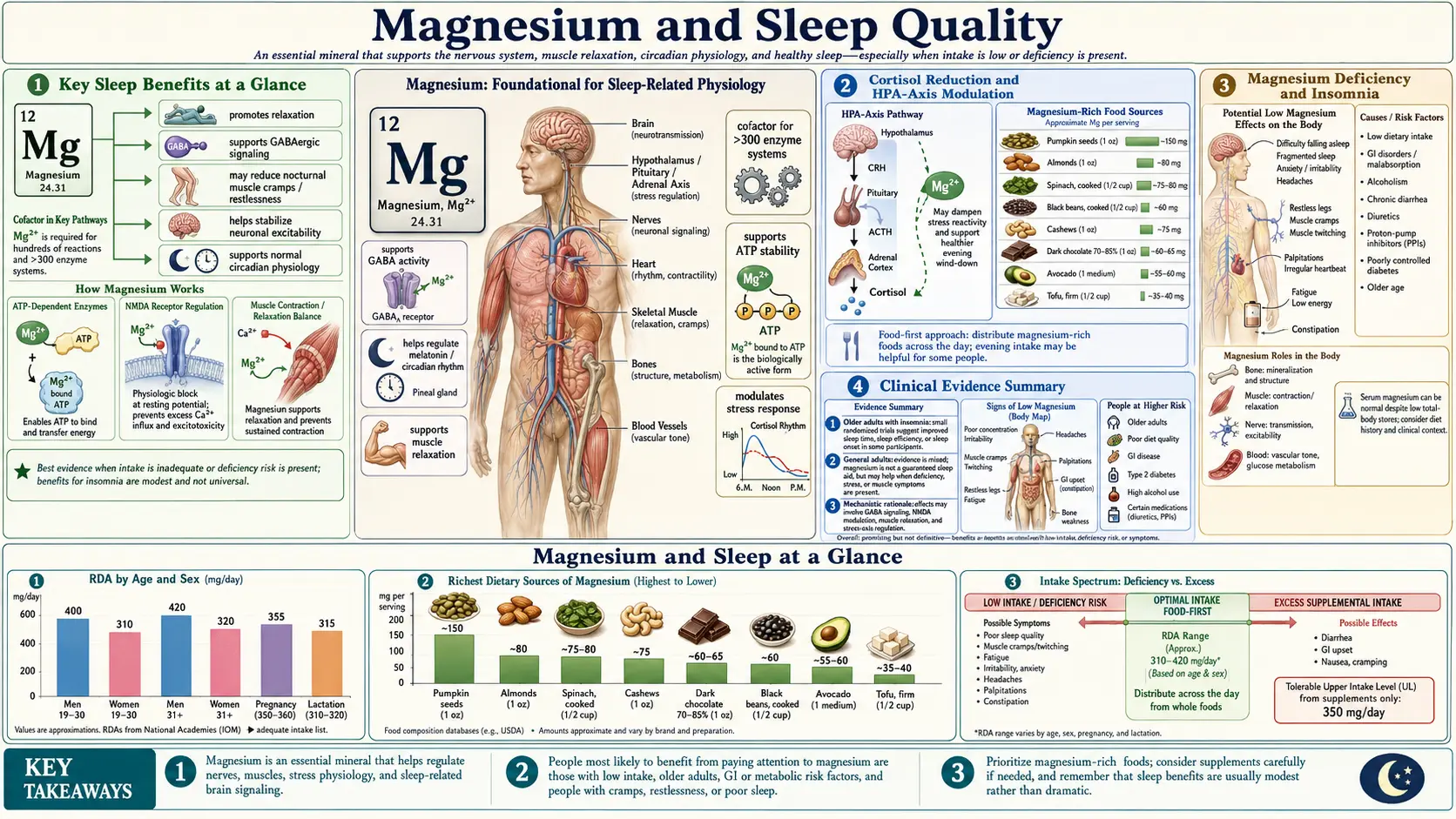
Sleep is one of the most fundamental pillars of health, and magnesium has emerged as one of the most important nutritional factors influencing sleep quality. Research consistently demonstrates that magnesium participates in multiple neurochemical and physiological pathways that govern the onset, depth, and duration of sleep — most directly through gamma-aminobutyric acid (GABA) receptor activation, N-methyl-D-aspartate (NMDA) receptor blockade, hypothalamic-pituitary-adrenal-axis cortisol regulation, and support of the tryptophan→serotonin→melatonin pathway. A 2012 clinical trial in older adults with primary insomnia found that 500 mg/day of oral magnesium for 8 weeks significantly shortened sleep onset latency, increased sleep efficiency, and raised serum melatonin while lowering cortisol. This article examines the mechanisms by which magnesium supports healthy sleep, the consequences of deficiency, the most effective supplemental forms, practical dosing and timing, drug interactions, and the landmark research papers that underpin these claims.
Interactive Visualization Magnesium — the mineral that makes adenosine triphosphate (ATP) work Bare adenosine triphosphate is useless and enzymes reject it. Watch magnesium clamp the phosphates and switch it on, plug the N-methyl-D-aspartate channel, and let a cramping muscle finally let go. Launch →Table of Contents
- Key Sleep Benefits at a Glance
- How Magnesium Affects Sleep: Mechanism Overview
- Gamma-Aminobutyric Acid Receptor Activation
- N-Methyl-D-Aspartate Receptor Blockade
- Melatonin and Circadian Regulation
- Cortisol Reduction and Hypothalamic-Pituitary-Adrenal-Axis Modulation
- Nervous System Calming and Parasympathetic Tone
- Muscle Relaxation and Nocturnal Cramps
- Sleep Architecture — Slow-Wave and REM Effects
- Magnesium Deficiency and Insomnia
- Best Forms of Magnesium for Sleep
- Dosing, Timing, and Cofactor Stacking
- Who Uses Magnesium for Sleep
- Drug Interactions and Safety
- Clinical Evidence Summary
- Key Research Papers
- Connections
- Featured Videos
Key Sleep Benefits at a Glance
The following is a high-level summary of the evidence-backed sleep benefits of adequate magnesium status. Each is explored in more depth below, and every supporting study is linked in the Key Research Papers section.
- Shorter sleep onset latency – In a double-blind placebo-controlled trial of elderly adults with primary insomnia (Abbasi et al., 2012), 500 mg of elemental magnesium daily for 8 weeks significantly reduced the time to fall asleep.
- Better sleep efficiency – The same 2012 trial reported significant increases in sleep time and sleep efficiency, measured by questionnaire and sleep log; total sleep time did not differ significantly from placebo (P = 0.37).
- Faster sleep onset in pooled trials – A 2021 systematic review (Mah & Pitre) found 3 randomized trials in 151 older adults: on magnesium, people fell asleep about 17 minutes sooner than on placebo, while the gain in total sleep time was not statistically significant; the authors rated the evidence low to very low quality.
- Reduced nighttime cortisol – Magnesium supplementation has been shown to lower serum cortisol, particularly the elevated nighttime cortisol that drives sleep-onset insomnia in chronically stressed individuals.
- Elevated endogenous melatonin – Clinical trials have shown that magnesium supplementation raises serum melatonin, supporting circadian signaling.
- Fewer nocturnal leg cramps – Magnesium has a long history of use for the nighttime leg cramps that fragment sleep, especially in pregnancy and older age.
- Relief for some restless legs syndrome – Clinical data (Hornyak et al., 1998) suggest magnesium therapy reduces periodic limb movements and improves sleep efficiency in patients with mild-to-moderate RLS/PLMS-related insomnia.
- Less bruxism-related sleep fragmentation – Magnesium’s muscle-relaxing effects may reduce nocturnal teeth grinding that disrupts sleep continuity.
- Reduced anxiety at bedtime – A 2017 systematic review (Boyle, Lawton & Dye) linked magnesium supplementation with reductions in subjective anxiety that commonly block sleep onset.
- Improved slow-wave sleep – electroencephalogram-based work has suggested that adequate magnesium status supports deeper NREM (N3) slow-wave sleep, the most physically restorative stage.
How Magnesium Affects Sleep: Mechanism Overview
Magnesium influences sleep through a network of interconnected biochemical and neurological pathways. Understanding these mechanisms clarifies why magnesium deficiency so frequently manifests first as sleep disturbance — before overt muscular, cardiovascular, or mood symptoms appear.
At the neurochemical level, magnesium simultaneously (1) potentiates the brain’s primary inhibitory receptor (gamma-aminobutyric acid-A), (2) blocks the brain’s primary excitatory receptor (N-methyl-D-aspartate) in a voltage-dependent manner, (3) supports the tryptophan→serotonin→melatonin synthesis pathway, (4) dampens the hypothalamic-pituitary-adrenal (HPA) stress axis, and (5) relaxes skeletal and smooth muscle. The result is a layered, physiologic calming effect — chemically distinct from but functionally analogous to the action of benzodiazepines, antihistamines, and melatonin, without their dependence or receptor-desensitization profile.
Gamma-Aminobutyric Acid Receptor Activation
Gamma-aminobutyric acid (GABA) is the primary inhibitory neurotransmitter in the central nervous system. Its role is to reduce neuronal excitability, promote relaxation, and prepare the brain for sleep.
- Direct gamma-aminobutyric acid-A Receptor Binding – Magnesium binds to gamma-aminobutyric acid-A receptors and enhances their sensitivity to gamma-aminobutyric acid. This potentiates the inhibitory effect of gamma-aminobutyric acid, increasing chloride ion flow into neurons and reducing their firing rate. The result is a calming effect on brain activity that facilitates sleep onset.
- Gamma-aminobutyric acid Synthesis Support – Magnesium is involved in the enzymatic conversion of glutamate (an excitatory neurotransmitter) to gamma-aminobutyric acid via the enzyme glutamic acid decarboxylase (GAD). Adequate magnesium ensures efficient gamma-aminobutyric acid production, maintaining the brain’s excitatory-inhibitory balance.
- Reduced Glutamate Excitotoxicity – By blocking N-methyl-D-aspartate receptors (which respond to glutamate), magnesium prevents excessive excitatory signaling that would otherwise keep the brain in a state of heightened alertness incompatible with sleep.
- Benzodiazepine-Like Action – The mechanism by which magnesium enhances gamma-aminobutyric acid receptor function is pharmacologically similar to the mechanism of benzodiazepine medications (such as diazepam), though magnesium’s effect is gentler and does not carry the same risks of dependence or tolerance.
N-Methyl-D-Aspartate Receptor Blockade
Along with gamma-aminobutyric acid activation, voltage-dependent blockade of the N-methyl-D-aspartate (NMDA) glutamate receptor is one of magnesium’s signature central-nervous-system effects and is arguably the most important for sleep.
- Voltage-Dependent Plug – At resting membrane potential, magnesium ions physically occupy the N-methyl-D-aspartate receptor channel, preventing calcium influx. Only when a neuron is already strongly depolarized does the magnesium ion leave the pore, allowing N-methyl-D-aspartate activation. This makes magnesium the body’s endogenous gatekeeper of excitatory glutamatergic tone.
- Anti-Hyperarousal – The hyperarousal state characteristic of primary insomnia involves excessive cortical glutamate activity. Adequate magnesium restores the normal N-methyl-D-aspartate-blockade threshold, quieting background excitatory activity.
- Anxiolytic Crossover – N-methyl-D-aspartate antagonism is the same pharmacological axis exploited by ketamine for rapid antidepressant effects, though magnesium’s action is physiologic and non-psychoactive at nutritional doses.
- Neuroprotection – The same mechanism prevents glutamate-mediated excitotoxicity associated with stress-induced neuronal injury, linking adequate sleep to longer-term brain resilience.
Melatonin and Circadian Regulation
Melatonin is the hormone primarily responsible for regulating the circadian rhythm and signaling the body to prepare for sleep.
- Pineal Gland Function – The pineal gland, which produces melatonin, requires magnesium for optimal function. Magnesium influences the activity of N-acetyltransferase and hydroxyindole-O-methyltransferase (HIOMT), two key enzymes in the melatonin synthesis pathway.
- Tryptophan-Serotonin-Melatonin Pathway – Melatonin is synthesized from serotonin, which itself is produced from the amino acid tryptophan. The enzyme that turns tryptophan into 5-hydroxytryptophan (5-HTP), tryptophan hydroxylase, needs oxygen, iron and tetrahydrobiopterin (BH4) as its cofactors (Martínez 2001) — magnesium is not one of them. The idea that magnesium supports this pathway and, through it, melatonin production is a common claim in supplement writing rather than a measured cofactor role.
- Circadian Rhythm Synchronization – Research has shown that magnesium supplementation can help normalize disrupted circadian rhythms, particularly in shift workers and individuals with irregular sleep schedules. This is partly mediated through its effects on melatonin timing and amplitude.
- Interaction with Light Sensitivity – Magnesium may influence the sensitivity of retinal ganglion cells that detect light and transmit signals to the suprachiasmatic nucleus (the brain’s master clock), helping to calibrate the circadian system.
- Clinical Support – A 2011 trial by Rondanelli and colleagues (J Am Geriatr Soc) combining magnesium, melatonin, and zinc in long-term-care residents significantly improved sleep quality and daytime alertness compared with placebo.
Cortisol Reduction and Hypothalamic-Pituitary-Adrenal-Axis Modulation
Cortisol, the body’s primary stress hormone, has a profound impact on sleep architecture. Elevated cortisol, particularly in the evening and nighttime hours, is a common cause of insomnia.
- Hypothalamic-pituitary-adrenal Axis Regulation – Magnesium modulates the hypothalamic-pituitary-adrenal (HPA) axis, which controls cortisol release. Adequate magnesium dampens the stress response and prevents excessive cortisol secretion, particularly the inappropriate nighttime cortisol elevations seen in chronic stress.
- Cortisol Awakening Response – Magnesium helps normalize the cortisol awakening response (CAR), the natural spike in cortisol that occurs upon waking. When the CAR is dysregulated, individuals may experience early morning awakening or difficulty achieving deep sleep in the early morning hours.
- Adrenal Support – Chronic magnesium deficiency places additional stress on the adrenal glands, which can lead to a pattern of sustained cortisol elevation followed by eventual adrenal fatigue. Restoring magnesium levels helps break this cycle.
- Sympathetic Nervous System – Magnesium reduces sympathetic nervous system activation (the “fight or flight” response), lowering levels of norepinephrine and epinephrine in addition to cortisol. This comprehensive reduction in stress hormones creates a physiological state conducive to sleep.
- Clinical Evidence – The Abbasi et al. 2012 trial directly documented a statistically significant reduction in serum cortisol alongside sleep improvements.
Nervous System Calming and Parasympathetic Tone
- N-methyl-D-aspartate Receptor Blockade – As a voltage-dependent blocker of N-methyl-D-aspartate receptors, magnesium prevents excessive calcium influx into neurons triggered by glutamate. This is one of the most important mechanisms by which magnesium calms the nervous system and reduces the hyperarousal state that prevents sleep.
- Parasympathetic Activation – Magnesium promotes the activity of the parasympathetic nervous system (the “rest and digest” division), shifting the autonomic balance away from the sympathetic (fight or flight) state. Heart rate variability (HRV) studies show that magnesium supplementation increases parasympathetic tone — a biomarker consistently linked with faster sleep onset and better sleep continuity.
- Reduction of Neuronal Firing Rate – By stabilizing neuronal membranes and regulating ion channel activity, magnesium reduces the overall rate of neuronal firing in the brain, creating the quieter neural environment necessary for sleep onset.
- Anxiety Reduction – Sleep-onset insomnia is frequently driven by anxiety and rumination. Magnesium’s combined effects on gamma-aminobutyric acid receptors, N-methyl-D-aspartate receptors, and the hypothalamic-pituitary-adrenal axis make it an effective anxiolytic that addresses one of the most common psychological barriers to sleep.
Muscle Relaxation and Nocturnal Cramps
- Skeletal Muscle Relaxation – Magnesium competes with calcium at neuromuscular junctions and muscle fiber binding sites, promoting the relaxation phase of the contraction-relaxation cycle. Physical tension in muscles is a significant barrier to comfortable sleep.
- Nocturnal Leg Cramps – Nighttime leg cramps are a common cause of sleep disruption, particularly in older adults and pregnant women. Magnesium is widely taken for these cramps, and many people report fewer and milder cramps with it. Magnesium supplementation has been shown to reduce the frequency and severity of these cramps, though effect sizes are largest in those with demonstrable deficiency. A 2020 Cochrane review of 11 trials found it unlikely to give clinically meaningful cramp prevention in older adults, and found the pregnancy studies conflicting.
- Restless Leg Syndrome (RLS) – A 1998 open-label trial by Hornyak and colleagues (Sleep) reported that oral magnesium improved sleep efficiency and reduced periodic limb movement-related arousals in patients with mild-to-moderate RLS/PLMS, making it one of the earliest nutritional interventions formally studied for the condition.
- Bruxism (Teeth Grinding) – Nocturnal bruxism, or teeth grinding during sleep, involves involuntary jaw muscle contraction and can significantly fragment sleep. Magnesium’s muscle-relaxing properties may help reduce bruxism severity.
- Smooth Muscle Relaxation – Magnesium relaxes smooth muscle in the airways and digestive tract, reducing nighttime symptoms of asthma and gastrointestinal discomfort that can interfere with sleep continuity.
Sleep Architecture — Slow-Wave and REM Effects
Sleep is not monolithic — it cycles through four stages (N1, N2, N3, REM), each with distinct functional value. Magnesium status appears to influence how much of the night is spent in each stage, with the strongest effect on deep, slow-wave sleep.
- Slow-Wave Sleep (N3) – N3 sleep, characterized by high-amplitude delta waves on electroencephalogram (EEG), is when growth hormone is secreted, glymphatic clearance of neural waste products peaks, and the most restorative physical recovery occurs. Magnesium-deficient rodents show reduced delta-wave activity, and supplementation studies in humans suggest modest increases in slow-wave proportion.
- REM Sleep – Rapid-eye-movement (REM) sleep consolidates emotional memory and supports procedural learning. Magnesium’s role in REM is less well studied but is believed to be indirect, mediated through hypothalamic-pituitary-adrenal-axis calming and stable sleep architecture.
- Sleep Efficiency – Defined as the proportion of time in bed actually spent asleep, sleep efficiency is the most clinically robust endpoint in magnesium sleep trials. The Abbasi 2012 trial documented a 6–7% absolute improvement in sleep efficiency over placebo — a clinically meaningful difference in geriatric insomnia.
- Nocturnal Awakenings – Magnesium supplementation has been associated with fewer wake-after-sleep-onset (WASO) episodes, likely through a combination of muscle relaxation, cortisol dampening, and reduced nocturnal sympathetic surges.
Magnesium Deficiency and Insomnia
The relationship between magnesium deficiency and sleep disturbance is well-documented and clinically significant.
- Prevalence of Deficiency – Population studies estimate that 48–60% of adults in developed countries do not consume adequate magnesium. Subclinical deficiency (insufficient for optimal function but not severe enough to cause overt symptoms) is even more common and frequently manifests as poor sleep quality before other symptoms appear.
- Sleep Architecture Changes – Magnesium deficiency has been associated with reduced slow-wave sleep (deep sleep, stage N3), which is the most restorative phase of sleep. Deficient individuals may spend more time in lighter sleep stages and experience more frequent awakenings.
- Sleep Onset Latency – Individuals with low magnesium levels often take longer to fall asleep (increased sleep onset latency), which is consistent with the hyperarousal state caused by reduced gamma-aminobutyric acid function and increased glutamate activity.
- Early Morning Awakening – Magnesium deficiency can cause premature waking in the early morning hours, often accompanied by difficulty returning to sleep. This pattern is linked to dysregulated cortisol and melatonin rhythms.
- Populations at Risk – Older adults, individuals with type 2 diabetes, those taking proton pump inhibitors (PPIs) or diuretics, people with gastrointestinal disorders (Crohn’s disease, celiac disease), heavy alcohol users, and individuals under chronic stress are particularly susceptible to magnesium deficiency and its associated sleep problems.
- Bidirectional Relationship – Poor sleep itself increases magnesium excretion through the kidneys, creating a vicious cycle where sleep deprivation worsens magnesium status, which in turn further degrades sleep quality.
- Why Serum Tests Underdiagnose – Only ~1% of body magnesium is in serum; homeostatic mechanisms defend serum levels even as cellular stores deplete. RBC magnesium, ionized magnesium, or a 24-hour urinary magnesium-loading test are more sensitive indicators of whole-body status.
Best Forms of Magnesium for Sleep
Not all forms of magnesium are equally effective for improving sleep. The forms below are the ones practitioners and supplement users most often describe for sleep, based on absorption, the companion molecule and reported experience. The main 2012 sleep trial itself used magnesium oxide.
Magnesium Glycinate
- Composition – Magnesium bound to glycine, an inhibitory amino acid that itself has calming and sleep-promoting properties.
- Dual Mechanism – Provides both the sleep benefits of magnesium and the independent calming effects of glycine. Glycine acts on N-methyl-D-aspartate receptors in the suprachiasmatic nucleus and lowers core body temperature, both of which promote sleep.
- High Bioavailability – Chelated forms like glycinate are well-absorbed in the intestines and have minimal laxative effect, making them suitable for daily use.
- Clinical Support – Studies on glycine supplementation alone (3 g before bedtime, e.g., Bannai & Kawai 2012) have shown improvements in subjective sleep quality and reduced daytime sleepiness. When combined with magnesium, the effects may be synergistic.
- Commonly Used Dose for Sleep – Typically 200–400 mg of elemental magnesium (as glycinate) taken 30–60 minutes before bedtime. See Magnesium Glycinate for a deeper discussion.
Magnesium L-Threonate
- Composition – Magnesium bound to L-threonic acid, a metabolite of vitamin C.
- Blood-Brain Barrier Penetration – Magnesium L-threonate is unique in its demonstrated ability to cross the blood-brain barrier and increase magnesium concentrations in the cerebrospinal fluid. This direct elevation of brain magnesium levels may make it particularly effective for sleep-related neurological functions.
- Synaptic Plasticity – Research by Slutsky et al. (Neuron, 2010) found that magnesium threonate increased synaptic density and plasticity in the hippocampus (the DG and CA1 regions) of rats, which may contribute to improved sleep architecture and cognitive function.
- Clinical Research – Early human trials suggest that magnesium threonate improves sleep quality and subjective cognitive function, particularly in individuals with age-related sleep decline.
- Commonly Used Dose for Sleep – Typically 1,500–2,000 mg of magnesium threonate (providing approximately 144 mg of elemental magnesium) taken in the evening.
Other Forms Worth Considering
- Magnesium Taurate – Taurine has independent GABAergic and glycine receptor activity, making this form a reasonable option for sleep support, particularly in individuals who also have cardiovascular concerns.
- Magnesium Citrate – Well-absorbed and widely available, though its mild laxative effect may be undesirable for some individuals when taken at bedtime.
- Magnesium Chloride (Topical) – Applied to the skin as “magnesium oil” or in bath salts (Epsom salt is magnesium sulfate). Some individuals report relaxation and sleep improvement from topical application, though evidence for significant transdermal absorption is limited.
- Magnesium Oxide – The main 2012 sleep trial (Abbasi) used magnesium oxide tablets twice a day, each giving 250 mg of elemental magnesium. Magnesium oxide is often described as poorly absorbed (a figure of about 4% is commonly quoted) and more likely to cause loose stools, which is why practitioners often prefer other forms for sleep.
Dosing, Timing, and Cofactor Stacking
- Dose Range – Most sleep trials use 200–500 mg of elemental magnesium daily, and people commonly start at 200 mg and increase according to tolerance. For comparison, the Institute of Medicine’s 1997 Tolerable Upper Intake Level for adults is 350 mg a day of magnesium from supplements and medicines (food and water are not counted); it is based on diarrhea, which the report treats as the most sensitive sign of too much non-food magnesium.
- Timing – Magnesium for sleep is commonly taken 30–60 minutes before bedtime, aiming at sleep onset.
- Split Dosing – For daily totals above 300 mg, splitting into a lunchtime and bedtime dose improves absorption and reduces any gastrointestinal (GI) side effects.
- Consistency – The sleep benefits of magnesium are cumulative and may take 1–4 weeks of consistent supplementation to become fully apparent. A single night says little about whether it works.
- Food Pairing – Magnesium is absorbed both with and without food, but taking it with a small protein-containing snack (e.g., yogurt, nuts) can reduce the risk of nausea.
- Dietary Foundation – In addition to supplementation, increasing dietary magnesium through pumpkin seeds, spinach, almonds, cashews, black beans, and dark chocolate consumed earlier in the day supports overall magnesium status.
- Cofactors That Help
- Vitamin B6 – Supports the conversion of tryptophan to serotonin and subsequently melatonin; also aids intracellular magnesium retention.
- Glycine – 3 g of free glycine or magnesium glycinate reinforces the same calming pathway.
- L-Theanine – 200 mg of the tea-derived amino acid pairs well with magnesium for pre-sleep relaxation.
- Vitamin D – Magnesium is required to activate 25-hydroxyvitamin D; maintaining both status improves overall sleep-hormone signaling.
- Melatonin (low dose) – 0.3–1 mg of melatonin combined with magnesium can help circadian timing without leaving morning grogginess; higher doses (5–10 mg) are usually unnecessary.
Who Uses Magnesium for Sleep
- Older adults with primary insomnia – Most of the sleep trials cited on this page are in this population; reported benefits include shorter sleep onset and improved sleep efficiency, while total sleep time did not differ significantly from placebo in the 2012 trial or the 2021 review.
- High-stress professionals and caregivers – Chronic hypothalamic-pituitary-adrenal-axis activation depletes magnesium; repletion restores stress reactivity and sleep continuity.
- Pregnant women with leg cramps – Magnesium is commonly taken for the nighttime leg cramps that break up third-trimester sleep, and some women report fewer cramps; the 2020 Cochrane review found the pregnancy trials conflicting and all at high risk of bias.
- Athletes in heavy training blocks – Sweat losses combined with high demand increase magnesium requirements, with recovery sleep quality among the first things to decline.
- People on chronic proton pump inhibitors or diuretics – Both drug classes can lower magnesium. The omeprazole (a proton pump inhibitor) drug label reports low blood magnesium (hypomagnesemia) in people taking these drugs for at least three months, most often after a year, with serious reactions including tetany (severe muscle spasms), irregular heartbeat and seizures; in most cases treatment needed magnesium replacement and stopping the drug. The same label names diuretics among drugs that may cause low magnesium.
- Individuals with perimenopausal and menopausal sleep disruption – Hot flashes, anxiety, and early morning waking often improve with bedtime magnesium.
- Migraine sufferers with sleep-onset difficulty – Magnesium prophylaxis doses for migraine (400–600 mg, above the 350 mg/day supplement Upper Intake Level described below) are reported by some users to improve sleep as well.
Drug Interactions and Safety
- Tolerable Upper Intake Level (UL) – 350 mg/day from supplements for adults. This does not include food magnesium, which is excreted readily in healthy kidneys.
- Common Side Effect – Loose stools are the main signal that you’ve exceeded what your gut can absorb. Switching from citrate or oxide to glycinate or threonate typically resolves this.
- Kidney Disease – Weak kidneys clear magnesium poorly. The Institute of Medicine’s 1997 report states that high blood magnesium (hypermagnesemia) occurs in people with impaired kidney function, most often when it is combined with non-food magnesium such as antacids, and can cause serious nerve and heart symptoms.
- Sedatives and central nervous system (CNS) Depressants – Magnesium’s calming actions raise a theoretical concern of added drowsiness with benzodiazepines, opioids, and alcohol.
- Quinolone/Tetracycline Antibiotics – Magnesium forms insoluble chelates with these antibiotics and lowers their absorption; the ciprofloxacin label says ciprofloxacin is taken at least 2 hours before or 6 hours after magnesium-containing products.
- Bisphosphonates and Levothyroxine – Magnesium can reduce absorption; separate by at least 2 hours (4 hours for levothyroxine).
- Proton Pump Inhibitors – Long-term proton pump inhibitor (PPI) use (>1 year) itself depletes magnesium (U.S. Food and Drug Administration (FDA) Safety Communication, 2011); the omeprazole label states that in most such patients, treatment required magnesium replacement and stopping the proton pump inhibitor.
- Diuretics – Loop and thiazide diuretics increase urinary magnesium loss; potassium-sparing diuretics may raise serum magnesium.
Clinical Evidence Summary
- Randomized Controlled Trials – Abbasi et al. (2012, J Res Med Sci) conducted the most frequently cited randomized controlled trial (RCT): 46 elderly adults with primary insomnia randomized to 500 mg elemental magnesium daily (as magnesium oxide) vs. placebo for 8 weeks. The magnesium group showed statistically significant improvements in Insomnia Severity Index, sleep efficiency, sleep time, and sleep onset latency, alongside decreased cortisol and increased melatonin; total sleep time did not differ significantly.
- Combination Trials – Rondanelli et al. (2011, JAGS) tested a magnesium + melatonin + zinc combination in long-term-care residents and found superior improvements in sleep quality and daytime alertness vs. placebo.
- Systematic Reviews – A 2021 systematic review and meta-analysis of oral magnesium for insomnia in older adults (Mah & Pitre) found 3 randomized trials with 151 participants. Pooled, sleep onset was 17 minutes shorter on magnesium than on placebo; total sleep time was not significantly different; all trials were at moderate-to-high risk of bias and the evidence was rated low to very low quality.
- Anxiety as Mediating Mechanism – Boyle, Lawton & Dye (2017, Nutrients) reviewed 18 studies of magnesium and anxiety, concluding that magnesium is associated with reduced subjective anxiety — one of the strongest psychological barriers to sleep onset.
- Restless Legs and PLMS – Hornyak et al. (1998, Sleep) reported improved sleep efficiency and reduced periodic limb movements in mild-to-moderate RLS/PLMS patients treated with magnesium.
- Observational Data – Large population-based studies, including NHANES analyses, have found that individuals with the lowest magnesium intake have significantly higher odds of reporting short sleep duration (<7 hours/night) and poor subjective sleep quality.
- Electroencephalogram Support – Sleep electroencephalogram studies have documented that magnesium supplementation increases slow-wave (delta) activity during NREM sleep, indicating deeper and more physiologically restorative sleep patterns.
This content is provided for informational purposes only and does not constitute medical advice. Impaired kidney function lets magnesium build up to dangerous levels: the Institute of Medicine’s 1997 report links high blood magnesium mainly to weak kidneys combined with non-food magnesium. With sedative medications, muscle relaxants, or other central nervous system depressants, extra drowsiness is a theoretical concern.
Key Research Papers
The following are landmark and frequently cited research papers underpinning the claims on this page. Links resolve to the publisher DOI or PubMed record.
Primary Clinical Trials — Magnesium and Sleep
- Abbasi B, Kimiagar M, Sadeghniiat K, Shirazi MM, Hedayati M, Rashidkhani B. The effect of magnesium supplementation on primary insomnia in elderly: a double-blind placebo-controlled clinical trial. Journal of Research in Medical Sciences. 2012;17(12):1161-1169. — PubMed PMID: 23853635
- Rondanelli M, Opizzi A, Monteferrario F, Antoniello N, Manni R, Klersy C. The effect of melatonin, magnesium, and zinc on primary insomnia in long-term care facility residents in Italy: a double-blind, placebo-controlled clinical trial. Journal of the American Geriatrics Society. 2011;59(1):82-90. — doi:10.1111/j.1532-5415.2010.03232.x
- Hornyak M, Voderholzer U, Hohagen F, Berger M, Riemann D. Magnesium therapy for periodic leg movements-related insomnia and restless legs syndrome: an open pilot study. Sleep. 1998;21(5):501-505. — doi:10.1093/sleep/21.5.501
Systematic Reviews and Meta-Analyses
- Mah J, Pitre T. Oral magnesium supplementation for insomnia in older adults: a systematic review and meta-analysis. BMC Complementary Medicine and Therapies. 2021. — PubMed PMID: 33865376 (PubMed topic search)
- Boyle NB, Lawton C, Dye L. The effects of magnesium supplementation on subjective anxiety and stress — a systematic review. Nutrients. 2017;9(5):429. — doi:10.3390/nu9050429
- Garrison SR, Korownyk CS, Kolber MR, Allan GM, Musini VM, Sekhon RK, Dugré N. Magnesium for skeletal muscle cramps. Cochrane Database of Systematic Reviews. 2020;9(9):CD009402. — PubMed PMID: 32956536
Mechanism Reviews
- de Baaij JH, Hoenderop JG, Bindels RJ. Magnesium in man: implications for health and disease. Physiological Reviews. 2015;95(1):1-46. — doi:10.1152/physrev.00012.2014
- Rosanoff A, Weaver CM, Rude RK. Suboptimal magnesium status in the United States: are the health consequences underestimated? Nutrition Reviews. 2012;70(3):153-164. — doi:10.1111/j.1753-4887.2011.00465.x
Brain Magnesium and Synaptic Plasticity
- Slutsky I, Abumaria N, Wu LJ, et al. Enhancement of learning and memory by elevating brain magnesium. Neuron. 2010;65(2):165-177. — doi:10.1016/j.neuron.2009.12.026
Supporting Amino-Acid / Cofactor Evidence
- Bannai M, Kawai N. New therapeutic strategy for amino acid medicine: glycine improves the quality of sleep. Journal of Pharmacological Sciences. 2012;118(2):145-148. — doi:10.1254/jphs.11R04FM
- Martínez A, Knappskog PM, Haavik J. A structural approach into human tryptophan hydroxylase and its implications for the regulation of serotonin biosynthesis. Current Medicinal Chemistry. 2001;8(9):1077-1091. — PubMed PMID: 11472242
External Authoritative Resources
- Institute of Medicine. Dietary Reference Intakes for Calcium, Phosphorus, Magnesium, Vitamin D, and Fluoride. Washington, DC: The National Academies Press; 1997. (Magnesium Tolerable Upper Intake Level of 350 mg/day from non-food sources for adults; hypermagnesemia with impaired kidney function.) — doi:10.17226/5776
- NIH Office of Dietary Supplements — Magnesium Fact Sheet for Health Professionals
- Harvard T.H. Chan School of Public Health — The Nutrition Source: Magnesium
- Sleep Foundation — Magnesium and Sleep
- PubMed — Magnesium and sleep RCT search
Connections
- All Minerals
- Magnesium: The Mineral That Makes Adenosine Triphosphate Work — interactive animation
- Magnesium Benefits Hub
- Magnesium
- Magnesium for Heart Health
- Magnesium for Muscle Function
- Magnesium for Migraines
- Magnesium Glycinate
- Insomnia
- Anxiety
- Depression
- Migraine
- Glycine
- Tryptophan
- Calcium
- Potassium
- Zinc
- Vitamin B6
- Sleep Hygiene
- Stress Management
- Cramp Prevention
- Magnesium Riboflavin and Supplements
- Magnesium Test
- Deficiency
- Toxicity
- History
- Sources