Kidney Function Tests: BUN, Creatinine, eGFR, and Cystatin C
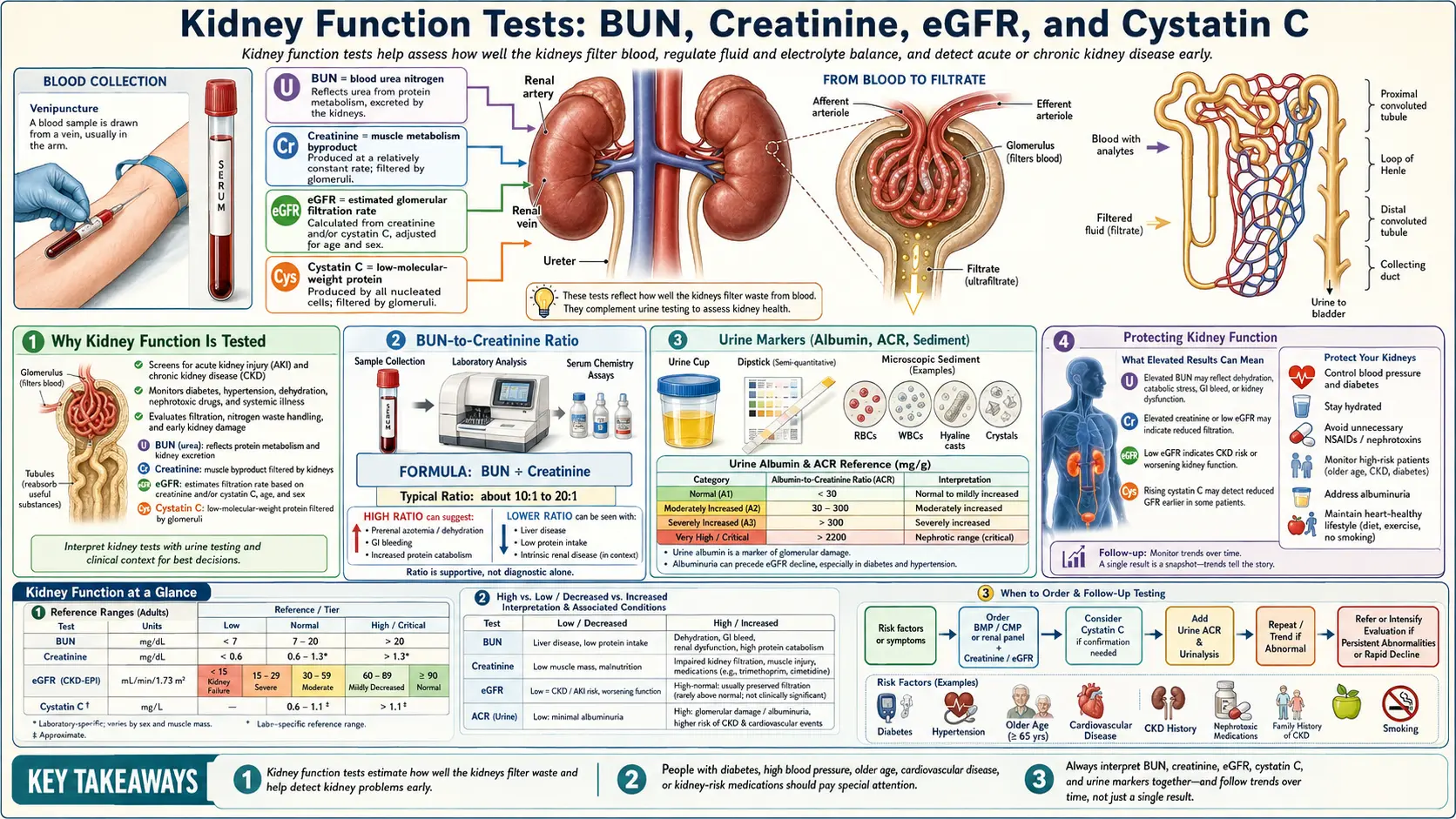
Kidney function tests are a small group of inexpensive blood and urine measurements that estimate how well the kidneys are filtering metabolic waste from the blood. The four core blood measurements are blood urea nitrogen (BUN), creatinine, the estimated glomerular filtration rate (eGFR), and cystatin C. BUN and creatinine are part of the standard comprehensive metabolic panel; eGFR is calculated from the creatinine result (the NKF-ASN Task Force recommended immediate use of the 2021 CKD-EPI equation by all U.S. laboratories; Delgado 2021); cystatin C is a separate test. Together with urine tests (urine albumin, urine creatinine, urine sediment), they are used to screen for, stage and monitor chronic kidney disease (CKD), acute kidney injury (AKI), and many systemic conditions that secondarily affect the kidneys.
Interactive Visualization Kidney Nephron — watch blood become urine Follow blood into the glomerulus and see filtration and reabsorption turn 180 litres of filtrate into urine — then toggle dehydration or diabetes. Launch →Table of Contents
- Why Kidney Function Is Tested
- What the Kidney Does
- The Four Core Tests
- BUN-to-Creatinine Ratio
- CKD Staging Using eGFR
- Urine Markers (Albumin, ACR, Sediment)
- Beyond the Standard Panel
- Red-Flag Patterns in Kidney Guidelines
- What Guidelines and Trials Report on Slowing Kidney Decline
- Key Research Papers
- Connections
- Featured Videos
Why Kidney Function Is Tested
The U.S. Centers for Disease Control and Prevention (CDC) estimates that about 14% of U.S. adults have chronic kidney disease and that as many as 9 in 10 of them do not know they have it. Serum creatinine alone can miss early loss of filtration: its relationship with GFR is curved, so in the higher GFR range a large fall in filtration produces only a small rise in creatinine, which can stay inside the reference range (Perrone 1992). The KDIGO 2024 guideline advises testing people at risk for, and with, CKD using both a urine albumin measurement and an assessment of GFR (KDIGO 2024).
Situations in which kidney testing is commonly done or repeated:
- Diabetes and high blood pressure — CDC reports that they are the leading causes of kidney failure in the United States, accounting for 2 out of 3 new cases; both are listed as common CKD risk factors in KDIGO 2024
- Cardiovascular disease, including heart failure — also a common risk factor in KDIGO 2024; the two-way link between heart and kidney failure is called cardiorenal syndrome
- A previous episode of acute kidney injury — listed by KDIGO 2024 among the common risk factors for CKD
- Medication monitoring — KDIGO 2024 describes monitoring eGFR, electrolytes and drug levels in people with CKD who take medicines with narrow therapeutic windows or nephrotoxic potential (examples in its tables include NSAIDs, aminoglycosides, vancomycin, lithium and proton pump inhibitors), and checking creatinine and potassium within 2–4 weeks of starting or increasing an ACE inhibitor or ARB; contrast dye, methotrexate and many chemotherapy agents are other common reasons for testing
- Family history — of kidney failure, or of kidney disease linked to a genetic abnormality such as polycystic kidney disease, APOL1-mediated kidney disease or Alport syndrome (KDIGO 2024)
- Other risk factors in the KDIGO 2024 table — recurrent kidney stones or structural urinary tract disease, lupus, vasculitis, HIV, preterm birth or pre-eclampsia, and occupational exposure to cadmium, lead or mercury
- Acute illness — sepsis, dehydration, post-surgical states, contrast exposure, rhabdomyolysis
- Symptoms commonly described with kidney disease — foamy urine, blood in urine, persistent edema, unexplained fatigue, decreased urine output, flank pain
What the Kidney Does
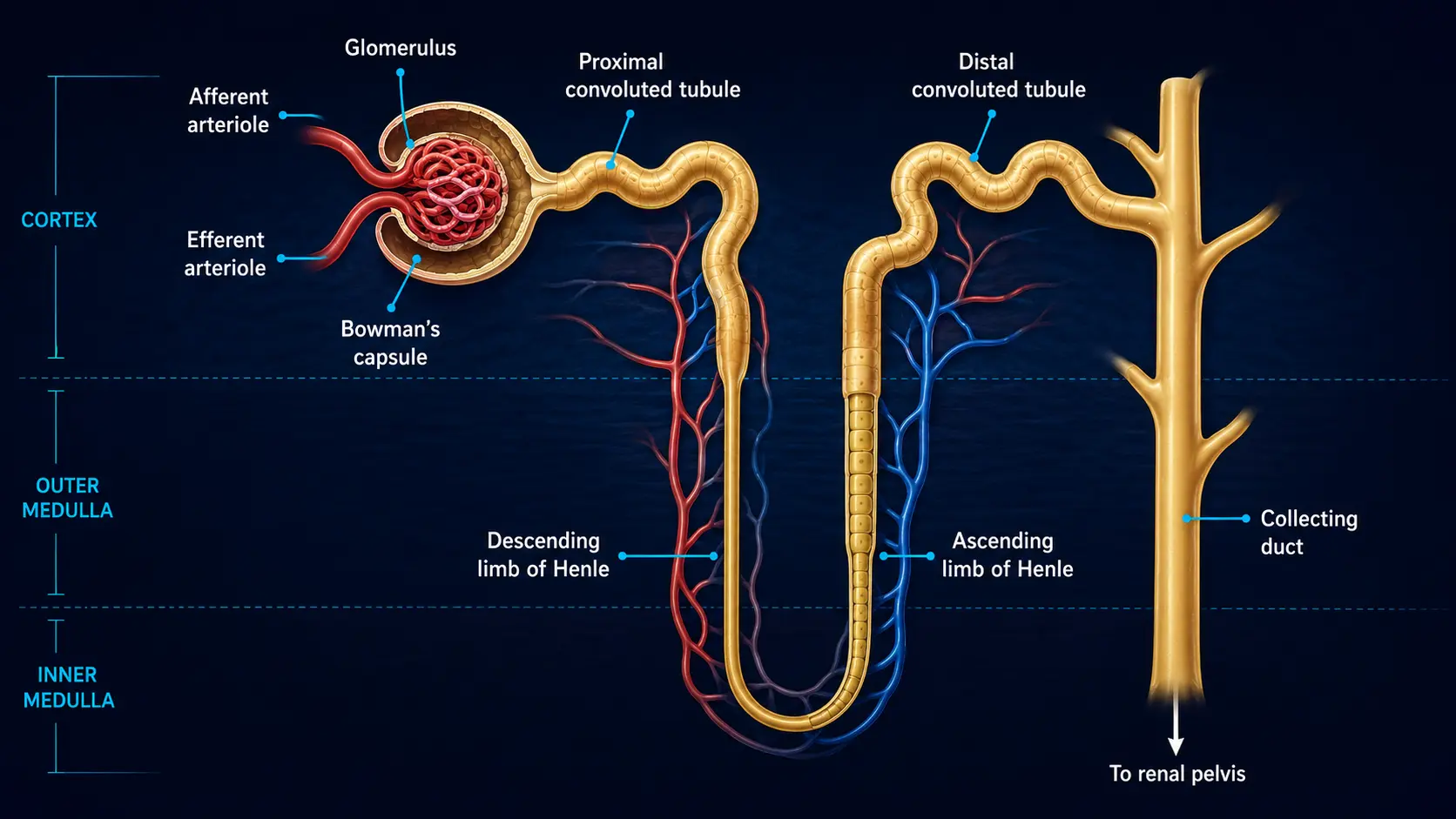
According to the U.S. National Institute of Diabetes and Digestive and Kidney Diseases (NIDDK), each kidney is made up of about a million filtering units called nephrons. NIDDK states that in a single day the kidneys filter about 150 quarts of blood; most of the water and other substances that filter through the glomeruli are returned to the blood by the tubules, and only 1 to 2 quarts become urine. The kidneys also make hormones that help control blood pressure (renin), make red blood cells (erythropoietin) and keep bones healthy (the active form of vitamin D), balance sodium, potassium, calcium, phosphate and acid-base chemistry, and excrete drugs and metabolic waste.
This is why kidney decline is rarely "just a kidney problem." The KDIGO 2024 guideline lists anemia, bone disease, acidosis, persistent potassium abnormalities, malnutrition and hypertension that does not respond to treatment among the complications of CKD, and notes that the doses of medicines cleared by the kidneys are adjusted for GFR (KDIGO 2024).
The Four Core Tests
Each of the four standard kidney function markers measures a slightly different physiologic process. None is perfect on its own — they are most useful together.
BUN (Blood Urea Nitrogen)
Urea is the nitrogen-containing waste product of protein metabolism in the liver. The kidneys filter and excrete it; some is reabsorbed in the proximal tubule. BUN reflects both kidney function and hydration, dietary protein, and tissue catabolism. Useful but non-specific. Read the full BUN page →
Creatinine
Creatinine is a waste product formed from creatine and phosphocreatine in muscle. It enters the blood at a roughly constant rate that tracks muscle mass and is freely filtered at the glomerulus; part of what reaches the urine is added by tubular secretion, and that share grows as filtration falls (Shemesh 1985). Creatinine is the workhorse of routine kidney testing — inexpensive and automated — but it is influenced by muscle mass, age, sex, diet (including cooked meat and creatine supplements) and several common medications that raise the number without changing filtration. Read the full Creatinine page →
eGFR (estimated Glomerular Filtration Rate)
eGFR is not measured directly. It is calculated from serum creatinine with age and sex — the 2021 CKD-EPI creatinine equation does this without the race term used in earlier versions (Inker 2021) — or from creatinine and cystatin C together. It estimates the glomerular filtration rate, the volume of plasma filtered by the glomeruli each minute, expressed in mL/min per 1.73 m² of body surface area. KDIGO uses GFR to assign the G1–G5 categories (KDIGO 2024). Read the full eGFR page →
Cystatin C
Cystatin C is a small protein made by nucleated cells, filtered by the glomerulus and broken down in the proximal tubule. It depends far less on muscle mass and diet than creatinine, although KDIGO 2024 lists higher adiposity, smoking, thyroid disorders, glucocorticoid excess and chronic inflammation as likely non-GFR influences on it. Equations combining creatinine and cystatin C were more accurate than either marker alone (Inker 2021). In a meta-analysis of 11 general-population cohorts (90,750 participants), cystatin C-based eGFR classified more people below 60 mL/min/1.73 m² (13.7% vs 9.7%) and strengthened the association of eGFR with death and kidney failure (Shlipak 2013). KDIGO 2024 lists situations in which creatinine-based estimates are less accurate and cystatin C is indicated, including eating disorders, extreme exercise or bodybuilding, above-knee amputation, spinal cord injury and class III obesity (KDIGO 2024). Read the full Cystatin C page →
BUN-to-Creatinine Ratio
The ratio of BUN to creatinine is traditionally used to sort kidney dysfunction into three broad patterns:
BUN : Creatinine ratio — traditionally taught cutoffs (mg/dL : mg/dL)
In the traditional interpretation, a high BUN-to-creatinine ratio with normal creatinine points to a prerenal cause — the kidneys themselves are healthy but are working against poor perfusion (dehydration, blood loss, heart failure) or an unusually high nitrogen load (gastrointestinal bleed releasing protein into the gut, very-high-protein diet, corticosteroid-induced catabolism). A low ratio with elevated creatinine is traditionally read as intrinsic renal disease (the kidneys themselves are damaged), severe malnutrition, or advanced liver disease (impaired urea synthesis).
Studies have questioned how well the ratio performs. In a retrospective study of 20,126 hospital patients, about half of those with AKI had a ratio above 20 — the traditional threshold for prerenal azotemia — and they had higher, not lower, hospital mortality than patients with a lower ratio; the authors concluded that the findings do not support the ratio as a marker of prerenal azotemia (Uchino 2012). In 1,103 emergency-department patients with AKI, the ratio did not differ between prerenal and intrinsic AKI and had no capacity to tell them apart (area under the ROC curve 0.5) (Manoeuvrier 2017).
CKD Staging Using eGFR
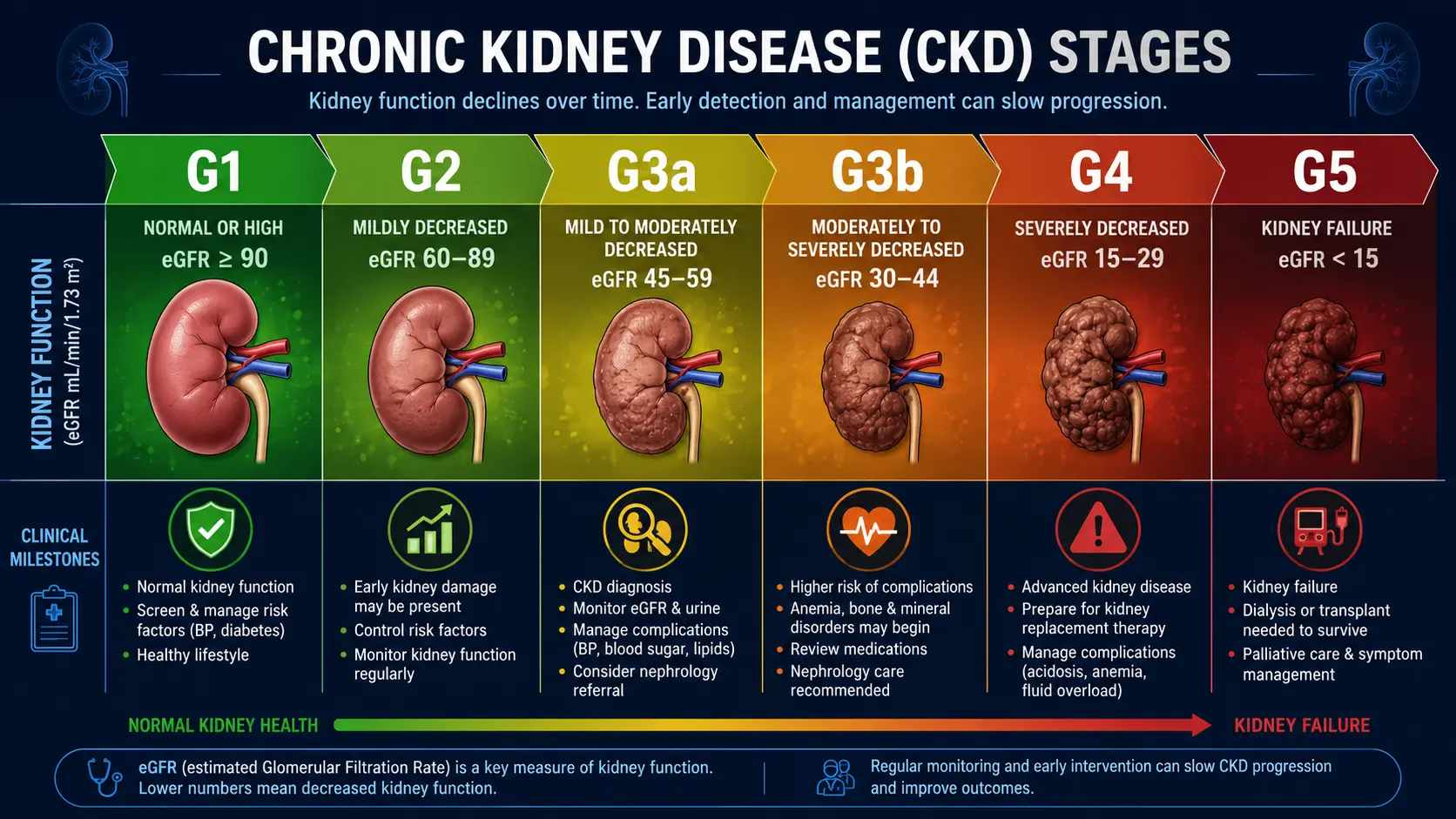
KDIGO defines chronic kidney disease as abnormalities of kidney structure or function present for a minimum of 3 months, with implications for health, and classifies it by Cause, GFR category (G1–G5) and Albuminuria category (A1–A3) — the "CGA" system (Levin 2024; KDIGO 2024). The G categories, used since the KDIGO 2012 guideline (Stevens and Levin 2013), are:
- G1 — eGFR ≥ 90 mL/min/1.73 m²: normal or high. In the absence of evidence of kidney damage (such as albuminuria, urine sediment abnormalities, or structural abnormalities on imaging), G1 does not meet the criteria for CKD.
- G2 — eGFR 60–89: mildly decreased (relative to the young adult level). Same caveat as G1 — a mild eGFR drop alone does not equal CKD.
- G3a — eGFR 45–59: mildly to moderately decreased. A GFR below 60 for at least 3 months meets the CKD criteria on its own.
- G3b — eGFR 30–44: moderately to severely decreased.
- G4 — eGFR 15–29: severely decreased. KDIGO 2024 lists an eGFR below 30 among the circumstances for referral to specialist kidney care, with planning and preparation for kidney replacement therapy as the goal.
- G5 — eGFR < 15: kidney failure.
Albuminuria adds an A category: A1 (urine ACR < 30 mg/g [< 3 mg/mmol], normal to mildly increased), A2 (30–300 mg/g [3–30 mg/mmol], moderately increased) and A3 (> 300 mg/g [> 30 mg/mmol], severely increased) (KDIGO 2024). In a meta-analysis of 14 general-population cohorts with ACR measurements (105,872 participants), eGFR and ACR were each associated with all-cause and cardiovascular mortality, multiplicatively and without interaction; the authors concluded that an eGFR below 60 and an ACR of 10 mg/g or more are independent predictors of mortality risk (Matsushita 2010).
Urine Markers (Albumin, ACR, Sediment)
Blood-based markers show how much filtration is happening; urine markers show whether the filter itself is leaking. The two key urine measurements:
- Urine albumin-to-creatinine ratio (ACR) — on a single random sample. Healthy glomeruli let very little albumin through; persistent leakage indicates kidney damage. An ACR of 30 mg/g or more for at least 3 months is one of KDIGO’s markers of kidney damage, so it can establish CKD even when eGFR is 60 or higher (G1–G2) (KDIGO 2024).
- Urinalysis (UA) with microscopy — dipstick screens for blood, protein, glucose, leukocyte esterase, nitrites, and pH. Microscopy looks for red cells, white cells, casts (cellular, granular, waxy), and crystals. Red cell casts are classically associated with glomerulonephritis and muddy brown granular casts with acute tubular necrosis; KDIGO 2024 lists urinary red cell casts among the circumstances for referral to specialist kidney care.
See Urinalysis → for a deeper walkthrough.
Beyond the Standard Panel
When the routine markers raise concern, a nephrologist may order:
- Renal ultrasound — size, echogenicity, hydronephrosis, cysts, stones
- Urine sodium and FENa (fractional excretion of sodium) — used to help distinguish prerenal from intrinsic AKI
- Serum and urine electrophoresis with free light chains — screens for multiple myeloma and light-chain disease
- ANA, ANCA, anti-GBM, complement (C3/C4), ASO — autoimmune and post-infectious glomerulonephritis
- Hepatitis B/C, HIV serology — viral nephropathies
- 24-hour urine collection — proteinuria quantification, creatinine clearance, stone-risk profile
- Kidney biopsy — the test that gives a tissue diagnosis of intrinsic glomerular and tubulointerstitial disease
Red-Flag Patterns in Kidney Guidelines
- Creatinine rising by ≥ 0.3 mg/dL within 48 hours, or to ≥ 1.5 times baseline within the prior 7 days — meets the KDIGO 2012 definition of acute kidney injury (AKI) (Kellum and Lameire 2013)
- Urine output below 0.5 mL/kg/hour for 6 hours — also meets the KDIGO AKI definition (Kellum and Lameire 2013)
- A sustained fall in GFR of more than 20% (more than 30% in people starting therapies that change kidney blood flow) — listed by KDIGO 2024 among the circumstances for referral to specialist kidney care
- Significant albuminuria — KDIGO 2024 lists as referral circumstances a consistent ACR ≥ 300 mg/g together with hematuria, a consistent ACR above 700 mg/g, and a two-fold or greater rise in albuminuria in people with significant albuminuria who are being monitored
- Hematuria with proteinuria — a pattern associated with glomerulonephritis; KDIGO 2024 also lists urinary red cell casts, or more than 20 red cells per high-power field that are sustained and not readily explained
- Persistent abnormalities of serum potassium — a KDIGO 2024 referral circumstance; high potassium (hyperkalemia) can disturb heart rhythm
- Hypertension refractory to treatment with 4 or more drugs in someone with CKD — a KDIGO 2024 referral circumstance
What Guidelines and Trials Report on Slowing Kidney Decline
The KDIGO guidelines and large randomized trials report the following. Decisions about medicines and supplements belong with a clinician.
- Blood pressure — the KDIGO 2021 blood pressure guideline proposes a systolic target below 120 mm Hg, using standardized office measurement, for most people with CKD not receiving dialysis (children and kidney transplant recipients excepted), based largely on the SPRINT results (Cheung 2021). KDIGO 2024 keeps this target "when tolerated" and suggests considering less intensive lowering in people with frailty, high risk of falls and fractures, very limited life expectancy, or symptomatic postural hypotension. It recommends an ACE inhibitor or ARB for people with CKD and severely increased albuminuria (A3) without diabetes, and for people with diabetes and moderately-to-severely increased albuminuria (A2–A3) (KDIGO 2024).
- SGLT2 inhibitors — KDIGO recommends an SGLT2 inhibitor for people with type 2 diabetes, CKD and an eGFR of 20 or more, and the 2024 guideline extends a general recommendation to adults with CKD (KDIGO 2024). In the DAPA-CKD trial, dapagliflozin lowered the risk of a composite of sustained eGFR decline of at least 50%, end-stage kidney disease, or renal or cardiovascular death (hazard ratio 0.61) over a median of 2.4 years, with similar effects in participants with and without type 2 diabetes (Heerspink 2020). In EMPA-KIDNEY (6,609 patients), empagliflozin lowered the risk of kidney disease progression or cardiovascular death (hazard ratio 0.72), with consistent results in patients with or without diabetes (Herrington 2023).
- GLP-1 receptor agonists in type 2 diabetes — in the FLOW trial (3,533 participants with type 2 diabetes and CKD), semaglutide lowered the risk of the primary kidney and cardiovascular composite outcome by 24% (hazard ratio 0.76) over a median of 3.4 years (Perkovic 2024). KDIGO 2024 recommends a long-acting GLP-1 receptor agonist for adults with type 2 diabetes and CKD who have not reached individualized glycemic targets despite metformin and an SGLT2 inhibitor, or who cannot use those medicines.
- NSAIDs (ibuprofen, naproxen, diclofenac) — KDIGO 2024 describes them as lowering GFR by reducing prostaglandin-dependent kidney blood flow, and as associated with interstitial nephritis and nephrotic syndrome; it reports that indiscriminate chronic over-the-counter NSAID use has been associated with a higher risk of kidney failure. In a meta-analysis of five case-control studies, taking an NSAID together with a diuretic and a renin-angiotensin system inhibitor (the "triple whammy") was associated with a higher risk of AKI (odds ratio 2.01; low-certainty evidence) (Calvo 2025).
- Fluids and contrast studies — dehydration is one of the prerenal causes described above. For patients at increased risk of contrast-induced AKI, the KDIGO AKI guideline recommends intravenous volume expansion with isotonic sodium chloride or sodium bicarbonate rather than none, and recommends against oral fluids alone (Lameire and Kellum 2013).
- Herbal products and supplements — KDIGO 2024 lists aristolochic acid-containing Chinese herbs and licorice among herbal remedies with evidence of potential nephrotoxicity, and notes that vitamin C supplements in excess can lead to calcium oxalate crystal deposition in the kidney tubules. Aristolochic acid nephropathy carries a high long-term risk of kidney failure and urothelial cancer, and aristolochic acid is also the primary cause of Balkan endemic nephropathy (Gökmen 2013).
- Sleep apnea and nocturnal hypoxia — in 858 people referred for sleep-apnea testing and followed for a mean of 2.1 years, nocturnal hypoxia was independently associated with accelerated loss of kidney function (odds ratio 2.89); the authors noted that whether treating it reduces kidney function loss is not yet known (Ahmed 2011).
- Physical activity, body weight and tobacco — KDIGO 2024 encourages people with CKD to undertake physical activity compatible with their cardiovascular health and frailty, to achieve an optimal body mass index, and not to use tobacco products.
- The medication list — KDIGO 2024’s table of nephrotoxic medicines includes proton pump inhibitors (interstitial nephritis, AKI and CKD), lithium (nephrogenic diabetes insipidus and chronic tubulointerstitial nephropathy), aminoglycosides and vancomycin, and the guideline describes periodic medication review. Calcineurin inhibitors used after transplantation are another recognized cause of kidney toxicity. In a community cohort of 10,482 adults, proton pump inhibitor use was associated with a higher risk of incident CKD (adjusted hazard ratio 1.50) — an observational association (Lazarus 2016).
Related pages: the Magnesium, Vitamin D3, and Berberine pages describe the research on those supplements, and the Blood Sugar and Anti-Inflammatory Diet pages cover diet-related research.
Key Research Papers
- Inker LA, Eneanya ND, Coresh J, et al. (2021). New creatinine- and cystatin C-based equations to estimate GFR without race. New England Journal of Medicine 385(19):1737-1749 — PubMed PMID: 34554658
- Delgado C, Baweja M, Crews DC, et al. (2021). A unifying approach for GFR estimation: recommendations of the NKF-ASN Task Force on Reassessing the Inclusion of Race in Diagnosing Kidney Disease. Journal of the American Society of Nephrology 32(12):2994-3015 — PubMed PMID: 34556489
- Shlipak MG, Matsushita K, Ärnlöv J, et al. (2013). Cystatin C versus creatinine in determining risk based on kidney function. New England Journal of Medicine 369(10):932-43 — PubMed PMID: 24004120
- Perrone RD, Madias NE, Levey AS (1992). Serum creatinine as an index of renal function: new insights into old concepts. Clinical Chemistry 38(10):1933-53 — PubMed PMID: 1394976
- Shemesh O, Golbetz H, Kriss JP, et al. (1985). Limitations of creatinine as a filtration marker in glomerulopathic patients. Kidney International 28(5):830-8 — PubMed PMID: 2418254
- Levin A, Ahmed SB, Carrero JJ, et al. (2024). Executive summary of the KDIGO 2024 Clinical Practice Guideline for the Evaluation and Management of Chronic Kidney Disease: known knowns and known unknowns. Kidney International 105(4):684-701 — PubMed PMID: 38519239
- Kidney Disease: Improving Global Outcomes (KDIGO) CKD Work Group (2024). KDIGO 2024 Clinical Practice Guideline for the Evaluation and Management of Chronic Kidney Disease. Kidney International 105(4S):S117-S314 — PubMed PMID: 38490803
- Stevens PE, Levin A; KDIGO CKD Guideline Development Work Group (2013). Evaluation and management of chronic kidney disease: synopsis of the Kidney Disease: Improving Global Outcomes 2012 clinical practice guideline. Annals of Internal Medicine 158(11):825-30 — PubMed PMID: 23732715
- Matsushita K, van der Velde M, Astor BC, et al.; Chronic Kidney Disease Prognosis Consortium (2010). Association of estimated glomerular filtration rate and albuminuria with all-cause and cardiovascular mortality in general population cohorts: a collaborative meta-analysis. Lancet 375(9731):2073-81 — PubMed PMID: 20483451
- Kellum JA, Lameire N; KDIGO AKI Guideline Work Group (2013). Diagnosis, evaluation, and management of acute kidney injury: a KDIGO summary (Part 1). Critical Care 17(1):204 — PubMed PMID: 23394211
- Lameire N, Kellum JA; KDIGO AKI Guideline Work Group (2013). Contrast-induced acute kidney injury and renal support for acute kidney injury: a KDIGO summary (Part 2). Critical Care 17(1):205 — PubMed PMID: 23394215
- Uchino S, Bellomo R, Goldsmith D (2012). The meaning of the blood urea nitrogen/creatinine ratio in acute kidney injury. Clinical Kidney Journal 5(2):187-191 — PubMed PMID: 29497527
- Manoeuvrier G, Bach-Ngohou K, Batard E, et al. (2017). Diagnostic performance of serum blood urea nitrogen to creatinine ratio for distinguishing prerenal from intrinsic acute kidney injury in the emergency department. BMC Nephrology 18(1):173 — PubMed PMID: 28545421
- Cheung AK, Chang TI, Cushman WC, et al. (2021). Executive summary of the KDIGO 2021 Clinical Practice Guideline for the Management of Blood Pressure in Chronic Kidney Disease. Kidney International 99(3):559-569 — PubMed PMID: 33637203
- Heerspink HJL, Stefánsson BV, Correa-Rotter R, et al.; DAPA-CKD Trial Committees and Investigators (2020). Dapagliflozin in patients with chronic kidney disease. New England Journal of Medicine 383(15):1436-1446 — PubMed PMID: 32970396
- Herrington WG, Staplin N, Wanner C, et al.; EMPA-KIDNEY Collaborative Group (2023). Empagliflozin in patients with chronic kidney disease. New England Journal of Medicine 388(2):117-127 — PubMed PMID: 36331190
- Perkovic V, Tuttle KR, Rossing P, et al.; FLOW Trial Committees and Investigators (2024). Effects of semaglutide on chronic kidney disease in patients with type 2 diabetes. New England Journal of Medicine 391(2):109-121 — PubMed PMID: 38785209
- Calvo DM, Saiz LC, Leache L, et al. (2025). Acute kidney injury and morbi-mortality associated with "triple whammy" combination: systematic review and meta-analysis. British Journal of Clinical Pharmacology 91(11):3031-3041 — PubMed PMID: 40876867
- Gökmen MR, Cosyns JP, Arlt VM, et al. (2013). The epidemiology, diagnosis, and management of aristolochic acid nephropathy: a narrative review. Annals of Internal Medicine 158(6):469-77 — PubMed PMID: 23552405
- Ahmed SB, Ronksley PE, Hemmelgarn BR, et al. (2011). Nocturnal hypoxia and loss of kidney function. PLoS One 6(4):e19029 — PubMed PMID: 21559506
- Lazarus B, Chen Y, Wilson FP, et al. (2016). Proton pump inhibitor use and the risk of chronic kidney disease. JAMA Internal Medicine 176(2):238-46 — PubMed PMID: 26752337
PubMed Topic Searches
- 2021 race-free CKD-EPI equation — PubMed search
- Cystatin C for kidney function — PubMed search
- BUN-to-creatinine ratio interpretation — PubMed search
- Urine albumin-to-creatinine ratio — PubMed search
- KDIGO CKD staging guidelines — PubMed search
- SGLT2 inhibitors and CKD progression — PubMed search
- Acute kidney injury (KDIGO) — PubMed search
- NSAIDs and kidney injury — PubMed search