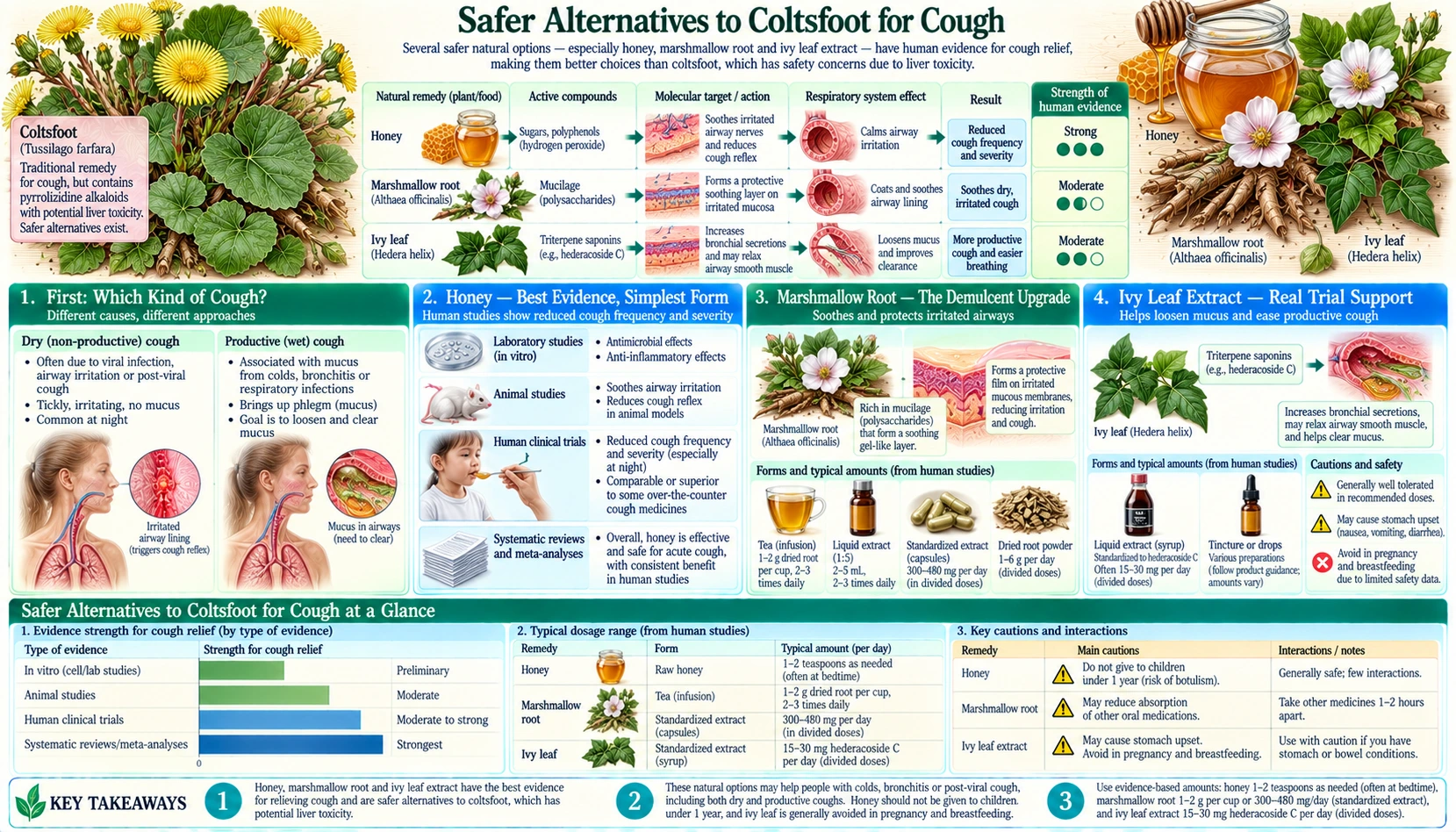
⚠ Evidence warning: Clinical trials or other evidence do not support the claim that systematic reviews consistently list ivy leaf among the preparations with supportive evidence for acute bronchitis. This page keeps it as a report of what people, websites or other media say.
Safer Alternatives to Coltsfoot for Cough

If you arrived at coltsfoot because you have a cough, this is the page with the options that have evidence behind them. The other pages in this section explain why coltsfoot is a poor choice: it contains hepatotoxic pyrrolizidine alkaloids, and its cough benefit has never been shown in a controlled human trial. Telling you that and stopping would be useless. You did not come looking for a toxicology lecture; you came because your throat is raw and you are not sleeping.
So here is the constructive half, organised by how good the evidence actually is. Some of these options have randomised controlled trials behind them — better evidence than coltsfoot ever had. Some are traditional demulcents that work by the same soothing mechanism coltsfoot uses, minus the liver toxin. Some are unglamorous physical measures that are more useful than they sound. Each one is labelled with its real evidence tier, including the ones where the honest label is "tradition only," and including the popular options where the honest answer is that they do not work.
Table of Contents
- First: How Coughs Differ
- Honey — Best Evidence, Simplest Form
- Marshmallow Root — The Demulcent Upgrade
- Ivy Leaf Extract — Trial Support, Small Effects
- Pelargonium sidoides — Real Trial Support
- Thyme and Primrose Combinations
- Slippery Elm, Mullein and Plantain
- Licorice — Effective, With Its Own Caution
- Elderberry, Elecampane and Horehound
- Fluids, Air, Sleep Position and Steam
- What Is Not Worth It — and What Is Unsafe
- Children: A Short, Strict Section
- The Options Ranked by Evidence Tier
- Warning Signs Beyond Self-Care
- Key Research Papers
- Connections
- Featured Videos
First: How Coughs Differ
Choosing well takes about ten seconds of thought, because different coughs respond to different things.
- Dry, tickly, throat-based cough — the irritable kind that starts in the throat and feeds on itself, worst when you lie down or talk. This is the demulcent's home ground: honey, marshmallow root, slippery elm. A coating that dulls the trigger is exactly what is needed.
- Chesty, productive cough with phlegm — deeper, with something to bring up. Here the useful options are the ones with actual bronchitis trials: ivy leaf, Pelargonium sidoides, thyme-and-primrose. Fluid intake matters more here too, because hydrated secretions clear more easily.
- Cough with wheeze or breathlessness — this is not a herbal situation. Wheeze suggests airway narrowing, a sign doctors assess rather than one herbs treat; see Asthma.
- Cough lasting more than three weeks — see Chronic Cough. Common causes include post-nasal drip, reflux, asthma and medication side effects, and each has a different fix. No herb substitutes for finding out which.
And one piece of context that keeps expectations sane: an ordinary post-viral cough runs one to three weeks, sometimes longer, and it settles on its own. Nothing in this list cures a cough. What these options do is make the days more bearable and the nights sleepable while your airway heals — which, in a self-limiting illness, is a perfectly respectable goal.
Honey — Best Evidence, Simplest Form
Evidence tier: randomised controlled trials and systematic review. The best-evidenced option here.
The cheapest thing in the kitchen has the strongest evidence base. Multiple randomised trials, mostly in children with nocturnal cough from upper respiratory infection, have compared honey against no treatment, against placebo, and against over-the-counter cough medicines. The 2018 Cochrane review of honey for acute cough in children (six trials, 899 children aged 12 months to 18 years) concluded that honey probably reduces cough frequency better than no treatment or placebo (moderate-certainty evidence), may have a similar effect to dextromethorphan, and may be better than diphenhydramine (both low-certainty evidence). Honey given for up to three days probably relieved cough better than placebo or salbutamol; beyond three days it probably had no advantage over them.
Note what the dextromethorphan comparison means. Honey is not merely "better than nothing"; in the trials available it performed about as well as the active ingredient in most cough syrups, though on low-certainty evidence — which says as much about those syrups as it does about honey.
Beyond children. A 2021 systematic review and meta-analysis of 14 studies of upper respiratory tract infections found that, compared with usual care, honey improved cough frequency (eight studies) and cough severity (five studies). The authors called it “a widely available and cheap alternative to antibiotics”, and added that more high-quality placebo-controlled trials are needed.
Why it works. Three mechanisms, all plausible and mutually reinforcing: it is a viscous demulcent that coats the pharynx; sweetness provokes salivation and swallowing, which appears to inhibit the cough reflex centrally; and honey has mild antimicrobial and antioxidant properties, though those are probably the least of it for cough.
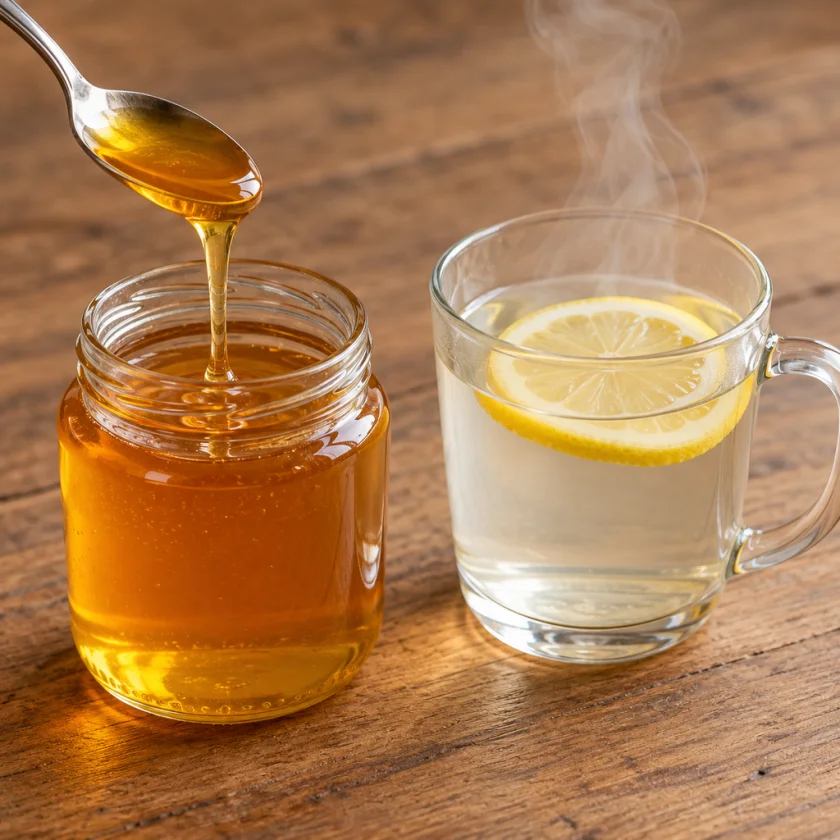
How it is taken. The usual home form is a teaspoon to a tablespoon, straight off the spoon or stirred into warm (not boiling) water with lemon, at bedtime and as needed. The trials did not use exotic varieties, so a premium grade is not what the evidence is about. The graded types are covered on Manuka and MGO Rating and Raw vs Pasteurized.
The one absolute safety fact: honey is not for infants under twelve months. Honey can carry Clostridium botulinum spores, and an infant gut can allow them to germinate and produce toxin — infant botulism, a serious and occasionally fatal illness. Over twelve months this is not a concern. Under twelve months the risk is real, and it applies to raw and pasteurised honey alike.
Other caveats are minor: honey is sugar, which matters if you have diabetes, and it is acidic and cariogenic, so nightly use leaves sugar and acid on the teeth unless the mouth is rinsed afterwards. Our full page is Honey: Cough Suppressant Evidence.
Marshmallow Root — The Demulcent Upgrade
Evidence tier: traditional use with European monograph support; small clinical studies of marshmallow-containing preparations; mechanism established.
If what you liked about coltsfoot was the idea of a slippery, soothing tea, marshmallow root (Althaea officinalis) is the straight substitution — and it is arguably the better herb on its own terms, not merely the safer one. Its mucilage content is higher than coltsfoot's, its demulcent effect is more pronounced, and it holds a European traditional-use herbal monograph for irritation of the mouth and throat with dry cough. Coltsfoot has no such monograph, for the reasons set out in Regulation, Bans and "PA-Free" Products.
It contains no pyrrolizidine alkaloids. Its side-effect profile is essentially "it is slippery."
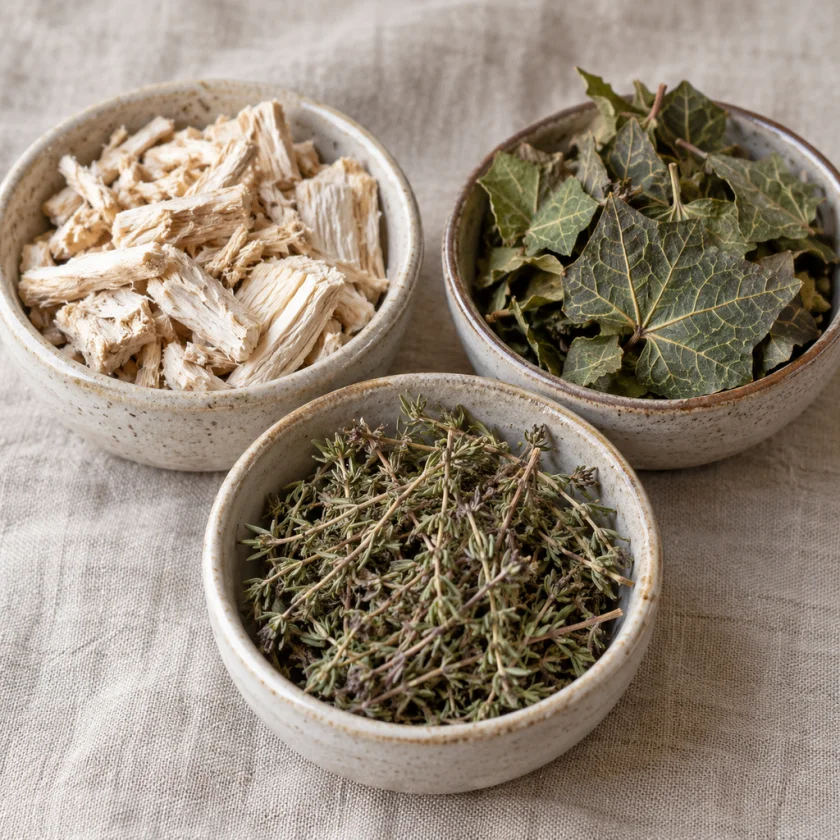
How to prepare it — and this part matters. Marshmallow mucilage is best extracted in cold water, not boiling. The traditional cold infusion is one to two teaspoons of chopped dried root steeped in a cup of cold water for several hours or overnight, strained, and drunk at room temperature or gently warmed. A cold infusion is noticeably thicker and more coating than a hot one. Lozenges and syrups containing marshmallow are also widely sold and are convenient for daytime use.
Practical notes. Because mucilage coats the gut as well as the throat, it can reduce the absorption of oral medicines taken at the same time, which is why a gap of a couple of hours is the usual spacing. There is a theoretical effect on blood-sugar-lowering medication timing for the same reason. Otherwise it is one of the gentlest herbs in the materia medica, used in children and in older adults.
See Marshmallow Root for Cough and Sore Throat and Mucilage Dosing and Safety.
Ivy Leaf Extract — Trial Support, Small Effects
Evidence tier: randomised controlled trials and large observational studies; licensed as a herbal medicine in parts of Europe.
Dried ivy leaf extract (Hedera helix) is the option most likely to be unfamiliar to English-speaking readers. In Germany it is a mainstream, licensed product — a standardised leaf extract in syrup or drops, widely prescribed for productive cough and acute bronchitis, including in children.
It has been studied in randomised trials and in very large post-marketing observational cohorts, with outcomes including cough severity, bronchitis symptom scores and time to improvement. Systematic reviews of herbal medicines for acute bronchitis consistently include ivy leaf among the preparations with supportive evidence, while noting that trial quality is variable and that much of the data comes from manufacturer-sponsored studies. A 2021 updated systematic review found six randomised trials, one controlled trial and four observational studies. Three of the randomised trials reported a faster fall in cough severity or frequency, and no serious adverse effects were reported. The reviewers concluded that ivy leaf preparations are safe for cough from acute upper respiratory infections and bronchitis, but that “effects are minimal at best and of uncertain clinical importance”; the overall quality of reporting was low and the risk of bias high. That is a real limitation and we state it rather than glossing it — but it is still a far stronger position than coltsfoot's, where the corresponding trials simply do not exist.
Mechanism. The saponins, chiefly α-hederin, are thought to act as secretolytics — thinning bronchial secretions so they clear more easily — with some evidence of an indirect bronchodilating effect via beta-receptor signalling.
Important safety distinction. The studies used standardised commercial extracts. Raw ivy leaves and berries are toxic and the sap causes contact dermatitis; this is emphatically not a forage-and-brew herb. Side effects of the standardised extract are mainly gastrointestinal — nausea, occasionally loose stools — and allergic reactions are uncommon. Many syrup formulations contain sorbitol, which loosens stools in some children.
Pelargonium sidoides — Real Trial Support
Evidence tier: randomised controlled trials and Cochrane review; licensed herbal medicine in several countries.
Pelargonium sidoides is a South African geranium whose root extract, developed in Europe under the name umckaloabo, has one of the better trial records of any herbal respiratory medicine. The 2013 Cochrane review of Pelargonium sidoides for acute respiratory tract infections found that three trials in 746 adults and three trials in 819 children with acute bronchitis showed benefit for most outcomes with the liquid preparation, but not with tablets. The reviewers rated this evidence low quality and concluded that it may relieve symptoms of acute bronchitis in adults and children. Side effects were more common than with placebo, but none were serious.
Its origin story is worth a line, because it is a good example of tradition and trial meeting: it entered European medicine in the early twentieth century after a British man was reportedly treated with a Zulu remedy for a respiratory illness, and the modern extract was subsequently developed and studied to a standard that permitted licensing.
Mechanism. Probably several actions together — interference with viral attachment to respiratory epithelium, stimulation of ciliary beat frequency (helping clear mucus mechanically), and immunomodulatory effects. The prodelphinidins rather than a single compound appear to be responsible.
Practical notes. Sold as drops, tablets or syrup and used for a defined course of days rather than indefinitely. Side effects are usually mild gastrointestinal upset; rare reports of liver-enzyme changes exist and have been debated, which is a concern the research raises for people with liver disease. It has a theoretical interaction with anticoagulants, and there are no safety data in pregnancy — a lack of data rather than known harm.
Thyme and Primrose Combinations
Evidence tier: randomised controlled trials of the fixed combination; monograph support for thyme alone.
The thyme-plus-primrose-root combination is a European pharmacy staple for acute bronchitis with productive cough, and it has been tested against placebo. In a double-blind, randomised, placebo-controlled trial at several centres, 150 adults with acute bronchitis took the combination or a placebo for 7–9 days; their bronchitis severity score fell from 12.0 to 1.0 points on the combination against 11.7 to 6.5 on placebo, and 58.7% against 5.3% were free of symptoms by the end. It is a rational pairing rather than a marketing bundle: thyme supplies antispasmodic and antimicrobial volatile oils — thymol and carvacrol — while primrose root supplies saponins that thin secretions in the same way ivy leaf does.
Thyme on its own is the most accessible respiratory herb in most kitchens and holds a European monograph for cough associated with colds. A strong infusion of a teaspoon of dried thyme in a covered cup for ten minutes — covered matters, or the volatile oils leave with the steam — sweetened with honey, is a genuinely pleasant and reasonable thing to drink several times a day. Thyme's evidence tier for cough is monograph-and-tradition rather than large trials, but its safety record as a culinary herb is excellent.
Caution on concentrated thyme oil: undiluted thyme essential oil is an irritant, and swallowing it is a different exposure from drinking the herb. The herb and its infusion are a different proposition from the oil. See Thyme for Respiratory Health and Cough.
Slippery Elm, Mullein and Plantain
Evidence tier: traditional use, with the demulcent mechanism established as a class effect. No adequate controlled trials for cough.
Three more coltsfoot substitutes that work by the same soothing mechanism and carry no pyrrolizidine alkaloids:
- Slippery elm (Ulmus rubra) — inner bark, powdered, one of the most mucilage-rich substances in herbal practice. Stirred into warm water it makes a thin gruel; in lozenge form it is widely sold for sore throat. Same absorption-timing caution as marshmallow. Note that slippery elm is a slow-growing native North American tree under harvesting pressure, so sustainably sourced material matters.
- Mullein (Verbascum thapsus) — the closest cultural analogue to coltsfoot: a traditional European lung herb, also historically smoked, also demulcent, and with no alkaloid problem. Traditional preparation strains the infusion through fine cloth or a paper filter, because the leaf hairs are irritating to the throat if they get through — an ironic way to worsen a cough. See Mullein for Cough, Bronchitis and Congestion.
- Plantain leaf (Plantago lanceolata) — a common lawn weed with genuine mucilage content and a traditional cough indication, holding European monograph support for that traditional use. Easy to grow, easy to identify, and safe.
All three are honest "tradition plus plausible mechanism" options. That is a weaker tier than honey or ivy leaf, and we are not going to inflate it. What matters for this page is that they occupy exactly the niche coltsfoot occupied — and they occupy it without the liver risk, which makes the trade obvious.
Licorice — Effective, With Its Own Caution
Evidence tier: traditional use with monograph support and a plausible mechanism; the safety caution is established pharmacology.
Licorice root (Glycyrrhiza glabra) belongs on this list because it is a genuinely useful demulcent and expectorant, and it belongs with a warning attached, because unlike marshmallow it has a real dose-dependent problem of its own.
Glycyrrhizin inhibits an enzyme that normally inactivates cortisol in the kidney, producing a state resembling excess aldosterone: sodium retention, potassium loss, raised blood pressure, and in extreme cases dangerous hypokalaemia and cardiac arrhythmia. This is not theoretical — it is documented in people who ate large amounts of real licorice confectionery or drank licorice tea daily for weeks.
So the documented harm comes with daily use over weeks and with higher doses, not with an occasional soothing tea for a few days; and the research raises a particular concern for people with high blood pressure, heart disease, kidney disease or low potassium, in pregnancy, and with diuretics, digoxin or corticosteroids. Deglycyrrhizinated licorice (DGL) removes the offending compound and sidesteps the problem, though it also removes some of the effect.
We include the caution rather than dropping the herb because that is the same principle applied to coltsfoot: state the harm beside the claim and let the reader decide. The difference is that licorice's harm is dose-dependent, reversible on stopping, and avoidable by using it briefly — whereas coltsfoot's is cumulative, potentially irreversible, and genotoxic. The full picture is on Licorice: Cortisol and Hypertension Warning.
Elderberry, Elecampane and Horehound
Evidence tier: traditional use; elderberry has some trial data for cold and influenza symptoms rather than for cough specifically.
- Elderberry (Sambucus nigra) — syrups and extracts have been studied for cold and influenza symptom duration with mixed but not negligible results; the evidence is about the illness rather than the cough. Useful, pleasant, and widely available. Raw elderberries, leaves, bark and stems contain cyanogenic glycosides and cause vomiting; cooking the berries destroys them. See Elderberry for Cold and Flu.
- Elecampane (Inula helenium) — a classic European expectorant root for chesty cough, bitter and warming, tradition-only in evidence terms. Can cause allergic reactions in people sensitive to the daisy family; traditionally not used in pregnancy.
- Horehound (Marrubium vulgare) — the bitter herb behind traditional horehound cough drops, long used as an expectorant. Tradition-only; traditionally not used in pregnancy or at high doses.
- Sage — not for cough as such, but sage gargles have monograph support for sore throat, which is often the driver of a tickly cough. See also Sore Throat.
- Ginger and peppermint — warming and comforting respectively, tradition-only for cough, and both entirely safe as a tea for an adult. Peppermint's menthol gives a subjective sense of clearer breathing.
None of these outperforms honey on evidence. They are listed because variety helps when you are drinking warm liquids all day, and because these give a reader who wants a herbal ritual one with a good safety record.
Fluids, Air, Sleep Position and Steam
Evidence tier: mixed — some measures are established, some are traditional, and one popular measure has a negative trial.
- Fluids. Being well hydrated keeps secretions thinner and easier to clear, and warm drinks are soothing in their own right. Simple, free, and the thing most people under-do when ill.
- Humidity. Dry indoor air, particularly with winter heating, aggravates a dry cough. A bowl of water near a radiator or a humidifier adds moisture. A dirty humidifier reservoir aerosolises microbes and mould.
- Sleep position. Elevating the head of the bed reduces night-time coughing driven by post-nasal drip and by reflux, both of which are worse lying flat. Raising the mattress or the head of the bed does this; stacked pillows mostly bend the neck.
- Saline nasal irrigation or spray. Genuinely useful when the cough is driven by post-nasal drip. A UK primary-care randomised trial of 871 adults with chronic or recurrent sinus symptoms found modest benefit from daily nasal irrigation — and, in the same trial, steam inhalation reduced headache but had no significant effect on other outcomes.
- Steam, honestly. That trial is why this page does not call steam proven. Many people find a warm humid bathroom comforting, and comfort is a legitimate reason to do something. But leaning over a bowl of boiling water is not evidence-based and does cause burns, especially where children are involved. A warm shower gives humid air without the bowl.
- Smoking and smoke exposure. The single largest modifiable factor in a persistent cough. Also relevant: secondhand smoke.
- Voice rest. Underrated. Talking and throat-clearing re-irritate a sensitised larynx and perpetuate the cycle.
What Is Not Worth It — and What Is Unsafe
Honesty cuts both ways, and a page about herbs for cough also owes the reader the popular things that do not earn their place.
- Most over-the-counter cough medicines. Cochrane reviews of over-the-counter preparations for acute cough have repeatedly found no good evidence of benefit in either adults or children. Dextromethorphan performs about as well as honey at greater cost and with side effects. If a syrup helps you, it may well be the syrup base doing the work — in which case honey is cheaper.
- Codeine and other opioid cough suppressants in children. Contraindicated in children and adolescents by regulators in the US and Europe because of respiratory-depression deaths, some involving fast metabolisers. Not a grey area.
- Antibiotics for an ordinary acute cough or bronchitis. They do not shorten a viral illness, they cause harm, and they drive resistance. Appropriate when a clinician diagnoses a bacterial infection such as pneumonia — not as a default.
- Other pyrrolizidine-alkaloid herbs. The point of this page is not to swap one PA herb for another. Comfrey is not an internal remedy — see Comfrey: Never Take It Internally. Borage leaf and non-depleted butterbur carry the same class problem.
- Eucalyptus and camphor products in young children. Eucalyptus oil swallowed by a child is a genuine poisoning risk, and menthol or camphor rubs applied to or near the face of an infant can cause airway problems.
- Smoking any herb for a cough. Coltsfoot, mullein, or anything else. Inhaled combustion products irritate the airway; the historical practice does not survive modern scrutiny.
- Vitamin C and zinc, in perspective. Routine high-dose vitamin C does not prevent colds in the general population and shortens them marginally at best. Zinc lozenges have some evidence for reducing cold duration if started very early, at the cost of a metallic taste and nausea. Neither is a cough treatment.
Children: A Short, Strict Section
Children are why the coltsfoot question matters most — a cough remedy is exactly what gets given to a child, and a child's liver is exactly what is most vulnerable. So, plainly:
- Coltsfoot, comfrey and other pyrrolizidine-alkaloid herbs carry their liver risk at any age. A "PA-free" label does not change that class of herb.
- Under 12 months: honey carries the infant-botulism risk, and herbal cough preparations have no infant safety data. Fluids, upright positioning and saline nose drops are the home measures; any cough in an infant is a sign doctors assess.
- Over 12 months: honey is the first-line home measure and the best-evidenced one.
- Over 1–2 years: licensed paediatric ivy-leaf syrups are used widely in Europe; each product's age labelling sets its dose.
- Codeine and opioid cough medicines are restricted by regulators for children and adolescents, as set out above.
- Essential oils near an infant's face can cause airway problems, and swallowed oils are a poisoning risk at any age.
- Signs in a child that doctors assess: any cough in an infant, a barking or whooping cough, difficulty breathing or feeding, fast or laboured breathing, blue lips, high or persistent fever, or a cough lasting more than about three weeks.
The Options Ranked by Evidence Tier
- Honey (over 12 months) — randomised trials and systematic review. Strongest evidence, lowest cost, safest.
- Pelargonium sidoides extract — randomised trials and Cochrane review; low-quality evidence, liquid form only.
- Ivy leaf extract — randomised and large observational data; licensed in Europe; effects small in the 2021 review.
- Thyme-and-primrose combination — randomised trials of the fixed combination.
- Saline nasal irrigation (post-nasal-drip cough) — randomised trial support, modest effect.
- Marshmallow root — monograph-supported traditional use; established demulcent mechanism; excellent safety.
- Thyme infusion alone — monograph-supported traditional use.
- Slippery elm, mullein, plantain — traditional use plus established class mechanism.
- Licorice — traditional use with monograph support; real dose-dependent cautions.
- Elderberry, elecampane, horehound, ginger, peppermint — traditional use; comfort value.
- Hydration, humidity, head elevation, voice rest — sensible and effectively risk-free.
- Steam inhalation — not supported by trial evidence; burn risk; a warm shower gives humid air without it.
- Coltsfoot — no controlled human evidence, plus an established cumulative liver hazard. Bottom of the list, and off it.
The shape of that ranking is the whole argument of this section of the site. Twelve options rank above coltsfoot on evidence or safety, and the top one is a spoonful of honey.
Warning Signs Beyond Self-Care
These are signs that doctors treat as needing prompt assessment:
- Cough lasting more than about three weeks, or worsening rather than settling.
- Coughing up blood.
- Breathlessness at rest or on mild exertion, or new wheeze.
- Chest pain, particularly with breathing.
- Persistent or high fever, night sweats, or unintended weight loss.
- Cough with ankle swelling or worse lying flat, which can be cardiac.
- Any cough in an infant, or a barking or whooping cough in a child.
- A cough that started with a new medication — angiotensin-converting enzyme inhibitors (ACE inhibitors) are a classic cause.
- Any suspicion of liver injury after taking a PA-containing herb: right-upper-abdominal pain, abdominal swelling, jaundice, dark urine, unexplained fluid weight gain. The name of the herb taken is what lets doctors identify the cause.
Key Research Papers
Entries checked against a single record link to it by PMID; the others run a live PubMed topic search.
- Oduwole O, Udoh EE, Oyo-Ita A, Meremikwu MM. Honey for acute cough in children. Cochrane Database of Systematic Reviews. 2018;4(4):CD007094 — six trials, 899 children; the review that makes honey the best-evidenced option here. — PubMed PMID: 29633783
- Abuelgasim H, Albury C, Lee J. Effectiveness of honey for symptomatic relief in upper respiratory tract infections: a systematic review and meta-analysis. BMJ Evidence-Based Medicine. 2021;26(2):57-64 — 14 studies; honey improved cough frequency and severity compared with usual care. — PubMed PMID: 32817011
- Honey compared with dextromethorphan and diphenhydramine for nocturnal cough — the head-to-head comparisons against active drugs. — Search PubMed
- Infant botulism and honey consumption — the basis of the absolute rule for infants under twelve months. — Search PubMed
- Timmer A, Günther J, Motschall E, Rücker G, Antes G, Kern WV. Pelargonium sidoides extract for treating acute respiratory tract infections. Cochrane Database of Systematic Reviews. 2013;(10):CD006323 — benefit in acute bronchitis with the liquid preparation, not tablets; low-quality evidence. — PubMed PMID: 24146345
- Sierocinski E, Holzinger F, Chenot JF. Ivy leaf (Hedera helix) for acute upper respiratory tract infections: an updated systematic review. European Journal of Clinical Pharmacology. 2021;77(8):1113-1122 — six randomised trials, one controlled trial and four observational studies; safe, effects minimal at best. — PubMed PMID: 33523253
- Gruenwald J, Graubaum HJ, Busch R. Efficacy and tolerability of a fixed combination of thyme and primrose root in patients with acute bronchitis. A double-blind, randomized, placebo-controlled clinical trial. Arzneimittelforschung. 2005;55(11):669-76 — 150 adults, 7–9 days. — PubMed PMID: 16366041
- Herbal medicines for acute bronchitis — systematic reviews comparing ivy, thyme, primrose and Pelargonium preparations. — Search PubMed
- Althaea officinalis (marshmallow root) mucilage and demulcent activity in dry cough and throat irritation. — Search PubMed
- Over-the-counter medications for acute cough in adults and children — the Cochrane reviews finding no good evidence of benefit. — Search PubMed
- Little P, Stuart B, Mullee M, Thomas T, Johnson S, Leydon G, Rabago D, Richards-Hall S, Williamson I, Yao G, Raftery J, Zhu S, Moore M; SNIFS Study Team. Effectiveness of steam inhalation and nasal irrigation for chronic or recurrent sinus symptoms in primary care: a pragmatic randomized controlled trial. CMAJ. 2016;188(13):940-949 — 871 adults; modest benefit from irrigation, steam reduced headache only. — PubMed PMID: 27431306
- Natural history and duration of acute cough after upper respiratory infection — what the untreated illness does. — Search PubMed
- Codeine and opioid antitussives in children: respiratory depression and regulatory restriction. — Search PubMed
- Licorice, glycyrrhizin and pseudohyperaldosteronism — hypertension and hypokalaemia from sustained intake. — Search PubMed
- Elderberry (Sambucus nigra) for cold and influenza symptoms — the trial evidence and its limits. — Search PubMed
- Zinc and vitamin C for the common cold — what they do and do not do. — Search PubMed
External Resources
- Cochrane Library — the systematic reviews behind the honey, over-the-counter and Pelargonium evidence above.
- European Medicines Agency — herbal monographs for marshmallow root, thyme, ivy leaf, primrose root and plantain.
- NIH National Center for Complementary and Integrative Health — plain-language herb summaries.
- NHS — self-care guidance for coughs and colds and when to seek help.
- US Centers for Disease Control and Prevention — respiratory illness guidance, including antibiotic stewardship.
- PubMed — the literature database behind every citation above.
Connections
- All Herbs
- Coltsfoot
- Coltsfoot Benefits Hub
- PA Liver Risk
- Cough Tradition and Evidence
- Regulation and PA-Free Products
- Honey for Cough
- Honey
- Marshmallow Root for Cough
- Marshmallow Root
- Mullein for Cough
- Thyme for Cough
- Slippery Elm Benefits
- Licorice Safety Warning
- Elderberry for Cold and Flu
- Elecampane
- Plantain
- Comfrey: Never Internally
- Chronic Cough
- Sore Throat
- Bronchitis
- Lung & Respiratory Disease
Safety Note and Disclaimer
This page is health education, not medical advice, and nothing here is a prescription or a dose recommendation for an individual. Herbal preparations interact with medicines and are not automatically safe because they are natural: licorice raises blood pressure and lowers potassium, which matters with high blood pressure, heart or kidney disease, diuretics, digoxin and corticosteroids; mucilage herbs such as marshmallow and slippery elm can reduce the absorption of medicines taken at the same time; Pelargonium has rare reports of liver-enzyme changes; and several of these herbs lack pregnancy safety data. Honey can cause infant botulism under twelve months. Coltsfoot, comfrey and other pyrrolizidine-alkaloid herbs carry a cumulative liver risk at any age. The ivy-leaf studies used standardised commercial preparations; raw ivy leaves and berries are toxic. Swallowed essential oils are a poisoning risk. A cough lasting more than about three weeks, or with blood, breathlessness, chest pain, persistent fever or weight loss, and any cough in an infant, are signs doctors assess.
Featured Videos