Coltsfoot — Benefits Deep Dive
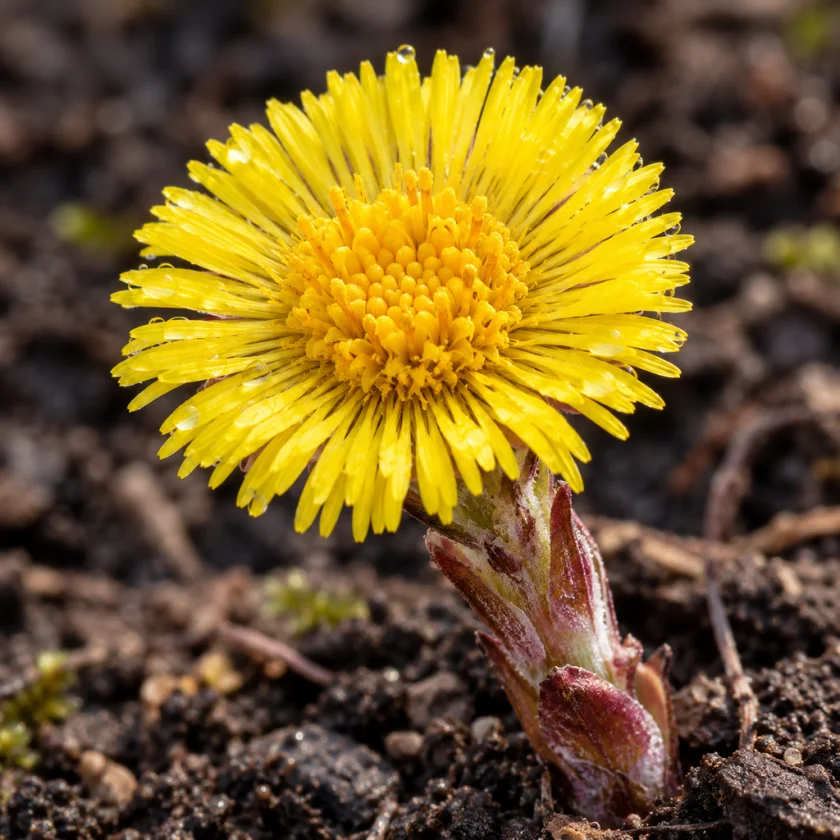
This is a safety-led section, and it has to open with the warning rather than the benefit. Coltsfoot (Tussilago farfara) contains pyrrolizidine alkaloids (PAs) — senkirkine and senecionine — which the liver converts into reactive compounds that damage the lining of its smallest blood vessels. The result is hepatic sinusoidal obstruction syndrome, formerly called veno-occlusive disease. The injury is cumulative, it can appear after the exposure has stopped, and because these alkaloids also damage DNA, safety assessors do not assume a threshold below which the risk is zero. The full account of this risk is in Coltsfoot and Pyrrolizidine Alkaloids: The Liver Risk, the first article in this section.
Nothing in these four pages is a recommendation to take coltsfoot. These pages document what a herb is claimed to do, label the evidence, and state any documented harm right next to the claim — because a reader who is told nothing simply finds the claim somewhere else, without the warning attached. So the tradition is here in full, and so is the toxicology. Where the two collide, the toxicology is stated in plain words rather than hedged.
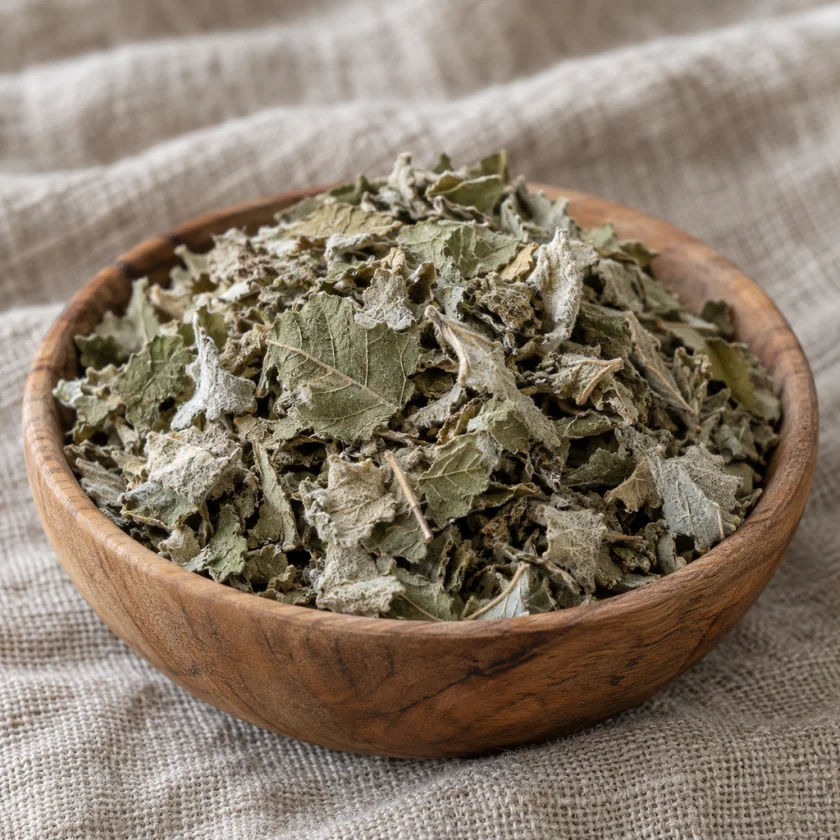
The claimed benefit is genuine as a tradition and thin as evidence. Tussilago means "cough dispeller," and for two thousand years coltsfoot was among the most trusted cough herbs in both Europe and China — where the flower bud is kuan dong hua. Its leaves and flowers are rich in mucilage, so a warm infusion genuinely does coat and soothe an irritated throat. But that demulcent effect is non-specific: it is a property of mucilage, not of this species, and marshmallow root delivers more of it with no alkaloid at all. Meanwhile there is no adequate randomised controlled trial of coltsfoot for cough in humans — not a negative trial, an absent one — while several other cough herbs have been trialled and licensed. Germany and Austria restricted coltsfoot for internal use decades ago; European herbal assessors have not supported it; the EU has written pyrrolizidine-alkaloid limits into food law.
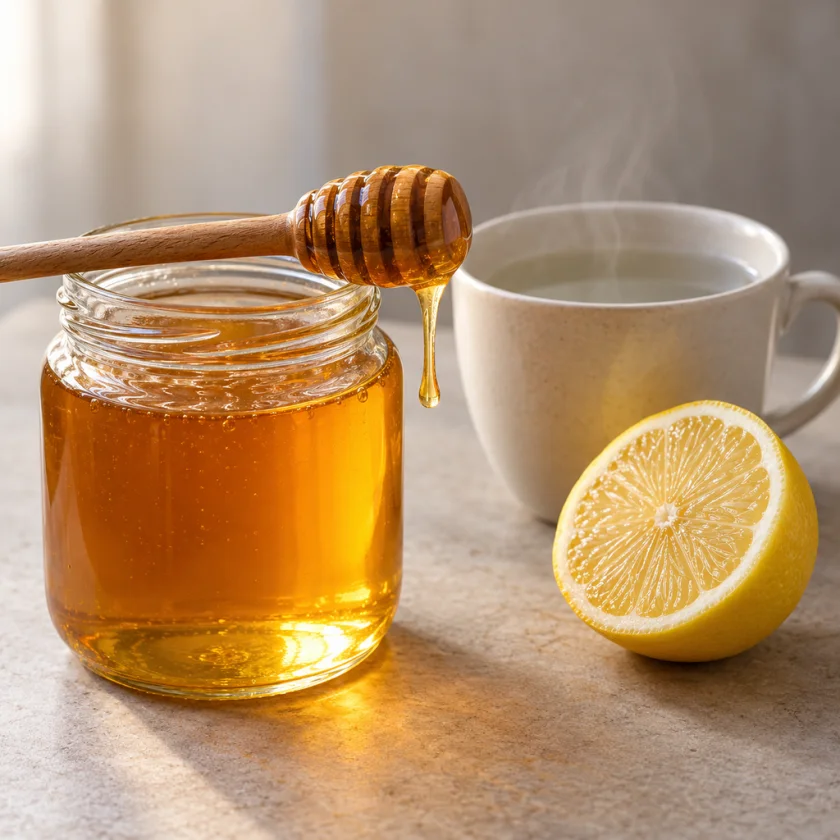
Which leaves an unusually clear picture for a herb page: the documented harm of internal coltsfoot is liver injury, its alkaloids reach an unborn child (a newborn died of hepatic veno-occlusive disease after its mother drank a herbal tea in pregnancy), and no human trial shows a cough benefit. The picture does not even depend on the herb being useless — it could be modestly helpful and the picture would not change, because the same modest soothing comes from mucilage herbs that carry no alkaloid. Cough remedies with trial evidence are collected in Safer Alternatives to Coltsfoot for Cough, which starts with a spoonful of honey.
Coltsfoot and Pyrrolizidine Alkaloids: The Liver Risk
The defining fact about this plant. What senkirkine and senecionine are, how liver cytochrome P450 (CYP) enzymes convert them into reactive pyrrolic esters, why the sinusoidal endothelium gives way first, and why the damage adds up and can surface after you stop. Includes the documented human cases — with the plant-identification caveat stated honestly — the animal cancer data, the warning signs, and which liver tests matter.
Read the deep dive →Coltsfoot for Cough: The Tradition and the Evidence
The claimed benefit, documented properly and weighed properly. Dioscorides and Pliny on smoking the leaf, kuan dong hua in Chinese formulas, coltsfoot rock and British Herbal Tobacco, the demulcent mechanism that genuinely explains the soothing, the tussilagone laboratory pharmacology — and the empty shelf where the human trials should be.
Read the deep dive →Coltsfoot: Regulation, Bans and "PA-Free" Products
The actionable summary, because authorities have acted on this herb and that is rare. German and Austrian restrictions, the EU medicines and food-contaminant positions, why US availability is not a safety assessment, why the limits are set so low — and a careful treatment of the low-PA cultivar and "PA-free" labels, including the butterbur precedent where PA depletion was done properly.
Read the deep dive →Safer Alternatives to Coltsfoot for Cough
The constructive page, and the one most readers need. Honey first (best evidence, never under twelve months), then marshmallow root and the demulcents, ivy leaf and Pelargonium sidoides which have real trial support, thyme-and-primrose combinations, licorice with its own caution, and the physical measures that help — each labelled with its true evidence tier, including what does not work.
Read the deep dive →Table of Contents
- The Four Deep-Dive Articles
- The Whole Thing on One Page
- The Evidence Ledger
- Who the Research Raises Concerns For
- Key Research: Pyrrolizidine Toxicology
- Key Research: Liver Injury in Humans
- Key Research: The Cough Claim
- Key Research: Regulation and PA-Free Products
- Key Research: Safer Alternatives
- External Resources
- Connections
- Featured Videos
The Four Deep-Dive Articles
- Coltsfoot and Pyrrolizidine Alkaloids: The Liver Risk — the mechanism, the disease, the human record, the lab tests. The core safety article.
- Coltsfoot for Cough: The Tradition and the Evidence — two millennia of use, and what has and has not been demonstrated.
- Coltsfoot: Regulation, Bans and "PA-Free" Products — what health authorities decided, and how to read a product claim.
- Safer Alternatives to Coltsfoot for Cough — other cough remedies, ranked by their evidence.
The Whole Thing on One Page
If you read nothing else in this section, this is the argument compressed:
- The tradition is real. Coltsfoot's genus name means "cough dispeller." It was used for cough across Europe and China for two thousand years, in teas, syrups, lozenges, sweets and even smoking mixtures.
- The soothing is real, and it is ordinary. Mucilage coats an irritated throat and dulls the cough reflex. That is a property of mucilage. Marshmallow root has more of it.
- The clinical evidence is absent. No adequate randomised controlled trial of coltsfoot for cough exists in humans. Honey, ivy leaf and Pelargonium sidoides all have trial data. Coltsfoot has tradition, animal models and cell studies.
- The alkaloids are the defining fact. Senkirkine and senecionine are 1,2-unsaturated pyrrolizidine alkaloids. The liver activates them to reactive pyrrolic esters that destroy sinusoidal endothelium.
- The disease has a name and a bad shape. Hepatic sinusoidal obstruction syndrome: liver congestion, ascites, jaundice, and in severe cases liver failure. Cumulative, sometimes silent until advanced, and capable of declaring itself after exposure ends.
- It reaches a fetus. A newborn died of hepatic veno-occlusive disease after maternal herbal-tea consumption in pregnancy. The plant identification in that case was later questioned — we say so — but the alkaloid causation was not, and a hazard that includes being sold a more toxic look-alike is worse, not better.
- It caused liver tumours in rats fed its young flowers. Human cancer risk is inferred from mechanism and animal data, not demonstrated.
- Authorities acted. Germany and Austria restricted it; EU herbal assessors did not support internal use; the EU set pyrrolizidine-alkaloid limits in food. US availability reflects a reactive framework, not a clearance.
- "PA-free" is a real concept and a weak guarantee. A low-alkaloid cultivar exists and batch-assayed depletion genuinely works — but cultivar identity is unverifiable by a shopper, wild material is unpredictable, content varies with part and season, and no consumer-grade assayed coltsfoot product is meaningfully available.
- Therefore: the documented risk of swallowing coltsfoot is liver injury, no human trial shows a benefit, and other cough remedies — honey, ivy leaf, Pelargonium sidoides — have trial data.
The Evidence Ledger
Every claim in this section carries a tier. Collected here so the asymmetry is visible at a glance:
- Established — coltsfoot contains senkirkine and senecionine; 1,2-unsaturated pyrrolizidine alkaloids are hepatotoxic and genotoxic; hepatic CYP enzymes activate them to reactive pyrroles; those alkaloids cause sinusoidal obstruction syndrome in humans; they cross the placenta; the demulcent mechanism works as a class effect.
- Animal evidence — in a 1976 rat study, rats fed young coltsfoot flowers developed a liver blood-vessel cancer (hemangioendothelial sarcoma), and the rate rose with the dose: 8 of 12 rats on a 16% coltsfoot diet, 1 of 10 on 8%, and none on 4%; the authors put the effect down to the alkaloid senkirkine; extracts reduce induced cough in animal models.
- Preliminary (cell studies) — tussilagone suppresses inflammatory signalling via heme oxygenase-1 induction; flavonoid antioxidant activity.
- Case reports — the fatal newborn case (alkaloid causation established, botanical identity uncertain); adult and fetal veno-occlusive disease after pyrrolizidine-alkaloid herbal exposure. A 2020 systematic review found 11 published case reports of possible PA harm after eating comfrey or coltsfoot. In many, the plant actually eaten was never firmly identified: some involved a different plant swapped in, some had no botanical identification, and some blamed coltsfoot or comfrey for an alkaloid that also occurs in other plants of known toxicity. The reviewers called these cases an unreliable basis for judging oral coltsfoot and comfrey; the worry about the alkaloids rests mainly on toxicology studies.
- Traditional use only — coltsfoot for cough, bronchitis, hoarseness, wheezing and whooping cough; the honey-fried kuan dong hua preparation; medicinal smoking.
- Not demonstrated — that coltsfoot relieves cough better than placebo in humans; that honey-frying or any kitchen preparation removes alkaloids; that a "PA-free" label reflects a tested batch.
- Contradicted — that coltsfoot is safe for internal use.
Who the Research Raises Concerns For
Regardless of any "PA-free" claim, because a label is not an assay:
- Anyone pregnant — the alkaloids cross the placenta and the fetal liver is uniquely vulnerable.
- Anyone breastfeeding — they can pass into milk.
- Infants and children — smaller body mass, developing metabolism, and the group most often given cough remedies.
- Anyone with any liver condition — hepatitis, fatty liver, cirrhosis, or a past drug-induced liver injury.
- Heavy drinkers and anyone taking multiple medications, particularly drugs broken down by the CYP3A liver enzymes or drugs already flagged for liver toxicity.
- Anyone taking another pyrrolizidine-alkaloid herb — comfrey, borage, non-depleted butterbur. The burden adds across sources.
- Anyone using wild-collected or unlabelled material — unknown provenance means unknown dose, and look-alike species can be worse.
Key Research: Pyrrolizidine Toxicology
Titled papers link to their PubMed records; the untitled topic lines link to live PubMed searches, so results stay current.
- Fu PP, Xia Q, Lin G, Chou MW. Pyrrolizidine alkaloids — genotoxicity, metabolism enzymes, metabolic activation, and mechanisms, Drug Metabolism Reviews, 2004;36(1):1-55 — how the liver converts these alkaloids into reactive pyrroles. — PubMed PMID: 15072438
- Ruan J, Yang M, Fu P, Ye Y, Lin G. Metabolic activation of pyrrolizidine alkaloids: insights into the structural and enzymatic basis, Chemical Research in Toxicology, 2014;27(6):1030-9 — which structures activate and via which enzymes. — PubMed PMID: 24836403
- Moreira R, Pereira DM, Valentão P, Andrade PB. Pyrrolizidine alkaloids: chemistry, pharmacology, toxicology and food safety, International Journal of Molecular Sciences, 2018;19(6):1668 — a broad modern synthesis of the class. — PubMed PMID: 29874826
- Hirono I, Mori H, Culvenor CC. Carcinogenic activity of coltsfoot, Tussilago farfara L., Gann, 1976;67(1):125-9 — rats fed young coltsfoot flowers developed liver tumours. — PubMed PMID: 1269853
- Mei N, Guo L, Fu PP, Fuscoe JC, Luan Y, Chen T. Metabolism, genotoxicity, and carcinogenicity of comfrey, Journal of Toxicology and Environmental Health, Part B, 2010;13(7-8):509-26 — the parallel pyrrolizidine herb, studied in more depth. — PubMed PMID: 21170807
- Pyrrole–protein adducts as biomarkers of pyrrolizidine-alkaloid exposure — how past exposure is detected once symptoms appear. — Search PubMed
Key Research: Liver Injury in Humans
- Roulet M, Laurini R, Rivier L, Calame A. Hepatic veno-occlusive disease in newborn infant of a woman drinking herbal tea, The Journal of Pediatrics, 1988;112(3):433-6 — the landmark fatal case, and the plant-identification question that accompanies it. — PubMed PMID: 3346784
- Chojkier M. Hepatic sinusoidal-obstruction syndrome: toxicity of pyrrolizidine alkaloids, Journal of Hepatology, 2003;39(3):437-46 — the vascular pathology in detail. — PubMed PMID: 12927933
- Chen Z, Huo JR. Hepatic veno-occlusive disease associated with toxicity of pyrrolizidine alkaloids in herbal preparations, Netherlands Journal of Medicine, 2010;68(6):252-60 — the human clinical record from herbal exposure. — PubMed PMID: 20558855
- Neuman MG, Cohen L, Opris M, Nanau RM, Hyunjin J. Hepatotoxicity of pyrrolizidine alkaloids, Journal of Pharmacy & Pharmaceutical Sciences, 2015;18(4):825-43 — mechanisms and clinical presentation together. — PubMed PMID: 26626258
- Prakash AS, Pereira TN, Reilly PE, Seawright AA. Pyrrolizidine alkaloids in human diet, Mutation Research, 1999;443(1-2):53-67 — dietary exposure routes and their consequences. — PubMed PMID: 10415431
- Avila C, Breakspear I, Hawrelak J, Salmond S, Evans S. A systematic review and quality assessment of case reports of adverse events for borage (Borago officinalis), coltsfoot (Tussilago farfara) and comfrey (Symphytum officinale), Fitoterapia, 2020;142:104519 — 11 case reports appraised; uncertain plant identity undermined attribution. — PubMed PMID: 32105669
- Herb-induced liver injury: recognition, reporting and the role of adulteration — why a herbal cause is so often missed. — Search PubMed
Key Research: The Cough Claim
A 2021 review of coltsfoot found that its anti-inflammatory, nerve-protective, anti-diabetic and antioxidant effects come from laboratory (cell) and animal studies, not from trials in people. The plant holds more than 150 chemicals, pyrrolizidine alkaloids among them, and reported harm has come from collecting the wrong, alkaloid-rich plant. The reviewers wrote that well-designed studies are needed to ensure safety before clinical use, and that correct botanical identification of coltsfoot and its look-alikes is a precondition for quality control.
- Chen S, Dong L, Quan H, Zhou X, Ma J, Xia W, Zhou H, Fu X. A review of the ethnobotanical value, phytochemistry, pharmacology, toxicity and quality control of Tussilago farfara L. (coltsfoot), Journal of Ethnopharmacology, 2021;267:113478 — the single best starting point for the plant. — PubMed PMID: 33069788
- Hwangbo C, Lee HS, Park J, Choe J, Lee JH. The anti-inflammatory effect of tussilagone, from Tussilago farfara, is mediated by the induction of heme oxygenase-1 in murine macrophages, International Immunopharmacology, 2009;9(13-14):1578-84 — the cell-level mechanism behind the plant's soothing reputation. — PubMed PMID: 19800419
- Antitussive and expectorant evaluation of Tussilago farfara extracts in animal cough models — the preliminary efficacy literature. — Search PubMed
- Demulcent mucilage polysaccharides in dry cough and throat irritation — the class mechanism coltsfoot shares with marshmallow and mullein. — Search PubMed
- Placebo response and the sweet-viscous-vehicle effect in antitussive trials — why uncontrolled impressions of a cough remedy mislead. — Search PubMed
- Natural history and duration of acute cough after upper respiratory infection — the untreated trajectory every remedy is credited with. — Search PubMed
Key Research: Regulation and PA-Free Products
- Regulatory limits and risk management for pyrrolizidine alkaloids in herbal medicinal products — how European limits were derived. — Search PubMed
- Determination of pyrrolizidine alkaloids in teas, herbal drugs and honey — the surveys that made this a food-safety issue. — Search PubMed
- Risk assessment of pyrrolizidine alkaloids in food of plant and animal origin — the exposure modelling behind maximum levels. — Search PubMed
- Breeding and selection of low-pyrrolizidine-alkaloid coltsfoot and comfrey lines — the plant-breeding response. — Search PubMed
- PA-depleted Petasites hybridus extracts in migraine prophylaxis — the model for doing alkaloid depletion properly. — Search PubMed
- Botanical authentication and adulteration of herbal raw material by DNA barcoding — how misidentification is caught. — Search PubMed
Key Research: Safer Alternatives
- Honey for acute cough in children — randomised trials and Cochrane review; the best-evidenced option in this space. — Search PubMed
- Infant botulism and honey — why honey is absolutely excluded under twelve months. — Search PubMed
- Pelargonium sidoides extract for acute respiratory tract infections — Cochrane review and underlying trials. — Search PubMed
- Ivy leaf (Hedera helix) extract for cough and acute bronchitis — trial and observational evidence, and the α-hederin mechanism. — Search PubMed
- Thyme and primrose root fixed combination in acute bronchitis — placebo-controlled randomised evidence. — Search PubMed
- Over-the-counter medications for acute cough — the Cochrane reviews finding no good evidence of benefit. — Search PubMed
External Resources
- European Medicines Agency — herbal monographs, and the committee statement on herbal products containing unsaturated pyrrolizidine alkaloids.
- European Food Safety Authority — scientific opinions on pyrrolizidine alkaloids in food, honey, tea and supplements.
- German Federal Institute for Risk Assessment (BfR) — the analytical and risk-assessment work behind the European limits.
- U.S. National Institutes of Health (NIH) National Center for Complementary and Integrative Health — plain-language herb safety information.
- Cochrane Library — systematic reviews of cough treatments.
- NHS — when a cough needs medical assessment.
- PubMed — the literature database behind every citation here.
Connections
- All Herbs
- Coltsfoot
- PA Liver Risk
- Cough Tradition and Evidence
- Regulation and PA-Free Products
- Safer Alternatives for Cough
- Comfrey
- Comfrey Benefits
- Comfrey: Never Internally
- Butterbur
- Butterbur PA Liver Safety
- Choosing a PA-Free Product
- Marshmallow Root
- Marshmallow Root for Cough
- Mullein
- Mullein for Cough
- Thyme for Cough
- Slippery Elm
- Licorice Safety Warning
- Honey for Cough
- Elderberry for Cold and Flu
- Liver Disease
- Cirrhosis
- Liver Function Tests
- Chronic Cough
- Bronchitis
- Toxins
Safety Note and Disclaimer
This hub and its four articles are health education, not medical advice, and they are not a recommendation to use coltsfoot. The section exists to document a claimed traditional use together with its documented harm, so that a reader meets both at once rather than only the claim. Coltsfoot contains hepatotoxic, genotoxic pyrrolizidine alkaloids; its cough benefit has never been demonstrated in a controlled human trial; and safer, better-evidenced options exist. The research raises the strongest concern for pregnancy and breastfeeding (the alkaloids reach the unborn child), for children, and for people with any liver condition, heavy drinkers and people taking prescription medicines — and a "PA-free" label is not a batch assay. Pain or swelling in the upper-right abdomen, abdominal fluid, jaundice, dark urine or unexplained fluid weight gain after coltsfoot or another pyrrolizidine-alkaloid herb are signs of liver injury that hospitals treat as urgent, and the exact product taken is what identifies the cause. A cough lasting more than about three weeks, or one with blood, breathlessness, chest pain or persistent fever, is a sign doctors investigate for a cause beyond a passing cold.