Marshmallow Root for Cough and Sore Throat
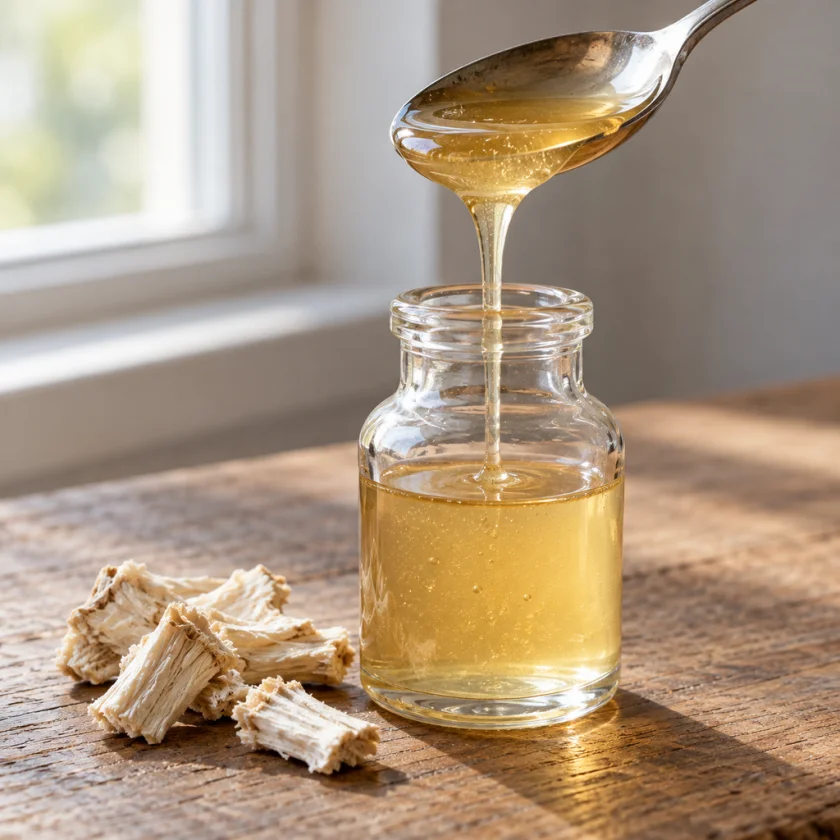
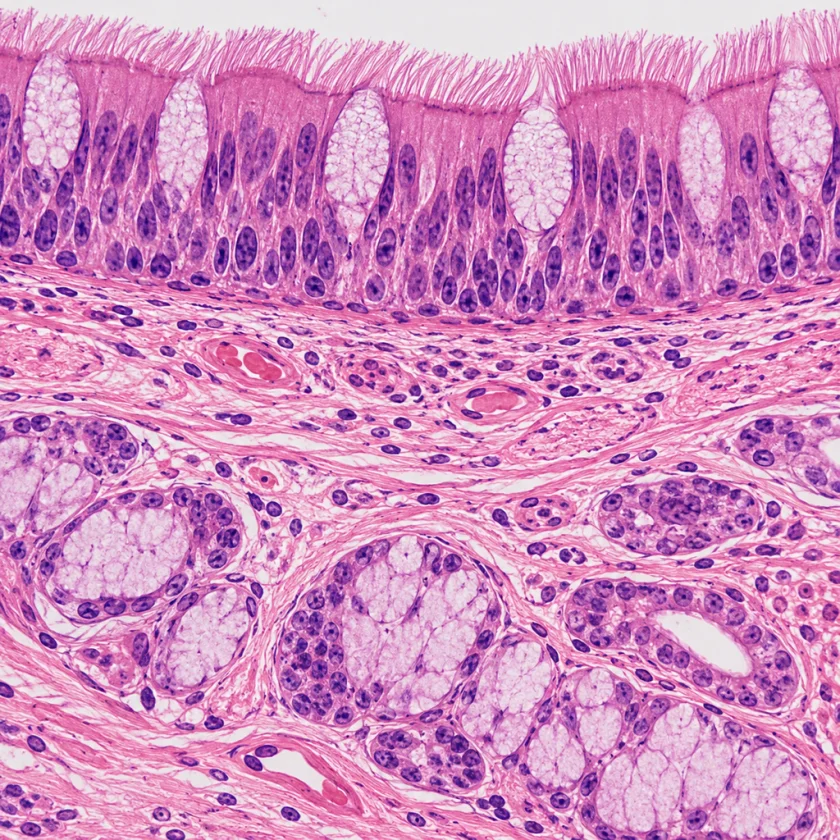
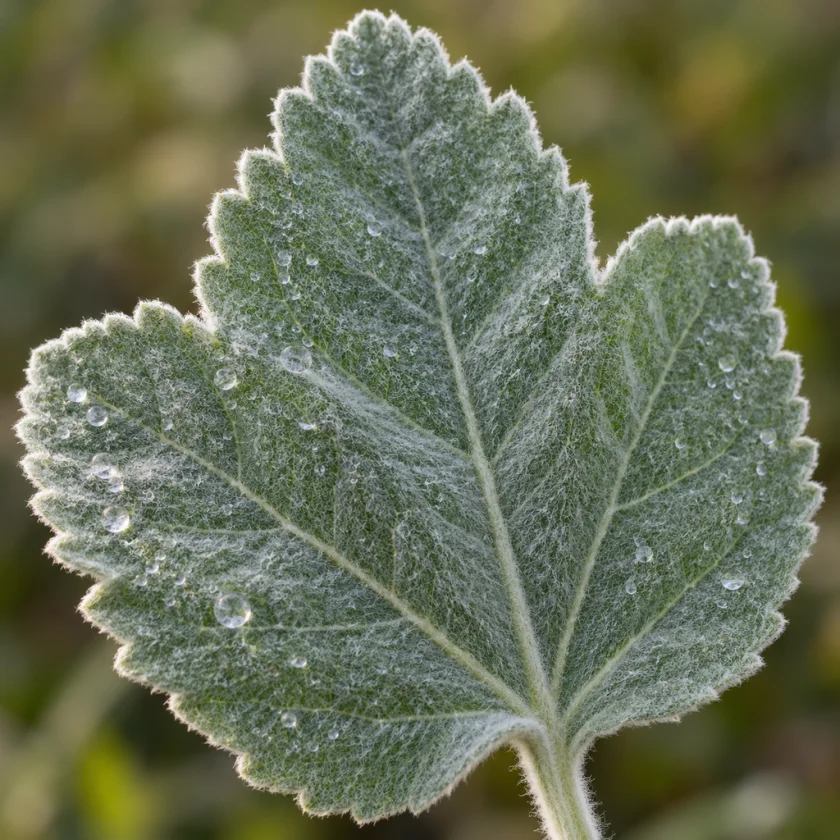
This is the one use of marshmallow root that a European regulator has put its name to, and the one where the mechanism and the tradition line up most convincingly. It is also the use most likely to disappoint you if you pick the wrong preparation, because a demulcent only works where it makes contact. A capsule of powdered root swallowed with a mouthful of water passes your throat in under a second, sealed inside a gelatin shell that does not dissolve until it reaches the stomach. It cannot possibly soothe a pharynx it never touched.
Everything below follows from that. Althaea officinalis relieves a dry, tickly cough and a raw throat by laying a film of hydrated mucilage across the irritated lining — a largely physical intervention rather than a pharmacological one. So the questions worth asking are: does the film really form, does it really quiet the cough reflex, how good is the human evidence, and how do you get the stuff onto the tissue that hurts?
Table of Contents
- Why a Coating Helps a Dry Cough
- The Cough Reflex and Where Mucilage Interrupts It
- What the Regulators Accept — and What That Means
- The Human Evidence, Graded Honestly
- The Multi-Herb Syrup Problem
- ACE-Inhibitor Cough: A Small, Interesting Signal
- Coughs Marshmallow Does Not Suit
- Using It So It Actually Touches the Tissue
- Marshmallow, Slippery Elm, Licorice and Honey
- When a Cough or Sore Throat Needs a Clinician
- Key Research Papers
- Connections
- Featured Videos
Why a Coating Helps a Dry Cough
A dry, unproductive cough is a machine running with no work to do. The cough reflex exists to clear the airway, and when there is nothing to clear it becomes self-sustaining: the throat is dry and inflamed, dryness and inflammation lower the threshold of the sensory nerve endings in the lining, those endings fire, you cough, the blast of air across the mucosa dries and abrades it further, and the threshold drops again. That loop is why a cold's cough can outlast the cold by two or three weeks, and why it is so much worse at night in a heated bedroom with dry air.
A demulcent breaks the loop at exactly one point: it puts a hydrated, slippery layer between the air and the nerve endings. Marshmallow root is 5–11 percent mucilage by dry weight — large branched polysaccharides including rhamnogalacturonans, arabinogalactans and arabinans — and in water those polymers swell into a viscous gel. Applied to the throat, the gel is mucoadhesive: its chains entangle with the mucin already coating the tissue and resist being immediately swallowed away. The film holds water against a dried-out surface, damps the mechanical stimulation of coughing, and blunts contact between irritants and the sensory endings beneath.
Most of this is physics rather than chemistry in the drug sense: no enzyme and no absorption are involved, although the one animal study of the purified root sugar (described in the next section) points to a receptor-linked effect on the cough reflex as well. The polysaccharides are far too large to cross into the bloodstream intact, and nobody has ever claimed a circulating active metabolite for marshmallow. That is not a weakness of the herb — a lot of over-the-counter cough relief works the same way, and pharmacologists have long observed that a substantial part of any cough syrup's effect comes from the sweet, viscous syrup vehicle itself rather than the labelled drug. Marshmallow simply makes the vehicle the active ingredient.
There is one finding that goes slightly beyond pure mechanics. In work published in the Journal of Ethnopharmacology in 2010, Deters and colleagues applied aqueous marshmallow root extract and isolated root polysaccharides to a human epithelial cell line (KB cells) and to human skin fibroblasts. At 1–10 µg/mL the extract raised the vitality and growth of the epithelial cells, and the polysaccharides raised their vitality without making them multiply faster; neither had any effect on the fibroblasts. The polysaccharides were taken up into the epithelial cells but not into the fibroblasts, on whose surface they formed an adhesive layer instead, and gene analysis of the epithelial cells showed genes for cell adhesion proteins, growth regulators, extracellular matrix, cytokine release and apoptosis switched on — a pattern the authors read as consistent with tissue repair rather than mere coverage. That is preliminary evidence from cell culture — it does not demonstrate healing in a human throat — but it suggests the mucilage is doing something more interactive than cling film.
The Cough Reflex and Where Mucilage Interrupts It
To judge whether the demulcent story is credible, it helps to know that cough sensors sit in two quite different places. Deeper in the airway, in the larynx and the tracheobronchial tree, are receptors that fire on mechanical touch and on chemical irritants. Higher up, in the pharynx and at the back of the mouth, are the endings that produce the familiar "tickle" — the urge-to-cough sensation that dominates a post-viral dry cough. A swallowed demulcent can reach the pharynx and the upper larynx. It cannot coat a bronchiole.
That anatomical limit predicts exactly which coughs marshmallow should help: the ones driven from above. And it matches the traditional indication, which has always been the dry, tickly, throat-driven cough rather than the deep chesty one.
The strongest mechanistic evidence comes from animal work. Šutovská and colleagues, writing in the International Journal of Biological Macromolecules in 2009, isolated the rhamnogalacturonan fraction of Althaea officinalis and tested it in a guinea-pig cough model, where coughing is provoked by a standard chemical stimulus and counted. The polysaccharide reduced cough number in a dose-dependent way, which is the pattern you want to see if an effect is real rather than incidental. In that study the purified root sugar quieted citric-acid-induced cough about as well as codeine, did not relax the airway muscle (so it does not work by opening the airways), was not affected by a blocker of one type of potassium channel (K-ATP), and lost much of its effect when the animals were first given a serotonin 5-HT2 receptor blocker. The authors conclude that the cough-suppressing effect is associated with the 5-HT2 receptor — so the root sugar may act on nerve signalling as well as by coating.
Grade that honestly: preliminary, animal. A guinea pig's cough response to citric acid is a useful model but not a human post-viral cough, and a purified polysaccharide fraction is not a cup of tea. What the study establishes is that a purified marshmallow polysaccharide can produce a measurable antitussive effect under controlled conditions, partly through a receptor-linked pathway rather than coating alone — a genuine step up from "people have used it for centuries."
What the Regulators Accept — and What That Means
The European Medicines Agency, through its Committee on Herbal Medicinal Products, publishes a monograph on Althaeae radix. It classifies marshmallow root as a traditional herbal medicinal product for the relief of irritation of the mouth and throat and the dry cough associated with it, and for the symptomatic treatment of mild gastrointestinal discomfort. ESCOP publishes a comparable monograph, and Germany's Commission E reached similar conclusions decades ago.
It matters enormously what that category means, because marketing copy routinely inflates it. European herbal regulation has two tracks. A well-established use product must show efficacy through published clinical data of adequate quality. A traditional use product does not: it needs a plausible mechanism, an acceptable safety profile, and documented medicinal use for at least thirty years, fifteen of them in the European Union. Marshmallow root is registered on the traditional track.
The monograph also sets out the amounts. For the throat and dry-cough use, adolescents, adults and the elderly take 0.5–3 g of cut root in 150 mL of water as a cold-water macerate several times a day, up to 15 g a day; children aged 3–5 take 0.5–1 g in 150 mL three times a day, and children aged 6–11 take 0.5–1.5 g three times a day. The macerate is used immediately after it is prepared. Use under 3 years of age is not recommended, and solid forms such as lozenges are not recommended under 6 because of the form itself. The monograph lists breathlessness, fever or pus-like sputum during use, symptoms that worsen, or symptoms lasting longer than one week as signs that call for a doctor.
So a regulator has formally assessed marshmallow root, examined the literature, and concluded that recommending it for a dry throat-driven cough is reasonable and safe. That is a real endorsement and worth respecting. It is not a statement that trials have demonstrated efficacy, and anyone citing the European Medicines Agency (EMA) monograph as proof of clinical benefit is misreading it. The honest summary is: officially recognised on the basis of tradition, plausibility and an excellent safety record.
The Human Evidence, Graded Honestly
Here is the whole human dataset, in descending order of how much weight it can carry — which is not very much in absolute terms.
- User surveys of a marshmallow root extract for irritative cough. Fink, Schmidt and Kraft reported two such surveys in Complementary Medicine Research in 2018 (in German). The 822 pharmacy customers had bought lozenges or syrup made from one aqueous marshmallow root extract for a dry cough and filled in a 7-day questionnaire; they reported a good effect with a very rapid onset — in most cases within 10 minutes — and tolerability was very good, with only 3 minor adverse events, all with the syrup. Tier: human, weakest possible design. There is no placebo arm and no randomisation. People who buy a cough remedy and are then asked whether it helped overwhelmingly say yes; this is one of the most reliably reproduced findings in all of medicine, and it is why placebo controls exist. The rapid onset is at least consistent with a coating mechanism, since a film forms in seconds while a systemic drug needs half an hour.
- Small clinical studies of marshmallow-containing syrups. Several exist, mostly in cough of the upper airway, and most are small, short and open-label. Their central problem is covered in the next section.
- A small study in ACE-inhibitor cough, reported by Rouhi and Ganji in 2007, discussed below.
- No adequately powered, placebo-controlled, single-herb randomized trial of marshmallow root for cough has been published. That sentence is the honest headline. Nothing in the literature fills that gap, and a product page implying otherwise is not supported by the published trials.
What that leaves: a dry post-viral cough is self-limiting, marshmallow is cheap and about as safe as a herb gets, the mechanism is coherent, and the outcome people care about — how scratchy the throat feels tonight — is precisely the kind of subjective comfort measure where a soothing film plausibly helps. The evidence describes a low-risk comfort measure; it does not show that marshmallow is proven to work.
The Multi-Herb Syrup Problem
This deserves its own section because it is the single biggest reason the marshmallow literature looks stronger at a glance than it is.
Marshmallow is almost never sold alone in a cough product. Commercial syrups combine it with thyme, ivy leaf, mullein, plantain, primrose root, honey and often menthol or a small dose of a conventional antitussive. There is a formulation logic to this — thyme and ivy are used as expectorants and bronchial relaxants, marshmallow as the demulcent — and combining them makes commercial sense. It also makes the resulting trials almost useless for judging marshmallow.
When a randomized trial of a five-herb syrup reports fewer coughing fits than placebo, the correct conclusion is "this syrup worked". It is not "marshmallow works." The effect could belong to the thyme, to the ivy, to the honey, to the sugar-and-viscosity vehicle, or to some combination. Nothing in the design allows attribution to one component, and a well-conducted trial of a combination product is still not evidence about a single ingredient. Reviews that list such trials under a marshmallow heading — and some do — overstate the case even when every individual citation is accurate.
The test that separates the two is whether the tested product was marshmallow root alone. If it was a formula, the finding is about the formula. This is not pedantry; it is the difference between an evidence base and a shelf of plausible products.
ACE-Inhibitor Cough: A Small, Interesting Signal
Roughly one in ten people taking an angiotensin-converting enzyme inhibitor (ACE inhibitor) for blood pressure or heart failure — lisinopril, ramipril, enalapril and their relatives — develops a persistent dry cough. The mechanism is thought to involve accumulation of bradykinin and substance P in the airway, which sensitises cough receptors. It is a genuinely miserable side effect, it is the commonest reason people stop these otherwise excellent drugs, and conventional medicine has no good treatment for it other than switching to a different drug class.
A dry, sensitised, throat-driven cough with no infection to clear is, in principle, an ideal target for a demulcent, and Rouhi and Ganji published a small study in 2007 reporting improvement in ACE-inhibitor cough with Althaea officinalis. Tier: human, very small, weak design. It is a single small study in a niche journal and it has not, as far as the published literature shows, been replicated in a properly controlled trial.
Two facts frame it. First, this is a legitimately interesting hypothesis with low risk, while the alternative — changing blood-pressure medication — is not trivial. Second, an angiotensin-converting enzyme inhibitor that is stopped no longer controls the blood pressure or heart failure it was prescribed for, and marshmallow mucilage can delay the absorption of medicines taken with it, which is why the European Medicines Agency (EMA) monograph sets a precautionary gap of ½ to 1 hour between marshmallow and other medicines (see Mucilage, Dosing and Safety).
Coughs Marshmallow Does Not Suit
A demulcent is a narrow tool, and using it for the wrong cough is how people conclude the herb is useless.
- Productive, chesty coughs with phlegm. Here the cough is doing useful work and the goal is to help it, not suppress it. Bronchitis is the typical case. Coating the throat neither loosens mucus in the lower airways nor helps you clear it; an expectorant approach, hydration and steam are the traditional answers.
- Asthmatic cough. Cough-variant asthma arises from bronchial smooth-muscle constriction and airway inflammation well below anything a swallowed gel can reach. It needs proper diagnosis and inhaled treatment. Treating asthma with tea is dangerous.
- Cough from reflux. A cough driven by acid reaching the larynx — laryngopharyngeal reflux — may respond partly to a demulcent, but the actual problem is the reflux. Marshmallow is at best adjunctive; see Gut Lining and Reflux.
- Bacterial throat infection. Strep throat and tonsillitis may feel better with a demulcent, and that is fine as comfort care — but marshmallow has no meaningful antibacterial action and will not treat the infection or prevent its complications.
- Any cough lasting more than about three weeks, or accompanied by blood, fever, weight loss, night sweats, breathlessness or a change in voice. That is a diagnostic problem, not a comfort problem.
Using It So It Actually Touches the Tissue
Because the action is contact-dependent, technique matters more for marshmallow than for almost any other herb. Ranked by how well each form delivers mucilage to an irritated throat:
- Lozenges made with real marshmallow root extract — best for throat use. The lozenge dissolves slowly in the mouth and bathes the pharynx repeatedly over several minutes. This is the closest modern equivalent to the original pâte de guimauve.
- A proper root-extract syrup — nearly as good, and the form behind most of the human data. It works best sipped; following it with water washes the film away.
- A cold-water infusion, sipped slowly — excellent, cheap, and the most traditional. In the traditional method, 1–2 tablespoons (about 2–4 g) of dried chopped root go into a jar with about 240 mL of cool water, covered and left 1–4 hours or overnight in the refrigerator, then strained. The liquid is visibly slippery and slightly thick — that is the mucilage. It can be warmed gently, but boiling degrades the long polysaccharide chains that do the work. Honey and a little lemon make it pleasant and honey has cough evidence of its own.
- A gargle or slow mouth-hold of the cooled infusion — useful for pharyngeal soreness specifically, held at the back of the mouth for ten to fifteen seconds before swallowing.
- Powder stirred into a little water — acceptable when sipped after it has hydrated for a few minutes.
- Capsules — the wrong form for a sore throat. They bypass the throat entirely. Capsules are defensible for gut use, not for this.
Frequency matters as much as dose. A film wears off, so small amounts often beat one large dose: the traditional pattern is a cup of infusion or the labelled dose of syrup up to three times a day, plus a lozenge as needed, and many people find the most valuable dose is the one taken last thing before bed, when a dry heated bedroom is about to restart the cycle. Infusions are traditionally made fresh each day, since the slippery brew does not keep well beyond about 24 hours and is best refrigerated; the EU monograph states that the macerate is used immediately after it is prepared.
Marshmallow, Slippery Elm, Licorice and Honey
Four soothing options are realistically in play for a raw throat, and they are not equivalent.
- Slippery elm (Ulmus rubra) is the closest analogue — another true demulcent working by the same physical mechanism. It makes a thicker, blander gruel, is easier to find in North America, and has a comparable (thin) evidence base. There are sustainability concerns about harvesting the inner bark. See Slippery Elm for Throat and Cough.
- Licorice is soothing but works differently — largely pharmacologically, influencing mucus and prostaglandin production, and in whole-root form affecting mineralocorticoid signalling. Whole licorice can raise blood pressure and lower potassium with regular use, which is why deglycyrrhizinated licorice (DGL) exists. Marshmallow has no comparable risk, and for a two-week cough that simplicity is an advantage.
- Honey is, awkwardly for herbalism, the demulcent with the best clinical evidence for cough — several randomized trials in children support it against placebo or no treatment. It is also viscous, sweet and coating, which is very likely the mechanism. Honey is often combined with a marshmallow infusion. Honey is unsafe for infants under twelve months because of the risk of infant botulism.
- Mullein and plantain are mildly mucilaginous partners rather than replacements, and are the herbs most often sharing a bottle with marshmallow. See Mullein for Cough, Bronchitis and Congestion.
When a Cough or Sore Throat Needs a Clinician
Comfort measures are for problems that will resolve on their own. Clinicians treat these as signs needing assessment: a cough lasting more than three weeks; coughing up blood; a sore throat with high fever, drooling, or difficulty opening the mouth or breathing; one-sided severe throat pain with a muffled voice, which can signal an abscess; hoarseness persisting beyond two to three weeks, which needs the vocal cords looked at; progressive difficulty swallowing; unexplained weight loss or night sweats; or any cough with breathlessness or chest pain. A demulcent buys comfort while the body heals — it does not replace a diagnosis.
Key Research Papers
Papers with a fixed identifier link to their PubMed record or DOI; the remaining entries are PubMed topic searches that return the current literature on the point being made. Evidence tier is labelled for each.
- Šutovská and colleagues, "Possible mechanisms of dose-dependent cough suppressive effect of Althaea officinalis rhamnogalacturonan," International Journal of Biological Macromolecules, 2009 — dose-dependent cough reduction by a purified marshmallow polysaccharide in a guinea-pig model. Preliminary (animal). Sutovská M, Nosálová G, Sutovský J, Franová S, Prisenznáková L, Capek P. Int J Biol Macromol. 2009;45(1):27-32. PubMed PMID: 19447256
- Deters and colleagues, "Aqueous extracts and polysaccharides from marshmallow roots: cellular internalisation and stimulation of cell physiology of human epithelial cells in vitro," Journal of Ethnopharmacology, 2010 — mucilage adheres to, is taken up by, and stimulates repair signalling in throat-lining cells. Preliminary (cell culture). Deters A, Zippel J, Hellenbrand N, Pappai D, Possemeyer C, Hensel A. J Ethnopharmacol. 2010;127(1):62-9. PubMed PMID: 19799989
- Fink, Schmidt and Kraft, "Marshmallow root extract for the treatment of irritative cough: two surveys on users' view on effectiveness and tolerability," Complementary Medicine Research, 2018 — 822 users, onset within 10 minutes in most cases, 3 minor adverse events, no control group. Human, weakest design. Fink C, Schmidt M, Kraft K. Complement Med Res. 2018;25(5):299-305 (in German). PubMed PMID: 30064132
- Mahboubi, "Marsh mallow (Althaea officinalis L.) and its potency in the treatment of cough," Complementary Medicine Research, 2020 — review assembling mechanism, tradition and clinical signals. Review. Search: Althaea officinalis cough review
- Rouhi H, Ganji F. Effect of Althaea officinalis on Cough Associated with ACE Inhibitors. Pakistan Journal of Nutrition. 2007;6(3):256-258 — small study reporting improvement in drug-induced dry cough (not indexed in PubMed). Human, very small. doi:10.3923/pjn.2007.256.258
- Randomized trials of multi-herb cough syrups containing Althaea officinalis with thyme, ivy, mullein or plantain — results belong to the formula, not to marshmallow. Search: herbal syrup cough randomized Althaea officinalis
- Literature on the demulcent and syrup-vehicle contribution to antitussive effect — why viscosity and sweetness matter independently of any labelled drug. Search: demulcent syrup vehicle antitussive effect
- Mucoadhesion of plant polysaccharides to oral and pharyngeal mucosa — the physical basis for a film that persists rather than being swallowed instantly. Search: mucoadhesive plant polysaccharide oral mucosa
- Randomized trials of honey for acute cough in children — the best-evidenced demulcent, and a useful benchmark for what a coating agent can achieve. Randomized clinical trials. Search: honey acute cough children randomized trial
- ACE-inhibitor cough mechanism — bradykinin, substance P and cough-receptor sensitisation, the rationale for trying a demulcent. Search: ACE inhibitor cough bradykinin mechanism
- Comparative demulcent literature on slippery elm (Ulmus rubra) for throat and cough. Search: slippery elm Ulmus rubra demulcent throat
- The whole Althaea officinalis literature, which is small enough to survey directly — itself a useful check on any strong claim. Search: Althaea officinalis cough
Connections
- All Herbs
- Marshmallow Root Benefits — the hub, with the full evidence map by tier.
- Marshmallow Root — botany, history and the candy story.
- Mucilage, Dosing and Safety — cold infusions, dose ranges and the ½-to-1-hour medicine gap.
- Gut Lining and Reflux — for cough driven from below by acid.
- Slippery Elm for Throat and Cough — the closest comparator demulcent.
- Mullein for Cough and Congestion — the usual formulation partner.
- Thyme — the expectorant paired with demulcents in commercial syrups.
- Plantain — another mildly mucilaginous cough herb.
- Licorice — soothing but pharmacologically active, with real cautions.
- Laryngitis — hoarseness and a raw throat, a classic demulcent situation.
- Tonsillitis — comfort care only; marshmallow is not antibacterial.
- Strep Throat — needs assessment, not just soothing.
- Laryngopharyngeal Reflux — acid-driven throat irritation and cough.
- Dysphagia — difficulty swallowing is a red flag, not a target for tea.
- Ear, Nose & Throat — where persistent throat symptoms are evaluated.
- Bronchitis — a productive cough, where a demulcent is the wrong tool.
- Asthma — cough from below the reach of any swallowed gel.
Safety and disclaimer. Marshmallow root is very well tolerated and allergy is rare. Because its mucilage can delay the absorption of other oral medicines, the EMA monograph sets a gap of ½ to 1 hour between it and other medicines, before or after. Animal studies report lowered blood sugar, which matters for people taking glucose-lowering drugs. The EMA monograph states that safety during pregnancy and breastfeeding has not been established and, in the absence of sufficient data, does not recommend use then. It does not recommend marshmallow root for children under 3 years, solid forms such as lozenges for children under 6, or the tea for stomach complaints under 12, and it gives cough doses for children aged 3–5 and 6–11. Honey is unsafe for infants under twelve months. A stopped or changed angiotensin-converting enzyme inhibitor, or any other prescribed drug, no longer does the job it was prescribed for. This page is health information, not medical advice, and no herb described here treats an infection, asthma or reflux disease. A cough lasting more than three weeks, blood in the sputum, breathlessness, persistent hoarseness or difficulty swallowing are signs clinicians treat as needing assessment.