Marshmallow Root: Mucilage, Dosing and Safety
This is the practical page, and it exists because marshmallow root is the herb people are most likely to take in a form that cannot possibly work. If a benefit depends on a gel physically touching irritated tissue, then how you prepare it and when you take it matter more than how much you take — which is the reverse of the usual supplement logic. A capsule swallowed whole is the wrong tool for a sore throat no matter what the dose says. A tea boiled hard for ten minutes has already destroyed part of what you were brewing for. And a dose taken alongside your morning medications may quietly delay the absorption of those medications.
Everything here follows from one fact: Althaea officinalis works by physical means, not pharmacological ones. There is no bloodstream level to reach, no receptor to saturate, and no dose-response curve in the pharmacological sense. There is a surface, a film, and a clock.
Table of Contents
- What the Mucilage Actually Is
- Why Cold Water, and What Heat Destroys
- Forms Ranked by Whether They Touch Tissue
- Dose Ranges, Honestly Sourced
- Timing Around Other Medicines: The Half-Hour to One-Hour Gap
- Blood Sugar and Diabetes Medication
- Children, Pregnancy and Breastfeeding
- Side Effects and Allergy
- Quality, Identity and What to Look For
- Storage and Shelf Life
- Marshmallow, Slippery Elm and Licorice Compared
- Key Research Papers
- Connections
- Featured Videos
What the Mucilage Actually Is
Dried marshmallow root is roughly 5 to 11 percent mucilage by weight, and the content is usually highest in roots harvested in autumn or winter from plants at least two years old. The rest of the root is starch, pectin, sucrose, small amounts of flavonoids, coumarins and phenolic acids, plus the usual plant structural material. The non-mucilage constituents are present in quantities too small to explain any of the herb's traditional effects, which is why nobody standardises marshmallow to a "marker compound" the way they standardise, say, milk thistle to silymarin.
The mucilage itself is a mixture of very large branched polysaccharides. The classes named in the chemistry literature — characterised in the "Plant mucilages" series by Tomoda and colleagues in Chemical and Pharmaceutical Bulletin in the early 1980s and refined since — include rhamnogalacturonans, arabinogalactans, arabinans and glucans. The rhamnogalacturonan fraction is the one that was isolated and shown to suppress cough dose-dependently in a guinea-pig model by Šutovská and colleagues in 2009, so if any single component is "the active," it is that one.
Three properties of these molecules explain everything practical:
- They are enormous. Molecular weights run into the hundreds of thousands of daltons. They cannot cross an intestinal wall or a skin barrier intact, and no meaningful amount enters the bloodstream. This is why marshmallow has essentially no systemic toxicity and no pharmacokinetics to speak of.
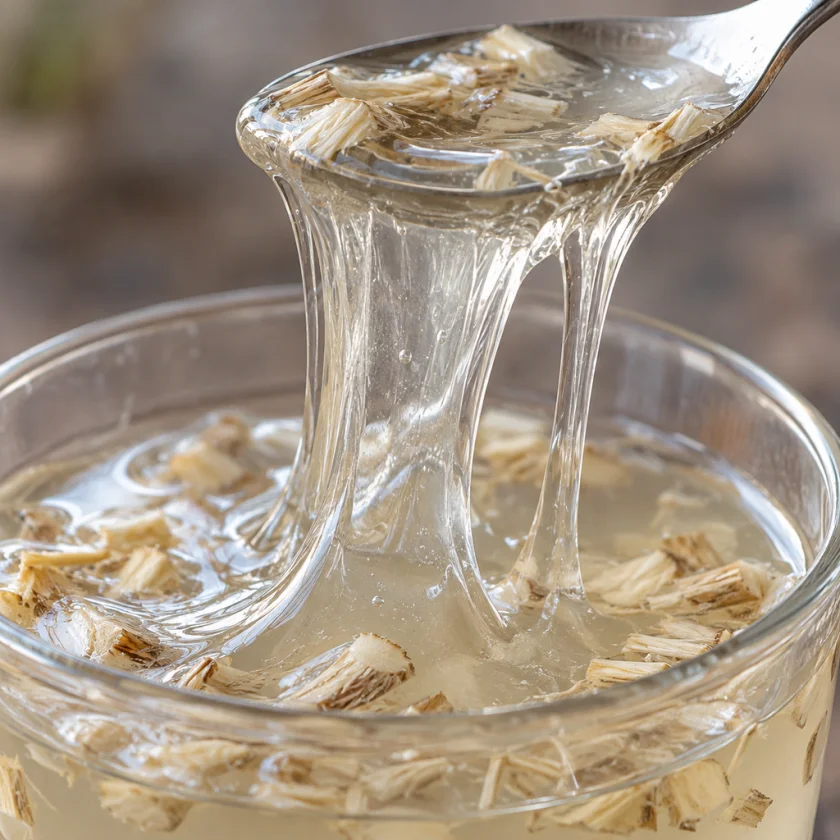
- They are highly hydrophilic. Loaded with hydroxyl groups, they bind many times their own weight in water and swell into a gel — which is what makes them humectants on skin and viscosity agents in the gut.
- The gel is shear-thinning and mucoadhesive. It thins while being spread or swallowed and thickens again at rest, and its chains tangle with the mucin glycoproteins already coating a mucosal surface, so it stays put longer than plain liquid would.
None of that is unique to marshmallow. Slippery elm, plantain, aloe inner leaf, flax, psyllium and okra all contain broadly comparable mucilages. Marshmallow's advantages are history and palatability. It has a formal European Medicines Agency (EMA) herbal monograph, as do linseed (flax), ribwort plantain leaf and psyllium husk.
Why Cold Water, and What Heat Destroys
The instruction to brew marshmallow root in cold water is the most counter-intuitive thing about the herb and the most important. Every other tea you have made in your life was made with boiling water.
The reason is that heat works against you twice over. Long polysaccharide chains are what create viscosity, and viscosity rises steeply with chain length — so breaking a chain in half costs you far more than half its thickening power. Prolonged heat, especially at a rolling boil and especially in the presence of acid, promotes hydrolysis of glycosidic bonds and depolymerises the mucilage. The rheology literature on marshmallow mucilage describes it as a shear-thinning gel whose viscosity depends strongly on extraction conditions, temperature among them. A hard-boiled brew ends up thinner and less protective than a patient cold soak, which defeats the purpose.
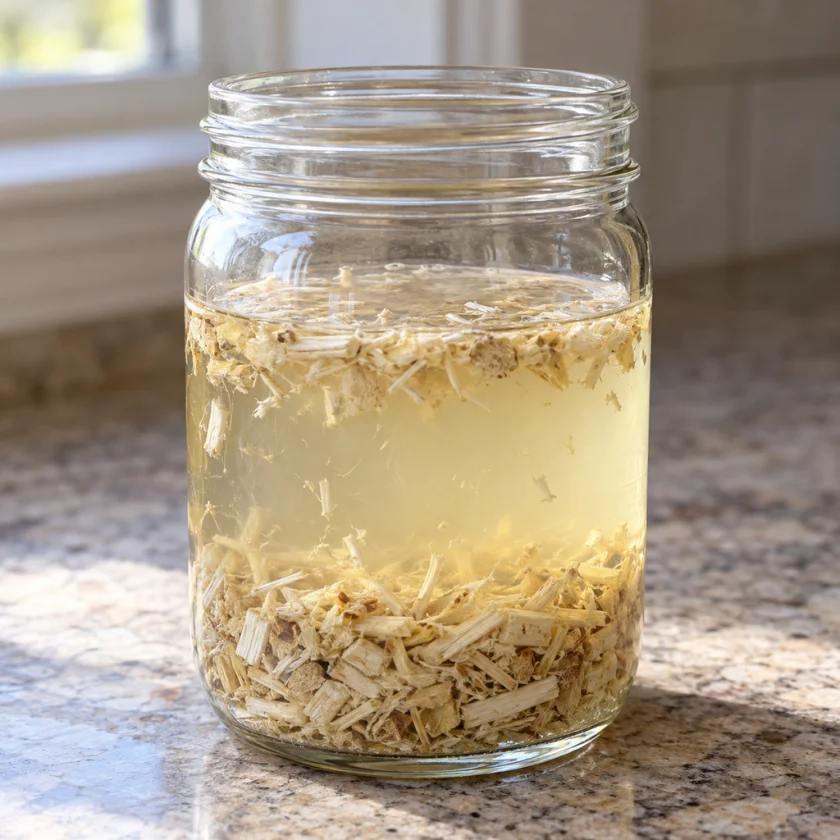
Cold water extracts mucilage perfectly well — it simply needs time instead of temperature. The polysaccharides hydrate and diffuse out of the root tissue over hours rather than minutes. The traditional term for this is a cold macerate or cold infusion.
The method:
- Put 1–2 tablespoons of dried chopped root (roughly 2–4 g) into a jar or mug.
- Add about 240 mL (one cup) of cool or room-temperature water.
- Stir, cover, and steep 1 to 4 hours, or overnight in the refrigerator. Longer is better up to about 8–12 hours.
- Strain. A good infusion is visibly slightly thick and slippery. If it is not slippery, it did not work — either the root was old and depleted, the soak was too short, or too little root was used.
- Drink as is, or warm it gently — below a simmer, just to a comfortable drinking temperature. Brief gentle warming of an already-extracted infusion is far less damaging than boiling the root itself. Honey and lemon make it pleasant.
If you are in a hurry, warm (not boiling) water for 20–30 minutes gives a usable if thinner result. What damages it is boiling the root for ten minutes as you would a hard woody decoction root such as burdock or astragalus — those are extracted for different constituents and tolerate heat; marshmallow's mucilage does not.
Forms Ranked by Whether They Touch Tissue
The form that works depends on the surface it has to reach. This is the single most useful table of judgements on the page.
- Lozenges made with real root extract — best for mouth and throat. Dissolves slowly and bathes the pharynx repeatedly. The direct descendant of the original medicinal pâte de guimauve.
- Root-extract syrup — excellent for throat and upper oesophagus. The form behind most of the human survey data. It works best sipped slowly; washing it down with water removes the film just applied.
- Cold-water infusion — excellent and cheapest, good for throat, oesophagus and stomach. The most traditional and the most controllable. Requires planning ahead.
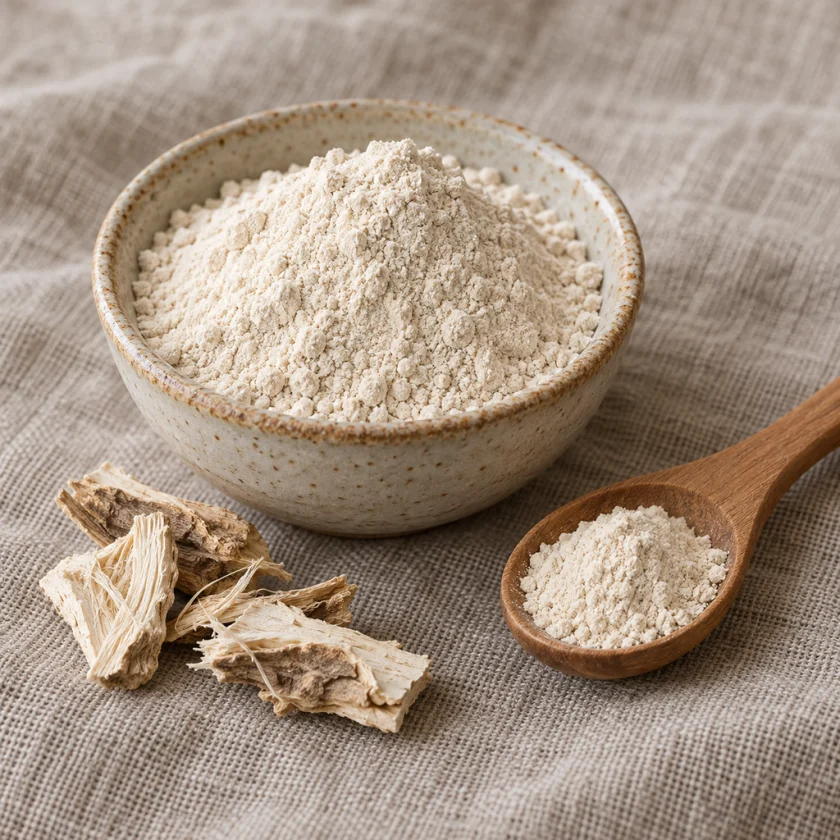
- Powdered root as a gruel — best mucilage delivery per dose for the stomach. A teaspoon is stirred into a little cool water, left a few minutes to hydrate until slippery, and taken slowly.
- Glycerite or low-alcohol liquid extract — acceptable, convenient. Water- and glycerin-based extracts retain mucilage better than high-percentage alcohol tinctures, in which polysaccharides precipitate out. If a tincture is not slippery, it is not delivering mucilage.
- Capsules and tablets — defensible for gut use, wrong for the throat. They bypass the mouth and pharynx entirely inside a shell that opens in the stomach. They are taken with a full glass of water so the powder hydrates rather than sitting as a dry plug.
- Cream, ointment or compress — for skin; see Skin and Wound Care.
- Confectionery marshmallows — contain no marshmallow root whatsoever. Sugar, gelatin and air. Not a form of this herb in any sense.
Dose Ranges, Honestly Sourced
Marshmallow has a wide, forgiving dose range precisely because it is not absorbed — there is no accumulating blood level to overshoot. The figures below are the ranges that appear consistently in traditional herbal texts and in European monograph documentation for adults. They are reference figures, not a prescription, and a commercial product's own label gives the dose for that product, because concentrations vary enormously.
- Dried root as a cold infusion (macerate): the EMA monograph gives 0.5–3 g in 150 mL of water, several times daily, for mouth and throat irritation with dry cough, and 2–5 g in 150 mL, three times daily, for mild stomach discomfort — with a maximum of 15 g a day for either use. Herbalists often use more per cup.
- Powdered root: roughly 1–3 g per dose, taken with plenty of water, up to three times daily.
- Syrup or lozenge: the label gives the dose. Syrups are typically taken several times a day and lozenges as needed, which is appropriate — frequency matters more than size of dose for a film that wears off.
- Liquid extract: the label gives the dose; typical directions fall in the range of 1–5 mL per dose depending on strength.
- Duration: traditional use is short-term and symptomatic — days to a couple of weeks. The EMA monograph's time limits are 1 week for throat and cough symptoms and 2 weeks for stomach symptoms; symptoms that last longer, or get worse, fall outside what it covers as self-care. There is no established basis for taking marshmallow continuously for months, and no safety data for that pattern either.
Frequency beats size. This is worth repeating because it is the practical corollary of the mechanism. A film applied to the throat lasts perhaps twenty to sixty minutes before being swallowed and washed away. Six small doses spread through the day will outperform two large ones, and the dose taken last thing before bed is often the most valuable, because a dry heated bedroom is where a night cough reignites.
Timing Around Other Medicines: The Half-Hour to One-Hour Gap
This is the one interaction that genuinely matters, and it is a direct and unavoidable consequence of how the herb works.
For a swallowed drug to reach your bloodstream it must dissolve, diffuse across the gut fluid to the intestinal wall, and cross that wall. A viscous polysaccharide gel in the lumen slows the diffusion step — molecules move more slowly through a thick medium — and a coating over the absorptive surface adds a further barrier. This is well documented as a class effect for viscous soluble fibres: psyllium, guar gum and similar agents carry timing instructions for exactly this reason. Marshmallow mucilage is the same kind of material and there is no reason for it to behave differently.
The EMA monograph states that the absorption of medicines taken at the same time may be delayed, and, as a precaution, it sets a gap of ½ to 1 hour between marshmallow root and other medicines, before or after.
How much this matters depends entirely on the drug:
- Matters most for anything with a narrow therapeutic window or monitored blood levels — levothyroxine, warfarin and other anticoagulants, anti-epileptics, lithium, digoxin, immunosuppressants such as tacrolimus or ciclosporin, antiretrovirals, and oral chemotherapy agents. Reduced absorption of these is a clinically meaningful event, not a theoretical one.
- Matters less, but still relevant for antibiotics, oral contraceptives, and anything where a full dose matters but a small variation would not be dangerous.
- Matters little for occasional paracetamol or ibuprofen taken for a headache, where slightly delayed absorption changes nothing important.
Two framing points. First, this interaction is about scheduling marshmallow rather than giving it up — an herb whose only significant interaction is solved by looking at a clock is a remarkably safe herb. Second, it has never been quantified in a human pharmacokinetic study of marshmallow specifically; the EMA monograph lists no reported interactions, and its ½–1 hour gap is a precautionary figure, not a measured one.
Blood Sugar and Diabetes Medication
Several rodent studies report that Althaea officinalis extracts lower blood glucose. Tier: preliminary (animal). No human trial of marshmallow and blood sugar exists.
A plausible and probably sufficient explanation is generic rather than herb-specific: viscous soluble fibre taken with a meal slows gastric emptying and slows glucose diffusion to the intestinal wall, flattening the post-meal rise. That effect is well established for viscous fibres in general and would apply to any mucilage. Whether marshmallow has an additional pharmacological glucose-lowering action is unknown.
The practical consequence is real:
- If you take insulin or a sulfonylurea (gliclazide, glipizide, glimepiride and relatives) — the drug classes that can cause hypoglycaemia on their own — an added mild glucose-lowering effect can stack with your dose. The first week or two of regular use is when a change would show up in home blood-sugar readings.
- If you take metformin or other agents that rarely cause hypoglycaemia alone, the risk is lower, but the ½–1 hour spacing precaution still applies to the medication itself.
- There is no evidence that marshmallow treats diabetes. The effect comes from rodent studies and has never been measured in people; it is not a substitute for proven medication. See Type 2 Diabetes.
Children, Pregnancy and Breastfeeding
Children. Marshmallow root syrups are marketed for children's coughs in several European countries, and the herb's non-absorbed nature makes a systemic problem unlikely. The EMA monograph sets the age limits: use under 3 years is not recommended, solid forms (such as lozenges and capsules) are not recommended under 6, use for stomach complaints has not been established under 12, and the alcohol-based liquid extract has not been established under 18. For coughs it gives its own age-scaled doses rather than a scaled-down adult dose — for the dried root, 0.5–1.0 g in 150 mL of water as a cold macerate three times daily at ages 3–5, and 0.5–1.5 g three times daily at ages 6–11. Products still differ in concentration, excipients and alcohol content, which is why each carries its own age guidance. Two additional points: honey is unsafe for infants under twelve months because of the risk of infant botulism; and the EMA names shortness of breath, fever or pus-like phlegm (purulent sputum) during a cough as warning signs — in a young child, breathing difficulty or a severe or lasting cough is beyond what a home remedy covers.
Pregnancy and breastfeeding. There is no adequate safety data, which is the honest position rather than a reassuring one. The EMA monograph states that safety during pregnancy and breastfeeding has not been established and that, in the absence of sufficient data, use during pregnancy and breastfeeding is not recommended. It is fair to note that the theoretical risk is low, since the mucilage is not absorbed; it is also fair to note that "not absorbed" has never been formally demonstrated in pregnancy and that regulators default to caution for good reasons. The absorption-interaction point applies with extra force to anyone on medication during pregnancy.
Older adults and anyone with swallowing difficulty. A viscous preparation or a dry powder needs care in anyone with dysphagia or a history of choking — a thick gel is harder to clear than water. Powders are meant to be taken fully hydrated in liquid, never dry.
Side Effects and Allergy
Marshmallow root has an excellent tolerability record and this is a large part of why regulators accept it. Reported problems are uncommon and mild.
- Bloating, gas or loose stool. The most likely complaint. Polysaccharides reaching the colon are fermented by bacteria, producing gas. Anyone with bloating-predominant irritable bowel syndrome or bacterial overgrowth may find marshmallow aggravates rather than soothes. Bloating that worsens on the herb is a sign it is not suiting that gut.
- Allergy. Genuinely rare; allergy to the root is the one contraindication the EMA monograph lists. The cross-reaction concern applies to people sensitive to other plants in the mallow family (Malvaceae — which includes hibiscus, okra and cotton), and a patch test is the usual check before a skin preparation goes on reactive skin.
- Choking or a sensation of thickness if powder is taken with too little liquid. Powders are meant to be fully hydrated.
- Dental considerations. Syrups and lozenges are sugar-based. Frequent use through the day — which is exactly what the mechanism encourages — is not tooth-friendly. Rinsing with water afterwards, and using the unsweetened infusion for regular use, cut the sugar exposure; see Tooth Decay.
Quality, Identity and What to Look For
Because there is no standardised marker compound, judging marshmallow quality comes down to a few sensory and label checks — which is actually easier than for most herbs, because the active property is one you can feel.
- The slippery test. Make a cold infusion. If it is not noticeably slippery and slightly viscous after a few hours, the material is depleted or old. This is a direct functional assay of the thing you are paying for, and no other herb offers one so simple.
- Correct species and part. A correct label says Althaea officinalis and specifies root (Althaeae radix). Marsh mallow is sometimes confused with common mallow (Malva sylvestris) and with hollyhock (Alcea rosea, once classified in Althaea) — both are mucilaginous and traditionally used, but they are different plants. Leaf (Althaeae folium) is a legitimate but weaker material.
- Appearance. Good peeled root is pale creamy white to light beige, fibrous, and faintly sweet-smelling. Greyish, dusty or musty material is old.
- Alcohol percentage in tinctures. High-alcohol tinctures precipitate polysaccharides. A marshmallow tincture that is not slippery is not delivering the demulcent.
- Product identity in syrups and lozenges. A genuine product lists Althaea officinalis extract as an active ingredient rather than as a flavour note far down the list, and the label shows what else is in the bottle — many "marshmallow" cough syrups are multi-herb formulas.
Storage and Shelf Life
- Dried root: airtight container, cool, dark, dry. Good for about one to two years, losing potency gradually. Whole or coarsely cut root keeps considerably better than powder, which oxidises faster and cakes with moisture.
- Prepared infusion: the EMA monograph states that the macerate is used immediately after preparation; kept longer, it goes straight into the refrigerator and is used within 24 hours. This is a nutrient-rich, unpreserved, room-temperature-friendly sugar solution — exactly what bacteria want. A fresh batch each day fits the overnight-soak method naturally.
- Home-made skin preparations: same 24-hour limit, and they are not for broken skin. See Skin and Wound Care.
- Commercial syrups: the label gives the shelf life, including the shorter in-use expiry after opening that most carry.
Marshmallow, Slippery Elm and Licorice Compared
These are the three herbs a reader is realistically choosing between, and the differences are practical rather than subtle.
- Marshmallow root. Purely physical demulcent. Best palatability, best availability as a proper syrup or lozenge, a formal European (EMA) traditional-use monograph (licorice has one too), and essentially no risk beyond the timing precaution. Requires a cold soak, which needs planning.
- Slippery elm. Functionally near-identical — the same physical mechanism from a different plant's inner bark. Makes a thicker, blander gruel that many prefer for the stomach, and is more available in North America. Its evidence base is no stronger, and bark harvesting raises sustainability concerns. See Throat and Cough and Digestive and Gut Health.
- Licorice, especially DGL. The important difference: licorice is pharmacologically active, not merely physical. It influences mucus and prostaglandin-mediated mucosal defence, which gives it a better claim on actually healing gastric mucosa — and whole licorice also inhibits the enzyme that inactivates cortisol in the kidney, so regular use can raise blood pressure and lower potassium. Deglycyrrhizinated licorice removes most of that. Marshmallow carries no comparable risk, which is why herbalists reach for marshmallow for a two-week cough and for licorice in a managed ulcer. See gastrointestinal (GI) Health and Ulcers and the cortisol and hypertension warning.
Honourable mentions: plantain and mullein as mildly mucilaginous cough partners; fenugreek as a mucilage-rich seed with far better-studied blood-sugar effects; flaxseed and okra as everyday foods delivering comparable mucilage; and honey, which is the demulcent with the strongest clinical trial evidence of all.
Key Research Papers
Cited as PubMed topic searches rather than fixed identifiers, so each link returns the current literature. Evidence tier is labelled for each.
- Tomoda and colleagues, "Plant mucilages," Chemical and Pharmaceutical Bulletin, early 1980s — isolation and structural characterisation of the Althaea officinalis mucilage polysaccharides. Search: Tomoda plant mucilages Althaea officinalis
- Rheological characterisation of marshmallow root mucilage as a shear-thinning polysaccharide, and the effect of extraction conditions including temperature — the physical basis of the cold-water rule. Search: Althaea officinalis mucilage extraction rheological viscosity. — Search PubMed
- Šutovská and colleagues, on the dose-dependent cough-suppressive effect of Althaea officinalis rhamnogalacturonan, International Journal of Biological Macromolecules, 2009 — identifies the fraction most likely to be "the active." Preliminary (animal). Search: Althaea officinalis rhamnogalacturonan cough
- Deters and colleagues, on marshmallow polysaccharide adhesion to and internalisation by human epithelial cells, Journal of Ethnopharmacology, 2010 — why contact with the tissue is the whole point. Preliminary (cell culture). Search: Althaea officinalis polysaccharide epithelial cells
- Fink, Schmidt and Kraft, on marshmallow root extract for irritative cough, Complementary Medicine Research, 2018 — the source of most human tolerability data, from uncontrolled surveys. Human, weakest design. Search: Althaea officinalis irritative cough survey
- Viscous dietary fibre and reduced or delayed drug absorption — the class evidence behind spacing marshmallow apart from medicines. Search: viscous dietary fiber drug absorption interaction
- Psyllium and guar gum interactions with co-administered medication — the best-documented example of a mucilage-type agent affecting drug levels. Search: psyllium guar gum drug absorption interaction
- Reports of reduced blood glucose with Althaea officinalis in animal models — the basis of the diabetes-medication caution. Preliminary (animal); no human data. Search: Althaea officinalis blood glucose hypoglycemic
- Viscous soluble fibre and postprandial glucose — the generic mechanism most likely behind that finding. Search: viscous soluble fiber postprandial glucose
- Phytochemical surveys of marshmallow root's non-mucilage constituents — flavonoids, coumarins and phenolic acids, present in quantities too small to explain the herb's effects. Search: Althaea officinalis phytochemical constituents flavonoids. — Search PubMed
- Comparative mucilage literature on Malva sylvestris, the common mallow with which marsh mallow is often confused. Search: Malva sylvestris mucilage demulcent
- Randomized trials of honey for acute cough — the benchmark for what a demulcent can achieve when properly tested. Randomized clinical trials. Search: honey acute cough children randomized trial
Connections
- All Herbs
- Marshmallow Root Benefits — the hub, with the full evidence map by tier.
- Marshmallow Root — botany, history and the candy story.
- Cough and Sore Throat — the best-supported use and the right forms for it.
- Gut Lining and Reflux — where the absorption interaction is discussed in depth.
- Skin and Wound Care — topical preparations and their hygiene rules.
- Slippery Elm — the functionally near-identical alternative.
- Licorice — pharmacologically active, with a genuinely different risk profile.
- Licorice: Cortisol and Hypertension Warning — the risk marshmallow does not carry.
- Mullein — common formulation partner in cough syrups.
- Plantain — another mildly mucilaginous herb.
- Fenugreek — mucilage-rich seed with better-studied blood-sugar effects.
- Flaxseed — an everyday food source of comparable mucilage.
- Okra — the mallow-family vegetable whose slipperiness is the same chemistry.
- Type 2 Diabetes — the interaction to raise with a prescriber.
- Irritable Bowel Syndrome — where fermentation may aggravate bloating.
- Small Intestinal Bacterial Overgrowth — bacterial overgrowth, another reason a mucilage may backfire.
- Dysphagia — why thick preparations need care in anyone who struggles to swallow.
- Tooth Decay — the cost of frequent sweetened syrups and lozenges.
Safety and disclaimer. Marshmallow root is among the gentlest herbs in common use and serious adverse effects are rare, but three cautions on this page are real rather than formulaic. The EMA monograph sets a gap of ½ to 1 hour between marshmallow root and other medicines, because their absorption may be delayed; this matters most for drugs with narrow therapeutic windows or monitored blood levels. For people on insulin or a sulfonylurea, animal work reports reduced blood sugar, and the effects could add together. The EMA does not recommend use in pregnancy and breastfeeding, where safety has not been established, and it gives its own age limits and age-scaled doses for children (not under 3 years; solid forms not under 6). Increased bloating or gas is a sign marshmallow is not suiting the gut. Powders are meant to be fully hydrated before swallowing, particularly for anyone with difficulty swallowing. Marshmallow does not treat infection, asthma, reflux disease, ulcers or diabetes. The EMA's warning signs during a cough are shortness of breath, fever or pus-like phlegm, and its time limits are 1 week for cough or throat symptoms and 2 weeks for stomach symptoms. This page is health information, not medical advice.