Chen Pi (Aged Tangerine Peel)
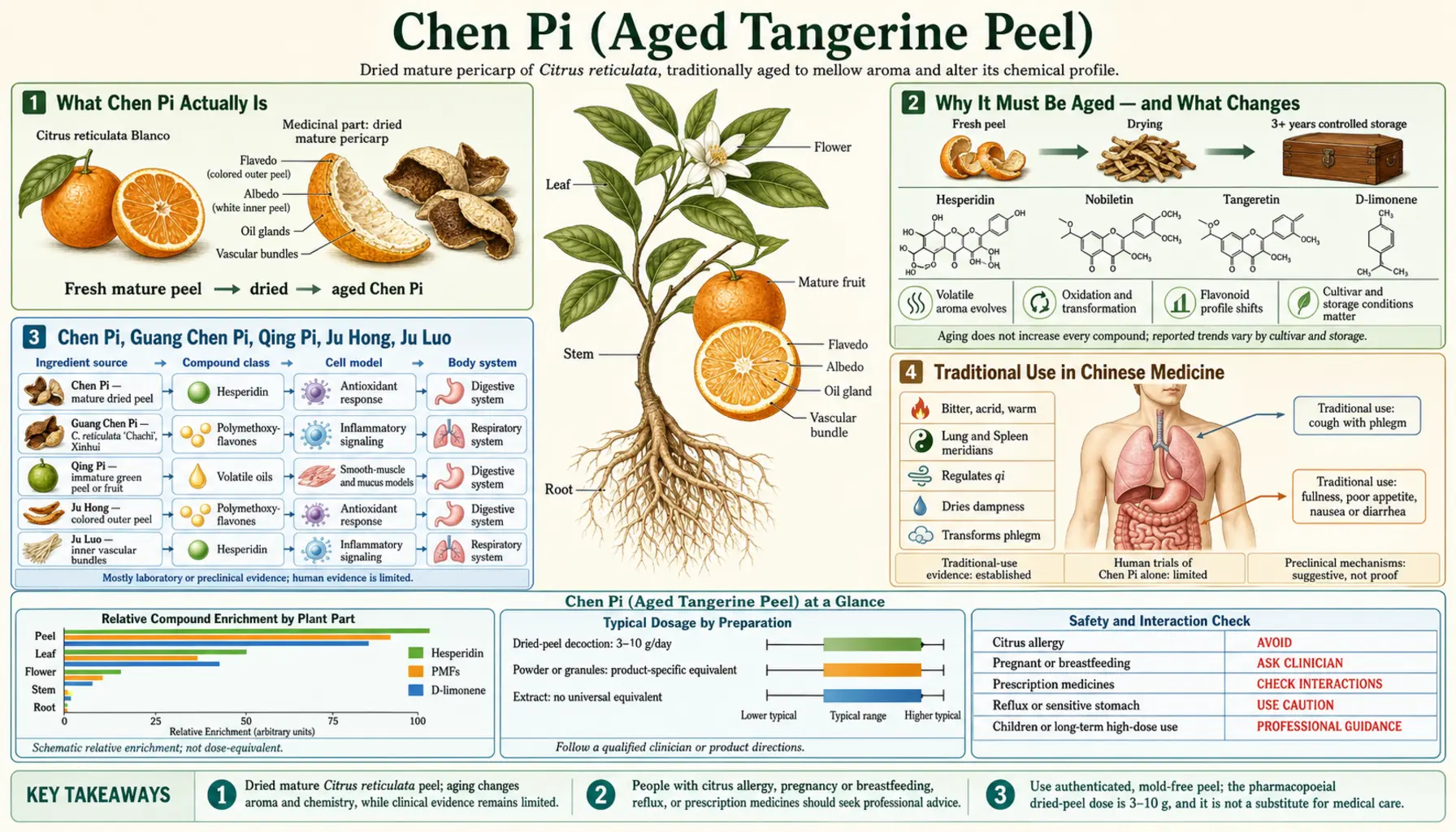
Chen pi is dried tangerine peel that has been deliberately stored for years before anyone is allowed to use it. The Chinese name 陈皮 says so outright — chen means aged or long-kept, pi means peel — and this is the rare case where a traditional insistence on aging turns out to have a measurable chemical basis. Fresh peel is sharp and volatile; old peel is mellow, resinous and richer in the flavonoids that modern laboratories care about.
In Chinese medicine it is one of the most-used herbs in the entire materia medica, not because it treats anything dramatic on its own, but because it is the herb added to other formulas to keep them from causing bloating. In the kitchen it flavours Cantonese red-bean soup, braised duck and Sichuan orange-peel beef. This page covers what it is, what is actually in it, what the human evidence supports, and where the marketing gets ahead of the science.
Table of Contents
- What Chen Pi Actually Is
- Why It Must Be Aged — and What Changes
- Chen Pi, Guang Chen Pi, Qing Pi, Ju Hong, Ju Luo
- Traditional Use in Chinese Medicine
- Active Compounds
- Digestion, Bloating and Appetite
- Phlegm, Cough and the Lungs
- Polymethoxyflavones and Metabolism
- Nobiletin and the Brain
- Chen Pi in the Kitchen
- Forms and Preparations
- Recommended Dosage
- Cautions and Contraindications
- Key Research Papers
- Connections
- Featured Videos
What Chen Pi Actually Is
Chen pi is the dried, ripe peel of the mandarin or tangerine, Citrus reticulata Blanco, and of its many cultivated varieties. The plant is a small evergreen tree in the citrus family, Rutaceae, native to southern China and grown across subtropical East and Southeast Asia. The species name reticulata means "netted", a reference to the fine network of fibres you can see webbing the inside of the peel.
The medicinal drug has a formal pharmacopeial name: Pericarpium Citri Reticulatae — literally "the pericarp of netted citrus". "Pericarp" is the botanical word for the fruit wall, which here means the outer coloured rind plus the spongy white layer underneath it. Nothing else from the tree is included. The juice, the seeds and the leaves are separate materials with separate names.
Two things distinguish the medicinal peel from the peel you would scrape off a mandarin at breakfast:
- The fruit is ripe. Chen pi is made from mature fruit, harvested when the skin has turned from green to orange or red. Peel from unripe green fruit is a different drug entirely — see Qing Pi below.
- The peel is old. Freshly dried peel is not chen pi. Chinese practice requires at least one year of storage; three years is a common commercial minimum; the most prized material is aged for decades.
In Vietnam the same drug is called trần bì, and Vietnamese labels frequently print the Latin name as Pericarpium Citri reticulatae perenne. That extra word — perenne, "perennial", "lasting through the years" — is doing real work: it signals the aged grade specifically, distinguishing it from ordinary dried peel. If you see it on a package, the maker is claiming genuine aging.
Why It Must Be Aged — and What Changes
Most herbs are best fresh, or as fresh as drying allows. Tangerine peel is one of a small handful that classical Chinese pharmacy insisted must be old. That instruction has survived unbroken for something like a thousand years, and unlike a lot of traditional processing lore, it corresponds to a chemical change you can measure.
What the peel is like when it is young
Freshly dried tangerine peel is loaded with essential oil — the volatile fraction that gives it the bright, sharp, almost turpentine-like smell of a fresh-peeled mandarin. That oil is dominated by d-limonene, a small monoterpene that evaporates readily and oxidises on contact with air. Traditional practitioners describe fresh peel as xin (acrid) and harsh on the stomach; taken in quantity it can irritate rather than settle.
What storage does
Over years of storage in a dry, ventilated place, three things happen:
- The volatile oil declines. Limonene and the other monoterpenes are volatile by definition — they leave. Total essential-oil content of aged peel is markedly lower than that of fresh-dried peel, and the composition shifts: the sharpest, lightest molecules go first.
- The flavonoid fraction concentrates by proportion. Hesperidin and the polymethoxyflavones are not volatile. As the oil fraction shrinks, the flavonoids make up a larger share of what is left. There is also evidence of slow conversion within the flavonoid pool during long storage — glycosides can shed sugars, and some methoxylated compounds accumulate hydroxyl groups — though the details vary between studies and cultivars and should not be overstated.
- The aroma reorganises. Oxidation and slow rearrangement of the remaining terpenes shift the smell from sharp citrus to something rounder and more resinous — the character that connoisseurs describe as sweet, woody, faintly medicinal. This is the same broad class of change that happens in aged pu-erh tea or long-stored dried tangerine liqueur.
The practical thresholds
| Age | Status | Character |
|---|---|---|
| Under 1 year | Not chen pi — just dried peel | Sharp, acrid, high volatile oil, pale to bright orange |
| 1–2 years | Minimum to be called chen pi | Softening, still citrus-forward |
| 3–5 years | Common commercial threshold | Mellow, usable in food and decoction without harshness |
| 10–20 years | Premium grade | Dark, brittle, deeply aromatic; sold by vintage |
| 30+ years | Collector grade | Near-black, glassy, priced like fine aged tea; heavily counterfeited |
The elite material is Guang Chen Pi (广陈皮) from Xinhui in Guangdong province, made from a local mandarin cultivar and aged for decades. It is sold by vintage year the way wine or aged pu-erh is, at prices that make it one of the most expensive items in the Chinese herbal trade per gram. That price gap creates exactly the incentive you would expect, and adulteration — young peel dyed, smoked or oven-treated to mimic age — is a genuine market problem.
Our companion article Aging, Grades and Quality goes into how the grades are defined, how counterfeiting is done, and what an ordinary buyer can realistically check.
Chen Pi, Guang Chen Pi, Qing Pi, Ju Hong, Ju Luo
Five different drugs come off the same tree, and confusing them is one of the most common mistakes in English-language herb writing. They differ by when the fruit was picked and which layer of the peel was kept.
| Name | Chinese | What it is | Traditional role |
|---|---|---|---|
| Chen Pi | 陈皮 | Whole aged peel of the ripe fruit | Regulates qi, dries damp, transforms phlegm, harmonises digestion |
| Guang Chen Pi | 广陈皮 | Chen pi from Xinhui, Guangdong; a named regional grade | Same, considered superior; listed separately in the Chinese Pharmacopoeia |
| Qing Pi | 青皮 | Peel of the unripe green fruit | Much more acrid; "breaks" stagnant qi in the Liver channel; used for distension and pain, not gentle digestion |
| Ju Hong | 橘红 | Only the outer coloured layer, white pith scraped away | Drier and more warming; favoured for phlegm and cough |
| Ju Luo | 橘络 | The white fibrous strands from the inside of the peel | Considered to unblock the fine collaterals; used for chest discomfort and stubborn phlegm |
The chen pi / qing pi distinction matters most. They are the same species and often the same orchard — the difference is a harvest date. Qing pi is picked green and is substantially more acrid and dispersing; classical texts warn it can deplete a weak patient. Chen pi is the gentle one, safe enough to be a routine ingredient in tonic formulas. Recipes and product labels that use "tangerine peel" for both are simply wrong.
Traditional Use in Chinese Medicine
In the traditional framework, chen pi is classed as warm and acrid-bitter, entering the Spleen, Stomach and Lung channels, with four stated actions:
- Regulates qi — in plain language, relieves the sensation of things being stuck: fullness after eating, distension, belching, a heavy feeling below the ribs.
- Dries dampness — addresses the pattern of sluggish, waterlogged digestion: loose stool, a thick tongue coat, heaviness after starchy meals.
- Transforms phlegm — thins and mobilises thick mucus, whether in the chest or, in traditional terms, in the digestive tract.
- Harmonises the middle burner — settles nausea and stops the stomach from rebelling upward.
Its most characteristic use is not as a headline herb at all. Chen pi is the classic assistant: the ingredient added to rich, sweet, cloying tonic formulas so that they do not cause bloating. Herbs like codonopsis, licorice and cooked rehmannia are nourishing but heavy, and a classical practitioner's reflex is to add a small amount of chen pi to keep the formula moving. Roughly speaking, it is the herbal equivalent of putting fennel seed in a bean dish.
The best-known formulas containing it:
- Er Chen Tang (二陈汤, "Two Aged Herbs Decoction") — the archetypal phlegm formula. The "two aged" ingredients are chen pi and aged pinellia, joined by poria and licorice.
- Ping Wei San (平胃散, "Calm the Stomach Powder") — for damp, heavy, sluggish digestion; pairs chen pi with atractylodes and magnolia bark.
- Liu Jun Zi Tang (六君子汤, "Six Gentlemen Decoction") — a digestive tonic that is Si Jun Zi Tang plus chen pi and pinellia; the two additions exist specifically to stop the tonic from being stodgy.
- Bu Zhong Yi Qi Tang (补中益气汤, "Tonify the Middle and Augment the Qi Decoction") — a major fatigue and prolapse formula in which chen pi is again the small moving ingredient among heavier tonics.
The History page traces these formulas to their source texts and covers the classical requirement that the peel be aged.
Active Compounds
Chen pi has three chemically distinct fractions, and almost every claim made about it belongs to one of them.
1. Flavanone glycosides — hesperidin
Hesperidin is the dominant single compound and the official quality marker. The Chinese Pharmacopoeia sets a minimum of roughly 3.5% hesperidin by dry weight for chen pi, and any laboratory certificate of analysis you are shown will lead with that number. Hesperidin is a flavanone bound to a sugar; it is poorly absorbed as-is and is largely converted by gut bacteria into hesperetin, the aglycone that actually enters the bloodstream. Hesperidin is the best-studied citrus flavonoid in humans, mostly in the context of blood-vessel function; our dedicated page on hesperidin covers that literature.
2. Polymethoxyflavones — nobiletin and tangeretin
These are the compounds that made chen pi interesting to modern pharmacology. Nobiletin and tangeretin are flavones carrying five to six methoxy groups instead of the usual hydroxyls. That heavy methylation makes them far more fat-soluble and considerably more metabolically stable than ordinary flavonoids — they survive first-pass metabolism better and get into tissues that most flavonoids never reach, including the brain.
Crucially, polymethoxyflavones are essentially restricted to citrus peel. They are not in the juice in any meaningful quantity, and they are not in other fruits. If you want them from food, you eat peel. That is the entire pharmacological argument for chen pi as something more than a flavouring, and it is a real argument — but see the metabolism section for what it does and does not justify.
3. The essential oil — d-limonene and friends
The volatile fraction is 60–90% d-limonene, with γ-terpinene, myrcene, α-pinene and linalool making up most of the rest. This is the fraction responsible for the smell, for the traditional "moves qi" character, and for the carminative (gas-relieving) effect that anyone who has drunk citrus-peel tea will recognise. It is also the fraction that declines most with aging — which is precisely why aged peel is gentler.
A note on synephrine, because people worry about it
Tangerine peel contains trace synephrine, an amine structurally related to ephedrine. This has caused recurring confusion with bitter orange (Citrus aurantium), whose immature fruit is deliberately extracted and standardised for p-synephrine and sold as a stimulant weight-loss ingredient, sometimes delivering tens of milligrams per dose.
Chen pi is not that. The synephrine content of ripe mandarin peel is a small fraction of what bitter-orange extracts are standardised to, and a normal culinary or decoction dose delivers an amount with no plausible stimulant effect. Chen pi does not raise heart rate, does not act as a fat burner, and should not be lumped in with Citrus aurantium supplements in either its benefits or its cardiovascular cautions.
Digestion, Bloating and Appetite
This is chen pi's core traditional use and its most defensible practical one.
Mechanism
Two things are going on. First, the essential oil is a carminative: limonene and related monoterpenes relax gastrointestinal smooth muscle and help trapped gas move rather than accumulate. This is the same general mechanism behind peppermint oil and fennel, both of which have better human trial data than chen pi does. Second, the bitter and aromatic components stimulate salivary and gastric secretion — the classic pre-meal bitter effect that makes food feel more digestible.
Animal work in rodents fairly consistently shows citrus peel extracts accelerating gastric emptying and increasing intestinal transit, and chen pi is a standard prokinetic ingredient in the Japanese kampo formula rikkunshito, which has been studied for functional dyspepsia and for chemotherapy-related loss of appetite.
What the human evidence actually shows
Here we have to be careful. There is no good randomised trial of chen pi alone for indigestion, bloating or appetite. What exists is:
- Small and moderate trials of multi-herb formulas containing chen pi — principally rikkunshito (the Japanese version of Liu Jun Zi Tang) — showing modest improvement in dyspeptic symptoms and, in some studies, increases in circulating ghrelin. These are formula trials. They cannot tell you how much of the effect belongs to chen pi versus the other five or six ingredients.
- Centuries of consistent traditional use, which is a strong signal about tolerability and a weak signal about efficacy.
- Mechanistic plausibility from the essential-oil chemistry, which is real but generic to aromatic carminatives.
The honest summary: chen pi is a reasonable, cheap, low-risk thing to try for post-meal fullness, mild bloating and a sluggish appetite, and traditional practice has a thousand years of experience with exactly that use. It is not an evidence-based treatment for a diagnosed gastrointestinal disorder, and it should not displace investigation of persistent symptoms. See Digestion and Appetite for the detail.
Phlegm, Cough and the Lungs
The second traditional pillar. "Transforms phlegm" in Chinese medicine covers both respiratory mucus and a broader concept of thick, stagnant fluid anywhere in the body, so the traditional indication is wider than the modern one.
Mechanism
Monoterpenes are genuinely relevant to airway mucus. Related compounds — cineole from eucalyptus, and the mixed terpene preparations sold in Europe for bronchitis — have human data supporting reduced mucus viscosity and improved clearance, and limonene shares the general class behaviour. Citrus flavonoids including hesperidin and nobiletin also suppress inflammatory signalling in airway cell models, and nobiletin in particular has been shown in laboratory studies to reduce mucin production driven by inflammatory stimuli.
The warm, drying character that traditional texts assign to chen pi maps onto something real: an aromatic, mildly irritant volatile oil that promotes secretion clearance and feels warming in the chest.
What the human evidence shows
Again: no controlled trial of chen pi alone for cough or bronchitis. Er Chen Tang and its descendants have been studied in Chinese and Japanese trials for chronic cough and for chronic obstructive pulmonary disease, generally as add-on therapy, and generally with methodological limitations that make the results suggestive rather than convincing. Systematic reviews of Chinese herbal formulas in chronic bronchitis routinely conclude that the trials are too small, too heterogeneous and too poorly blinded to support a firm recommendation.
The honest summary: chen pi tea is a pleasant traditional support for a wet, productive cough and is unlikely to hurt. It is not a treatment for pneumonia, asthma or COPD, and a cough lasting more than three weeks needs a diagnosis, not a herb. Note also the paradox: because concentrated citrus oil can aggravate reflux, and reflux is a leading cause of chronic cough, chen pi is a poor choice for the subset of cough patients whose cough is actually reflux-driven. Phlegm, Cough and Lungs covers this in more depth.
Polymethoxyflavones and Metabolism
This is where chen pi gets exciting in the laboratory and where the marketing gets furthest ahead of the evidence. It is worth being precise, because the underlying science is genuinely good — it just has not been done in people.
What the preclinical literature shows
Nobiletin has one of the more impressive rodent metabolic records of any plant compound:
- In obese diabetic mice, nobiletin improved hyperglycaemia and insulin resistance.
- In insulin-resistant mice fed a high-fat diet, nobiletin reduced very-low-density lipoprotein overproduction, corrected dyslipidaemia and reduced atherosclerotic plaque — a strikingly complete effect.
- Nobiletin was later shown to act on the molecular circadian clock, enhancing the amplitude of the body's daily oscillator, with metabolic protection in mice that appeared to depend on an intact clock. That is a genuinely novel mechanism and it is why nobiletin turns up in circadian-biology literature as well as nutrition literature.
- Aged citrus peel extract itself — not just isolated nobiletin — has been reported to reduce weight gain and improve glucose handling in diet-induced obese mice.
Tangeretin has a smaller but parallel literature. Both compounds also show anti-inflammatory and anti-proliferative activity in cell culture across many models.
The dose gap — the number that matters
Here is the arithmetic nobody puts on a supplement label. Every figure in it is approximate and the ranges are wide, but the conclusion survives at every end of them.
Rodent metabolic studies dose nobiletin at roughly 10 to 200 mg per kilogram of body weight, usually by gavage; a few influential studies instead mixed it into the feed at 0.1–0.3% by weight, which works out higher still. Take a mid-range 100 mg/kg mouse dose. Because small animals metabolise far faster than we do, you cannot simply multiply that by human body weight; the standard body-surface-area conversion divides the mouse dose by about 12.3, giving a human-equivalent dose of roughly 8 mg/kg — around 570 mg per day for a 70 kg adult, or something near 1,100 mg/day if you scale from the 200 mg/kg studies instead.
Now the peel. Nobiletin content varies enormously between mandarin cultivars — far more than it varies with age. A survey of 25 chen pi samples spanning 11 cultivars, collected across China, measured nobiletin from 0.22 to 6.91 mg per gram of dried peel: a thirtyfold spread, with cultivars like Subcompressa, Erythrosa and Unshiu at the bottom and Kinokuni, Dahongpao and Ponkan at the top. The Xinhui "Chachi" material that guang chen pi is made from sat in a narrower band of roughly 2–4 mg/g. A generous 10 g daily dose of good aged chen pi therefore contains something like 20–40 mg of nobiletin — and that is what is in the peel, not what ends up in your cup. Polymethoxyflavones are strongly fat-soluble and extract poorly into water, so a decoction or a mug of tea recovers only a fraction of it.
So: the rodent-equivalent target is several hundred to a thousand milligrams a day; the peel itself supplies a few tens of milligrams at best, and a water infusion delivers a fraction of that again. On content alone the shortfall is somewhere in the region of fifteen- to fiftyfold, and once poor water extraction is taken into account the delivered gap is larger still. Whichever end of the ranges you take, drinking chen pi tea is not a way to reproduce the mouse experiments.
What human evidence exists
Essentially none for nobiletin or tangeretin as isolated agents. There are no adequately powered randomised controlled trials of purified nobiletin for diabetes, obesity, dyslipidaemia or metabolic syndrome. The human citrus-flavonoid trial record belongs almost entirely to hesperidin, where there are genuine randomised studies — in metabolic syndrome and in healthy volunteers — reporting modest improvements in endothelial function and inflammatory markers. Those are real but modest results, and they are about a different molecule from the one the exciting mouse data concerns.
The honest summary: nobiletin and tangeretin are promising laboratory compounds with a serious pharmacological case for further study, and they are not proven treatments for anything in humans. Anyone selling chen pi as a metabolic or blood-sugar remedy is extrapolating from mice at doses the product cannot deliver. Polymethoxyflavones and Metabolism examines the studies individually.
Nobiletin and the Brain
A parallel preclinical story deserves the same caveat. Because polymethoxyflavones are unusually fat-soluble, they cross the blood–brain barrier better than typical flavonoids, and a substantial body of rodent work — much of it from Japanese groups — reports that nobiletin improves memory performance in models of Alzheimer's disease and reduces motor deficits in models of Parkinson's disease, with mechanisms proposed around cyclic-AMP signalling, CREB activation and reduced neuroinflammation.
This is interesting science. It is also entirely animal and cell-culture science. There is no human trial showing that nobiletin, citrus peel extract, or chen pi tea slows cognitive decline, improves memory in older adults, or affects any neurodegenerative disease. The dose problem described above applies with equal force, and brain concentrations after oral dosing are a further hurdle beyond plasma concentrations.
Treat "citrus peel for brain health" claims as a hypothesis that researchers are pursuing, not as an established benefit.
Chen Pi in the Kitchen
Unlike many Chinese herbs, chen pi has a real culinary life, and food use is a perfectly good reason to keep it in the pantry regardless of the pharmacology.
- Cantonese red-bean soup (紅豆沙) — a piece of chen pi simmered with adzuki beans is close to mandatory; it cuts the sweetness and adds a bitter-aromatic top note. The same applies to black-sesame and green-bean sweet soups.
- Braised duck and braised beef — the peel's bitterness balances rich fatty meat, and its aroma survives long braising better than fresh citrus zest does.
- Sichuan orange-peel beef (陈皮牛肉) — a classic cold dish in which dried peel is a defining flavour, alongside chilli and Sichuan pepper.
- Steamed fish and steamed pork ribs — a few shreds of rehydrated peel, used the way a European cook uses lemon zest but with more depth.
- Vietnamese and southern Chinese stews and broths — trần bì is a background note in many long-simmered dishes.
- Congee and slow-cooked soups — the everyday domestic use: one small piece per pot.
A practical kitchen note: soak the peel in warm water for ten to fifteen minutes, then scrape away some of the white pith if you want less bitterness. Older peel needs less scraping because time has already softened its edge.
Forms and Preparations
Whole dried peel
The default and the best value. Sold as curled, leathery pieces ranging from orange-brown (young) to near-black (old). Good material is aromatic when you press or tear it, flexible rather than crumbling to dust, and free of mould spots. Store it in a sealed jar in a dry cupboard — and note that under good storage it continues to age, so your own supply improves.
Decoction (the traditional method)
Simmer 3–10 g in about 500 ml of water for 15–20 minutes. In multi-herb decoctions chen pi is often added late, in the last five minutes, precisely because its active aromatics are volatile and prolonged boiling drives them off. If you are making it as a single herb for digestion, the late-addition principle still applies: shorter simmering preserves more of the carminative oil.
Tea and infusion
The casual daily form: one small piece in a mug of hot water, often with a slice of ginger or a few goji berries. Aged peel is also blended with pu-erh tea — the combination sold as gan pu or xiao qing gan, where whole small mandarins are hollowed, stuffed with tea and aged together.
Powder and granules
Convenient, and used in commercial formula granules. The trade-off is that powdered peel loses volatile oil quickly, so buy small quantities and use them.
Standardised extracts
Sold as "citrus peel extract", "citrus bioflavonoid complex", or explicitly as nobiletin or tangeretin. Two cautions. First, standardisation is usually to hesperidin, which is cheap and abundant, and tells you nothing about polymethoxyflavone content. Second, "citrus bioflavonoid" products are frequently made from orange or grapefruit processing waste rather than from aged mandarin peel and are a different material from chen pi even when the label implies otherwise.
Essential oil
Mandarin or tangerine essential oil is a real product but is not chen pi. It is the isolated volatile fraction, missing the flavonoids entirely, and it is concentrated enough to irritate. Citrus oils are also photosensitising on skin. Do not substitute the oil for the herb.
Recommended Dosage
| Use | Typical amount | Notes |
|---|---|---|
| Traditional decoction | 3–10 g dried peel per day | The standard pharmacopeial range; the middle of it, 5–6 g, is the everyday dose |
| Casual tea | 1–3 g (one small piece) per mug | Can be re-steeped; suitable daily |
| Culinary | 1–5 g per dish or pot | Flavour-led; no upper concern at food doses |
| Powder | 1–3 g per day | Split across meals |
| In a formula | 3–6 g | Chen pi is almost always a minor ingredient by weight |
Practical points:
- Timing. For digestive use, take it shortly before or with meals. Its whole traditional logic is preparing the stomach for food, not rescuing it afterwards.
- Start low. If you are new to it, one piece in tea for a few days tells you whether it agrees with you.
- Duration. Traditional use is short-course — days to weeks — or as a small component of a longer formula. There is no safety data on high-dose concentrated extracts taken continuously for years, so open-ended use of concentrated products is not supported.
- Older peel is not stronger. Aged material is gentler in aroma and more prized in flavour; nothing about high-vintage chen pi calls for a smaller or larger dose.
Cautions and Contraindications
Chen pi has an excellent safety record at food and traditional decoction doses. The cautions below matter mostly for concentrated extracts and for specific patient groups.
Drug metabolism — getting this right
This is the most widely garbled claim about citrus peel, so it is worth stating carefully.
The famous grapefruit interaction — grapefruit juice raising blood levels of statins, calcium-channel blockers, some immunosuppressants and others — is driven by furanocoumarins: bergamottin, 6',7'-dihydroxybergamottin and a family of related compounds that inactivate intestinal CYP3A4 more or less irreversibly. This is settled, and the way it was settled is worth knowing. The bitter grapefruit flavonoid naringin was the original suspect in the early 1990s and was ruled out: a grapefruit juice with 99% of its furanocoumarins stripped out but its flavonoids left intact had no effect on felodipine levels, while the untreated juice roughly doubled them. Grapefruit, pomelo, Seville (sour) orange and lime carry furanocoumarins in quantity.
Mandarin does not. The most complete survey of the genus measured coumarins and furanocoumarins in the peel and pulp of 61 citrus species and found that three of the four ancestral taxa — pomelo, citron and papeda — make these compounds in quantity, while mandarins are "practically devoid" of them; the authors go so far as to recommend breeding with mandarin to produce furanocoumarin-free citrus. The best evidence, though, is human and direct. Tangeretin, one of chen pi's own polymethoxyflavones, looks like a CYP3A4 modulator in the test tube — it altered midazolam metabolism in human liver microsomes by up to 212%. Given as tangerine juice to healthy volunteers with midazolam, the standard CYP3A4 probe drug, it changed total exposure, half-life and metabolite ratio not at all; the only effect was a small delay in absorption. Chen pi is therefore not expected to reproduce the grapefruit effect, and treating it as if it were grapefruit is incorrect.
Two honest qualifications. First, mandarin's furanocoumarin content is low rather than zero, and it varies by cultivar — and the peel is where what little there is concentrates, which is exactly the part chen pi is made of, taken in gram amounts. No human interaction with chen pi has ever been reported, and there is no reason from the tangerine-juice data to expect one, but "contains none" would overstate the case.
Second, and more usefully: the interaction chen pi is most likely to have is not a CYP3A4 one at all, and it runs in the opposite direction. Hesperidin — chen pi's dominant flavonoid — is a potent inhibitor of OATP1A2, an intestinal transporter that carries certain drugs into the body rather than metabolising them. Hesperidin-rich orange juice measurably reduces absorption of the antihistamine fexofenadine in healthy volunteers. That means less drug absorbed, not more, and it affects a different list of medicines: fexofenadine, aliskiren, atenolol, celiprolol, montelukast, levothyroxine, some fluoroquinolones and bisphosphonates. Nobiletin and tangeretin separately inhibit P-glycoprotein without inhibiting CYP3A4, and d-limonene has effects on hepatic enzymes at high exposure. None of this has been quantified for chen pi at ordinary doses. The reasonable position is that this is a timing issue rather than a dose issue: do not take chen pi in the same hour as a prescription medicine — leave two to four hours between them — and flag high-dose concentrated extracts to a pharmacist if you take a narrow-therapeutic-index drug. Do not claim certainty in either direction.
Anticoagulants and antiplatelets
Citrus flavonoids have mild antiplatelet activity in laboratory and animal work. At food doses this is not a practical issue. At high supplemental intake, alongside warfarin, direct oral anticoagulants, or regular aspirin or clopidogrel, an additive effect is plausible and worth discussing before starting. This is a precaution, not a documented clinical event pattern.
Reflux and heartburn
Concentrated citrus oil can relax the lower oesophageal sphincter and irritate an already inflamed oesophagus. People with gastro-oesophageal reflux disease often find that strong citrus-peel preparations make symptoms worse, even though chen pi is traditionally a "digestive" herb. If you have reflux and chen pi tea makes your chest burn, believe the symptom and stop.
Traditional contraindications
Classical texts caution against chen pi in patterns of yin deficiency with dry cough and in cases of heat with coughing of blood — it is warm and drying, so it is the wrong herb for a dry, hacking, irritated cough. It is also traditionally used sparingly by people who are markedly depleted, since its action is dispersing rather than nourishing.
Pesticide residue — a real, underrated issue
Peel is the single most pesticide-prone part of any fruit. It is the surface that gets sprayed, it accumulates lipophilic residues in its oil glands, and unlike a mandarin you eat, chen pi is the peel itself. Add the fact that much commercial "chen pi" is young peel sold as aged, and the case for buying either certified-organic peel or material from a reputable aged-peel supplier is strong. This is arguably a more concrete safety consideration than any of the pharmacological ones.
Pregnancy, breastfeeding and children
Chen pi is used in food throughout East Asia by pregnant women without any signal of harm, and small culinary amounts are conventionally regarded as fine. There is no controlled safety data on concentrated extracts in pregnancy or lactation, so those should be avoided. Culinary use in children is ordinary; medicinal dosing in children should be handled by a practitioner.
Allergy
Citrus allergy is uncommon but real, and citrus peel contact can cause dermatitis in sensitive people. Anyone with a known citrus allergy should avoid it.
When to see a doctor rather than reach for the jar
- Bloating with unintended weight loss, blood in stool, difficulty swallowing, persistent vomiting, or new symptoms after age 50 — these need investigation, not a carminative.
- Cough lasting more than three weeks, coughing blood, breathlessness, or fever with chest pain.
- Any digestive change that is new, progressive and unexplained.
Key Research Papers
Citations below name the authors, title and journal in full so you can verify each one independently. Every identifier was checked against the live PubMed index — authors, title, journal and year all match the linked record.
- Yu X, Sun S, Guo Y, Liu Y, Yang D, Li G, Lü S. Citri Reticulatae Pericarpium (Chenpi): Botany, ethnopharmacology, phytochemistry, and pharmacology of a frequently used traditional Chinese medicine. Journal of Ethnopharmacology. 2018;220:265–282. The standard modern review of the drug — the single best starting point.
- Lee YS, Cha BY, Saito K, Yamakawa H, Choi SS, Yamaguchi K, Yonezawa T, Teruya T, Nagai K, Woo JT. Nobiletin improves hyperglycemia and insulin resistance in obese diabetic ob/ob mice. Biochemical Pharmacology. 2010;79(11):1674–1683. A foundational rodent metabolic study — note the species.
- Mulvihill EE, Assini JM, Lee JK, Allister EM, Sutherland BG, Koppes JB, Sawyez CG, Edwards JY, Telford DE, Charbonneau A, St-Pierre P, Marette A, Huff MW. Nobiletin attenuates VLDL overproduction, dyslipidemia, and atherosclerosis in mice with diet-induced insulin resistance. Diabetes. 2011;60(5):1446–1457. The most complete animal cardiometabolic result for nobiletin.
- He B, Nohara K, Park N, Park YS, Guillory B, Zhao Z, Garcia JM, Koike N, Lee CC, Takahashi JS, Yoo SH, Chen Z. The small molecule nobiletin targets the molecular oscillator to enhance circadian rhythms and protect against metabolic syndrome. Cell Metabolism. 2016;23(4):610–621. The circadian-clock mechanism paper.
- Guo J, Tao H, Cao Y, Ho CT, Jin S, Huang Q. Prevention of obesity and type 2 diabetes with aged citrus peel (Chenpi) extract. Journal of Agricultural and Food Chemistry. 2016;64(10):2053–2061. Tests the aged peel extract itself rather than an isolated compound.
- Nakajima A, Ohizumi Y. Potential benefits of nobiletin, a citrus flavonoid, against Alzheimer's disease and Parkinson's disease. International Journal of Molecular Sciences. 2019;20(14):3380. A review of the neuroscience — read it noting how little is human.
- Li S, Lo CY, Ho CT. Hydroxylated polymethoxyflavones and methylated flavonoids in sweet orange (Citrus sinensis) peel. Journal of Agricultural and Food Chemistry. 2006;54(12):4176–4185. Why polymethoxyflavones are a peel-only class.
- Rizza S, Muniyappa R, Iantorno M, Kim JA, Chen H, Pullikotil P, Senese N, Tesauro M, Lauro D, Cardillo C, Quon MJ. Citrus polyphenol hesperidin stimulates production of nitric oxide in endothelial cells while improving endothelial function and reducing inflammatory markers in patients with metabolic syndrome. Journal of Clinical Endocrinology and Metabolism. 2011;96(5):E782–E792. One of the few genuine randomised human trials of a citrus flavonoid.
- Morand C, Dubray C, Milenkovic D, Lioger D, Martin JF, Scalbert A, Mazur A. Hesperidin contributes to the vascular protective effects of orange juice: a randomized crossover study in healthy volunteers. American Journal of Clinical Nutrition. 2011;93(1):73–80. A well-designed crossover trial isolating hesperidin's contribution.
- Bailey DG, Dresser G, Arnold JM. Grapefruit–medication interactions: forbidden fruit or avoidable consequences? Canadian Medical Association Journal. 2013;185(4):309–316. The reference that explains why furanocoumarins — not flavonoids — drive the grapefruit effect.
- Sun J. D-Limonene: safety and clinical applications. Alternative Medicine Review. 2007;12(3):259–264. Background on the dominant volatile constituent.
- Paine MF, Widmer WW, Hart HL, Pusek SN, Beavers KL, Criss AB, Brown SS, Thomas BF, Watkins PB. A furanocoumarin-free grapefruit juice establishes furanocoumarins as the mediators of the grapefruit juice–felodipine interaction. American Journal of Clinical Nutrition. 2006;83(5):1097–1105. The experiment that settled the mechanism: strip out the furanocoumarins, keep the flavonoids, and the interaction disappears.
- Dugrand-Judek A, Olry A, Hehn A, Costantino G, Ollitrault P, Froelicher Y, Bourgaud F. The distribution of coumarins and furanocoumarins in Citrus species closely matches Citrus phylogeny and reflects the organization of biosynthetic pathways. PLoS ONE. 2015;10(11):e0142757. Peel and pulp of 61 citrus species; mandarins are "practically devoid" of furanocoumarins.
- Backman JT, Mäenpää J, Belle DJ, Wrighton SA, Kivistö KT, Neuvonen PJ. Lack of correlation between in vitro and in vivo studies on the effects of tangeretin and tangerine juice on midazolam hydroxylation. Clinical Pharmacology and Therapeutics. 2000;67(4):382–390. The human negative result: tangerine juice does not measurably affect CYP3A4.
- Bailey DG, Dresser GK, Leake BF, Kim RB. Naringin is a major and selective clinical inhibitor of organic anion-transporting polypeptide 1A2 (OATP1A2) in grapefruit juice. Clinical Pharmacology and Therapeutics. 2007;81(4):495–502. Measures hesperidin as an equally potent OATP1A2 inhibitor — the transporter route that matters for chen pi.
- Luo M, Luo H, Hu P, Yang Y, Wu B, Zheng G. Evaluation of chemical components in Citri Reticulatae Pericarpium of different cultivars collected from different regions by GC-MS and HPLC. Food Science & Nutrition. 2018;6(2):400–416. The cultivar survey behind the nobiletin figures above — 25 chen pi samples, 11 cultivars, a thirtyfold spread.
- Reagan-Shaw S, Nihal M, Ahmad N. Dose translation from animal to human studies revisited. FASEB Journal. 2008;22(3):659–661. The body-surface-area conversion used in the dose-gap arithmetic.
Live PubMed Searches
These run against the live PubMed index, so they stay current as new papers appear.
- Citri Reticulatae Pericarpium
- Chenpi aged citrus peel
- Nobiletin and metabolic syndrome
- Tangeretin pharmacology
- Polymethoxyflavones in citrus peel
- Hesperidin randomised controlled trials
- D-limonene and the gastrointestinal tract
- Rikkunshito for functional dyspepsia
- Citrus flavonoids and CYP3A4 interactions
- Storage time and flavonoid content in Citrus reticulata
Connections
- All Herbs
- Deep dives: Chen Pi Benefits · History and Traditional Use · Digestion and Appetite · Phlegm, Cough and Lungs · Polymethoxyflavones and Metabolism · Aging, Grades and Quality
- Hesperidin — the dominant flavonoid in chen pi and its official quality marker; the compound with the real human trial record.
- Licorice — the other near-universal harmonising herb in Chinese formulas; frequently paired with chen pi in digestive and phlegm prescriptions.
- Ginger — the standard companion in chen pi tea and in Er Chen Tang; another warming carminative with better human trial data for nausea.
- Atractylodes — chen pi's partner in Ping Wei San, the classic formula for damp, heavy digestion.
- Codonopsis — a sweet, heavy qi tonic; chen pi is added to formulas like Liu Jun Zi Tang precisely to stop tonics like this causing bloating.
- Fennel — a Western carminative working through the same essential-oil mechanism, with a comparable evidence profile.
- Peppermint — the best-evidenced aromatic digestive herb, and the useful comparison point for what a well-studied carminative looks like.