Gut Healing Protocols: What the Research Shows
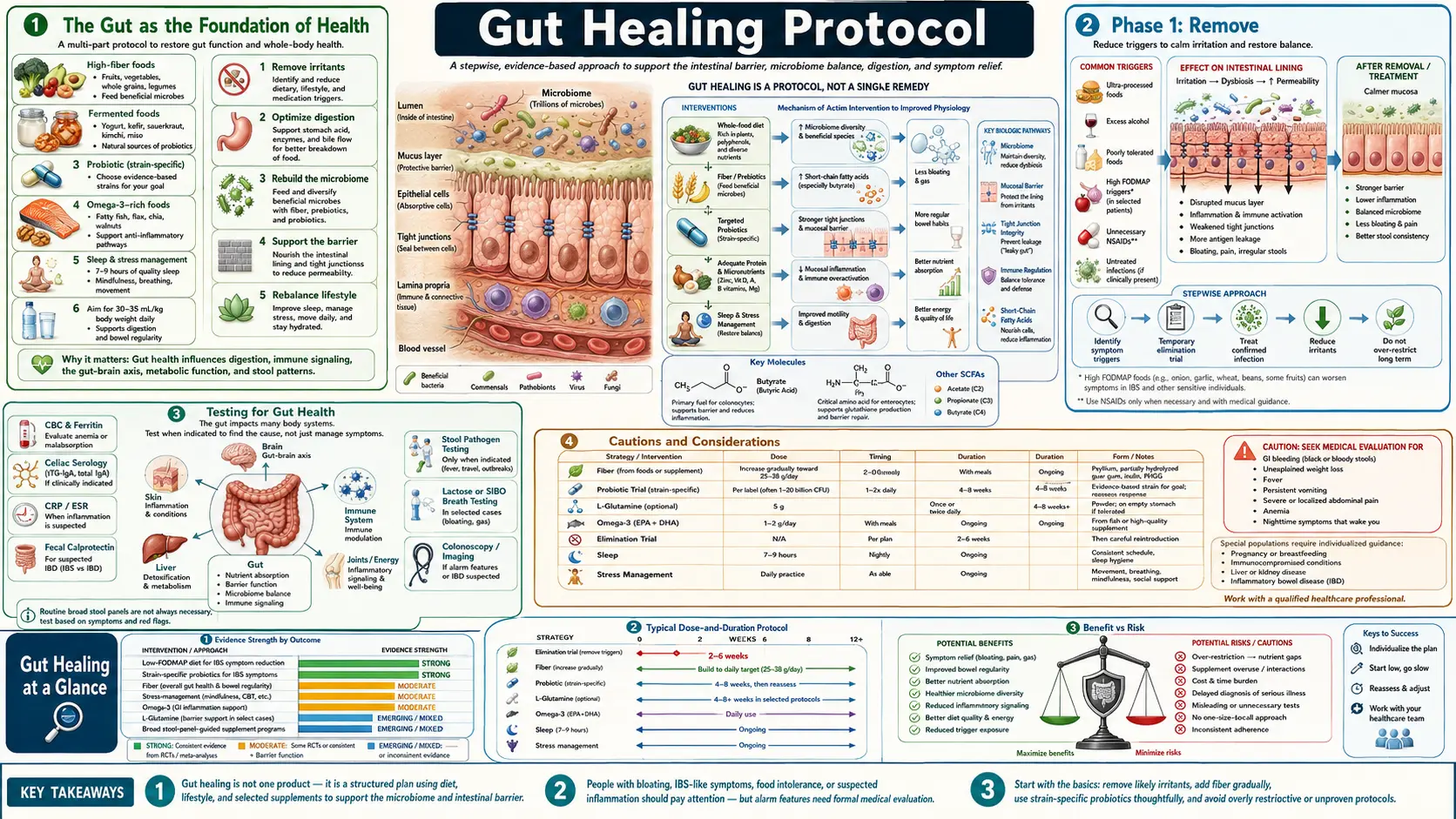
The gastrointestinal tract digests and absorbs food, holds a large share of the body's immune tissue and exchanges signals with the brain. "Gut healing" protocols, most often the five-step "5R" sequence used in functional and naturopathic medicine, aim to repair the intestinal lining and rebalance the gut microbes. This page sets out what such protocols contain and what controlled research has and has not shown for each part. In a 2019 review for clinicians, Camilleri wrote that information on "healthy" or "leaky" gut in the public domain requires confirmation before endorsing dietary exclusions, fermented foods or supplements to repair the damage, and that it is still unproven that restoring barrier function improves gastrointestinal or systemic disease (Camilleri, Gut 2019).
Table of Contents
- The Gut and the Rest of the Body
- What Is Leaky Gut (Intestinal Permeability)?
- What Is Known to Affect the Gut Barrier and Microbiome
- The 5R Protocol: What It Is
- Phase 1: Remove
- Phase 2: Replace
- Phase 3: Reinoculate
- Phase 4: Repair
- Phase 5: Rebalance
- Testing for Gut Health
- Foods Included in Gut-Healing Diets
- Foods Excluded in Gut-Healing Diets
- How Long Gut Healing Takes
- Cautions and Considerations
- Key Research Papers
- Connections
- Featured Videos
1. The Gut and the Rest of the Body
Gut-associated lymphoid tissue (GALT) is described in a 2008 review as representing almost 70% of the entire immune system, with about 80% of plasma cells (mainly IgA-bearing cells) residing in it. The same review describes GALT allowing either tolerance or elimination of what passes through the gut, and sometimes damaging the lining, as in coeliac disease or food allergy (Vighi, Clin Exp Immunol 2008).
The gut contains most of the body's serotonin (5-hydroxytryptamine), which acts there as a neurotransmitter, a local signalling factor, a hormone and a growth factor (Gershon, Curr Opin Endocrinol Diabetes Obes 2013). The often-repeated figure of "90 percent" and claims that the gut makes a large share of the body's dopamine and GABA are not stated in the sources fetched for this page. The two-way link between gut and brain has its own page in the Remedies section (Gut Brain Axis).
Functions of the gut microbes that the sources on this page describe include:
- Vitamin synthesis: lactic acid bacteria and gut commensals such as bifidobacteria can make B-group vitamins such as folate and riboflavin, and certain strains make cobalamin (vitamin B12) (LeBlanc, Curr Opin Biotechnol 2013).
- Short-chain fatty acids: butyrate-producing species are among the bacteria depleted by broad-spectrum antibiotics (Palleja, Nat Microbiol 2018); feeding the emulsifier carboxymethylcellulose to healthy adults reduced faecal short-chain fatty acids (Chassaing, Gastroenterology 2022).
- The mucus barrier: multi-layered mucus covering the intestinal surface keeps the vast majority of gut bacteria at a distance from the cells lining the intestine (Chassaing, Nature 2015).
- Blood sugar: in a randomized trial in 120 healthy adults, non-nutritive sweeteners altered the gut microbiome, and germ-free mice given gut microbes from the strongest and weakest responders largely reproduced their donors' glucose responses (Suez, Cell 2022).
2. What Is Leaky Gut (Intestinal Permeability)?
The intestinal barrier includes surface mucus, the epithelial layer and immune defences (Camilleri, Gut 2019). The epithelial cells are joined by intercellular tight junctions, which, together with gut immune tissue, control the traffic of large molecules from the gut into the body (Fasano, Physiol Rev 2011).
Increased intestinal permeability, popularly called "leaky gut", can come from greater passage between cells, cell death, or greater passage through cells. It is measured in people by drinking probe sugars (for example lactulose and mannitol or rhamnose) and measuring how much appears in urine, or in biopsy tissue in the laboratory. Inflammatory or ulcerating intestinal diseases result in leaky gut, and endurance exercise, non-steroidal anti-inflammatory drugs (NSAIDs), pregnancy, bile acids and dietary emulsifiers increase permeability (Camilleri, Gut 2019).
Gut-healing material links leaky gut to a long list of conditions: autoimmune diseases (Hashimoto's thyroiditis, rheumatoid arthritis, lupus, celiac disease), skin disorders (eczema, psoriasis, acne, rosacea), digestive symptoms, brain fog, headaches, anxiety and depression, food sensitivities, weight gain, insulin resistance, asthma, allergies, chronic sinusitis, and joint and muscle pain. What the research fetched for this page shows is narrower:
- Established: inflammatory and ulcerating gut diseases cause increased permeability, but no such disease is cured by simply normalising barrier function, and it is unproven that restoring barrier function improves symptoms in gut or whole-body disease (Camilleri, Gut 2019).
- Celiac disease: zonulin, a protein that opens tight junctions, was raised in intestinal tissue during the acute phase of coeliac disease, when permeability is increased (Fasano, Lancet 2000).
- Rheumatoid arthritis: in a 1984 study, intestinal permeability was normal in untreated patients but almost always abnormal in patients taking NSAIDs; the authors concluded that increased permeability does not seem to be important in causing the disease, though NSAID-related leakiness might help it persist (Bjarnason, Lancet 1984).
- Mood: some, but not all, alcohol-dependent adults had a leaky gut, and in them it was associated with higher depression, anxiety and craving scores after 3 weeks without alcohol, an association rather than proof of cause (Leclercq, PNAS 2014).
- A hypothesis, not a finding: Fasano's 2011 review proposes that when the zonulin pathway is deregulated in genetically susceptible people, autoimmune, inflammatory and cancerous disorders inside and outside the gut can occur, and that these processes might be stopped by restoring the barrier (Fasano, Physiol Rev 2011). Camilleri's 2019 review judged the clinical benefit of restoring the barrier still unproven.
Zonulin was described by Fasano and colleagues in 2000 as a human protein similar to a cholera toxin (zonula occludens toxin) that takes tight junctions apart in non-human primate intestinal tissue. Gliadin, a gluten protein, increases permeability in laboratory tissue: in duodenal biopsies from four groups of 5 or 6 people each, it raised permeability in all four groups (active celiac disease, celiac disease in remission, non-celiac gluten sensitivity, and controls without either), with larger rises in active celiac disease and gluten sensitivity (Hollon, Nutrients 2015). This was measured in excised tissue over 120 minutes, not in people eating gluten.
3. What Is Known to Affect the Gut Barrier and Microbiome
The factors below are those commonly listed in gut-healing material. The evidence ranges from human trials to test-tube studies, and each is described as what it is.
Medications
- Antibiotics: in 12 healthy men given a 4-day course of three last-resort antibiotics (meropenem, gentamicin and vancomycin), the gut microbes first shifted toward enterobacteria and other potential pathogens, with loss of bifidobacteria and butyrate producers. The community recovered to near its starting composition within 1.5 months, but 9 common species present in everyone beforehand were still undetectable in most of the men after 180 days (Palleja, Nat Microbiol 2018). The figures often quoted in gut-healing material (a 30 percent loss of diversity, six months to two years to recover) were not found in the sources fetched for this page.
- NSAIDs: intestinal permeability was almost always abnormal in rheumatoid arthritis patients taking NSAIDs (Bjarnason, Lancet 1984). In 10 healthy volunteers, 5 days of indomethacin (50 mg three times a day) caused a threefold increase in a urine permeability ratio (Mahmood, Gut 2007), and indomethacin also increased permeability in a 2014 volunteer study (Vanuytsel, Gut 2014).
- Proton pump inhibitors (PPIs): in faecal samples from 1,827 healthy twins, PPI users had fewer gut commensals, lower microbial diversity and more bacteria normally found in the mouth and upper gut; the authors propose that the change results from the loss of the stomach's acid barrier (Jackson, Gut 2016).
Environmental Chemicals
- Glyphosate: in a laboratory study of poultry gut bacteria, the pathogens tested (Salmonella species, Clostridium perfringens, Clostridium botulinum) were highly resistant to it, while most beneficial bacteria tested (Enterococcus species, Bifidobacterium adolescentis, Lactobacillus species) were moderately to highly susceptible (Shehata, Curr Microbiol 2013). This is a test-tube finding in poultry bacteria; no human study of glyphosate and gut permeability was among the sources fetched for this page.
Dietary Factors
- Ultra-processed foods and emulsifiers: in Narula and colleagues' 2021 BMJ cohort of 116,087 adults in 21 countries, eating five or more servings of ultra-processed food a day, compared with less than one, was associated with a higher risk of inflammatory bowel disease (IBD) (hazard ratio 1.82, 95% CI 1.22–2.72); soft drinks, refined sweetened foods, salty snacks and processed meat were each associated with higher risk, and the authors called for studies to identify which components contribute. In mice, the emulsifiers carboxymethylcellulose and polysorbate-80 induced low-grade inflammation with bacteria encroaching on the protective mucus layer, and promoted colitis in mice predisposed to it (Chassaing, Nature 2015). In a controlled-feeding study of 16 healthy adults, 15 g a day of carboxymethylcellulose for 11 days modestly increased abdominal discomfort after meals, reduced microbiota diversity and faecal short-chain fatty acids, and two participants showed bacterial encroachment into the inner mucus layer (Chassaing, Gastroenterology 2022). Two 2025 trials in people with Crohn's disease reported different results: in a double-blind feeding trial of 24 adults, a high- and a low-emulsifier diet showed no statistically significant differences in any outcome over 4 weeks, and the authors concluded that recommendations to avoid emulsifiers in active Crohn's are not supported (Fitzpatrick, Aliment Pharmacol Ther 2025); the larger ADDapt trial (154 patients, 8 weeks), so far reported as a conference abstract rather than a full peer-reviewed paper, found a disease-activity response in 49.4% on a low-emulsifier diet versus 30.7% on the same diet with emulsifiers added back (p=0.019). The human trial evidence is therefore small and not yet consistent. Crohn's disease has its own page in the Diseases section.
- Artificial sweeteners: in the 2022 randomized trial of 120 healthy adults, saccharin, sucralose, aspartame and stevia, given for 2 weeks at doses below the acceptable daily intake, each altered the stool and oral microbiome; saccharin and sucralose impaired glucose responses, and the effects differed from person to person (Suez, Cell 2022).
- Alcohol: some, but not all, alcohol-dependent adults developed a leaky gut, and those who did had altered gut microbes (Leclercq, PNAS 2014). The sources fetched for this page did not measure the effect of moderate drinking on permeability.
- Refined sugar and seed oils: claims that sugar "feeds pathogenic bacteria and yeast" and that omega-6-rich seed oils inflame the gut lining were not supported by any source fetched for this page; refined sweetened foods were one of the ultra-processed food groups associated with higher IBD risk in the Narula cohort.
Stress and Exercise
- Psychological stress: in 23 healthy volunteers, giving a public speech increased small-intestinal permeability, but only in those whose cortisol rose. An infusion of the stress hormone CRH also increased permeability, and pretreatment with a mast-cell stabiliser (disodium cromoglycate) blocked the effect of both, pointing to mast cells (Vanuytsel, Gut 2014).
- Endurance exercise: listed among the "stress" states that increase permeability (Camilleri, Gut 2019).
- Claims that sleep loss and a sedentary life damage the gut barrier were not among the findings of the sources fetched for this page.
4. The 5R Protocol: What It Is
The 5R program comes from functional medicine. A 2022 review describing its use for small intestinal bacterial overgrowth (SIBO) lists the steps as remove, replenish, repair, reinoculate and rebalance, applied alongside conventional SIBO treatment (Patel, Phys Med Rehabil Clin N Am 2022). Practitioner descriptions, including the one this page follows, often order them as:
- Remove: triggers, irritants and infections thought to damage the gut
- Replace: digestive factors (stomach acid, enzymes, bile) thought to be lacking
- Reinoculate: beneficial microorganisms
- Repair: nutrients and compounds intended to rebuild the intestinal lining
- Rebalance: lifestyle factors such as stress and sleep
PubMed searches made for this page (October 2026) found no controlled trial testing the 5R sequence as a whole. The evidence that exists concerns its separate parts, and is summarized phase by phase below. Practitioners describe the phases as overlapping and tailored to the individual.
5. Phase 1: Remove
The first phase removes foods and other exposures thought to damage the gut, and treats infections. No trial was found that sets the length of this phase; practitioner protocols commonly describe several weeks.
Elimination Diets
Elimination diets in gut-healing protocols commonly remove the foods below. What the research says about each:
- Gluten (wheat, barley, rye, spelt): gliadin increased permeability in biopsy tissue from every group tested, including people without celiac disease or gluten sensitivity (Hollon, Nutrients 2015). That laboratory result is the basis for the claim that gluten increases permeability "in all individuals"; the sources fetched for this page did not test gluten removal in people without celiac disease or gluten sensitivity.
- Dairy: protocols remove cow's milk products, citing casein, whey and lactose. In the 116,087-adult Narula cohort, dairy intake was not associated with incident IBD (Narula, BMJ 2021).
- Artificial sweeteners: see the Suez 2022 trial above: microbiome changes with all four sweeteners tested, impaired glucose responses with saccharin and sucralose.
- Emulsifiers and other additives: protocols remove emulsifiers such as carboxymethylcellulose and polysorbate 80. The evidence (summarized in section 3) is a mouse study, one 16-person feeding study in healthy adults, and two 2025 Crohn's disease trials with conflicting results.
- Alcohol: protocols remove it completely during the healing phase. The human permeability data fetched for this page come from alcohol-dependent adults (Leclercq, PNAS 2014).
- Corn, soy and eggs: removed in many protocols as suspected food-sensitivity triggers (corn and soy also for glyphosate residues). No controlled study of removing them was among the sources fetched for this page.
- Low-FODMAP diet: a related elimination approach with controlled-trial evidence in irritable bowel syndrome (IBS). In a single-blind crossover trial of 30 people with IBS, 21 days on a diet low in fermentable carbohydrates (FODMAPs) lowered overall symptom scores (22.8 mm versus 44.9 mm on a typical Australian diet) and reduced bloating, pain and wind (Halmos, Gastroenterology 2014).
Infections
- SIBO (small intestinal bacterial overgrowth): a North American consensus states that glucose and lactulose breath tests remain the least invasive ways to diagnose SIBO, and counts a hydrogen rise of at least 20 parts per million within 90 minutes as positive (Rezaie, Am J Gastroenterol 2017). A meta-analysis of 32 studies (1,331 patients) found the antibiotic rifaximin eradicated SIBO in 70.8% by intention-to-treat, while noting that study quality was generally poor (Gatta, Aliment Pharmacol Ther 2017). In a clinic study of 104 patients offered either rifaximin or herbal therapy, follow-up breath tests were negative in 46% after herbal antimicrobial preparations and 34% after rifaximin, a difference that was not statistically significant (Chedid, Glob Adv Health Med 2014).
- "Candida overgrowth": protocols treat a suspected yeast overgrowth, said to cause sugar cravings and brain fog, with antifungal supplements (caprylic acid, undecylenic acid, pau d'arco) and strict sugar removal. No controlled trial of this approach was among the sources fetched for this page.
- Parasites: protocols test for organisms such as Blastocystis hominis, Dientamoeba fragilis and Giardia with stool PCR panels. Intestinal parasites have their own pages in the Diseases section.
- H. pylori: this bacterium causes dyspepsia, peptic ulcer disease and gastric cancer. The 2024 American College of Gastroenterology guideline names 14 days of bismuth quadruple therapy as the preferred first treatment when antibiotic susceptibility is unknown (Chey, Am J Gastroenterol 2024). Mastic gum, included in some gut-healing protocols, is not among the regimens in the guideline's summary.
6. Phase 2: Replace
The Replace phase adds back digestive factors that protocols consider deficient.
Hydrochloric Acid (HCl)
Protocols hold that stomach acid falls with age, chronic stress, H. pylori infection and long-term PPI use, and that heartburn is more often caused by too little acid than too much. The heartburn claim was not supported by any source fetched for this page. Betaine HCl does lower stomach pH for a short time: in 6 healthy volunteers whose acid had been suppressed with a PPI, 1,500 mg of betaine HCl lowered gastric pH from 5.2 to 0.6 within 30 minutes, with pH staying below 3 for about 73 minutes (Yago, Mol Pharm 2013). The capsule-titration method described in practitioner protocols (adding capsules until a warm sensation is felt), and apple cider vinegar before meals, were not tested in any trial found for this page.
Digestive Enzymes and Bile
Protocols use broad-spectrum enzyme supplements (proteases, lipases and amylases, sometimes with DPP-IV, an enzyme promoted for breaking down gluten and casein peptides), ox bile with fatty meals, and bitter herbs such as gentian root, dandelion root and artichoke leaf. No trial of these products for gut healing was among the sources fetched for this page.
7. Phase 3: Reinoculate
The Reinoculate phase adds microorganisms and the fibres that feed them.
Probiotics
Products used in protocols include Lactobacillus species (L. rhamnosus GG, L. plantarum, L. acidophilus, L. reuteri), Bifidobacterium species (B. longum, B. infantis, B. lactis, B. breve), the yeast Saccharomyces boulardii, and spore-forming Bacillus species (B. subtilis, B. coagulans, B. clausii). The 2020 American Gastroenterological Association technical review found:
- IBS: 55 trials of 44 different probiotic formulations, with low overall certainty of evidence; no single strain or combination had been studied rigorously enough.
- Preventing C. difficile infection during antibiotics: probiotics might reduce risk compared with placebo (risk ratio 0.40), with low overall certainty, based mainly on S. boulardii and a two-strain Lactobacillus combination.
- Crohn's disease: no evidence that probiotics help induce or maintain remission. Ulcerative colitis: adding a probiotic to conventional therapy did not appear to improve remission rates (Preidis, Gastroenterology 2020).
A meta-analysis of 21 randomized trials (4,780 participants) found that S. boulardii lowered the risk of antibiotic-associated diarrhoea from 18.7% to 8.5%; its reduction of C. difficile diarrhoea was significant in children but not in adults (Szajewska, Aliment Pharmacol Ther 2015). After antibiotics, however, a multi-strain probiotic delayed and left incomplete the return of people's own gut microbes compared with no treatment, while a transplant of each person's own stored stool restored them within days (Suez, Cell 2018). The doses quoted in gut-healing protocols (25 to 100 billion CFU a day) were not drawn from these trials, which used different strains and doses.
Prebiotics
Fibres used in protocols include partially hydrolyzed guar gum, acacia fibre, inulin and fructo-oligosaccharides, resistant starch and larch arabinogalactan. In a 17-week randomized study of healthy adults, a high-fibre diet did not change gut microbial diversity, though it increased microbial enzymes that break down fibre (Wastyk, Cell 2021). The evidence for individual prebiotics is reviewed on the Prebiotics page in the Remedies section.
Fermented Foods
Fermented foods used in protocols include raw sauerkraut, kimchi, dairy-free coconut yogurt or kefir, beet kvass and miso (fermented soybean paste). In the same 17-week randomized study (18 people per diet), a diet high in fermented foods steadily increased gut microbial diversity and lowered inflammatory markers (Wastyk, Cell 2021).
"Die-off" reactions: protocols warn that starting probiotics or fermented foods too fast causes a "Herxheimer" die-off reaction. The Jarisch-Herxheimer reaction is documented after antibiotic treatment of spirochete infections (syphilis, Lyme disease, leptospirosis, relapsing fever): chills, fever and worsening rash within 24 hours (Butler, Am J Trop Med Hyg 2017). No source fetched for this page documents such a reaction from probiotics or fermented foods.
8. Phase 4: Repair
The Repair phase is the most supplement-heavy part of the protocol.
L-Glutamine
Glutamine is described as the most abundant and versatile amino acid in the body, with the gut among the main organs controlling its release into the blood (Cruzat, Nutrients 2018). The main controlled trial of glutamine for gut symptoms enrolled adults who had developed diarrhoea-predominant IBS with increased intestinal permeability after a gut infection. With 5 g three times a day for 8 weeks, 79.6% of the 54 people on glutamine and 5.8% of the 52 on placebo had at least a 50-point fall in IBS symptom score, and glutamine normalized the raised permeability, which placebo did not. Side effects were low and similar in both groups. The authors called for larger trials to confirm the result (Zhou, Gut 2019). The trial was in one specific group of patients; claims that glutamine is "the single most important supplement for gut repair", and the 5 to 20 g daily range quoted in protocols, go beyond it.
Bone Broth and Collagen
Protocols describe bone broth as a source of collagen, gelatin, glycine, proline, glucosamine and minerals that rebuild the gut wall. A PubMed search for "bone broth" (27 records, October 2026) returned mainly food-science studies of flavour and texture; none was a clinical trial of gut permeability or gut symptoms. For collagen peptides:
- In a randomized crossover trial in 20 runners, 10 g a day of collagen peptides for 7 days did not change exercise-induced gut permeability, inflammation or gut symptoms compared with placebo (Taylor, Eur J Nutr 2023).
- In an open-label, single-arm study with no control group, 13 of the 14 women (of 40 recruited) who completed 8 weeks of 20 g a day reported fewer digestive symptoms, including bloating (Abrahams, JMIR Form Res 2022). In both studies, the supplements were supplied by, or authors were employed by, a collagen manufacturer.
Zinc Carnosine
The main human study is small. In a randomized crossover trial in 10 healthy volunteers, 5 days of indomethacin caused a threefold increase in gut permeability with placebo (urine ratio 0.35 before, 0.88 after), while no significant increase was seen when zinc carnosine, 37.5 mg twice daily, was taken alongside. The same paper reported that zinc carnosine stimulated cell migration and growth in cell cultures and reduced stomach and small-intestinal injury in rats and mice. The authors noted that scientific evidence behind the product's health claims was limited and that further studies were warranted (Mahmood, Gut 2007). The dose often quoted in protocols (75 mg twice daily) is higher than the 37.5 mg twice daily used in this trial.
Demulcent and Soothing Herbs
- Slippery elm bark (Ulmus rubra) and marshmallow root (Althaea officinalis): used for their mucilage, which is said to coat and protect the gut lining. No placebo-controlled trial testing either alone on the gut lining was found for this page.
- Aloe vera gel: in a double-blind trial in 44 outpatients with mild to moderate ulcerative colitis, 100 mL of aloe vera gel twice daily for 4 weeks produced clinical remission in 30% versus 7% on placebo (not statistically significant, P=0.09) and a clinical response in 47% versus 14% (P<0.05), with reduced disease activity on biopsy; the authors called for further evaluation (Langmead, Aliment Pharmacol Ther 2004).
- DGL (deglycyrrhizinated licorice, Glycyrrhiza glabra): licorice with its glycyrrhizin largely removed. Whole licorice products providing at least 100 mg of glycyrrhizic acid a day raised systolic blood pressure by 5.45 mm Hg and lowered blood potassium in a meta-analysis of 18 studies (Penninkilampi, J Hum Hypertens 2017). A PubMed search found no randomized trial of DGL indexed as such.
Other Nutrients in Protocols
Protocols also include omega-3 fatty acids (EPA and DHA), vitamin D3, vitamin A, N-acetyl glucosamine and butyrate (as tributyrin), each with its own dose range. Those doses were not traced to trials of gut permeability or gut healing in the sources fetched for this page, and are not repeated here.
9. Phase 5: Rebalance
The final phase addresses lifestyle.
Stress
Acute psychological stress (a public speech) increased small-intestinal permeability in healthy volunteers whose cortisol rose, through a mechanism involving the stress hormone CRH and mast cells (Vanuytsel, Gut 2014). Whether stress-reduction practices reverse this was not tested in that study.
Exercise
Endurance exercise is one of the "stress" states that increase permeability (Camilleri, Gut 2019). In a trial in runners, 10 g a day of collagen peptides did not change exercise-induced gut permeability (Taylor, Eur J Nutr 2023).
Other Lifestyle Elements
Protocols also include 7 to 9 hours of sleep with a fixed schedule and no screens before bed; vagus-nerve practices (slow breathing, cold exposure, humming, gargling, singing); daily meditation; adaptogenic herbs (ashwagandha, rhodiola, holy basil); time outdoors; chewing each bite 20 to 30 times; drinking little with meals; and 4 to 5 hours between meals for the gut's "migrating motor complex". None of these was tested as part of a gut-healing protocol in the sources fetched for this page.
10. Testing for Gut Health
Practitioners offering gut-healing protocols commonly order some of the tests below.
Stool Microbiome and Pathogen Panels
Commercial stool panels report bacterial, parasitic and fungal organisms by DNA (PCR) methods, the relative abundance of "beneficial" and "pathogenic" species, and digestion and inflammation markers (pancreatic elastase, fat, calprotectin, secretory IgA, occult blood). A 2025 international consensus statement found that evidence supporting the clinical usefulness of gut microbiome testing is scarce, and that a growing number of providers sell direct-to-consumer microbiome tests without consensus on their regulation or any proven value in clinical practice (Porcari, Lancet Gastroenterol Hepatol 2025). Trials use faecal calprotectin as objective evidence of gut inflammation; the ADDapt trial accepted a level of at least 150 µg/g as one way of confirming active Crohn's disease.
Food Sensitivity Panels
IgG and IgA food-antibody panels are offered to identify "delayed" food reactions. A European Academy of Allergy and Clinical Immunology task force found that food-specific IgG4 indicates repeated exposure to a food and immune tolerance, not allergy or intolerance, and that many people test positive with no symptoms; it concluded that IgG4 testing is irrelevant to the work-up of food allergy or intolerance and should not be performed for food-related complaints (Stapel, Allergy 2008). Mediator-release tests, also marketed for food sensitivity, were not evaluated in any source fetched for this page.
Urine Organic Acids Tests
These urine panels are marketed to detect yeast markers (arabinose, D-arabinitol), bacterial markers (DHPPA, hippuric acid) and Clostridia markers (HPHPA). No validation study for diagnosing gut overgrowth was among the sources fetched for this page.
Other Tests
- SIBO breath test: glucose or lactulose breath testing measures hydrogen and methane; the North American consensus counts a hydrogen rise of at least 20 ppm within 90 minutes as positive for SIBO and methane of at least 10 ppm as methane-positive (Rezaie, Am J Gastroenterol 2017).
- Zonulin blood test: sold as a marker of intestinal permeability. Two laboratory analyses found that widely used commercial zonulin assays do not detect the actual zonulin protein (pre-haptoglobin 2), but other proteins such as complement C3, haptoglobin or properdin; the authors of one advised caution in using serum zonulin as a marker of barrier integrity until the assays improve (Ajamian, PLoS One 2019; Scheffler, Front Endocrinol 2018).
- Lactulose-mannitol permeability test: a urine test after drinking two probe sugars, used as the permeability measure in the stress and glutamine trials on this page (Vanuytsel, Gut 2014; Zhou, Gut 2019).
- Blood work: inflammatory markers (CRP, ESR), vitamin D, iron studies, B12 and folate.
11. Foods Included in Gut-Healing Diets
Gut-healing diets emphasize whole foods. Those commonly listed are bone broth; oily fish such as salmon, sardines, mackerel and anchovies; cooked vegetables such as squash, sweet potatoes, zucchini, carrots and beets; leafy greens such as spinach, kale, chard and arugula; raw fermented vegetables such as sauerkraut, kimchi and pickles; coconut oil, milk and cream; ginger and turmeric; prebiotic-rich foods such as garlic, cooked onions, leeks, asparagus, Jerusalem artichokes and green bananas; extra virgin olive oil, avocado and ghee; and liver and other organ meats.
Two findings from the sources on this page bear on these lists: a diet high in fermented foods increased gut microbial diversity and lowered inflammatory markers over 17 weeks (Wastyk, Cell 2021), and in the Narula cohort, intakes of white meat, red meat, dairy, starch, fruit, vegetables and legumes were not associated with incident IBD (Narula, BMJ 2021). The specific health claims made for individual foods in gut-healing material (for example the antimicrobial action of lauric and caprylic acid in coconut oil) were not checked against a trial here and are not repeated.
12. Foods Excluded in Gut-Healing Diets
Gut-healing protocols exclude the foods below during the protocol, and many advise long-term limits for people prone to gut problems. What the sources on this page report:
- Gluten-containing grains (wheat, barley, rye, spelt, kamut, triticale): gliadin raised permeability in biopsy tissue from all groups tested, a laboratory finding (Hollon, Nutrients 2015).
- Refined sugar and high-fructose corn syrup: soft drinks and refined sweetened foods were each associated with higher IBD risk in an observational cohort (Narula, BMJ 2021).
- Artificial sweeteners (sucralose, aspartame, saccharin, acesulfame potassium): saccharin, sucralose and aspartame altered the microbiome in a randomized trial; acesulfame potassium was not tested (Suez, Cell 2022).
- Ultra-processed foods and emulsifiers: associated with higher IBD risk in a cohort; emulsifier trials in humans are small and conflicting (see section 3).
- Processed meat: associated with higher IBD risk in the Narula cohort, while red and white meat were not.
- Alcohol: leaky gut and altered microbes in some alcohol-dependent adults (Leclercq, PNAS 2014).
- Conventional dairy: some protocols exclude dairy containing A1 casein and reintroduce A2, goat or sheep milk products; dairy intake was not associated with IBD in the Narula cohort, and no trial comparing these milks for gut healing was among the sources fetched for this page.
- Industrial seed oils (canola, soybean, corn, sunflower, safflower, cottonseed), fried foods, conventionally raised meats (for possible antibiotic residues) and excess caffeine: excluded in many protocols; no study of these and gut permeability was among the sources fetched for this page.
13. How Long Gut Healing Takes
Practitioner protocols quote timelines such as 4 to 8 weeks for mild gut problems, 3 to 6 months for moderate ones and 6 to 12 months or longer for severe or long-standing ones. No study measuring how long gut healing takes was found for this page; the human diet and supplement studies described here lasted from a single dose to 17 weeks.
The intestinal lining renews itself quickly: a meta-analysis of 85 studies estimated the turnover time of human gut epithelial cells at 3.48 ± 1.55 days (Darwich, Drug Metab Dispos 2014). Microbial recovery can be slower: after a short course of broad-spectrum antibiotics, some common species were still missing in most people after 6 months (Palleja, Nat Microbiol 2018).
14. Cautions and Considerations
- "Die-off" claims: the Jarisch-Herxheimer reaction is documented after antibiotic treatment of spirochete infections (Butler, Am J Trop Med Hyg 2017); no source fetched for this page documents it from probiotics, fermented foods or antifungal supplements. The binders and other measures protocols use for it (activated charcoal, bentonite clay, Epsom salt baths) were not tested in any source found.
- Histamine and oxalate claims: protocols describe histamine intolerance and excess oxalate absorption in people with leaky gut. No source supporting these links was among the papers fetched for this page.
- FODMAPs: inulin and fructo-oligosaccharides, common prebiotics, are fermentable oligosaccharides, the "O" in FODMAP. A low-FODMAP diet reduced IBS symptoms in a controlled trial (Halmos, Gastroenterology 2014), so prebiotic-rich foods and a low-FODMAP diet pull in opposite directions for people with IBS.
- Berberine interactions: in healthy men, berberine 300 mg three times a day for 2 weeks reduced the activity of the drug-metabolizing enzymes CYP2D6, CYP2C9 and CYP3A4; the authors wrote that drug interactions should be considered (Guo, Eur J Clin Pharmacol 2012).
- Licorice: whole licorice with glycyrrhizic acid raises blood pressure and lowers potassium even at modest doses, which the authors note matters most for people with existing cardiovascular disease (Penninkilampi, J Hum Hypertens 2017). DGL has most of the glycyrrhizin removed.
- Pregnancy and breastfeeding: safety data for most of the supplements and antimicrobial herbs on this page in pregnancy and breastfeeding were not found in the sources fetched.
- Inflammatory bowel disease: the AGA technical review found no evidence that probiotics help induce or maintain remission in Crohn's disease, and no improvement in remission when a probiotic is added to conventional therapy for ulcerative colitis (Preidis, Gastroenterology 2020).
- Who decides: decisions about supplements, testing and treatment belong with a clinician, particularly for people with inflammatory bowel disease, cancer, an organ transplant or another serious condition.
Key Research Papers
- Camilleri M. Leaky gut: mechanisms, measurement and clinical implications in humans. Gut. 2019;68(8):1516–1526. — doi:10.1136/gutjnl-2019-318427 ( PubMed PMID: 31076401)
- Vighi G, Marcucci F, Sensi L, et al. Allergy and the gastrointestinal system. Clin Exp Immunol. 2008;153 Suppl 1(Suppl 1):3–6. — doi:10.1111/j.1365-2249.2008.03713.x ( PubMed PMID: 18721321)
- Gershon MD. 5-Hydroxytryptamine (serotonin) in the gastrointestinal tract. Curr Opin Endocrinol Diabetes Obes. 2013;20(1):14–21. — doi:10.1097/MED.0b013e32835bc703 ( PubMed PMID: 23222853)
- LeBlanc JG, Milani C, de Giori GS, et al. Bacteria as vitamin suppliers to their host: a gut microbiota perspective. Curr Opin Biotechnol. 2013;24(2):160–8. — doi:10.1016/j.copbio.2012.08.005 ( PubMed PMID: 22940212)
- Palleja A, Mikkelsen KH, Forslund SK, et al. Recovery of gut microbiota of healthy adults following antibiotic exposure. Nat Microbiol. 2018;3(11):1255–1265. — doi:10.1038/s41564-018-0257-9 ( PubMed PMID: 30349083)
- Chassaing B, Compher C, Bonhomme B, et al. Randomized Controlled-Feeding Study of Dietary Emulsifier Carboxymethylcellulose Reveals Detrimental Impacts on the Gut Microbiota and Metabolome. Gastroenterology. 2022;162(3):743–756. — doi:10.1053/j.gastro.2021.11.006 ( PubMed PMID: 34774538)
- Chassaing B, Koren O, Goodrich JK, et al. Dietary emulsifiers impact the mouse gut microbiota promoting colitis and metabolic syndrome. Nature. 2015;519(7541):92–6. — doi:10.1038/nature14232 ( PubMed PMID: 25731162) — a corrigendum was published in 2016 (PubMed PMID: 27144359)
- Suez J, Cohen Y, Valdés-Mas R, et al. Personalized microbiome-driven effects of non-nutritive sweeteners on human glucose tolerance. Cell. 2022;185(18):3307–3328.e19. — doi:10.1016/j.cell.2022.07.016 ( PubMed PMID: 35987213)
- Fasano A. Zonulin and its regulation of intestinal barrier function: the biological door to inflammation, autoimmunity, and cancer. Physiol Rev. 2011;91(1):151–75. — doi:10.1152/physrev.00003.2008 ( PubMed PMID: 21248165)
- Fasano A, Not T, Wang W, et al. Zonulin, a newly discovered modulator of intestinal permeability, and its expression in coeliac disease. Lancet. 2000;355(9214):1518–9. — doi:10.1016/S0140-6736(00)02169-3 ( PubMed PMID: 10801176)
- Bjarnason I, Williams P, So A, et al. Intestinal permeability and inflammation in rheumatoid arthritis: effects of non-steroidal anti-inflammatory drugs. Lancet. 1984;2(8413):1171–4. — doi:10.1016/s0140-6736(84)92739-9 ( PubMed PMID: 6150232)
- Leclercq S, Matamoros S, Cani PD, et al. Intestinal permeability, gut-bacterial dysbiosis, and behavioral markers of alcohol-dependence severity. Proc Natl Acad Sci U S A. 2014;111(42):E4485–93. — doi:10.1073/pnas.1415174111 ( PubMed PMID: 25288760)
- Hollon J, Puppa EL, Greenwald B, et al. Effect of gliadin on permeability of intestinal biopsy explants from celiac disease patients and patients with non-celiac gluten sensitivity. Nutrients. 2015;7(3):1565–76. — doi:10.3390/nu7031565 ( PubMed PMID: 25734566)
- Mahmood A, FitzGerald AJ, Marchbank T, et al. Zinc carnosine, a health food supplement that stabilises small bowel integrity and stimulates gut repair processes. Gut. 2007;56(2):168–75. — doi:10.1136/gut.2006.099929 ( PubMed PMID: 16777920)
- Vanuytsel T, van Wanrooy S, Vanheel H, et al. Psychological stress and corticotropin-releasing hormone increase intestinal permeability in humans by a mast cell-dependent mechanism. Gut. 2014;63(8):1293–9. — doi:10.1136/gutjnl-2013-305690 ( PubMed PMID: 24153250)
- Jackson MA, Goodrich JK, Maxan ME, et al. Proton pump inhibitors alter the composition of the gut microbiota. Gut. 2016;65(5):749–56. — doi:10.1136/gutjnl-2015-310861 ( PubMed PMID: 26719299)
- Shehata AA, Schrödl W, Aldin AA, et al. The effect of glyphosate on potential pathogens and beneficial members of poultry microbiota in vitro. Curr Microbiol. 2013;66(4):350–8. — doi:10.1007/s00284-012-0277-2 ( PubMed PMID: 23224412)
- Narula N, Wong ECL, Dehghan M, et al. Association of ultra-processed food intake with risk of inflammatory bowel disease: prospective cohort study. BMJ. 2021;374:n1554. — doi:10.1136/bmj.n1554 ( PubMed PMID: 34261638)
- Fitzpatrick JA, Gibson PR, Taylor KM, et al. Clinical Trial: The Effects of Emulsifiers in the Food Supply on Disease Activity in Crohn’s Disease: An Exploratory Double-Blinded Randomised Feeding Trial. Aliment Pharmacol Ther. 2025;61(8):1276–1289. — doi:10.1111/apt.70041 ( PubMed PMID: 39967287)
- Bancil A, Rossi M, Sandall A, et al. DOP097 Emulsifier restriction is an effective therapy for active Crohn’s disease: the ADDapt trial – a multi-centre, randomised, double-blind, placebo-controlled, re-supplementation trial in 154 patients. J Crohns Colitis. 2025;19(Suppl 1):i262. Conference abstract, not a full peer-reviewed paper. — doi:10.1093/ecco-jcc/jjae190.0136
- Patel SM, Young MC. The Identification and Management of Small Intestinal Bacterial Overgrowth: A Functional Medicine Approach. Phys Med Rehabil Clin N Am. 2022;33(3):587–603. — doi:10.1016/j.pmr.2022.04.003 ( PubMed PMID: 35989053)
- Halmos EP, Power VA, Shepherd SJ, et al. A diet low in FODMAPs reduces symptoms of irritable bowel syndrome. Gastroenterology. 2014;146(1):67–75.e5. — doi:10.1053/j.gastro.2013.09.046 ( PubMed PMID: 24076059)
- Rezaie A, Buresi M, Lembo A, et al. Hydrogen and Methane-Based Breath Testing in Gastrointestinal Disorders: The North American Consensus. Am J Gastroenterol. 2017;112(5):775–784. — doi:10.1038/ajg.2017.46 ( PubMed PMID: 28323273)
- Gatta L, Scarpignato C. Systematic review with meta-analysis: rifaximin is effective and safe for the treatment of small intestine bacterial overgrowth. Aliment Pharmacol Ther. 2017;45(5):604–616. — doi:10.1111/apt.13928 ( PubMed PMID: 28078798)
- Chedid V, Dhalla S, Clarke JO, et al. Herbal therapy is equivalent to rifaximin for the treatment of small intestinal bacterial overgrowth. Glob Adv Health Med. 2014;3(3):16–24. — doi:10.7453/gahmj.2014.019 ( PubMed PMID: 24891990)
- Chey WD, Howden CW, Moss SF, et al. ACG Clinical Guideline: Treatment of Helicobacter pylori Infection. Am J Gastroenterol. 2024;119(9):1730–1753. — doi:10.14309/ajg.0000000000002968 ( PubMed PMID: 39626064)
- Yago MR, Frymoyer AR, Smelick GS, et al. Gastric reacidification with betaine HCl in healthy volunteers with rabeprazole-induced hypochlorhydria. Mol Pharm. 2013;10(11):4032–7. — doi:10.1021/mp4003738 ( PubMed PMID: 23980906)
- Preidis GA, Weizman AV, Kashyap PC, et al. AGA Technical Review on the Role of Probiotics in the Management of Gastrointestinal Disorders. Gastroenterology. 2020;159(2):708–738.e4. — doi:10.1053/j.gastro.2020.05.060 ( PubMed PMID: 32531292)
- Szajewska H, Kołodziej M. Systematic review with meta-analysis: Saccharomyces boulardii in the prevention of antibiotic-associated diarrhoea. Aliment Pharmacol Ther. 2015;42(7):793–801. — doi:10.1111/apt.13344 ( PubMed PMID: 26216624)
- Suez J, Zmora N, Zilberman-Schapira G, et al. Post-Antibiotic Gut Mucosal Microbiome Reconstitution Is Impaired by Probiotics and Improved by Autologous FMT. Cell. 2018;174(6):1406–1423.e16. — doi:10.1016/j.cell.2018.08.047 ( PubMed PMID: 30193113)
- Wastyk HC, Fragiadakis GK, Perelman D, et al. Gut-microbiota-targeted diets modulate human immune status. Cell. 2021;184(16):4137–4153.e14. — doi:10.1016/j.cell.2021.06.019 ( PubMed PMID: 34256014)
- Butler T. The Jarisch-Herxheimer Reaction After Antibiotic Treatment of Spirochetal Infections: A Review of Recent Cases and Our Understanding of Pathogenesis. Am J Trop Med Hyg. 2017;96(1):46–52. — doi:10.4269/ajtmh.16-0434 ( PubMed PMID: 28077740)
- Cruzat V, Macedo Rogero M, Noel Keane K, et al. Glutamine: Metabolism and Immune Function, Supplementation and Clinical Translation. Nutrients. 2018;10(11). — doi:10.3390/nu10111564 ( PubMed PMID: 30360490)
- Zhou Q, Verne ML, Fields JZ, et al. Randomised placebo-controlled trial of dietary glutamine supplements for postinfectious irritable bowel syndrome. Gut. 2019;68(6):996–1002. — doi:10.1136/gutjnl-2017-315136 ( PubMed PMID: 30108163)
- Taylor G, Leonard A, Tang JCY, et al. The effects of collagen peptides on exercise-induced gastrointestinal stress: a randomized, controlled trial. Eur J Nutr. 2023;62(2):1027–1039. — doi:10.1007/s00394-022-03051-2 ( PubMed PMID: 36370176)
- Abrahams M, O'Grady R, Prawitt J. Effect of a Daily Collagen Peptide Supplement on Digestive Symptoms in Healthy Women: 2-Phase Mixed Methods Study. JMIR Form Res. 2022;6(5):e36339. — doi:10.2196/36339 ( PubMed PMID: 35639457)
- Langmead L, Feakins RM, Goldthorpe S, et al. Randomized, double-blind, placebo-controlled trial of oral aloe vera gel for active ulcerative colitis. Aliment Pharmacol Ther. 2004;19(7):739–47. — doi:10.1111/j.1365-2036.2004.01902.x ( PubMed PMID: 15043514)
- Penninkilampi R, Eslick EM, Eslick GD. The association between consistent licorice ingestion, hypertension and hypokalaemia: a systematic review and meta-analysis. J Hum Hypertens. 2017;31(11):699–707. — doi:10.1038/jhh.2017.45 ( PubMed PMID: 28660884)
- Porcari S, Mullish BH, Asnicar F, et al. International consensus statement on microbiome testing in clinical practice. Lancet Gastroenterol Hepatol. 2025;10(2):154–167. — doi:10.1016/S2468-1253(24)00311-X ( PubMed PMID: 39647502)
- Stapel SO, Asero R, Ballmer-Weber BK, et al. Testing for IgG4 against foods is not recommended as a diagnostic tool: EAACI Task Force Report. Allergy. 2008;63(7):793–6. — doi:10.1111/j.1398-9995.2008.01705.x ( PubMed PMID: 18489614)
- Ajamian M, Steer D, Rosella G, et al. Serum zonulin as a marker of intestinal mucosal barrier function: May not be what it seems. PLoS One. 2019;14(1):e0210728. — doi:10.1371/journal.pone.0210728 ( PubMed PMID: 30640940)
- Scheffler L, Crane A, Heyne H, et al. Widely Used Commercial ELISA Does Not Detect Precursor of Haptoglobin2, but Recognizes Properdin as a Potential Second Member of the Zonulin Family. Front Endocrinol (Lausanne). 2018;9:22. — doi:10.3389/fendo.2018.00022 ( PubMed PMID: 29459849)
- Darwich AS, Aslam U, Ashcroft DM, et al. Meta-analysis of the turnover of intestinal epithelia in preclinical animal species and humans. Drug Metab Dispos. 2014;42(12):2016–22. — doi:10.1124/dmd.114.058404 ( PubMed PMID: 25233858)
- Guo Y, Chen Y, Tan ZR, et al. Repeated administration of berberine inhibits cytochromes P450 in humans. Eur J Clin Pharmacol. 2012;68(2):213–7. — doi:10.1007/s00228-011-1108-2 ( PubMed PMID: 21870106)
PubMed Topic Searches
The following PubMed topic searches open live queries on the subjects of this page; results update as new papers are indexed.
- Intestinal permeability and leaky gut — PubMed search
- Zonulin and tight junction regulation — PubMed search
- L-glutamine and gut barrier function — PubMed search
- Probiotics and intestinal barrier — PubMed search
- Bone broth, collagen, and gut repair — PubMed search
- Butyrate and colonic health — PubMed search
- SIBO research — PubMed search
- Dysbiosis and intestinal inflammation — PubMed search
Connections
- All Remedies
- Prebiotics — the reinoculate-and-feed step, honestly evidenced
- Gut Brain Axis
- Probiotics
- Leaky Gut
- Bone Broth
- Zinc
- Glutamine
- Elimination Diet
- SIBO
- Fermented Foods
- Collagen
- Licorice
- Bloating
- Berberine
- Artificial Sweeteners
- Anxiety
- Celiac Disease
- Irritable Bowel Syndrome
- Anti Inflammatory Diet
- Conditions on this site that reference this page: B. subtilis and Gut Health · B. subtilis Immune Support · Bacillus subtilis · Bacteroides fragilis · Escherichia coli · Salmonella typhimurium · Fungal Infections · Psoriasis
Featured Videos