⚠ Evidence warning: Clinical trials or other evidence do not support the claims that clay, zeolite, charcoal, chlorella and sauna sweating remove fluoride from the body. This page keeps it as a report of what people, websites or other media say.
Binders, Sweating and Water
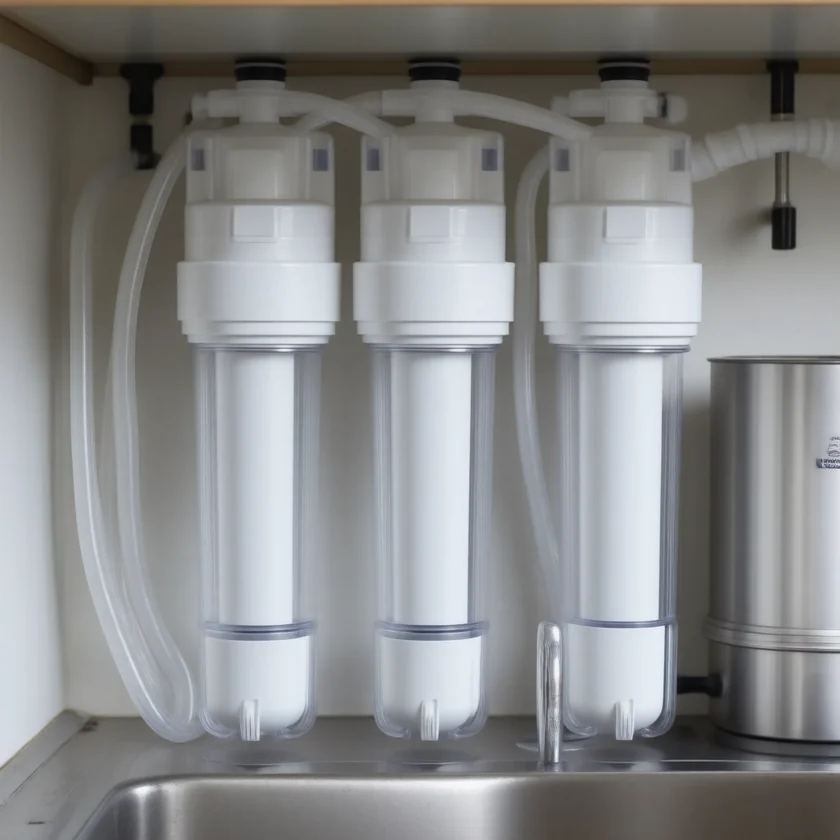

The physical layer. No biochemistry, no displacement theory — just three blunt mechanisms: grab it in the gut before it gets in, open a second exit through the skin, and above all stop drinking it. The last of those is the only step everyone agrees on and the only one that is guaranteed to work.
Table of Contents
Water First — the Step That Actually Works
Every honest person in this field says the same thing, so it goes at the top rather than buried at the bottom: if the tap is still running, nothing else on this site matters much. Boron, iodine, clay and sauna are all attempts to remove something you are simultaneously drinking several litres of. People in this field describe stopping the intake first as what makes everything else easier.
It is also the only step that costs nothing to be right about. People in this field report that, whatever anyone believes about fluoride, drinking less of it is the one step they see as carrying no risk.
What Removes Fluoride and What Does Not
This table is the most practically useful thing on the page, because the single most common and most expensive mistake people make is assuming their filter is doing something it is not.
| Method | Removes fluoride? | Notes |
|---|---|---|
| Reverse osmosis | Yes — the usual choice | The standard answer. Under-sink or countertop. Strips minerals too, which is why people remineralise — a pinch of unrefined salt or trace-mineral drops. |
| Distillation | Yes — the most thorough | Boils and re-condenses; leaves everything behind. Slow, uses power, and the water is completely flat. See below. |
| Activated alumina | Yes — specifically for fluoride | The purpose-built fluoride medium, used in endemic regions at village scale. A cartridge that is not replaced on schedule stops working silently. |
| Bone char | Yes — the traditional medium | The oldest fluoride filter there is, still used. Not suitable for vegans. |
| Carbon pitcher filters | No | The big one. The popular jug and fridge filters are built for chlorine, taste and some metals. They do essentially nothing for fluoride. Millions of people think they are filtering fluoride and are not. A 2008 laboratory study measured this directly: activated-carbon filters took some fluoride out of fluoridated tap water (0.8 mg/L) only for the first 8 litres filtered, and hollow-fibre membrane filters did not change fluoride levels at all (Konno 2008, PubMed PMID: 18538069). |
| Standard carbon block | Mostly no | Same story unless it explicitly carries a fluoride-specific medium. |
| Boiling | No — makes it worse | Water leaves as steam, fluoride stays. Boiling concentrates it. This one catches people out constantly. |
| Freezing, standing overnight, sunlight | No | These work for chlorine, which evaporates. Fluoride does not. |
| Water softeners | No | They swap calcium and magnesium for sodium. Different job entirely. |
| Bottled spring water | Depends entirely | Some springs are naturally high in fluoride. The number is on the analysis, if the brand publishes one. |
The Distilled Water Question
Distilled water is the most thorough option and also the most argued about, so both sides are here.
The case for: nothing gets through. No fluoride, no chlorine, no fluorinated compounds, no metals. People running strict protocols use it for a defined period specifically because it removes the variable entirely.
The case against: it strips minerals along with everything else, and long-term exclusive use of demineralised water is argued to leach minerals rather than supply them. It also tastes flat, which is a bigger practical obstacle than people expect.
What people actually do: use distilled or reverse osmosis (RO) water for a defined stretch, and remineralise — a pinch of unrefined sea or rock salt per litre, trace-mineral drops, or simply eating a mineral-dense diet with plenty of calcium and magnesium. Very few people drink distilled water indefinitely without adding something back.
The Binders
Taken so that something in the gut grabs what is there before it crosses into the blood. This is the same principle as calcium, using a different material.
| Binder | What it is | How people use it |
|---|---|---|
| Bentonite clay | Volcanic ash clay with a strong negative charge, so it attracts positively charged particles. Fluoride is itself a negatively charged ion, so this is not how clay would bind fluoride, and no human study of clay and body fluoride was found. | A teaspoon in water, well away from food and supplements. Some people also use it as a tooth powder or in baths. |
| Zeolite (clinoptilolite) | A cage-structured volcanic mineral that traps particles inside its lattice. | Powder or drops. Popular for being gentler than clay on the bowels. |
| Activated charcoal | Enormous surface area; the hospital binder for poisoning. | Occasional rather than daily — it binds indiscriminately, nutrients included, and constipates. |
| Chlorella | A single-celled green alga; its cell wall is the binding part, so broken-cell-wall chlorella is what people buy. | The most popular binder in this whole space. Tablets or powder, built up gradually. Classically paired with cilantro. |
| Spirulina | A blue-green alga; more a nutrient source than a true binder, but always mentioned alongside chlorella. | Powder in smoothies. Sourcing matters — poorly grown spirulina can carry contaminants. |
| Soluble fibre — psyllium, pectin, oat | The gentlest and cheapest option. | Daily, with plenty of water. Apple pectin is a common choice. |
The Two Binder Rules
Everyone who has done this a while repeats the same two things, and both matter more than which binder you pick.
- Time apart from everything else. Binders do not know the difference between a toxin and your thyroid medication, your iron tablet, your minerals or your amino acids. People take them well away from food, supplements and prescriptions — two hours either side is the usual figure in this community. The thyroid hormone label is stricter: levothyroxine is to be taken at least 4 hours before or after drugs known to interfere with its absorption, and at least 4 hours apart from calcium and iron supplements, antacids and phosphate binders; bile-acid binders and ion-exchange resins are taken at least 4 hours after it (levothyroxine sodium tablets label, DailyMed).
- Water, and bowels that keep moving. A binder holds what it grabs and it has to leave. Binders taken without enough water and without regular bowel movements are the standard recipe for feeling worse rather than better. Magnesium citrate, triphala or simple fibre are the usual insurance.
Sweating — the Second Exit
The reasoning is straightforward: the kidney is the main route out, and sweat is a second one. People who feel their kidneys are doing all the work add sweating deliberately.
- Infrared sauna — the favourite in detox circles, because it is tolerable for longer at a lower air temperature, so sessions run longer.
- Traditional and steam saunas — hotter, shorter, and with the longest cultural track record by far.
- Hot yoga — sweating plus circulation plus movement, and free if you already go.
- Plain exercise — the version nobody can object to, and it gets bowels and lymph moving too.
- Hot baths with Epsom salts — the accessible version, and it doubles as the transdermal magnesium route.
How People Run the Sauna
- They hydrate before, not just after.
- They start short — ten to fifteen minutes — and build up. People who overdo it early feel wrung out and stop.
- They replace salt and minerals afterwards. Sweat is not just water. Unrefined salt in water, or a mineral drink, is the usual choice. This is the step people skip and then wonder why they feel dizzy and headachy.
- They shower promptly, so what came out does not sit on the skin.
- Two to four times a week is the usual rhythm; daily is unusual outside cultures where sauna is routine.
- Filtered shower water is a detail people who are being strict pay attention to, since hot showers are also an exposure route for what is in the supply.
Cautions
Before you start. Everything on this page is what people do and report. Some of it is centuries old, some of it is community practice from the last twenty years. Where a substance has a real dose ceiling — boron and iodine above all — the number is given, because the people who get hurt are the ones who assume natural means unlimited. For people who are pregnant, on dialysis, have kidney disease or thyroid disease, or take prescription medication, the facts that matter most are these: kidney disease lowers how much fluoride the body can clear, since the kidney is the main exit (see the last item below); the levothyroxine label calls for at least 4 hours between the thyroid tablet and calcium, iron, antacids and phosphate binders (levothyroxine sodium tablets label, DailyMed); and pregnancy is among the conditions in which sauna heat is a cardiovascular load (below).
- The binder timing rule is the important one on this page. People have run into real trouble by taking clay or charcoal alongside thyroid medication, heart medication or contraceptives and quietly reducing the dose that reached them.
- Activated charcoal is not a daily supplement. Used continuously it binds nutrients and causes constipation.
- Sauna is a cardiovascular load. Heart disease, low blood pressure, pregnancy and any tendency to faint are the conditions in which that load matters most. Alcohol and sauna is a genuinely dangerous combination.
- Dehydration adds to the strain, and light-headedness in the heat is a warning sign of fainting.
- Clay and zeolite sourcing matters. These are mined minerals and quality varies; some suppliers publish heavy-metal testing and some do not. Bringing lead in while trying to get fluoride out is a poor trade.
- Kidney disease changes the whole picture, since the main exit is impaired. See Fluoride, the Kidneys and the Liver.
Key Research Papers
- Konno H, Yaegaki K, Tanaka T, Sato T, Itai K, Imai T, Murata T, Herai M (2008). Neither hollow-fibre membrane filters nor activated-charcoal filters remove fluoride from fluoridated tap water. Journal of the Canadian Dental Association 74(5):443. — PubMed PMID: 18538069
Connections
- Fluoride Chelation — the full toolkit
- Calcium and Magnesium — the other way to bind it in the gut
- Amino Acids and Glutathione — keep two hours clear of binders
- Herbs — chlorella, cilantro and triphala
- Detox Protocols
- Exercise
- Fluoride in Water
- Fluoride, the Kidneys and the Liver
- Fluoride Toxicity