IMO: Intestinal Methanogen Overgrowth & Constipation
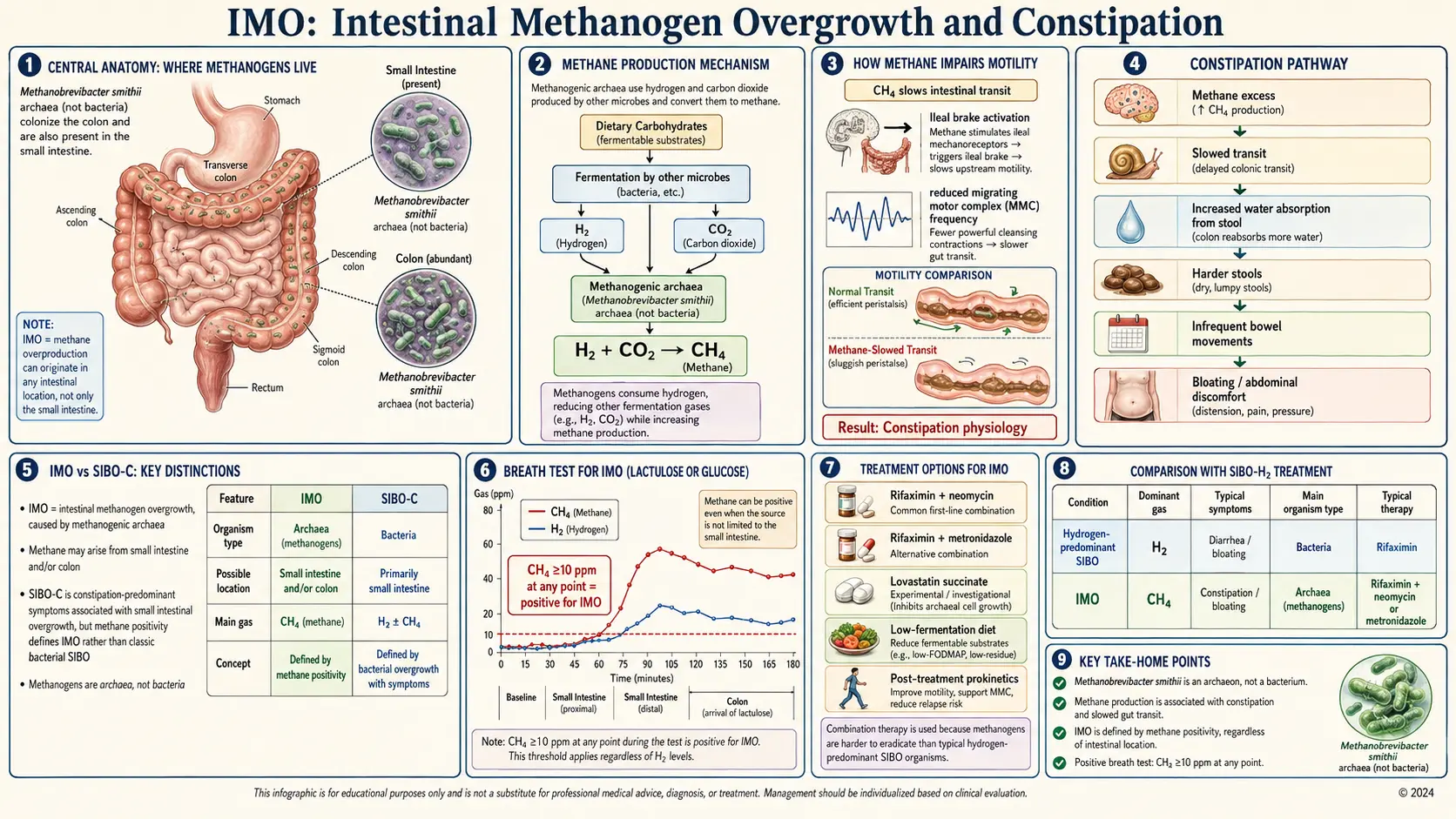
IMO, short for intestinal methanogen overgrowth, is the name proposed in 2020 for what was often called "methane SIBO": a breath test showing raised methane, often alongside constipation and bloating. It differs from the classic small intestinal bacterial overgrowth (SIBO) story in several ways. The microbes that make the methane are not bacteria but archaea, the symptoms lean toward constipation rather than diarrhea, and in a retrospective review of methane-positive patients, rifaximin alone cleared methane in only 28% (Low 2010). This plain-language guide covers what IMO is, why a new name was proposed, how it is diagnosed, and what the research reports about treatment and relapse.
Interactive Visualization The Gut Barrier & Your Microbiome Watch fibre become butyrate and butyrate tighten the gut wall — then starve the microbes and see them eat your mucus layer instead. Launch →Table of Contents
- What IMO Is (and Why a New Name Was Proposed)
- How Methane Is Linked to Constipation
- Symptoms: The Methane Pattern
- Diagnosis: Breath Testing and the 10 ppm Rule
- Antibiotic Treatment: Rifaximin Alone and in Combination
- Herbal Antimicrobials for Methane
- Diet: Low-FODMAP Plus Low-Fermentation
- Prokinetics and Preventing Relapse
- Lovastatin and Methane-Targeted Drug Research
- Key Research Papers
- Connections
- Featured Videos
What IMO Is (and Why a New Name Was Proposed)
For years, clinicians and patients used the term "methane SIBO" for people with high breath methane and constipation. In 2020, the authors of the American College of Gastroenterology (ACG) clinical guideline on SIBO proposed the name intestinal methanogen overgrowth (IMO) for a methane-positive breath test. Three points lie behind the change:
- Methanogens aren't bacteria. They belong to the domain Archaea, one of the three domains of life alongside bacteria and eukaryotes (Mehravar 2025), so "bacterial overgrowth" does not describe them.
- One species dominates. Methanobrevibacter smithii is the predominant methanogen in the human gut (Gottlieb 2016). In people with IBS-C and methane on breath testing, stool counts of M. smithii were significantly higher than in methane-negative people with IBS, and they tracked the amount of breath methane (Kim 2012). In 700 stool samples, M. smithii was detected in 95.7% and a second methanogen, Methanosphaera stadtmanae, in 29.4% (Dridi 2009).
- It isn't limited to the small bowel. Methane is produced mainly in the colon, but methanogens can also be found in the small intestine, especially when bacterial overgrowth is present (Gottlieb 2016); in rats, M. smithii colonized the small intestine as well as the colon (Mathur, Kim et al. 2013, an animal study). A review co-written by the guideline's first author gives this as the reason for the new name: methane production is likely not limited to the small intestine (Takakura 2020).
The distinction also bears on treatment, because archaea respond to antibiotics differently from bacteria (see the antibiotic section below).
How Methane Is Linked to Constipation
Methane may be more than a marker. Animal studies show that it slows intestinal transit, and in clinical studies methane on breath testing is consistently associated with delayed transit and constipation, although a causal relation in humans has not been proven (Triantafyllou 2014). Two effects have been measured:
- Slower small-bowel transit, with more contractions rather than fewer. In a 2006 study, methane infused into the small intestine of dogs slowed transit in every animal, by an average of 59%; in guinea-pig intestine in an organ bath, methane increased contractile activity; and among people with IBS who had a small-bowel motility study, methane producers had a higher motility index than hydrogen producers. The authors concluded that methane slows small-intestinal transit, apparently by augmenting contractile activity (Pimentel 2006).
- Slower colonic transit. In 96 people with chronic constipation (without IBS), methane-producing flora was found in 75% of those with slow colonic transit, 44% of those with normal transit and 28% of 106 non-constipated controls, and methane production correlated with colonic transit but not with stool consistency (Attaluri 2010). In a 2024 retrospective study of 196 patients who had both a breath test and a wireless motility capsule, those with IMO alone had longer small-bowel and colonic transit times than those with a negative breath test (Talamantes 2024).
The amount of methane matters as well as its presence: in a 2007 study of 87 people with IBS, the quantity of breath methane was directly proportional to the reported degree of constipation (r = 0.60), and greater methane production went with fewer bowel movements and harder stools (Chatterjee 2007).
Methane has also been linked with body weight. Among 58 people with obesity, those positive for breath methane had a higher average BMI than those who were not (45.2 vs 38.5 kg/m²) (Basseri 2012), and in a 2013 study of 792 people having breath tests, those positive for both methane and hydrogen had a higher BMI and body-fat percentage, while those positive for methane alone did not (Mathur, Amichai et al. 2013). One hypothesis is that by consuming hydrogen made by neighboring bacteria, M. smithii lets them ferment more dietary carbohydrate (Rezaie 2017). In germ-free mice, adding M. smithii to a gut bacterium increased the animals' body fat (Samuel 2006, an animal study), and in rats the extent of M. smithii colonization predicted diet-induced weight gain (Mathur, Kim et al. 2013, an animal study).
Symptoms: The Methane Pattern
IMO symptoms overlap with those of hydrogen-predominant SIBO and IBS. A 2025 meta-analysis of 19 studies (1,293 people with IMO and 3,208 without) found constipation more common and more severe with IMO, and diarrhea and nausea less common (Mehravar 2025):
- Constipation — hard stools, infrequent bowel movements, straining and a feeling of incomplete evacuation. In the meta-analysis, 47% of people with IMO reported constipation, against 38% of controls (odds ratio 2.04).
- Bloating — reported by 78% of people with IMO across the studies (Mehravar 2025).
- Gas — flatulence was reported by 56% (Mehravar 2025). Methane itself is odorless; the smell of flatus comes mainly from sulfur-containing gases, chiefly hydrogen sulfide (Suarez 1998).
- Body weight — a higher BMI has been reported in some methane-positive groups (see the section above).
- Nonspecific symptoms — nausea was less common with IMO than in controls (32% vs 45%) (Mehravar 2025). Practitioner accounts also describe brain fog and fatigue, which are nonspecific.
- Overlap with IBS-C (constipation-predominant IBS) — methane-positive breath tests were more common in IBS with constipation than in IBS with diarrhea (odds ratio 2.3) (Shah 2020), and a 2011 meta-analysis of nine studies (1,277 people) found methane on breath testing associated with constipation (odds ratio 3.51) (Kunkel 2011). The IBS subtypes are covered in the Rome IV subtypes article.
Diarrhea is less typical of methane: in the meta-analysis, diarrhea was less common and less severe with IMO (Mehravar 2025), and in a 2026 nationwide study of 3,004 three-gas breath tests, higher hydrogen and hydrogen sulfide levels correlated with more severe diarrhea (Pimentel 2026). The patterns are compared in the three-gas comparison.
Diagnosis: Breath Testing and the 10 ppm Rule
IMO is diagnosed with a breath test, usually using lactulose or glucose. The person drinks the sugar solution (the doses in the 2017 North American Consensus are 10 g of lactulose or 75 g of glucose) and then breathes into collection tubes at set intervals; the consensus listed the best sampling interval as an open question. The lab measures hydrogen and methane, and on newer three-gas tests also hydrogen sulfide, in parts per million (ppm); the consensus recommends measuring hydrogen, methane and carbon dioxide together (Rezaie 2017).
The 2017 North American Consensus set the methane cutoff now used to define IMO:
- Methane ≥ 10 ppm at any time point during the test = methane-positive (Rezaie 2017; Takakura 2020). Later studies use the same 10 ppm level to define IMO (Talamantes 2024; Pimentel 2026).
That differs from the hydrogen criterion for SIBO, a rise of at least 20 ppm above baseline by 90 minutes. Because the methane cutoff is a level rather than a rise, a flat but raised methane line meets it. The consensus notes that, unlike hydrogen, people with excessive methane production show an elevated methane level at baseline, and their methane rises less sharply during the test (Rezaie 2017); in a 2022 study, a single fasting methane reading of ≥10 ppm identified IMO on glucose and lactulose breath tests with 86.4% sensitivity and 100% specificity (Takakura 2022).
Test preparation and choices described in the 2017 consensus and later studies:
- Test length. The consensus considered two hours enough for glucose and lactulose testing for SIBO (Rezaie 2017), and a 2022 study described a 2-hour breath test as the gold standard for diagnosing IMO (Takakura 2022).
- Diet and fasting. The consensus suggests avoiding fermentable foods such as complex carbohydrates on the day before the test (it notes that meat and rice do not appear to affect results) and a fast of 8–12 hours.
- Medicines. It recommends a 4-week gap after antibiotics and suggests stopping promotility drugs and laxatives at least a week before, if tolerated; it reached no position on probiotics because of a lack of conclusive data. It also recommends no smoking on the day of the test.
- Lactulose or glucose. Glucose is absorbed in the upper small bowel, whereas lactulose is not digested and reaches the colon (Rezaie 2017). A 2026 Israeli national consensus guideline recommends lactulose as the preferred substrate for SIBO and IMO testing, with glucose as an acceptable alternative (Perets 2026), and in the 2026 nationwide study, SIBO positivity was more common with lactulose (27%) than with glucose (7.3%) (Pimentel 2026).
Breath testing has critics: a 2025 review argues that reliance on breath tests, particularly with lactulose, has led to overdiagnosis of SIBO, that diagnostic thresholds and the role of methane remain unresolved, and it advocates a cautious approach to diagnosing both SIBO and IMO (Kholwadwala 2025). Preparation, cost and reading the results are covered in the full Breath Test Guide.
Antibiotic Treatment: Rifaximin Alone and in Combination
Rifaximin on its own has cleared methane less often than in combination. A 2026 systematic review of 39 studies of antibiotic treatment for SIBO and IMO found rifaximin the most frequently studied antibiotic and no antibiotic universally superior; in methane-positive or IMO patients, rifaximin combined with neomycin showed the strongest comparative signal (Koller 2026). A 2020 review noted that only a small number of studies with limited sample sizes had evaluated antibiotics for IMO (Takakura 2020). In laboratory testing, human M. smithii strains were resistant to rifampicin, a drug from the same family as rifaximin, and to several other antibiotics, but susceptible to metronidazole (Dridi 2011).
Regimens reported in studies:
- Rifaximin plus neomycin. In a 2010 retrospective chart review of methane-positive IBS patients (methane ≥3 ppm, a lower cutoff than today's 10 ppm), 10 days of rifaximin 400 mg three times daily plus neomycin 500 mg twice daily cleared methane in 87%, against 33% with neomycin alone and 28% with rifaximin alone; clinical response was 85%, 63% and 56% (Low 2010). A 2014 double-blind randomized trial in 31 people with IBS-C and breath methane above 3 ppm compared neomycin 500 mg twice daily plus rifaximin 550 mg three times daily for 14 days (the doses in the trial's registry record, NCT00945334) with neomycin plus placebo: the combination improved constipation, straining and bloating more, but not abdominal pain, and in the combination group people whose methane fell below 3 ppm reported less constipation (Pimentel 2014). Neomycin is a poorly absorbed aminoglycoside — its US label states that about 97% of an oral dose is not absorbed from a normal gut — but the label also warns that some is absorbed and that kidney damage and nerve damage, including hearing loss, have been reported after oral use even at recommended doses; the risk is greater with impaired kidney function, and the hearing loss can be permanent.
- Metronidazole, alone or with rifaximin. In a 2025 double-blind randomized trial in 97 people with IBS and SIBO, 10 days of metronidazole lowered breath methane more than rifaximin or ciprofloxacin and had the highest SIBO eradication rate (79%, against 59% with rifaximin), while rifaximin brought the greatest reduction in abdominal pain and bloating, with fewer adverse events (von Muhlenbrock 2025). Rifaximin combined with metronidazole is described in practice as an alternative to the neomycin combination; published reports of it in IMO include a 2025 single-patient case report (Kriegshäuser 2025). The metronidazole US label lists nausea and a sharp, unpleasant metallic taste among its side effects, warns of a disulfiram-like reaction to alcohol during treatment and for at least three days afterwards, and describes cases of peripheral neuropathy and encephalopathy.
- Rifaximin alone. In the 2010 review, rifaximin alone (400 mg three times daily for 10 days) cleared methane in 28%; among patients whose methane persisted and who then took rifaximin with neomycin, 66% normalized their breath test (Low 2010).
Neomycin and metronidazole are available as generics. Rifaximin doses, timing and the trial evidence are covered on the Rifaximin Protocols page.
Herbal Antimicrobials for Methane
Herbal antimicrobials are used by some patients as an alternative to prescription antibiotics. A 2014 retrospective chart review from Johns Hopkins followed 104 patients with a positive lactulose breath test who chose either rifaximin (1,200 mg a day) or commercial herbal blends for 4 weeks. The follow-up test was negative in 46% (17/37) of the herbal group and 34% (23/67) of the rifaximin group, a difference that was not statistically significant (P = 0.24). The authors concluded the herbs were at least as effective and called for prospective studies; treatment was chosen by the patients rather than randomized, and methane results were not reported separately (Chedid 2014). For methane specifically, the evidence for individual herbs is thinner:
- Allicin (a compound from garlic) — often cited by practitioners for methane. The evidence that it lowers methane comes from livestock: in sheep, 2.0 g of allicin a day lowered methane emissions by 5.95% to 8.36%, depending on how emissions were scaled, and reduced rumen methanogens (Ma 2016, an animal study). It was not among the ingredients of the herbal blends in the 2014 review.
- Oregano oil — one ingredient, with thyme oil and other herbs, of the herbal blends in the 2014 review; the review tested the blends, not oregano oil on its own (Chedid 2014).
- Berberine — an alkaloid found in plants such as goldenseal, Oregon grape and barberry; berberine-containing extracts were also in the 2014 blends (Chedid 2014). In a 3-month randomized comparison in 36 adults with newly diagnosed type 2 diabetes, 0.5 g three times a day lowered blood glucose about as much as metformin, and the paper reports transient gastrointestinal side effects in 20 patients (34.5%) (Yin 2008). Its measured effect on motility runs opposite to a prokinetic: in 20 healthy volunteers, a 1.2 g dose slowed small-intestinal transit (Yuan 1994).
Practitioner protocols commonly combine two or three agents for several weeks; the 2014 review used 4 weeks. Practitioner accounts also describe a temporary "die-off" flare of symptoms; in the 2014 review, the only adverse effect recorded with the herbal blends was one case of diarrhea (Chedid 2014). The herbs are covered in more detail on the Herbal Antimicrobials page.
Diet: Low-FODMAP Plus Low-Fermentation
Methanogens depend on other microbes: fermentation of undigested carbohydrate produces the hydrogen that intestinal methanogens turn into methane (Triantafyllou 2014). Diet approaches for IMO therefore aim to cut fermentable carbohydrate, starting from a standard low-FODMAP diet. The evidence is indirect. Low-FODMAP diets have been studied mainly in IBS, and a 2026 survey study described research on them in SIBO and IMO as insufficient (Bogdanowska-Charkiewicz 2026). In a 2010 crossover study, a high-FODMAP diet raised breath hydrogen in both healthy people and people with IBS, but breath methane was lower on the high-FODMAP diet in healthy methane producers and did not differ in IBS (Ong 2010).
Practitioner diet plans for IMO typically combine:
- Low-FODMAP as the backbone — restricting the high-FODMAP fruits, lactose, wheat, garlic, onion, legumes and sugar alcohols.
- A low-fermentation layer — also limiting resistant starch (for example cold potatoes and underripe bananas) and extra fiber during the treatment phase.
- Fat and protein foods — fish, eggs, meat and olive oil, which contain little or no fermentable carbohydrate.
- Meal spacing — three meals with 4–5 hours between them. The reasoning comes from motility physiology: the migrating motor complex, a recurring pattern of contractions in the fasting stomach and small bowel, is interrupted by eating, and its absence has been associated with SIBO (Deloose 2012). The approach rests on this physiology rather than on trials that measured relapse.
An elemental diet — a liquid formula of predigested nutrients taken as the only food, for 2–3 weeks in the studies — has been studied as another option. In a 2004 study of 93 people with IBS and an abnormal lactulose breath test, 80% had a normal test after 14 days and 85% after up to 21 days (Pimentel 2004). In a 2025 trial of a more palatable formula in 30 people with SIBO and/or IMO, average maximum breath methane fell from 41 to 12 ppm, 73% normalized their breath test, and no serious adverse events occurred; the authors note that palatability has been the main barrier to adherence (Rezaie 2025).
Diet in these plans is a treatment-phase tool. Low-FODMAP plans are built as an elimination phase followed by reintroduction (Bogdanowska-Charkiewicz 2026), and restriction changes the gut bacteria: in a 4-week randomized trial in people with IBS, FODMAP restriction lowered luminal bifidobacteria (Staudacher 2012).
Prokinetics and Preventing Relapse
Relapse after treatment is common in SIBO generally. In an Italian cohort of 80 patients whose glucose breath test had normalized after a week of rifaximin, 12.6%, 27.5% and 43.7% tested positive again at 3, 6 and 9 months; older age, a past appendectomy and long-term proton-pump-inhibitor use were associated with recurrence (Lauritano 2008). That cohort was not selected for methane. Prokinetics, drugs that stimulate gut contractions, are used after treatment on the reasoning that stronger fasting motility lowers the chance of relapse. The options studied:
- Prucalopride, a selective 5-HT4 receptor agonist, is FDA-approved for chronic idiopathic constipation in adults; the US label dose is 2 mg once daily, or 1 mg once daily with severe kidney impairment. In 40 people with constipation, it accelerated gastric emptying and small-bowel transit, with significantly faster colonic transit at 4 mg (Bouras 2001). Its use in IMO is off-label and rests on this effect on transit rather than on IMO trials. The label warns that suicidal thoughts and behavior have been reported, although a causal link has not been established.
- Low-dose erythromycin — a macrolide antibiotic that also acts on motilin receptors; given intravenously, erythromycin can induce the strong phase III contractions of the migrating motor complex (Deloose 2012). In a retrospective review of 64 IBS patients whose symptoms and breath tests had resolved after antibiotics, erythromycin 50 mg at bedtime was followed by 138.5 symptom-free days on average, against 59.7 days with no prevention, a difference that was not statistically significant (P = .08) (Pimentel 2009). In gastroparesis, long-term responses to low-dose erythromycin were weaker than short-term ones, possibly from tachyphylaxis (loss of effect) (Dhir 2004). In a Medicaid cohort of people prescribed oral erythromycin as an antibiotic, the rate of sudden cardiac death was twice as high as in non-users, and five times as high when it was combined with drugs that block its breakdown by the CYP3A enzyme (Ray 2004).
- Tegaserod — a 5-HT4 agonist withdrawn from the US market in 2007 over cardiovascular concerns and re-approved in 2019 with a narrower label, for IBS-C in women under 65 without heart disease or additional cardiovascular risk factors (Sayuk 2022); Drugs@FDA now lists it as discontinued. In the 2009 review, bedtime tegaserod (2–6 mg) was followed by 241.6 symptom-free days on average (P = .003 against no prevention) (Pimentel 2009).
- Herbal products — ginger sped stomach emptying in 24 healthy volunteers (Wu 2008), and a ginger-and-artichoke extract eased functional dyspepsia symptoms in a 4-week placebo-controlled trial in 126 people (Giacosa 2015). A nine-herb liquid preparation reduced abdominal pain and IBS symptom scores more than placebo in a 208-patient trial (Madisch 2004); one of its herbs is greater celandine, and a 2022 case report describes acute severe hepatitis that resolved after it was stopped, with other occasional cases of liver injury documented (Leroy 2022). None of these studies measured SIBO or IMO.
Randomized trials of prokinetics for preventing SIBO or IMO relapse are lacking, so how long they are taken is not trial-defined. Dosing, side effects and the evidence are covered on the Prokinetics and Relapse Prevention page, and conditions linked to SIBO and its recurrence on the root cause page.
Lovastatin and Methane-Targeted Drug Research
Statins have been studied as a way to target methanogens without antibiotics. Archaea build their cell membranes using HMG-CoA reductase, the same enzyme that statins block in human cholesterol synthesis, whereas most bacteria use a different pathway (Gottlieb 2016). The same review, written largely by the developers of a lovastatin product, adds that statins may also inhibit methane production directly, and that this second mechanism may predominate with the lactone form of lovastatin (Gottlieb 2016). In laboratory tests on stool samples from people with IBS-C, lovastatin lactone inhibited methane production, while the hydroxyacid form that lowers cholesterol did not; because much of an ordinary dose is converted to the hydroxyacid in the stomach and absorbed, the developers designed a modified-release capsule intended to release lovastatin in the duodenum and the ileocecal region (Hubert 2018).
The developers reported that a placebo-controlled phase 2 trial in breath-methane-positive people with IBS-C (NCT02495623) showed lower symptoms and breath methane than placebo (Muskal 2016). A later 12-week placebo-controlled phase 2 trial in 59 people with IBS-C (NCT03763175) was terminated in 2020 after an interim futility analysis, according to its registry record. No lovastatin product is FDA-approved for IMO or IBS-C; the lovastatin products in the FDA's Drugs@FDA database are cholesterol-lowering tablets.
Lovastatin also carries the usual statin risks: its US label warns of muscle injury (myopathy, which can take the form of rhabdomyolysis, with rare deaths) and liver enzyme rises, and contraindicates its use with strong CYP3A4 inhibitors, a list that includes erythromycin, the drug also used at low dose as a prokinetic. Red yeast rice, sold as a supplement, contains monacolin K, which is lovastatin; in an analysis of 12 commercial products, monacolin K content ranged from 0.10 to 10.09 mg per capsule, and four products had elevated levels of citrinin, a mycotoxin that is toxic to the kidneys in animals (Gordon 2010). Decisions about medicines and supplements belong with a clinician.
Key Research Papers
Peer-reviewed publications on methanogen biology, intestinal methanogen overgrowth and methane-associated constipation. Each citation links to its DOI or PubMed record.
- Pimentel M, Saad RJ, Long MD, Rao SSC. ACG Clinical Guideline: Small Intestinal Bacterial Overgrowth. American Journal of Gastroenterology. 2020;115(2):165–178. — doi:10.14309/ajg.0000000000000501
- Rezaie A, Buresi M, Lembo A, et al. Hydrogen and Methane-Based Breath Testing in Gastrointestinal Disorders: The North American Consensus. American Journal of Gastroenterology. 2017;112(5):775–784. — doi:10.1038/ajg.2017.46
- Pimentel M, Lin HC, Enayati P, et al. Methane, a Gas Produced by Enteric Bacteria, Slows Intestinal Transit and Augments Small Intestinal Contractile Activity. American Journal of Physiology — Gastrointestinal and Liver Physiology. 2006;290(6):G1089–G1095. — doi:10.1152/ajpgi.00574.2004
- Triantafyllou K, Chang C, Pimentel M. Methanogens, Methane and Gastrointestinal Motility. Journal of Neurogastroenterology and Motility. 2014;20(1):31–40. — doi:10.5056/jnm.2014.20.1.31
- Kunkel D, Basseri RJ, Makhani MD, Chong K, Chang C, Pimentel M. Methane on Breath Testing Is Associated with Constipation: A Systematic Review and Meta-Analysis. Digestive Diseases and Sciences. 2011;56(6):1612–1618. — doi:10.1007/s10620-011-1590-5
- Chatterjee S, Park S, Low K, Kong Y, Pimentel M. The degree of breath methane production in IBS correlates with the severity of constipation. American Journal of Gastroenterology. 2007;102(4):837–841. — PubMed PMID: 17397408
- Pimentel M, Chow EJ, Lin HC. Eradication of Small Intestinal Bacterial Overgrowth Reduces Symptoms of Irritable Bowel Syndrome. American Journal of Gastroenterology. 2000;95(12):3503–3506. — doi:10.1111/j.1572-0241.2000.03368.x
- Low K, Hwang L, Hua J, Zhu A, Morales W, Pimentel M. A Combination of Rifaximin and Neomycin Is Most Effective in Treating Irritable Bowel Syndrome Patients with Methane on Lactulose Breath Test. Journal of Clinical Gastroenterology. 2010;44(8):547–550. — doi:10.1097/mcg.0b013e3181c64c90
- Pimentel M, Chang C, Chua KS, et al. Antibiotic Treatment of Constipation-Predominant Irritable Bowel Syndrome. Digestive Diseases and Sciences. 2014;59(6):1278–1285. — doi:10.1007/s10620-014-3157-8
- Gottlieb K, Wacher V, Sliman J, Pimentel M. Review Article: Inhibition of Methanogenic Archaea by Statins as a Targeted Management Strategy for Constipation and Related Disorders. Alimentary Pharmacology & Therapeutics. 2016;43(2):197–212. — doi:10.1111/apt.13469
- Chedid V, Dhalla S, Clarke JO, et al. Herbal Therapy Is Equivalent to Rifaximin for the Treatment of Small Intestinal Bacterial Overgrowth. Global Advances in Health and Medicine. 2014;3(3):16–24. — doi:10.7453/gahmj.2014.019
- Mathur R, Kim G, Morales W, et al. Intestinal Methanobrevibacter smithii but Not Total Bacteria Is Related to Diet-Induced Weight Gain in Rats. Obesity. 2013;21(4):748–754. — doi:10.1002/oby.20277
- Takakura W, Pimentel M. Small Intestinal Bacterial Overgrowth and Irritable Bowel Syndrome - An Update. Frontiers in Psychiatry. 2020;11:664. — PubMed PMID: 32754068
- Mehravar S, Takakura W, Wang J, Pimentel M, Nasser J, Rezaie A. Symptom Profile of Patients With Intestinal Methanogen Overgrowth: A Systematic Review and Meta-analysis. Clinical Gastroenterology and Hepatology. 2025;23(7):1111–1122.e9. — PubMed PMID: 39147218
- Kim G, Deepinder F, Morales W, et al. Methanobrevibacter smithii is the predominant methanogen in patients with constipation-predominant IBS and methane on breath. Digestive Diseases and Sciences. 2012;57(12):3213–3218. — PubMed PMID: 22573345
- Dridi B, Henry M, El Khéchine A, Raoult D, Drancourt M. High prevalence of Methanobrevibacter smithii and Methanosphaera stadtmanae detected in the human gut using an improved DNA detection protocol. PLoS One. 2009;4(9):e7063. — PubMed PMID: 19759898
- Dridi B, Fardeau ML, Ollivier B, Raoult D, Drancourt M. The antimicrobial resistance pattern of cultured human methanogens reflects the unique phylogenetic position of archaea. Journal of Antimicrobial Chemotherapy. 2011;66(9):2038–2044. — PubMed PMID: 21680581
- Attaluri A, Jackson M, Valestin J, Rao SS. Methanogenic flora is associated with altered colonic transit but not stool characteristics in constipation without IBS. American Journal of Gastroenterology. 2010;105(6):1407–1411. — PubMed PMID: 19953090
- Talamantes S, Steiner F, Spencer S, Neshatian L, Sonu I. Intestinal Methanogen Overgrowth (IMO) Is Associated with Delayed Small Bowel and Colonic Transit Time (TT) on the Wireless Motility Capsule (WMC). Digestive Diseases and Sciences. 2024;69(9):3361–3368. — PubMed PMID: 39068378
- Basseri RJ, Basseri B, Pimentel M, et al. Intestinal methane production in obese individuals is associated with a higher body mass index. Gastroenterology & Hepatology (N Y). 2012;8(1):22–28. — PubMed PMID: 22347829
- Mathur R, Amichai M, Chua KS, Mirocha J, Barlow GM, Pimentel M. Methane and hydrogen positivity on breath test is associated with greater body mass index and body fat. Journal of Clinical Endocrinology and Metabolism. 2013;98(4):E698–E702. — PubMed PMID: 23533244
- Samuel BS, Gordon JI. A humanized gnotobiotic mouse model of host-archaeal-bacterial mutualism. Proceedings of the National Academy of Sciences of the United States of America. 2006;103(26):10011–10016. — PubMed PMID: 16782812
- Suarez FL, Springfield J, Levitt MD. Identification of gases responsible for the odour of human flatus and evaluation of a device purported to reduce this odour. Gut. 1998;43(1):100–104. — PubMed PMID: 9771412
- Shah A, Talley NJ, Jones M, et al. Small Intestinal Bacterial Overgrowth in Irritable Bowel Syndrome: A Systematic Review and Meta-Analysis of Case-Control Studies. American Journal of Gastroenterology. 2020;115(2):190–201. — PubMed PMID: 31913194
- Pimentel M, Leite G, Joo L, et al. Real-world Study of Three-gas Breath Testing Nationwide and the Association With Symptoms. Journal of Clinical Gastroenterology. 2026;60(5):406–417. — PubMed PMID: 41671534
- Takakura W, Pimentel M, Rao S, et al. A Single Fasting Exhaled Methane Level Correlates With Fecal Methanogen Load, Clinical Symptoms and Accurately Detects Intestinal Methanogen Overgrowth. American Journal of Gastroenterology. 2022;117(3):470–477. — PubMed PMID: 35041624
- Perets TT, Thurm T, Ben-Yehoyada M, et al. A national consensus guideline on the performance and interpretation of hydrogen- and methane-based breath tests for carbohydrate malabsorption, small intestinal bacterial overgrowth, and intestinal methanogen overgrowth. Annals of Gastroenterology. 2026;39(4):383–389. — PubMed PMID: 42434160
- Kholwadwala AS, Quigley EMM. Small Intestinal Bacterial Overgrowth and Intestinal Methanogen Overgrowth: Are They Overdiagnosed? Acta Gastroenterologica Latinoamericana. 2025;55(4):276–291. — PubMed PMID: 41821875
- Koller AM, Săsăran MO, Lupu A, Mărginean CO. Antibiotic therapy for small intestinal bacterial overgrowth: a systematic review of comparative efficacy, clinical-test discordance, and pediatric evidence gaps. Frontiers in Pharmacology. 2026;17:1908516. — PubMed PMID: 42787509
- von Muhlenbrock C, Landskron G, Madrid AM. Treatment of small intestinal bacterial overgrowth in Chilean patients with irritable bowel syndrome: A prospective and comparative study. Revista de Gastroenterologia de Mexico (English Edition). 2025;90(1):54–62. — PubMed PMID: 40240267
- Kriegshäuser G. Dual versus sequenial therapy using rifaximin and MTZ in a patient with intestinal methanogen overgrowth-a case report. Journal of Antimicrobial Chemotherapy. 2025;80(6):1744–1746. — PubMed PMID: 40167144
- Ma T, Chen D, Tu Y, et al. Effect of supplementation of allicin on methanogenesis and ruminal microbial flora in Dorper crossbred ewes. Journal of Animal Science and Biotechnology. 2016;7:1. — PubMed PMID: 26779340
- Yuan J, Shen XZ, Zhu XS. [Effect of berberine on transit time of human small intestine]. Zhongguo Zhong Xi Yi Jie He Za Zhi. 1994;14(12):718–720. [Article in Chinese.] — PubMed PMID: 7719104
- Yin J, Xing H, Ye J. Efficacy of berberine in patients with type 2 diabetes mellitus. Metabolism. 2008;57(5):712–717. — PubMed PMID: 18442638
- Ong DK, Mitchell SB, Barrett JS, et al. Manipulation of dietary short chain carbohydrates alters the pattern of gas production and genesis of symptoms in irritable bowel syndrome. Journal of Gastroenterology and Hepatology. 2010;25(8):1366–1373. — PubMed PMID: 20659225
- Bogdanowska-Charkiewicz D, Górski P, Jurkowska G, et al. Effectiveness of the low FODMAP diet in patients with irritable bowel syndrome and small intestine bacterial overgrowth syndrome. Frontiers in Nutrition. 2026;13:1725524. — PubMed PMID: 41684777
- Staudacher HM, Lomer MC, Anderson JL, et al. Fermentable carbohydrate restriction reduces luminal bifidobacteria and gastrointestinal symptoms in patients with irritable bowel syndrome. Journal of Nutrition. 2012;142(8):1510–1518. — PubMed PMID: 22739368
- Deloose E, Janssen P, Depoortere I, Tack J. The migrating motor complex: control mechanisms and its role in health and disease. Nature Reviews Gastroenterology & Hepatology. 2012;9(5):271–285. — PubMed PMID: 22450306
- Pimentel M, Constantino T, Kong Y, Bajwa M, Rezaei A, Park S. A 14-day elemental diet is highly effective in normalizing the lactulose breath test. Digestive Diseases and Sciences. 2004;49(1):73–77. — PubMed PMID: 14992438
- Rezaie A, Chang BW, de Freitas Germano J, et al. Effect, Tolerability, and Safety of Exclusive Palatable Elemental Diet in Patients With Intestinal Microbial Overgrowth. Clinical Gastroenterology and Hepatology. 2025;23(12):2306–2317.e7. — PubMed PMID: 40189034
- Lauritano EC, Gabrielli M, Scarpellini E, et al. Small intestinal bacterial overgrowth recurrence after antibiotic therapy. American Journal of Gastroenterology. 2008;103(8):2031–2035. — PubMed PMID: 18802998
- Pimentel M, Morales W, Lezcano S, Sun-Chuan D, Low K, Yang J. Low-dose nocturnal tegaserod or erythromycin delays symptom recurrence after treatment of irritable bowel syndrome based on presumed bacterial overgrowth. Gastroenterology & Hepatology (N Y). 2009;5(6):435–442. — PubMed PMID: 20574504
- Bouras EP, Camilleri M, Burton DD, Thomforde G, McKinzie S, Zinsmeister AR. Prucalopride accelerates gastrointestinal and colonic transit in patients with constipation without a rectal evacuation disorder. Gastroenterology. 2001;120(2):354–360. — PubMed PMID: 11159875
- Dhir R, Richter JE. Erythromycin in the short- and long-term control of dyspepsia symptoms in patients with gastroparesis. Journal of Clinical Gastroenterology. 2004;38(3):237–242. — PubMed PMID: 15128069
- Ray WA, Murray KT, Meredith S, Narasimhulu SS, Hall K, Stein CM. Oral erythromycin and the risk of sudden death from cardiac causes. New England Journal of Medicine. 2004;351(11):1089–1096. — PubMed PMID: 15356306
- Sayuk GS, Tack J. Tegaserod: What's Old Is New Again. Clinical Gastroenterology and Hepatology. 2022;20(10):2175–2184.e19. — PubMed PMID: 35123085
- Wu KL, Rayner CK, Chuah SK, et al. Effects of ginger on gastric emptying and motility in healthy humans. European Journal of Gastroenterology & Hepatology. 2008;20(5):436–440. — PubMed PMID: 18403946
- Giacosa A, Guido D, Grassi M, et al. The Effect of Ginger (Zingiber officinalis) and Artichoke (Cynara cardunculus) Extract Supplementation on Functional Dyspepsia: A Randomised, Double-Blind, and Placebo-Controlled Clinical Trial. Evidence-Based Complementary and Alternative Medicine. 2015;2015:915087. — PubMed PMID: 25954317
- Madisch A, Holtmann G, Plein K, Hotz J. Treatment of irritable bowel syndrome with herbal preparations: results of a double-blind, randomized, placebo-controlled, multi-centre trial. Alimentary Pharmacology & Therapeutics. 2004;19(3):271–279. — PubMed PMID: 14984373
- Leroy A, Perrin H, Porret R, et al. Iberogast®-Induced Acute Liver Injury-A Case Report. Gastro Hep Advances. 2022;1(4):601–603. — PubMed PMID: 39132058
- Hubert S, Chadwick A, Wacher V, Coughlin O, Kokai-Kun J, Bristol A. Development of a Modified-Release Formulation of Lovastatin Targeted to Intestinal Methanogens Implicated in Irritable Bowel Syndrome With Constipation. Journal of Pharmaceutical Sciences. 2018;107(2):662–671. — PubMed PMID: 28989013
- Muskal SM, Sliman J, Kokai-Kun J, Pimentel M, Wacher V, Gottlieb K. Lovastatin lactone may improve irritable bowel syndrome with constipation (IBS-C) by inhibiting enzymes in the archaeal methanogenesis pathway. F1000Research. 2016;5:606. — PubMed PMID: 27347377
- Gordon RY, Cooperman T, Obermeyer W, Becker DJ. Marked variability of monacolin levels in commercial red yeast rice products: buyer beware! Archives of Internal Medicine. 2010;170(19):1722–1727. — PubMed PMID: 20975018
PubMed Topic Searches
Live PubMed queries that update as new papers are indexed.
- PubMed: intestinal methanogen overgrowth
- PubMed: Methanobrevibacter smithii and constipation
- PubMed: methane breath test and constipation
- PubMed: rifaximin plus neomycin for methane SIBO
- PubMed: lovastatin, SYN-010, methanogen inhibition
- PubMed: allicin and methanogen archaea
- PubMed: prucalopride for chronic constipation
- PubMed: migrating motor complex and SIBO recurrence
- PubMed: methane, BMI, obesity-microbiome link
- PubMed: North American Consensus on breath testing
Connections
- Gastroenterology
- The Gut Barrier & Your Microbiome — interactive animation
- SIBO Overview
- Herbal Antimicrobials
- Prokinetics and Relapse Prevention
- Rifaximin Protocols
- Breath Test Guide
- Elemental Diet
- Low-FODMAP Diet
- Root Causes
- Hydrogen vs Methane vs Hydrogen Sulfide
- Irritable Bowel Syndrome
- Rome IV Subtypes
- Constipation
- Bloating
- Garlic
- Oregano
- Berberine
- Probiotics
- Thyroid Disorders