Oregano (Origanum vulgare)
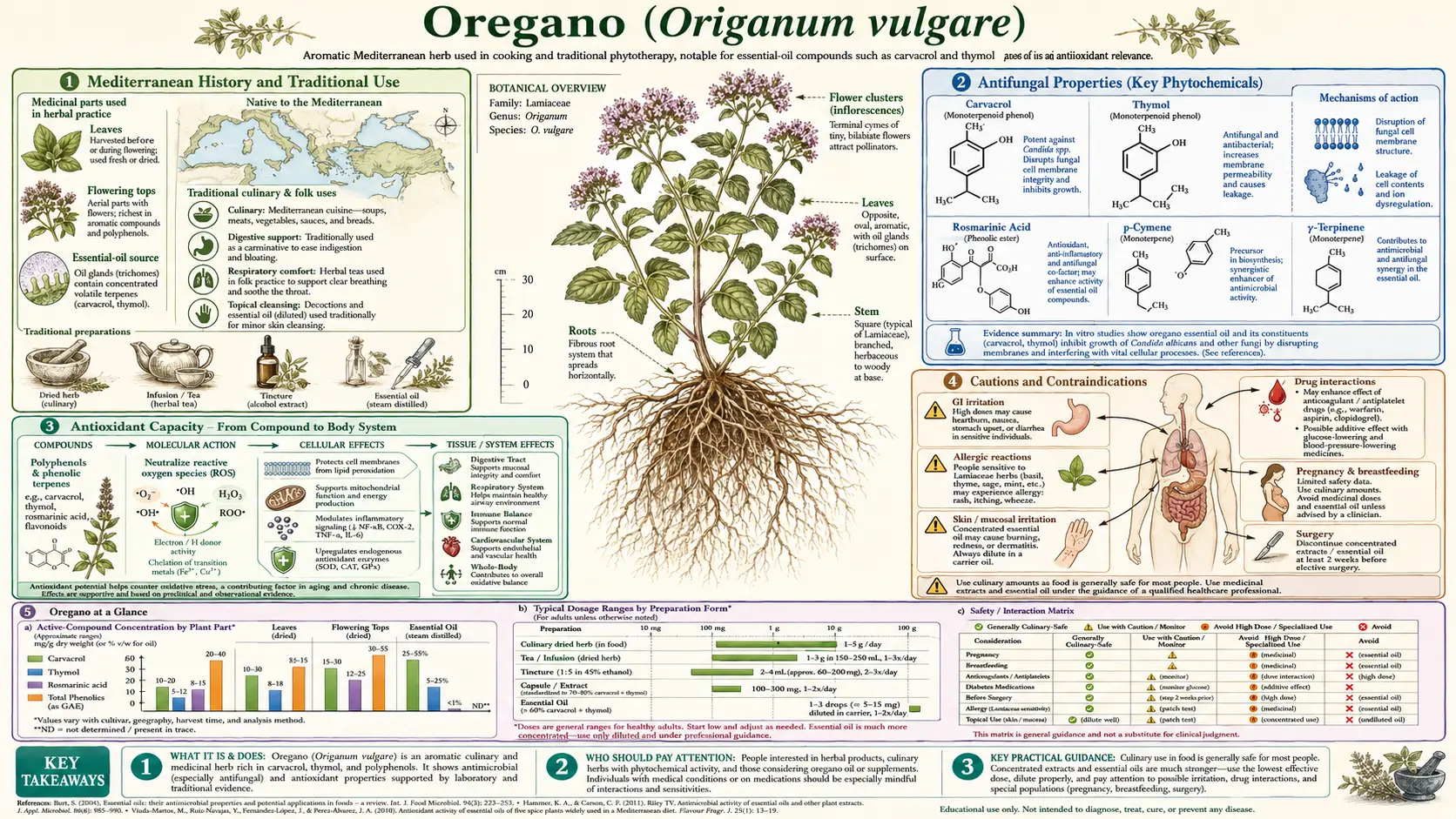
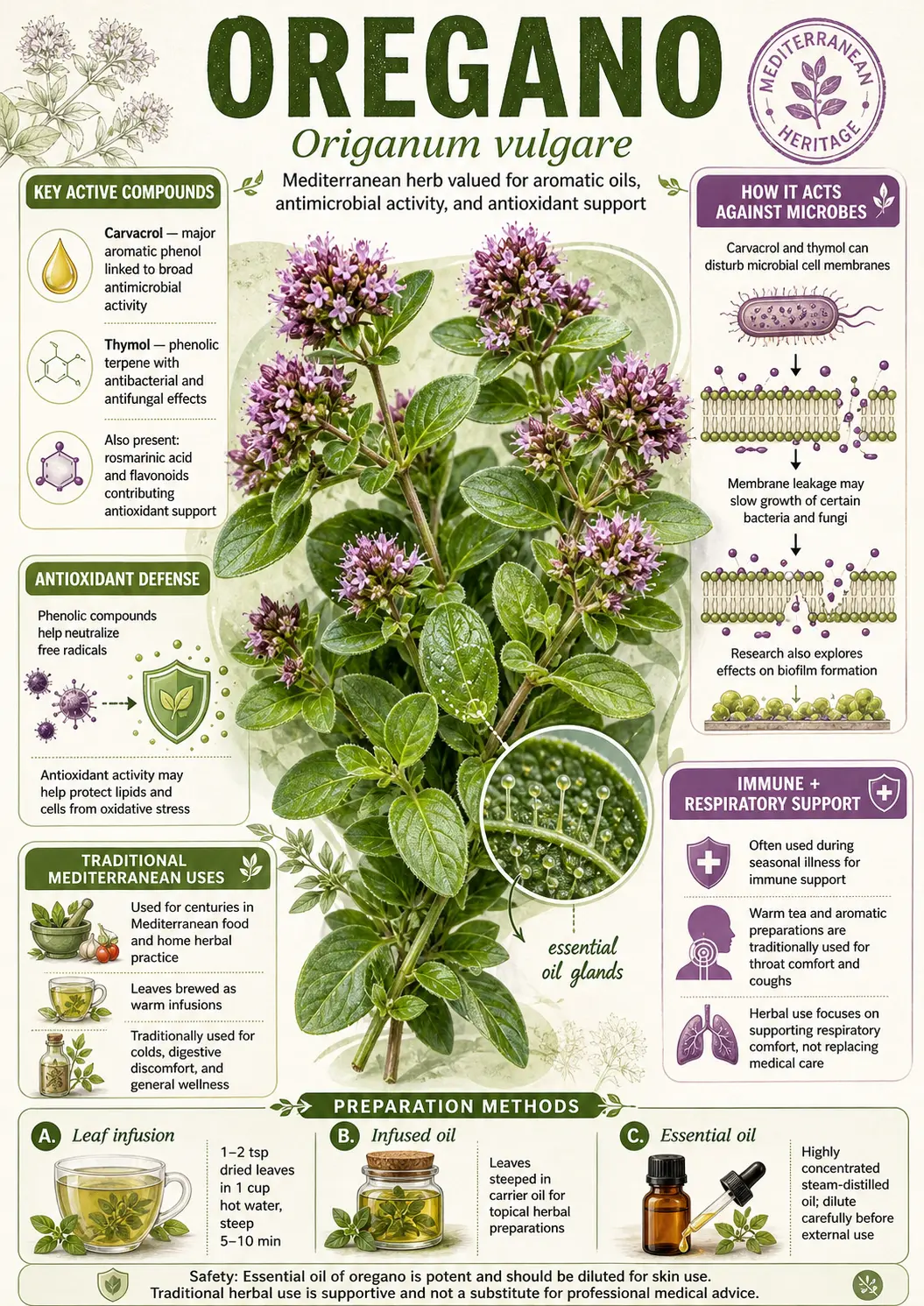
Table of Contents
- Mediterranean History and Traditional Use
- Active Compounds
- Antimicrobial Properties
- Oil of Oregano vs Culinary Oregano
- MRSA and Antibiotic-Resistant Bacteria Research
- Antifungal Properties
- Antiviral Activity
- The Immune System: What Has Been Studied
- Respiratory Health
- Digestive Health and Gut Infections
- Anti-Inflammatory Properties
- Antioxidant Capacity
- Cancer Research
- Skin Health and Topical Applications
- Forms and Preparations
- Doses Used in Studies
- Cautions and Safety Findings
- Featured Videos
Mediterranean History and Traditional Use
Oregano's written record reaches back more than two thousand years to the physicians and playwrights of ancient Greece, who used it for the chest, the cough, and the stomach long before it ever flavoured a pizza. Its name is traditionally read as "joy of the mountain" (though scholars consider the origin genuinely uncertain), and Greek custom tied the herb to weddings and to graves. Curiously, the plant's reputation dimmed in the medieval centuries before American soldiers returning from the Second World War turned this once-obscure "pizza herb" into a kitchen staple almost overnight — the fuller story is told in the dedicated History & Traditional Use article.
Active Compounds
Laboratory studies attribute most of oregano's activity to a small group of compounds. How much of each a plant contains varies widely between species, subspecies and growing conditions.
- Carvacrol: a phenol that is the main component of many oregano essential oils, though not all. An Origanum virens oil analysed in a 2003 Portuguese study contained 68.1% carvacrol (Salgueiro 2003), while an Origanum vulgare oil tested in a 2010 Brazilian study contained 9.42% carvacrol and was dominated by terpinen-4-ol at 47.95% (Cleff 2010). In laboratory work on Bacillus cereus, the authors propose that carvacrol destabilizes the bacterial cell membrane and acts as a proton exchanger, collapsing the proton motive force and depleting the cell's ATP (Ultee 2002).
- Thymol: a closely related phenol. In a 2001 laboratory study against Pseudomonas aeruginosa and Staphylococcus aureus, mixtures of carvacrol and thymol had an additive effect, and the authors attributed the overall inhibition by oregano oil mainly to these two compounds (Lambert 2001).
- Rosmarinic acid: a polyphenol also found in rosemary, sage and other mint-family herbs, studied as an antioxidant and anti-inflammatory compound in laboratory and animal work.
- Beta-caryophyllene: a sesquiterpene common in spice plants. A 2008 study found that it binds selectively to the CB2 cannabinoid receptor, and that given by mouth at 5 mg/kg it reduced carrageenan-induced inflammation in normal mice but not in mice lacking CB2 receptors (Gertsch 2008, cell and animal study). It is not psychoactive.
- Other compounds: p-cymene, gamma-terpinene, linalool and flavonoids are also present.
Antimicrobial Properties
Oregano essential oil and its phenols inhibit a wide range of bacteria, fungi, viruses and protozoa in laboratory tests. Almost all of this evidence comes from test tubes and animals; the human studies are few and small, and they are described in the sections below. The detailed laboratory evidence is on the Antibacterial Spectrum deep-dive.
- Mechanism: in laboratory studies, low amounts of carvacrol and thymol increased the permeability of bacterial cells, dissipated pH gradients and caused leakage of inorganic ions (Lambert 2001; Ultee 2002). A 2004 review describes essential oils in general partitioning into the lipids of the cell membrane and making it permeable, and notes that Gram-negative organisms are slightly less susceptible than Gram-positive bacteria (Burt 2004).
- Spectrum: in laboratory tests, oregano oil inhibited Staphylococcus aureus and Pseudomonas aeruginosa (Lambert 2001); it killed S. aureus, Escherichia coli, Klebsiella pneumoniae and Helicobacter pylori (Preuss 2005); and it was among the most active of 96 essential oils against E. coli O157:H7, Listeria monocytogenes and Salmonella enterica (Friedman 2002).
- Resistance: whether bacteria adapt to oregano phenols has been tested only in the laboratory. In a 2017 study, repeated exposure of four S. aureus strains to low (sub-inhibitory) concentrations of carvacrol for up to 10 days made them less susceptible to carvacrol, most clearly in two of the four strains, without cross-protection against antibiotics; at concentrations above the minimum inhibitory concentration the mutation frequency was very low (Nostro 2017). The research therefore does not support the common statement that bacteria cannot become resistant to oregano oil.
Oil of Oregano vs Culinary Oregano
The oregano used in cooking and the concentrated essential oil are very different products, and research on one does not transfer automatically to the other.
- Culinary oregano: the dried or fresh leaves used as a seasoning. Dried oregano was one of the herbs with the highest antioxidant concentrations in a 2003 Norwegian survey of culinary and medicinal herbs (Dragland 2003). The amount of essential oil eaten with food is small.
- Essential oil: a steam-distilled concentrate of the plant's volatile compounds. Its carvacrol content depends on the plant source — about 9% and about 68% in the two analyses cited above (Cleff 2010; Salgueiro 2003). Concentrated essential oils can irritate skin and mucous membranes (see Cautions).
- Oil-of-oregano supplements: capsules or liquids in which the essential oil is diluted in a carrier oil such as olive oil. Products differ in strength and composition; the NIH's LactMed database notes that dietary supplements do not need premarket approval from the U.S. Food and Drug Administration and that labelled and actual ingredients often differ (LactMed 2024).
Naturopathic practitioners generally describe standardized oil-of-oregano supplements, rather than culinary oregano, for therapeutic use. No study has compared the two forms in people.
MRSA and Antibiotic-Resistant Bacteria Research
Oregano oil and its phenols have been tested against methicillin-resistant Staphylococcus aureus (MRSA) in the laboratory. No clinical trial of oregano oil in people with MRSA infection was found for this page.
- In a 2004 Italian laboratory study of 26 methicillin-susceptible and 21 methicillin-resistant staphylococcal isolates, susceptibility to oregano oil, carvacrol and thymol did not differ significantly between the two groups. The minimum inhibitory concentrations (MICs) were 0.015–0.03% v/v for carvacrol, 0.03–0.06% for thymol and 0.06–0.125% for oregano oil (Nostro 2004, in vitro).
- In a 2007 follow-up by the same group, the concentrations needed to inhibit or eradicate S. aureus and S. epidermidis biofilms were mostly twofold or fourfold greater than those needed to inhibit free-floating cells, and sub-inhibitory concentrations reduced biofilm formation on plastic plates (Nostro 2007, in vitro).
- These are test-tube concentrations. What concentration of carvacrol reaches infected tissue after an oral dose has not been measured in people, and no study was found showing that oregano oil restores antibiotic sensitivity in resistant infections in patients.
Antifungal Properties
Oregano oil is active against Candida yeasts and skin fungi in laboratory and animal studies; no randomized trial in people with a fungal infection was found. The detailed evidence is on the Antifungal deep-dive.
- Laboratory and mouse data: in a 2001 study, oregano oil at 0.25 mg/ml completely inhibited Candida albicans growth in culture. In mice infected with C. albicans, 8.6 mg/kg of oregano oil a day in olive oil for 30 days was followed by 80% survival, while mice given olive oil alone died within 10 days; carvacrol gave similar results (Manohar 2001, in vitro and mouse study).
- Drug-resistant yeasts: in a 2008 Brazilian laboratory study of eight spice essential oils, oregano oil was the most effective against Candida species, and fluconazole-resistant isolates were more susceptible to it than fluconazole-susceptible ones (Pozzatti 2008, in vitro). In a 2016 study of 30 C. albicans strains from vaginal swabs, oregano oil was one of six essential oils that inhibited the yeast more efficiently than clotrimazole (Bona 2016, in vitro).
- Biofilms and oral thrush in animals: carvacrol combined with fluconazole prevented C. albicans biofilm formation at low fluconazole concentrations in a 2014 laboratory study (Doke 2014, in vitro). In immunosuppressed rats with oral candidiasis, carvacrol given for eight days reduced oral Candida counts, with results similar to nystatin (Chami 2004, animal study).
- Naturopathic protocols that rotate oregano oil with other antifungal herbs have not been tested in trials.
Antiviral Activity
The antiviral data on oregano are from cell culture; no clinical trial of oregano for a viral infection in people was found for this page.
- Oregano oil and carvacrol reduced the infectivity of murine norovirus, a laboratory stand-in for human norovirus. Carvacrol was far more effective, producing up to 3.87-log10 reductions within 1 hour and acting directly on the virus capsid; the authors saw potential for carvacrol as a food and surface sanitizer (Gilling 2014, in vitro).
- Essential oil of Mexican oregano (Lippia graveolens, a plant from a different botanical family) inhibited acyclovir-resistant and acyclovir-sensitive herpes simplex virus type 1 and human respiratory syncytial virus in cell culture, and carvacrol alone was highly active against human rotavirus (Pilau 2011, in vitro).
- Whether oregano reduces viral load or shortens viral illness in people has not been studied.
The Immune System: What Has Been Studied
No human study measuring immune function after oregano or oregano oil was found for this page. Descriptions of oregano as "immune support" rest on its laboratory antimicrobial activity (above) and on cell and animal studies of single compounds, such as beta-caryophyllene acting on the CB2 receptor found on immune cells (Gertsch 2008).
Whether oregano changes gut bacteria or gut-associated immune tissue in people has not been measured; the human studies on this page did not assess it.
Respiratory Health
Oregano is a traditional remedy for coughs and chest complaints (see the History article). The clinical evidence is limited to one small trial of a multi-oil spray.
- In a 2011 double-blind trial in six Israeli primary-care clinics, 60 adults with upper respiratory tract infections used either a spray of five essential oils (two eucalyptus species, peppermint, Origanum syriacum and rosemary) or a placebo spray, 5 times a day for 3 days. Twenty minutes after spraying, the essential-oil group reported greater improvement in their most troublesome symptom (sore throat, hoarseness or cough); the authors report that the effect was not significant after 3 days (Ben-Arye 2011). Oregano was one of five oils, so the result is not oregano's alone.
- No trial of oregano oil for sinusitis, bronchitis, sore throat or asthma was found. Descriptions of carvacrol as an expectorant, and practices such as steam inhalation or gargling with diluted oregano oil, come from traditional and naturopathic sources rather than trials.
- The respiratory evidence is covered further on the Antioxidant and Respiratory deep-dive.
Digestive Health and Gut Infections
The gut is the setting for the two human studies most often cited for oregano oil. Both were small and uncontrolled or non-randomized; details are on the Antiparasitic and SIBO deep-dive.
- Small intestinal bacterial overgrowth (SIBO): a 2014 Johns Hopkins retrospective chart review of 104 people with SIBO compared the antibiotic rifaximin with commercial multi-herb blends, one ingredient of which was oregano oil. The follow-up breath test was negative in 17 of 37 (46%) on the herbal blends and 23 of 67 (34%) on rifaximin, a difference that was not statistically significant (P = 0.24). Patients chose their own treatment. The authors concluded that the herbal therapies "are at least as effective as rifaximin" and called for prospective studies (Chedid 2014). No trial of oregano oil on its own for SIBO was found.
- Intestinal parasites: in an uncontrolled 2000 study, 14 adults whose stools tested positive for Blastocystis hominis, Entamoeba hartmanni or Endolimax nana took 600 mg of emulsified oregano oil a day for 6 weeks. Afterwards E. hartmanni was no longer found in all 4 cases and E. nana in the 1 case; Blastocystis was no longer found in 8 of the 11 cases and its scores declined in the other 3; gastrointestinal symptoms improved in 7 of the 11 people with Blastocystis. There was no comparison group (Force 2000).
- Giardia: the data are from the laboratory only. In a 2010 study of 18 essential oils, carvacrol-rich oils such as Origanum virens (IC50 85 µg/mL) were among the most active against cultured Giardia lamblia (Machado 2010, in vitro). No study of oregano in people with giardiasis was found.
- Beneficial gut bacteria: whether oregano oil spares Lactobacillus and Bifidobacterium in the human gut has not been measured; the SIBO and parasite studies did not assess the gut microbiome.
- Digestive comfort: oregano is used traditionally for gas, bloating and cramping; no clinical trial of these uses was found.
Anti-Inflammatory Properties
The anti-inflammatory evidence for oregano comes from cell and animal studies of its individual compounds; no clinical trial of oregano for an inflammatory disease was found for this page.
- Beta-caryophyllene binds the CB2 cannabinoid receptor, and by mouth it reduced carrageenan-induced paw inflammation in normal mice but not in mice lacking that receptor (Gertsch 2008, animal study).
- A 2025 review lists NF-κB, a central inflammatory signalling pathway, among the pathways that thymol and carvacrol modulate in laboratory studies (Noman 2025).
- Whether these effects occur in people at dietary or supplement intakes, and whether they matter for arthritis, inflammatory bowel disease or metabolic syndrome, has not been tested.
Antioxidant Capacity
Dried oregano is rich in antioxidant compounds measured in the test tube.
- In a 2003 Norwegian survey, dried oregano was one of the culinary herbs with very high antioxidant concentrations (over 75 mmol per 100 g), alongside sage, peppermint, garden thyme, lemon balm, clove, allspice and cinnamon. The authors found more than a 1000-fold difference among herbs and suggested that herbs may contribute more dietary antioxidants than many other food groups such as fruits, berries, cereals and vegetables (Dragland 2003).
- The antioxidant activity is attributed to rosmarinic acid, thymol, carvacrol and flavonoids.
- A high antioxidant score in a laboratory assay does not show an effect in the body. No study was found linking oregano intake to lower rates of heart disease or neurodegeneration in people.
- Oregano oil and its phenols have also been studied as natural food preservatives, mainly for their antibacterial effect in foods (Burt 2004).
Cancer Research
All of the cancer research on oregano compounds is from cell cultures and animals. No human trial of oregano or its compounds as a cancer treatment was found for this page.
- A 2025 review reports that thymol and carvacrol induce apoptosis (programmed cell death) and cell-cycle arrest in cancer cell lines including MCF-7 (breast), HT-29 (colon), HeLa (cervical), PC-3 (prostate), HepG2 (liver) and HL-60 (leukemia), with antiproliferative effects in animal models; the authors note that poor stability and bioavailability, and the lack of clinical trials, limit clinical application (Noman 2025).
- In a 2007 cell study, a non-toxic concentration of beta-caryophyllene increased the activity of the chemotherapy drug paclitaxel against cancer cell lines, about 10-fold in DLD-1 colon cancer cells, and increased paclitaxel uptake into the cells (Legault 2007, in vitro).
- These laboratory findings have not been tested as cancer treatment in people.
Skin Health and Topical Applications
One randomized trial has tested an oregano preparation on the skin; the other skin uses rest on laboratory data.
- Surgical wounds: in a 2011 randomized, double-blind trial in 40 people after surgical skin excision, a 3% oregano extract ointment was compared with petrolatum. Cultures grew Staphylococcus aureus in 19% of the oregano group against 41% of the petrolatum group; 1 patient in the oregano group and 3 in the petrolatum group developed cellulitis; overall scar appearance was equivalent, with better scar color, pigmentation and pliability in the oregano group (Ragi 2011).
- Fungal skin infections: in a 2007 laboratory model of a foot bath, oregano oil was among the most fungicidal of 11 essential oils against Trichophyton mentagrophytes, a cause of athlete's foot, and heating to 42 °C lowered the concentrations needed (Inouye 2007, in vitro). No trial in athlete's foot, ringworm or nail fungus was found.
- Acne and cold sores: no clinical trials of oregano oil were found; the herpes simplex data are from cell culture (Pilau 2011).
- Skin reactions: a 2020 case report describes irritant contact dermatitis after a therapeutic use of oregano essential oil (Lauriola 2020). Dilution ratios given in aromatherapy and naturopathic sources have not been tested in trials.
Forms and Preparations
- Fresh herb: used in cooking and teas.
- Dried oregano: used in cooking and teas; dried oregano was the form tested in the 2003 antioxidant survey (Dragland 2003).
- Essential oil: the steam-distilled concentrate; its composition varies with the plant source (see Active Compounds).
- Oil-of-oregano capsules and liquids: essential oil diluted in a carrier oil. The 2000 parasite study used an emulsified oil (Force 2000). Product composition varies.
- Ointment: a 3% oregano extract ointment was the form tested in the 2011 wound trial (Ragi 2011).
- Tea and tincture: traditional preparations; no clinical trials of either were found.
Doses Used in Studies
No dose of oregano or oregano oil has been established by clinical trials for any condition. The amounts used in the human studies on this page were:
- Force 2000 (intestinal parasites): 600 mg of emulsified oregano oil a day for 6 weeks.
- Chedid 2014 (SIBO): 2 capsules twice daily of commercial multi-herb blends, one ingredient of which was oregano oil, for 4 weeks.
- Ben-Arye 2011 (upper respiratory infections): a five-oil throat spray, 5 times a day for 3 days.
- Ragi 2011 (surgical wounds): a 3% oregano extract ointment.
The capsule and liquid doses, dilution ratios, course lengths and on/off cycling schedules described in naturopathic practice come from practitioners and product labels, not from trials. Decisions about supplements belong with a clinician.
Cautions and Safety Findings
Oregano is a common food. The safety questions concern the concentrated oil and supplement doses, for which there is little human data.
- Pregnancy: no study of oregano oil supplements in pregnant women was found, so their safety in pregnancy has not been established. The statement often repeated that oregano oil "may stimulate uterine contractions" could not be traced to a study; laboratory studies on isolated uterine tissue from pregnant rats found the opposite, with carvacrol and thymol relaxing contractions (Muñoz-Pérez 2020; Muñoz-Pérez 2024, animal tissue). Neither the NIH's NCCIH herb fact sheets nor its LiverTox database has an entry for oregano. Oregano and oregano oil are "generally recognized as safe" (GRAS) by the U.S. Food and Drug Administration as food ingredients (LactMed 2024).
- Breastfeeding: the NIH's LactMed database states that no data exist on the safety or efficacy of oregano in nursing mothers or infants, and that because of the lack of data, oregano "in amounts higher than those found in foods as a flavoring should probably be avoided during breastfeeding" (LactMed 2024).
- Iron absorption: in a 1989 Swedish study of iron absorption from test meals, oregano inhibited the absorption of non-heme iron in proportion to its content of iron-binding galloyl groups (Brune 1989). This raises a concern for people with low iron stores.
- Concentrated essential oil: undiluted essential oils can irritate skin and mucous membranes; a 2020 case report describes irritant contact dermatitis after a therapeutic use of oregano essential oil (Lauriola 2020). The human studies on this page used emulsified, encapsulated, sprayed or ointment preparations, not the undiluted oil.
- Allergy: a 1996 case report describes three systemic allergic reactions to oregano and thyme in one patient, with skin-test and IgE results suggesting cross-sensitivity among plants of the Lamiaceae (mint) family, such as thyme, sage, marjoram and hyssop (Benito 1996). LactMed notes that gastrointestinal upset and allergic skin reactions have been reported rarely (LactMed 2024).
- Medicines: interactions with blood thinners, drugs cleared by liver cytochrome P450 enzymes and diabetes medicines are commonly raised in supplement references; no human study of these interactions with oregano was found for this page. Questions about combining supplements with medicines are for a clinician.
- Gut bacteria: no study has measured the effect of oregano oil on the human gut microbiome.
Key Research Papers
- Force M, Sparks WS, Ronzio RA (2000). Inhibition of enteric parasites by emulsified oil of oregano in vivo. Phytotherapy Research. 2000;14(3):213–214. — PubMed PMID: 10815019
- Chedid V, Dhalla S, Clarke JO, et al. (2014). Herbal therapy is equivalent to rifaximin for the treatment of small intestinal bacterial overgrowth. Global Advances in Health and Medicine. 2014;3(3):16–24. — PubMed PMID: 24891990
- Machado M, Sousa MC, Salgueiro L, Cavaleiro C (2010). Effects of essential oils on the growth of Giardia lamblia trophozoites. Natural Product Communications. 2010;5(1):137–141. — PubMed PMID: 20184039
- Manohar V, Ingram C, Gray J, et al. (2001). Antifungal activities of origanum oil against Candida albicans. Molecular and Cellular Biochemistry. 2001;228(1–2):111–117. — PubMed PMID: 11855736
- Pozzatti P, Scheid LA, Spader TB, et al. (2008). In vitro activity of essential oils extracted from plants used as spices against fluconazole-resistant and fluconazole-susceptible Candida spp. Canadian Journal of Microbiology. 2008;54(11):950–956. — PubMed PMID: 18997851
- Bona E, Cantamessa S, Pavan M, et al. (2016). Sensitivity of Candida albicans to essential oils: are they an alternative to antifungal agents? Journal of Applied Microbiology. 2016;121(6):1530–1545. — PubMed PMID: 27568869
- Doke SK, Raut JS, Dhawale S, Karuppayil SM (2014). Sensitization of Candida albicans biofilms to fluconazole by terpenoids of plant origin. Journal of General and Applied Microbiology. 2014;60(5):163–168. — PubMed PMID: 25420420
- Chami N, Chami F, Bennis S, Trouillas J, Remmal A (2004). Antifungal treatment with carvacrol and eugenol of oral candidiasis in immunosuppressed rats. Brazilian Journal of Infectious Diseases. 2004;8(3):217–226. — PubMed PMID: 15476054
- Nostro A, Blanco AR, Cannatelli MA, et al. (2004). Susceptibility of methicillin-resistant staphylococci to oregano essential oil, carvacrol and thymol. FEMS Microbiology Letters. 2004;230(2):191–195. — PubMed PMID: 14757239
- Nostro A, Roccaro AS, Bisignano G, et al. (2007). Effects of oregano, carvacrol and thymol on Staphylococcus aureus and Staphylococcus epidermidis biofilms. Journal of Medical Microbiology. 2007;56(Pt 4):519–523. — PubMed PMID: 17374894
- Nostro A, Marino A, Ginestra G, et al. (2017). Effects of adaptation to carvacrol on Staphylococcus aureus in the planktonic and biofilm phases. Biofouling. 2017;33(6):470–480. — PubMed PMID: 28521511
- Lambert RJ, Skandamis PN, Coote PJ, Nychas GJ (2001). A study of the minimum inhibitory concentration and mode of action of oregano essential oil, thymol and carvacrol. Journal of Applied Microbiology. 2001;91(3):453–462. — PubMed PMID: 11556910
- Ultee A, Bennik MH, Moezelaar R (2002). The phenolic hydroxyl group of carvacrol is essential for action against the food-borne pathogen Bacillus cereus. Applied and Environmental Microbiology. 2002;68(4):1561–1568. — PubMed PMID: 11916669
- Burt S (2004). Essential oils: their antibacterial properties and potential applications in foods — a review. International Journal of Food Microbiology. 2004;94(3):223–253. — PubMed PMID: 15246235
- Preuss HG, Echard B, Enig M, Brook I, Elliott TB (2005). Minimum inhibitory concentrations of herbal essential oils and monolaurin for gram-positive and gram-negative bacteria. Molecular and Cellular Biochemistry. 2005;272(1–2):29–34. — PubMed PMID: 16010969
- Friedman M, Henika PR, Mandrell RE (2002). Bactericidal activities of plant essential oils and some of their isolated constituents against Campylobacter jejuni, Escherichia coli, Listeria monocytogenes, and Salmonella enterica. Journal of Food Protection. 2002;65(10):1545–1560. — PubMed PMID: 12380738
- Salgueiro LR, Cavaleiro C, Pinto E, et al. (2003). Chemical composition and antifungal activity of the essential oil of Origanum virens on Candida species. Planta Medica. 2003;69(9):871–874. — PubMed PMID: 14598221
- Cleff MB, Meinerz AR, Xavier M, et al. (2010). In vitro activity of Origanum vulgare essential oil against Candida species. Brazilian Journal of Microbiology. 2010;41(1):116–123. — PubMed PMID: 24031471
- Gertsch J, Leonti M, Raduner S, et al. (2008). Beta-caryophyllene is a dietary cannabinoid. Proceedings of the National Academy of Sciences of the USA. 2008;105(26):9099–9104. — PubMed PMID: 18574142
- Gilling DH, Kitajima M, Torrey JR, Bright KR (2014). Antiviral efficacy and mechanisms of action of oregano essential oil and its primary component carvacrol against murine norovirus. Journal of Applied Microbiology. 2014;116(5):1149–1163. — PubMed PMID: 24779581
- Pilau MR, Alves SH, Weiblen R, et al. (2011). Antiviral activity of the Lippia graveolens (Mexican oregano) essential oil and its main compound carvacrol against human and animal viruses. Brazilian Journal of Microbiology. 2011;42(4):1616–1624. — PubMed PMID: 24031796
- Ben-Arye E, Dudai N, Eini A, et al. (2011). Treatment of upper respiratory tract infections in primary care: a randomized study using aromatic herbs. Evidence-Based Complementary and Alternative Medicine. 2011;2011:690346. — PubMed PMID: 21052500
- Ragi J, Pappert A, Rao B, Havkin-Frenkel D, Milgraum S (2011). Oregano extract ointment for wound healing: a randomized, double-blind, petrolatum-controlled study evaluating efficacy. Journal of Drugs in Dermatology. 2011;10(10):1168–1172. — PubMed PMID: 21968667
- Inouye S, Uchida K, Nishiyama Y, et al. (2007). Combined effect of heat, essential oils and salt on fungicidal activity against Trichophyton mentagrophytes in a foot bath. Nihon Ishinkin Gakkai Zasshi (Japanese Journal of Medical Mycology). 2007;48(1):27–36. — PubMed PMID: 17287720
- Dragland S, Senoo H, Wake K, Holte K, Blomhoff R (2003). Several culinary and medicinal herbs are important sources of dietary antioxidants. Journal of Nutrition. 2003;133(5):1286–1290. — PubMed PMID: 12730411
- Noman AM, Sultan MT, Zafar S, et al. (2025). Thymol and carvacrol: molecular mechanisms, therapeutic potential, and synergy with conventional therapies in cancer management. Food Science and Nutrition. 2025;13(9):e70936. — PubMed PMID: 40964147
- Legault J, Pichette A (2007). Potentiating effect of beta-caryophyllene on anticancer activity of alpha-humulene, isocaryophyllene and paclitaxel. Journal of Pharmacy and Pharmacology. 2007;59(12):1643–1647. — PubMed PMID: 18053325
- Brune M, Rossander L, Hallberg L (1989). Iron absorption and phenolic compounds: importance of different phenolic structures. European Journal of Clinical Nutrition. 1989;43(8):547–557. — PubMed PMID: 2598894
- Benito M, Jorro G, Morales C, Peláez A, Fernández A (1996). Labiatae allergy: systemic reactions due to ingestion of oregano and thyme. Annals of Allergy, Asthma and Immunology. 1996;76(5):416–418. — PubMed PMID: 8630713
- Lauriola MM, Sena P, De Bitonto A, Corazza M (2020). Irritant contact dermatitis after a curious therapeutic use of oregano essential oil. Contact Dermatitis. 2020;83(2):129–130. — PubMed PMID: 32232859
- Muñoz-Pérez VM, Ortiz MI, Gerardo-Muñoz LS, et al. (2020). Tocolytic effect of the monoterpenic phenol isomer, carvacrol, on the pregnant rat uterus. Chinese Journal of Physiology. 2020;63(5):204–210. — PubMed PMID: 33109786
- Muñoz-Pérez VM, Pérez-Sánchez A, Salas-Casas A, Ortíz MI (2024). Thymol and carvacrol as potential tocolytic and anti-inflammatory agents in pregnant rat uterus. Current Molecular Pharmacology. 2024;17:e18761429342128. — PubMed PMID: 39806980
- Drugs and Lactation Database (LactMed) (2024). Oregano. National Institute of Child Health and Human Development, Bethesda (MD); updated 2024. — PubMed PMID: 30000904
PubMed Topic Searches
- Carvacrol and thymol: antimicrobial pharmacology. — PubMed: oregano oil carvacrol antimicrobial
- Oregano oil activity against MRSA and resistant bacteria. — PubMed: Origanum vulgare antibacterial MRSA
- Oregano oil antifungal activity against Candida. — PubMed PMID: 41011397
- Oregano oil in SIBO management. — PubMed: oregano SIBO small intestinal bacterial
- Oregano oil for intestinal parasites. — PubMed: oregano oil parasites blastocystis
- Antioxidant pharmacology of Origanum vulgare. — PubMed: oregano antioxidant
- Anti-inflammatory effects of oregano extracts. — PubMed: oregano anti-inflammatory
- Oregano oil in upper respiratory tract infections. — PubMed: oregano oil respiratory tract infection
- Activity of oregano oil against microbial biofilms. — PubMed: oregano oil biofilm
- Oregano and metabolic/lipid markers. — PubMed: oregano glucose lipid metabolic
- Safety of oregano oil: mucosal and systemic effects. — PubMed: oregano oil safety mucosal
External Authoritative Resources
Connections
- All Herbs
- Oregano Benefits Deep Dive
- Garlic
- Thyme
- Tea Tree
- Gut Healing
- Neem
- Antibacterial Herbs
- Olive Leaf
- SIBO
- Cancer
- Parasites
- Staphylococcus Aureus
- Olive Oil
- Berberine
- Sage
- Inflammatory Bowel Disease
- Acne
- Pneumonia
- Urinary Tract Infections
- Mullein
- Conditions on this site that reference this page: Bacillus subtilis · E. coli Food Safety and Prevention · Escherichia coli · Klebsiella pneumoniae · Pseudomonas aeruginosa · Salmonella Treatment and Prevention · Salmonella typhimurium · MRSA Antibiotic Resistance