Irritable Bowel Syndrome
Deep-Dive Articles
Rome IV Subtypes (IBS-C/D/M/U)
Rome IV diagnostic criteria, the Bristol Stool Chart, how IBS-C, IBS-D, IBS-M and IBS-U are told apart, and how subtype relates to treatment choices.
Read the deep dive →Low-FODMAP Diet
The three phases — restriction, reintroduction, personalization — what the trials report, and why the restriction phase is meant to be temporary.
Read the deep dive →Visceral Hypersensitivity & Brain-Gut Axis
Why normal gut sensations can register as pain in IBS — central sensitization, vagal tone, the HPA axis, and the overlap with fibromyalgia and anxiety.
Read the deep dive →IBS & SIBO Overlap
How often breath tests are positive in IBS, what the tests can and cannot show, and what the rifaximin trials found.
Read the deep dive →Post-Infectious IBS
IBS that follows gastroenteritis, anti-CdtB and anti-vinculin antibody tests, and why symptoms can persist long after the infection.
Read the deep dive →IBS Medications Guide
Rifaximin, linaclotide, plecanatide, lubiprostone, tenapanor, eluxadoline, alosetron, antispasmodics — what the trials and guidelines report, by subtype.
Read the deep dive →Gut-Directed Hypnotherapy & CBT
Gut-directed hypnotherapy and CBT trials, app-delivered programmes, and low-dose tricyclic neuromodulators — what the evidence shows.
Read the deep dive →Peppermint, Probiotics & Herbals
Enteric-coated peppermint oil, Bifidobacterium infantis 35624, triphala, a nine-herb combination product, artichoke leaf — what the trials and guidelines report.
Read the deep dive →Bile Acid Malabsorption in IBS-D
Bile acid diarrhoea as a cause of IBS-D-type symptoms — SeHCAT, C4 testing, and bile acid sequestrants.
Read the deep dive →Table of Contents
1. Overview
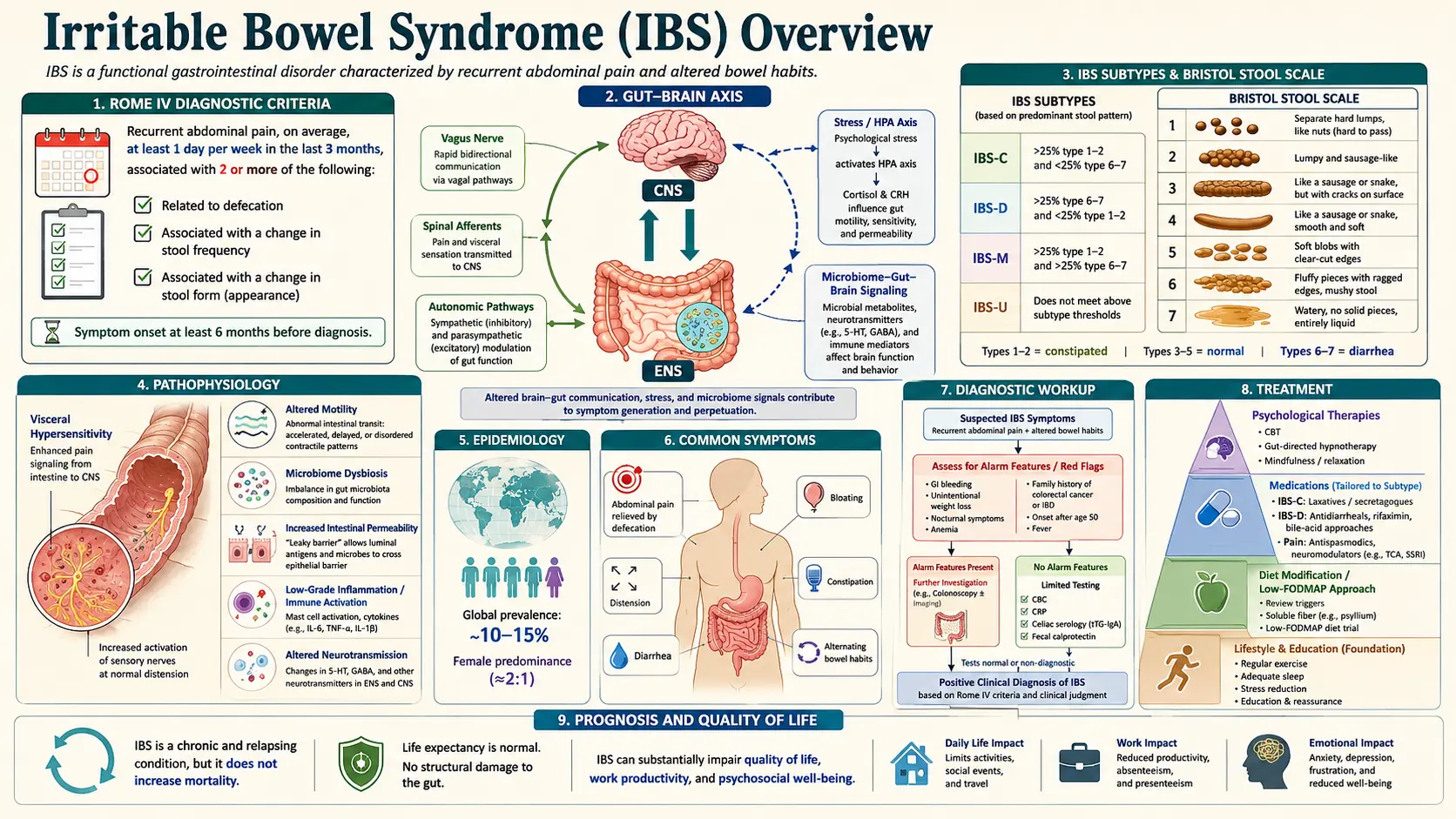
Irritable bowel syndrome (IBS) is a chronic disorder in which recurrent abdominal pain is associated with defecation or a change in bowel habits, without a clear biochemical or structural cause (Lacy and Patel 2017; Papale 2024). The Rome IV criteria, introduced in 2016, reclassified IBS from a functional gastrointestinal disorder to a disorder of gut–brain interaction (DGBI) (Papale 2024).
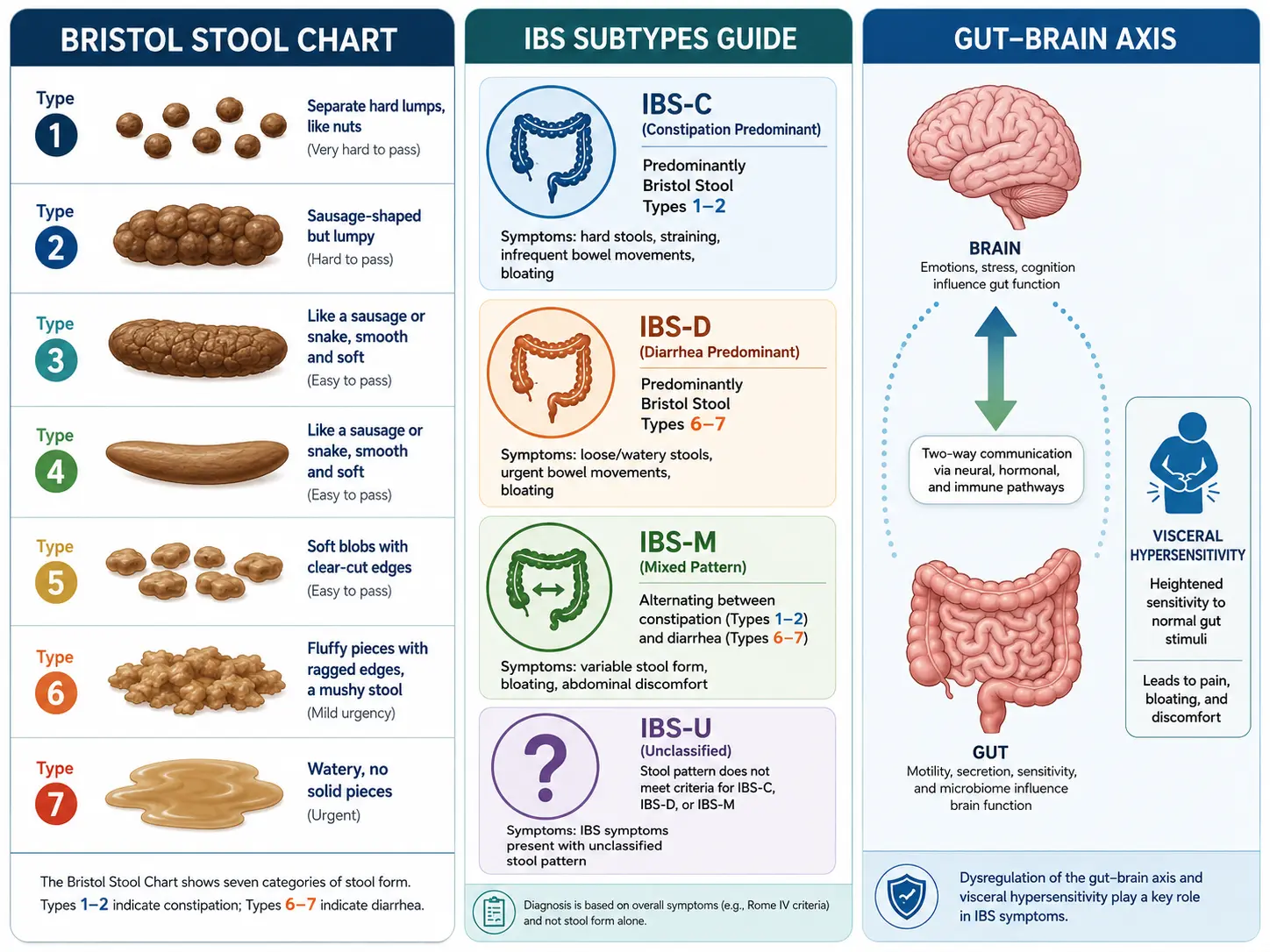
IBS is one of the most common functional bowel disorders (Oka 2020). A 2024 review reports that in the United States it accounts for 25–50% of referrals to gastroenterologists and is the second-leading cause of work absenteeism (Papale 2024). Its effect on quality of life is comparable to that of other chronic diseases such as diabetes and hepatitis (Enck 2016). Four subtypes are recognized by predominant bowel habit: IBS with predominant constipation (IBS-C), IBS with predominant diarrhea (IBS-D), IBS with mixed bowel habits (IBS-M), and unclassified IBS (IBS-U) (Schmulson and Drossman 2017).
2. Epidemiology
How common IBS appears depends heavily on the diagnostic criteria used. A 2020 meta-analysis pooled 53 studies that used the Rome III criteria (395,385 participants in 38 countries) and found a prevalence of 9.2%; six studies that used the stricter Rome IV criteria (82,476 people in 34 countries) gave 3.8%. Prevalence varied substantially between countries even when identical methods were used (Oka 2020). The Rome Foundation Global Epidemiology Study of 73,076 adults in 33 countries found the same gap: 4.1% met the Rome IV criteria versus 10.1% the Rome III criteria in its Internet survey, and 1.5% versus 3.5% in household interviews (Sperber 2021). In the first population survey to use Rome IV in English-speaking countries, prevalence roughly halved compared with Rome III: 11.1% (Rome III) versus 6.1% (Rome IV) in the United States, 11.7% versus 5.8% in Canada, and 10.6% versus 5.5% in the United Kingdom (Schmulson and Drossman 2017).
With the Rome III criteria IBS-M was the most common subtype, while with Rome IV it was IBS-D (31.5% of people with IBS). IBS was more common in women than in men (12.0% versus 8.6%; odds ratio 1.46) (Oka 2020). Prevalence is higher in younger adults than in people over 40, anxiety and depression are strongly associated with IBS, and findings on socioeconomic status are mixed (Papale 2024). Long-term surveys in the United States put the annual incidence at 1–2%, with disappearance rates of about 2% (Enck 2016).
3. Pathophysiology
The causes of IBS are not fully understood. Reviews describe several contributing mechanisms — altered visceral sensitivity, altered brain–gut interaction, changes in bowel motility and secretion, immune activation, dysbiosis and increased epithelial permeability — while noting that a coherent link between particular abnormalities and particular symptoms has not been established and that many results are inconsistent (Enck 2016):
- Visceral hypersensitivity: In five cohorts totalling 1,144 people with IBS or functional dyspepsia who underwent balloon-distension testing, gastrointestinal symptom severity rose step by step with greater visceral sensitivity. The association held after allowing for anxiety, depression and a general tendency to report symptoms (Simrén 2018).
- Altered motility and bile acids: Some patients with IBS-D have raised total faecal bile acids, which accelerate colonic transit and can cause diarrhoea and visceral hypersensitivity (Enck 2016).
- Gut–brain axis: Brain imaging studies have found differences in the salience, attention, sensorimotor and emotional-arousal networks in IBS. Serotonin (5-HT) regulates gut motility; up to 90% of it is made by enteroendocrine cells in the gut, and disturbed 5-HT levels appear relevant to IBS (Enck 2016).
- Gut microbiota: A 2019 systematic review of 24 case-control studies found the family Enterobacteriaceae, the family Lactobacillaceae and the genus Bacteroides increased in IBS, and uncultured Clostridiales I, Faecalibacterium (including Faecalibacterium prausnitzii) and Bifidobacterium decreased, compared with controls. Microbial diversity was either decreased or not different. Whether these microbes are a cause or a product of IBS is not known (Pittayanon 2019). Methane-positive breath tests are more common in IBS-C than in IBS-D (odds ratio 2.3) (Shah 2020).
- Post-infectious IBS (PI-IBS): In a meta-analysis of 45 studies of 21,421 people with infectious enteritis, 10.1% had IBS 12 months after the infection and 14.5% after more than 12 months (Klem 2017).
- Increased intestinal permeability: Described mainly in post-infectious IBS and IBS-D, with reduced expression of the tight-junction proteins occludin and zonula occludens-1 (Enck 2016).
- Low-grade immune activation: Increased numbers of T cells and mast cells are found in the gut lining of some patients, and functional and molecular evidence points to increased immune-cell activation in about half of patients. Higher proportions of mast cells in a degranulating state, and raised levels of the inflammatory markers IL-6 and IL-8, have been reported (Enck 2016).
- Food and dietary factors: Fermentable oligosaccharides, disaccharides, monosaccharides and polyols (FODMAPs) can provoke symptoms in people with IBS (Enck 2016); they are thought to increase the delivery of substrate and water to the gut, distending the bowel and triggering pain (Papale 2024).
4. Etiology and Risk Factors
Factors associated with developing IBS:
- Female sex, younger age and a preceding gastrointestinal infection are described as the most important single risk factors (Enck 2016)
- Infectious enteritis: risk of IBS was 4.2-fold higher in people who had infectious enteritis in the previous 12 months and 2.3-fold higher when it was more than 12 months earlier; 41.9% of people with protozoal or parasitic enteritis and 13.8% with bacterial enteritis developed IBS (Klem 2017)
- After enteritis, risk was higher in women (odds ratio 2.2) and in people with antibiotic exposure (1.7), anxiety (2), depression (1.5), somatization (4.1), neuroticism (3.3) or more severe enteritis (Klem 2017)
- Psychological conditions: anxiety and depression are strongly associated with IBS (Papale 2024)
- Genetics: family, twin, candidate-gene and genome-wide studies have been carried out, but genetic variants associated with IBS remain scarce and often have not been replicated (Enck 2016)
- Small intestinal bacterial overgrowth (SIBO): in a meta-analysis of 25 case-control studies, SIBO was more common in people with IBS than in controls (odds ratio 3.7). By breath testing, prevalence was 35.5% in IBS versus 29.7% in controls, and lactulose breath tests gave much higher positive rates than glucose breath tests in both groups. The authors rated the overall quality of the evidence as low (Shah 2020)
5. Clinical Presentation
Core symptoms:
- Recurrent abdominal pain related to bowel movements — in some patients pain improves with defecation, in others it worsens or does not change (Schmulson and Drossman 2017)
- Disordered bowel habits: constipation, diarrhea, or a mix of the two (Lacy and Patel 2017)
- Abdominal bloating and distension, which Rome IV recognizes as common symptoms (Lacy and Patel 2017)
IBS subtypes by predominant stool form (Bristol Stool Form Scale), Rome IV:
- IBS-C: More than 25% of bowel movements Bristol types 1–2 and less than 25% types 6–7
- IBS-D: More than 25% of bowel movements Bristol types 6–7 and less than 25% types 1–2
- IBS-M: More than 25% of bowel movements types 1–2 and more than 25% types 6–7
- IBS-U: Meets the diagnostic criteria for IBS, but bowel habits cannot be accurately placed in any of the above subtypes
In Rome IV these proportions are judged only on days with abnormal bowel movements; Rome III counted all bowel movements, which led to many patients being left unsubtyped (Schmulson and Drossman 2017).
Extraintestinal and associated conditions:
Psychiatric disorders, especially major depression, anxiety and somatoform disorders, occur in up to 94% of people with IBS in some studies. Outside the gut, the best-documented overlaps are with fibromyalgia, chronic fatigue syndrome, temporomandibular joint disorder and chronic pelvic pain: a median of 49% of people with fibromyalgia, 51% with chronic fatigue syndrome, 64% with temporomandibular joint disorder and 50% with chronic pelvic pain also have IBS (Whitehead 2002). A 2016 review also lists urological chronic pelvic pain syndromes (including interstitial cystitis), vulvodynia, overactive bladder, migraine and other functional gastrointestinal disorders such as functional dyspepsia (Enck 2016).
Alarm features (red flags): symptoms that raise clinical concern for a different disease. A 2016 review lists (Enck 2016):
- Unintended weight loss (more than 10% in 3 months)
- Blood in the stool not caused by haemorrhoids or anal fissures
- Symptoms that wake the person at night
- Fever together with the bowel symptoms
- Family history of colorectal cancer, inflammatory bowel disease or coeliac disease
- New onset of IBS symptoms after age 50
The same review notes that it is not clear whether alarm features improve the accuracy of the diagnostic criteria, and that they are present in many patients without a serious underlying condition (Enck 2016).
6. Diagnosis
Rome IV Diagnostic Criteria (2016)
Recurrent abdominal pain, on average at least 1 day per week in the last 3 months, associated with two or more of the following criteria, with symptom onset at least 6 months before diagnosis and symptoms present during the last 3 months (Lacy and Patel 2017):
- Related to defecation (may be relieved or worsened)
- Associated with a change in frequency of stool
- Associated with a change in form (appearance) of stool
Note: Rome IV removed the term “discomfort”, replaced “improvement with defecation” (Rome III) with “related to defecation”, deleted “onset” from the two stool-related criteria, and raised the pain-frequency threshold from 3 days per month (Rome III) to 1 day per week (Schmulson and Drossman 2017; Lacy and Patel 2017). Prevalence is substantially lower with the Rome IV criteria (Oka 2020).
Diagnostic Approach — Positive Diagnosis Strategy
The 2021 ACG guideline suggests a positive diagnostic strategy, rather than a strategy of exclusion, to shorten the time to appropriate therapy. It suggests serologic testing for celiac disease, and a fecal calprotectin test to rule out inflammatory bowel disease, in people with suspected IBS and diarrhea symptoms (Lacy 2021). A 2024 review summarizes that in the absence of alarm symptoms IBS is diagnosed with limited testing, relying mainly on the clinical history and the Rome IV criteria (Papale 2024). Tests described in the guidelines and reviews:
- Complete blood count and CRP: a 2016 review describes both as inexpensive and reasonable to perform (Enck 2016). In a meta-analysis, a CRP of 0.5 mg/dl or less, or a fecal calprotectin of 40 µg/g or less, meant a probability of inflammatory bowel disease of 1% or less (Menees 2015)
- Thyroid tests: when clinical suspicion of thyroid disease is high (Enck 2016)
- Celiac serology: in a meta-analysis of 36 studies, biopsy-proven celiac disease was more common in people with IBS symptoms than in controls (odds ratio 4.48) and was higher across all IBS subtypes, but no increase was found in North American studies (Irvine 2017)
- Stool tests for infection: when diarrhea predominates and is hard to treat, especially where infectious diarrhea is common (Enck 2016)
- Colonoscopy: when alarm features, raised CRP or calprotectin, or colorectal cancer screening programmes call for it; with biopsies to look for microscopic colitis when watery diarrhea predominates, especially in women over 50 (Enck 2016)
- Bile acid diarrhea testing (SeHCAT or serum C4): described as an important differential diagnosis in people with frequent loose stools; the tests are not available everywhere (Enck 2016)
Additional Investigations in Selected Cases
- Breath testing for SIBO: in a 2009 meta-analysis, the pooled prevalence of a positive test in people with IBS was 54% with the lactulose hydrogen breath test, 31% with the glucose breath test and 4% with jejunal aspirate culture; the authors concluded that the role of SIBO testing in suspected IBS remains unclear (Ford 2009). A 2020 meta-analysis rated the evidence linking SIBO and IBS as low quality, partly because of the limited sensitivity and specificity of the available tests (Shah 2020)
- Digital rectal examination: helps identify dyssynergic defecation in people with constipation and to exclude rectal cancer (Enck 2016)
7. Treatment
A 2024 review comparing the U.S., British and European guidelines describes IBS treatment as individualized and largely guided by bowel-habit subtype, and notes that many recommendations are conditional and based on low-certainty evidence (Papale 2024). Decisions about medicines and supplements belong with a clinician.
Dietary Interventions
- Low-FODMAP diet: The 2021 ACG guideline recommends a limited trial of a low-FODMAP diet to improve global IBS symptoms (Lacy 2021). A 2025 network meta-analysis of 28 trials (2,338 patients) found the most trial evidence for the low-FODMAP diet (24 trials): the relative risk of global symptoms not improving was 0.51 versus a habitual diet, ranking it fourth, and it was the only diet better than a habitual diet for bloating (Cuffe 2025). In a 30-patient crossover trial in which almost all food was provided, overall symptom scores were 22.8 mm on the low-FODMAP diet versus 44.9 mm on a typical Australian diet (Halmos 2014). The diet is described in three phases: restriction for 2–6 weeks, gradual reintroduction over 6–10 weeks, and a personalized diet; a 2024 review describes a GI-trained dietitian as valuable (Papale 2024).
- Fibre: The ACG strongly recommends soluble fibre, and psyllium gave significant symptom relief compared with placebo; insoluble fibre did not show significant improvement (Papale 2024).
- Other diets: In the 2025 network meta-analysis, the British Dietetic Association/NICE diet ranked tenth for global symptoms (relative risk 0.62 versus habitual diet; eight trials), and a starch- and sucrose-reduced diet ranked first but was tested in only two trials (Cuffe 2025). Gluten-free diet trials have given mixed results: one reported greater improvement than a gluten-containing diet, while another, in non-constipated IBS, found no difference between traditional, gluten-free and low-FODMAP diets (Papale 2024).
Pharmacological Treatment — IBS-D
The 2022 AGA guideline for IBS-D makes conditional recommendations for eluxadoline, rifaximin and alosetron (moderate certainty), loperamide (very low certainty), and tricyclic antidepressants and antispasmodics (low certainty), and a conditional recommendation against selective serotonin reuptake inhibitors (low certainty) (Lembo 2022). The 2021 ACG guideline recommends rifaximin for global IBS-D symptoms (Lacy 2021).
- Loperamide: A peripheral µ-opioid receptor agonist that slows gut motility. Pooled analyses of two trials found improved stool frequency but no substantial relief of global IBS-D symptoms; the ACG has made no recommendation on it (Papale 2024).
- Rifaximin: A minimally absorbed antibiotic. In the identically designed TARGET 1 and TARGET 2 trials in IBS without constipation, rifaximin 550 mg three times daily for 2 weeks gave adequate relief of global symptoms during the first 4 weeks after treatment in 40.7% versus 31.7% with placebo (both trials combined), with similar adverse-event rates (Pimentel 2011). In TARGET 3, 1,074 patients (44.1%) responded to an open-label 2-week course; 636 who later relapsed were randomized to repeat treatment, and 38.1% responded to rifaximin versus 31.5% to placebo (Lembo 2016, TARGET 3). In a substudy, repeat courses had no apparent long-term effect on the susceptibility of stool bacteria to rifaximin, rifampin or the other antibiotics tested (Pimentel 2017).
- Eluxadoline: A mixed opioid agent (µ- and κ-opioid receptor agonist, δ-opioid receptor antagonist). In two phase 3 trials of 2,427 adults with IBS-D, the composite response over weeks 1–12 was 23.9% (75 mg) and 25.1% (100 mg) versus 17.1% with placebo in one trial, and 28.9% and 29.6% versus 16.2% in the other. The most common adverse events were nausea, constipation and abdominal pain, and pancreatitis developed in 5 of 1,666 patients (0.3%) (Lembo 2016, eluxadoline). It is contraindicated in people without a gallbladder and in those who drink more than three alcoholic drinks a day, because of rare but serious pancreatitis and sphincter of Oddi spasm (Papale 2024).
- Alosetron: A 5-HT3 receptor antagonist that slows intestinal transit. The AGA and ACG conditionally recommend it for women with severe IBS-D who have not responded to conventional therapy. It is associated with severe constipation and ischemic colitis; the U.S. requirement to enrol in a risk-management (REMS) program was removed in 2023 (Papale 2024).
Pharmacological Treatment — IBS-C
The 2022 AGA guideline for IBS-C makes a strong recommendation for linaclotide (high certainty); conditional recommendations for tenapanor, plecanatide, tegaserod and lubiprostone (moderate certainty) and for polyethylene glycol laxatives, tricyclic antidepressants and antispasmodics (low certainty); and a conditional recommendation against selective serotonin reuptake inhibitors (low certainty) (Chang 2022). The 2021 ACG guideline recommends chloride channel activators and guanylate cyclase activators for global IBS-C symptoms (Lacy 2021).
- Linaclotide: A minimally absorbed guanylate cyclase-C agonist. In a 26-week phase 3 trial of 804 patients, 290 µg once daily met the FDA responder end point in 33.7% versus 13.9% with placebo (number needed to treat 5.1); diarrhea led to discontinuation in 4.5% versus 0.2% (Chey 2012). Guanylate cyclase-C agonists are thought to work by stimulating intestinal fluid secretion and peristalsis and possibly dampening visceral pain receptors (Papale 2024).
- Plecanatide: Also a guanylate cyclase-C agonist; the ACG gives it a strong recommendation and the AGA a conditional one (Papale 2024).
- Lubiprostone: A prostaglandin E1 analogue that acts on chloride channels in the intestinal lining, increasing fluid secretion. A 2024 review cites a number needed to treat of 12.5, nausea and diarrhea as reported adverse effects, and FDA approval in 2008 for adult women with IBS-C (Papale 2024).
- Tenapanor: A sodium/hydrogen exchanger 3 (NHE3) inhibitor, FDA-approved for IBS-C in 2019. It reduces intestinal sodium absorption and increases water secretion into the gut; how it relieves abdominal pain is unclear (Papale 2024).
- Selective serotonin reuptake inhibitors (SSRIs): The AGA makes a conditional recommendation against SSRIs in both IBS-C and IBS-D (Chang 2022; Lembo 2022), and the ACG makes no recommendation for or against them (Papale 2024). In a 2019 meta-analysis, antidepressants as a class reduced IBS symptoms, with similar effects for tricyclics and SSRIs but heterogeneity between the SSRI trials (Ford 2019).
- Osmotic laxatives: Studies found that polyethylene glycol (PEG) did not significantly reduce overall IBS symptoms, including abdominal pain; the AGA recommends it conditionally, while the ACG advises against it because of the low quality of the evidence (Papale 2024; Chang 2022).
Centrally Acting Neuromodulators (All Subtypes)
- Low-dose tricyclic antidepressants (TCAs): The ACG and the British Society of Gastroenterology strongly recommend TCAs for global IBS symptoms (moderate quality of evidence), and the AGA recommends them conditionally (Papale 2024). In a 2019 meta-analysis of antidepressant trials, the relative risk of symptoms not improving was 0.66 versus placebo (Ford 2019). In the ATLANTIS trial of 463 adults in 55 English general practices whose symptoms persisted despite first-line treatment, amitriptyline started at 10 mg once daily and titrated up to 30 mg lowered the IBS Severity Scoring System score by 27.0 points more than placebo at 6 months; 13% stopped amitriptyline because of adverse events, versus 9% on placebo (Ford 2023).
- Licensing: Antidepressants are not licensed for IBS anywhere in the world, so their use in IBS is off-label (Enck 2016).
Psychological and Behavioral Therapies
- Gut-directed psychotherapy: The 2021 ACG guideline suggests gut-directed psychotherapy for global IBS symptoms (Lacy 2021). In a 2019 meta-analysis, the relative risk of symptoms not improving with psychological therapies was 0.69; cognitive behavioral therapy, relaxation therapy, multi-component psychological therapy, hypnotherapy and dynamic psychotherapy were each beneficial when two or more trials were pooled. The trials showed significant heterogeneity, funnel-plot asymmetry and a lack of blinding, so the effects may be overestimated (Ford 2019).
- Cognitive behavioral therapy (CBT): The AGA has identified over 30 randomized trials supporting CBT for IBS in individual, group, web-based and self-administered formats (Papale 2024).
- Gut-directed hypnotherapy: In the first controlled trial, 30 patients with severe refractory IBS improved markedly with hypnotherapy compared with psychotherapy plus placebo (Whorwell 1984). In a follow-up of 204 treated patients, 71% responded initially and 81% of responders maintained their improvement, with symptom scores still improved at five years or more; this was a follow-up of treated patients, not a controlled comparison (Gonsalkorale 2003). Across trials results vary, and some found no difference from control groups (Papale 2024).
- Other psychological therapies: A 2016 review summarizes UK NICE guidance as considering referral for CBT, hypnotherapy or other psychological therapy, such as psychodynamic therapy and mindfulness-based therapy, for people whose symptoms have not responded to drug treatment after 12 months (Enck 2016).
Probiotics
The 2021 ACG guideline suggests against probiotics for the treatment of global IBS symptoms (conditional recommendation, very low quality of evidence), and the 2020 AGA probiotics guideline recommends probiotics in IBS only in the context of a clinical trial, describing a knowledge gap (Marlicz 2021, a review of the guidelines; Su 2020). Other guidelines differ: the British Society of Gastroenterology states that probiotics as a group may be an effective treatment for global symptoms and abdominal pain (weak recommendation, very low quality of evidence) (Marlicz 2021). Trial results are specific to strain, dose and formulation and do not transfer from one product to another; the individual strains with published IBS trials are covered in the Peppermint, Probiotics & Herbals deep dive.
8. Complications
IBS has not been linked to shorter survival: in a Minnesota community cohort of 3,933 people surveyed in 19883,933 people followed for up to two decadesndash;1993 and followed through 2008, IBS was not associated with overall survival (hazard ratio 1.06) (Chang 2010). Its chronic course is nonetheless associated with a substantial burden:
- Quality-of-life impairment comparable to that of other chronic diseases such as diabetes and hepatitis (Enck 2016)
- Work absence: described as the second-leading cause of work absenteeism in the United States (Papale 2024)
- High rates of psychiatric comorbidity, especially major depression, anxiety and somatoform disorders (Whitehead 2002)
- Testing burden: in most people with typical symptoms, normal routine tests and no alarm features, further investigations do not seem to improve patient satisfaction or quality of life (Enck 2016)
- Restrictive diets: a 2024 review describes discussing the risks and benefits of specific diets, and the value of a registered dietitian (Papale 2024)
- Adverse effects reported in drug trials, such as diarrhea with linaclotide (Chey 2012), nausea, constipation and rare pancreatitis with eluxadoline (Lembo 2016, eluxadoline), and severe constipation and ischemic colitis with alosetron (Papale 2024)
9. Prognosis
IBS is a chronic condition with a fluctuating course. No treatment cures it, although a substantial proportion of patients experience spontaneous remission over time; long-term U.S. surveys report disappearance rates of about 2% (Enck 2016). The subtypes overlap, and many patients switch predominant subtype over time (Enck 2016).
In a Danish nationwide cohort of 57,851 people with a first hospital contact for IBS, colon cancer risk was more than eight-fold higher, and rectal cancer risk five-fold higher, in the first 3 months after the IBS diagnosis — which the authors attribute to diagnostic confusion from overlapping symptoms — while risk 1–10 years after diagnosis was lower than expected (Nørgaard 2011). In a U.S. community cohort, IBS was not associated with reduced survival (Chang 2010).
10. Prevention
A 2016 review states that screening for IBS risk and prevention of IBS development are currently not applicable, given the heterogeneity of the disease and its many proposed mechanisms (Enck 2016). The best-studied modifiable risk is post-infectious IBS:
- Infectious enteritis: more than 10% of people with infectious enteritis later develop IBS (Klem 2017)
- Antibiotics during enteritis: antibiotic exposure during the infection was associated with a higher risk of post-infectious IBS (odds ratio 1.7) (Klem 2017)
- Psychological distress: anxiety, depression and somatization were also associated with a higher risk after enteritis (Klem 2017)
11. Recent Research and Advances
- Diagnostic biomarkers: A 2016 review states that there is currently no valid diagnostic biomarker for IBS, although preliminary data suggest that some biomarkers may prove valid after further study (Enck 2016).
- Anti-CdtB and anti-vinculin antibodies: Cytolethal distending toxin B (CdtB) is produced by bacteria that cause acute gastroenteritis, and in an animal model of post-infectious IBS, antibodies to CdtB cross-react with vinculin in the host gut. In 2,375 people with IBS-D from the TARGET 3 trial, compared with people with inflammatory bowel disease, celiac disease and healthy controls, both antibodies were higher in IBS-D. At the optimized cut-offs, anti-CdtB had a specificity of 91.6% and a sensitivity of 43.7%, and anti-vinculin 83.8% and 32.6%; both tests were less specific in separating IBS from celiac disease (Pimentel 2015).
- Fecal microbiota transplantation (FMT): In a single-centre Norwegian trial of 90 randomized patients with IBS-D or mixed IBS (83 analysed), 65% responded at 3 months with donor FMT versus 43% with their own stool as placebo (p=0.049); the authors stated that larger multicentre studies are needed (Johnsen 2018).
- Mast cell and histamine pathways: In a trial of 60 patients, 8 weeks of the mast cell stabiliser ketotifen raised the discomfort threshold in patients with visceral hypersensitivity and reduced IBS symptoms (Klooker 2010). In a 12-week trial of 55 patients, the H1 antihistamine ebastine gave symptom relief in 46% versus 13% with placebo and lowered abdominal pain scores (Wouters 2016).
- Diet comparisons: The 2025 network meta-analysis concluded that the most evidence exists for the low-FODMAP diet, that other diets, such as a starch- and sucrose-reduced diet, are emerging, and that these need further study (Cuffe 2025).
Key Research Papers
- Lacy BE, Mearin F, Chang L, et al. Bowel Disorders. Gastroenterology. 2016;150(6):1393–1407. — doi:10.1053/j.gastro.2016.02.031
- Ford AC, Lacy BE, Talley NJ. Irritable Bowel Syndrome. N Engl J Med. 2017;376(26):2566–2578. — doi:10.1056/NEJMra1607547
- Simrén M, Törnblom H, Palsson OS, et al. Visceral hypersensitivity is associated with GI symptom severity in functional GI disorders: consistent findings from five different patient cohorts. Gut. 2018;67(2):255–262. — doi:10.1136/gutjnl-2016-312361
- Halmos EP, Power VA, Shepherd SJ, Gibson PR, Muir JG. A diet low in FODMAPs reduces symptoms of irritable bowel syndrome. Gastroenterology. 2014;146(1):67–75. — doi:10.1053/j.gastro.2013.09.046
- Pimentel M, Lembo A, Chey WD, et al. Rifaximin Therapy for Patients with Irritable Bowel Syndrome without Constipation. N Engl J Med. 2011;364(1):22–32. — doi:10.1056/NEJMoa1004409
- Lembo AJ, Lacy BE, Zuckerman MJ, et al. Eluxadoline for Irritable Bowel Syndrome with Diarrhea. N Engl J Med. 2016;374(3):242–253. — doi:10.1056/NEJMoa1505180
- Chey WD, Lembo AJ, Lavins BJ, et al. Linaclotide for irritable bowel syndrome with constipation: a 26-week, randomized, double-blind, placebo-controlled trial to evaluate efficacy and safety. Am J Gastroenterol. 2012;107(11):1702–1712. — PubMed PMID: 22986437 (Editorial note: previously listed with the wrong journal, N Engl J Med 2012;366(17).)
- Pittayanon R, Lau JT, Yuan Y, et al. Gut Microbiota in Patients With Irritable Bowel Syndrome — A Systematic Review. Gastroenterology. 2019;157(1):97–108. — doi:10.1053/j.gastro.2019.03.049
- Ford AC, Quigley EM, Lacy BE, et al. Effect of Antidepressants and Psychological Therapies, Including Hypnotherapy, in IBS. Am J Gastroenterol. 2014;109(9):1350–1365. — doi:10.1038/ajg.2014.148
- Pimentel M, Morales W, Rezaie A, et al. Development and validation of a biomarker for diarrhea-predominant irritable bowel syndrome in human subjects. PLoS ONE. 2015;10(5):e0126438. — doi:10.1371/journal.pone.0126438
- Johnsen PH, Hilpüsch F, Cavanagh JP, et al. Faecal microbiota transplantation versus placebo for moderate-to-severe irritable bowel syndrome: a double-blind, randomised, placebo-controlled, parallel-group, single-centre trial. Lancet Gastroenterol Hepatol. 2018;3(1):17–24. — doi:10.1016/S2468-1253(17)30338-2
- Mearin F, Lacy BE, Chang L, et al. Bowel Disorders. Gastroenterology. 2016;150(6):1393–1407.e5. — doi:10.1053/j.gastro.2016.02.031 (Editorial note: the same article as the first entry; PubMed lists Mearin F as first author, Crossref lists Lacy BE.)
- Barbara G, Stanghellini V, Brandi G, et al. Interactions between commensal bacteria and gut sensorimotor function in health and disease. Am J Gastroenterol. 2005;100(11):2560–2568. — doi:10.1111/j.1572-0241.2005.00230.x
- Drossman DA (senior editor), Chang L, et al., eds. Rome IV Multidimensional Clinical Profile for the Functional Gastrointestinal Disorders. 2nd ed. Raleigh, NC: The Rome Foundation; 2016. Book, no DOI or PubMed record (cited as reference 79 in Schmulson and Drossman 2017). (Editorial note: the DOI previously given here, 10.1053/j.gastro.2016.02.015, belongs to a different article on childhood functional gastrointestinal disorders.)
- Whorwell PJ, Prior A, Faragher EB. Controlled trial of hypnotherapy in the treatment of severe refractory irritable bowel syndrome. Lancet. 1984;2(8414):1232–1234. — doi:10.1016/S0140-6736(84)92793-4
- Farmer AD, Randall HA, Aziz Q. It's a gut feeling: how the gut microbiome affects the state of mind. J Physiol. 2014;592(14):2981–2988. — doi:10.1113/jphysiol.2013.270389
- Lacy BE, Pimentel M, Brenner DM, et al. ACG Clinical Guideline: Management of Irritable Bowel Syndrome. Am J Gastroenterol. 2021;116(1):17-44. — PubMed PMID: 33315591
- Lembo A, Sultan S, Chang L, et al. AGA Clinical Practice Guideline on the Pharmacological Management of Irritable Bowel Syndrome With Diarrhea. Gastroenterology. 2022;163(1):137-151. — PubMed PMID: 35738725
- Chang L, Sultan S, Lembo A, et al. AGA Clinical Practice Guideline on the Pharmacological Management of Irritable Bowel Syndrome With Constipation. Gastroenterology. 2022;163(1):118-136. — PubMed PMID: 35738724
- Su GL, Ko CW, Bercik P, et al. AGA Clinical Practice Guidelines on the Role of Probiotics in the Management of Gastrointestinal Disorders. Gastroenterology. 2020;159(2):697-705. — PubMed PMID: 32531291
- Marlicz W, Skonieczna-Żydecka K, Krynicka P, et al. Probiotics in irritable bowel syndrome - is the quest for the right strain over? Rapid review of existing guidelines and recommendations. Prz Gastroenterol. 2021;16(4):369-382. — PubMed PMID: 34976247
- Papale AJ, Flattau R, Vithlani N, et al. A Review of Pharmacologic and Non-Pharmacologic Therapies in the Management of Irritable Bowel Syndrome: Current Recommendations and Evidence. J Clin Med. 2024;13(22):6948. — PubMed PMID: 39598092
- Sperber AD, Bangdiwala SI, Drossman DA, et al. Worldwide Prevalence and Burden of Functional Gastrointestinal Disorders, Results of Rome Foundation Global Study. Gastroenterology. 2021;160(1):99-114.e3. — PubMed PMID: 32294476
- Oka P, Parr H, Barberio B, et al. Global prevalence of irritable bowel syndrome according to Rome III or IV criteria: a systematic review and meta-analysis. Lancet Gastroenterol Hepatol. 2020;5(10):908-917. — PubMed PMID: 32702295
- Schmulson MJ, Drossman DA. What Is New in Rome IV. J Neurogastroenterol Motil. 2017;23(2):151-163. — PubMed PMID: 28274109
- Lacy BE, Patel NK. Rome Criteria and a Diagnostic Approach to Irritable Bowel Syndrome. J Clin Med. 2017;6(11):99. — PubMed PMID: 29072609
- Enck P, Aziz Q, Barbara G, et al. Irritable bowel syndrome. Nat Rev Dis Primers. 2016;2:16014. — PubMed PMID: 27159638
- Klem F, Wadhwa A, Prokop LJ, et al. Prevalence, Risk Factors, and Outcomes of Irritable Bowel Syndrome After Infectious Enteritis: A Systematic Review and Meta-analysis. Gastroenterology. 2017;152(5):1042-1054.e1. — PubMed PMID: 28069350
- Whitehead WE, Palsson O, Jones KR. Systematic review of the comorbidity of irritable bowel syndrome with other disorders: what are the causes and implications?. Gastroenterology. 2002;122(4):1140-56. — PubMed PMID: 11910364
- Menees SB, Powell C, Kurlander J, et al. A meta-analysis of the utility of C-reactive protein, erythrocyte sedimentation rate, fecal calprotectin, and fecal lactoferrin to exclude inflammatory bowel disease in adults with IBS. Am J Gastroenterol. 2015;110(3):444-54. — PubMed PMID: 25732419
- Irvine AJ, Chey WD, Ford AC. Screening for Celiac Disease in Irritable Bowel Syndrome: An Updated Systematic Review and Meta-analysis. Am J Gastroenterol. 2017;112(1):65-76. — PubMed PMID: 27753436
- Shah A, Talley NJ, Jones M, et al. Small Intestinal Bacterial Overgrowth in Irritable Bowel Syndrome: A Systematic Review and Meta-Analysis of Case-Control Studies. Am J Gastroenterol. 2020;115(2):190-201. — PubMed PMID: 31913194
- Ford AC, Spiegel BM, Talley NJ, et al. Small intestinal bacterial overgrowth in irritable bowel syndrome: systematic review and meta-analysis. Clin Gastroenterol Hepatol. 2009;7(12):1279-86. — PubMed PMID: 19602448
- Lembo A, Pimentel M, Rao SS, et al. Repeat Treatment With Rifaximin Is Safe and Effective in Patients With Diarrhea-Predominant Irritable Bowel Syndrome. Gastroenterology. 2016;151(6):1113-1121. — PubMed PMID: 27528177
- Pimentel M, Cash BD, Lembo A, et al. Repeat Rifaximin for Irritable Bowel Syndrome: No Clinically Significant Changes in Stool Microbial Antibiotic Sensitivity. Dig Dis Sci. 2017;62(9):2455-2463. — PubMed PMID: 28589238
- Ford AC, Lacy BE, Harris LA, et al. Effect of Antidepressants and Psychological Therapies in Irritable Bowel Syndrome: An Updated Systematic Review and Meta-Analysis. Am J Gastroenterol. 2019;114(1):21-39. — PubMed PMID: 30177784
- Ford AC, Wright-Hughes A, Alderson SL, et al. Amitriptyline at Low-Dose and Titrated for Irritable Bowel Syndrome as Second-Line Treatment in primary care (ATLANTIS): a randomised, double-blind, placebo-controlled, phase 3 trial. Lancet. 2023;402(10414):1773-1785. — PubMed PMID: 37858323
- Gonsalkorale WM, Miller V, Afzal A, et al. Long term benefits of hypnotherapy for irritable bowel syndrome. Gut. 2003;52(11):1623-9. — PubMed PMID: 14570733
- Cuffe MS, Staudacher HM, Aziz I, et al. Efficacy of dietary interventions in irritable bowel syndrome: a systematic review and network meta-analysis. Lancet Gastroenterol Hepatol. 2025;10(6):520-536. — PubMed PMID: 40258374
- Wouters MM, Balemans D, Van Wanrooy S, et al. Histamine Receptor H1-Mediated Sensitization of TRPV1 Mediates Visceral Hypersensitivity and Symptoms in Patients With Irritable Bowel Syndrome. Gastroenterology. 2016;150(4):875-87.e9. — PubMed PMID: 26752109
- Klooker TK, Braak B, Koopman KE, et al. The mast cell stabiliser ketotifen decreases visceral hypersensitivity and improves intestinal symptoms in patients with irritable bowel syndrome. Gut. 2010;59(9):1213-21. — PubMed PMID: 20650926
- Nørgaard M, Farkas DK, Pedersen L, et al. Irritable bowel syndrome and risk of colorectal cancer: a Danish nationwide cohort study. Br J Cancer. 2011;104(7):1202-6. — PubMed PMID: 21343936
- Chang JY, Locke GR 3rd, McNally MA, et al. Impact of functional gastrointestinal disorders on survival in the community. Am J Gastroenterol. 2010;105(4):822-32. — PubMed PMID: 20160713
PubMed Topic Searches
Curated PubMed topic searches of peer-reviewed literature on Irritable Bowel Syndrome (IBS). Each link opens a live PubMed query so you always see the most current studies.
- PubMed: Rome IV IBS criteria
- PubMed: Low-FODMAP diet for IBS
- PubMed: IBS microbiome
- PubMed: Rifaximin in IBS
- PubMed: Post-infectious IBS
- PubMed: Visceral hypersensitivity
- PubMed: Gut-brain axis in IBS
- PubMed: Probiotics in IBS
- PubMed: Peppermint oil for IBS
- PubMed: Eluxadoline and linaclotide
- PubMed: CBT for IBS
- PubMed: Bile acid diarrhea and IBS
Connections
- Gastroenterology
- Peristalsis: How Food Actually Moves Through You — interactive animation
- The Gut Barrier & Your Microbiome — interactive animation
- Post-Infectious IBS
- Rome IV Subtypes
- Low-FODMAP Diet for IBS
- IBS Medications Guide
- Bile Acid Malabsorption
- Peppermint, Probiotics, and Herbals
- Gut-Directed Hypnotherapy and CBT
- IBS and SIBO Overlap
- Visceral Hypersensitivity and Brain-Gut Axis
- SIBO
- Celiac Disease
- Inflammatory Bowel Disease
- Bloating
- Constipation
- Chronic Diarrhea
- Anxiety
- Depression
- Gut Healing
- Colorectal Cancer
- Hemorrhoids
- Herbs covered on this site that discuss this condition: Shallot (Allium ascalonicum) · Fennel (Foeniculum vulgare) · Ginger (Zingiber officinale) · Slippery Elm · Bael (Aegle marmelos) · Carum / Ajwain (Trachyspermum ammi)
- Probiotics
Featured Videos