Carum / Ajwain (Trachyspermum ammi)
Sanskrit Name: "Ajwain" / Also called "Bishop's Weed"
Traditional Role: described in folk accounts as the "Ultimate Digestive Remedy & Supreme Pain Reliever"; a 2012 review of the plant describes its traditional use in India as a remedy for flatulence, indigestion (atonic dyspepsia) and diarrhoea
Table of Contents
Description
- Tiny oval-shaped seeds
- Described in traditional use as the EMERGENCY herb — said to work in MINUTES, not weeks
- Traditional accounts describe the other herbs as working gradually and carum as giving immediate relief
- Reportedly used by monks for digestive sluggishness and pain from long meditation
- Described in traditional medicine as intensely warming and drying (vs. the cooling/neutral properties of other herbs)
Key Active Compounds
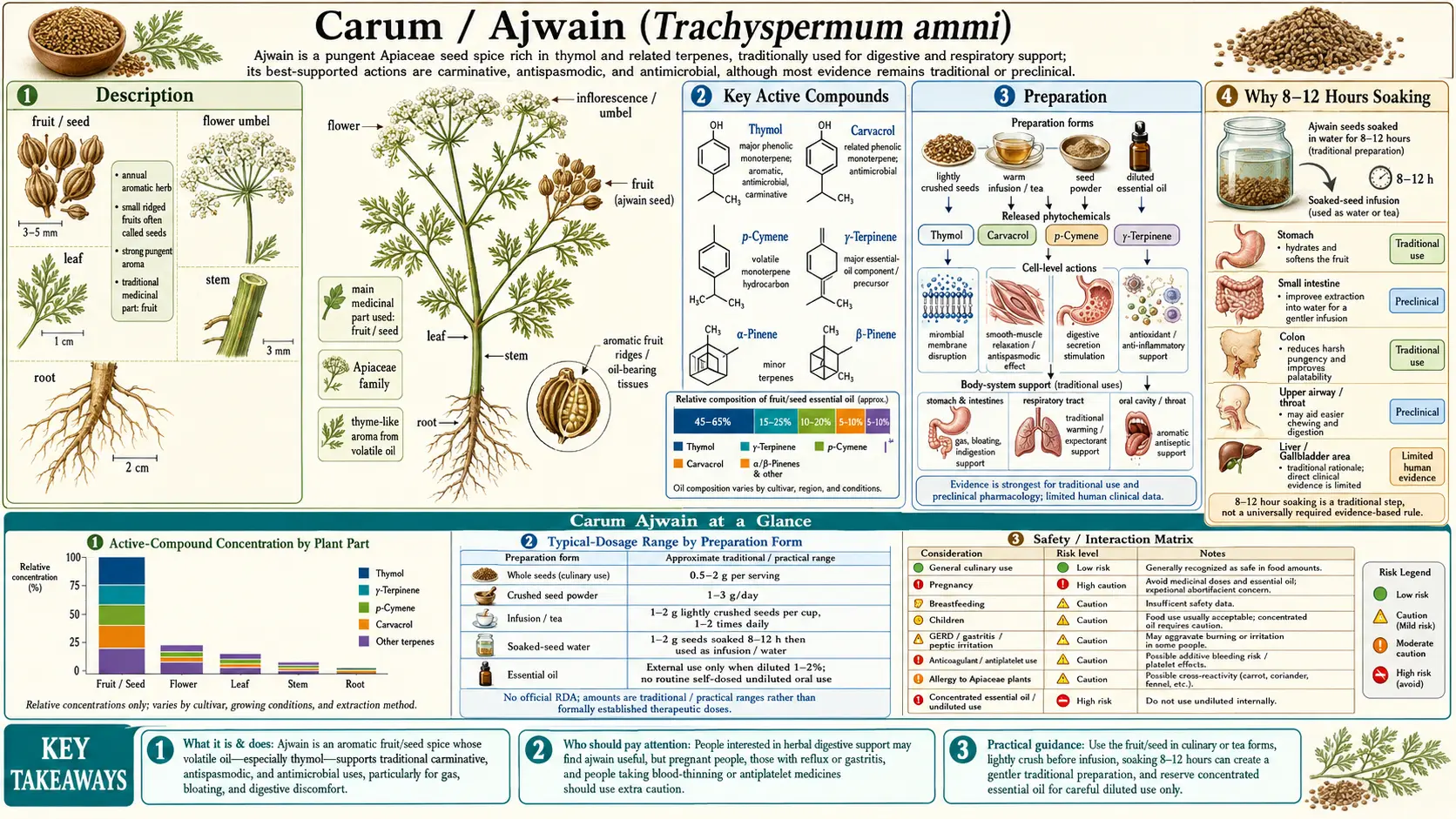
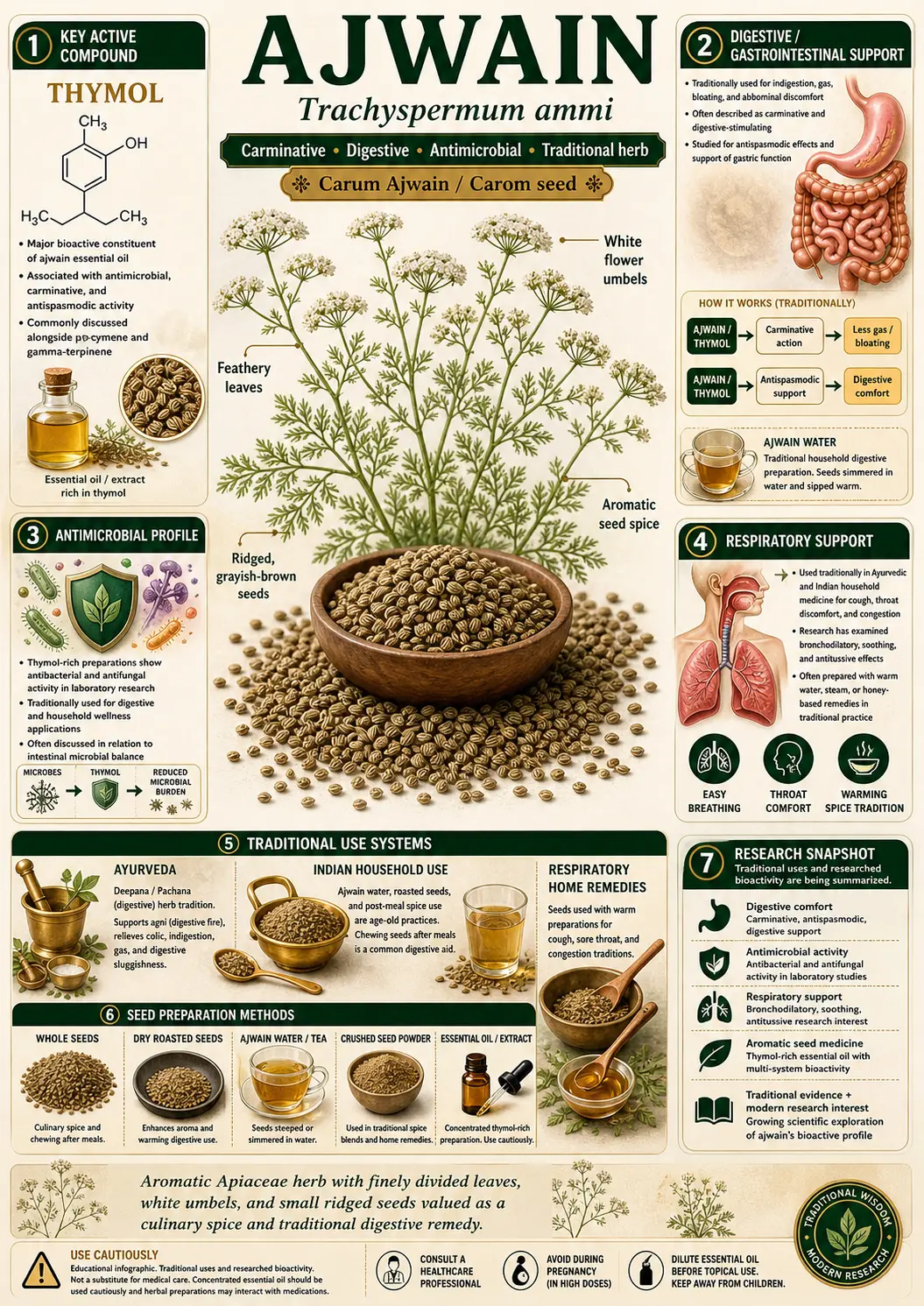
- Thymol: Comprises 35-60% of seed's essential oil — extremely powerful antiseptic, antispasmodic, and carminative agent
- Carvacrol: Potent antimicrobial
- Gamma-terpinene and Para-cymene: Contribute to rapid medicinal effects
- Rich in insoluble fiber, antioxidants, calcium, phosphorus, iron, niacin
Health Benefits
The benefits below are those described in traditional use and by practitioners of herbal medicine.
Digestive Relief (traditionally described as within 15-30 minutes)
- Relieves painful intestinal gas, abdominal bloating, acute cramps, chronic indigestion, and feeling of fullness after eating
- Thymol is described as quickly relaxing the smooth muscles of the digestive tract
- Stimulates secretion of gastric acid for more efficient food breakdown
- Traditionally used for Irritable Bowel Syndrome (IBS)
- Prevents digestive problems when eating unfamiliar foods
- Gently stimulates bowel movements for constipation without causing dependency like pharmaceutical laxatives
Respiratory Conditions & Mucus Clearing
- Thins viscous mucus, making it easier to expel from airways
- Fights bacterial respiratory infections
- Anti-inflammatory properties reduce airway swelling within hours
- Traditionally used for soothing relief of colds and flu
- Especially beneficial for respiratory conditions worsened by cold/humid weather
Joint Pain & Arthritis Relief
- Anti-inflammatory compounds work systemically throughout entire body
- Reduces inflammatory markers in blood and deep tissues
- Traditionally used for rheumatoid arthritis, osteoarthritis, and general joint pain
- Improves mobility
- Warming quality particularly useful for joint pain worsened by cold weather
Preparation
- Amount: the traditional preparation uses ONLY 1/2 to 1 teaspoon (2-5 grams) — carum is regarded as MUCH MORE POTENT than the other herbs, and traditional practice begins with 1/2 teaspoon
- Can lightly crush seeds (not strictly necessary)
- Water: 200-250 ml filtered water (LESS water than other herbs due to potency)
- Soak: 8-12 hours overnight
- Sign of readiness: Water turns slightly greenish or brownish with strong distinctive medicinal aroma
- Drink: Room temperature, or gently heated to enhance warming effect
- Can strain for smooth texture
Potency: Traditional practice regards carum as significantly more powerful than the other herbs and uses conservative amounts, increasing them only after the body has adjusted.
Pregnancy: A 2012 review of Trachyspermum ammi lists abortifacient (miscarriage-causing) activity among the plant's effects. It reports a 1987 survey in which 50 of 75 pregnant women in one village in Uttar Pradesh, India, said they had used ajwain seed to end a pregnancy, and it describes a high risk of potential harm to the unborn baby (fetotoxicity) from ten plants including ajwain, based on birth defects seen in rat foetuses.
Why 8-12 Hours Soaking
Practitioners explain the long overnight soak with the following timeline:
- 0-30 min: Only surface oils begin to dissolve slightly
- 2-4 hours: Water penetrates seed structure but hasn't reached deep essential oil pockets where thymol is concentrated
- 6-8 hours: Thymol, carvacrol, and therapeutic compounds fully dissolve
- 10-12 hours: Absolute maximum extraction of all anti-inflammatory, antimicrobial, and antispasmodic compounds
Key Research Papers
The first entry is a 2012 review of the plant; the rest are topic-level PubMed search links covering the main evidence streams for Ajwain (Trachyspermum ammi). Each link resolves to a curated PubMed query so that the most current randomized trials, meta-analyses, and mechanistic studies can be reviewed directly from the National Library of Medicine.
- Bairwa R, Sodha RS, Rajawat BS. Trachyspermum ammi. Pharmacognosy Reviews. 2012;6(11):56-60. — PubMed PMID: 22654405
- Antimicrobial activity of Trachyspermum ammi. — PubMed: Trachyspermum ammi antimicrobial thymol
- Antispasmodic effects of ajwain essential oil. — PubMed: ajwain antispasmodic smooth muscle
- Ajwain in functional dyspepsia and flatulence. — PubMed: Trachyspermum ammi gastrointestinal dyspepsia
- Thymol and carvacrol: pharmacology and mechanisms. — PubMed: thymol carvacrol pharmacology
- Bronchodilatory effects of Trachyspermum ammi. — PubMed: Trachyspermum ammi antiasthmatic bronchodilator
- Hypolipidemic effects of Trachyspermum ammi. — PubMed: ajwain hypolipidemic cholesterol
- Trachyspermum ammi and blood glucose. — PubMed: Trachyspermum ammi hypoglycemic diabetes
- Anti-inflammatory pharmacology of ajwain. — PubMed: ajwain anti-inflammatory
- Antifungal activity of Trachyspermum ammi. — PubMed: Trachyspermum ammi antifungal
- Antioxidant activity of Trachyspermum ammi. — PubMed: ajwain antioxidant free radical
External Authoritative Resources
Connections
- All Herbs
- Ajwain Benefits Deep Dive
- Irritable Bowel Syndrome
- Cumin
- Fennel
- Coriander Seeds
- Fenugreek
- Ginger
- Gut Healing
- Bloating
- Constipation
- Arthritis
- Diabetes
- Calcium
- Iron
- Inflammatory Markers
- Conditions on this site that reference this page: Sinusitis · Peptic Ulcer Disease · Allergic Rhinitis (Hay Fever) · Pneumonia · Dysmenorrhea (Menstrual Cramps)