IBS Medications Guide
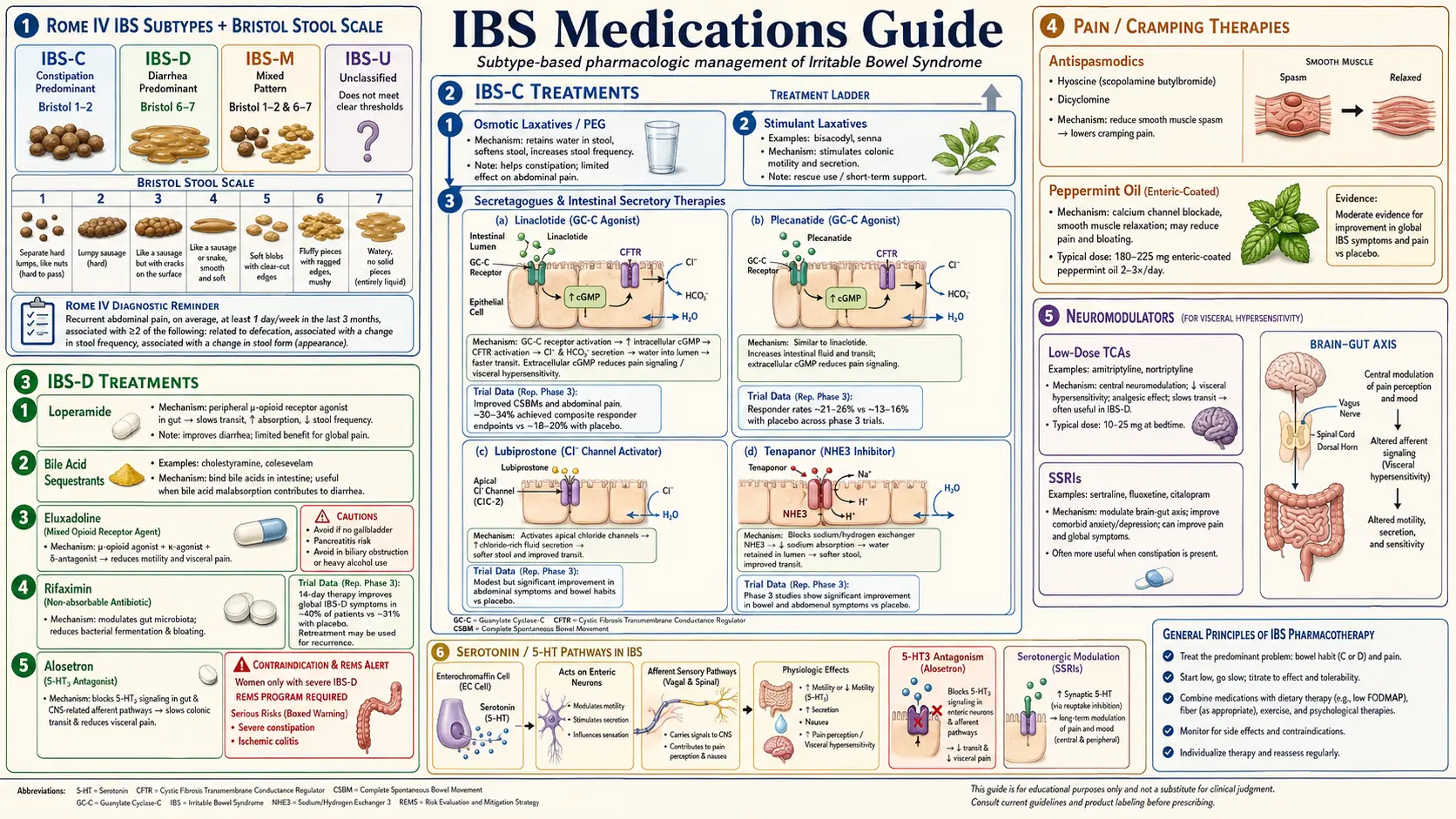
Table of Contents
- About This Page
- IBS-C Drugs — Constipation-Predominant
- IBS-D Drugs — Diarrhea-Predominant
- Antispasmodics and Peppermint Oil
- Central Neuromodulators
- Experimental and Off-Label Options
- How Guidelines Place These Drugs
- Long-Term Use and Retreatment
- Prescription Status and Restrictions
- Key Research Papers
- Connections
- Featured Videos
About This Page
Irritable bowel syndrome is grouped into subtypes by the predominant bowel habit — IBS with constipation (IBS-C), IBS with diarrhea (IBS-D) and mixed IBS (IBS-M) — and it overlaps with conditions such as SIBO and bile acid malabsorption. A 2024 review comparing the U.S., British and European guidelines describes IBS care as individualized to the subtype and symptom profile, with treatment aimed at relieving symptoms rather than curing a disease process (Papale 2024).
This page describes each drug class used in IBS: what the main randomized trials measured and found, how the 2021 American College of Gastroenterology (ACG) guideline and the 2022 American Gastroenterological Association (AGA) guidelines grade it, and what the U.S. prescribing information (the FDA-approved label) warns about. Both guideline panels used the GRADE method, which rates each recommendation as strong or conditional and the evidence behind it from high to very low certainty (Lacy 2021; Chang 2022; Lembo 2022). Generic names are used throughout, and doses appear only as the doses a trial tested. Decisions about medicines belong with a clinician.
Placebo responses in IBS trials are large: in the two TARGET trials of rifaximin, 31.7% of patients given placebo reported adequate relief of their symptoms (Pimentel 2011). Most trials of the older drug classes lasted 4–12 weeks, so their long-term relative efficacy is unknown (Black 2020).
IBS-C Drugs — Constipation-Predominant
The 2022 AGA guideline for IBS-C makes a strong recommendation for linaclotide (high certainty); conditional recommendations for tenapanor, plecanatide, tegaserod and lubiprostone (moderate certainty) and for polyethylene glycol laxatives, tricyclic antidepressants and antispasmodics (low certainty); and a conditional recommendation against selective serotonin reuptake inhibitors (low certainty) (Chang 2022). The 2021 ACG guideline recommends chloride channel activators and guanylate cyclase activators for global IBS-C symptoms (Lacy 2021).
Linaclotide — Guanylate Cyclase-C Agonist
Linaclotide is a minimally absorbed peptide that activates guanylate cyclase-C on the intestinal lining (Chey 2012). Drugs of this class are thought to work by stimulating intestinal fluid secretion and peristalsis, and possibly by dampening visceral pain receptors (Papale 2024).
Trial results: In a 26-week phase 3 trial of 804 patients with IBS-C, linaclotide 290 µg once daily met the FDA responder end point (at least a 30% fall in worst abdominal pain plus at least one extra complete spontaneous bowel movement a week, in the same week, for at least 6 of the first 12 weeks) in 33.7% of patients versus 13.9% on placebo (number needed to treat 5.1). Diarrhea led to discontinuation in 4.5% versus 0.2% (Chey 2012).
Guidelines: The ACG gives guanylate cyclase-C agonists a strong recommendation (high quality of evidence), and the AGA a strong recommendation for linaclotide (high certainty) (Papale 2024; Chang 2022).
FDA label: A boxed warning states that linaclotide is contraindicated in children under 2 years of age; in studies in newborn mice, a single clinically relevant adult oral dose caused deaths from dehydration. It is also contraindicated in known or suspected mechanical bowel obstruction. Diarrhea is the most common adverse reaction: 20% versus 3% on placebo in the adult IBS-C trials, and severe diarrhea was reported in 2% of adults with IBS-C or chronic idiopathic constipation taking 145 or 290 µg. The label lists IBS-C in adults and in children 7 years and older among its indications.
Plecanatide — Guanylate Cyclase-C Agonist
Plecanatide acts on the same receptor as linaclotide (FDA label).
Trial results: Two identical 12-week phase 3 trials randomized 2,189 adults with IBS-C to plecanatide 3 mg, 6 mg or placebo. The primary end point (at least a 30% fall in worst abdominal pain plus at least one extra complete spontaneous bowel movement a week, in the same week, for at least 6 of 12 weeks) was met by 30.2% (3 mg) and 29.5% (6 mg) versus 17.8% on placebo in the first trial, and by 21.5% and 24.0% versus 14.2% in the second. Diarrhea was the most common adverse event (4.3% and 4.0% versus 1.0%) (Brenner 2018).
Guidelines: The ACG gives plecanatide a strong recommendation (high quality of evidence); the AGA gives it a conditional recommendation (moderate certainty). A 2024 review cites a response rate of about 26% across the plecanatide trials, against 34% for linaclotide, as the reason for the AGA’s weaker grade (Papale 2024).
FDA label: A boxed warning states that plecanatide is contraindicated in children under 6 years of age, after deaths from dehydration in young juvenile mice given a single oral dose, and that its use is to be avoided from 6 to under 18 years of age; safety and effectiveness below 18 years have not been established. In the IBS-C trials, diarrhea occurred in 5% versus 1% on placebo, and severe diarrhea in 0.6% versus 0.3%.
Lubiprostone — Chloride Channel Activator
Lubiprostone is a prostaglandin E1 analogue that acts on chloride channels in the intestinal lining, increasing fluid secretion and speeding intestinal transit. A 2024 review cites a number needed to treat of 12.5 and FDA approval in 2008 for adult women with IBS-C (Papale 2024).
Trial results: In a combined analysis of two 12-week phase 3 trials in 1,171 patients with IBS-C, lubiprostone 8 µg twice daily produced more overall responders on a seven-point patient-rated relief scale than placebo (17.9% versus 10.1%), with a similar rate of adverse events (Drossman 2009).
Guidelines: The ACG gives lubiprostone a strong recommendation (moderate quality of evidence); the AGA a conditional recommendation (moderate certainty) (Papale 2024).
FDA label: The IBS-C indication is limited to women aged 18 and older. Lubiprostone is contraindicated in known or suspected mechanical bowel obstruction. The warnings cover nausea (the label states that taking it with food may reduce nausea), diarrhea, syncope and low blood pressure, and shortness of breath within an hour of a dose. In the IBS-C trials, nausea occurred in 8% versus 4% on placebo and diarrhea in 7% versus 4%.
Tenapanor — NHE3 Inhibitor
Tenapanor inhibits the sodium/hydrogen exchanger 3 (NHE3) in the gut and was FDA-approved for IBS-C in 2019. It reduces intestinal sodium absorption and increases water secretion into the gut; how it relieves abdominal pain is unclear (Papale 2024). It is minimally absorbed (Chey 2020).
Trial results: In the 12-week T3MPO-1 trial (606 patients analysed), tenapanor 50 mg twice daily met the combined pain-and-bowel-movement responder end point in 27.0% versus 18.7% on placebo (Chey 2020). In the 26-week T3MPO-2 trial (593 patients analysed), the figures were 36.5% versus 23.7% (Chey 2021). In both trials diarrhea led to discontinuation in 6.5% versus 0.7%.
Guidelines: The AGA gives tenapanor a conditional recommendation (moderate certainty), noting that diarrhea often led to stopping treatment; the 2021 ACG guideline makes no recommendation on it (Papale 2024).
FDA label: A boxed warning states that tenapanor is contraindicated in children under 6 years of age, after deaths presumed due to dehydration in young juvenile rats, and that its use is to be avoided from 6 to under 12 years of age. It is contraindicated in known or suspected mechanical bowel obstruction. In the 26-week trial, diarrhea occurred in 16% versus 4% on placebo, and severe diarrhea was reported in 2.5% of patients given tenapanor.
Polyethylene Glycol (PEG) 3350 — Osmotic Laxative
Trial results: In a 28-day trial of 139 patients with IBS-C, PEG 3350 with electrolytes increased spontaneous bowel movements in the final week (4.40 versus 3.11 a week on placebo) and improved stool consistency and straining. Abdominal discomfort and pain fell from baseline but did not differ from placebo (Chapman 2013). A 2024 review summarizes the studies as finding that PEG does not significantly reduce overall IBS symptoms, including abdominal pain (Papale 2024).
Guidelines: The AGA gives PEG a conditional recommendation (low certainty) and describes it as a first-line option because it is widely available; the ACG makes a conditional recommendation against it (low quality of evidence), while acknowledging that it is an accessible and affordable way to relieve constipation (Papale 2024).
FDA label: PEG 3350 is sold over the counter for occasional constipation. Its label lists irritable bowel syndrome among the conditions to ask a doctor about before use, states that it is not for use in kidney disease except under a doctor’s supervision, and lists needing a laxative for longer than one week as a reason to stop and ask a doctor.
Magnesium Salts
Magnesium citrate is sold over the counter as a saline laxative; its label lists kidney disease and a magnesium-restricted diet among the conditions to ask a doctor about before use. The 2022 AGA IBS-C guideline did not include magnesium among the agents it reviewed (Chang 2022), and no randomized trial of magnesium in IBS-C was found for this page.
Prucalopride and Tegaserod — 5-HT4 Agonists
Prucalopride is a serotonin-4 (5-HT4) receptor agonist whose U.S. label indication is chronic idiopathic constipation in adults; IBS is not a labelled indication. The label warns of suicidal ideation and behavior reported in trials and after marketing (a causal link has not been established) and lists contraindications that include intestinal perforation or obstruction and severe inflammatory bowel conditions. The 2022 AGA IBS-C guideline did not review prucalopride (Chang 2022), and no randomized trial of prucalopride in IBS was found for this page.
Tegaserod, an older 5-HT4 agonist, is described in a 2024 review as having been removed from the market when retrospective analyses suggested more cardiovascular ischemic events, then reintroduced for women under 65 without cardiovascular disease after further studies did not confirm the finding. The ACG gives it a conditional recommendation for women under 65 with no more than one cardiovascular risk factor, and the AGA a conditional recommendation (moderate certainty) for women under 65 without a history of cardiovascular ischemic events (Papale 2024; Chang 2022).
IBS-D Drugs — Diarrhea-Predominant
The 2022 AGA guideline for IBS-D makes conditional recommendations for eluxadoline, rifaximin and alosetron (moderate certainty), loperamide (very low certainty), and tricyclic antidepressants and antispasmodics (low certainty), and a conditional recommendation against selective serotonin reuptake inhibitors (low certainty) (Lembo 2022). The 2021 ACG guideline recommends rifaximin for global IBS-D symptoms (Lacy 2021).
Rifaximin — Minimally Absorbed Antibiotic
Rifaximin is a rifamycin antibiotic. In a mass-balance study described in its label, 96.62% of an oral dose was recovered in the feces, mostly unchanged, and 0.32% in the urine (FDA label).
Trial results: In the identically designed TARGET 1 and TARGET 2 trials in IBS without constipation, rifaximin 550 mg three times daily for 2 weeks gave adequate relief of global IBS symptoms during the first 4 weeks after treatment in 40.7% versus 31.7% on placebo (both trials combined), and adequate relief of bloating in 40.2% versus 30.3%, with similar adverse-event rates (Pimentel 2011). In TARGET 3, 1,074 patients (44.1%) responded to an open-label 2-week course; 636 who later relapsed were randomized to repeat treatment, and 38.1% responded to rifaximin versus 31.5% to placebo. The abdominal-pain response was greater with rifaximin (50.6% versus 42.2%), but the stool-consistency response was not (51.8% versus 50.0%) (Lembo 2016, TARGET 3). In a substudy, repeat courses had no apparent long-term effect on the susceptibility of stool bacteria to rifaximin, rifampin or the other antibiotics tested (Pimentel 2017).
Guidelines: The ACG gives rifaximin a strong recommendation (moderate quality of evidence); the AGA a conditional recommendation (moderate certainty). A 2024 review cites a meta-analysis reporting a number needed to treat of 9 (Papale 2024).
FDA label: The IBS-D indication is for adults; the label regimen is a 14-day course, and patients whose symptoms recur can be retreated up to two times. Rifaximin is contraindicated in people with hypersensitivity to rifaximin or other rifamycins. The warnings cover Clostridium difficile-associated diarrhea, severe (Child-Pugh C) liver impairment, and use with P-glycoprotein inhibitors such as cyclosporine. The Rifaximin Protocols article covers its use in SIBO.
Eluxadoline — Mixed Opioid Receptor Agent
Eluxadoline is a µ- and κ-opioid receptor agonist and δ-opioid receptor antagonist (Lembo 2016, eluxadoline).
Trial results: Two phase 3 trials randomized 2,427 adults with IBS-D to eluxadoline 75 mg, 100 mg or placebo twice daily. The primary end point — less abdominal pain and better stool consistency on the same day, on at least half of the days — was met over weeks 1–12 by 23.9% (75 mg) and 25.1% (100 mg) versus 17.1% on placebo in one trial, and by 28.9% and 29.6% versus 16.2% in the other. The most common adverse events were nausea, constipation and abdominal pain, and pancreatitis developed in 5 of 1,666 patients in the safety population (0.3%) (Lembo 2016, eluxadoline).
Guidelines: The ACG gives eluxadoline a conditional recommendation (moderate quality of evidence), and the AGA a conditional recommendation (moderate certainty) (Papale 2024; Lembo 2022).
FDA label: Eluxadoline is contraindicated in people without a gallbladder; with known or suspected bile duct obstruction or sphincter of Oddi disease; with alcoholism or alcohol abuse, or who drink more than three alcoholic drinks a day; with a history of pancreatitis or structural pancreatic disease; with severe (Child-Pugh C) liver impairment; and with a history of chronic or severe constipation or bowel obstruction. The label reports serious pancreatitis, including hospitalizations and fatal cases, mainly in patients without a gallbladder; most serious cases began within a week of starting treatment, some after one or two doses.
Alosetron — 5-HT3 Receptor Antagonist
Alosetron blocks serotonin-3 (5-HT3) receptors and slows intestinal transit (Papale 2024).
Trial results: In a 12-week trial of 705 women with severe IBS-D, moderate or substantial global improvement at week 12 was reported by 50.8% on 0.5 mg once daily, 48% on 1 mg once daily and 42.9% on 1 mg twice daily, versus 30.7% on placebo. Constipation was the most common adverse event (9%, 16% and 19% of the three alosetron groups); one case of ischemic colitis and one of intestinal obstruction occurred in the 0.5 mg group (Krause 2007).
Guidelines: The ACG gives alosetron a conditional recommendation (low quality of evidence) for women with severe symptoms who have not responded to conventional therapy; the AGA a conditional recommendation (moderate certainty) for women with severe symptoms, framed in 2022 around the risk-management program then in place (Papale 2024; Lembo 2022).
Restriction program: U.S. patients taking alosetron were previously required to enrol in a Risk Evaluation and Mitigation Strategy (REMS). A 2024 review reports that this requirement was removed in 2023, because post-marketing studies showed a better safety profile than first thought (Papale 2024). In an analysis of post-marketing reports from November 2002 to December 2011, after the drug’s reintroduction under a risk-management program, ischemic colitis occurred at about 1.0 case per 1,000 patient-years and complications of constipation at 0.25 per 1,000 patient-years (Tong 2013).
FDA label: A boxed warning describes infrequent but serious gastrointestinal adverse reactions, including ischemic colitis and serious complications of constipation, that have led to hospitalization and, rarely, blood transfusion, surgery and death. The indication is limited to women with severe IBS-D who have not responded adequately to conventional therapy; the label states that studies have not adequately confirmed benefit in men. In the IBS trials, the cumulative incidence of ischemic colitis in women taking alosetron was 0.2% through 3 months and 0.3% through 6 months, and serious complications of constipation occurred in about 0.1% of women on either alosetron or placebo. It is contraindicated with constipation, a history of severe bowel disorders or severe liver impairment, and with the antidepressant fluvoxamine.
Ondansetron — 5-HT3 Receptor Antagonist (Off-Label)
Ondansetron is labelled for preventing nausea and vomiting from chemotherapy, radiotherapy and surgery; IBS is not a labelled indication (FDA label).
Trial results: In a 5-week crossover trial of 120 patients with IBS-D, ondansetron starting at 4 mg (titration allowed up to two tablets three times daily) firmed stool consistency, reduced urgency and stool frequency and lessened bloating compared with placebo, but did not change pain scores (Garsed 2014). The TRITON trial planned 400 patients but randomized 80; the primary end point was met by 40.5% on ondansetron versus 27.9% on placebo, a difference that was not statistically significant. Pooled with two similar trials (327 patients), ondansetron was better than placebo for the FDA composite end point (number needed to treat 9) and stool response (number needed to treat 5), but not for abdominal pain (Gunn 2023).
Guidelines: The 2022 AGA IBS-D guideline did not include ondansetron among the agents it reviewed (Lembo 2022).
FDA label: The warnings include QT-interval prolongation and torsade de pointes (the label advises against use in congenital long QT syndrome and ECG monitoring with electrolyte abnormalities, heart failure, arrhythmias or other QT-prolonging drugs), and serotonin syndrome, particularly with other serotonergic drugs. It is contraindicated with apomorphine.
Loperamide — Peripheral Opioid Agonist
Loperamide is a peripheral µ-opioid receptor agonist that slows gut motility. Pooled analyses of two trials found improved stool frequency but no substantial relief of global IBS-D symptoms. The AGA gives it a conditional recommendation (very low certainty), and the ACG has made no recommendation (Papale 2024; Lembo 2022).
FDA label: Loperamide is sold over the counter for diarrhea. Its label carries a heart alert that taking more than directed can cause serious heart problems or death, and lists a history of abnormal heart rhythm among the conditions to ask a doctor about before use.
Bile Acid Sequestrants — Cholestyramine, Colestipol, Colesevelam
In a 2015 meta-analysis of six studies (908 patients meeting IBS-D criteria) that used SeHCAT testing, the rate of bile acid malabsorption ranged from 16.9% to 35.3%, with a pooled rate of 28.1% (Slattery 2015). Bile acid sequestrants bind bile acids in the gut. In one small open-label study colestipol improved IBS symptom scores, and in two randomized trials colesevelam increased bile acid delivery to the stool but gave mixed results for stool consistency and other symptoms (Papale 2024).
Guidelines: The ACG makes a conditional recommendation against bile acid sequestrants for IBS-D symptoms (very low quality of evidence); the AGA has issued no formal recommendation (Papale 2024).
FDA labels: Cholestyramine and colesevelam are labelled for lowering cholesterol (colesevelam also for blood-sugar control in type 2 diabetes), so their use for bile acid diarrhea is off-label. The cholestyramine label lists complete biliary obstruction as a contraindication; the colesevelam label lists a history of bowel obstruction, triglycerides above 500 mg/dL and a history of triglyceride-induced pancreatitis.
Testing and diagnosis are covered in the bile-acid malabsorption article.
Antispasmodics and Peppermint Oil
Antispasmodics are thought to ease abdominal pain and cramping by reducing contractions of the gut’s smooth muscle; those available in the U.S. include dicyclomine, hyoscyamine and hyoscine (Papale 2024). In a 2008 meta-analysis, 22 trials of antispasmodics against placebo (1,778 patients) gave a relative risk of persisting symptoms of 0.68; hyoscine (three trials) and otilonium (four trials) showed the most consistent evidence (Ford 2008). In a 2020 network meta-analysis of 51 trials, only 13 were judged at low risk of bias, and the authors describe considerable uncertainty around the rankings (Black 2020).
Guidelines: The AGA gives antispasmodics a conditional recommendation (low certainty) in both IBS-C and IBS-D (Chang 2022; Lembo 2022). The ACG makes a conditional recommendation against dicyclomine and hyoscyamine (low quality of evidence), citing studies that are of poor quality and outdated (Papale 2024).
Hyoscyamine
An anticholinergic (antimuscarinic) drug. The label lists adjunctive treatment of irritable bowel syndrome among its uses; DailyMed lists the product’s marketing category as “unapproved drug other”. Contraindications include glaucoma, obstructive uropathy such as bladder-neck obstruction from an enlarged prostate, obstructive gastrointestinal disease, paralytic ileus, severe ulcerative colitis, toxic megacolon and myasthenia gravis (FDA label).
Dicyclomine
An antispasmodic and anticholinergic drug whose label indication is functional bowel or irritable bowel syndrome. It is contraindicated in infants under 6 months, in nursing mothers, and in people with glaucoma, obstructive uropathy, obstructive gastrointestinal disease, severe ulcerative colitis, reflux esophagitis, myasthenia gravis or unstable cardiovascular status in acute hemorrhage; the label also advises caution with an enlarged prostate (FDA label).
Peppermint Oil
Peppermint oil has antispasmodic properties (Ingrosso 2022). In a 2022 meta-analysis of 10 trials (1,030 patients), peppermint oil was more effective than placebo for global IBS symptoms (relative risk of not improving 0.65; number needed to treat 4) and abdominal pain (number needed to treat 7), but adverse events were more frequent (relative risk 1.57) and the quality of evidence was very low (Ingrosso 2022). In the 2020 network meta-analysis, peppermint oil capsules ranked first for global symptoms (relative risk 0.63) (Black 2020). The ACG and the AGA both give peppermint oil a conditional recommendation (low quality or certainty of evidence) (Papale 2024). The trials of specific products are covered in the peppermint and probiotics article.
Central Neuromodulators
None of the antidepressants or gabapentinoids discussed here has an FDA-labelled indication for IBS; their use in IBS is off-label (FDA labels). In a 2019 meta-analysis of 17 placebo-controlled antidepressant trials, the relative risk of IBS symptoms not improving was 0.66, with similar effects for tricyclic antidepressants and SSRIs, although with heterogeneity between the SSRI trials (Ford 2019). The labels of the antidepressants discussed here carry a boxed warning that antidepressants increased suicidal thoughts and behavior in children, adolescents and young adults in short-term studies.
Tricyclic Antidepressants (TCAs)
A 2024 review describes the benefit of TCAs as thought to come through norepinephrine and dopamine pathways that reduce psychological distress and visceral pain, and notes that higher doses may slow intestinal transit, reducing diarrhea in IBS-D (Papale 2024).
Trial results: In the ATLANTIS trial of 463 adults in 55 English general practices whose symptoms persisted despite first-line treatment, amitriptyline started at 10 mg once daily and titrated up to 30 mg lowered the IBS Severity Scoring System score by 27.0 points more than placebo at 6 months; 13% stopped amitriptyline because of adverse events, versus 9% on placebo (Ford 2023). In the 2020 network meta-analysis, TCAs ranked first for abdominal pain (relative risk 0.53, based on four trials and 92 patients) and were more likely than placebo to cause adverse events (relative risk 1.59) (Black 2020).
Guidelines: The ACG gives TCAs a strong recommendation (moderate quality of evidence); the AGA a conditional recommendation (low certainty) in both IBS-C and IBS-D (Papale 2024; Chang 2022; Lembo 2022).
FDA label (amitriptyline): Labelled for depression. The label calls for caution in people with a history of urinary retention or angle-closure glaucoma, reports arrhythmias, sinus tachycardia and prolonged conduction time with tricyclics, particularly at high doses, notes that myocardial infarction and stroke have been reported with drugs of this class, and states that amitriptyline is not recommended in the acute recovery phase after a heart attack.
Selective Serotonin Reuptake Inhibitors (SSRIs)
The AGA makes a conditional recommendation against SSRIs in both IBS-C and IBS-D (low certainty) (Chang 2022; Lembo 2022). The ACG makes no recommendation for or against them, and the British Society of Gastroenterology gives them a weak recommendation as a second-line option for global symptoms (Papale 2024). A 2024 review describes randomized trials of SSRIs as showing limited efficacy, with potential worsening of symptoms, and notes a meta-analysis in which the abdominal-pain benefit of antidepressants was attributed to TCAs rather than SSRIs (Papale 2024).
FDA labels: SSRIs such as paroxetine and citalopram are labelled for psychiatric conditions such as depression, not for IBS. The citalopram label warns of dose-dependent QT prolongation, torsade de pointes and sudden death.
Duloxetine (SNRI)
Duloxetine is labelled for depression, generalized anxiety disorder, diabetic nerve pain, chronic musculoskeletal pain and fibromyalgia, not IBS (FDA label). In a 12-week open-label pilot study of 15 patients with IBS (without major depression), duloxetine was associated with improvements in pain, quality of life and loose stools but not hard stools; eight patients completed the study and seven withdrew because of adverse events, most notably constipation (Brennan 2009). Neither 2022 AGA guideline included SNRIs among the agents reviewed (Chang 2022; Lembo 2022).
Mirtazapine
Mirtazapine is labelled for major depressive disorder (FDA label). In an 8-week randomized trial of 67 patients with IBS-D in Iran (15 mg nightly for one week, then 30 mg), mirtazapine lowered IBS symptom severity scores and improved quality of life and anxiety compared with placebo; the authors state that the findings need replication (Khalilian 2021).
Experimental and Off-Label Options
Low-Dose Naltrexone (LDN)
Naltrexone is labelled at 50 mg for alcohol dependence and for blocking the effects of opioids, and is contraindicated in people taking opioid painkillers or dependent on opioids (FDA label); low-dose use in IBS is off-label. In a 4-week open-label pilot study, 42 patients with IBS took 0.5 mg a day; global assessment improved in 76%, and pain-free days rose from a mean of 0.5 to 1.25 a week. There was no placebo group, and the authors called for a randomized, placebo-controlled trial (Kariv 2006). The LDN article covers its other uses.
Cannabidiol (CBD)
In a randomized, placebo-controlled crossover study of 32 women with IBS, chewing gum containing 50 mg of CBD, used as needed for pain, did not reduce pain scores compared with placebo gum at the group level (van Orten-Luiten 2022). The FDA-approved prescription cannabidiol product is labelled for seizure disorders; its label lists drug interactions, including dose changes for drugs metabolized by CYP2B6, CYP2C19, CYP1A2 and CYP2C8.
Gabapentin and Pregabalin
In a 12-week randomized trial of 85 adults with IBS, pregabalin 225 mg twice daily lowered abdominal-pain scores in weeks 9–12 compared with placebo (25 versus 42), but adequate relief did not differ (46% versus 36%) and quality-of-life scores did not differ (Saito 2019). No randomized trial of gabapentin in IBS was found for this page. Pregabalin is labelled for nerve pain, fibromyalgia and seizures, and gabapentin for post-herpetic neuralgia and seizures. Both labels warn of respiratory depression with other central nervous system depressants such as opioids or with existing breathing problems, and of suicidal thoughts and behavior; the pregabalin label also warns of dizziness and sleepiness, and the gabapentin label of impaired ability to drive. The pregabalin label states that it is withdrawn gradually over at least one week (FDA labels).
How Guidelines Place These Drugs
The guidelines grade each drug individually. A 2024 review notes that the U.S., British and European societies are generally in agreement but vary on certain therapies, which it attributes to mixed evidence (Papale 2024). Some ordering is stated:
- IBS-C: the AGA describes polyethylene glycol as a first-line option because of its availability (conditional recommendation, low certainty); the AGA and the British Society of Gastroenterology place lubiprostone as a second-line treatment, and the British Society of Gastroenterology places tenapanor second-line (Papale 2024).
- IBS-D: the alosetron label restricts it to women with severe IBS-D who have not responded adequately to conventional therapy (FDA label), and the ACG’s conditional recommendation uses the same group (Papale 2024).
- Tricyclic antidepressants: the ATLANTIS investigators note that the UK National Institute for Health and Care Excellence guideline suggests considering low-dose TCAs as a second-line treatment when first-line therapies have not worked, which is the setting the trial tested (Ford 2023).
- Non-drug treatments: the ACG recommends a limited trial of a low-FODMAP diet to improve global symptoms and suggests gut-directed psychotherapy (Lacy 2021), and the 2024 review’s authors conclude that non-drug therapies such as these are always worth considering alongside medicines (Papale 2024).
IBS-M (mixed): the two 2022 AGA guidelines are organized by IBS-C and IBS-D (Chang 2022; Lembo 2022). The meta-analyses of antispasmodics, peppermint oil and neuromodulators, and the ATLANTIS trial, enrolled patients with any IBS subtype (Black 2020; Ford 2023).
Long-Term Use and Retreatment
Most randomized trials of IBS drugs are short. In the 2020 network meta-analysis, most trials lasted 4–12 weeks, and the authors state that the long-term relative efficacy of these treatments is unknown (Black 2020). Longer placebo-controlled trials include linaclotide over 26 weeks (Chey 2012), tenapanor over 26 weeks (Chey 2021), eluxadoline over 26 and 52 weeks (Lembo 2016, eluxadoline) and low-dose amitriptyline over 6 months (Ford 2023).
- Rifaximin is given as a 2-week course rather than daily. In TARGET 3, 692 of the 1,074 initial responders (64.4%) relapsed during follow-up of up to 18 weeks, and repeat treatment produced more responders than placebo (Lembo 2016, TARGET 3). The label allows retreatment up to two times for recurrence (FDA label).
- Gabapentinoids: the pregabalin label states that the drug is withdrawn gradually over at least one week, because rapid discontinuation can increase seizure frequency or other adverse reactions (FDA label).
Prescription Status and Restrictions
- Over the counter: polyethylene glycol 3350, loperamide and magnesium citrate (FDA labels).
- Prescription drugs with a U.S. IBS indication: linaclotide (IBS-C in adults and children 7 and older), plecanatide (IBS-C in adults), lubiprostone (IBS-C in women 18 and older), tenapanor (IBS-C in adults), rifaximin (IBS-D in adults), eluxadoline (IBS-D in adults), alosetron (severe IBS-D in women) and dicyclomine (functional bowel or irritable bowel syndrome) (FDA labels).
- Used off-label in IBS: ondansetron, tricyclic antidepressants, SSRIs, duloxetine, mirtazapine, gabapentin, pregabalin, bile acid sequestrants, prucalopride and low-dose naltrexone, whose labels list other indications (FDA labels).
- Alosetron: the U.S. REMS enrolment requirement was removed in 2023 (Papale 2024).
Key Research Papers
- Chey WD, Lembo AJ, Lavins BJ, et al. Linaclotide for irritable bowel syndrome with constipation: a 26-week, randomized, double-blind, placebo-controlled trial to evaluate efficacy and safety. Am J Gastroenterol. 2012;107(11):1702-12. — PubMed PMID: 22986437 (Editorial note: previously dated 2015 and linked to doi:10.1038/ajg.2015.130, which belongs to a different paper, on colon polyps.)
- Pimentel M, Lembo A, Chey WD, et al. Rifaximin therapy for patients with irritable bowel syndrome without constipation. N Engl J Med. 2011;364(1):22-32. — doi:10.1056/NEJMoa1004409
- Lembo AJ, Lacy BE, Zuckerman MJ, et al. Eluxadoline for irritable bowel syndrome with diarrhea. N Engl J Med. 2016;374(3):242-53. — doi:10.1056/NEJMoa1505180
- Lacy BE, Pimentel M, Brenner DM, et al. ACG clinical guideline: management of irritable bowel syndrome. Am J Gastroenterol. 2021;116(1):17-44. — doi:10.14309/ajg.0000000000001036 (Editorial note: previously dated 2020, the year of online publication.)
- Chang L, Sultan S, Lembo A, et al. AGA Clinical Practice Guideline on the Pharmacological Management of Irritable Bowel Syndrome With Constipation. Gastroenterology. 2022;163(1):118-136. — PubMed PMID: 35738724
- Lembo A, Sultan S, Chang L, et al. AGA Clinical Practice Guideline on the Pharmacological Management of Irritable Bowel Syndrome With Diarrhea. Gastroenterology. 2022;163(1):137-151. — PubMed PMID: 35738725
- Papale AJ, Flattau R, Vithlani N, et al. A Review of Pharmacologic and Non-Pharmacologic Therapies in the Management of Irritable Bowel Syndrome: Current Recommendations and Evidence. J Clin Med. 2024;13(22):6948. — PubMed PMID: 39598092
- Brenner DM, Fogel R, Dorn SD, et al. Efficacy, safety, and tolerability of plecanatide in patients with irritable bowel syndrome with constipation: results of two phase 3 randomized clinical trials. Am J Gastroenterol. 2018;113(5):735-745. — PubMed PMID: 29545635
- Chey WD, Lembo AJ, Rosenbaum DP. Efficacy of Tenapanor in Treating Patients With Irritable Bowel Syndrome With Constipation: A 12-Week, Placebo-Controlled Phase 3 Trial (T3MPO-1). Am J Gastroenterol. 2020;115(2):281-293. — PubMed PMID: 31934897
- Chey WD, Lembo AJ, Yang Y, et al. Efficacy of Tenapanor in Treating Patients With Irritable Bowel Syndrome With Constipation: A 26-Week, Placebo-Controlled Phase 3 Trial (T3MPO-2). Am J Gastroenterol. 2021;116(6):1294-1303. — PubMed PMID: 33337659 (A correction notice was published in 2026: PubMed PMID 42447341.)
- Drossman DA, Chey WD, Johanson JF, et al. Clinical trial: lubiprostone in patients with constipation-associated irritable bowel syndrome--results of two randomized, placebo-controlled studies. Aliment Pharmacol Ther. 2009;29(3):329-41. — PubMed PMID: 19006537
- Chapman RW, Stanghellini V, Geraint M, et al. Randomized clinical trial: macrogol/PEG 3350 plus electrolytes for treatment of patients with constipation associated with irritable bowel syndrome. Am J Gastroenterol. 2013;108(9):1508-15. — PubMed PMID: 23835436
- Lembo A, Pimentel M, Rao SS, et al. Repeat Treatment With Rifaximin Is Safe and Effective in Patients With Diarrhea-Predominant Irritable Bowel Syndrome. Gastroenterology. 2016;151(6):1113-1121. — PubMed PMID: 27528177
- Pimentel M, Cash BD, Lembo A, et al. Repeat Rifaximin for Irritable Bowel Syndrome: No Clinically Significant Changes in Stool Microbial Antibiotic Sensitivity. Dig Dis Sci. 2017;62(9):2455-2463. — PubMed PMID: 28589238 (An erratum was published: doi:10.1007/s10620-017-4729-1.)
- Krause R, Ameen V, Gordon SH, et al. A randomized, double-blind, placebo-controlled study to assess efficacy and safety of 0.5 mg and 1 mg alosetron in women with severe diarrhea-predominant IBS. Am J Gastroenterol. 2007;102(8):1709-19. — PubMed PMID: 17509028
- Tong K, Nicandro JP, Shringarpure R, et al. A 9-year evaluation of temporal trends in alosetron postmarketing safety under the risk management program. Ther Adv Gastroenterol. 2013;6(5):344-57. — PubMed PMID: 24003335
- Garsed K, Chernova J, Hastings M, et al. A randomised trial of ondansetron for the treatment of irritable bowel syndrome with diarrhoea. Gut. 2014;63(10):1617-25. — PubMed PMID: 24334242
- Gunn D, Topan R, Barnard L, et al. Randomised, placebo-controlled trial and meta-analysis show benefit of ondansetron for irritable bowel syndrome with diarrhoea: The TRITON trial. Aliment Pharmacol Ther. 2023;57(11):1258-1271. — PubMed PMID: 36866724
- Slattery SA, Niaz O, Aziz Q, et al. Systematic review with meta-analysis: the prevalence of bile acid malabsorption in the irritable bowel syndrome with diarrhoea. Aliment Pharmacol Ther. 2015;42(1):3-11. — PubMed PMID: 25913530
- Ford AC, Talley NJ, Spiegel BM, et al. Effect of fibre, antispasmodics, and peppermint oil in the treatment of irritable bowel syndrome: systematic review and meta-analysis. BMJ. 2008;337:a2313. — PubMed PMID: 19008265 (An erratum was published: BMJ 2009;338:b1881.)
- Ingrosso MR, Ianiro G, Nee J, et al. Systematic review and meta-analysis: efficacy of peppermint oil in irritable bowel syndrome. Aliment Pharmacol Ther. 2022;56(6):932-941. — PubMed PMID: 35942669
- Black CJ, Yuan Y, Selinger CP, et al. Efficacy of soluble fibre, antispasmodic drugs, and gut-brain neuromodulators in irritable bowel syndrome: a systematic review and network meta-analysis. Lancet Gastroenterol Hepatol. 2020;5(2):117-131. — PubMed PMID: 31859183
- Ford AC, Lacy BE, Harris LA, et al. Effect of Antidepressants and Psychological Therapies in Irritable Bowel Syndrome: An Updated Systematic Review and Meta-Analysis. Am J Gastroenterol. 2019;114(1):21-39. — PubMed PMID: 30177784
- Ford AC, Wright-Hughes A, Alderson SL, et al. Amitriptyline at Low-Dose and Titrated for Irritable Bowel Syndrome as Second-Line Treatment in primary care (ATLANTIS): a randomised, double-blind, placebo-controlled, phase 3 trial. Lancet. 2023;402(10414):1773-1785. — PubMed PMID: 37858323
- Brennan BP, Fogarty KV, Roberts JL, et al. Duloxetine in the treatment of irritable bowel syndrome: an open-label pilot study. Hum Psychopharmacol. 2009;24(5):423-8. — PubMed PMID: 19548294
- Khalilian A, Ahmadimoghaddam D, Saki S, et al. A randomized, double-blind, placebo-controlled study to assess efficacy of mirtazapine for the treatment of diarrhea predominant irritable bowel syndrome. Biopsychosoc Med. 2021;15(1):3. — PubMed PMID: 33536043
- Kariv R, Tiomny E, Grenshpon R, et al. Low-dose naltreoxone for the treatment of irritable bowel syndrome: a pilot study. Dig Dis Sci. 2006;51(12):2128-33. — PubMed PMID: 17080248
- van Orten-Luiten AB, de Roos NM, Majait S, et al. Effects of Cannabidiol Chewing Gum on Perceived Pain and Well-Being of Irritable Bowel Syndrome Patients: A Placebo-Controlled Crossover Exploratory Intervention Study with Symptom-Driven Dosing. Cannabis Cannabinoid Res. 2022;7(4):436-444. — PubMed PMID: 33998882
- Saito YA, Almazar AE, Tilkes KE, et al. Randomised clinical trial: pregabalin vs placebo for irritable bowel syndrome. Aliment Pharmacol Ther. 2019;49(4):389-397. — PubMed PMID: 30663077
PubMed Topic Searches
For further reading, the following PubMed topic searches return current peer-reviewed work on each drug class discussed above:
- PubMed: Linaclotide and IBS-C randomized trials
- PubMed: Plecanatide for IBS-C
- PubMed: Tenapanor and NHE3 inhibition in IBS-C
- PubMed: Rifaximin and IBS-D TARGET trials
- PubMed: Eluxadoline safety and pancreatitis risk
- PubMed: Alosetron REMS and severe IBS-D
- PubMed: Ondansetron off-label use in IBS-D
- PubMed: Tricyclic antidepressants and visceral pain in IBS
- PubMed: Duloxetine in IBS and fibromyalgia overlap
- PubMed: Low-dose naltrexone and visceral pain
- PubMed: Bile-acid malabsorption, cholestyramine, and IBS-D
- PubMed: Enteric-coated peppermint oil in IBS meta-analyses
FDA Prescribing Information (DailyMed)
Label statements on this page come from the current U.S. labels below, retrieved from the FDA’s openFDA database and the National Library of Medicine’s DailyMed in October 2026. Generic products of the same drug share the same core label.
- Linaclotide label (DailyMed)
- Plecanatide label (DailyMed)
- Lubiprostone label (DailyMed)
- Tenapanor label (DailyMed)
- Prucalopride label (DailyMed)
- Rifaximin label (DailyMed)
- Eluxadoline label (DailyMed)
- Alosetron label (DailyMed)
- Ondansetron label (DailyMed)
- Amitriptyline label (DailyMed)
- Citalopram label (DailyMed)
- Duloxetine label (DailyMed)
- Mirtazapine label (DailyMed)
- Gabapentin label (DailyMed)
- Pregabalin label (DailyMed)
- Dicyclomine label (DailyMed)
- Hyoscyamine label (DailyMed)
- Cholestyramine label (DailyMed)
- Colesevelam label (DailyMed)
- Polyethylene glycol 3350 label (DailyMed)
- Loperamide label (DailyMed)
- Magnesium citrate label (DailyMed)
- Naltrexone label (DailyMed)
- Cannabidiol (prescription product) label (DailyMed)
Connections
- Gastroenterology
- The Gut Barrier & Your Microbiome — interactive animation
- Irritable Bowel Syndrome
- SIBO
- Rifaximin Protocols
- Fibromyalgia
- Low-Dose Naltrexone
- Peppermint, Probiotics, and Herbals
- Low-FODMAP Diet for IBS
- Gut-Directed Hypnotherapy and CBT
- Post-Infectious IBS
- Rome IV Subtypes
- IBS and SIBO Overlap
- Chronic Pain
- Constipation
- Bloating
- Magnesium
- Depression
- Anxiety
- Peppermint