Staphylococcus Aureus Infections: Symptoms and Clinical Presentations
Skin & Soft Tissue Infections
Boils, abscesses, cellulitis, impetigo, folliculitis — the most common staph presentations.
Read the deep dive →Invasive Disease & Sepsis
Bacteremia, endocarditis, pneumonia, osteomyelitis, and septic shock.
Read the deep dive →Diagnosis, Cultures & Sensitivity
Blood cultures, wound cultures, sensitivity testing, and identifying MRSA.
Read the deep dive →Table of Contents
- What Is Staphylococcus Aureus?
- How Staph Makes You Sick
- Skin and Soft Tissue Infections
- Invasive Disease Spectrum
- Toxic Shock Syndrome
- Staphylococcal Food Poisoning
- Hospital vs. Community Strains
- Risk Factors for Invasive Disease
- Warning Signs and When to Seek Care
- Key Research Papers
- Connections
- Featured Videos
What Is Staphylococcus Aureus?
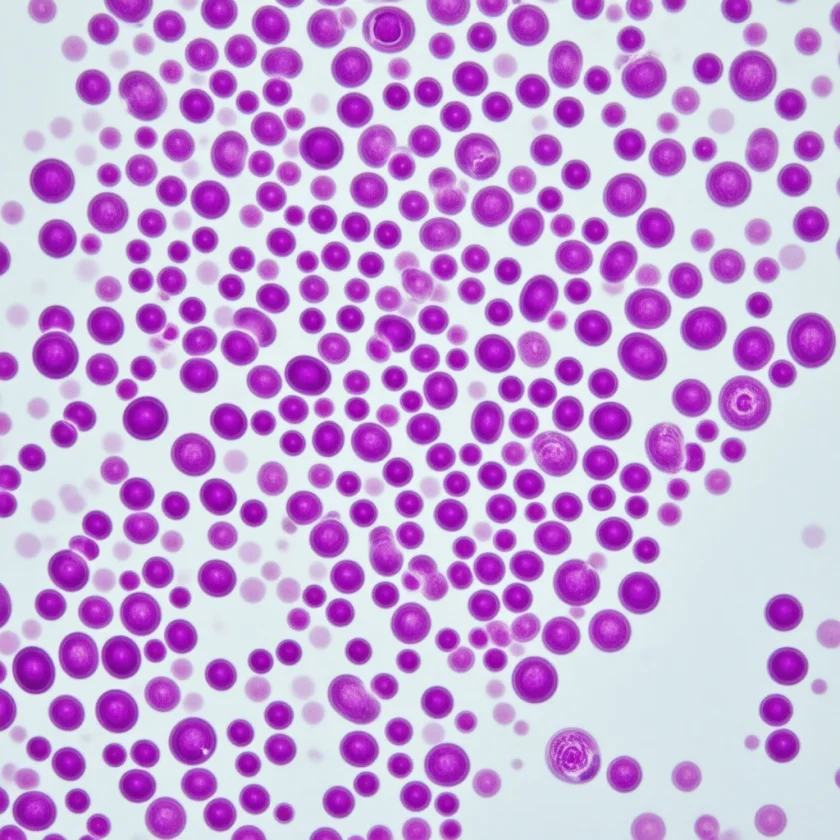
Staphylococcus aureus is a round, gram-positive bacterium that clusters together under a microscope in arrangements that look like bunches of grapes — the name comes from the Greek staphyle, meaning grape cluster. The species name aureus is Latin for "golden" and refers to the yellow-orange pigment many strains produce on lab agar plates.
Staph aureus is one of the most successful human pathogens partly because it is so common. Roughly 30% of people carry it persistently in their nostrils, while another 30% carry it intermittently. It also lives on the skin, throat, and other body surfaces without causing any symptoms at all. This harmless coexistence is called colonization. The problem begins when the bacteria get into places they do not belong — a cut, a surgical wound, the bloodstream, or deep tissue.
The same organism is responsible for a wide range of illness: a minor pimple on one end of the spectrum, and a life-threatening bloodstream infection on the other. Understanding this range is the first step in recognizing when a staph infection needs urgent attention.
How Staph Makes You Sick: Toxin-Mediated vs. Invasive Infections
Staph aureus causes disease by two fundamentally different strategies, and the symptoms depend entirely on which one is operating.
Toxin-mediated illness happens when the bacteria produce proteins called toxins that do the damage even if the bacteria themselves stay in one place — or are no longer alive. The classic examples are food poisoning (where you eat preformed toxin in contaminated food) and toxic shock syndrome (where a superantigen toxin triggers a runaway immune response). In these cases, standard antibiotics that kill bacteria may not stop the illness, because the toxins are already circulating.
Invasive infection happens when living bacteria break through the body's defenses and multiply in tissue, organs, or the bloodstream. This requires direct bacterial presence. The bacteria use a toolkit of surface proteins and enzymes to evade immune cells, destroy tissue, and spread. Treatment requires killing the bacteria with antibiotics — and the choice of antibiotic depends critically on whether the strain is MRSA (methicillin-resistant) or not.
Many serious infections involve both mechanisms at once. For instance, necrotizing fasciitis caused by staph can involve direct tissue destruction by the bacteria and simultaneous toxin release that accelerates the damage.
Skin and Soft Tissue Infections
Skin infections are by far the most common way staph aureus causes trouble, and most of them start when a small break in the skin allows bacteria from the skin surface or nasal passages to enter the underlying tissue.
- Folliculitis: Infection of a hair follicle. Appears as a small red pimple with a white center around a hair. Usually mild and heals on its own, but can spread if squeezed.
- Furuncle (boil): A deeper infection of the follicle that forms a painful, pus-filled lump. The surrounding skin becomes red, warm, and swollen. Many boils come to a head and drain on their own; larger ones need drainage by a clinician. Never squeeze a boil on the face — the veins around the nose and lips drain toward the brain, and squeezing can drive bacteria inward.
- Carbuncle: A cluster of interconnected boils beneath the skin, creating a larger, deeper abscess with multiple draining points. More painful and more likely to cause fever and systemic symptoms than a single boil.
- Abscess: A pocket of pus in the skin or deeper tissue. Feels fluctuant (fluid-filled and movable) under pressure. Nearly always requires incision and drainage; antibiotics alone do not reliably cure an abscess because the pus cavity has no blood supply to carry the drug to the bacteria.
- Cellulitis: Spreading infection of the skin and the tissue just below it. Unlike an abscess, there is no central pocket of pus. The skin becomes red, warm, tender, and swollen, and the redness typically spreads outward. Fever and chills may accompany severe cases. Cellulitis needs antibiotic treatment.
- Impetigo: A superficial skin infection most common in young children. Starts as small blisters that rupture and leave a characteristic honey-colored crust. Highly contagious by direct contact. Caused by staph, or by streptococcus, or both together.
Community-associated MRSA (CA-MRSA) has become a leading cause of skin abscesses in the United States since the early 2000s. The USA300 strain — the dominant CA-MRSA clone — is particularly good at causing skin and soft tissue infections and can spread person-to-person in households, locker rooms, and sports teams.
Search PubMed — Moran GJ et al. Methicillin-resistant S. aureus infections among patients in the emergency department. N Engl J Med, 2006.
Invasive Disease Spectrum
When staph aureus enters the bloodstream or deep tissues, the consequences can be severe and rapidly life-threatening. Invasive disease can arise from an uncontrolled skin infection, a surgical wound, an intravenous line, or spread from another infected site.
Bacteremia (bloodstream infection): The presence of staph in the blood. Symptoms include high fever, chills, and feeling profoundly unwell. Bacteremia is serious on its own, but its main danger is seeding distant organs with bacteria — the bacteria circulate and land wherever the blood goes. Even a single positive blood culture for staph aureus always requires full evaluation and treatment; it is never safe to dismiss it as a contaminant.
Infective endocarditis: Staph aureus is the leading cause of acute bacterial endocarditis — infection of the heart valves. It progresses rapidly, within days rather than weeks. Fever, a new or changed heart murmur, and the classic embolic signs (small blood clots escaping from the infected valve) are hallmarks. Emboli can cause strokes, kidney infarcts, and the characteristic Janeway lesions (painless hemorrhagic spots on the palms and soles). Osler nodes (painful nodules on the fingertips) are also seen. Mortality remains 20–30% even with treatment.
Osteomyelitis: Bone infection. Staph is the most common cause. Presents as deep, aching bone pain, tenderness, fever, and swelling over the affected bone. Children most often develop it in the long bone growth plates (metaphyses); adults more often get it in the vertebrae (vertebral osteomyelitis), causing severe back pain.
Septic arthritis: Joint infection. The affected joint becomes swollen, red, exquisitely tender, and warm. Movement is severely restricted because fluid accumulates and the joint lining is inflamed. This is a medical emergency — cartilage is destroyed within hours to days.
Pneumonia: Staph pneumonia typically occurs after influenza ("post-influenza pneumonia") or in hospitalized patients on ventilators (ventilator-associated pneumonia). It is characterized by rapid onset, fever, cough, and areas of tissue destruction in the lung that appear as abscesses or cavities on imaging. Far more aggressive than typical community-acquired pneumonia.
Septic shock: When bacteremia triggers a systemic inflammatory response that causes dangerously low blood pressure, organ failure, and death without immediate treatment. Requires intensive care, aggressive fluid resuscitation, vasopressors, and early appropriate antibiotics.
Search PubMed — Tong SYC et al. Staphylococcus aureus infections: epidemiology, pathophysiology, clinical manifestations, and management. Clin Microbiol Rev, 2015.
PMID: 21208910 — Fowler VG et al. Endocarditis and intravascular infections. In: Mandell, Douglas, and Bennett's Principles and Practice of Infectious Diseases, 2010.
Toxic Shock Syndrome
Toxic shock syndrome (TSS) is caused by a toxin called TSST-1 (toxic shock syndrome toxin-1). TSST-1 is what is known as a superantigen — a protein that bypasses the normal, orderly immune response and instead forces massive numbers of T cells to activate all at once, releasing a flood of immune signaling molecules called cytokines. This cytokine storm causes the dramatic symptoms of TSS.
Menstrual TSS became widely publicized in the 1980s after it was linked to highly absorbent tampons. The tampons created an environment where staph could grow and produce TSST-1 in the vagina. It was not a tampon ingredient that caused TSS — it was the prolonged presence of a super-absorbent device that prevented normal fluid flow and provided ideal growth conditions for staph. The incidence dropped sharply after highly absorbent tampon products were withdrawn.
Non-menstrual TSS is now more common than menstrual TSS. It can follow surgical wounds, nasal packing (after sinus surgery), childbirth, skin infections, burns, and other conditions where staph aureus colonizes a wound.
Symptoms of toxic shock syndrome develop suddenly and include:
- High fever, often above 39°C (102°F)
- Sudden drop in blood pressure (hypotension, lightheadedness)
- A diffuse sunburn-like skin rash that covers most of the body
- Peeling of skin on palms and soles 1–2 weeks after onset
- Vomiting and diarrhea
- Muscle aches
- Confusion or altered consciousness
- Red mucous membranes (eyes, mouth, throat, vagina)
- Organ involvement: kidney failure, liver dysfunction, low platelet count
TSS is a medical emergency. Anyone with sudden high fever plus rash plus low blood pressure needs emergency care immediately.
Search PubMed — Hajjeh RA et al. Toxic shock syndrome in the United States: surveillance update 1979–1996. Emerg Infect Dis, 1999.
Search PubMed — Lappin E, Ferguson AJ. Gram-positive toxic shock syndromes. Lancet Infect Dis, 2009.
Staphylococcal Food Poisoning
Staph food poisoning is not caused by eating live bacteria — it is caused by eating toxins that the bacteria have already produced and left behind in the food. These toxins are proteins, and they are heat-stable: even if you fully cook contaminated food, killing all the bacteria, the toxins survive and will still make you sick. This is a key difference from most other foodborne illnesses.
How it happens: Someone handling food (often with a hand wound or active skin infection, or simply a carrier) transfers staph aureus to the food. The bacteria grow and produce staphylococcal enterotoxins — most commonly types A through E. Foods that sit at temperatures between 40°F and 140°F (4–60°C) for more than two hours are at particular risk. Classic culprits include potato salad, egg salad, cream pastries, deviled eggs, and sliced meats left at room temperature at picnics or buffets.
Symptoms appear quickly — usually within 1 to 6 hours of eating contaminated food, which is faster than most other foodborne illnesses. This rapid onset is a key diagnostic clue. Symptoms include:
- Sudden onset of nausea
- Severe vomiting (often the most prominent symptom)
- Abdominal cramps
- Diarrhea (may or may not be present)
- No fever in most cases (because this is a toxin effect, not a bacterial infection)
The illness is self-limiting. Most people recover within 24–48 hours without any treatment. Hydration is the main concern, especially in young children and elderly people who can become dehydrated quickly from vomiting. Antibiotics are useless because they don't neutralize preformed toxin.
Search PubMed — Hennekinne JA et al. Staphylococcus aureus and its food poisoning toxins: characterization and outbreak investigation tools. FEMS Microbiol Rev, 2012.
Search PubMed — Bergdoll MS. Staphylococcal food poisoning. In: Foodborne Diseases, 2002.
Hospital vs. Community Strains: HA-MRSA and CA-MRSA
MRSA — methicillin-resistant Staphylococcus aureus — is staph that has acquired resistance to most penicillin-class antibiotics, including methicillin, oxacillin, and the widely used amoxicillin and cephalosporins. The resistance is carried on a mobile genetic element called SCCmec that encodes an altered penicillin-binding protein (PBP2a) that the drug cannot effectively block.
There are two main populations of MRSA, and they behave differently:
Hospital-associated MRSA (HA-MRSA) emerged first, in hospitals in the 1960s and spread through healthcare settings. It tends to carry larger SCCmec elements (types I–III) and accumulates resistance to multiple antibiotic classes. It most commonly causes bloodstream infections, surgical site infections, and pneumonia in patients who have had surgery, are on dialysis, have indwelling catheters or other devices, or have prolonged hospital stays. HA-MRSA strains are often resistant to many drugs, limiting treatment options.
Community-associated MRSA (CA-MRSA) appeared unexpectedly in the 1990s in people with no healthcare exposure — athletes, children in daycare, inmates, and military recruits. The dominant US strain, called USA300, carries a smaller SCCmec element (type IV) and remains susceptible to more drug classes. USA300 is notable for producing Panton-Valentine leukocidin (PVL), a toxin that punches holes in white blood cells. PVL is associated with severe skin abscesses and necrotizing pneumonia. CA-MRSA spreads through skin-to-skin contact and sharing of contaminated items like towels, razors, and sports equipment.
The distinction matters clinically because CA-MRSA can still be treated with some oral antibiotics (trimethoprim-sulfamethoxazole, clindamycin, doxycycline), while HA-MRSA infections often require intravenous vancomycin or newer agents.
Search PubMed — Deleo FR et al. Community-associated methicillin-resistant Staphylococcus aureus. Lancet, 2010.
Search PubMed — Chambers HF, Deleo FR. Waves of resistance: Staphylococcus aureus in the antibiotic era. Nat Rev Microbiol, 2009.
Risk Factors for Invasive Staph Disease
Most healthy people can fight off staph skin infections on their own. Invasive, life-threatening staph disease is much more likely in people whose defenses are compromised in specific ways. Understanding these risk factors helps explain why some people get a boil and others end up in the ICU.
- Diabetes mellitus: Elevated blood sugar impairs the function of neutrophils — the white blood cells that are the first responders to bacterial invasion. Diabetic patients are at greatly increased risk for both skin infections (particularly on the feet) and invasive disease.
- Hemodialysis: Dialysis patients have the highest known rate of S. aureus bacteremia of any patient group. Every dialysis session involves puncturing skin to access a vascular line or fistula, creating a repeated entry point. Nasal carriage rates are also higher in dialysis patients.
- Intravenous drug use: Injection drug users introduce skin bacteria directly into the bloodstream. Staph endocarditis — particularly involving the tricuspid valve of the right heart — is a characteristic complication. The contaminated drug supply, non-sterile injection technique, and often-delayed medical care combine to create very high risk.
- Indwelling medical devices: Prosthetic heart valves, orthopedic implants (artificial hips, knees), pacemakers, central venous catheters, and urinary catheters all provide surfaces where bacteria can form a biofilm — a protective slime matrix that shields them from antibiotics and the immune system. Device-related infections are extremely difficult to cure without removing the device.
- Immunosuppression: Patients taking corticosteroids, chemotherapy, or drugs to prevent organ rejection have impaired immune responses and are at higher risk for all bacterial infections including staph.
- Skin breakdown: Burns, eczema, surgical wounds, pressure sores, and traumatic injuries all disrupt the skin barrier that normally keeps staph out. Burn patients in particular have extremely high rates of staph bacteremia.
- Recent surgery or hospitalization: Hospital stays bring exposure to resistant organisms, invasive procedures, and a patient population with other risk factors.
- Chronic skin conditions: Atopic dermatitis (eczema) is associated with very high rates of staph colonization on the skin — up to 90% compared to 5–30% in healthy people — and recurrent staph flares are a major problem in eczema management.
Search PubMed — Klevens RM et al. Invasive methicillin-resistant Staphylococcus aureus infections in the United States. JAMA, 2007.
Search PubMed — Thwaites GE et al. Clinical management of Staphylococcus aureus bacteraemia. Lancet Infect Dis, 2011.
Warning Signs and When to Seek Care Immediately
Many staph skin infections start small and can be managed at home with warm compresses and watchful waiting. But certain signs mean a trip to urgent care or the emergency room cannot wait.
Go to the emergency room immediately if any of these are present:
- High fever (above 38.5°C / 101.3°F) with a skin infection, wound, or recent procedure
- Red streaks spreading outward from a wound or infection (a sign of lymphangitis — infection tracking up the lymph channels)
- Rapid worsening of a skin infection despite 48 hours of oral antibiotics
- Severe pain that seems out of proportion to the visible wound (a hallmark of necrotizing fasciitis)
- Skin that is turning dark, gray, or black around an infection
- Sudden widespread rash (especially with fever and low blood pressure — possible toxic shock)
- Confusion, altered consciousness, or difficulty speaking
- Chills, shaking, very fast heartbeat, or feeling like you might pass out
- A wound that is not healing at all after one week, or that keeps returning to the same location
Call your doctor promptly (within 24 hours) if:
- You have a painful lump or abscess that may need drainage
- You have mild cellulitis (spreading redness) without fever
- You have a household member with recurrent boils (possible household transmission of CA-MRSA)
- You have a known risk factor (diabetes, dialysis, immunosuppression) and any new skin infection
Search PubMed — Stevens DL et al. Practice guidelines for the diagnosis and management of skin and soft tissue infections: 2014 update by the IDSA. Clin Infect Dis, 2014.
Key Research Papers
The following peer-reviewed publications form the evidence base for this page. All are indexed in PubMed.
- Tong SYC et al. Staphylococcus aureus infections: epidemiology, pathophysiology, clinical manifestations, and management. Clin Microbiol Rev, 2015. — PubMed PMID: 26016486
- Hajjeh RA et al. Surveillance for toxic shock syndrome in the United States, 1979–1996. Emerg Infect Dis, 1999. — Search PubMed
- Fowler VG et al. Staphylococcus aureus endocarditis. Chapter in Mandell, Douglas, and Bennett's Principles and Practice of Infectious Diseases, 2010. — PubMed PMID: 21208910
- Lappin E, Ferguson AJ. Gram-positive toxic shock syndromes. Lancet Infect Dis, 2009. — Search PubMed
- Moran GJ et al. Methicillin-resistant S. aureus infections among patients in the emergency department. N Engl J Med, 2006. — PubMed PMID: 16914702
- Hennekinne JA et al. Staphylococcus aureus and its food poisoning toxins: characterization and outbreak investigation tools. FEMS Microbiol Rev, 2012. — Search PubMed
- Deleo FR et al. Community-associated methicillin-resistant Staphylococcus aureus. Lancet, 2010. — Search PubMed
- Chambers HF, Deleo FR. Waves of resistance: Staphylococcus aureus in the antibiotic era. Nat Rev Microbiol, 2009. — PubMed PMID: 19680247
- Klevens RM et al. Invasive methicillin-resistant Staphylococcus aureus infections in the United States. JAMA, 2007. — Search PubMed
- Thwaites GE et al. Clinical management of Staphylococcus aureus bacteraemia. Lancet Infect Dis, 2011. — Search PubMed
- Stevens DL et al. Practice guidelines for the diagnosis and management of skin and soft tissue infections: 2014 update. Clin Infect Dis, 2014. — Search PubMed
- Bergdoll MS. Staphylococcal food poisoning. In: Foodborne Diseases, 2002. — Search PubMed