Sea Moss Mineral Density and Electrolytes
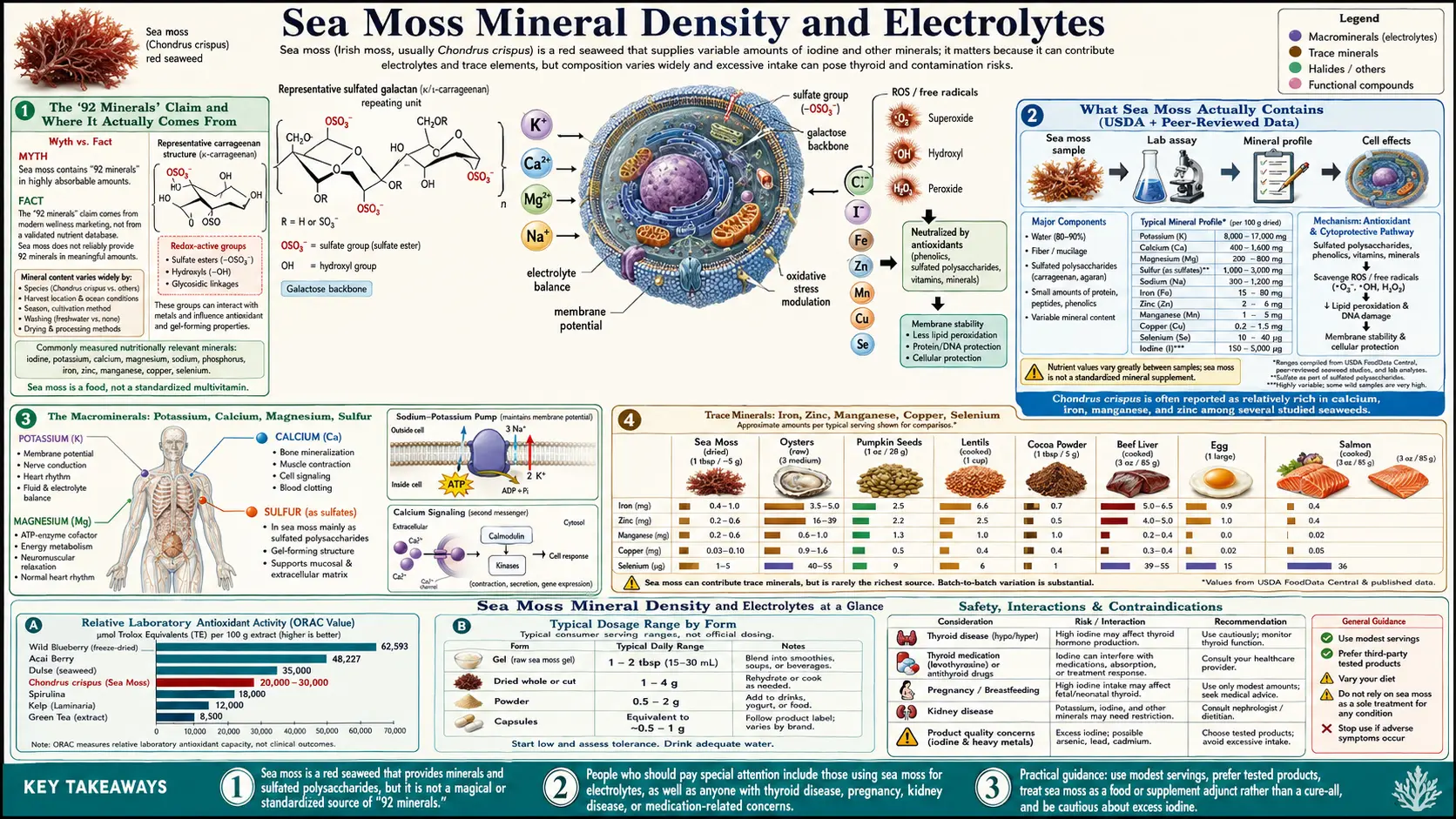
One of the most repeated claims about sea moss is that it "contains 92 of the 102 minerals the human body needs." The phrase appears on product labels, in social-media videos and in wellness articles. It has no scientific basis: no peer-reviewed analysis supports it, and no scientific source for the figure has been identified. What published laboratory analyses report for sea moss is a spread of macro- and trace minerals that varies widely by species, harvest site and processing — potassium, calcium, magnesium, sulfur and manganese prominent, measurable iron, zinc and copper, and iodine levels that range from low to very high. Seaweeds also take up toxic elements from their growing water; a 2020 food-safety review ranked arsenic, cadmium and iodine among the major hazards in seaweed. This page sets the "92 minerals" claim beside what USDA FoodData Central and the peer-reviewed seaweed literature report, compares sea moss to ordinary whole-food mineral sources, and describes the harvest-region, cultivation and processing variables that shape both the mineral content and the contaminant load of a given product.
Table of Contents
- The "92 Minerals" Claim and Where It Actually Comes From
- What Sea Moss Actually Contains (USDA + Peer-Reviewed Data)
- The Macrominerals: Potassium, Calcium, Magnesium, Sulfur
- Trace Minerals: Iron, Zinc, Manganese, Copper, Selenium
- Sea Moss as an Electrolyte Source: Real Numbers
- The Heavy-Metal Problem: Cadmium, Arsenic, Lead, Aluminum
- Wildcrafted vs Pool-Cultivated Sourcing
- Processing Methods and Bioavailability
- Comparison to Whole-Food Mineral Sources
- Sourcing and Testing: What Is Known
- Key Research Papers
- Connections
- Featured Videos
The "92 Minerals" Claim and Where It Actually Comes From
The same phrase recurs almost verbatim across online retailers, health-food stores and social-media videos: "Sea moss contains 92 of the 102 minerals that make up the human body." The number is repeated so widely that many readers assume it comes from a published analysis. It does not. No peer-reviewed paper, USDA dataset, government laboratory or academic phycology reference supports the figure, and its origin is not documented in any scientific source; it circulates through product copy, reseller listings and social media.
The claim has two separate problems. First, there is no recognized list of "102 minerals the human body needs." The National Academies (formerly the Institute of Medicine) set dietary reference intakes for 15 mineral elements — calcium, phosphorus, magnesium, potassium, sodium, chloride, iron, zinc, copper, manganese, iodine, selenium, molybdenum, chromium and fluoride — and reviewed arsenic, boron, nickel, silicon and vanadium without establishing a requirement for them. Nothing in recognized human nutrition approaches 102. Second, published seaweed analyses do not report 92 nutritionally meaningful minerals. Multi-element methods (ICP-MS, ICP-OES, atomic absorption, X-ray fluorescence) can detect many elements, but the panels reported in seaweed studies typically cover roughly a dozen to a few dozen — an Italian study of 14 edible seaweeds, for example, measured 21 elements, including the macrominerals, essential trace elements and contaminants such as arsenic, cadmium, lead and aluminum.
Sea moss does, like most marine algae, accumulate elements broadly from seawater because every element dissolved in the ocean is at least potentially present. But "potentially present at parts-per-trillion" is not the same as "a meaningful dietary source." The laboratory data summarized below describe a food with a real but variable mineral content, and marketing claims that go well beyond those data.
What Sea Moss Actually Contains (USDA + Peer-Reviewed Data)
The USDA FoodData Central entry for "Seaweed, irishmoss, raw" (FDC ID 168456, derived from older USDA Standard Reference data) reports the per-100-gram nutrient profile shown below. These numbers are for the raw alga, which USDA lists as 81% water. Sea moss gel is made by soaking and blending dried alga with added water, so a spoonful of gel contains less alga than the same weight of raw seaweed; the per-serving figures on this page, calculated for 30 grams of raw alga, overstate what the same weight of gel provides.
Per 100 g raw Chondrus crispus, USDA FoodData Central:
- Calcium — 72 mg (7% of the 1,000 mg RDA)
- Iron — 8.9 mg (49% of the 18 mg RDA for premenopausal women)
- Magnesium — 144 mg (34% of the 420 mg RDA for men)
- Phosphorus — 157 mg (22% of the 700 mg RDA)
- Potassium — 63 mg (2% of the 3,400 mg adequate intake for men set in 2019) — note: this USDA number is much lower than other analyses; dry-weight values compiled in a 2018 review of minerals in European edible seaweeds range from about 1,000 to 3,300 mg per 100 g dry weight
- Sodium — 67 mg (3% of the 2,300 mg upper limit)
- Zinc — 1.95 mg (18% of the 11 mg RDA for men)
- Copper — 0.149 mg (17% of the 900 mcg RDA)
- Manganese — 0.37 mg (16% of the 2.3 mg adequate intake for men)
- Selenium — 0.7 mcg (1% of the 55 mcg RDA) — trace
- Iodine — not reported in the USDA profile; published values for Chondrus crispus differ widely — a Spanish analysis of Irish moss found an average of 3.86 mg per kg dry weight (about 4 mcg per gram), data compiled in the 2018 review imply levels more than a hundred times higher, and across commonly eaten seaweeds iodine has been measured from 16 to over 8,000 mcg per gram (see Thyroid and Iodine page)
The peer-reviewed literature adds elements that USDA does not tabulate — notably sulfur, part of the sulfated carrageenan polysaccharide (the Italian analysis of 14 edible seaweeds found the highest sulfur content in Chondrus crispus), and molybdenum at trace levels. Scaled from the USDA figures, 30 grams of raw alga supplies roughly:
- Magnesium: 40 to 50 mg (about 10% daily value)
- Iron: 2 to 3 mg (about 15% of the RDA for premenopausal women)
- Calcium: 20 to 25 mg (about 2% daily value)
- Potassium: about 20 mg on the USDA figure; on the dry-weight values from the 2018 review, the same amount of alga (about 5.6 grams dry) would hold roughly 55 to 185 mg
- Zinc: 0.5 to 0.6 mg (about 5% daily value)
- Iodine: highly variable — published values for the same species differ more than a hundredfold, making iodine one of the most variable elements in the profile
This is a modest mineral contribution, in the range of other plant foods eaten in similar amounts. Iodine stands apart because its level is so variable, and toxic elements such as arsenic and cadmium are the main safety findings in the seaweed literature.
The Macrominerals: Potassium, Calcium, Magnesium, Sulfur
The four macrominerals delivered in meaningful amounts by sea moss are potassium, calcium, magnesium, and sulfur. None of these are unique to sea moss — all are widely available from ordinary whole foods — and sea moss adds modest amounts as part of a varied diet.
Potassium is the dominant intracellular cation, required for nerve impulse transmission, muscle contraction (including cardiac), and blood pressure regulation. The adequate intake set by the National Academies in 2019 is 3,400 mg per day for men and 2,600 mg for women. Dry-weight analyses compiled in the 2018 review put potassium in Chondrus crispus at roughly 1,000 to 3,300 mg per 100 g dry weight, which works out to about 55 to 185 mg in 30 grams of raw alga — well below a single banana (about 420 mg), an avocado (about 700 mg), or a cup of cooked spinach (about 840 mg). The USDA entry shows a much lower 63 mg per 100 g raw; the gap between the two sources is unexplained and may reflect differences between samples.
Calcium at 72 mg per 100 g raw is modest by any standard — 100 grams of yogurt provides roughly 110 mg, a cup of fortified plant milk 300 mg, a handful of almonds 75 mg. Calcium absorption from sea moss has not been formally measured; the 2018 review notes that anionic polysaccharides such as carrageenan can form insoluble complexes with minerals and reduce their bioavailability, and that one unusually high calcium value reported for Chondrus crispus (54 g per kg dry weight) may reflect calcareous organisms growing on the samples rather than the alga itself.
Magnesium at 144 mg per 100 g raw is sea moss's strongest macromineral claim — 30 grams of raw alga provides roughly 40 to 50 mg, or about 10% of the daily requirement. This is comparable to a half-cup of cooked black beans (60 mg), a cup of brown rice (84 mg), or a small piece of dark chocolate (50 mg). Magnesium is required for over 300 enzymatic reactions including ATP production, DNA synthesis, neuromuscular transmission, and vasodilation; dietary surveys find that many American adults take in less than the RDA of 400 to 420 mg for men. Magnesium is covered in depth on the magnesium page.
Sulfur is structurally abundant in sea moss because its dominant polysaccharide is carrageenan, a sulfated galactan; the Italian analysis of 14 edible seaweeds found the highest sulfur content in Chondrus crispus. Whether this sulfate is nutritionally useful is not established — carrageenan is largely indigestible to human enzymes, so most of it reaches the colon, where some of the sulfate can be liberated by microbial sulfatases. Whether this contributes to host sulfur status (relevant to glutathione synthesis, glycosaminoglycan production, and methylation chemistry) or simply increases colonic hydrogen sulfide is not established.
Trace Minerals: Iron, Zinc, Manganese, Copper, Selenium
The trace minerals in sea moss tell a similar story — modest and variable content, with iron the largest contributor on the USDA figures, manganese high in some other analyses, and little selenium on the USDA figures.
Iron at 8.9 mg per 100 g raw is high in absolute terms on the USDA figures, though published values vary more than twentyfold between samples (22 to 490 mg per kg dry weight in the data compiled in the 2018 review). Thirty grams of raw alga holds roughly 2.7 mg of iron on the USDA figure, about 15% of the RDA for premenopausal women. The form is non-heme iron (the form present in all plant sources), which is absorbed less efficiently than heme iron from animal foods. Vitamin C eaten at the same meal increases non-heme iron absorption; calcium, tannins from tea, and phytates reduce it. For the broader iron-status conversation see the iron page.
Zinc at 1.95 mg per 100 g raw provides about 0.6 mg in 30 grams of raw alga, or 5 to 8% of the daily requirement — a small contribution beside other plant zinc sources (pumpkin seeds, hemp seeds, chickpeas). Zinc absorption from sea moss has not been formally tested.
Manganese at 0.37 mg per 100 g raw on the USDA figure is about 5% of the 1.8 to 2.3 mg/day adequate intake in 30 grams of raw alga. Other analyses report far more: the 2018 review lists Chondrus crispus among the red seaweeds with the highest manganese content, with an 8-gram dry serving supplying on average about 72% of the RDA in its compiled data. Manganese is required for the antioxidant enzyme manganese-superoxide dismutase (MnSOD), bone formation, and carbohydrate metabolism. Manganese deficiency is rare.
Copper at 0.149 mg per 100 g raw delivers about 0.045 mg in 30 grams of raw alga, or 5% of the 900 mcg RDA. Copper is required for ceruloplasmin, lysyl oxidase (collagen and elastin cross-linking), cytochrome c oxidase, and superoxide dismutase. Dietary copper from whole foods, a theme in Morley Robbins's work, is covered on the whole-food copper sources page.
Selenium at 0.7 mcg per 100 g raw makes sea moss a negligible selenium source on the USDA figure; a Danish analysis compiled in the 2018 review reported a higher 0.6 mg per kg dry weight, which still leaves a serving far below Brazil nuts or marine fish. A single Brazil nut delivers roughly 60 to 90 mcg of selenium; 30 grams of raw sea moss delivers about 0.2 mcg on the USDA figure. Selenium is the cofactor for the deiodinase enzymes that convert T4 to active T3 and for glutathione peroxidase, and sea moss is widely marketed for thyroid support while supplying iodine with little selenium. See the selenium page.
Sea Moss as an Electrolyte Source: Real Numbers
The four ionic species that together constitute "electrolytes" in physiological terms are sodium (Na+), potassium (K+), calcium (Ca2+), and magnesium (Mg2+), with chloride (Cl-) as the dominant anion. The functional role of an electrolyte drink — whether commercial or homemade — is to deliver ionic species that maintain extracellular fluid volume, cellular membrane potentials, neuromuscular function, and cardiac rhythm during exercise, illness, or fluid losses.
Thirty grams of raw alga contributes, per the figures above:
- Sodium: about 20 mg
- Potassium: about 20 mg (USDA) to roughly 55 to 185 mg (dry-weight literature)
- Calcium: 20 to 25 mg
- Magnesium: 40 to 50 mg
For comparison, a single banana delivers about 420 mg potassium, and 100 grams of coconut water (a little under half a cup) about 250 mg potassium and 105 mg sodium (USDA). Thirty grams of raw sea moss falls well below a banana on potassium, supplies a moderate amount of magnesium, and is low in sodium.
Sea moss supplies some magnesium and a little potassium, but it is not formulated for electrolyte replacement in an athlete losing sweat sodium, a person with acute gastroenteritis losing fluid to vomiting and diarrhea, or someone on a low-carbohydrate diet with the classic sodium-depletion symptoms (lightheadedness, fatigue, muscle cramps, headache). Oral rehydration solutions such as the WHO/UNICEF formula, which contain measured amounts of sodium, potassium and glucose, are designed for acute fluid losses.
The marketing of sea moss as a "natural electrolyte drink" conflates two things — the general value of dietary potassium and magnesium, and the specific situation in which a measured electrolyte solution is used. Sea moss is a modest dietary source of these minerals; it is not designed for replacing acute fluid losses.
The Heavy-Metal Problem: Cadmium, Arsenic, Lead, Aluminum
The same uptake that lets seaweeds gather minerals from seawater also lets them accumulate toxic elements. The 2018 review describes how anionic groups in algal cell walls bind metal cations: the alginates and sulfated polysaccharides of brown algae are the most effective, while the agar and carrageenan of red algae, including sea moss, carry sulfate and hydroxyl groups that also bind cations, less strongly. For iron and zinc this is a nutritional feature. For cadmium, inorganic arsenic, lead, and aluminum it is a liability.
Cadmium is one of the most consistent contamination findings in seaweed; a 2020 review ranked it among the four major food-safety hazards in the European seaweed chain. The European Food Safety Authority (EFSA) 2009 Scientific Opinion on cadmium set a tolerable weekly intake of 2.5 mcg per kg body weight per week (about 25 mcg per day for a 70-kg adult). Data compiled in the 2018 review put cadmium in Chondrus crispus at 0.3 to 1 mg per kg dry weight; across 112 seaweed products sold in Spain, cadmium ranged up to 3.55 mg/kg. At 1 mg/kg, a 4-gram dry portion (the daily amount used in a 2020 Irish moss risk assessment) supplies about 4 mcg of cadmium, around 16% of that daily equivalent; at 3.55 mg/kg it supplies about 14 mcg, more than half. Cadmium accumulates in the kidney cortex, where its biological half-life is 10 to 30 years, and chronic exposure is linked to renal proximal tubular dysfunction.
Arsenic in seaweed exists in both inorganic (toxic) and organic (arsenobetaine, arsenosugars, generally non-toxic) forms. Data compiled in the 2018 review put total arsenic in Chondrus crispus at 4 to 26 mg per kg dry weight, with inorganic arsenic around 0.2 mg/kg; some other species carry far more — in the Spanish survey, every sample of hijiki (Hizikia fusiforme) exceeded the inorganic-arsenic limit set in some countries. Inorganic arsenic is a recognized human carcinogen, associated with bladder, lung, and skin cancers at chronic doses. The EFSA-derived benchmark dose lower confidence limit for inorganic arsenic-associated cancer (BMDL01) is 0.3 to 8 mcg per kg body weight per day, a range low enough that EFSA could not exclude a risk for some consumers. For more detail see the arsenic toxin page.
Lead contamination is variable and primarily a function of harvest region — a 2020 review found that seaweed grown near industrial or other human activity is more likely to carry contaminants. Data compiled in the 2018 review put lead in Chondrus crispus at 0.1 to 5 mg per kg dry weight, and seaweed products sold in Spain ranged up to 12.1 mg/kg. For reference, the FDA guidance level for lead in candy likely to be eaten by small children is 0.1 ppm.
Aluminum accumulates in some seaweeds; data compiled in the 2018 review put it at 8 to 120 mg per kg dry weight in Chondrus crispus. Aluminum has no known nutritional role, and chronic exposure has been associated (with debate) with neurological and bone disease.
The 2020 Banach et al. review in Comprehensive Reviews in Food Science and Food Safety ranked 22 food-safety hazards in the European seaweed chain and identified arsenic, cadmium, iodine and Salmonella as the major ones; it found that hazard levels depend on seaweed type, season, harvest and cultivation environment and processing. A 2006 survey of 112 seaweed products sold in Spain estimated that eating 3 grams a day could supply up to 15% of the WHO tolerable daily intakes for these contaminants. A 2026 analysis of 66 sea moss products bought from major US online retailers detected arsenic, cobalt and mercury in the dried products; in the gels, arsenic and cobalt were below detection limits and mercury was found at trace levels. No study identified for this page has measured long-term heavy-metal exposure in people who eat sea moss daily.
Wildcrafted vs Pool-Cultivated Sourcing
Sea moss in commerce comes from two fundamentally different production methods that produce different mineral profiles, different contamination risks, and different ecological footprints.
Wildcrafted Atlantic Chondrus crispus is harvested from cold North Atlantic rocky coastal zones, primarily in Ireland, Canada (Prince Edward Island, Nova Scotia), Maine, and parts of northern France. The alga grows attached to rocks in the intertidal and shallow subtidal zones, and is harvested by rake or by hand-cutting at low tide. This is the "true Irish moss" of historical Irish cuisine (used as a thickening agent in flummeries and milk-based puddings). Its mineral and iodine content varies with location and season, and its heavy-metal content reflects the water it grows in, including any local industrial history.
Pool-cultivated Eucheuma cottonii (the trade name for Kappaphycus alvarezii) is grown in tropical and subtropical coastal farms, primarily in the Philippines, Indonesia, Tanzania (Zanzibar), and the Caribbean (St. Lucia, Jamaica). Seedling fragments are tied to long lines anchored in shallow protected bays and harvested after several weeks of growth. This warm-water alga is a major commercial source of the carrageenan used as a food additive (E407) and is widely sold as consumer sea moss; products sold as sea moss may also be Gracilaria species. Its iodine and mineral profile differs from that of Atlantic Chondrus crispus, and its heavy-metal content depends on the specific farm location and water quality.
Labels such as "wildcrafted Caribbean sea moss" describe an origin and a harvest method; the studies reviewed for this page did not test such label claims, and the amount of traceability information varies between sellers.
What the sourcing literature describes:
- Species and harvest region — mineral and iodine levels in seaweed vary with species, environmental conditions and geographic location; cold-water and warm-water sea moss are different algae with different profiles
- Water quality — a 2020 review found that seaweed cultivated near industrial or other human activity is more likely to carry contaminants
- Certificates of Analysis (COA) — some suppliers publish third-party laboratory results for cadmium, inorganic arsenic, lead, and sometimes mercury and aluminum; without batch-specific testing, the contaminant level of a particular product is unknown
- Single-source consumption — eating one supplier's product daily for years repeats the same harvest region's contaminant profile with every serving
Processing Methods and Bioavailability
The way sea moss is processed between harvest and consumption affects mineral content, bioavailability, and contamination risk in several ways.
Sun-drying versus oven-drying — traditional Atlantic harvest involves spreading the freshly cut alga on rocks or racks in the sun for several days, with periodic turning. Sun-dried product retains pigments and tends to be greenish-gold to purple. Industrial product is sometimes oven-dried at higher temperatures, which can degrade some heat-sensitive compounds (vitamin C, some phenolics); minerals do not evaporate, although iodine is water-soluble and may vaporize in humid storage conditions, according to a 2004 iodine study.
Bleaching — some product is sold as pale yellow-white "golden sea moss", lighter than the greenish-gold, purple or brown colour of unbleached alga (which varies with species and growing conditions). The studies reviewed for this page did not measure how bleaching affects mineral content or what residues it leaves.
Salting — most commercial sea moss arrives heavily salted, both as a preservation strategy and as a by-product of harvest from seawater. Preparation instructions commonly call for rinsing in several changes of fresh water before making gel; without thorough rinsing, the gel carries extra sodium, which changes its low-sodium profile.
Soaking and rinsing — the standard sea moss gel preparation soaks the dried alga in cool water for many hours, then rinses and blends. The soaking step rehydrates the carrageenan polysaccharide and leaches some surface material. Some iodine and other water-soluble elements also pass into the water: a 2021 study of four seaweeds found that rehydration and boiling released iodine, sodium, potassium, selenium and arsenic, with Chondrus crispus losing less iodine and arsenic than the kelps tested. Leaching of this kind is one reason iodine content varies between batches of the same dried product.
Heat preparation — some people boil sea moss before blending; others prefer cold preparation. Boiling releases further iodine into the cooking water and can degrade some heat-sensitive bioactive compounds. Cold preparation does not eliminate microbial contamination: a 2026 analysis of 66 sea moss products bought from US online retailers recovered presumptive Bacillus and Staphylococcus from both dried products and gels, with Escherichia, Salmonella, Listeria and Vibrio detected less often; sequencing identified Salmonella and Cronobacter among the isolates, but not Listeria or Vibrio.
Capsule and powder products — finely ground dried sea moss in capsules carries the same mineral and contaminant concentration per gram as the source alga. A 500 mg capsule holds one-eighth of the 4-gram dry portion used in the risk assessment above, so total exposure scales with the number of capsules taken each day.
Bioavailability of the mineral content has not been formally quantified in clinical studies. The 2018 review reports that anionic polysaccharides such as carrageenan can form insoluble complexes with minerals and reduce their bioavailability, and that iodine from seaweed is highly bioaccessible but appears to have low bioavailability, unlike sodium, potassium and iron. The general findings on plant mineral absorption — vitamin C increases non-heme iron absorption, while calcium and tea reduce iron and zinc absorption — apply here as for other plant sources.
Comparison to Whole-Food Mineral Sources
Set against ordinary whole foods on a per-serving basis, sea moss is a respectable contributor but not a category leader for any single mineral except iodine. The table-style comparison below shows typical contributions of one serving of sea moss against more familiar food sources:
- Magnesium per serving — sea moss (30 g raw) 40-50 mg; pumpkin seeds (1 oz) 168 mg; cooked spinach (1 cup) 157 mg; almonds (1 oz) 80 mg; dark chocolate (1 oz) 64 mg; black beans (half cup cooked) 60 mg; sea moss is one of the lower-density options on this list
- Iron per serving — sea moss (30 g raw) about 2.7 mg; cooked lentils (half cup) 3.3 mg; pumpkin seeds (1 oz) 2.5 mg; cooked spinach (1 cup) 6.4 mg; beef (3 oz) 2.1 mg (heme iron, higher bioavailability); sea moss is comparable to the plant sources listed, all of which supply non-heme iron
- Potassium per serving — sea moss (30 g raw) about 20 mg (USDA) to 55-185 mg (dry-weight literature); banana 420 mg; potato with skin 925 mg; avocado 700 mg; coconut water (1 cup) about 600 mg; sea moss is well below a banana
- Calcium per serving — sea moss 20-25 mg; yogurt (1 cup) 300 mg; fortified plant milk (1 cup) 300 mg; sardines with bones (3 oz) 325 mg; sea moss is a minor contributor
- Zinc per serving — sea moss 0.5-0.6 mg; oysters (3 oz) 32 mg; pumpkin seeds (1 oz) 2.2 mg; beef (3 oz) 5.3 mg; sea moss is a minor contributor
- Selenium per serving — sea moss 0.2 mcg; 1 Brazil nut 60-90 mcg; tuna (3 oz) 92 mcg; sardines (3 oz) 45 mcg; sea moss is essentially not a selenium source
- Iodine per serving — sea moss highly variable (published values for the same species differ more than a hundredfold); dairy milk (1 cup) 85 mcg; cod (3 oz) 99 mcg; iodized salt (1.5 g, about ¼ teaspoon) 76 mcg; among commonly eaten seaweeds, the highest iodine levels have been measured in kelp
In summary, sea moss contributes modest amounts of several minerals, with iron and magnesium the largest on the USDA figures and iodine the most variable. The "92 minerals" marketing framing significantly overstates this. A varied diet of whole foods — dark leafy greens, legumes, nuts and seeds, dairy or fortified alternatives, and iodized salt or seafood — supplies the same minerals, many of them in larger amounts per serving.
Sourcing and Testing: What Is Known
For people who include sea moss in their diet regularly, the factors that the seaweed-safety literature links to higher or lower exposure are:
- Whole dried alga versus capsules. Whole dried product can be inspected for species, condition and bleaching, and the rinsing step before gel preparation removes residual salt and some surface material. Capsules contain ground alga at the same contaminant concentration per gram, so exposure scales with the number taken.
- Certificates of Analysis (COA). Some suppliers publish or provide third-party laboratory results covering cadmium, inorganic arsenic, lead, mercury, and sometimes aluminum. Without such testing, the contaminant level of a given batch is unknown.
- Iodine content disclosure. Published iodine values for the same species differ more than a hundredfold, so a stated iodine figure per gram or per serving is the only way to know a product's iodine load — the iodine evidence is covered on the Thyroid and Iodine page.
- Rinsing before preparation. Preparation instructions commonly call for several changes of cool fresh water until the soaking water runs clear, which reduces residual sea salt and surface material.
- Supplier and harvest region. Daily long-term consumption from a single source repeats that source's contaminant profile; consumption spread across suppliers and regions does not repeat any one region's profile day after day.
- Amount eaten. Product labels commonly list one to two tablespoons of prepared gel per day; iodine and contaminant exposure rise in proportion to the amount eaten. In the 2020 Irish moss risk assessment, 4 grams of dried alga per day did not pose an iodine risk for the samples tested, while about 286 grams a day would have exceeded the adult upper limit.
- Markers used in research. Urinary iodine concentration is the standard measure of population iodine status, and urinary beta-2-microglobulin, a marker of kidney tubular function, was the endpoint EFSA used to set its cadmium intake limit.
- Groups the research raises concerns for. The NIH LactMed database reports that excess iodine from maternal seaweed consumption has caused thyroid suppression in breastfed infants, and it advises against sea moss during breastfeeding unless its iodine and heavy-metal levels have been shown to be low. The research also raises concerns for pregnant women, young children, people with chronic kidney disease (the kidney is where cadmium accumulates), and people with autoimmune thyroid disease, in whom excess iodine can trigger thyroid dysfunction. Decisions about supplements in these situations belong with a clinician.
Key Research Papers
- Circuncisão AR, Catarino MD, Cardoso SM, Silva AMS (2018). Minerals from macroalgae origin: health benefits and risks for consumers. Marine Drugs 16(11):400. — PubMed PMID: 30360515
- Banach JL, Hoek-van den Hil EF, van der Fels-Klerx HJ (2020). Food safety hazards in the European seaweed chain. Comprehensive Reviews in Food Science and Food Safety 19(2):332-364. — PubMed PMID: 33325177
- Roleda MY et al. (2019). Variations in polyphenol and heavy metal contents of wild-harvested and cultivated seaweed bulk biomass: health risk assessment and implication for food applications. Food Control 95:121-134. — doi:10.1016/j.foodcont.2018.07.031
- Almela C, Clemente MJ, Vélez D, Montoro R (2006). Total arsenic, inorganic arsenic, lead and cadmium contents in edible seaweed sold in Spain. Food and Chemical Toxicology 44(11):1901-1908. — PubMed PMID: 16901603
- Mac Monagail M et al. (2017). Sustainable harvesting of wild seaweed resources. European Journal of Phycology 52:371-390. — doi:10.1080/09670262.2017.1365273
- Holdt SL, Kraan S (2011). Bioactive compounds in seaweed: functional food applications and legislation. Journal of Applied Phycology 23:543-597. — doi:10.1007/s10811-010-9632-5
- Teas J, Pino S, Critchley A, Braverman LE (2004). Variability of iodine content in common commercially available edible seaweeds. Thyroid 14(10):836-841. — PubMed PMID: 15588380
- Hwang YO, Park SG, Park GY, Choi SM, Kim MY (2010). Total arsenic, mercury, lead, and cadmium contents in edible dried seaweed in Korea. Food Additives & Contaminants: Part B 3(1):7-13. — PubMed PMID: 24785310
- Desideri D, Cantaluppi C, Ceccotto F, Meli MA, Roselli C, Feduzi L (2016). Essential and toxic elements in seaweeds for human consumption. Journal of Toxicology and Environmental Health, Part A 79(3):112-122. — PubMed PMID: 26817952
- European Food Safety Authority (EFSA) (2009). Cadmium in food: Scientific Opinion of the Panel on Contaminants in the Food Chain. EFSA Journal 7(3):980. — doi:10.2903/j.efsa.2009.980
- EFSA Panel on Contaminants in the Food Chain (2009). Scientific Opinion on arsenic in food. EFSA Journal 7(10):1351. — doi:10.2903/j.efsa.2009.1351
- Pereira L (2011). A review of the nutrient composition of selected edible seaweeds. Seaweed: Ecology, Nutrient Composition and Medicinal Uses. — PubMed
- MacArtain P, Gill CI, Brooks M, Campbell R, Rowland IR (2007). Nutritional value of edible seaweeds. Nutrition Reviews 65(12):535-543. — PubMed PMID: 18236692
- Lozano Muñoz I, Díaz NF (2022; online 2020). Minerals in edible seaweed: health benefits and food safety issues. Critical Reviews in Food Science and Nutrition 62(6):1592-1607. — PubMed PMID: 33203217
- Darias-Rosales J, Rubio C, Gutiérrez ÁJ, Paz S, Hardisson A (2020). Risk assessment of iodine intake from the consumption of red seaweeds (Palmaria palmata and Chondrus crispus). Environmental Science and Pollution Research International 27(36):45737-45741. — PubMed PMID: 32803579
- Correia H, Soares C, Morais S, et al. (2021). Seaweeds rehydration and boiling: impact on iodine, sodium, potassium, selenium, and total arsenic contents and health benefits for consumption. Food and Chemical Toxicology 155:112385. — PubMed PMID: 34237393
- Rejuso A, Çobo M, Curran JE, et al. (2026). Microbial and heavy metal analyses of commercially available sea moss and sea moss products. Journal of Food Protection 89(11):100915. — PubMed PMID: 42710593
- Drugs and Lactation Database (LactMed) (2026). Sea Moss. National Institute of Child Health and Human Development. — PubMed PMID: 41730053
PubMed Topic Searches
Connections
- Sea Moss Overview
- Sea Moss Benefits Hub
- Sea Moss for Thyroid and Iodine
- Sea Moss for Skin and Collagen
- Sea Moss for Gut Health
- Magnesium
- Potassium
- Calcium
- Iron
- Zinc
- Selenium
- Iodine
- Copper
- Arsenic (Heavy Metal Contaminant)
- Cadmium (Heavy Metal Contaminant)
- Lead (Heavy Metal Contaminant)
- Whole-Food Copper Sources
- Chlorella
- Spirulina
- History