⚠ Evidence warning: Clinical trials or other evidence do not support the claims that one arsenic trial is strong clinical evidence that spirulina chelates metals, and that relapse after stopping it supports a direct effect on oral leukoplakia. This page keeps it as a report of what people, websites or other media say.
Spirulina: A Nutrient-Dense Cyanobacterium
Table of Contents
- What Is Spirulina
- Extraordinary Nutrient Profile
- Phycocyanin: The Blue Pigment Powerhouse
- B Vitamins and Iron Content
- Heavy Metal Detoxification
- Immune System Modulation
- Allergy and Histamine Reduction
- Cardiovascular Benefits
- Blood Sugar Regulation
- Anti-Cancer Research
- Exercise Performance and Endurance
- NASA Research for Space Nutrition
- Spirulina Quality and Contamination
- Doses Used in Research
- Cautions and Contraindications
- Key Research Papers
- Connections
- Featured Videos
What Is Spirulina
Spirulina is a blue-green microorganism classified as a cyanobacterium, one of the oldest life forms on Earth, dating back approximately 3.5 billion years. Despite being commonly referred to as an algae, spirulina is technically a photosynthetic bacterium that thrives in warm, alkaline freshwater lakes and ponds. The two primary species used in supplementation are Arthrospira platensis and Arthrospira maxima.
Naturopathic practitioners describe spirulina as one of the most complete whole foods available in nature. Ancient civilizations used it long before modern science studied it. The Aztecs harvested spirulina from Lake Texcoco in Mexico, calling it tecuitlatl, and it served as a primary protein source for their warriors. Similarly, the Kanembu people near Lake Chad in Africa have consumed spirulina for centuries, drying it into cakes called dihe.
What makes spirulina remarkable from a therapeutic standpoint is the extraordinary concentration of bioavailable nutrients packed into its microscopic spiral-shaped filaments. Unlike many supplements that deliver isolated compounds, spirulina provides a synergistic matrix of proteins, vitamins, minerals, essential fatty acids, and unique phytochemicals that work together to support virtually every system in the human body.
Spirulina grows rapidly, doubling its biomass every two to five days under optimal conditions, and it can be cultivated sustainably with minimal environmental impact. It requires far less water and land than conventional protein crops, making it not only a personal health asset but also a promising solution for global nutrition challenges.
Extraordinary Nutrient Profile
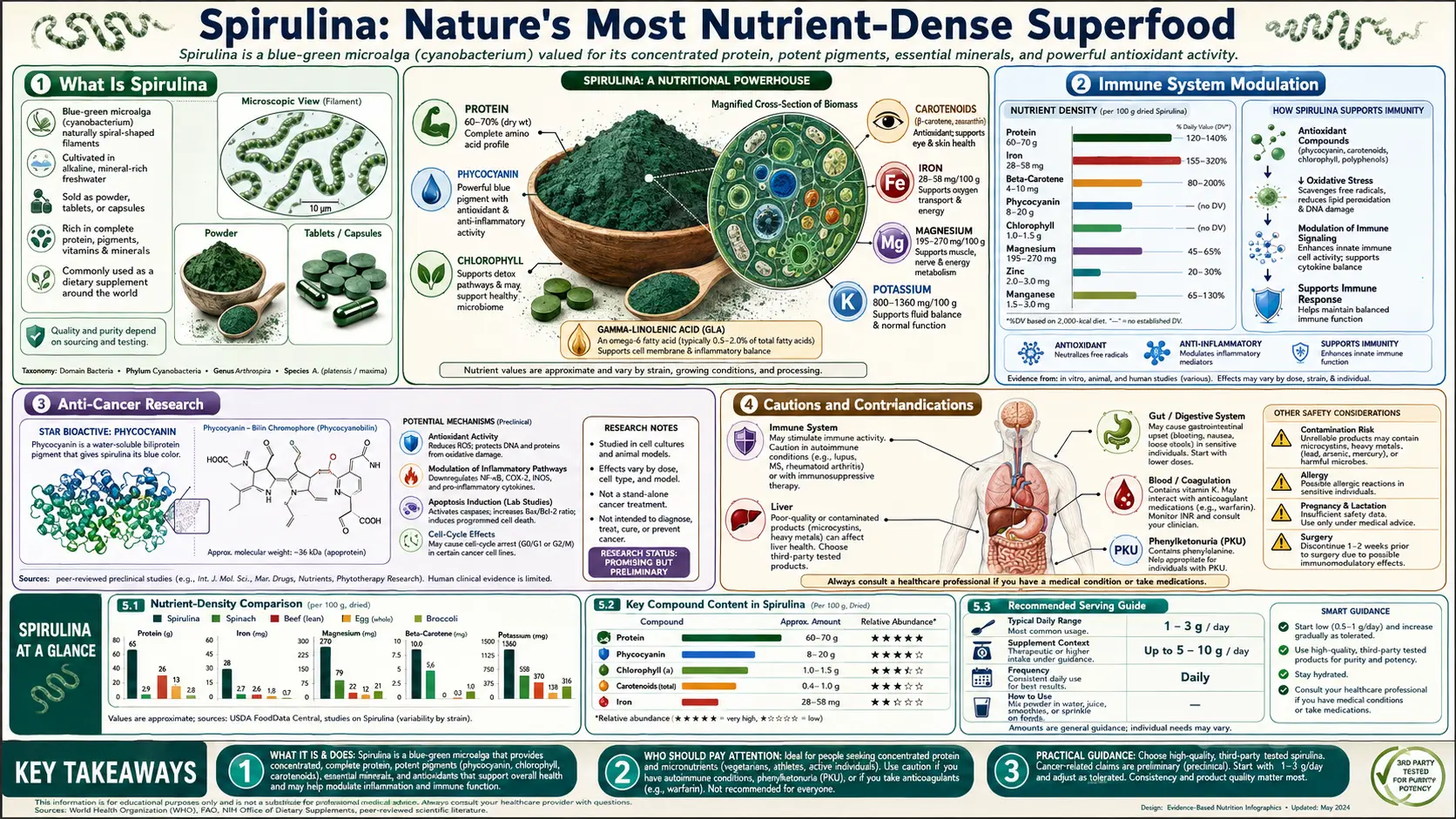
Spirulina's nutrient density is virtually unmatched in the natural world. By dry weight, spirulina is about 57 percent complete protein (USDA FoodData Central lists about 57 grams of protein per 100 grams of dried spirulina), making it one of the highest protein sources known. To put this in perspective, beef contains roughly 22 percent protein, eggs about 12 percent, and soybeans approximately 36 percent. Spirulina surpasses them all by a wide margin.
What distinguishes spirulina's protein is not merely its quantity but its quality. Spirulina contains all essential amino acids in bioavailable form, making it a complete protein. It is particularly rich in leucine, isoleucine, and valine, the branched-chain amino acids critical for muscle repair and energy metabolism. The protein in spirulina is also highly digestible because it lacks the tough cellulose cell walls found in plant-based proteins, allowing the body to absorb and utilize its amino acids with remarkable efficiency.
Beyond protein, spirulina provides an impressive array of additional nutrients:
- Gamma-linolenic acid (GLA) — a rare anti-inflammatory omega-6 fatty acid also found in evening primrose oil and borage oil
- Beta-carotene — USDA FoodData Central lists 342 micrograms per 100 grams of dried spirulina; raw carrots, at 8,280 micrograms per 100 grams in the same database, contain far more
- Chlorophyll — a potent blood-building and detoxifying compound
- Sulfolipids and polysaccharides — unique compounds with documented immunomodulatory activity
- Zeaxanthin — a carotenoid critical for eye health and macular protection
- Superoxide dismutase (SOD) — one of the body's most important endogenous antioxidant enzymes
A single tablespoon (approximately 7 grams) of dried spirulina powder delivers meaningful amounts of thiamine, riboflavin, niacin, copper, iron, manganese, and magnesium. It also provides small but significant amounts of potassium, phosphorus, and zinc. This concentration of nutrients in a small serving is the reason spirulina is widely marketed as a superfood.
Phycocyanin: The Blue Pigment Powerhouse
The brilliant blue color of spirulina comes from phycocyanin, a unique pigment-protein complex found almost exclusively in cyanobacteria. Phycocyanin typically accounts for up to 20 percent of spirulina's dry weight and is arguably its most therapeutically significant compound. Naturopathic practitioners regard phycocyanin as one of the most powerful natural anti-inflammatory and antioxidant substances discovered to date.
Research has demonstrated that phycocyanin exerts its anti-inflammatory effects through multiple mechanisms. It inhibits the cyclooxygenase-2 (COX-2) enzyme, the same target of pharmaceutical anti-inflammatory drugs like celecoxib, but without the gastrointestinal and cardiovascular side effects associated with those medications. Phycocyanin also suppresses the nuclear factor kappa-B (NF-kB) signaling pathway, a master regulator of inflammatory gene expression implicated in chronic disease.
The antioxidant capacity of phycocyanin is extraordinary. Studies have shown it can scavenge hydroxyl radicals, peroxyl radicals, and reactive oxygen species with an efficiency that rivals or exceeds well-known antioxidants such as vitamin C and vitamin E. Phycocyanin also supports the body's endogenous antioxidant defenses by upregulating the production of superoxide dismutase, catalase, and glutathione peroxidase.
Emerging research has reported additional properties of phycocyanin:
- Neuroprotective effects — phycocyanin has been shown to protect neuronal cells from oxidative damage and may support brain health in neurodegenerative conditions
- Hepatoprotective activity — it helps shield liver cells from toxin-induced damage and supports Phase I and Phase II detoxification pathways
- Anti-apoptotic effects on healthy cells — while promoting programmed cell death in abnormal cells, phycocyanin appears to protect healthy cells from premature destruction
- Stem cell stimulation — preliminary research suggests phycocyanin may support the proliferation of bone marrow stem cells
B Vitamins and Iron Content
Spirulina is an outstanding natural source of several B vitamins, making it particularly valuable for individuals following plant-based diets or those with increased nutritional demands. It is especially rich in thiamine (B1), riboflavin (B2), and niacin (B3), all of which play essential roles in cellular energy production, nervous system function, and metabolic health.
A seven-gram serving (one tablespoon) of dried spirulina provides about 0.17 milligrams of thiamine and 0.26 milligrams of riboflavin by USDA FoodData Central figures, roughly 14 percent and 20 percent of the current Daily Values (1.2 milligrams and 1.3 milligrams). These B vitamins serve as cofactors in the mitochondrial electron transport chain, directly supporting the body's ability to convert food into usable energy. Naturopathic practitioners cite this B vitamin content as a reason spirulina is used by people with chronic fatigue.
It is important to address the vitamin B12 question directly. Spirulina contains significant amounts of a B12 analogue known as pseudovitamin B12. While this compound has a similar molecular structure to true cobalamin, research indicates it is not bioavailable to humans and may actually interfere with the absorption of true B12. For this reason the research does not support spirulina as a source of vitamin B12, a finding that matters most for vegans and vegetarians, who are already at higher risk of deficiency.
The iron content of spirulina deserves special attention. Spirulina contains approximately 2 milligrams of iron per tablespoon, which represents about 11 percent of the daily requirement. What makes spirulina's iron particularly valuable is its bioavailability. Studies have demonstrated that iron from spirulina is absorbed at rates comparable to ferrous sulfate, the standard pharmaceutical iron supplement, but without the common side effects of constipation, nausea, and gastric irritation that plague conventional iron supplementation.
A small pilot study published in Cellular and Molecular Immunology in 2011 gave spirulina for 12 weeks to 40 volunteers aged 50 or older with no history of major chronic disease; 30 completed it. With no control group, it reported a steady rise in average mean corpuscular hemoglobin (the amount of hemoglobin in each red blood cell); it did not report a measure of iron status, and the authors called for large randomized trials. These findings have led researchers to study spirulina as an adjunct in iron-deficiency anemia, including in people who do not tolerate conventional iron supplements well.
Heavy Metal Detoxification
One of the most studied applications of spirulina in naturopathic practice is its reported capacity to bind and facilitate the excretion of heavy metals from the body. In an increasingly polluted world, chronic low-level exposure to toxic metals such as lead, arsenic, mercury, and cadmium represents a significant and underappreciated health threat. Spirulina has been studied as a gentle approach to this toxic burden.
The most extensively studied application of spirulina in heavy metal detoxification involves arsenic. A randomized, placebo-controlled trial of 41 patients was conducted in Bangladesh, where chronic arsenic poisoning from contaminated groundwater affects millions of people. In the group that received spirulina extract (250 mg) combined with zinc (2 mg) twice daily for 16 weeks, 47.1 percent of the arsenic was removed from scalp hair, and arsenic excretion in the urine rose sharply. The authors, writing in Clinical Toxicology in 2006, concluded that the combination “may be useful” for chronic arsenic poisoning with darkened skin patches (melanosis) and thickened skin (keratosis). This study, published in Clinical Toxicology, provided strong clinical evidence for spirulina's chelating capabilities.
Spirulina's ability to bind lead has also been documented in both animal and human studies. The unique polysaccharides and phycocyanin in spirulina appear to form complexes with lead ions, preventing their absorption in the gastrointestinal tract and facilitating their elimination through bile and urine. Animal studies have shown that spirulina supplementation can reduce lead accumulation in the brain, liver, kidneys, and bones.
Regarding mercury detoxification, spirulina works through several mechanisms:
- The chlorophyll content binds to mercury and other heavy metals in the intestinal tract, reducing their reabsorption through enterohepatic circulation
- Spirulina's unique polysaccharides chelate mercury ions directly
- The selenium content in spirulina forms insoluble selenium-mercury complexes that are more readily excreted
- Phycocyanin protects tissues from the oxidative damage caused by mercury exposure
In naturopathic practice, spirulina is commonly used as part of a detoxification protocol that may also include chlorella, cilantro, modified citrus pectin, and targeted mineral supplementation. Practitioners describe its mechanism of action as gentle and use it long-term, including in sensitive individuals who do not tolerate more aggressive chelation approaches.
Immune System Modulation
Spirulina demonstrates a remarkable capacity to modulate the immune system rather than simply stimulate or suppress it. This regulatory effect is one of the qualities naturopathic medicine values in spirulina, since that tradition aims to restore balance rather than push the body in one direction.
Research has shown that spirulina enhances the activity of natural killer (NK) cells, the immune system's first line of defense against viral infections and abnormal cell growth.
Spirulina's polysaccharides, particularly a high-molecular-weight polysaccharide fraction (named Immulina by the researchers who isolated it; results for that one extract may not transfer to other spirulina products), have been shown to activate macrophages, dendritic cells, and T-cells through stimulation of toll-like receptors. These effects enhance the body's ability to detect and respond to pathogens while also improving immune surveillance against abnormal cells. In laboratory tests on human immune cells (monocytes) grown in culture, this fraction was reported to be between one hundred and one thousand times more active than polysaccharide preparations used clinically for cancer immunotherapy.
Studies have also documented spirulina's antiviral properties. Research has demonstrated activity against a range of viruses including influenza, herpes simplex, cytomegalovirus, and human immunodeficiency virus (HIV). The mechanism appears to involve spirulina's sulfolipids and calcium spirulan, which inhibit viral replication by preventing the virus from penetrating host cell membranes.
The groups most often discussed in connection with these immunomodulatory effects are people who experience frequent infections, those recovering from illness, elderly people with declining immune function, and people under chronic stress whose immune systems may be compromised.
Allergy and Histamine Reduction
Spirulina has demonstrated significant promise as a natural intervention for allergic rhinitis and other histamine-driven conditions. It has been studied as an alternative for people seeking to sidestep the drowsiness and dry mucous membranes associated with antihistamine medications.
A pivotal double-blind, placebo-controlled study published in the European Archives of Oto-Rhino-Laryngology found that spirulina supplementation at 2 grams daily significantly reduced allergy symptoms including nasal discharge, sneezing, nasal congestion, and itching compared to placebo. The authors described the improvements as clinically meaningful.
The anti-allergic mechanism of spirulina operates through several pathways:
- Mast cell stabilization — spirulina inhibits the degranulation of mast cells, reducing the explosive release of histamine that triggers allergic symptoms
- Immunoglobulin E (IgE) suppression — spirulina reduces the production of immunoglobulin E, the antibody class responsible for triggering allergic cascades
- Th1/Th2 rebalancing — spirulina helps shift the immune system away from the Th2-dominant state that characterizes allergic individuals back toward a more balanced Th1/Th2 ratio
- Cytokine modulation — spirulina reduces the production of pro-allergic cytokines such as IL-4, IL-5, and IL-13
In naturopathic practice, spirulina is commonly used as part of an allergy management protocol, with supplementation typically begun four to six weeks before the anticipated allergy season. Practitioners often combine it with other natural anti-allergy agents such as quercetin, stinging nettle, and bromelain.
Cardiovascular Benefits
The cardiovascular benefits of spirulina are among its most well-documented therapeutic effects, with multiple clinical trials demonstrating improvements across several key risk factors for heart disease. Cardiovascular disease remains the leading cause of death globally, which is why these findings have drawn research attention.
Cholesterol management is perhaps the most studied cardiovascular benefit of spirulina. A meta-analysis of randomized controlled trials found that spirulina supplementation significantly reduces total cholesterol, low-density lipoprotein (LDL) cholesterol, and triglycerides while increasing beneficial high-density lipoprotein (HDL) cholesterol. Typical improvements include reductions in low-density lipoprotein cholesterol of 10 to 15 percent and triglyceride reductions of 15 to 25 percent at doses of 1 to 8 grams daily.
The mechanism by which spirulina improves lipid profiles appears to involve multiple pathways. Phycocyanin and the C-phycocyanin compound inhibit the intestinal absorption of cholesterol. The gamma-linolenic acid in spirulina supports healthy prostaglandin metabolism, which influences lipid handling. Additionally, spirulina's antioxidant compounds prevent the oxidation of low-density lipoprotein cholesterol, a critical step in the atherosclerotic process. Oxidized low-density lipoprotein is far more atherogenic than native low-density lipoprotein, so preventing its oxidation is arguably more important than simply lowering total low-density lipoprotein numbers.
Blood pressure reduction is another significant cardiovascular benefit. Research has shown that spirulina promotes the production of nitric oxide, a powerful vasodilator that relaxes blood vessel walls and improves circulation. An open before-and-after study of 36 adults in Mexico, with no control group, reported that 4.5 grams of spirulina daily for six weeks lowered both systolic and diastolic blood pressure (systolic from 121 to 111 mmHg in men and from 120 to 109 mmHg in women). The peptides released during the digestion of spirulina protein appear to inhibit angiotensin-converting enzyme (ACE), the same target of widely prescribed pharmaceutical antihypertensives.
Spirulina also demonstrates anti-atherosclerotic effects by reducing endothelial inflammation, inhibiting platelet aggregation, and improving arterial elasticity. These effects, combined with its lipid-lowering and blood pressure findings, are why spirulina appears in naturopathic cardiovascular wellness protocols.
Blood Sugar Regulation
Spirulina shows considerable promise as a supportive therapy for blood sugar regulation and metabolic health. With the global prevalence of type 2 diabetes and insulin resistance continuing to climb, natural interventions that safely improve glycemic control are increasingly important in clinical practice.
Multiple clinical trials have demonstrated that spirulina supplementation can reduce fasting blood glucose levels in individuals with type 2 diabetes. A study published in the Journal of Medicinal Food found that 2 grams of spirulina daily for two months resulted in a significant reduction in fasting blood glucose and a notable decrease in hemoglobin A1c (HbA1c), the gold-standard marker of long-term blood sugar control.
The blood sugar-regulating mechanisms of spirulina include:
- Enhanced insulin sensitivity — spirulina's anti-inflammatory and antioxidant effects reduce the chronic inflammation that drives insulin resistance at the cellular level
- Pancreatic beta-cell protection — phycocyanin and other antioxidant compounds in spirulina protect the insulin-producing beta cells of the pancreas from oxidative damage
- Glycogen synthesis promotion — spirulina appears to support the liver's ability to store glucose as glycogen, reducing circulating blood sugar levels
- Alpha-glucosidase inhibition — compounds in spirulina slow the enzymatic breakdown of complex carbohydrates, reducing postprandial glucose spikes
- AMP-activated protein kinase (AMPK) activation — spirulina activates AMP-activated protein kinase, a master metabolic regulator that promotes glucose uptake and fatty acid oxidation
In the trials, spirulina was studied as a complementary therapy for blood sugar management, not as a replacement for medication in established diabetes. Naturopathic protocols pair it with dietary modifications, exercise, stress management, and other natural interventions such as chromium, berberine, and alpha-lipoic acid. Because it can lower blood glucose, the research raises a concern for people taking diabetes medications, whose blood sugar and medication doses may shift when spirulina is added.
Anti-Cancer Research
The anti-cancer potential of spirulina has been the subject of growing scientific investigation, with research spanning cellular, animal, and preliminary human studies. While it would be premature and irresponsible to characterize spirulina as a cancer cure, the evidence supporting its role in cancer prevention and as an adjunctive therapy is compelling and continues to expand.
Phycocyanin, spirulina's signature blue pigment, has demonstrated the ability to induce apoptosis (programmed cell death) in various cancer cell lines while leaving healthy cells unharmed. This selective toxicity is a hallmark of an ideal anti-cancer agent and distinguishes phycocyanin from conventional chemotherapy drugs, which typically damage healthy and cancerous cells indiscriminately. Research has documented phycocyanin's anti-proliferative effects against breast cancer, liver cancer, colon cancer, leukemia, and lung cancer cell lines.
One of the most significant human studies involved patients with oral leukoplakia, a precancerous condition of the mouth often associated with tobacco use. In a placebo-controlled trial among pan tobacco chewers in Kerala, India, supplementation with Spirulina fusiformis (1 gram daily for 12 months) was followed by complete regression of lesions in 45 percent of evaluable participants (20 of 44), compared to 7 percent (3 of 43) in the placebo group. Within one year of stopping spirulina, 9 of the 20 complete responders (45 percent) developed lesions again, further supporting a direct therapeutic effect.
The anti-cancer mechanisms of spirulina extend beyond phycocyanin and include:
- Enhanced immune surveillance — spirulina's activation of natural killer cells and macrophages improves the body's natural ability to detect and destroy abnormal cells
- Antioxidant protection of DNA — by reducing oxidative stress, spirulina helps prevent the DNA mutations that initiate carcinogenesis
- Anti-angiogenic effects — some research suggests spirulina compounds may inhibit the formation of new blood vessels that tumors require for growth
- Radioprotective properties — spirulina has shown the ability to protect healthy tissues from radiation damage, potentially making it valuable alongside conventional radiation therapy
In naturopathic oncology, spirulina is used as a supportive agent for cancer prevention, immune enhancement during treatment, and recovery support. It has not been shown to replace proven cancer treatments.
Exercise Performance and Endurance
Spirulina has been studied as a performance supplement for athletes and physically active people, with research reporting benefits for endurance, fatigue resistance, and recovery. Unlike synthetic performance enhancers, spirulina achieves these effects through natural nutritional support of the body's energy and antioxidant systems.
A notable study published in Medicine and Science in Sports and Exercise found that spirulina supplementation significantly increased time to exhaustion during a treadmill running test. Participants who consumed 6 grams of spirulina daily for four weeks demonstrated improved exercise performance and enhanced fat oxidation during exercise compared to the placebo group. The researchers attributed these improvements to spirulina's antioxidant capacity, which reduced exercise-induced oxidative stress and delayed the onset of fatigue.
The mechanisms underlying spirulina's exercise benefits include:
- Reduced exercise-induced oxidative damage — the intense antioxidant activity of phycocyanin and other spirulina compounds neutralizes the free radicals generated during vigorous exercise
- Enhanced fat oxidation — spirulina promotes the use of fat as a fuel source during exercise, sparing glycogen reserves and extending endurance
- Improved oxygen-carrying capacity — spirulina's iron content and its ability to stimulate red blood cell production support oxygen delivery to working muscles
- Reduced muscle damage markers — studies have shown decreases in creatine kinase and lactate dehydrogenase after exercise in spirulina-supplemented individuals, indicating less muscle tissue breakdown
- Anti-inflammatory recovery support — by modulating post-exercise inflammation, spirulina may accelerate recovery between training sessions
In naturopathic practice, spirulina is typically begun two to four weeks before a competitive event or intensive training block to allow cumulative benefits to develop. Doses of 4 to 6 grams daily are the range most associated with performance findings in the available research.
NASA Research for Space Nutrition
The nutrient density of spirulina has attracted the attention of the National Aeronautics and Space Administration (NASA) and the European Space Agency (ESA), both of which have extensively studied spirulina as a potential food source for long-duration space missions. In that work spirulina was studied as a candidate food for long space missions, not ranked against other foods.
NASA's interest in spirulina dates back to the 1980s, when the agency began investigating closed-loop life support systems for extended missions to Mars and beyond. A widely repeated claim, usually attributed to NASA, holds that 1 kilogram of spirulina could provide the nutritional equivalent of approximately 1,000 kilograms of assorted fruits and vegetables; that comparison is not traced to a cited NASA source. What is documented is that NASA studied spirulina as a candidate crop for the extreme resource constraints of space travel.
The ESA has conducted experiments through its Micro-Ecological Life Support System Alternative (MELiSSA) project, which includes spirulina cultivation as a core component of a self-sustaining life support system. In this system, spirulina serves triple duty: producing oxygen through photosynthesis, recycling carbon dioxide, and providing high-quality nutrition for astronauts.
Several properties make spirulina uniquely suited for space applications:
- Rapid growth rate — spirulina can double its biomass in as little as two days under optimal conditions
- Minimal resource requirements — it needs only water, light, carbon dioxide, and a small number of mineral nutrients to grow
- Radiation protection — the antioxidant and radioprotective properties of spirulina could help protect astronauts from cosmic radiation exposure
- Complete nutrition — its protein, vitamin, mineral, and essential fatty acid content could sustain human nutritional needs in environments where food variety is severely limited
- Immune support — the immunomodulatory effects of spirulina could help counter the immune suppression observed in astronauts during spaceflight
NASA and ESA have invested decades of research into spirulina as a candidate life-sustaining food source for long missions.
Spirulina Quality and Contamination
Spirulina products vary in quality, and contamination is one of the most important safety findings in the research. Poorly produced spirulina can contain dangerous levels of heavy metals, microcystins, and other contaminants that would negate its health benefits. Spirulina grown in Hawaii, on the Kona Coast, is cultivated with deep ocean water as a mineral source and abundant year-round sunshine, and the producers there describe testing for contaminants.
Laboratory testing for contaminants, such as microcystins and heavy metals, is how the purity of a spirulina product is checked. Controlled cultivation in lined ponds in a clean air and water environment lowers the risk of contamination.
The quality factors described in the research and in quality standards include:
- Country of origin — spirulina from China and India may be contaminated with heavy metals, microcystins from co-occurring toxic algae, and other environmental pollutants due to industrial contamination of water sources. This is not universally true; testing results vary by producer.
- Third-party testing — some producers publish certificates of analysis showing testing for heavy metals (lead, mercury, arsenic, cadmium), microcystins, BMAA (beta-methylamino-L-alanine), and microbial contamination
- Cultivation method — controlled outdoor ponds with lined bottoms or closed photobioreactors offer the greatest protection against contamination compared to open natural lake harvesting
- Organic certification — while spirulina's growth conditions differ from conventional agriculture, organic certification indicates adherence to additional quality and purity standards
- Processing method — low-temperature spray drying preserves the maximum nutrient content and phycocyanin activity compared to high-heat processing methods
Products differ in whether they state their country of origin and publish batch-specific testing results.
Doses Used in Research
Spirulina doses in clinical practice and trials typically range from 1 to 10 grams daily, varying with the goal, individual tolerance, and the form of spirulina used. Naturopathic practice commonly uses a graduated approach, particularly for people new to spirulina.
Starting dose: A common naturopathic starting dose is 1 gram (approximately one-quarter teaspoon of powder or two 500mg tablets) daily for the first week, described as a way to let the body adjust and to identify any sensitivity reactions.
General wellness maintenance: 3 to 5 grams daily is the dose range most commonly used in naturopathic practice for general nutritional and antioxidant support.
Therapeutic applications: For specific conditions, the trials described on this page used 2 grams daily for blood sugar in type 2 diabetes (a 2001 trial) and for blood pressure in overweight people with hypertension (a 2016 trial), and 4.5 grams daily in an open blood-pressure study; a 2016 meta-analysis found that spirulina’s effect on blood fats did not depend on the dose. Some protocols call for up to 10 grams daily, usually under a practitioner's guidance.
Practical dosing points described in practice include:
- Timing — spirulina can be taken with or without food. Taking it 30 minutes before meals is described as supporting appetite regulation; taking it with meals may improve tolerance for sensitive individuals.
- Form — powder is the most economical and versatile form, easily added to smoothies, juices, or water. Tablets and capsules offer convenience and mask the strong taste that some find objectionable.
- Splitting doses — for amounts above 3 grams daily, practitioners commonly divide it into two or three doses through the day, which is described as improving absorption and tolerance
- Hydration — spirulina is rich in protein and chlorophyll, both of which require adequate water for processing; practitioners commonly pair it with extra water intake.
- Consistency — the benefits of spirulina are cumulative and most pronounced with consistent daily use over weeks to months. Short-term or sporadic use is unlikely to deliver the results seen in clinical trials.
Cautions and Contraindications
Spirulina has a good safety record in the research and has been consumed by humans for centuries, but the research and case reports describe several cautions and contraindications.
Autoimmune conditions: Because spirulina stimulates and modulates immune function, individuals with autoimmune diseases such as multiple sclerosis, lupus, rheumatoid arthritis, or other conditions where the immune system attacks the body's own tissues are the group the research raises the clearest concern for. Published case reports describe autoimmune flares after spirulina: a 2004 report in Archives of Dermatology implicated echinacea and spirulina in flares of pemphigus vulgaris (a blistering skin disease) in two patients, and a supplement of spirulina with another blue-green alga in the onset and a severe flare of dermatomyositis (a muscle and skin inflammation) in a third; a 2008 report described a blistering skin disorder with features of bullous pemphigoid and pemphigus foliaceus associated with spirulina intake. While some research suggests spirulina's immunomodulatory effects may actually benefit certain autoimmune conditions, this remains an area of uncertainty. There is no good safety data on its use in autoimmune disease.
Phenylketonuria (PKU): Spirulina is contraindicated in individuals with PKU, a genetic metabolic disorder in which the body cannot properly metabolize the amino acid phenylalanine. Spirulina contains significant amounts of phenylalanine (USDA FoodData Central lists 2.78 grams per 100 grams of dried spirulina, about 0.19 grams per tablespoon), and its consumption could lead to dangerous accumulations of this amino acid in PKU patients, potentially causing neurological damage.
Additional cautions include:
- Anticoagulant medications — spirulina contains vitamin K (USDA FoodData Central lists 25.5 micrograms per 100 grams of dried spirulina, about 1.8 micrograms per tablespoon) and has mild antiplatelet effects, which may interact with blood-thinning medications such as warfarin. The research raises a concern for people taking anticoagulants.
- Immunosuppressive drugs — spirulina's immune-stimulating effects may counteract the intended effects of immunosuppressive medications used in organ transplant recipients or certain autoimmune conditions
- Detoxification reactions — when starting spirulina, some individuals experience temporary symptoms such as headache, digestive upset, or skin breakouts as the body begins mobilizing and excreting stored toxins. These reactions are typically mild and resolve within a few days. Practitioners describe starting with a low dose and increasing gradually as a way to minimize these effects.
- Pregnancy and nursing — while spirulina is generally considered safe during pregnancy and lactation, there are no large-scale safety studies in these populations, so the safety data are thin.
- Contamination risk — as discussed in the sourcing section, poorly sourced spirulina may contain heavy metals, microcystins, or bacterial contamination. This is not a risk of spirulina itself but rather of inadequate quality control in production.
In naturopathic practice spirulina is used as one part of a broader approach that includes a nutrient-dense whole foods diet, regular physical activity, adequate sleep, and stress management.
Key Research Papers
Selected peer-reviewed literature. Links resolve to PubMed or DOI.
- Deng R, Chow TJ. Hypolipidemic, antioxidant, and antiinflammatory activities of microalgae Spirulina. Cardiovasc Ther. 2010;28(4):e33-45. — PubMed PMID: 20633020
- Miczke A, Szulińska M, Hansdorfer-Korzon R, et al. Effects of spirulina consumption on body weight, blood pressure, and endothelial function in overweight hypertensive Caucasians: a double-blind, placebo-controlled, randomized trial. Eur Rev Med Pharmacol Sci. 2016;20(1):150-156. — PubMed PMID: 26813468
- Cingi C, Conk-Dalay M, Cakli H, Bal C. The effects of spirulina on allergic rhinitis. Eur Arch Otorhinolaryngol. 2008;265(10):1219-1223. — PubMed PMID: 18343939
- Mao TK, Van de Water J, Gershwin ME. Effects of a Spirulina-based dietary supplement on cytokine production from allergic rhinitis patients. J Med Food. 2005;8(1):27-30. — PubMed PMID: 15857205
- Ferreira-Hermosillo A, Torres-Duran PV, Juarez-Oropeza MA. Hepatoprotective effects of Spirulina maxima in patients with non-alcoholic fatty liver disease: a case series. J Med Case Rep. 2010;4:103. — PubMed PMID: 20370930
- Mazokopakis EE, Papadomanolaki MG, Fousteris AA, Kotsiris DA, Lampadakis IM, Ganotakis ES. The hepatoprotective and hypolipidemic effects of Spirulina (Arthrospira platensis) supplementation in a Cretan population with non-alcoholic fatty liver disease: a prospective pilot study. Ann Gastroenterol. 2014;27(4):387-394. — PubMed PMID: 25331487
- Serban MC, Sahebkar A, Dragan S, et al. A systematic review and meta-analysis of the impact of Spirulina supplementation on plasma lipid concentrations. Clin Nutr. 2016;35(4):842-851. — PubMed PMID: 26433766
- Karkos PD, Leong SC, Karkos CD, Sivaji N, Assimakopoulos DA. Spirulina in clinical practice: evidence-based human applications. Evid Based Complement Alternat Med. 2011;2011:531053. — PubMed PMID: 18955364
- Kalafati M, Jamurtas AZ, Nikolaidis MG, et al. Ergogenic and antioxidant effects of spirulina supplementation in humans. Med Sci Sports Exerc. 2010;42(1):142-151. — PubMed PMID: 20010119
- Misbahuddin M, Islam AZ, Khandker S, et al. Efficacy of spirulina extract plus zinc in patients of chronic arsenic poisoning: a randomized placebo-controlled study. Clin Toxicol (Phila). 2006;44(2):135-141. — PubMed PMID: 16615668
- Mathew B, Sankaranarayanan R, Nair PP, et al. Evaluation of chemoprevention of oral cancer with Spirulina fusiformis. Nutr Cancer. 1995;24(2):197-202. — PubMed PMID: 8584455
- Selmi C, Leung PS, Fischer L, et al. The effects of Spirulina on anemia and immune function in senior citizens. Cell Mol Immunol. 2011;8(3):248-254. — PubMed PMID: 21278762
- Torres-Duran PV, Ferreira-Hermosillo A, Juarez-Oropeza MA. Antihyperlipemic and antihypertensive effects of Spirulina maxima in an open sample of Mexican population: a preliminary report. Lipids Health Dis. 2007;6:33. — PubMed PMID: 18039384
- Parikh P, Mani U, Iyer U. Role of Spirulina in the Control of Glycemia and Lipidemia in Type 2 Diabetes Mellitus. J Med Food. 2001;4(4):193-199. — PubMed PMID: 12639401
- Pugh N, Ross SA, ElSohly HN, et al. Isolation of three high molecular weight polysaccharide preparations with potent immunostimulatory activity from Spirulina platensis, aphanizomenon flos-aquae and Chlorella pyrenoidosa. Planta Med. 2001;67(8):737-742. — PubMed PMID: 11731916
- Lee AN, Werth VP. Activation of autoimmunity following use of immunostimulatory herbal supplements. Arch Dermatol. 2004;140(6):723-727. — PubMed PMID: 15210464
- Kraigher O, Wohl Y, Gat A, Brenner S. A mixed immunoblistering disorder exhibiting features of bullous pemphigoid and pemphigus foliaceus associated with Spirulina algae intake. Int J Dermatol. 2008;47(1):61-63. — PubMed PMID: 18173606
- PubMed — spirulina clinical trial search.
- PubMed — phycocyanin anti-inflammatory search.
Connections
- Fluoride Chelation — taken alongside chlorella as a binder
- Chlorella
- Iron
- Vitamin B12
- Non-Alcoholic Fatty Liver Disease
- Sea Moss
- Hypertension
- Bee Pollen
- Cancer
- Blood Sugar
- Heavy Metals
- Mercury
- Lead
- Arsenic
- Gerson Therapy Detoxification
- Fatigue
- Vitamin C
- Chlorophyll
Featured Videos