Chlorella

Table of Contents
- What Is Chlorella
- Chlorella Growth Factor (CGF)
- Heavy Metal and Toxin Detoxification
- Chlorophyll Content
- Immune System Enhancement
- Digestive Health and Gut Repair
- Cardiovascular Benefits
- Blood Sugar Regulation
- Skin Health and Anti-Aging
- Chlorella vs. Spirulina
- Broken Cell Wall vs. Whole Cell Chlorella
- Chlorella Sourcing and Contamination Testing
- Doses Described in Practice
- Cautions and Side Effects
- Related Topics
- Key Research Papers
- Connections
- Featured Videos
What Is Chlorella
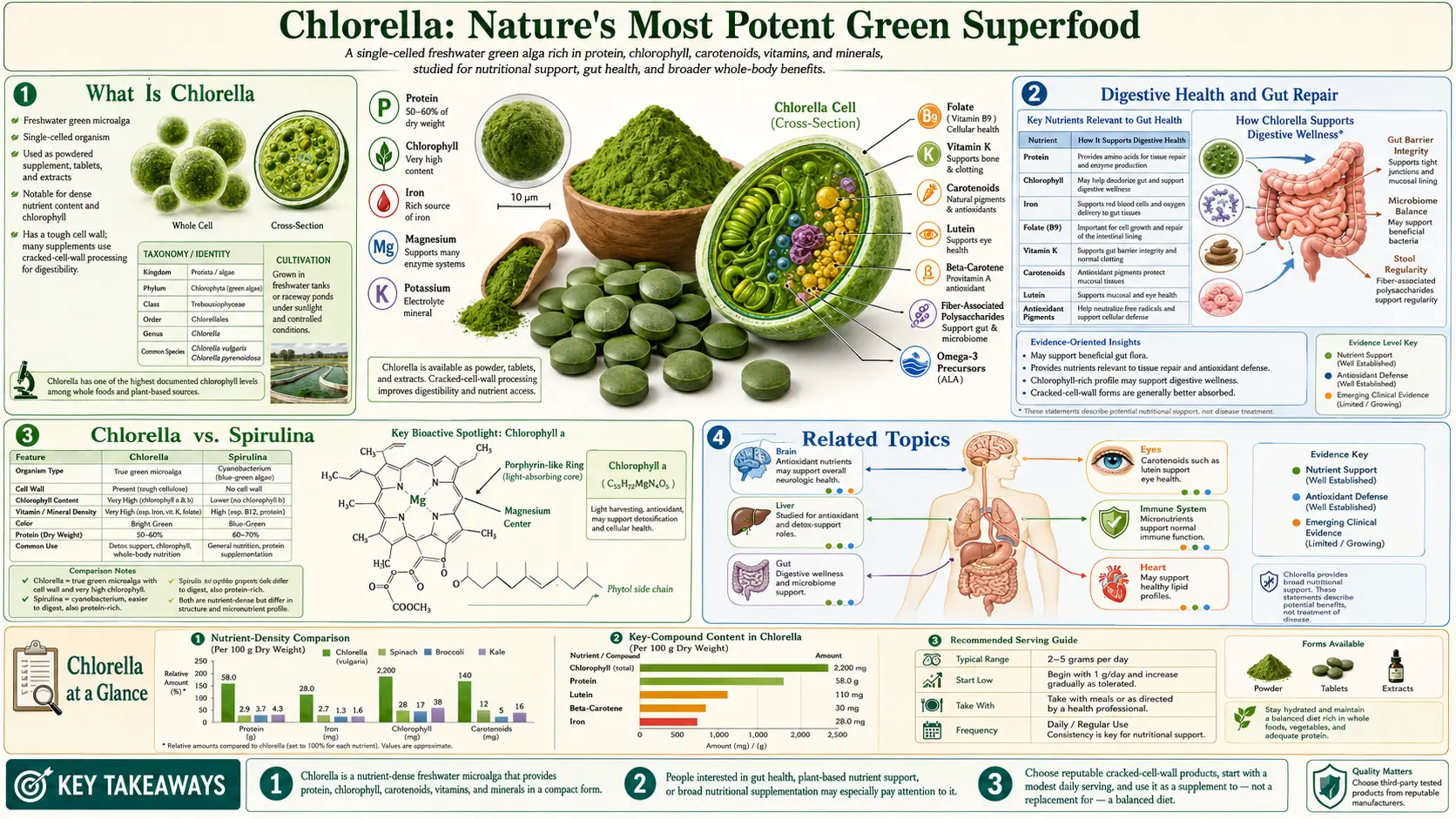
Chlorella is a single-celled green freshwater alga belonging to the phylum Chlorophyta, the green algae. The name chlorella derives from the Greek word chloros, meaning green, and the Latin diminutive suffix ella, meaning small. Despite its microscopic size, typically measuring only 2 to 10 micrometers in diameter, chlorella is an extraordinarily dense source of nutrition.
Chlorella reproduces quickly: each mother cell divides into several daughter cells, and producers commonly describe the population as able to quadruple in roughly a day under optimal conditions. Chlorella thrives in freshwater environments and requires sunlight, carbon dioxide, water, and a small amount of minerals to grow. The two most studied and commercially cultivated species are Chlorella vulgaris and Chlorella pyrenoidosa, both of which offer significant therapeutic benefits.
Naturopathic writers describe chlorella as one of the most complete whole foods available. Producers commonly cite a protein content of roughly 50 to 60 percent of dry weight, and it supplies all essential amino acids, essential fatty acids and a range of minerals. A 2020 review notes that chlorella products contain vitamins D and B12, which are absent from plant-derived foods, and more folate and iron than other plant foods (PMID 32825362). Naturopathic practitioners regard its nutritional density as support for the body's innate capacity for healing and regeneration.
Chlorella Growth Factor (CGF)
One of the most distinctive and therapeutically significant components of chlorella is the Chlorella Growth Factor, commonly abbreviated as CGF. CGF is the name producers give to a water-soluble nucleotide-peptide extract of chlorella; proponents describe it as unique to chlorella and credit it with the alga's rapid rate of reproduction.
CGF is composed of a rich mixture of nucleic acids (RNA and DNA), amino acids, peptides, polysaccharides, and beta-glucans. Proponents state that CGF supports cellular repair and regeneration, tissue growth and recovery after illness or injury; these claims come mainly from producer and practitioner literature rather than from human trials.
The nucleic acid content of CGF is particularly noteworthy. Proponents state that the body's production of RNA and DNA declines with age, which they link to the visible and internal signs of aging, and that CGF provides preformed nucleic acids that can support cellular renewal. In clinical observations, practitioners report that patients who regularly consume CGF-rich chlorella often report increased energy, improved wound healing, and a general sense of vitality.
CGF has also been studied for its potential to support healthy immune function and to promote the growth of beneficial intestinal bacteria, particularly Lactobacillus species. This prebiotic effect makes CGF a dual-action compound that supports both cellular health and digestive wellness simultaneously.
Heavy Metal and Toxin Detoxification
Perhaps the most well-known therapeutic application of chlorella in naturopathic medicine is its remarkable capacity to bind and eliminate heavy metals and environmental toxins from the body. In the modern world, chronic low-level exposure to heavy metals such as mercury, lead, cadmium, and arsenic is virtually unavoidable. These metals accumulate in tissues over time and can contribute to a wide range of chronic health complaints.
Chlorella's cell wall contains a unique fibrous material that has a strong affinity for binding heavy metals and other toxic substances. When consumed, chlorella travels through the gastrointestinal tract and acts as a natural chelating agent, attracting and binding to metals and toxins so they can be safely excreted through the stool rather than being reabsorbed into circulation.
Toxins discussed in connection with chlorella (studied mostly in animals; dioxin also in the Japanese breast-milk study described below) include:
- Mercury — from dental amalgam fillings, contaminated seafood, and industrial exposure
- Lead — from older paint, contaminated water, and environmental pollution
- Cadmium — from cigarette smoke, industrial emissions, and certain foods
- Dioxins — persistent organic pollutants from industrial processes and contaminated food chains
- Polychlorinated biphenyls (PCBs) — industrial chemicals that persist in the environment
In clinical practice, chlorella is frequently used as part of comprehensive heavy metal detoxification protocols. It is often paired with cilantro (coriander leaf), which proponents believe mobilizes metals from deeper tissues while chlorella binds them in the gut. The cilantro idea traces largely to a 1996 single-patient case report in which cilantro alone was given after amalgam removal and mercury deposits were assessed by the author's Bi-Digital O-Ring Test (PMID 8914687). Evidence for chlorella binding mercury comes mainly from animal work, such as a 2011 mouse study in which a chlorella-family alga increased methylmercury excretion (PMID 21297350). No controlled human trial of the cilantro-plus-chlorella combination was found; practitioners who use it describe their own favorable experience. Practitioners who use these protocols describe proceeding gradually and under professional guidance, to limit the load on the body's elimination pathways.
Chlorophyll Content
Chlorella is rich in chlorophyll, and producers often describe it as one of the richest chlorophyll sources among foods; published figures vary with species and growing conditions. The deep emerald green color of chlorella reflects this chlorophyll content.
Chlorophyll is often referred to as "plant blood" because its molecular structure is remarkably similar to hemoglobin, the oxygen-carrying molecule in human blood. The key difference is that chlorophyll has a magnesium atom at its center, whereas hemoglobin has an iron atom. This structural similarity is believed to support the body's ability to produce and maintain healthy red blood cells.
The therapeutic benefits of chlorophyll are extensive:
- Internal deodorizing - Chlorophyll neutralizes body odor, bad breath, and the odor of stool and flatulence from within
- Alkalizing effect - Chlorophyll promotes a more alkaline internal environment, which supports optimal cellular function
- Wound healing - Topical and internal chlorophyll has been shown to accelerate tissue repair
- Liver support - Chlorophyll assists the liver in its role as the body's primary detoxification organ
- Antioxidant protection - Chlorophyll scavenges free radicals and reduces oxidative stress
- Blood building - Chlorophyll supports the production of healthy red blood cells and may improve oxygen delivery to tissues
Naturopathic practitioners consider the high chlorophyll content of chlorella especially relevant for people who are anemic, fatigued, or recovering from chronic illness. Practitioners say many patients report improved energy and mental clarity within the first few weeks; these are practice reports, not trial findings, and the suggested link to oxygen transport is their interpretation.
Immune System Enhancement
Chlorella has been extensively studied for its immunomodulatory properties. Rather than simply stimulating the immune system, chlorella appears to help regulate and balance immune function, which practitioners cite as the reason it is used across a wide range of immune-related conditions. This is a critical distinction in naturopathic medicine, where the goal is always to restore balance rather than to push the body in one direction.
Several mechanisms underlie chlorella's immune-enhancing effects:
- Increased Natural Killer (NK) cell activity - Research published in peer-reviewed journals has demonstrated that chlorella supplementation significantly increases NK cell activity. These cells are the body's first line of defense against virally infected cells and early-stage cancer cells.
- Enhanced interferon production - Chlorella promotes the production of interferon, a protein that plays a critical role in the body's antiviral defense.
- Macrophage activation - Chlorella has been shown to stimulate macrophage activity, improving the body's ability to engulf and destroy pathogens and cellular debris.
- Increased secretory IgA (sIgA) - sIgA is the primary antibody that protects mucosal surfaces, including the gut, respiratory tract, and urogenital tract. Chlorella supplementation has been associated with increased sIgA levels.
- T-cell support - Chlorella provides nutrients and bioactive compounds that support the maturation and function of T-lymphocytes.
A 2012 randomized, double-blind, placebo-controlled trial in South Korea gave 51 healthy adults 5 g of chlorella or placebo daily for eight weeks; in the chlorella group NK cell activity and serum interferon-gamma and interleukin-1 beta rose significantly, and interleukin-12 tended to rise (PMID 22849818). Practitioners have taken these findings as a reason to use chlorella during cold and flu season, for people with compromised immunity, and as an adjunct in integrative oncology protocols.
Digestive Health and Gut Repair
In naturopathic medicine, the health of the digestive tract is considered foundational to overall wellness. Chlorella offers multiple benefits for digestive health, making it one of the most versatile gut-supportive supplements available.
The Chlorella Growth Factor (CGF) plays a central role in gut repair. The peptides and nucleotides within CGF support the regeneration of the intestinal lining, which is particularly beneficial for individuals dealing with increased intestinal permeability, commonly known as leaky gut syndrome. By promoting the growth and repair of enterocytes (intestinal lining cells), chlorella helps restore the integrity of the gut barrier.
Chlorella also functions as a prebiotic, promoting the growth of beneficial bacteria in the colon. A 2026 systematic review of chlorella and the gut microbiota found that most studies were in animals, with only a limited number of human trials, and that most reported favorable shifts in gut bacteria (PMID 42356400). A healthy and diverse microbiome is essential for proper nutrient absorption, immune regulation, neurotransmitter production, and protection against pathogenic organisms.
Additional digestive benefits of chlorella include:
- Relief from constipation - The fiber content of chlorella, combined with its ability to stimulate peristalsis, helps promote regular bowel movements
- Reduction of intestinal inflammation - The anti-inflammatory compounds in chlorella can help soothe inflamed intestinal tissues
- Support for digestive enzyme production - Chlorella provides cofactors that support the body's production of digestive enzymes
- Binding of intestinal toxins - Chlorella's fibrous cell wall binds toxins in the gut lumen, preventing their absorption and reducing the toxic burden on the liver
For people with chronic digestive complaints, naturopathic practitioners describe introducing chlorella slowly and increasing the dose gradually to let the gastrointestinal system adapt. Practitioners report that many patients describe improvements in digestion, regularity and abdominal comfort within four to six weeks; this time frame comes from practice, not from a trial.
Cardiovascular Benefits
Chlorella offers a range of cardiovascular benefits that make it a valuable component of a heart-healthy protocol. Multiple clinical studies have demonstrated its positive effects on key markers of cardiovascular health.
Cholesterol management: A 2018 meta-analysis of 19 randomized controlled trials (797 participants) found that chlorella lowered total cholesterol (about 9 mg/dL) and LDL (low-density lipoprotein) cholesterol (about 8 mg/dL), while changes in triglycerides and HDL (high-density lipoprotein) cholesterol were not significant (PMID 29037431). In one 4-week randomized, double-blind, placebo-controlled trial in 63 mildly hypercholesterolemic Korean adults, the chlorella group showed reductions in total cholesterol and triglycerides compared with placebo (PMID 24920270). The mechanism appears to involve the binding of bile acids in the intestine, which forces the liver to use circulating cholesterol to produce new bile acids.
Blood pressure regulation: The same 2018 meta-analysis found modest reductions in blood pressure (systolic about 4.5 mmHg, diastolic about 1.6 mmHg), with the clearest effect in people with hypertension and at doses above 4 g/day for 8 weeks or longer (PMID 29037431). The potassium, magnesium, calcium, and omega-3 fatty acids in chlorella all contribute to vascular relaxation and healthy blood pressure. Additionally, chlorella contains peptides that may inhibit angiotensin-converting enzyme (ACE), a mechanism similar to that of pharmaceutical ACE inhibitor medications.
Reduction of arterial stiffness: Chlorella's antioxidant compounds, particularly lutein, chlorophyll, and beta-carotene, help protect the vascular endothelium from oxidative damage. This protection helps maintain the elasticity and flexibility of arterial walls, reducing the risk of atherosclerosis.
Homocysteine reduction: Chlorella is a natural source of folate, vitamin B6, and vitamin B12, the three key nutrients required for the metabolism of homocysteine. Elevated homocysteine is an independent risk factor for cardiovascular disease, and chlorella's B-vitamin content helps keep homocysteine levels in a healthy range.
Blood Sugar Regulation
Maintaining stable blood sugar levels is essential for long-term health, and chlorella has demonstrated promising effects in supporting glycemic control. This is particularly relevant given the rising prevalence of insulin resistance, metabolic syndrome, and type 2 diabetes worldwide.
The 2018 meta-analysis found a small reduction in fasting blood glucose (about 4 mg/dL) (PMID 29037431). A double-blind, placebo-controlled trial published in Clinical Nutrition randomized 70 people with non-alcoholic fatty liver disease to chlorella (four 300 mg tablets daily) or placebo for eight weeks; fasting glucose, liver enzymes and hs-CRP fell in the chlorella group, and the between-group differences in glucose and TNF-alpha were significant, but serum insulin and the HOMA insulin-resistance score rose in the chlorella group (PMID 27475283).
The mechanisms through which chlorella supports blood sugar regulation include:
- Improved insulin receptor sensitivity - Chlorella's magnesium, chromium, and bioactive peptides support the proper functioning of insulin receptors on cell surfaces
- Reduction of oxidative stress in pancreatic beta cells - The antioxidants in chlorella protect the insulin-producing cells of the pancreas from free radical damage
- Modulation of hepatic glucose output - Chlorella supports healthy liver function, which plays a central role in blood sugar regulation through glycogen storage and gluconeogenesis
- Anti-inflammatory effects - Chronic low-grade inflammation is a driver of insulin resistance, and chlorella's anti-inflammatory properties help address this underlying cause
- Fiber content - The cell wall fiber in chlorella slows the absorption of glucose from the digestive tract, preventing sharp postprandial blood sugar spikes
Naturopathic practitioners use chlorella for blood sugar imbalances as one part of a broader approach that includes dietary modifications, regular physical activity, stress management, and targeted nutritional supplementation. Chlorella has not been shown to replace prescribed diabetes medications; decisions about those medicines belong with a clinician.
Skin Health and Anti-Aging
Chlorella provides remarkable support for skin health and offers compelling anti-aging benefits that work from the inside out. Naturopathic medicine holds that the condition of the skin is a direct reflection of internal health, and practitioners use chlorella to address skin concerns at their root.
Nucleic acid support: The high RNA and DNA content of chlorella, concentrated in the Chlorella Growth Factor, supports cellular renewal throughout the body, including in the skin. Dr. Benjamin Frank, a physician who promoted nucleic acid therapy in books of the 1960s and 1970s, wrote that his patients on nucleic-acid-rich diets showed improvements in skin texture, fewer wrinkles and a more youthful appearance; these were his clinical observations, not controlled trials. Proponents describe chlorella as a rich dietary source of nucleic acids.
Antioxidant protection: Chlorella contains a potent array of antioxidants including beta-carotene, lutein, lycopene, vitamin C, vitamin E, and chlorophyll. These compounds neutralize free radicals generated by UV radiation, environmental pollution, and metabolic processes. By reducing oxidative damage to skin cells, chlorella helps prevent premature aging, hyperpigmentation, and loss of elasticity.
Detoxification and skin clarity: Many skin conditions, including acne, eczema, and psoriasis, have an underlying toxic or inflammatory component. By supporting the body's detoxification pathways and binding toxins in the gut, chlorella reduces the toxic burden that often manifests through the skin. Practitioners say patients often report clearer skin after several weeks; this is a practice report, not a trial finding.
Collagen support: Chlorella provides vitamin C, zinc, and amino acids that are essential cofactors for collagen synthesis. Adequate collagen production is crucial for maintaining skin firmness, elasticity, and hydration with age.
Practitioners describe the skin effects as cumulative and typically cite consistent daily use over at least three to six months, with patients reporting progressive changes in skin tone and texture; no trial has tested this time frame.
Chlorella vs. Spirulina
Chlorella and spirulina are frequently mentioned together and sometimes confused, but they are fundamentally different organisms with distinct therapeutic profiles. The differences below set out what each organism contributes.
Biological classification: Chlorella is a true single-celled green algae (eukaryote) with a defined nucleus and cell wall. Spirulina is technically a cyanobacterium (prokaryote), a blue-green organism that lacks a true nucleus. This distinction is not merely academic; it has practical implications for their nutritional profiles and therapeutic applications.
Key differences:
- Chlorophyll content - Producers describe chlorella as richer in chlorophyll than spirulina, which practitioners cite when using it for detoxification and blood-building
- Chlorella Growth Factor - Proponents describe CGF as unique to chlorella, which is why practitioners favor chlorella for cellular repair and regeneration
- Detoxification capacity - Chlorella's fibrous cell wall gives it a far greater capacity to bind and remove heavy metals and environmental toxins. Spirulina does not share this ability to the same degree
- Protein content - Commonly cited figures put spirulina at about 60 to 70 percent protein by dry weight, slightly higher than the 50 to 60 percent cited for chlorella
- Phycocyanin - Spirulina contains the unique blue pigment phycocyanin, a potent anti-inflammatory and antioxidant compound not found in chlorella
- Iron content - Spirulina is generally higher in bioavailable iron
- Digestibility - Spirulina is more easily digested in its natural state, while chlorella requires cell wall processing for optimal nutrient absorption
- GLA content - Spirulina is a rich source of gamma-linolenic acid (GLA), an anti-inflammatory omega-6 fatty acid
Naturopathic practitioners often pair chlorella and spirulina, describing them as complementary: chlorella for detoxification and cellular repair, spirulina for anti-inflammatory support and readily available protein. Where detoxification is the main goal and only one is used, practitioners typically favor chlorella.
Broken Cell Wall vs. Whole Cell Chlorella
A key difference between chlorella products is whether the cell wall has been processed. Chlorella possesses an exceptionally tough cellulose cell wall that the human digestive system cannot fully break down. Without proper processing, a significant portion of chlorella's internal nutrients, including CGF, vitamins, and minerals, may pass through the digestive tract unabsorbed.
Broken cell wall chlorella has been mechanically processed to crack or pulverize the outer cell wall, making the nutrients inside fully accessible for absorption. This processing is typically achieved through one of several methods:
- Pressure-release method - Uses rapid pressure changes to crack the cell wall. This is considered the gold standard as it preserves nutrient integrity while effectively opening the cell
- Milling - Uses glass beads or other media to physically break the cell wall. Effective but may generate heat that can degrade some heat-sensitive nutrients
- Sound wave disruption - Uses ultrasonic vibrations to fracture the cell wall. A gentle method that preserves nutrient quality
Whole cell chlorella retains its intact cell wall. While this means that some internal nutrients are less bioavailable, the intact cell wall itself has therapeutic value. The fibrous cell wall material is what binds to heavy metals and toxins in the digestive tract. Some practitioners argue that whole cell chlorella is superior specifically for detoxification purposes because of this intact binding matrix.
Which form practitioners use depends on the goal. For general nutrition and cellular support, broken cell wall chlorella offers greater bioavailability. For heavy metal detoxification, some practitioners prefer whole cell chlorella or a combination of both forms. Many products now use processing methods that crack the cell wall sufficiently for nutrient release while retaining enough fibrous material for effective toxin binding.
Chlorella Sourcing and Contamination Testing
The quality of chlorella supplements varies enormously, and sourcing is often described as the single most important factor in both the safety and the efficacy of a chlorella product.
Japan and Taiwan are the longest-established centers of commercial chlorella production. Japanese chlorella production has a history spanning over 50 years, and supplement writers describe Japanese production as subject to some of the most stringent quality control standards in the world. Taiwanese chlorella is similarly well-regarded, with many facilities described as operating under rigorous testing protocols.
Factors that bear on contamination and quality:
- Growing environment - Chlorella is cultivated either in controlled, enclosed freshwater systems or in open ponds. Open pond cultivation increases the risk of contamination from environmental pollutants, heavy metals, and microbial contaminants
- Water quality - Heavy metals, pesticides, and other contaminants in the cultivation water are a contamination route; mountain spring water or purified water is described as ideal
- Third-party testing - Some manufacturers provide certificates of analysis from independent laboratories confirming the absence of heavy metals, microcystin, pesticides, and microbial contamination
- Organic certification - While not strictly necessary given that chlorella is grown in controlled environments, organic certification provides an additional layer of assurance
- Species identification - Labels vary in whether they identify the species used, typically Chlorella vulgaris or Chlorella pyrenoidosa
- Processing method - Labels vary in whether they state the cell wall processing method
- Country of origin - Citing concerns about environmental contamination and less rigorous quality control standards, many practitioners advise caution with chlorella sourced from mainland China
Because chlorella is often taken to remove toxins from the body, a contaminated product would be entirely counterproductive, which is why transparency about sourcing, cultivation methods, and testing protocols features prominently in discussions of chlorella quality.
Doses Described in Practice
Doses described for chlorella vary with the individual's health status, body weight, therapeutic goals, and sensitivity. The approach practitioners most often describe is to start low and increase gradually, which they say minimizes the likelihood of detoxification reactions and lets the body adapt comfortably.
Dose ranges commonly described for adults:
- Starting dose - 500 mg to 1 gram (approximately 2 to 4 tablets of 250 mg each) per day in the first week
- Gradual increase - Increases of 500 mg to 1 gram per week until the target dose is reached
- Maintenance dose - 3 to 5 grams per day is the typical maintenance dose for general health support
- Therapeutic dose - 5 to 10 grams per day may be used under professional guidance for detoxification protocols or specific health conditions
- High-dose protocols - Some practitioners use doses of 15 to 20 grams per day for intensive detoxification, described as done only under close supervision
Timing and administration:
- Chlorella can be taken with or without food, though taking it with meals may reduce digestive discomfort in sensitive individuals
- Dividing the daily dose into two or three servings throughout the day is commonly described as preferable to taking it all at once
- Chlorella is available in tablet, capsule, powder, and liquid extract forms. Tablets and capsules offer convenience and precise dosing, while powder can be added to smoothies or juices
- For detoxification purposes, chlorella is often taken 30 minutes before meals to optimize its toxin-binding capacity in the digestive tract
Special populations:
- Children - Doses described for children are smaller and proportional to body weight, typically starting at 250 mg per day and increasing gradually. Decisions about giving chlorella to children belong with a qualified practitioner
- Pregnant and nursing women - A 2007 Japanese study of 35 pregnant women, 18 of whom took chlorella tablets during pregnancy (not randomized), found lower dioxin toxic equivalents and higher IgA concentrations in the breast milk of the chlorella group (PMID 17472477). Decisions about chlorella during pregnancy or lactation belong with a healthcare provider
- Elderly individuals - Practitioners cite chlorella's nucleic acid content and detoxification support for older adults and describe starting at lower doses because elimination capacity may be reduced
Cautions and Side Effects
While chlorella is generally considered safe and well-tolerated, several cautions are described in the literature and in practice.
Detoxification reactions (Herxheimer reactions): As chlorella mobilizes and binds toxins, some individuals may experience temporary worsening of symptoms before improvement occurs. These reactions can include headaches, fatigue, muscle aches, skin breakouts, digestive upset, or flu-like symptoms. This is the main reason practitioners give for starting with a low dose and increasing gradually. When such reactions occur, practitioners describe reducing the dose or pausing until symptoms subside, then resuming at a lower dose.
Interactions with blood-thinning medications: Chlorella contains vitamin K, which plays a role in blood clotting. This raises a concern for people taking anticoagulant medications such as warfarin, because the vitamin K in chlorella could potentially interfere with the medication's efficacy. Warfarin management depends on a stable daily vitamin K intake, so starting, stopping or changing chlorella is a matter for the prescribing physician.
Additional cautions:
- Autoimmune conditions - Because chlorella stimulates immune function, this raises a theoretical concern for people with autoimmune diseases, and practitioners describe using it there only under professional supervision. While chlorella is immunomodulatory rather than purely immunostimulatory, individual responses can vary
- Iodine sensitivity - Some chlorella products may contain small amounts of iodine. The iodine content, which varies between products, matters most for people with thyroid conditions or iodine sensitivity
- Allergic reactions - Although rare, some individuals may be allergic to chlorella. Symptoms can include difficulty breathing, chest tightness, hives, or swelling. Symptoms like these are treated as a medical emergency
- Digestive sensitivity - Some individuals may experience gas, bloating, green-colored stools, or mild nausea when first starting chlorella. These effects typically resolve within a few days as the body adjusts
- Photosensitivity - The high chlorophyll content may increase skin sensitivity to sunlight in rare cases
- Medication interactions - Chlorella may reduce the absorption of certain medications due to its binding properties. The commonly cited guidance is to space chlorella at least two hours apart from prescription medications
Decisions about chlorella, as about any supplement, belong with a clinician; naturopathic and integrative practitioners emphasize individualized dosing, careful monitoring, and a comprehensive approach to health.
Related Topics
- Heavy Metals in Food — lead, mercury, arsenic, and cadmium contamination in the food supply
- Mercury Toxicity — sources, neurotoxicity, seafood advisories, dental amalgam, and chelation
- Lead Poisoning — no safe blood lead level, sources of exposure, and prevention
- Cadmium Toxicity — kidney damage, bone disease, 10-30 year half-life, and prevention
- Arsenic Exposure — rice contamination, drinking water crisis, cancer risk, and detoxification
- Dioxins — persistent organic pollutants, AhR receptor binding, and food chain bioaccumulation
- Polychlorinated Biphenyls (PCBs) — industrial legacy toxins, neurodevelopmental effects, and contaminated sites
- Pesticides — environmental contaminants in conventional agriculture
- Heavy Metals in Cosmetics — hidden toxin exposure from personal care products
- Spirulina — complementary blue-green algae, marketed as a superfood, used for detox and nutrition
- Milk Thistle — liver-protective herb that supports detoxification pathways
- Selenium — essential mineral that binds mercury and supports antioxidant defense
- Zinc — competes with cadmium for absorption, supports immune function
- Vitamin C — reduces lead absorption and supports natural detoxification
Key Research Papers
Selected peer-reviewed literature. Links resolve to PubMed or DOI.
- Search PubMed
- Panahi Y, Mostafazadeh B, Abrishami A, et al. Investigation of the effects of Chlorella vulgaris supplementation on the modulation of oxidative stress in apparently healthy smokers. Clin Lab. 2013;59(5-6):579-587. — PubMed PMID: 23865357
- Search PubMed
- Search PubMed
- Search PubMed
- Search PubMed
- Search PubMed
- Kwak JH, Baek SH, Woo Y, et al. Beneficial immunostimulatory effect of short-term Chlorella supplementation. Nutr J. 2012;11:53. — PubMed PMID: 22849818
- Search PubMed
- PubMed — chlorella human clinical trial search.
- PubMed — chlorella heavy metal detoxification search.
- Ebrahimi-Mameghani M, Sadeghi Z, Abbasalizad Farhangi M, et al. Glucose homeostasis, insulin resistance and inflammatory biomarkers in patients with non-alcoholic fatty liver disease: beneficial effects of supplementation with microalgae Chlorella vulgaris: a double-blind placebo-controlled randomized clinical trial. Clin Nutr. 2017;36(4):1001-1006. — PubMed PMID: 27475283
- Fallah AA, Sarmast E, Habibian Dehkordi S, et al. Effect of Chlorella supplementation on cardiovascular risk factors: a meta-analysis of randomized controlled trials. Clin Nutr. 2018;37(6 Pt A):1892-1901. — PubMed PMID: 29037431
- Ryu NH, Lim Y, Park JE, et al. Impact of daily Chlorella consumption on serum lipid and carotenoid profiles in mildly hypercholesterolemic adults: a double-blinded, randomized, placebo-controlled study. Nutr J. 2014;13:57. — PubMed PMID: 24920270
- Nakano S, Takekoshi H, Nakano M. Chlorella (Chlorella pyrenoidosa) supplementation decreases dioxin and increases immunoglobulin A concentrations in breast milk. J Med Food. 2007;10(1):134-142. — PubMed PMID: 17472477
- Uchikawa T, Kumamoto Y, Maruyama I, et al. Enhanced elimination of tissue methylmercury in Parachlorella beijerinckii-fed mice. J Toxicol Sci. 2011;36(1):121-126. — PubMed PMID: 21297350
- Omura Y, Shimotsuura Y, Fukuoka A, et al. Significant mercury deposits in internal organs following the removal of dental amalgam, & development of pre-cancer on the gingiva and the sides of the tongue and their represented organs as a result of inadvertent exposure to strong curing light: a clinical case report. Acupunct Electrother Res. 1996;21(2):133-160. — PubMed PMID: 8914687
- Bito T, Okumura E, Fujishima M, Watanabe F. Potential of Chlorella as a dietary supplement to promote human health. Nutrients. 2020;12(9):2524. — PubMed PMID: 32825362
- Felip O, García I, Santocildes G, et al. Effects of the edible microalga Chlorella on gut microbiota and on brain health: current evidence and emerging links. Nutrients. 2026;18(12):2014. — PubMed PMID: 42356400
Connections
- Fluoride Chelation — a binder named in fluoride-chelation protocols
- Chlorella Benefits Deep Dive
- Spirulina
- Lead
- Mercury
- Heavy Metals
- Cadmium
- Pesticides
- Arsenic
- Gerson Therapy Detoxification
- Selenium
- Vitamin C
- Milk Thistle
- Dioxins
- PCBs
- Zinc
- Iron
- Vitamin B12
- Non-Alcoholic Fatty Liver Disease
- Sea Moss
- Chlorophyll
Featured Videos