Vitamin K2 and Bone Health
Vitamin K2 has emerged as a critically important nutrient for bone health, working through the activation of osteocalcin — the most abundant non-collagen protein in bone — to direct calcium into the bone mineral matrix where it belongs. While calcium and Vitamin D3 have long been recognized as essential for bone health, research over the past two decades has revealed that Vitamin K2 is the missing link that ensures calcium is properly utilized for bone mineralization rather than being deposited in soft tissues. The distinction between Vitamin K1 (phylloquinone) and Vitamin K2 (menaquinones) is particularly important for bone health: while K1 is preferentially used by the liver for coagulation factor synthesis, K2 forms — particularly MK-4 and MK-7 — have greater extrahepatic distribution and more directly support bone metabolism. Japanese populations consuming natto (rich in MK-7) have consistently lower fracture rates than Western populations, and Japan has approved high-dose MK-4 as a pharmaceutical treatment for osteoporosis. The synergistic relationship between Vitamin K2, Vitamin D3, and calcium represents the optimal nutritional strategy for building and maintaining strong bones throughout life.
Table of Contents
- Osteocalcin Carboxylation — The Central Mechanism
- K2 vs. K1 for Bone Health
- MK-4 vs. MK-7 — Comparing the Two Principal K2 Forms
- Osteoporosis Prevention and Fracture Risk Reduction
- Synergy with Vitamin D3 and Calcium
- Japanese Natto Studies and Population Evidence
- Clinical Trial Evidence Summary
- Research Papers
- Connections
- Featured Videos
1. Osteocalcin Carboxylation — The Central Mechanism
Osteocalcin (also called bone Gla protein, BGP) is the principal Vitamin K-dependent protein in bone and the key mediator of Vitamin K2's bone-protective effects.
- Osteocalcin Structure and Synthesis: Osteocalcin is a small protein (49 amino acids) synthesized exclusively by osteoblasts (bone-building cells) and odontoblasts (tooth-forming cells). Its gene expression is upregulated by Vitamin D3 (calcitriol), creating a direct biochemical link between these two vitamins in bone metabolism. Osteocalcin contains three glutamic acid residues (positions 17, 21, and 24) that require Vitamin K-dependent gamma-carboxylation for full biological activity.
- Gamma-Carboxylation of Osteocalcin: Vitamin K serves as the essential cofactor for the gamma-glutamyl carboxylase enzyme that converts the three Glu residues in osteocalcin to gamma-carboxyglutamic acid (Gla) residues. These Gla residues create a calcium-binding domain that allows osteocalcin to bind hydroxyapatite — the calcium phosphate mineral that constitutes approximately 70% of bone mass — with high affinity and specificity.
- Calcium Binding to Hydroxyapatite: Fully carboxylated osteocalcin binds to the hydroxyapatite crystal surface through its three Gla residues, each coordinating calcium ions in the mineral lattice. This binding serves multiple functions: it promotes orderly crystal growth, regulates the size and shape of hydroxyapatite crystals, and integrates the mineral phase with the organic collagen matrix, contributing to bone's unique combination of strength and flexibility.
- Undercarboxylated Osteocalcin (ucOC): When Vitamin K status is insufficient, osteocalcin is released from osteoblasts in its undercarboxylated form (ucOC), which has a markedly reduced affinity for hydroxyapatite. Elevated serum ucOC is a sensitive and specific biomarker of functional Vitamin K deficiency in bone — it becomes elevated well before conventional coagulation tests show any abnormality, indicating that the body triages Vitamin K, prioritizing coagulation over bone health.
- ucOC/OC Ratio: The ratio of undercarboxylated to total osteocalcin (ucOC/OC ratio) is the best functional biomarker of Vitamin K status for bone health. A high ratio indicates insufficient Vitamin K for complete osteocalcin carboxylation and is associated with lower bone mineral density and increased fracture risk. Vitamin K2 supplementation effectively reduces this ratio.
2. K2 vs. K1 for Bone Health
The distinction between Vitamin K1 and K2 for bone health is significant and has important practical implications for supplementation strategies.
- Hepatic Retention of K1: Vitamin K1 is preferentially taken up and retained by the liver, where it is used primarily for the synthesis of coagulation factors. The liver's strong affinity for K1 limits the amount available for extrahepatic tissues, including bone. While K1 can support osteocalcin carboxylation to some degree, its availability for bone tissue is limited compared to K2.
- Extrahepatic Distribution of K2: Vitamin K2 (particularly MK-7) has a longer biological half-life and more extensive distribution to extrahepatic tissues, including bone, cartilage, and arterial walls. MK-7's long half-life (approximately 72 hours vs. 1-2 hours for K1) allows it to accumulate in bone tissue and maintain sustained osteocalcin carboxylation.
- Direct Osteoblast Effects: Beyond its gamma-carboxylation function, MK-4 has been shown to directly stimulate osteoblast differentiation and activity through mechanisms that may include activation of the steroid and xenobiotic receptor (SXR/PXR), a nuclear receptor that regulates bone-specific gene expression. These direct effects on bone cells are independent of osteocalcin carboxylation and are not shared by K1.
- Osteoclast Inhibition: MK-4 has been shown to inhibit osteoclast differentiation and activity, reducing bone resorption. This dual action — stimulating bone formation (osteoblasts) and inhibiting bone resorption (osteoclasts) — gives MK-4 a favorable profile for bone health that goes beyond simple calcium binding.
- Epidemiological Evidence: Japanese populations with high natto consumption (rich in MK-7) have lower fracture rates than populations with low natto intake, even within Japan. The geographic variation in fracture rates within Japan correlates with regional natto consumption patterns, providing epidemiological support for the bone-protective effects of K2.
3. MK-4 vs. MK-7 — Comparing the Two Principal K2 Forms
MK-4 and MK-7 are the two most studied and clinically important forms of Vitamin K2, with distinct pharmacological profiles.
- MK-4 Characteristics: MK-4 (menaquinone-4) is a short-chain menaquinone with a short biological half-life (hours). It is synthesized in human tissues from Vitamin K1 by the enzyme UBIAD1 and is found in animal products (meat, eggs, dairy). Due to its short half-life, MK-4 must be taken in high doses or multiple daily doses to maintain significant tissue levels. Japan has approved MK-4 at 45 mg/day (15 mg three times daily) as a pharmaceutical treatment for osteoporosis.
- MK-7 Characteristics: MK-7 (menaquinone-7) is a long-chain menaquinone with a significantly longer biological half-life (approximately 72 hours). It is produced by bacterial fermentation (most notably in natto) and is the most popular supplemental form of K2 in Western markets. MK-7's long half-life allows it to accumulate to effective steady-state levels with a single daily dose, and its superior bioavailability means that much lower doses (100-200 mcg/day) can produce meaningful effects on osteocalcin carboxylation.
- Osteocalcin Carboxylation Efficiency: Direct comparison studies have shown that MK-7 at nutritional doses (100-200 mcg/day) is more effective at reducing the ucOC/OC ratio than equivalent doses of MK-4, due to MK-7's longer half-life and sustained tissue presence. However, high-dose MK-4 (45 mg/day) achieves osteocalcin carboxylation through sheer dose magnitude.
- Cost and Practicality: MK-7 supplements are more cost-effective for bone health supplementation because effective doses are in the microgram range (100-200 mcg/day), whereas MK-4 requires milligram doses (45 mg/day) for comparable bone protection. MK-7 also requires only one daily dose, while MK-4 at therapeutic doses is typically taken three times daily.
- Complementary Roles: Some researchers suggest that MK-4 and MK-7 may have complementary roles in bone health — MK-4 through its direct effects on osteoblast and osteoclast signaling (SXR/PXR activation), and MK-7 through sustained osteocalcin carboxylation. Combination supplementation is available but has not been extensively studied.
4. Osteoporosis Prevention and Fracture Risk Reduction
The clinical evidence linking Vitamin K2 to osteoporosis prevention and fracture risk reduction spans multiple study types across different populations.
- Japanese MK-4 Trials: Multiple Japanese randomized controlled trials have demonstrated that high-dose MK-4 (45 mg/day) reduces fracture risk in postmenopausal women with osteoporosis. A meta-analysis of these trials showed significant reductions in vertebral fractures (approximately 60%), hip fractures (approximately 77%), and all non-vertebral fractures (approximately 81%). MK-4 is approved in Japan as a pharmaceutical treatment for osteoporosis and is widely prescribed.
- MK-7 Bone Loss Prevention: A 3-year randomized controlled trial by Knapen et al. (2013) demonstrated that MK-7 supplementation (180 mcg/day) significantly reduced the age-related decline in bone mineral content and bone mineral density at the lumbar spine and femoral neck in healthy postmenopausal women. The MK-7 group also showed significantly improved bone strength indices.
- Epidemiological Fracture Data: Multiple epidemiological studies have found inverse associations between Vitamin K intake (both K1 and K2) and fracture risk. The Nurses' Health Study found that women in the lowest quintile of Vitamin K intake had a 30% higher relative risk of hip fracture compared to those in the highest quintile. The ECKO study in postmenopausal women with osteopenia found that daily K1 supplementation (5 mg) reduced fracture incidence by 50% over 2 years.
- Bone Quality vs. Bone Density: Vitamin K2's effects on fracture risk may be partly independent of bone mineral density (BMD) changes. Some studies show significant fracture reduction with K2 without proportional changes in BMD, suggesting that K2 improves bone quality (mineral crystal organization, collagen cross-linking, microdamage repair) rather than simply increasing mineral mass. This is consistent with osteocalcin's role in organizing the mineral-collagen interface.
- Combination with Standard Therapy: Vitamin K2 supplementation is increasingly used alongside standard osteoporosis treatments (bisphosphonates, denosumab, teriparatide) and calcium/Vitamin D3 supplementation. While Vitamin K2 is not a replacement for pharmacological therapy in established osteoporosis, it may provide complementary benefits by optimizing bone mineralization quality.
5. Synergy with Vitamin D3 and Calcium
The synergistic relationship between Vitamin K2, Vitamin D3, and calcium is one of the most important nutritional concepts in bone health.
- Vitamin D3 Stimulates Osteocalcin Production: Vitamin D3 (as its active metabolite calcitriol, 1,25-dihydroxyvitamin D) binds to the Vitamin D receptor (VDR) in osteoblasts and directly upregulates the transcription of the osteocalcin gene. Without adequate Vitamin D3, osteocalcin production is insufficient, regardless of Vitamin K2 status.
- Vitamin K2 Activates Osteocalcin: The osteocalcin produced under Vitamin D3 stimulation requires Vitamin K2-dependent gamma-carboxylation to become functionally active. Without adequate Vitamin K2, the osteocalcin remains undercarboxylated and cannot effectively bind calcium to the hydroxyapatite bone mineral matrix.
- Calcium Provides the Mineral Substrate: Adequate dietary calcium (or supplemental calcium) provides the mineral substrate that carboxylated osteocalcin incorporates into bone. Without sufficient calcium, even fully carboxylated osteocalcin cannot build bone mineral.
- The Complete Pathway: The complete pathway for optimal bone mineralization is: (1) Vitamin D3 increases intestinal calcium absorption and stimulates osteocalcin production, (2) Vitamin K2 activates the osteocalcin through gamma-carboxylation, and (3) activated osteocalcin binds calcium ions and incorporates them into the hydroxyapatite crystal lattice of bone. Deficiency of any one component breaks this chain and impairs bone health.
- Vitamin D3 + K2 Without Calcium Supplementation Safety: There is growing concern that Vitamin D3 supplementation without adequate Vitamin K2 may increase vascular calcification risk by increasing calcium absorption without providing the K2-dependent mechanisms (osteocalcin and MGP activation) needed to direct calcium to bones and away from arteries. This concern reinforces the recommendation to combine D3 with K2 supplementation.
- Practical Recommendations: Many clinicians now recommend a bone health regimen that includes Vitamin D3 (1000-4000 IU/day, adjusted to achieve 25(OH)D levels of 40-60 ng/mL), Vitamin K2 as MK-7 (100-200 mcg/day), and adequate calcium intake (1000-1200 mg/day, preferably from dietary sources). This triad addresses all three components of the bone mineralization pathway.
6. Japanese Natto Studies and Population Evidence
Japan has provided some of the most compelling population-level evidence for Vitamin K2's bone-protective effects through studies of natto consumption.
- Natto and MK-7: Natto is a traditional Japanese fermented soybean food produced by fermentation with Bacillus subtilis var. natto. It is extraordinarily rich in Vitamin K2, specifically MK-7, providing approximately 1,000-1,100 mcg of MK-7 per 100-gram serving. Natto consumption varies dramatically across Japanese regions — it is consumed most frequently in eastern Japan (Tokyo, Ibaraki, Tochigi) and least in western Japan (Osaka, Kyoto, Kobe).
- Geographic Fracture Correlation: Studies by Kaneki et al. demonstrated a striking geographic correlation within Japan: prefectures with the highest natto consumption had the lowest hip fracture incidence in postmenopausal women, while prefectures with the lowest natto consumption had the highest fracture rates. This correlation remained significant after adjustment for other dietary and lifestyle factors.
- Serum ucOC and Fracture Risk: Japanese studies have shown that serum undercarboxylated osteocalcin (ucOC) levels are inversely correlated with natto consumption and positively correlated with fracture risk. Women in low-natto regions had higher ucOC levels and higher fracture rates than women in high-natto regions.
- International Comparisons: Japan has lower hip fracture rates than many Western countries despite comparable rates of osteoporosis by bone density criteria. While multiple factors contribute to this (body size, physical activity, dietary patterns), the high MK-7 intake from natto in parts of Japan is considered a significant contributing factor.
- Clinical Relevance: For individuals who do not consume natto (its strong taste and texture are not universally accepted), MK-7 supplementation provides the same form of Vitamin K2 in a more palatable format. The epidemiological evidence from natto consumption patterns has been a major driver of interest in MK-7 supplementation for bone health worldwide.
7. Clinical Trial Evidence Summary
The clinical trial evidence for Vitamin K2 in bone health, while not uniformly consistent, provides substantial support for its use in osteoporosis prevention.
- Positive MK-4 Trials: The Japanese MK-4 trial database is the most robust, with multiple randomized controlled trials showing significant fracture reduction at 45 mg/day. These results led to the approval of MK-4 as a pharmaceutical osteoporosis treatment in Japan. Meta-analyses of Japanese trials consistently show significant reductions in vertebral and non-vertebral fractures.
- Positive MK-7 Trials: The Knapen et al. 3-year trial (180 mcg/day MK-7) showed significant preservation of bone mineral content and density. Shorter-term studies have shown that MK-7 supplementation effectively reduces ucOC levels and improves osteocalcin carboxylation status, confirming its bioavailability and functional effect on bone metabolism.
- Mixed K1 Evidence: Trials of Vitamin K1 for bone health have produced mixed results. The ECKO trial showed significant fracture reduction with K1 (5 mg/day) but no improvement in bone mineral density. Other K1 trials have not shown consistent bone density or fracture benefits, supporting the concept that K2 forms are more effective for bone health than K1.
- Cochrane Review Perspective: Cochrane reviews have noted that while the evidence for Vitamin K2 in fracture prevention is promising, most positive trials come from Japan (with possible population-specific factors), and larger international trials are needed to confirm the findings across diverse populations.
- Ongoing Research: Multiple clinical trials are ongoing or recently completed examining the effects of MK-7 supplementation on bone health in Western populations, fracture prevention in high-risk individuals, and the combined effects of K2 with D3 and calcium. These trials will provide important additional evidence for clinical recommendations.
- Practical Conclusion: Given the strong biological rationale, positive epidemiological evidence, encouraging clinical trial data, excellent safety profile, and low cost, Vitamin K2 supplementation (as MK-7, 100-200 mcg/day) is a reasonable component of a comprehensive bone health strategy, particularly for postmenopausal women, elderly individuals, and anyone supplementing with Vitamin D3 and calcium.
Research Papers
Curated PubMed topic searches on Vitamin K2, osteocalcin, and bone health. Each link opens a live PubMed search that aggregates the current literature.
- Vitamin K2 and bone health
- Osteocalcin carboxylation and Vitamin K
- Menaquinone-7 (MK-7) and bone mineral density
- Menaquinone-4 (MK-4) and osteoporosis
- Undercarboxylated osteocalcin (ucOC) and fracture risk
- Natto, Vitamin K2, and fracture prevention
- Vitamin K2, Vitamin D3, and calcium for bone
- Vitamin K in postmenopausal osteoporosis
- Vitamin K2 and bone quality
- Vitamin K intake and hip fracture risk
- Knapen MK-7 bone trials
- Vitamin K2 effects on osteoblasts and osteoclasts
Connections
- Vitamin K
- Vitamin D3
- Osteoporosis
- Calcium
- Vitamin K2 and Arterial Calcification
- Magnesium
- Fermented Foods
- Natto
- Collagen
- Vitamin K and Blood Clotting
- Bacillus Subtilis
- Bisphosphonates
- Vitamin D3 and Bone Health
Featured Videos
Vitamin K2, Genetics, and Bone Health: What You Need to Know [Doctor Explains]
Vitamin K2 and Bone Health [2021 UPDATE]

Vitamin K2: The Surprising Benefits From Your Heart to Your Bones

Best Type of Vitamin K2 for Osteoporosis?
Osteoporosis & Vitamin K2
BEST Bone Health & Osteoporosis Treatment [Remedies, Diet & Vitamins]
Vitamin K2 and Its Role in Bone, Heart, and Cellular Health

Exposing the links between Calcium, Vitamin K2, and Plaque Buildup in Blood Vessels
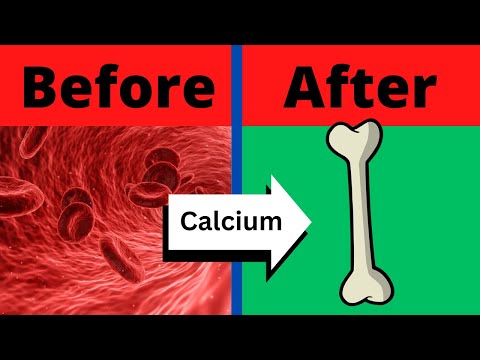
Vitamin K2 takes Calcium out of your Arteries and into your Bones