Artificial Food Dyes: Hidden Dangers in Our Food Supply
Table of Contents
- A Brief History of Synthetic Food Dyes
- The Seven FDA-Approved Synthetic Food Dyes
- How Synthetic Food Dyes Are Made
- Where Artificial Food Dyes Are Found
- Health Concerns: What the Science Shows
- Regulatory Differences: The US vs. the Rest of the World
- Natural Alternatives to Synthetic Food Dyes
- Why Does the US Still Allow These Dyes?
- What Labels, Standards and Laws Show
- Explore Individual Food Dyes
- Connections
- Featured Videos
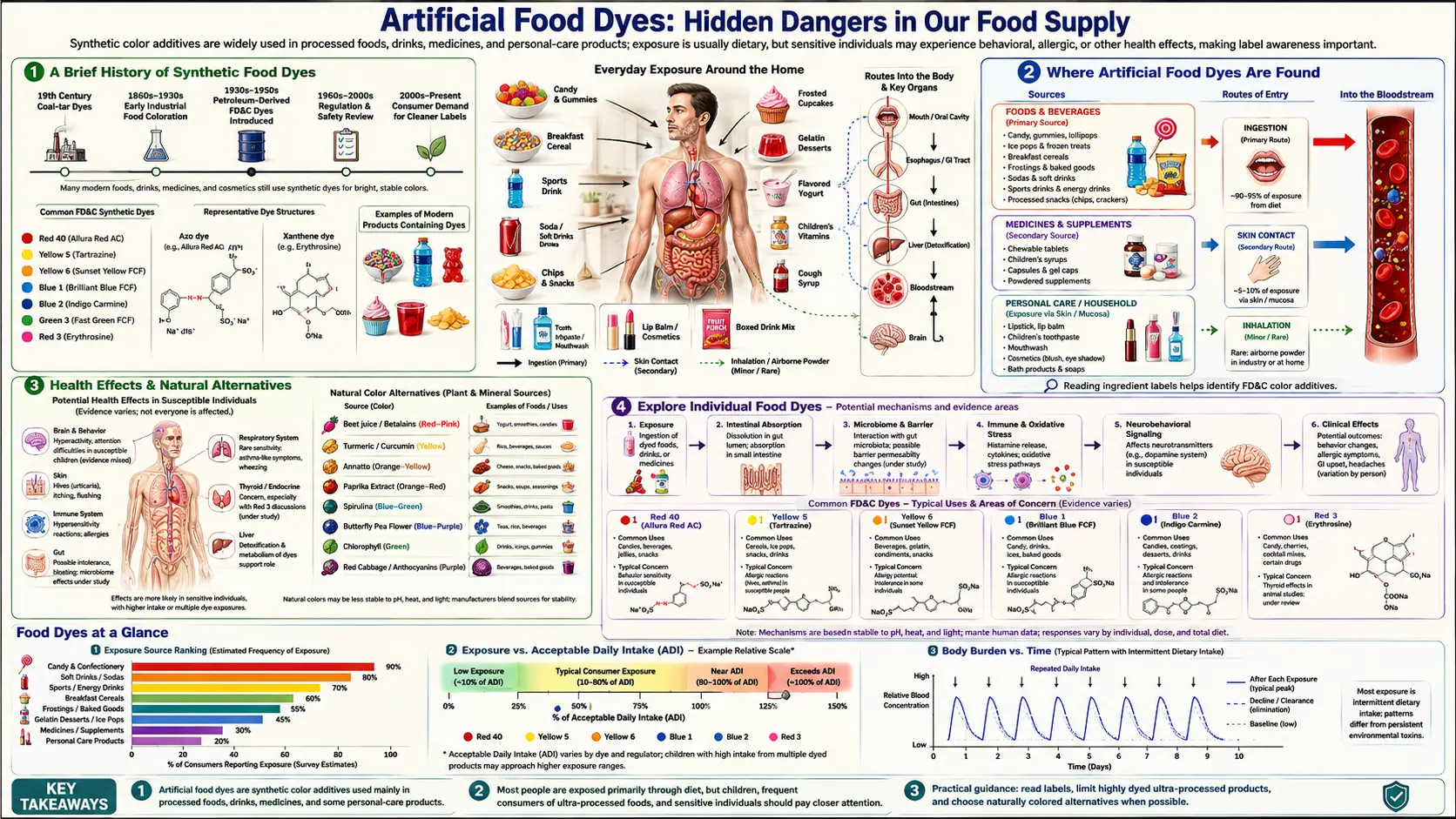
Artificial food dyes are among the most pervasive and least scrutinized chemical additives in the modern food supply. Found in everything from breakfast cereals and candy to medications and cosmetics, these petroleum-derived compounds were originally synthesized from coal tar in the late 1800s. Today, the average American consumes roughly five times more synthetic food dye than they did in 1955, with annual per-capita consumption exceeding 60 milligrams per day. Despite mounting scientific evidence linking these chemicals to hyperactivity in children, allergic reactions, organ toxicity, and cancer, the United States Food and Drug Administration still lists seven synthetic dyes for widespread use in food. It revoked one of them, Red No. 3, in January 2025 (effective in food on 15 January 2027), and in April 2025 HHS and FDA announced a plan to phase out the other six that relies largely on industry action.
A Brief History of Synthetic Food Dyes
The story of artificial food coloring begins in 1856, when British chemist William Henry Perkin accidentally synthesized mauveine, the first synthetic dye, from coal tar while attempting to create artificial quinine. This discovery launched an entire industry of synthetic colorants. By the late 1800s, food manufacturers had embraced these cheap, vibrant, and stable dyes as replacements for natural colorants. At one point, more than 80 different synthetic dyes were used in food products in the United States, many of which were later found to be toxic.
The first major regulation came with the Pure Food and Drug Act of 1906, which attempted to curb the most dangerous adulterants. Over the following decades, many dyes were removed from the approved list as evidence of toxicity accumulated. The Federal Food, Drug, and Cosmetic Act of 1938 further tightened regulations, and by the 1960s and 1970s, several more dyes were delisted after being linked to cancer and organ damage. Today, only seven synthetic dyes remain approved by the FDA for use in food, yet the total volume of dye consumed has increased dramatically due to the proliferation of processed foods.
The Seven FDA-Approved Synthetic Food Dyes
The following seven artificial colors are currently certified by the FDA for use in food products sold in the United States. Each is a synthetic compound derived from petroleum, and each carries its own set of documented health concerns.
Red 40 (Allura Red AC)
- Chemical class: Azo dye derived from petroleum distillates
- Prevalence: The single most widely used food dye in the United States, accounting for approximately 40% of all food dye consumption
- Common products: Fruit-flavored snacks, sports drinks, candy, gelatin desserts, baked goods, and sauces
- Health concerns: Linked to hyperactivity in children, allergic reactions, and potential carcinogenicity; requires warning labels in the European Union
- Detailed page: Red 40 (Allura Red) In-Depth
Yellow 5 (Tartrazine)
- Chemical class: Azo dye, synthetic lemon-yellow colorant
- Prevalence: The second most widely used food dye in the US
- Common products: Citrus sodas, cheese-flavored tortilla chips, candy corn, pickles, mustard, boxed macaroni and cheese
- Health concerns: Cross-reactivity with aspirin sensitivity, asthma exacerbation, urticaria (hives), hyperactivity, and contamination with the known carcinogen benzidine
- Detailed page: Yellow 5 (Tartrazine) In-Depth
Yellow 6 (Sunset Yellow FCF)
- Chemical class: Azo dye, petroleum-derived orange-yellow colorant
- Prevalence: The third most commonly used dye in the US food supply
- Common products: Orange soda, cheese-flavored snacks, sausage casings, candy, baked goods, and cereals
- Health concerns: Linked to adrenal tumors in animal studies, allergic reactions, hyperactivity in children, and contamination with carcinogenic compounds including benzidine and 4-aminobiphenyl
Blue 1 (Brilliant Blue FCF)
- Chemical class: Triphenylmethane dye derived from petroleum
- Common products: Ice cream, canned peas, candy, beverages, icings, and blue-colored sports drinks
- Health concerns: Poorly absorbed by the body but has been shown to cross the blood-brain barrier; linked to chromosomal damage in vitro; caused kidney tumors in animal studies; reactions in sensitive individuals include rashes and breathing difficulties
Blue 2 (Indigo Carmine / Indigotine)
- Chemical class: Indigoid dye, synthetic version of natural indigo
- Common products: Candy, baked goods, pet food, and pharmaceutical tablets
- Health concerns: Linked to brain tumors (gliomas) in male rats at high doses; may cause nausea, vomiting, high blood pressure, and skin rashes in sensitive individuals; concerns about statistical significance of tumor findings in original safety studies
Green 3 (Fast Green FCF)
- Chemical class: Triphenylmethane dye
- Common products: Canned vegetables, candy, desserts, cereals, and sauces (relatively rare compared to other dyes)
- Health concerns: Linked to bladder tumors and testicular tumors in animal studies; mutagenic in some in vitro tests; poorly studied compared to more commonly used dyes
Red 3 (Erythrosine)
- Chemical class: Xanthene dye containing iodine
- Common products: Candy hearts, cake decorations, maraschino cherries, popsicles, and some medications
- Health concerns: The FDA banned Red 3 in cosmetics and externally applied drugs in 1990 after it was shown to cause thyroid cancer in animals. On 16 January 2025 the FDA revoked its authorization in food (effective 15 January 2027) and in ingested drugs (effective 18 January 2028) under the Delaney Clause, because it causes thyroid tumors in male rats; the FDA stated that the rat mechanism is of limited relevance to humans and that a human cancer risk at current exposure levels is unlikely. Objections stayed the order in February 2025; the FDA lifted the stay on 5 August 2026 and confirmed both dates. California also bans it in food from 1 January 2027 under the Food Safety Act of 2023
- Detailed page: Red 3 (Erythrosine) In-Depth
How Synthetic Food Dyes Are Made
All seven FDA-approved synthetic food dyes are manufactured from petroleum (crude oil) derivatives. The process typically begins with raw materials extracted during petroleum refining, including benzene, toluene, and naphthalene. Through a series of chemical reactions involving sulfonation, nitration, reduction, and diazotization, these petrochemicals are transformed into the brightly colored compounds found in food. Azo dyes (Red 40, Yellow 5, Yellow 6) are formed through a process called diazotization coupling, where a diazonium salt reacts with a coupling agent to create the chromophore responsible for color. The resulting compounds are then purified, dried, and ground into powders or dissolved into liquid concentrates for use by food manufacturers.
During manufacturing, contaminants such as benzidine, 4-aminobiphenyl, and other aromatic amines may be present in the final product. Both benzidine and 4-aminobiphenyl are recognized human carcinogens. The FDA sets limits on these contaminants, but critics argue that no level of a known carcinogen should be considered safe, particularly when exposure is chronic and begins in early childhood.
Where Artificial Food Dyes Are Found
The reach of synthetic food dyes extends far beyond obviously colorful candy and sodas. These additives are found in a staggering array of consumer products.
Food and Beverages
- Breakfast cereals: Many popular cereals marketed to children contain multiple synthetic dyes to achieve bright, appealing colors
- Candy and confections: From gummy bears to candy-coated chocolates, artificial dyes create the rainbow of colors consumers expect
- Beverages: Sodas, sports drinks, fruit-flavored drinks, and flavored waters frequently contain synthetic dyes
- Baked goods: Cakes, cookies, frostings, and pastries often use dyes, even when the color appears "natural"
- Dairy products: Flavored yogurts, ice cream, and cheese products may contain dyes
- Savory foods: Pickles, salad dressings, sausages, smoked salmon, and seasoning mixes frequently contain added color
- Condiments: Ketchup, mustard, barbecue sauce, and relish may contain artificial dyes
Medications and Supplements
- Over-the-counter drugs: Many liquid and chewable medications, including those marketed to children, contain artificial dyes for visual appeal
- Prescription medications: Tablet coatings and capsule shells frequently use synthetic dyes for identification purposes
- Vitamins and supplements: Gummy vitamins and many tablet supplements contain artificial colors
Cosmetics and Personal Care
- Toothpaste and mouthwash: Common oral care products contain dyes for aesthetic purposes
- Shampoo and body wash: Color is added to make products visually appealing
- Lip products and makeup: Some food-grade dyes are also used in cosmetics (though Red 3 was banned from this use in 1990)
Health Concerns: What the Science Shows
Hyperactivity and Behavioral Effects in Children
The link between artificial food dyes and hyperactivity in children has been studied for over 50 years. Dr. Ben Feingold first proposed the connection in the 1970s, and while his work was initially dismissed by industry-funded researchers, subsequent studies have strengthened the evidence. The landmark 2007 Southampton Study, published in The Lancet, demonstrated that mixtures of artificial food dyes and the preservative sodium benzoate increased hyperactive behavior in children in the general population, not just those with pre-existing ADHD. This study was pivotal in prompting the European Union to require warning labels on products containing certain food dyes, stating that they "may have an adverse effect on activity and attention in children."
Allergic Reactions and Hypersensitivity
Synthetic food dyes are documented triggers for allergic and pseudo-allergic reactions in sensitive individuals. Tartrazine (Yellow 5) is particularly notorious for triggering reactions in people with aspirin sensitivity, with symptoms including urticaria (hives), angioedema (swelling), asthma exacerbation, and rhinitis. Red 40 and other azo dyes can also provoke hypersensitivity reactions. Because dyes are present in so many products, affected individuals often have difficulty identifying the source of their symptoms.
Carcinogenicity and Genotoxicity
Several approved food dyes have raised cancer concerns in animal and in vitro studies. Red 3 caused thyroid tumors in rats, leading the FDA to ban it from cosmetics in 1990 and, in January 2025, to revoke its use in food (effective 15 January 2027). Blue 2 was linked to brain tumors in male rats. Yellow 5 and Yellow 6 have been found to be contaminated with known carcinogens, including benzidine. Multiple dyes have shown genotoxic potential in laboratory studies, meaning they can damage DNA. The Center for Science in the Public Interest has called for bans on several dyes based on this cumulative evidence.
Organ Toxicity
Animal studies have documented toxic effects of food dyes on multiple organ systems, including the liver, kidneys, thyroid, and reproductive organs. Red 3 disrupts thyroid hormone function due to its iodine content. Several dyes have shown evidence of developmental toxicity and neurotoxicity in animal models. The cumulative effect of daily exposure to multiple dyes from multiple sources remains poorly studied.
Gut Microbiome Disruption
Emerging research suggests that artificial food dyes may alter the composition and function of the gut microbiome. A 2022 study found that Red 40 (Allura Red) promoted intestinal inflammation in animal models by disrupting the gut barrier and altering microbial communities. Given the growing understanding of the gut microbiome's role in overall health, immune function, and mental health, these findings are particularly concerning.
Regulatory Differences: The US vs. the Rest of the World
The regulatory approach to artificial food dyes varies dramatically around the world, with the United States being among the most permissive nations.
- United States: No warning label is required; after a 2011 Food Advisory Committee review, the FDA concluded that a causal relationship between certified color additives and hyperactivity in the general population of children had not been established. The April 2025 HHS/FDA plan seeks to eliminate the six remaining synthetic dyes (Blue 1 and 2, Green 3, Red 40, Yellow 5 and 6) by the end of 2026, largely through industry action; they remain listed as permitted color additives. The FDA revoked Orange B effective 8 September 2026 and proposed revoking Citrus Red No. 2 in July 2026.
- European Union: Requires mandatory warning labels on foods containing six specific dyes (Red 40, Yellow 5, Yellow 6, and others), stating they "may have an adverse effect on activity and attention in children." Many EU manufacturers have voluntarily reformulated products to use natural colorants. The EU banned Titanium Dioxide (E171) in food in 2022.
- United Kingdom: Following the Southampton Study, the UK Food Standards Agency encouraged voluntary removal of the "Southampton Six" dyes, and most major food companies complied
- Norway and Austria: Apply the EU food-additive rules (Austria as an EU member; Norway through the EEA since 2011), so Tartrazine (Yellow 5) is permitted there with the EU warning label
- Japan, Canada, Australia and New Zealand: Permit all seven US-certified food dyes; Green 3 is the one US dye not authorised in the EU and Great Britain
A country-by-country comparison of each dye's status, from each jurisdiction's own rules: Food Dyes Banned in Other Countries: What Is Actually Restricted.
Natural Alternatives to Synthetic Food Dyes
Safe, effective natural alternatives exist for every synthetic food dye currently in use. Many European food companies already use these alternatives in products that are sold with synthetic dyes in the United States. The same brand of candy or cereal may contain natural colors in Europe and petroleum-derived dyes in America.
- Red: Beet juice, lycopene (from tomatoes), carmine (from cochineal insects), anthocyanins (from red cabbage, berries), paprika extract
- Yellow: Turmeric (curcumin), saffron, annatto, beta-carotene
- Orange: Paprika, beta-carotene, annatto
- Blue: Spirulina extract (phycocyanin), butterfly pea flower, red cabbage extract at specific pH
- Green: Chlorophyll, spirulina, matcha
- Purple: Anthocyanins from grapes, berries, or purple sweet potatoes
- Brown: Caramel color (though this has its own concerns), cocoa
Why Does the US Still Allow These Dyes?
The continued approval of synthetic food dyes in the United States despite growing evidence of harm can be attributed to several interrelated factors.
- Industry lobbying: Critics argue that food- and chemical-industry lobbying influences FDA decision-making and Congressional oversight
- Burden of proof: New color additives need FDA pre-market approval, but removing an approved one requires a formal rule or order and can take years; critics contrast this with the EU's precautionary principle, which allows provisional restrictions under scientific uncertainty
- "Generally Recognized as Safe" (GRAS) loopholes: The GRAS system allows many food additives to bypass rigorous FDA review, with safety determinations sometimes made by panels with industry ties
- Outdated safety studies: Many approved dyes were grandfathered in based on studies conducted decades ago using methods and sample sizes that would not meet modern scientific standards
- Economic interests: Synthetic dyes are significantly cheaper than natural alternatives, and reformulation would require investment by food manufacturers
- Regulatory inertia: The FDA has historically been slow to act on food safety concerns, often taking decades to respond to emerging evidence
What Labels, Standards and Laws Show
- Ingredient labels: Certified dyes must be identified individually by name (Red 40, Yellow 5, Blue 1, etc.) in US ingredient lists
- Natural colors: Some products are colored with beet juice, turmeric, annatto, or other plant-based colorants, which are also named on the label
- Organic standards: USDA Organic certification prohibits the use of synthetic food dyes
- Brightly colored processed foods: The more vivid and unnatural the color, the more likely synthetic dyes are present
- Medications: Many medications, including some made for children, contain dyes; dye-free versions exist for some of them, and pharmacists can identify these
- State law: California's Food Safety Act of 2023 prohibits food containing Red No. 3, brominated vegetable oil, potassium bromate or propylparaben from 1 January 2027
- Reformulation: Some manufacturers already use natural colorants in versions of their products made for European markets
Explore Individual Food Dyes
Connections
Featured Videos