Celery Juice Bioactive Compounds — What Is Actually in the Glass
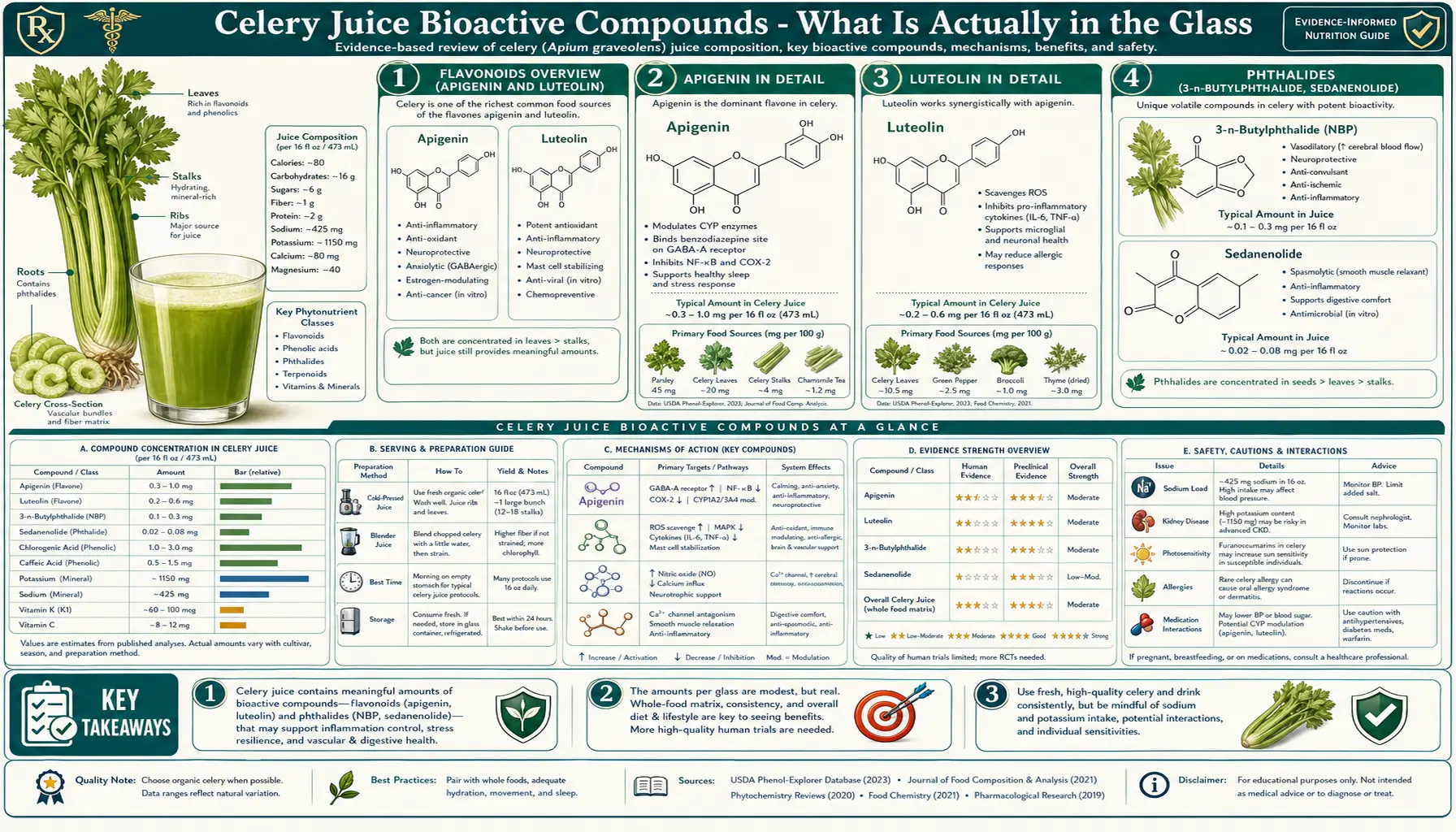
A 16-ounce serving of fresh-pressed celery juice contains a measurable, peer-reviewed mixture of bioactive compounds: approximately 36-50 mg of the flavonoid apigenin (as apiin and free apigenin), 8-15 mg of luteolin (as luteolin-7-O-glucoside and free luteolin), 3-15 mg of the phthalide 3-n-butylphthalide (NBP) and related sedanenolide phthalides, polyacetylenes (falcarinol and falcarindiol), apiin, 100-250 mg of dietary nitrate, 690 mg potassium, 215 mg sodium, approximately 56 µg of Vitamin K, and trace amounts of Vitamin C, folate, and B vitamins. None of these compounds require any metaphysical framework to be real or to have documented pharmacology. This page is the inventory: what is in the glass, in what quantity, with what peer-reviewed action.
Table of Contents
- Flavonoids Overview (Apigenin and Luteolin)
- Apigenin in Detail
- Luteolin in Detail
- Phthalides (3-n-Butylphthalide, Sedanenolide)
- Polyacetylenes (Falcarinol, Falcarindiol)
- Dietary Nitrates
- Electrolytes (Sodium, Potassium)
- Vitamins and Trace Minerals
- What Is Lost in Juicing (Fiber)
- Key Research Papers
- Connections
- Featured Videos
Flavonoids Overview (Apigenin and Luteolin)
Celery is among the richest dietary sources of two specific flavone-class flavonoids: apigenin and luteolin. Both occur primarily as glycosides (sugar-conjugated forms): apigenin is most commonly present as apiin (apigenin-7-O-apiosylglucoside, named after celery itself: Apium), and luteolin is most commonly present as luteolin-7-O-glucoside. The juicing process releases these compounds from the cell matrix into the liquid phase, though some are lost in the discarded pulp.
Quantitative estimates from peer-reviewed analyses of fresh celery juice:
- Apigenin equivalents: approximately 19.1 to 38.4 mg per 100 g fresh celery, translating to roughly 36-72 mg in a typical 16 oz juice yield from one pound of celery
- Luteolin equivalents: approximately 8-16 mg per 100 g fresh celery, translating to roughly 15-30 mg per 16 oz juice
For context, these are substantial doses. Most clinical trials of apigenin or luteolin as isolated compounds have used doses in the 50-200 mg range, achievable from celery juice alone or in combination with other Apiaceae-family foods (parsley is even richer in apigenin per gram).
Apigenin in Detail
Apigenin (4',5,7-trihydroxyflavone) is one of the most-studied dietary flavonoids in the past two decades. Documented mechanisms in peer-reviewed pharmacology:
- NF-kB pathway inhibition. Apigenin suppresses nuclear translocation of NF-kB (the master transcription factor for pro-inflammatory cytokine production), reducing downstream IL-6, TNF-alpha, IL-1-beta, and COX-2 expression. This is the proposed mechanism behind its anti-inflammatory activity in animal models and cell culture.
- Mast cell stabilization. Apigenin reduces IgE-mediated histamine release from mast cells, with proposed clinical relevance to allergic rhinitis and atopic conditions. The effect is comparable to cromolyn in in vitro comparisons.
- Mild estrogen receptor modulation. Apigenin is a weak phytoestrogen with documented binding to ER-beta. Whether dietary doses produce systemic estrogenic effects in humans is uncertain, but the affinity is real.
- Monoamine oxidase inhibition. Apigenin weakly inhibits MAO-A and MAO-B at micromolar concentrations. This is proposed to contribute to a mild mood-elevating effect at high doses.
- Cell-cycle and apoptosis effects in cancer cell lines. Apigenin induces G2/M cell-cycle arrest and intrinsic apoptosis in many human cancer cell lines in vitro. This is repeatedly observed but has not translated to demonstrated cancer prevention or treatment efficacy in human dietary epidemiology.
- Anxiolytic effect at the GABA-A benzodiazepine site. Apigenin is a partial agonist at the GABA-A benzodiazepine binding site, with documented anxiolytic effect in rodent models. This is proposed as one mechanism behind the calming reputation of celery and parsley in traditional herbal medicine.
The systemic bioavailability of apigenin from dietary sources is modest but not negligible — plasma concentrations after a celery-rich meal reach approximately 0.1-0.3 µM, which is below the concentrations used in most cell-culture experiments but within the range where mast cell stabilization and mild NF-kB modulation may be measurable.
The dedicated Apigenin page covers the compound's pharmacology in more depth.
Luteolin in Detail
Luteolin (3',4',5,7-tetrahydroxyflavone) is the close structural cousin of apigenin, differing only by an additional hydroxyl group on the B-ring. The extra hydroxyl substantially increases antioxidant potency, in some assays making luteolin a stronger radical scavenger than vitamin E.
Documented luteolin effects:
- Microglial deactivation. Luteolin crosses the blood-brain barrier and suppresses activated microglia (the brain's resident inflammatory cells). This is the basis for the substantial research interest in luteolin as a candidate intervention for neuroinflammatory conditions including autism spectrum disorder, traumatic brain injury, and post-COVID neurological symptoms.
- Anti-inflammatory effect comparable to apigenin. NF-kB inhibition, reduced IL-6 and TNF-alpha, COX-2 modulation — same general flavonoid mechanism.
- Histamine reduction via mast cell stabilization. Documented in atopic dermatitis and chronic urticaria models, with luteolin slightly more potent than apigenin in head-to-head comparisons.
- Endothelial protection and mild vasodilation. Luteolin upregulates endothelial nitric oxide synthase and reduces oxidative damage to vascular endothelium.
- Insulin sensitization in animal models. Reduced fasting glucose and improved glucose tolerance in high-fat-diet rodent models. Human evidence is limited.
Bioavailability of luteolin from dietary celery is in the same range as apigenin — plasma concentrations reach low-micromolar after a large dose. The dedicated Luteolin page has more detail.
Phthalides (3-n-Butylphthalide, Sedanenolide)
Phthalides are a class of aromatic lactones largely responsible for celery's characteristic odor. The most studied is 3-n-butylphthalide (NBP), sometimes also called butylphthalide or 3-BP. Other related phthalides in celery include sedanenolide, sedanolide, and ligustilide (the last is more abundant in Dong Quai but also present in celery).
3-n-Butylphthalide is sufficiently pharmacologically active that a synthetic version is approved and marketed in China as an investigational therapy for acute ischemic stroke under the brand name "NBP" (Shijiazhuang Pharmaceutical). Documented mechanisms include:
- Calcium-channel modulation in vascular smooth muscle — the proposed mechanism for celery's mild blood pressure reduction
- Mitochondrial protection and reduced apoptosis in ischemic neurons
- Antiplatelet activity (relevant to both the cardiovascular benefit signal and the warning that high-dose celery juice may interact with antiplatelet drugs)
- Improvement of cerebral microcirculation in stroke models
- Mild GABAergic activity contributing to celery's sedative reputation
Dietary NBP exposure from 16 oz celery juice is approximately 3-15 mg depending on celery variety and growing conditions — well below the therapeutic NBP-drug dose of 600 mg/day used in Chinese stroke trials, but not negligible.
The phthalide content is the most plausible single explanation for celery's documented mild blood pressure effect in human studies. See the Celery Juice for Blood Pressure article for the clinical evidence.
Polyacetylenes (Falcarinol, Falcarindiol)
The Apiaceae family (celery, carrot, parsley, parsnip, fennel) produces a distinctive group of polyacetylene compounds — chemically unusual molecules with multiple triple bonds. The two most-studied are falcarinol and falcarindiol. Both occur in celery, though carrot is the richer dietary source.
Polyacetylene effects:
- Selective toxicity to several human cancer cell lines (colon, breast, leukemia) in cell culture at micromolar concentrations
- Mild anti-inflammatory effect through PPAR-gamma agonism
- Antimicrobial effect against several common pathogens at high concentrations
The polyacetylene content of celery is lower than carrot and is partly bound to the cellulose matrix, so juicing may not extract all of it. Bioavailability data are limited.
Dietary Nitrates
Celery is a moderate dietary nitrate source. A 16 oz juice provides approximately 100-250 mg of inorganic nitrate (NO3-), depending on soil conditions and farming practices. For comparison, beetroot juice typically delivers 300-600 mg nitrate per equivalent serving and arugula can exceed 1000 mg/100 g.
The dietary nitrate-nitrite-nitric oxide pathway is one of the better-established mechanisms in vegetable-based cardiovascular benefit:
- Dietary nitrate is absorbed in the small intestine and concentrated in saliva
- Oral commensal bacteria (especially on the dorsum of the tongue) reduce nitrate to nitrite
- Swallowed nitrite is further reduced in the acidic stomach and via various mammalian enzymes to nitric oxide (NO) and other reactive nitrogen species
- Systemic NO produces vasodilation, reduces blood pressure, improves endothelial function, and improves muscle oxygen economy during exercise
This is one mechanism behind celery juice's mild blood pressure effect, alongside the phthalide content. It also explains why post-mouthwash use abolishes most of the cardiovascular nitrate benefit from any vegetable source — antibacterial mouthwash kills the oral bacteria that perform step 2.
One curiosity: some bottled, commercial pasteurized celery juice products use nitrate-rich celery powder explicitly as a "natural" sodium nitrite replacement in cured meats (this is why "uncured" bacon labeled "no nitrites or nitrates added" often contains the qualifier "except those naturally occurring in celery powder"). The dietary nitrate exposure from this culinary use is generally lower than the direct juice consumption.
Electrolytes (Sodium, Potassium)
Celery is unusually sodium-rich for a vegetable. A 16 oz juice provides approximately:
- Sodium: 215 mg (approximately 9% of the 2,300 mg daily upper recommended limit)
- Potassium: 690 mg (approximately 15% of the 4,700 mg daily adequate intake)
The sodium-potassium ratio of about 1:3.2 is favorable for cardiovascular health — epidemiologic evidence consistently shows that a higher dietary K:Na ratio is associated with lower blood pressure and lower cardiovascular event rates. This is the same logic behind the DASH diet's emphasis on potassium-rich vegetables and fruits.
For most adults the sodium load from celery juice is unremarkable in the context of a normal diet. Patients on sodium-restricted diets for advanced heart failure or end-stage renal disease should be aware that 16 oz daily contributes a non-trivial amount of sodium that should be counted in their total intake.
Patients on lithium should be cautious about substantial changes in dietary sodium intake. Lithium clearance by the kidney is partly dependent on sodium handling, and sustained increases or decreases in sodium intake can shift serum lithium levels into the toxic range. Anyone on chronic lithium should discuss any large new dietary intervention with their psychiatrist or pharmacist.
Vitamins and Trace Minerals
The micronutrient content of 16 oz celery juice (approximate):
- Vitamin K (phylloquinone): 56 µg (approximately 47% of the daily adequate intake). This is the single most consequential micronutrient figure for drug interaction purposes — patients on warfarin must keep Vitamin K intake stable, and adding or stopping daily celery juice constitutes a meaningful change.
- Vitamin C: 8-12 mg (modest; juice loses vitamin C to oxidation during pressing and storage)
- Folate: 70-90 µg
- Vitamin A (as beta-carotene): small amounts, varying with celery variety
- Calcium: 90 mg
- Magnesium: 30 mg
- Phosphorus: 50 mg
- Iron: 0.5 mg (poorly absorbed; non-heme)
- Manganese, copper, zinc: trace amounts
None of these are particularly high in isolation. The case for celery juice on a micronutrient basis is weak compared with, say, leafy greens or organ meats. The vegetable's nutritional interest is in its phytochemistry (flavonoids, phthalides, polyacetylenes, nitrates) rather than its micronutrient density.
What Is Lost in Juicing (Fiber)
The most important nutritional caveat is that juicing eliminates virtually all of the insoluble fiber from the vegetable. The discarded pulp contains cellulose, hemicellulose, lignin, and some pectin — the bulk of celery's ~1.6 g fiber per 100 g.
Loss of fiber has several consequences:
- Reduced gut microbiome substrate. Soluble fiber feeds beneficial gut bacteria that produce short-chain fatty acids (butyrate, propionate, acetate) with documented systemic benefit. Juice retains less of this prebiotic capacity than whole vegetable.
- Reduced satiety. Fiber slows gastric emptying and contributes to fullness. Juice is absorbed faster and produces less satiety per calorie.
- Reduced cholesterol-lowering effect. Soluble fiber binds bile acids and modestly lowers LDL cholesterol. Juice loses much of this effect.
- Faster absorption of any sugars present. Less relevant for celery (very low sugar) but the general principle applies.
- Loss of phytochemicals bound to the fiber matrix. Some flavonoids and polyacetylenes are partly bound to cell-wall material and are discarded with the pulp.
The juice retains the soluble, free-form bioactive compounds (free apigenin and luteolin, dissolved phthalides, nitrates, electrolytes, Vitamin C, dissolved sugars) but loses the insoluble matrix that contributes much of the whole vegetable's long-term health value.
For users who want both the juice's rapid bioactive delivery and the whole vegetable's fiber benefit, a reasonable compromise is to use a high-powered blender (which keeps the fiber) rather than a juicer (which discards it). The blended product is a "smoothie" rather than a "juice" but provides closer to whole-vegetable nutrition with similar bioactive content.
Key Research Papers
- Hostetler GL et al. (2017). Flavones: Food sources, bioavailability, metabolism, and bioactivity. Advances in Nutrition. — PubMed
- Salehi B et al. (2019). The therapeutic potential of apigenin. International Journal of Molecular Sciences. — PubMed
- Lopez-Lazaro M (2009). Distribution and biological activities of the flavonoid luteolin. Mini Reviews in Medicinal Chemistry. — PubMed
- Lin Y et al. (2008). Luteolin, a flavonoid with potential for cancer prevention and therapy. Current Cancer Drug Targets. — PubMed
- Peng Y et al. (2010). l-3-n-Butylphthalide improves cognitive impairment and reduces amyloid-beta in a transgenic model of Alzheimer's. Journal of Neuroscience. — PubMed
- Wang BN et al. (2018). Butylphthalide for treatment of cerebral ischemia: pharmacological review. Frontiers in Pharmacology. — PubMed
- Christensen LP (2011). Aliphatic C17-polyacetylenes of the falcarinol type as potential health-promoting compounds in food. Recent Patents on Food, Nutrition & Agriculture. — PubMed
- Lundberg JO et al. (2008). The nitrate-nitrite-nitric oxide pathway in physiology and therapeutics. Nature Reviews Drug Discovery. — PubMed
- Madhujith T, Shahidi F (2007). Antioxidant potential of fresh and processed celery. Journal of Food Lipids. — PubMed
- Yao Y et al. (2012). Apigenin and luteolin: dietary sources and biosynthesis. Phytochemistry Reviews. — PubMed
- Aviello G et al. (2009). Garlic: empiricism or science? Natural Product Communications (comparative dietary phytochemical context). — PubMed
- Slavin JL, Lloyd B (2012). Health benefits of fruits and vegetables. Advances in Nutrition. — PubMed
PubMed Topic Searches
- PubMed: Celery phytochemistry
- PubMed: Apigenin and luteolin in celery
- PubMed: 3-n-Butylphthalide and celery phthalides
- PubMed: Dietary nitrate from vegetables
- PubMed: Celery polyacetylenes
Connections
- All Remedies
- Celery Juice Benefits Hub
- Anthony William Origin Story
- Claimed Detox Benefits
- Evidence and Skepticism
- Celery Juice (Hub)
- Celery Juice and Blood Pressure
- Celery (Whole Food)
- Luteolin
- Apigenin
- Polyphenols
- Potassium
- Vitamin K
- Beets (Dietary Nitrate)
- Parsley (Apiaceae)
- Hypertension
- Dong Quai (Angelica sinensis) — the Apiaceae root richest in ligustilide, the celery phthalide discussed above