Molybdenum and Detoxification
Table of Contents
- Overview
- Key Benefits at a Glance
- Sulfite Oxidase and Sulfite Detoxification
- Sulfite Sensitivity
- Aldehyde Oxidase and Xenobiotic Metabolism
- Xanthine Oxidase and Purine Metabolism
- Environmental Toxin Processing
- Clinical Relevance
- Dosing and Dietary Sources
- Safety and Drug Interactions
- Research Papers
- Connections
- Featured Videos
Key Benefits at a Glance
- Sulfite detoxification – Sulfite oxidase is the sole enzymatic pathway for converting toxic sulfite to sulfate.
- Xenobiotic metabolism – Aldehyde oxidase oxidizes nitrogen heterocycles, environmental aldehydes, and many pharmaceuticals.
- Purine catabolism – Xanthine oxidase drives hypoxanthine → xanthine → uric acid for renal excretion.
- Neonatal neuroprotection – Cofactor replacement (fosdenopterin) prevents catastrophic sulfite toxicity in MoCD type A.
- Complements cytochrome P450 – Provides broad-spectrum phase I detoxification independent of CYP enzymes.
- Supports sulfur amino acid catabolism – Critical for balanced methionine and cysteine metabolism.
Overview
- Molybdenum is indispensable to the body's detoxification capacity through its role in three key enzymes: sulfite oxidase, aldehyde oxidase, and xanthine oxidase.
- Each of these enzymes requires the molybdopterin cofactor (Moco) to function. Without adequate molybdenum or intact cofactor biosynthesis, detoxification of sulfites, aldehydes, purines, and various xenobiotics is severely compromised.
- Molybdenum-dependent detoxification operates largely independently of the cytochrome P450 system, providing a complementary and essential biotransformation pathway.
Sulfite Oxidase and Sulfite Detoxification
- Sulfite oxidase is a mitochondrial intermembrane space enzyme that catalyzes the oxidation of sulfite (SO₃²⁻) to sulfate (SO₄²⁻), using cytochrome c as the physiological electron acceptor.
- This reaction represents the sole enzymatic pathway for sulfite elimination in humans. There is no redundant or compensatory mechanism for sulfite detoxification.
- Endogenous sulfite is continuously generated from the catabolism of the sulfur amino acids methionine and cysteine. Degradation of cysteine through the cysteine sulfinic acid pathway yields sulfite as a penultimate intermediate before conversion to sulfate.
- Exogenous sulfites are ingested through foods and beverages preserved with sulfiting agents (sodium sulfite, sodium bisulfite, sodium metabisulfite, potassium bisulfite, potassium metabisulfite, and sulfur dioxide). Common sources include wine, beer, dried fruits, fruit juices, processed meats, and condiments.
- Sulfite toxicity at the cellular level involves multiple mechanisms: disruption of disulfide bonds in proteins leading to loss of tertiary structure and function; reaction with S-adenosylmethionine and other sulfonium compounds; generation of sulfite radical anions (SO₃⁻) through one-electron oxidation that damage lipid membranes, DNA, and mitochondrial components; and depletion of glutathione stores.
- The nervous system is exquisitely sensitive to sulfite accumulation. Sulfite interferes with NMDA receptor function, disrupts calcium homeostasis, causes mitochondrial energy failure in neurons, and induces apoptotic cell death in developing brain tissue.
- Sulfite oxidase deficiency (either isolated or as part of molybdenum cofactor deficiency) results in neonatal seizures, progressive leukoencephalopathy, lens subluxation, and typically death in early childhood. Biochemically, patients exhibit markedly elevated urinary sulfite, S-sulfocysteine, thiosulfate, and decreased sulfate excretion.
Sulfite Sensitivity
- Sulfite sensitivity affects an estimated 1% of the general population and up to 5–10% of individuals with asthma, particularly those with steroid-dependent disease.
- Symptoms of sulfite sensitivity include bronchospasm, wheezing, urticaria, angioedema, gastrointestinal cramping, diarrhea, hypotension, and in severe cases anaphylactoid reactions.
- The mechanism is thought to involve insufficient sulfite oxidase activity relative to the sulfite load, resulting in transient sulfite accumulation that triggers mast cell degranulation, parasympathetic nerve stimulation in airways, and direct airway smooth muscle contraction.
- Individuals with sulfite sensitivity may benefit from ensuring adequate molybdenum intake to optimize sulfite oxidase function, though clinical data on molybdenum supplementation for sulfite sensitivity remain limited.
- Regulatory agencies require sulfite labeling on foods containing more than 10 parts per million of sulfite equivalents due to the clinical significance of sulfite-induced reactions.
Aldehyde Oxidase and Xenobiotic Metabolism
- Aldehyde oxidase (AO) is a cytosolic molybdoflavoprotein expressed predominantly in the liver, with additional expression in the lungs, kidneys, gastrointestinal tract, and brain.
- AO contains a molybdopterin cofactor, a FAD cofactor, and two iron-sulfur (2Fe-2S) clusters, enabling it to catalyze the oxidation of a remarkably broad range of substrates.
- Endogenous substrates include retinaldehyde (converted to retinoic acid), pyridoxal (vitamin B6 aldehyde form), and various biogenic aldehydes produced during neurotransmitter metabolism such as the aldehyde intermediates of dopamine and serotonin degradation.
- Xenobiotic metabolism: AO oxidizes a wide spectrum of exogenous compounds including nitrogen-containing heterocycles (pyridines, pyrimidines, purines, quinolines, phthalazines), aromatic and aliphatic aldehydes, and nitro-compounds. This makes it a significant enzyme in phase I drug metabolism.
- Pharmaceutical substrates of aldehyde oxidase include:
- Famciclovir (activated to the antiviral penciclovir)
- Zaleplon (sedative-hypnotic, primary metabolic pathway)
- Methotrexate (converted to 7-hydroxymethotrexate)
- Various kinase inhibitors used in oncology (SGX523, BIBX1382, and others withdrawn from development due to unexpectedly rapid AO-mediated clearance)
- Ziprasidone (atypical antipsychotic, partially metabolized by AO)
- Idelalisib and other targeted therapies
- AO-mediated metabolism has become a major consideration in drug development, as compounds cleared primarily by aldehyde oxidase may exhibit species-dependent pharmacokinetics (AO activity varies significantly between humans, rodents, and other preclinical species), leading to unexpected drug failures in clinical trials.
- AO also contributes to the detoxification of environmental aldehydes encountered through tobacco smoke, air pollution, industrial chemical exposure, and lipid peroxidation products such as 4-hydroxynonenal and malondialdehyde.
Xanthine Oxidase and Purine Metabolism
- Xanthine oxidase (XO) and its NAD⁺-dependent form xanthine dehydrogenase (XDH) catalyze the final two steps of purine catabolism: hypoxanthine to xanthine, and xanthine to uric acid.
- This represents a detoxification function because hypoxanthine and xanthine are relatively insoluble and must be converted to uric acid for renal excretion, or in their accumulated form (in enzyme deficiency), they can precipitate in renal tubules and cause obstructive nephropathy.
- Xanthine oxidase uses molecular oxygen as an electron acceptor, producing superoxide anion (O₂⁻) and hydrogen peroxide (H₂O₂) as byproducts. While these reactive oxygen species serve antimicrobial functions, their overproduction contributes to tissue damage.
- In the context of detoxification, XO contributes to the oxidative metabolism of various purines and pteridines beyond the canonical hypoxanthine-xanthine pathway, including the metabolism of certain purine analog drugs (6-mercaptopurine, azathioprine).
- XO is released into the circulation during tissue injury and inflammation (particularly from the liver and intestinal mucosa), where it binds to vascular endothelium via glycosaminoglycans and can generate oxidative stress at the vessel wall, contributing to ischemia-reperfusion injury and endothelial dysfunction.
- Xanthine oxidase inhibitors (allopurinol, febuxostat) are used therapeutically to reduce uric acid production in gout and to limit oxidative damage in conditions such as tumor lysis syndrome and ischemia-reperfusion injury.
Environmental Toxin Processing
- Molybdenum-dependent enzymes collectively provide a broad-spectrum detoxification capacity that complements the cytochrome P450 and conjugation enzyme systems.
- Sulfur dioxide (SO₂) exposure from air pollution and fossil fuel combustion generates sulfite in the respiratory tract, which must be detoxified by sulfite oxidase. Populations with high SO₂ exposure may place increased demand on this pathway.
- Aldehyde pollutants such as formaldehyde, acetaldehyde, and acrolein (from tobacco smoke, vehicle exhaust, and industrial emissions) are substrates for aldehyde oxidase-mediated oxidation.
- The purine load from high dietary intake of nucleic acid-rich foods (organ meats, sardines, anchovies, yeast extracts) requires adequate xanthine oxidase activity for efficient catabolism and excretion.
- Molybdenum status may therefore be particularly relevant for individuals with high xenobiotic exposure, heavy dietary sulfite intake, significant purine loads, or occupational exposure to aldehydes and sulfur compounds.
Clinical Relevance
- Molybdenum cofactor deficiency (MoCD) is the most dramatic demonstration of molybdenum's detoxification importance. Loss of all three enzyme activities produces overwhelming sulfite toxicity, xanthine accumulation, and impaired aldehyde metabolism, with the sulfite toxicity component being the primary driver of neurological devastation.
- Cyclic pyranopterin monophosphate (cPMP, fosdenopterin) replacement therapy for MoCD type A represents a breakthrough treatment, restoring molybdenum cofactor synthesis and preventing progressive neurological damage when administered early in the neonatal period.
- Genetic polymorphisms in aldehyde oxidase (AOX1 gene) can affect drug metabolism rates, with some variants producing rapid or slow metabolizer phenotypes that influence the efficacy and toxicity of AO-substrate drugs.
- Hepatic disease can impair molybdenum enzyme function due to reduced enzyme expression and cofactor availability, potentially compounding the detoxification deficit already present from impaired cytochrome P450 activity in liver disease.
- Patients on long-term total parenteral nutrition require molybdenum supplementation (typically as ammonium molybdate) to maintain adequate cofactor synthesis and detoxification enzyme function.
- Although frank molybdenum deficiency is exceedingly rare in individuals consuming oral diets, suboptimal molybdenum status in the context of high sulfite exposure, heavy purine intake, or significant xenobiotic burden may have clinically relevant effects on detoxification capacity that warrant further investigation.
Dosing and Dietary Sources
- RDA (adults) – 45 mcg/day; pregnancy and lactation 50 mcg/day.
- Tolerable Upper Intake Level (UL) – 2000 mcg/day (2 mg/day).
- Legumes – Black-eyed peas, lima beans, kidney beans, lentils are the richest sources.
- Whole grains – Oats, barley, whole wheat.
- Nuts and seeds – Almonds, peanuts, sunflower seeds.
- Organ meats – Liver and kidney.
- Typical supplements – 50–500 mcg/day as sodium molybdate or ammonium molybdate.
Safety and Drug Interactions
- Copper antagonism – High molybdenum intake (especially with sulfur) can induce functional copper deficiency; the chelator tetrathiomolybdate is used therapeutically in Wilson disease.
- Gout – Very high intakes (>500 mcg/day) have been associated with elevated uric acid in occupational exposure reports.
- Allopurinol / febuxostat – These xanthine oxidase inhibitors interact pharmacodynamically; clinical impact of dietary molybdenum is minimal.
- 6-Mercaptopurine / azathioprine – XO metabolism relevant; discuss with prescribing physician.
- TPN patients – Require formal molybdenum supplementation in total parenteral nutrition.
This content is provided for informational purposes only and does not constitute medical advice. Consult a qualified healthcare provider before starting molybdenum supplementation.
Research Papers
- Hille R, Hall J, Basu P. The mononuclear molybdenum enzymes. Chem Rev. 2014;114(7):3963-4038.
- Schwarz G, Mendel RR, Ribbe MW. Molybdenum cofactors, enzymes and pathways. Nature. 2009;460(7257):839-847.
- Reiss J, Hahnewald R. Molybdenum cofactor deficiency: mutations in GPHN, MOCS1, and MOCS2. Hum Mutat. 2011;32(1):10-18.
- Schwahn BC, Van Spronsen FJ, Belaidi AA, et al. Efficacy and safety of cyclic pyranopterin monophosphate substitution in severe molybdenum cofactor deficiency type A. Lancet. 2015;386(10007):1955-1963.
- Pryde DC, Dalvie D, Hu Q, Jones P, Obach RS, Tran TD. Aldehyde oxidase: an enzyme of emerging importance in drug discovery. J Med Chem. 2010;53(24):8441-8460.
- Harrison R. Physiological roles of xanthine oxidoreductase. Drug Metab Rev. 2004;36(2):363-375.
- Kisker C, Schindelin H, Rees DC. Molybdenum-cofactor-containing enzymes: structure and mechanism. Annu Rev Biochem. 1997;66:233-267.
- Turnlund JR. Molybdenum metabolism and requirements in humans. Met Ions Biol Syst. 2002;39:727-739.
- PubMed — sulfite oxidase deficiency
- PubMed — molybdenum cofactor deficiency
- NIH Office of Dietary Supplements — Molybdenum Fact Sheet
- Linus Pauling Institute — Molybdenum
Connections
- Molybdenum
- Sulfur
- Cysteine
- Methionine
- Copper
- Gout
- Sulfites
- Selenium
- Zinc
- Liver Cleansing
- Detoxification
- Uric Acid Test
- Sulfur and Joint Health
- Glutathione
- Oxidative Stress
- Organ Meats
- Copper-Iron Dysregulation
- Liver Disease
Featured Videos
Molybdenum - An Essential Mineral Every Body Needs
Are You Getting Enough Molybdenum? - Dr. Osborne's Zone
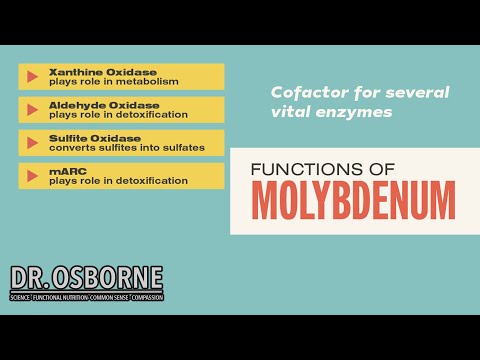
Discover How Molybdenum Affects Your Body's Metabolism!
M-36.Distribution, absorption, utilization, sources , deficiency and toxicity of Molybdenum ,
Mold Detox Explained: How to Recover from Chronic Mold Exposure
How I Manage Die-Off Symptoms: The Art of Candida Treatment

23. Could Your Histamine Intolerance Actually Be Sulfur Intolerance?
The 5 Most Common Copper Toxicity Symptoms