Valerian (Valeriana officinalis)
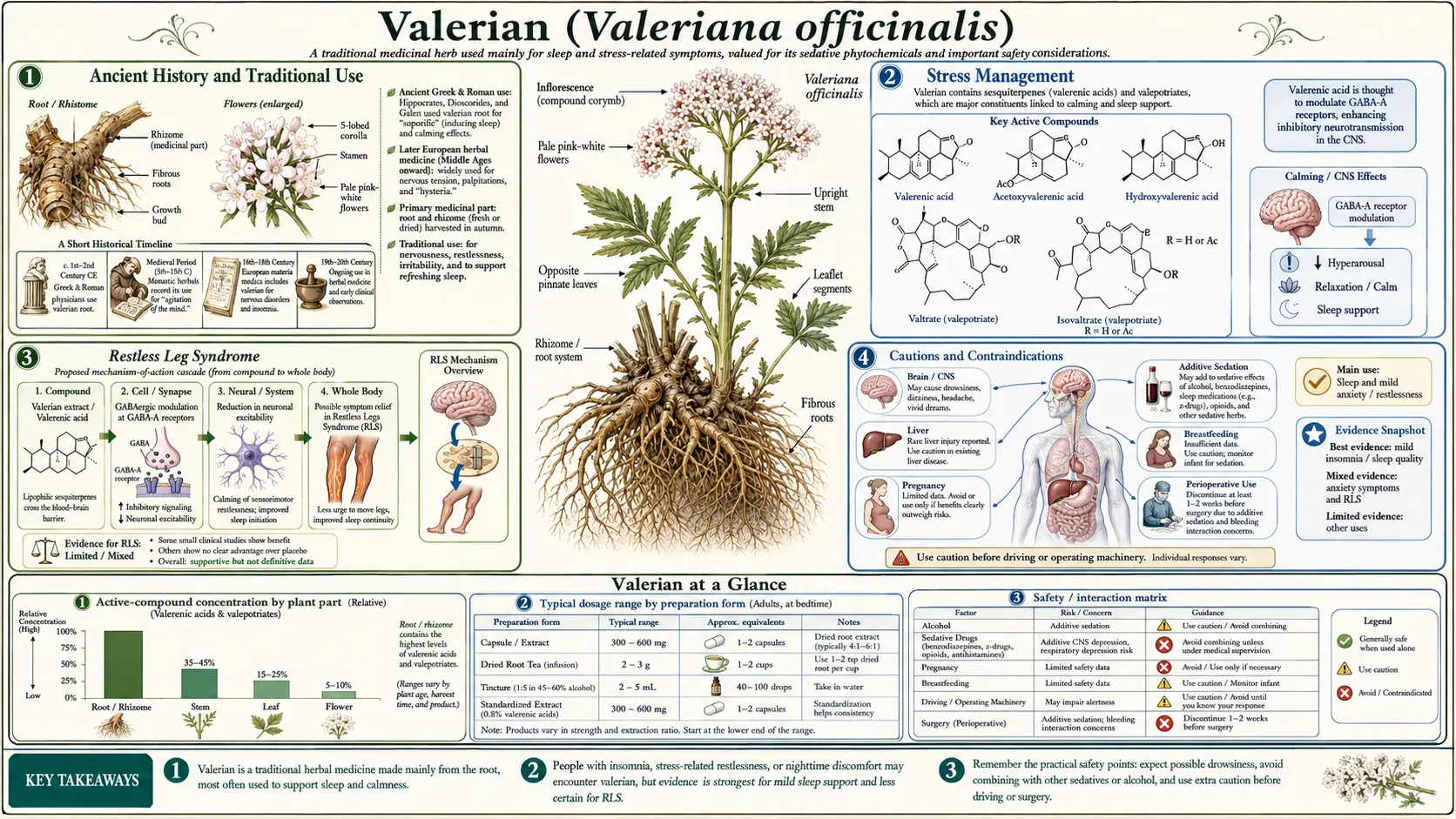
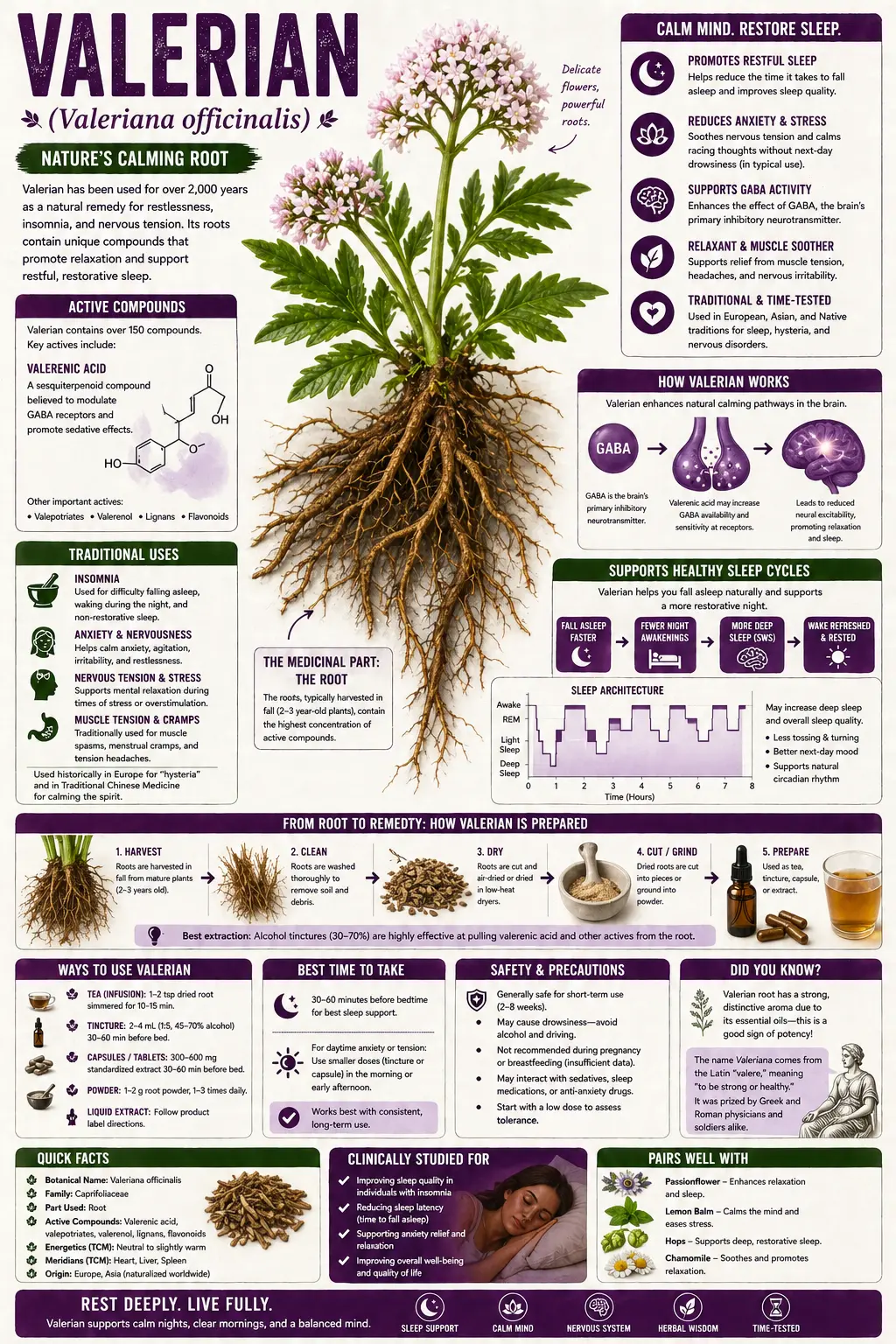
Table of Contents
- Ancient History and Traditional Use
- Active Compounds
- Natural Sleep Aid
- GABA Receptor Modulation
- Anxiety and Nervous Tension Relief
- Stress Management
- Muscle Relaxation and Cramp Relief
- Menstrual Cramp Relief
- Headache and Migraine Support
- Digestive Calming
- Restless Leg Syndrome
- Heart Palpitations from Anxiety
- Combination with Other Calming Herbs
- Forms and Preparations
- Recommended Dosage and Timing
- Cautions and Contraindications
- Featured Videos
Ancient History and Traditional Use
Valerian is one of the oldest calming plants in Western herbal medicine, though its early history is more tangled than the usual telling: for most of two thousand years it was known not as “valerian” but by older names such as phu and setwall, and the classical writers valued the root chiefly as a warming, settling medicine. Its now-famous identity as the remedy for the nerves and for sleep took firm shape only with the Renaissance herbalists and the centuries that followed, right up to the air-raid shelters of two world wars and the 1957 laboratory that first isolated the molecule named after it. — the fuller story is told in the dedicated History & Traditional Use article.
Active Compounds
Valerian root contains a complex mixture of bioactive constituents that work together synergistically. No single compound accounts for its full therapeutic effect; rather, it is the interplay of multiple chemical classes that gives valerian its remarkable calming properties.
- Valerenic acid: The most studied compound in valerian; inhibits the enzymatic breakdown of gamma-aminobutyric acid (GABA) in the brain, thereby increasing GABA availability and promoting relaxation and sedation
- Isovaleric acid: Contributes to valerian's characteristic pungent odor; possesses antispasmodic and mild sedative properties that support muscle relaxation
- Iridoids (valepotriates): A group of compounds including valtrate and isovaltrate that exhibit sedative, anxiolytic, and antispasmodic effects; these are somewhat unstable and are most potent in fresh or carefully processed preparations
- GABA: Valerian root contains small but measurable amounts of the neurotransmitter GABA itself, which may contribute directly to its calming effect, particularly in aqueous extracts and teas
- Flavonoids (hesperidin, linarin): Linarin in particular has demonstrated sleep-enhancing properties in research studies, and hesperidin provides antioxidant support
- Sesquiterpenes: Including valeranone and valerenal, which contribute to the overall sedative and spasmolytic profile of the root
- Volatile oils: A complex mixture of terpenes and esters that contribute both to the herb's aroma and to its pharmacological activity
Natural Sleep Aid
Valerian's primary and most well-documented use is as a natural sleep aid. For individuals who struggle with falling asleep, staying asleep, or achieving restorative sleep, valerian offers a gentle yet effective alternative to pharmaceutical sedatives.
- Clinical studies consistently show that valerian reduces sleep latency—the time it takes to fall asleep—often by 15 to 20 minutes compared to placebo
- Improves overall subjective sleep quality, with users reporting deeper, more restful, and more satisfying sleep
- Unlike many pharmaceutical sleep medications, valerian does not typically cause morning grogginess, mental fog, or a "hangover" effect the following day
- Does not suppress REM sleep or alter normal sleep architecture the way benzodiazepines and Z-drugs commonly do
- Benefits tend to build over time; while some individuals notice improvement on the first night, the most consistent results appear after two to four weeks of regular use
- Particularly effective for stress-related insomnia—the kind of sleeplessness driven by racing thoughts, worry, and an inability to mentally "switch off" at bedtime
- A valuable option for individuals weaning off prescription sleep medications under professional guidance, as it can ease the transition to unmedicated sleep
GABA Receptor Modulation
Understanding how valerian works at the neurochemical level helps explain why it is so effective yet so much gentler than pharmaceutical sedatives. The key lies in its interaction with the GABA system.
- GABA (gamma-aminobutyric acid) is the brain's primary inhibitory neurotransmitter, responsible for calming neural activity, reducing excitability, and promoting relaxation
- Valerenic acid binds to GABA-A receptors and modulates their activity, enhancing the effect of naturally released GABA in the brain
- This mechanism is similar in principle to benzodiazepines (such as diazepam and lorazepam), which also act on GABA-A receptors, but valerian's action is considerably gentler and more subtle
- Valerian also inhibits GABA transaminase, the enzyme responsible for breaking down GABA, effectively allowing more GABA to remain active in synaptic spaces for longer periods
- The GABA naturally present in valerian root may cross the blood-brain barrier in sufficient quantities to contribute a direct calming effect
- Because valerian modulates rather than overwhelms the GABA system, it carries a far lower risk of dependence, tolerance, and withdrawal compared to benzodiazepines
- This gentler mechanism is why valerian produces relaxation and drowsiness without the heavy sedation, cognitive impairment, or respiratory depression seen with pharmaceutical GABA agonists
Anxiety and Nervous Tension Relief
Beyond sleep, valerian is a trusted remedy for daytime anxiety and nervous tension. Its calming influence on the central nervous system makes it useful for individuals who experience chronic worry, nervousness, or an overactive mind.
- Reduces generalized feelings of anxiety and unease without causing the sedation or cognitive dulling associated with anti-anxiety medications
- Helps calm situational anxiety—nervousness before public speaking, examinations, dental visits, or other stressful events—when taken 30 to 60 minutes beforehand
- Eases the physical manifestations of anxiety, including shallow breathing, chest tightness, nervous sweating, and a sensation of inner trembling
- Particularly beneficial for individuals with anxious temperaments who tend toward overthinking, hypervigilance, and difficulty relaxing even in safe environments
- Can be used as part of a comprehensive, naturopathic approach to anxiety management alongside breathing exercises, mindfulness, and dietary optimization
Stress Management
Chronic stress takes a cumulative toll on the nervous system, immune function, digestion, and cardiovascular health. Valerian helps interrupt the stress cycle by promoting parasympathetic nervous system activation.
- Encourages a shift from sympathetic dominance (fight-or-flight) to parasympathetic activation (rest-and-digest), helping the body recover from sustained stress
- May help lower elevated cortisol levels that result from chronic stress, thereby protecting against the damaging effects of prolonged cortisol exposure
- Supports emotional resilience during periods of high demand, such as caregiving, grief, job pressures, or major life transitions
- Promotes a state of calm alertness during the day when used at lower doses, allowing individuals to manage stress without losing productivity
- Works well as an evening wind-down ritual, signaling to the body and mind that the demands of the day are over and it is time to rest
Muscle Relaxation and Cramp Relief
Valerian's antispasmodic properties extend beyond the nervous system to smooth and skeletal muscle tissue, making it a valuable remedy for various forms of muscular tension and cramping.
- Relaxes skeletal muscle tension caused by stress, poor posture, or physical overexertion, particularly in the neck, shoulders, and upper back
- The antispasmodic action of isovaleric acid and valepotriates helps relieve smooth muscle spasms in the gastrointestinal tract and uterus
- Useful for individuals who carry tension in their body, clench their jaw, or grind their teeth (bruxism) as a result of stress
- Can be combined with magnesium supplementation for enhanced muscle relaxation benefits
- A warm valerian tea before bed helps release the accumulated physical tension of the day and prepares the body for restful sleep
Menstrual Cramp Relief
Valerian has a long tradition of use in women's health, particularly for easing the discomfort of menstrual cramps. Its dual action as a smooth muscle relaxant and nervous system calmative makes it especially well-suited for this purpose.
- Clinical research has demonstrated that valerian can significantly reduce the severity and duration of dysmenorrhea (painful menstruation)
- Works by relaxing the uterine smooth muscle, reducing the intensity of contractions that cause cramping pain
- Simultaneously calms the nervous system, addressing the irritability, mood swings, and anxiety that often accompany the menstrual cycle
- Can be taken preventively in the days leading up to menstruation for best results
- Provides a natural alternative to nonsteroidal anti-inflammatory drugs (NSAIDs) for women who prefer to avoid pharmaceutical pain relievers or who experience gastrointestinal side effects from them
Headache and Migraine Support
Because many headaches and migraines are triggered or worsened by muscle tension, stress, and poor sleep, valerian can offer meaningful support by addressing these underlying contributors.
- Helps prevent and relieve tension headaches by relaxing tight muscles in the neck, shoulders, and scalp
- By improving sleep quality, valerian reduces one of the most common migraine triggers—sleep deprivation and disrupted sleep patterns
- Its calming effect on the nervous system may help reduce the frequency of stress-triggered migraines
- Works best as a preventive strategy when used consistently rather than as an acute treatment once a migraine is fully established
- Can be combined with feverfew, magnesium, and riboflavin as part of a comprehensive naturopathic migraine prevention protocol
Digestive Calming
The gut and the brain are intimately connected through the vagus nerve and the enteric nervous system. When the mind is anxious, the gut often suffers. Valerian's ability to calm both systems simultaneously makes it valuable for stress-related digestive complaints.
- Relieves nervous stomach—the nausea, churning, and discomfort that arise during periods of anxiety or emotional upset
- Reduces intestinal spasms and cramping associated with irritable bowel syndrome (IBS), particularly the IBS subtypes driven by stress and anxiety
- Eases bloating and gas that result from stress-induced changes in gut motility and digestive secretion
- Helps restore healthy gut-brain communication by calming the central nervous system's overactive signals to the enteric nervous system
- A cup of valerian tea after meals can soothe an agitated digestive tract and promote comfortable digestion
Restless Leg Syndrome
Restless leg syndrome (RLS) is a neurological condition characterized by uncomfortable sensations in the legs and an irresistible urge to move them, particularly at night. Valerian may provide relief through multiple pathways.
- The GABA-enhancing properties of valerenic acid may help calm the abnormal nerve signaling that triggers restless leg sensations
- Muscle-relaxant effects reduce the physical tension and involuntary movements associated with RLS
- By improving overall sleep quality, valerian helps individuals with RLS achieve the rest that the condition so often disrupts
- Some clinical studies have shown improvement in both RLS symptom severity and sleep quality with consistent valerian supplementation over eight weeks or more
- Best used as part of an integrative approach that also addresses potential iron deficiency, magnesium status, and lifestyle factors contributing to RLS
Heart Palpitations from Anxiety
Anxiety-driven heart palpitations—the sensation of a racing, pounding, or irregular heartbeat—are one of the most frightening manifestations of nervous system overactivation. Valerian can help by addressing the root cause.
- Calms the sympathetic nervous system overdrive that causes the heart to race during anxiety episodes
- Historical physicians, including Galen, specifically prescribed valerian for heart palpitations linked to emotional distress
- By promoting parasympathetic tone, valerian helps restore a calm, steady heart rhythm
- Reduces the hyperawareness of one's own heartbeat (cardiac hypervigilance) that often accompanies anxiety disorders
- Important: Heart palpitations should always be medically evaluated to rule out cardiac causes before attributing them solely to anxiety
Combination with Other Calming Herbs
In naturopathic practice, valerian is frequently combined with other nervine herbs to create synergistic formulations that are more effective than any single herb alone.
- Valerian + Lemon Balm (Melissa officinalis): One of the most well-researched combinations; lemon balm adds a gentle uplifting quality that balances valerian's heaviness, and together they reduce anxiety and improve sleep more effectively than either herb alone
- Valerian + Passionflower (Passiflora incarnata): Passionflower enhances GABA activity through complementary pathways, creating a deeper and broader calming effect; excellent for racing thoughts and mental restlessness
- Valerian + Hops (Humulus lupulus): Hops has its own mild sedative properties and has been traditionally paired with valerian for insomnia; clinical trials of this combination show significant improvements in sleep quality
- Valerian + Chamomile (Matricaria chamomilla): Chamomile adds digestive soothing and gentle anti-inflammatory effects, making this combination ideal for individuals whose anxiety manifests in the gut
- Valerian + Skullcap (Scutellaria lateriflora): Skullcap is a nervous system trophorestorative that helps rebuild depleted nerves, pairing well with valerian for long-term nervous exhaustion
Forms and Preparations
Valerian is available in a variety of forms, each with distinct advantages. The choice of preparation depends on individual preference, the condition being addressed, and how quickly relief is needed.
- Root extract (standardized capsules or tablets): The most common and convenient form; standardized to valerenic acid content for consistent potency; ideal for daily supplementation and clinical dosing
- Tincture (alcohol or glycerite extract): Fast-absorbing liquid form taken in water; allows flexible dosing; alcohol-based tinctures tend to be more potent, while glycerite versions are suitable for those avoiding alcohol
- Capsules (dried root powder): Contains the full spectrum of valerian's compounds in ground form; a good option for those who want the whole root without the taste
- Tea (dried root decoction): Made by simmering 1 to 2 teaspoons of dried, chopped valerian root in hot water for 10 to 15 minutes; the ritual of preparing and drinking the tea adds its own calming dimension, though the taste is strong and earthy
- Essential oil (external use): Can be added to bath water or used in aromatherapy diffusers for mild relaxation; not for internal consumption
- Combination formulas: Many commercial sleep and relaxation products blend valerian with complementary herbs such as lemon balm, passionflower, and hops
Recommended Dosage and Timing
Proper dosage and timing are essential to getting the most benefit from valerian. As a naturopathic practitioner, I recommend the following general guidelines, recognizing that individual needs may vary.
- For sleep: 300 to 600 mg of standardized root extract, taken 30 minutes to 2 hours before bedtime
- For anxiety: 200 to 400 mg, taken two to three times daily in divided doses
- Tincture: 2 to 4 mL (approximately 40 to 80 drops) of a 1:5 tincture, taken up to three times daily
- Tea: 1 to 2 teaspoons of dried root simmered in 8 ounces of water for 10 to 15 minutes; drink one cup in the evening or up to three cups throughout the day
- Onset: Some individuals feel effects within 30 minutes, but optimal benefits typically develop after two to four weeks of consistent daily use
- Cycling: To maintain effectiveness and avoid potential tolerance, consider using valerian for four to six weeks followed by a one-week break before resuming
- Start with the lower end of the dosage range and increase gradually based on response
Cautions and Contraindications
Valerian is generally regarded as safe for most adults when used appropriately, but several important cautions should be observed.
- Sedative medication interactions: Valerian may enhance the effects of prescription sedatives, benzodiazepines, barbiturates, and other central nervous system depressants; do not combine without medical supervision
- Alcohol: Avoid combining valerian with alcohol, as both potentiate GABA activity and the combined sedative effect may be excessive
- Driving and machinery: Do not drive or operate heavy machinery after taking valerian, especially at higher doses or until you know how it affects you personally
- Pregnancy and breastfeeding: Valerian is not recommended during pregnancy or lactation due to insufficient safety data; the valepotriates in particular raise theoretical concerns
- Surgery: Discontinue valerian at least two weeks before scheduled surgery, as it may interact with anesthesia and other surgical medications
- Children: Valerian is generally not recommended for children under 3 years of age; for older children, consult a qualified naturopathic or pediatric practitioner for appropriate dosing
- Long-term use and cycling: While valerian has a good safety profile, continuous long-term use without breaks is not advised; cycling on and off (four to six weeks on, one week off) helps maintain the herb's effectiveness and prevents potential tolerance
- Paradoxical stimulation: In rare cases, some individuals experience increased restlessness or vivid dreams rather than sedation; if this occurs, discontinue use or reduce the dose
- Antihistamines and sleep aids: Use caution when combining with over-the-counter sleep medications such as diphenhydramine, as additive sedation may occur
Research Papers
The following PubMed topic searches aggregate the peer-reviewed literature underpinning the claims above. Each link opens a live PubMed query so the result set stays current as new research is published.
- PubMed — insomnia randomized controlled trial
- PubMed — sleep quality clinical trial
- PubMed — valerenic acid GABA receptor
- PubMed — anxiety
- PubMed — menopausal hot flashes
- PubMed — dysmenorrhea
- PubMed — restless leg syndrome
- PubMed — systematic review and meta-analysis
- PubMed — valerian hops combination
- PubMed — pharmacokinetics
- PubMed — safety and hepatotoxicity
Connections
- All Herbs
- Valerian Benefits Deep Dive
- Anxiety
- Magnesium
- Passionflower
- Lemon Balm
- Stress Management
- Chamomile
- Depression
- Lavender
- Sleep Hygiene
- Insomnia
- Heart Palpitations
- Migraine
- Kava
- Ashwagandha
- Magnesium Glycinate
- Natural Anxiety Relief
- Rhodiola Rosea
- Cramp Prevention