Perilla — Benefits Deep Dive
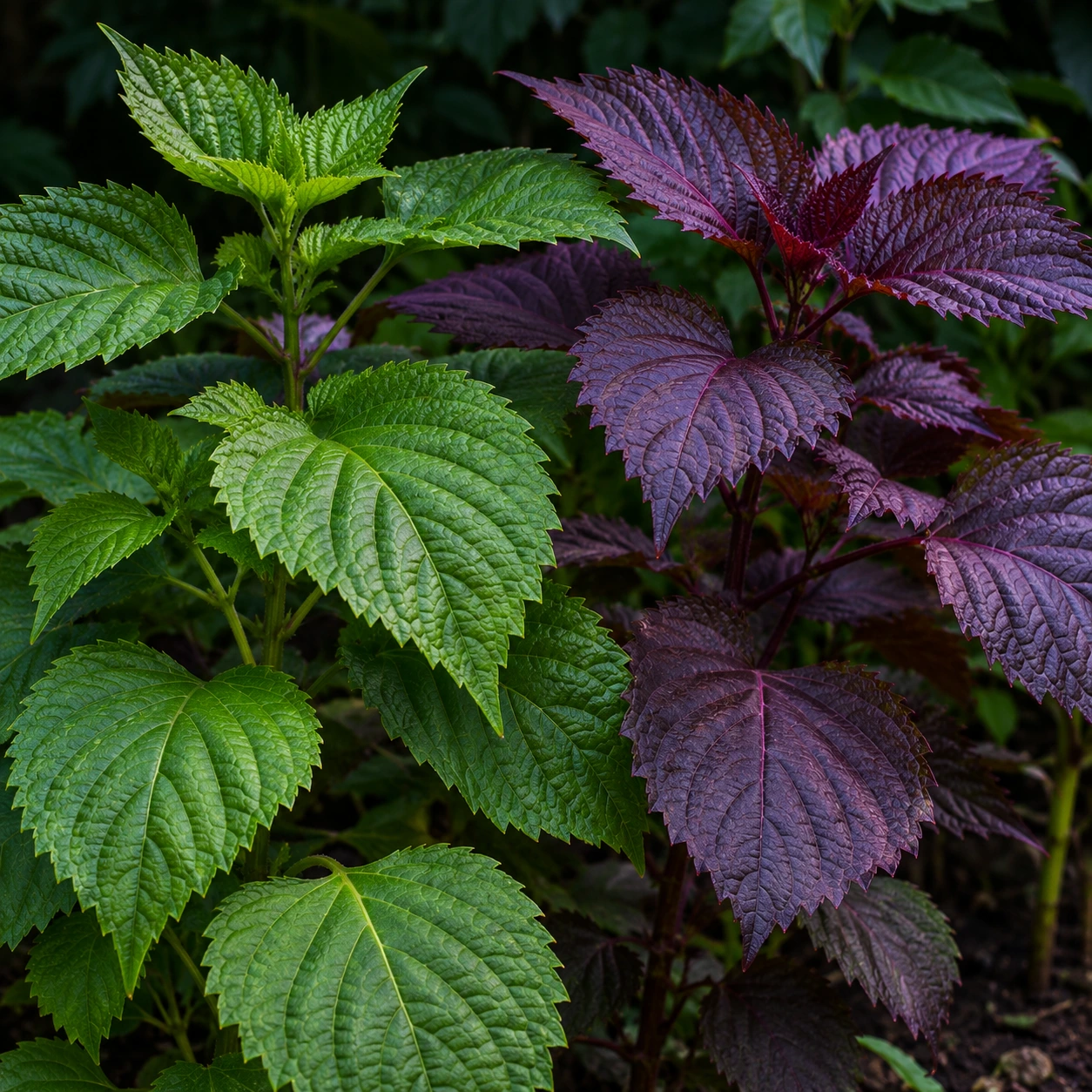
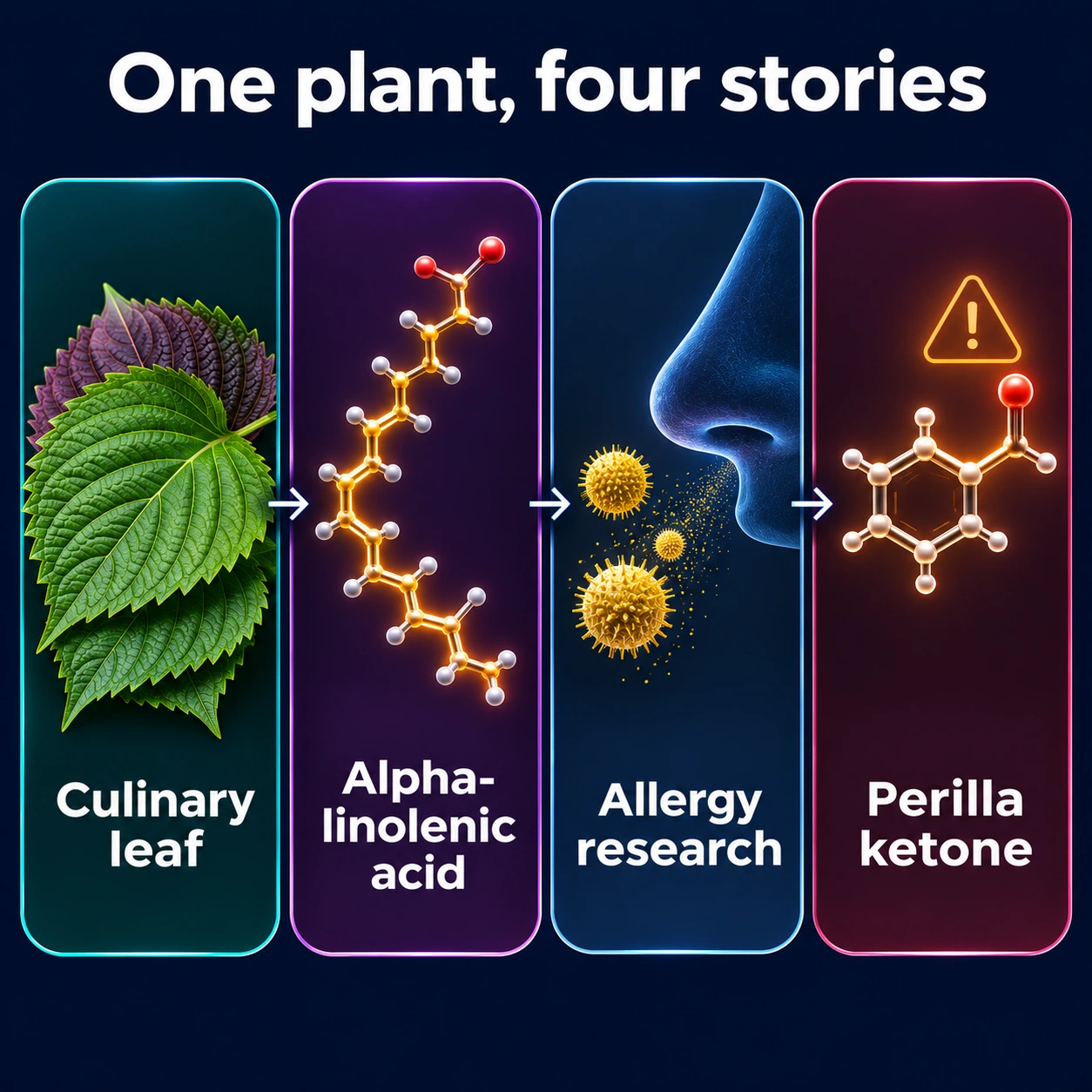
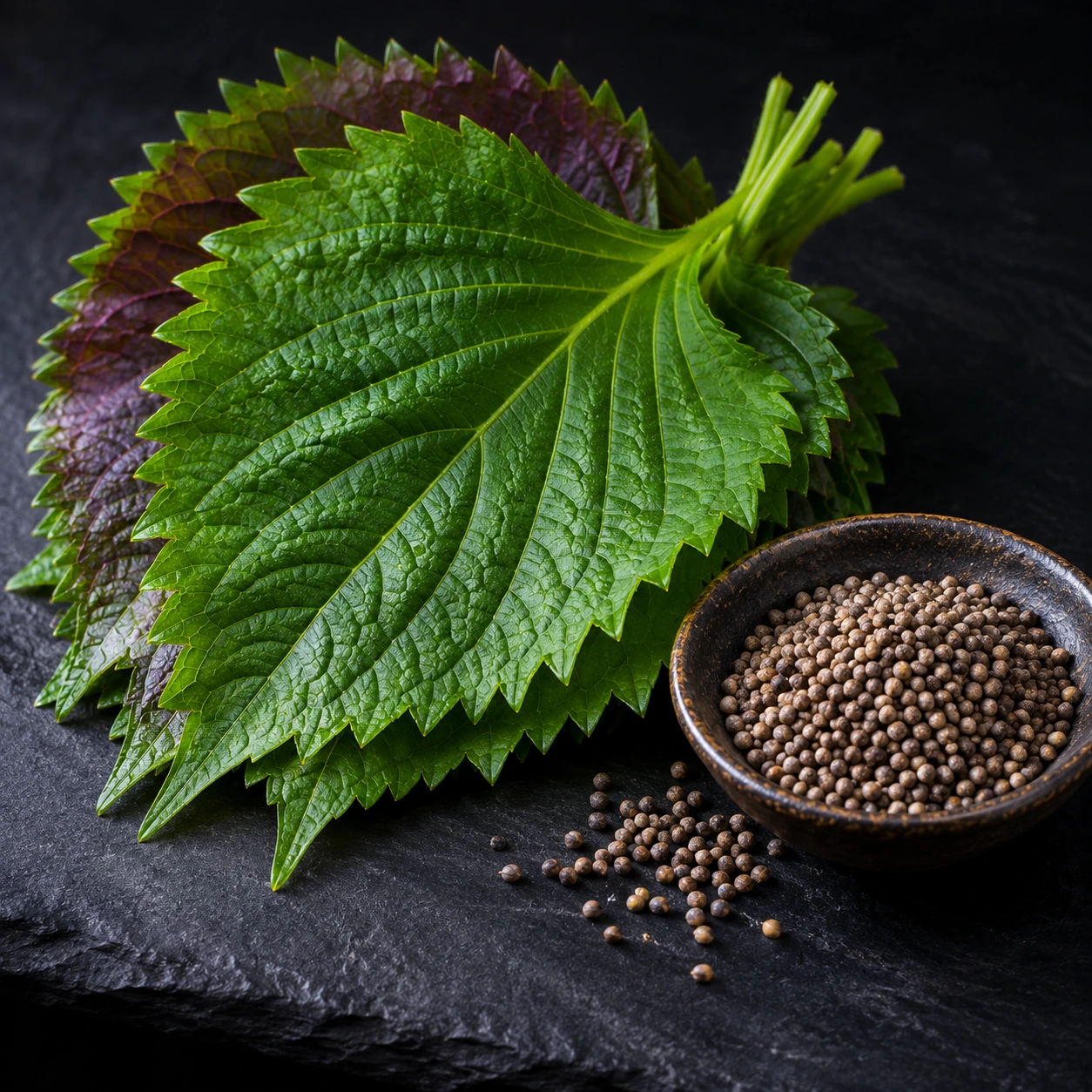
Perilla frutescens is one plant with four almost unrelated stories. The culinary leaf is shiso in Japan, tía tô in Vietnam and kkaennip in Korea — and those are not the same product: var. crispa and var. frutescens differ in chemotype, in essential-oil content and in flavour, and Korean perilla leaf and Japanese shiso are not compositionally interchangeable. From that single species come a leaf extract with genuine randomized-trial evidence in hay fever, a seed oil that is among the richest plant sources of omega-3 on earth, a set of thousand-year-old digestive indications with essentially no trial evidence behind them, and a compound that kills cattle in American pastures every summer.
These four pages take those strands apart. The short version of each, so you know which one you want:
- Allergy is the best real evidence perilla has. A rosmarinic-acid-enriched perilla extract beat placebo on nasal itch and watery eyes in a randomized, double-blind, placebo-controlled trial, and lowered inflammatory cell counts inside the nose. The trial had twenty-nine participants over three weeks. And rosmarinic acid is abundant in rosemary, lemon balm and spearmint too — so the effect may belong to the compound rather than to this plant.
- Perilla seed oil is 55–60%+ alpha-linolenic acid, and alpha-linolenic acid (ALA) is not eicosapentaenoic acid (EPA) or docosahexaenoic acid (DHA). In small tracer studies, estimated net conversion in young women was 21% to eicosapentaenoic acid and 9% to docosahexaenoic acid; in young men, no docosahexaenoic acid enrichment appeared, and the authors call that conversion very low or absent. Conversion is also influenced by the absolute amounts of alpha-linolenic and linoleic acid in the diet. Perilla oil is not a substitute for marine omega-3. It is also one of the most oxidation-prone edible oils there is.
- The digestive claims are traditional, not tested. Chinese medicine treats leaf, stem and seed as three separate drugs. The antimicrobial activity is real in a petri dish and does not survive the trip to a human gut — the shiso under your sashimi is a garnish, not a food-safety measure.
- Perilla ketone is a documented lung toxin in livestock. Perilla mint causes acute respiratory distress — “panting disease” — in cattle and has been reported in horses. Human relevance is not established and culinary use has a long safe record. The compound is nonetheless real, and the chemotype question is exactly why it matters for concentrated preparations.
Throughout, evidence is labelled by tier — randomized clinical trial, preliminary (animal or in-vitro), or traditional use only — because on this plant those three tiers point in noticeably different directions.
Deep-Dive Articles
Perilla for Allergy and Seasonal Rhinitis
The one strand with human randomized-trial evidence — reported at its real size. A rosmarinic-acid-enriched extract, twenty-nine participants, twenty-one days, objective nasal cell counts that fell. Plus the distinction almost everyone skips: rosmarinic acid is abundant in rosemary, lemon balm and spearmint, so the credit may belong to the compound rather than the plant.
Read the deep dive →Perilla Seed Oil: Plant Omega-3 and What Alpha-Linolenic Acid Does
Among the richest plant alpha-linolenic acid sources on earth — and not a substitute for fish oil. The conversion arithmetic without hand-waving, how linoleic acid affects it, the small human trials on the oil itself, and how readily the oil oxidizes.
Read the deep dive →Perilla for Digestion and Antimicrobial Use
One plant, three traditional Chinese drugs — leaf, stem and seed, each for something different. Globus, dyspepsia and nausea assessed honestly, which mostly means admitting the trials do not exist. And the petri-dish-to-patient gap that makes “natural antimicrobial” claims collapse, including the sashimi question answered properly.
Read the deep dive →Perilla: Perilla Ketone, Species and Safety
Why a cattle-killing weed and a sashimi garnish are the same species. The chemotypes named, the lung-toxin mechanism explained, the veterinary record laid out, and human relevance framed as what it is — an open question. Wild perilla in North America can carry the toxic chemotype, which cannot be judged by eye; perilla essential oil is a concentrate, not a food; a shiso leaf eaten as food has a long safe record.
Read the deep dive →Memory and Brain Function
Every human trial on perilla and the brain, read both ways: a maker-funded leaf extract trial in 100 adults improved two memory tests over 12 weeks, an independent seed-oil trial in 182 people with dementia found no effect, and why the oil barely raises docosahexaenoic acid.
Read the deep dive →Table of Contents
- Deep-Dive Articles
- Evidence at a Glance
- Key Research: Allergy and Rhinitis
- Key Research: Alpha-Linolenic Acid, Conversion and Seed Oil
- Key Research: Traditional and Digestive Use
- Key Research: Antimicrobial Activity
- Key Research: Perilla Ketone, Chemotypes and Safety
- External Resources
- Connections
- Featured Videos
Evidence at a Glance
| Claim | Best evidence tier | Honest summary |
|---|---|---|
| Reduces seasonal allergic rhinitis symptoms | Randomized clinical trial (pilot scale) | One 29-person, 21-day trial (200 mg n=10, 50 mg n=9, placebo n=10) with an objective nasal endpoint. More responders for itchy nose, watery eyes, itchy eyes and total symptoms; fewer neutrophils and eosinophils in nasal fluid. Positive, unreplicated, mild disease only. |
| Rich source of alpha-linolenic acid | Established (composition) | 55–60%+ of seed-oil fatty acids. Not in dispute. |
| Substitutes for fish oil / supplies docosahexaenoic acid | Refuted | Small tracer studies estimate 21% conversion to eicosapentaenoic acid and 9% to docosahexaenoic acid in young women; in young men no docosahexaenoic acid enrichment appeared. It is not a substitute. |
| Raises blood omega-3; changes a platelet test | Randomized clinical trial (small) | A 2026 double-blind trial in healthy smokers: 4.8 g of perilla oil a day for 8 weeks raised plasma eicosapentaenoic acid and alpha-linolenic acid, and lengthened a platelet clotting test. |
| Improves bone health | Randomized clinical trial (small) | 52 adults (mean age 54), 12 months, 7 mL/day against olive oil as the placebo. The heel-ultrasound surrogate improved and the bone-breakdown marker TRACP-5b fell; the bone-building marker BALP did not change. Unreplicated. |
| Improves cognition | Randomized clinical trials (small, mixed design) | Oil alone against a control group in 75 people aged 64–84 for 12 months: cognitive measures only “tended to be improved”. Two 12-month trials compared oil alone with oil plus a second plant powder (ponkan, Anredera cordifolia), and the combinations scored higher. A 2026 double-blind trial gave 100 adults with cognitive impairment a purple perilla leaf extract (500 mg a day) or placebo for 12 weeks: scores on two standard memory and thinking tests improved more than on placebo, but blood amyloid beta and brain-derived neurotrophic factor did not differ. |
| Helps globus, dyspepsia or nausea | Traditional use; multi-herb formula studies | No trial of perilla alone. Ginger and peppermint have real evidence; perilla does not. |
| Antimicrobial | Preliminary (in vitro, extensive) | Real in a dish; the concentration gap makes clinical effect implausible at edible doses. |
| Treats or prevents human infection | Not supported | No clinical trials of any kind. Shiso is not a food-safety measure. |
| Perilla ketone is a lung toxin | Established in animals | Characterised chemistry, in-vivo mechanism, recurring cattle deaths. Human dose–response unstudied. |
| Culinary perilla leaf is safe | Established (large dietary record) | Eaten daily by millions for over a thousand years. Contact dermatitis and occasional allergy are the real caveats. |
Key Research: Allergy and Rhinitis
Named papers link to their PubMed record. Entries describing a body of work link to a PubMed topic search.
- Takano H, Osakabe N, Sanbongi C, et al. Extract of Perilla frutescens enriched for rosmarinic acid, a polyphenolic phytochemical, inhibits seasonal allergic rhinoconjunctivitis in humans. Experimental Biology and Medicine (Maywood), 2004. The pivotal randomized, double-blind, placebo-controlled trial — 50 mg and 200 mg rosmarinic acid arms, 29 participants. PubMed PMID: 14988517
- Sanbongi C, Takano H, Osakabe N, et al. Rosmarinic acid in perilla extract inhibits allergic inflammation induced by mite allergen, in a mouse model. Clinical and Experimental Allergy, 2004. Tests whether rosmarinic acid specifically is responsible. Animal model. PubMed PMID: 15196288
- Ueda H, et al. Luteolin as an anti-inflammatory and anti-allergic constituent of Perilla frutescens. Biological and Pharmaceutical Bulletin, 2002. The case for a second active flavone. Preliminary. PubMed PMID: 12230117
- The wider rosmarinic acid and allergic disease literature, across source plants including rosemary, lemon balm and spearmint — the searches that show the compound is not perilla-specific. Find on PubMed
- Rosmarinic acid bioavailability and pharmacokinetics in humans — essential context for any oral polyphenol claim. Find on PubMed
Key Research: Alpha-Linolenic Acid, Conversion and Seed Oil
- Matsuzaki K, Hossain S, Wakatsuki H, et al. Perilla seed oil improves bone health by inhibiting bone resorption in healthy Japanese adults: a 12-month, randomized, double-blind, placebo-controlled trial. Phytotherapy Research, 2023. 52 adults, 7 mL/day, surrogate endpoint. PubMed PMID: 36637040
- Burdge GC, Jones AE, Wootton SA. Eicosapentaenoic and docosapentaenoic acids are the principal products of alpha-linolenic acid metabolism in young men. British Journal of Nutrition, 2002. The tracer study in six men: no docosahexaenoic acid enrichment appeared, and the authors call that conversion very low or absent. PubMed PMID: 12323085
- Burdge GC, Wootton SA. Conversion of alpha-linolenic acid to eicosapentaenoic, docosapentaenoic and docosahexaenoic acids in young women. British Journal of Nutrition, 2002. The companion study, and the origin of the sex difference: estimated net conversion was 21% to eicosapentaenoic acid, 6% to docosapentaenoic acid and 9% to docosahexaenoic acid. PubMed PMID: 12323090
- Goyens PL, Spilker ME, Zock PL, et al. Conversion of alpha-linolenic acid in humans is influenced by the absolute amounts of alpha-linolenic acid and linoleic acid in the diet and not by their ratio. American Journal of Clinical Nutrition, 2006. Corrects the popular “omega ratio” story. PubMed PMID: 16825680
- Guan L, et al. Perilla seed oil and protein: composition, health benefits, and potential applications in functional foods. Molecules, 2024. Current composition review. PubMed PMID: 39598647
- Oxidative stability studies of perilla and other high-ALA oils — the evidence on how readily these oils oxidize. Find on PubMed
- Hashimoto M, Matsuzaki K, Hossain S, Ito T, Wakatsuki H, Tanabe Y, Ohno M, Kato S, Yamashita K, Shido O. Perilla Seed Oil Enhances Cognitive Function and Mental Health in Healthy Elderly Japanese Individuals by Enhancing the Biological Antioxidant Potential. Foods, 2021. Oil alone against a control group, 75 people aged 64–84, 12 months. PubMed PMID: 34069601
- Hashimoto M, Matsuzaki K, Maruyama K, Hossain S, Sumiyoshi E, Wakatsuki H, Kato S, Ohno M, Tanabe Y, Kuroda Y, Yamaguchi S, Kajima K, Ohizumi Y, Shido O. Perilla seed oil in combination with nobiletin-rich ponkan powder enhances cognitive function in healthy elderly Japanese individuals: a possible supplement for brain health in the elderly. Food Funct, 2022. Oil alone against oil plus ponkan powder, 49 people, 12 months. PubMed PMID: 35171190
- Hashimoto M, Matsuzaki K, Maruyama K, Sumiyoshi E, Hossain S, Wakatsuki H, Kato S, Ohno M, Tanabe Y, Kuroda Y, Yamaguchi S, Kajima K, Ohizumi Y, Shido O. Perilla frutescens seed oil combined with Anredera cordifolia leaf powder attenuates age-related cognitive decline by reducing serum triglyceride and glucose levels in healthy elderly Japanese individuals: a possible supplement for brain health. Food Funct, 2022. Oil alone against oil plus Anredera cordifolia leaf powder, 12 months. PubMed PMID: 35722977
- Baek HI, Joo JC, Kim SK, Park MH, Cho GH, Shen L, Park SJ. Efficacy and Safety of Standardized Ethanol Extract of Purple Perilla (Perilla frutescens Britton var. acuta Kudo) Leaves in Cognitive Impairment: A Randomized, Double-Blind, Placebo-Controlled Clinical Trial. Nutrients, 2026. Leaf extract 500 mg a day against placebo, 100 adults, 12 weeks. PubMed PMID: 41901135
- Lee S, Kim KJ, Park MJ, Park SY, Kim YJ, Yoo H, Kim JY. Effects of perilla oil on platelet and inflammatory responses in healthy smokers: a randomized, double-blind, placebo-controlled, parallel trial. Food Funct, 2026. Oil 4.8 g a day, healthy smokers, 8 weeks. PubMed PMID: 42132779
Key Research: Traditional and Digestive Use
- Liu S, Jin X, Shang Y, et al. A comprehensive review of the botany, ethnopharmacology, phytochemistry, pharmacology, toxicity and quality control of Perillae Fructus. Journal of Ethnopharmacology, 2023. The best entry point to the seed drug zi su zi. PubMed PMID: 36481246
- Ahmed HM. Ethnomedicinal, phytochemical and pharmacological investigations of Perilla frutescens (L.) Britt. Molecules, 2018. Broad review of traditional indications and reported pharmacology. PubMed PMID: 30597896
- Clinical research on hange-koboku-to (ban xia hou po tang) for globus sensation and functional dyspepsia — note that perilla is one of five herbs, so nothing is attributable to it. Find on PubMed
- Animal and isolated-tissue studies of perilla effects on gastrointestinal motility and smooth muscle. Preliminary. Find on PubMed
- Enteric-coated peppermint oil randomized trials in irritable bowel syndrome, and ginger trials for nausea in pregnancy — the mint-family and kitchen-herb comparators that do have evidence. Find on PubMed
Key Research: Antimicrobial Activity
- Perilla essential oil and perillaldehyde antibacterial studies, including minimum inhibitory concentrations against Gram-positive and Gram-negative organisms. In vitro. Find on PubMed
- Antifungal work on perillaldehyde, including Candida species and food-spoilage moulds, with proposed membrane mechanisms. In vitro. Find on PubMed
- Perilla essential oil in active food packaging, edible films and post-harvest antifungal use — the setting where in-vitro activity genuinely translates. Find on PubMed
- Reviews of the general problem of extrapolating plant essential-oil antimicrobial data to clinical use. Find on PubMed
- Animal studies of perilla seed and perilla oil effects on gut microbiota composition. Preliminary; interpretation unsettled. Find on PubMed
Key Research: Perilla Ketone, Chemotypes and Safety
- Wilson BJ, Garst JE, Linnabary RD, et al. Perilla ketone: a potent lung toxin from the mint plant, Perilla frutescens Britton. Science, 1977. The original isolation and identification. PubMed PMID: 877573
- Garst JE, Wilson WC, Kristensen NC, et al. Species susceptibility to the pulmonary toxicity of 3-furyl isoamyl ketone (perilla ketone): in vivo support for involvement of the lung monooxygenase system. Journal of Animal Science, 1985. The mechanistic keystone. PubMed PMID: 3972746
- Kerr LA, Johnson BJ, Burrows GE. Intoxication of cattle by Perilla frutescens (purple mint). Veterinary and Human Toxicology, 1986. Field documentation of livestock deaths. PubMed PMID: 3776081
- Chemotype genetics and essential-oil composition in Perilla frutescens — why oil type segregates discretely and cannot be judged by eye. Find on PubMed
- Perillaldehyde as a fragrance contact sensitiser, including occupational hand dermatitis in perilla handlers, plus case reports of perilla allergy. Find on PubMed
- The wider veterinary literature on acute bovine pulmonary emphysema and perilla mint toxicosis, including horses and toxicity retained in cut hay. Find on PubMed
External Resources
- PubMed — the primary biomedical and veterinary literature database.
- National Center for Complementary and Integrative Health — U.S. National Institutes of Health (NIH) centre with plain-language herb and supplement summaries.
- U.S. National Institutes of Health Office of Dietary Supplements — fact sheets on omega-3 fatty acids and intake recommendations.
- U.S. Department of Agriculture (USDA) FoodData Central — authoritative food and oil composition data.
- Merck Veterinary Manual — the standard reference for livestock plant toxicoses.
- USDA PLANTS Database — distribution of naturalized species in the United States.
- American Academy of Allergy, Asthma & Immunology — patient-facing allergy information.
Connections
- All Herbs
- Perilla for Allergy and Seasonal Rhinitis — the randomized-trial strand, reported at its real size.
- Perilla Seed Oil: Plant Omega-3 and What Alpha-Linolenic Acid Does — the conversion problem, without hand-waving.
- Perilla for Digestion and Antimicrobial Use — three traditional drugs, and the petri-dish gap.
- Perilla: Perilla Ketone, Species and Safety — chemotypes, panting disease, and what it does and does not mean for you.
- Perilla (Perilla frutescens) — the main topic page: names, identification, culinary use, dosage.
- Lemon Balm — often the richest common culinary source of rosmarinic acid.
- Rosemary — the plant rosmarinic acid is named after.
- Peppermint — the mint relative with real gut-symptom trials.
- Ginger — the evidence-backed choice for nausea.
- Butterbur — the herb with the strongest allergic-rhinitis evidence, and its own liver caution.
- Stinging Nettle — the other traditional hay-fever herb.
- Houttuynia cordata (Fish Mint) — perilla's partner on the Vietnamese raw-herb plate.
- Vietnamese Balm — another rosmarinic-acid-rich Lamiaceae herb.
- Vietnamese Coriander — the third essential Vietnamese fresh herb.
- Thyme — the classic culinary example of a chemotyped species.
- Omega-3 Fatty Acids — alpha-linolenic acid, eicosapentaenoic acid and docosahexaenoic acid explained in full.
- Omega-3 Index — the blood test that shows whether a plant oil moved your eicosapentaenoic acid and docosahexaenoic acid.
- Flaxseed — the plant omega-3 perilla oil is measured against.
- Chia Seeds — another concentrated plant alpha-linolenic acid source, as a whole food.
- Walnuts — the everyday whole-food alpha-linolenic acid source.
- Salmon — preformed eicosapentaenoic acid and docosahexaenoic acid, which alpha-linolenic acid cannot replace.
- Sardines — the cheapest reliable marine omega-3.
- Olive Oil — an edible oil far less prone to oxidation than perilla oil.
- Allergic Rhinitis — the condition, and the treatments that are actually proven.
- Allergies — how immunoglobulin E-mediated allergy works.
- Functional Dyspepsia — the condition the traditional digestive claims map onto.
- Contact Dermatitis — the perillaldehyde sensitisation risk for cooks.
- Antibacterial Herbs — the in-vitro-to-clinical gap across the whole category.
- Luteolin — the perilla flavone with its own anti-allergic literature.
- Apigenin — the companion flavone.
Safety and disclaimer. These pages are health information, not medical advice. Culinary perilla is food with a long safe record; concentrated perilla extracts have no safety data in pregnancy, breastfeeding or childhood, and perilla essential oil is a concentrate, not a food. Perilla seed oil is not a substitute for marine or algal eicosapentaenoic acid and docosahexaenoic acid. No trial tests perilla as a treatment for an infection, or in place of prescribed treatment for allergy, asthma, heart disease or bone loss. Wild perilla in North America can carry perilla ketone, the lung toxin behind the cattle deaths described above, and the chemotype cannot be judged by eye. A 2026 trial in healthy smokers found that 4.8 g of perilla oil a day for 8 weeks significantly lengthened a platelet clotting test, which bears on anticoagulant use and surgery; neither situation has been tested.