⚠ Evidence warning: Clinical trials or other evidence do not support the claim that the perilla extract trial was industry-adjacent work on a commercial extract. This page keeps it as a report of what people, websites or other media say.
Perilla for Allergy and Seasonal Rhinitis
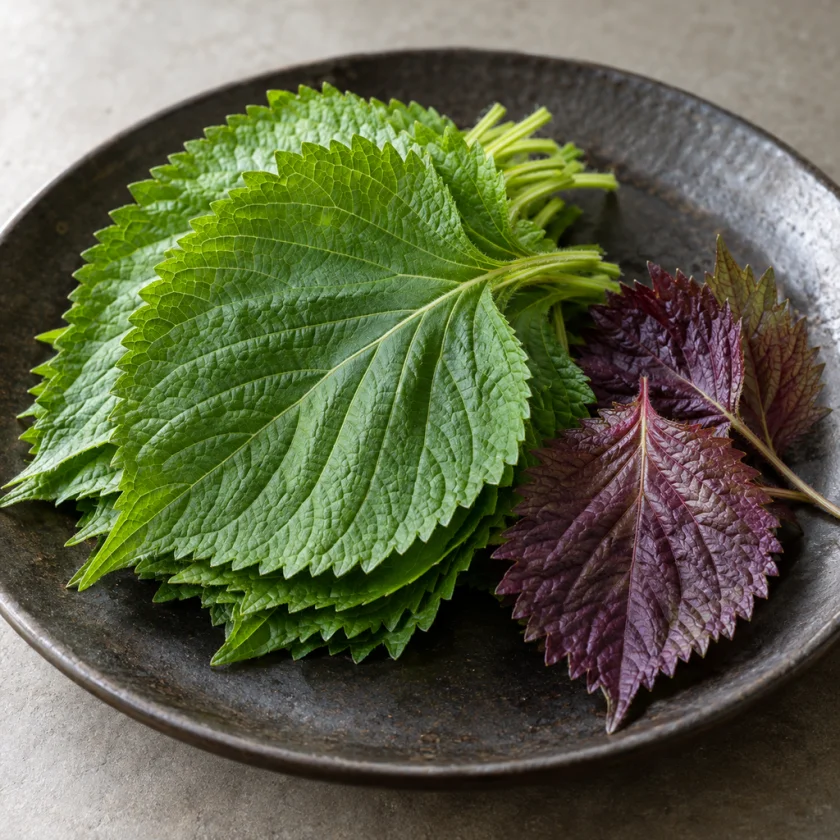
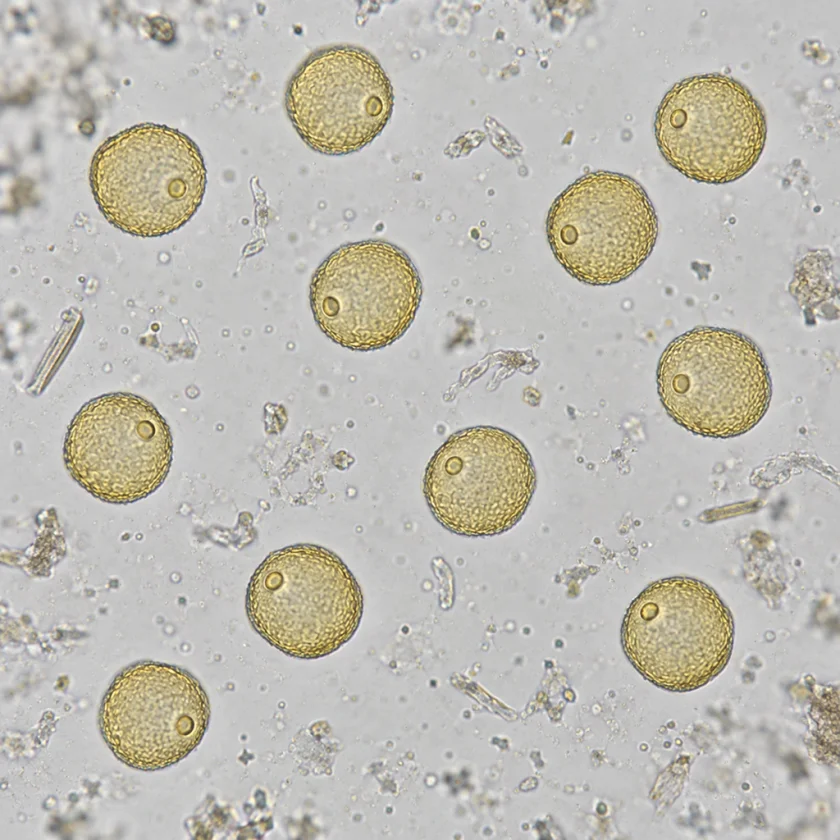
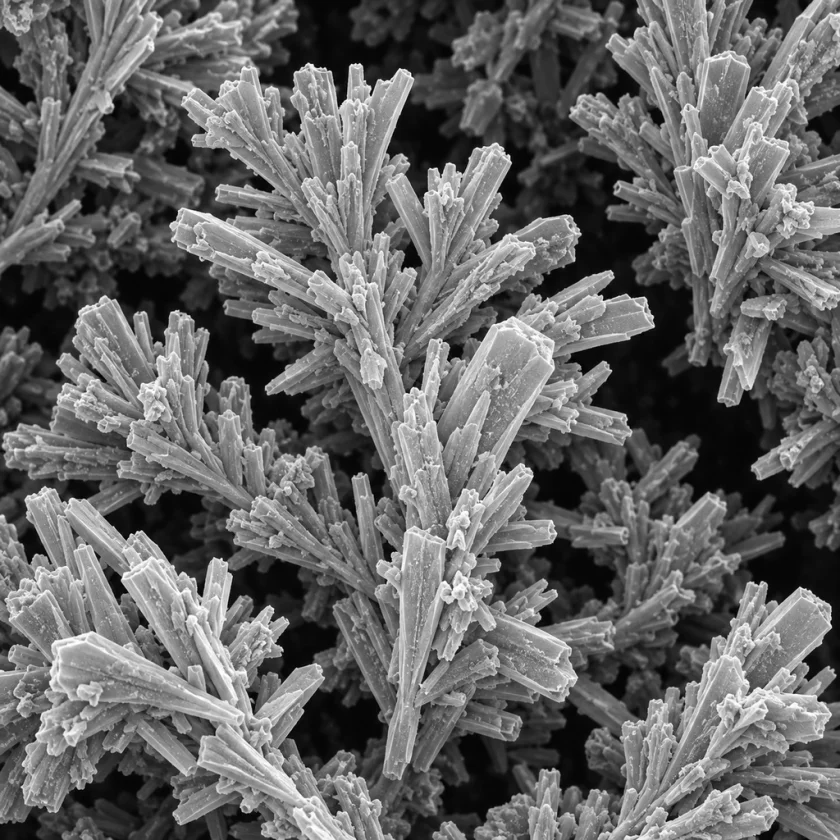
Of everything claimed for Perilla frutescens — the plant sold as shiso in Japan, tía tô in Vietnam and kkaennip in Korea — the hay-fever claim is the only one with randomized, placebo-controlled human evidence behind it. That makes this the most interesting page in the Benefits section, and also the one that most needs its numbers reported honestly, because the trials are small, old, and arguably not about perilla at all.
The short version: a perilla leaf extract concentrated for rosmarinic acid beat placebo on itchy nose and watery eyes in a three-week trial, and measurably lowered inflammatory cell counts inside the nose. The trial had twenty-nine participants. And rosmarinic acid is not a perilla molecule — rosemary, lemon balm, spearmint and sage all carry it, sometimes in higher concentration. If the effect is real, it may belong to the compound rather than to this particular mint.
Table of Contents
- The Claim and Its Evidence Tier
- Rosmarinic Acid Is the Active Molecule
- The Compound, Not the Plant
- Mechanism: What Happens in the Nose
- The Human Trial, With Its Real Size
- Why the Nasal Lavage Result Carries More Weight
- The Animal and Cell Evidence Underneath
- Which Perilla Was Tested
- How This Compares With an Antihistamine
- How Leaf Amounts Compare With the Trial Dose
- Forms and the Doses Used in the Trial
- Cautions and Who the Research Raises Concerns For
- Evidence Verdict
- Key Research Papers
- Connections
- Featured Videos
The Claim and Its Evidence Tier
The marketing claim on a bottle of perilla extract usually reads something like “supports a healthy response to seasonal allergens.” Stripped of the euphemism, the testable claim is: taking a rosmarinic-acid-rich perilla leaf extract reduces the sneezing, nasal itch and eye watering of seasonal allergic rhinitis.
Here is how the evidence stacks up, tier by tier:
- Randomized clinical trial — yes, but small. One randomized, double-blind, placebo-controlled study in adults with mild seasonal allergic rhinoconjunctivitis, twenty-one days, twenty-nine participants across three arms. Positive on several symptom endpoints and on objective nasal inflammatory-cell counts. A second, larger randomized trial tested perilla only as part of a combination product added to antihistamine treatment in 146 children; symptoms fell about equally with placebo (see How This Compares With an Antihistamine).
- Preliminary (animal and in-vitro) — substantial and consistent. Mouse models of mite-allergen and pollen-driven allergic inflammation, cultured mast cells, and cultured airway epithelium all show that rosmarinic acid and perilla extracts dampen allergic signalling. This is a real body of work, not a single lab.
- Traditional use — adjacent, not identical. Chinese and Japanese medicine used perilla leaf for the acute wind-cold pattern of an early common cold and for chest tightness, not for hay fever. Seasonal pollinosis as we now define it was not a category these systems described. So tradition supports “perilla is used for stuffy, streaming upper airways” but does not specifically support “perilla for pollen allergy.”
Nothing in that list is evidence that perilla extract can replace an antihistamine. On its own, the extract has been tested once, in a properly designed pilot trial, and the result was positive.
Rosmarinic Acid Is the Active Molecule
Rosmarinic acid is an ester of caffeic acid and 3,4-dihydroxyphenyllactic acid — a water-soluble polyphenol, not a volatile aroma compound. That distinction matters practically. The smell of shiso comes from perillaldehyde, which lives in the essential oil. The anti-allergic activity, as far as anyone has tested it, comes from rosmarinic acid, which lives in the water-soluble fraction. A hot-water infusion of dried perilla leaf loses most of the aroma and keeps most of the rosmarinic acid; a distilled essential oil does the reverse.
That is why every supplement in this space is described as a rosmarinic-acid-standardized perilla extract rather than as “perilla oil” or “perilla leaf powder.” The trial material was standardized. Ordinary dried leaf is not.
Perilla leaf is a genuinely rich source. Reported rosmarinic acid content in perilla leaf varies widely with cultivar, growing conditions and how the leaf was dried — that variability is itself a reason standardized extracts exist — but perilla sits with rosemary and lemon balm at the top of the commonly eaten plants.
The Compound, Not the Plant
This is the point most write-ups skip, and it changes how every perilla allergy claim reads.
Rosmarinic acid is named for rosemary, where it was first characterized. It is abundant across the Lamiaceae — the mint family — and in several other families too. Substantial dietary sources include:
- Rosemary — the namesake.
- Lemon balm (Melissa officinalis) — often the highest of the common culinary herbs.
- Spearmint and peppermint.
- Sage, thyme and oregano.
- Vietnamese balm (Elsholtzia ciliata), perilla's neighbour on the same herb plate.
- Perilla leaf.
What follows from that. If a trial of a rosmarinic-acid-enriched perilla extract works, the honest conclusion is “a defined dose of rosmarinic acid, delivered in a perilla matrix, worked.” It is not evidence that perilla is special. Nobody has run the head-to-head trial — the same milligram dose of rosmarinic acid sourced from perilla versus from lemon balm versus from spearmint, in the same patients — that would tell you whether the plant matters. Until someone does, a claim that perilla specifically is the allergy herb is unsupported, and a spearmint or lemon-balm extract standardized to the same rosmarinic acid content has, on the available reasoning, an equally good case.
There is a possible counter-argument worth stating fairly: perilla leaf also contains luteolin and apigenin glycosides, both flavones with their own documented mast-cell-stabilizing activity in the laboratory, so a whole perilla extract may deliver more than rosmarinic acid alone. That is a hypothesis about synergy, and it has not been tested against a rosmarinic-acid-only comparator in humans.
Mechanism: What Happens in the Nose
Evidence tier: preliminary — animal models and cell culture.
Seasonal allergic rhinitis runs in two waves. Within minutes of pollen landing on the nasal mucosa, allergen cross-links immunoglobulin E (IgE) antibodies already bound to mast cells; the mast cells degranulate, releasing histamine, tryptase and leukotrienes; you sneeze, itch and run. Hours later comes the late phase, in which eosinophils and neutrophils are recruited into the tissue by cytokines and chemokines, and the nose becomes congested, swollen and hyper-reactive to the next exposure.
Antihistamines act almost entirely on the first wave, at the histamine receptor. What the laboratory work on rosmarinic acid describes is mostly action on the second wave:
- Reduced allergen-specific immunoglobulin E. In mouse models sensitized to house-dust-mite allergen, oral perilla extract lowered allergen-specific immunoglobulin E compared with control animals.
- Fewer eosinophils and neutrophils recruited. The clearest and most reproducible finding across the animal work: less inflammatory-cell infiltration into airway tissue and lavage fluid.
- Damped cytokine and chemokine signalling. Reduced expression of the interleukins and chemokines that call eosinophils in, in both animal tissue and cultured cells.
- Mast-cell stabilization in culture. Rosmarinic acid, luteolin and apigenin each reduce mediator release from cultured mast cells or basophil-like cell lines.
- General antioxidant and anti-inflammatory activity. Rosmarinic acid is a good radical scavenger and inhibits several inflammatory enzymes in vitro. This is true of most dietary polyphenols and by itself predicts very little about a person's symptoms.
A mechanism that acts on the late phase rather than the immediate phase has a practical implication: it would be expected to work slowly and prophylactically, over days to weeks, rather than to abort an attack in progress. That is consistent with how the human trial was designed — three weeks of daily dosing, not a rescue dose.
The Human Trial, With Its Real Size
Evidence tier: randomized clinical trial, pilot scale.
The study everyone cites is Takano and colleagues, Extract of Perilla frutescens enriched for rosmarinic acid, a polyphenolic phytochemical, inhibits seasonal allergic rhinoconjunctivitis in humans, published in Experimental Biology and Medicine in 2004. Design and result:
- Population: adults with mild seasonal allergic rhinoconjunctivitis.
- Design: randomized, double-blind, placebo-controlled — the right architecture.
- Duration: twenty-one days.
- Arms: rosmarinic-acid-enriched perilla extract supplying 200 mg of rosmarinic acid daily, the same extract supplying 50 mg daily, and placebo.
- Size: roughly ten, nine and ten participants respectively. Twenty-nine people in total.
- Symptom result: higher responder rates than placebo for itchy nose, watery eyes, itchy eyes and total symptoms. The abstract reports the two dose groups together as “active treatment”; it does not give a separate result for each dose.
- Objective result: significantly fewer neutrophils and eosinophils in nasal lavage fluid (the liquid collected after rinsing the nose).
- Also measured: the inflammatory messengers eotaxin, interleukin-1 beta (IL-1β) and interleukin-8 (IL-8), and histamine, in nasal lavage fluid, plus allergy antibody (immunoglobulin E) levels in the blood. The abstract reports significant results only for the cell counts and the symptom responder rates.
- Safety: no adverse events reported; routine laboratory panels unremarkable.
Now read that critically. Twenty-nine participants split three ways gives about ten people per arm. At that size, a single unusually good or bad responder moves the group mean, confidence intervals are wide, and the probability that a genuine effect is being over-estimated is high — small positive trials systematically overstate effect size, which is why large replications so often disappoint. The population had mild disease, so nothing here speaks to moderate or severe hay fever. The trial is now two decades old and has not been repeated at a size that would settle it. And it was, as far as the published record goes, industry-adjacent work on a commercial extract, which is normal for supplement research but is not a neutral fact.
None of that makes the result wrong. It makes it a pilot — the kind of study whose job is to justify a larger trial. The one larger trial found so far tested perilla only as part of a combination product (see How This Compares With an Antihistamine).
Why the Nasal Lavage Result Carries More Weight
This is the most important result of the trial, because it is the part least vulnerable to the usual criticisms of small supplement studies.
Symptom diaries are subjective. In allergy trials, placebo response rates are notoriously high — people who believe they are being treated report fewer symptoms — and a diary score in ten people is exactly the sort of endpoint that produces false positives. But the investigators also washed out the participants' nasal passages and counted cells under a microscope. Neutrophil and eosinophil counts in nasal lavage fluid do not know which capsule you swallowed. Those counts fell.
An objective biological change in the target tissue, in the direction the mechanism predicts, is a much stronger signal than any diary score. It is what makes this trial worth taking seriously despite its size, and it is precisely the result that a larger trial would be most likely to confirm.
The caveat is that nasal cell counts are a surrogate. A reduction in eosinophils is not the same as a person feeling well, and the link between the two is assumed rather than demonstrated in a study this small.
The Animal and Cell Evidence Underneath
Evidence tier: preliminary.
The human trial did not come out of nowhere. It sat on a run of Japanese laboratory work through the late 1990s and early 2000s:
- A mouse study reported as Rosmarinic acid in perilla extract inhibits allergic inflammation induced by mite allergen, in a mouse model, published in Clinical and Experimental Allergy in 2004, tested the specific hypothesis that the rosmarinic acid was the responsible constituent — not just that the extract worked. Allergen-specific immunoglobulin E and inflammatory cell infiltration both fell.
- Work published as Anti-allergic effect of Perilla frutescens and its active constituents in Phytotherapy Research in 2003 examined which fractions of the leaf carried activity.
- A study of orally administered perilla in a type-I allergy mouse model appeared in Biological and Pharmaceutical Bulletin in 2001, establishing that oral dosing — not just injection — produced an effect.
- Also in Biological and Pharmaceutical Bulletin, work titled Luteolin as an anti-inflammatory and anti-allergic constituent of Perilla frutescens (2002) argued for a second active molecule alongside rosmarinic acid.
Taken together this is a coherent, mechanistically specific body of preliminary evidence — better than most herbs have. It is still animal and cell work. Mouse models of allergic airway inflammation are famously poor predictors of what will help a human with hay fever; a great many compounds that cleaned up a mouse airway did nothing in a clinic.
Which Perilla Was Tested
Perilla frutescens is a chemotype species: plants that look nearly identical can produce completely different dominant volatile compounds. The culinary chemotype is dominated by perillaldehyde — that is Perilla frutescens var. crispa, Japanese shiso and Vietnamese tía tô. Var. frutescens is the Korean oilseed type, deulkkae, grown for seed rather than leaf. And wild or naturalized populations, particularly in North America, may be dominated by perilla ketone, a compound with documented lung toxicity in livestock.
The allergy research was done in Japan on cultivated leaf material of the culinary type — the perillaldehyde chemotype — extracted into a water-soluble, rosmarinic-acid-standardized preparation. The chemotype question is the safety-relevant variable and it is not academic here: an extract made from wild-collected leaf of unknown chemotype is not the material that was tested, and a distilled essential oil of any chemotype is not the material that was tested either. The material tested was a rosmarinic-acid-standardized leaf extract; perilla essential oil is a different product — the concentrated volatile fraction and the exact place where chemotype variation lives. See Perilla: Perilla Ketone, Species and Safety for the full picture.
How This Compares With an Antihistamine
Plainly: no head-to-head comparison has been made.
A modern second-generation oral antihistamine has been tested in many thousands of patients across dozens of trials, works within an hour, and has a known and small side-effect profile. An intranasal corticosteroid is more effective still for congestion and for moderate-to-severe disease. Perilla extract on its own has one twenty-nine-person trial in mild disease.
There has been no head-to-head trial of perilla extract against any antihistamine. One trial has tested perilla added to standard treatment — the question a patient actually has — though only as part of a combination product. In a randomized, double-blind, placebo-controlled trial at several Italian centres, 146 children (average age about 9) with allergic rhinoconjunctivitis who were already taking an antihistamine every day received either a supplement combining perilla extract, quercetin and vitamin D3, or a placebo, for 4 weeks. Symptom scores fell about equally in both groups (by 63.6% with the combination and by 60.7% with placebo, no significant difference). Fewer children on the combination had their symptoms get worse between weeks 2 and 4 (8 versus 16, a significant difference), and no relevant side effects were reported (Marseglia 2019, PubMed PMID: 30968678). Because the product had three ingredients, the trial cannot show what perilla alone contributed.
- No trial has tested perilla extract as a replacement for a prescribed medication; in the add-on trial every child stayed on their antihistamine.
- In both trials perilla was taken every day for weeks (3 weeks on its own in adults, 4 weeks in combination in children), not as a rescue dose.
- One person's season is an uncontrolled experiment of one, in a condition with a large placebo response (in the children's trial, symptoms fell by 60.7% on placebo) and enormous year-to-year variation in pollen counts. A good season proves very little.
How Leaf Amounts Compare With the Trial Dose
Eating the leaves almost certainly does not reach the trial doses.
The trial's higher arm delivered 200 mg of rosmarinic acid per day from a concentrated extract. Rosmarinic acid content in fresh perilla leaf is highly variable — cultivar, season, leaf age and drying method all move it substantially — and published figures scatter too widely for a responsible single number here. What can be said is that a concentrated, standardized extract exists precisely because reaching a defined polyphenol dose from fresh leaf is impractical: a plate of shiso is a few grams of leaf, and the extract concentrates the water-soluble fraction of a much larger mass.
That does not make eating shiso pointless. Perilla, lemon balm, spearmint, rosemary and sage are all rosmarinic-acid-rich mint-family herbs, and the herb plate served with Vietnamese noodle soup is a nutritious food. The point is narrower: the trial results come from the extract, not the salad.
Forms and the Doses Used in the Trial
- Rosmarinic-acid-standardized perilla leaf extract — the only form with human trial support. Doses used were 50 mg or 200 mg of rosmarinic acid per day for 21 days; the abstract reports the two dose groups together as active treatment, which beat placebo in that small study. Labels may give milligrams of rosmarinic acid or milligrams of extract; only the rosmarinic acid figure can be compared with the trial doses.
- Timing. The mechanism is late-phase and the trial dosed daily for three weeks. Starting two to four weeks before the season and taking it daily is the timing described. It was not tested as a rescue remedy for an attack in progress.
- Dried leaf tea — rosmarinic acid is water-soluble, so an infusion extracts it. Dose is unknown and unstandardized. Pleasant, harmless, unquantified.
- Fresh leaf as food — excellent food. Not a dose.
- Perilla seed oil — a different product entirely, a fatty oil rich in alpha-linolenic acid with no meaningful rosmarinic acid. It is not the allergy preparation. See Perilla Seed Oil: Plant Omega-3 and What alpha-linolenic acid (ALA) Does.
- Perilla essential oil — not an internal preparation. Concentrated volatile fraction; chemotype unverified; no role in allergy.
Cautions and Who the Research Raises Concerns For
- Perilla itself can be an allergen. This is not a footnote on an anti-allergy page — allergic reactions to perilla leaf and seed have been reported, mostly from countries where it is eaten daily and in quantity. In 21 Korean children with perilla seed allergy (median age 3), 28.6% had anaphylaxis, a severe whole-body allergic reaction, and a seed protein called oleosin was identified as one of the major allergens (Jeong 2023, PubMed PMID: 34643183). People who react to perilla are reacting to the same plant the extract is made from.
- Perillaldehyde is a contact sensitizer. Hand dermatitis has been described in people who handle large quantities of fresh leaf. Relevant to cooks more than to capsule-takers.
- Pregnancy and breastfeeding: perilla leaf as food is traditional across East Asia. Concentrated extracts have no pregnancy safety data.
- Children: the extract on its own has not been studied in children. Perilla leaf is eaten as food; the one children's trial used a combination of perilla extract, quercetin and vitamin D3 for 4 weeks and reported no relevant side effects (Marseglia 2019).
- Asthma is not hay fever. None of these trials studied asthma, and asthma left uncontrolled when an untested supplement replaces controller inhalers is a danger in itself. See Asthma.
- Severe or year-round symptoms often have other causes. Persistent congestion can be non-allergic rhinitis, chronic sinusitis, nasal polyps or a structural problem, none of which a polyphenol will touch.
Evidence Verdict
Plausible, encouraging, unconfirmed — and possibly not about perilla.
The mechanism is specific and coherent. The animal work is unusually consistent for a herbal claim. The one human trial had the right design, included an objective tissue endpoint, and was positive. It also had twenty-nine participants in mild disease, ran three weeks, and the extract on its own has not been tested at a larger scale; the larger add-on trial of a perilla combination in children found that symptoms fell about equally with placebo. And the active molecule is a widely distributed plant polyphenol, so the credit may belong to rosmarinic acid rather than to Perilla frutescens.
In summary: a low-risk extract with one positive pilot trial of its own, and one add-on trial of a combination product that did not beat placebo on overall symptoms. No trial has tested it in place of standard treatment, and one person's experience over a single season cannot show whether it helped.
Key Research Papers
The named papers link to their PubMed records; the topic searches further down stay current as new work appears.
- Takano H, Osakabe N, Sanbongi C, Yanagisawa R, Inoue K, Yasuda A, Natsume M, Baba S, Ichiishi E, Yoshikawa T. Extract of Perilla frutescens enriched for rosmarinic acid, a polyphenolic phytochemical, inhibits seasonal allergic rhinoconjunctivitis in humans. Experimental Biology and Medicine (Maywood), 2004. The pivotal randomized, double-blind, placebo-controlled trial — 29 participants, 21 days, 50 mg and 200 mg rosmarinic acid arms. 229(3):247-254. PubMed PMID: 14988517
- Sanbongi C, Takano H, Osakabe N, Sasa N, Natsume M, Yanagisawa R, Inoue KI, Sadakane K, Ichinose T, Yoshikawa T. Rosmarinic acid in perilla extract inhibits allergic inflammation induced by mite allergen, in a mouse model. Clinical and Experimental Allergy, 2004. Tests whether rosmarinic acid specifically is the responsible constituent. Animal model. 34(6):971-977. PubMed PMID: 15196288
- Makino T, Furuta Y, Wakushima H, Fujii H, Saito K, Kano Y. Anti-allergic effect of Perilla frutescens and its active constituents. Phytotherapy Research, 2003. Fractionation work identifying which leaf constituents carry the activity. Preliminary. 17(3):240-243. PubMed PMID: 12672153
- Makino T, Furuta A, Fujii H, Nakagawa T, Wakushima H, Saito K, Kano Y. Effect of oral treatment of Perilla frutescens and its constituents on type-I allergy in mice. Biological and Pharmaceutical Bulletin, 2001. Establishes that oral dosing produces the effect. Animal model. 24(10):1206-1209. PubMed PMID: 11642335
- Ueda H, Yamazaki C, Yamazaki M. Luteolin as an anti-inflammatory and anti-allergic constituent of Perilla frutescens. Biological and Pharmaceutical Bulletin, 2002. Argues for a second active flavone alongside rosmarinic acid. In vitro and animal. 25(9):1197-1202. PubMed PMID: 12230117
- Marseglia GL, Licari A, Ciprandi G; Italian Study Group on Pediatric Allergic Rhinoconjunctivitis. A polycentric, randomized, double blind, parallel-group, placebo-controlled study on [brand name], a multicomponent nutraceutical, as add-on treatment in children with allergic rhinoconjunctivitis: phase I during active treatment. Journal of Biological Regulators and Homeostatic Agents, 2019. A perilla extract, quercetin and vitamin D3 combination added to antihistamine treatment in 146 children. 33(2):617-622. PubMed PMID: 30968678
- Jeong K, Lee SY, Jeon SA, Gantulga P, Nam JY, Hong SJ, Lee S. Clinical and Immunological Characterization of Perilla Seed Allergy in Children. Journal of Investigational Allergology and Clinical Immunology, 2023. 21 children with perilla seed allergy. 33(1):14-20. PubMed PMID: 34643183
- Reviews of rosmarinic acid pharmacology and bioavailability — essential context, because a polyphenol that is poorly absorbed and rapidly metabolized may act through its metabolites rather than intact. Find on PubMed
- The wider literature on rosmarinic acid in allergic disease, across source plants including rosemary, lemon balm and spearmint — the searches that show the compound is not perilla-specific. Find on PubMed
- Mast-cell stabilization and IgE-mediated degranulation studies on rosmarinic acid, luteolin and apigenin — the immediate-phase mechanism, all in vitro. Find on PubMed
- Case reports and series on perilla as an allergen in its own right, mostly from Japan and Korea. Find on PubMed
- Chemotype and rosmarinic acid content variation across Perilla frutescens cultivars — why standardization exists. Find on PubMed
- General reviews of complementary and herbal treatments in allergic rhinitis, for comparison with butterbur, stinging nettle and the rest of the field. Find on PubMed
External Resources
- PubMed — the primary biomedical literature database.
- National Center for Complementary and Integrative Health — NIH centre with plain-language herb and supplement summaries.
- American Academy of Allergy, Asthma & Immunology — professional body; patient-facing allergy information.
- USDA FoodData Central — food composition reference.
Connections
- All Herbs
- Perilla (Perilla frutescens) — the main topic page: names, chemotypes, culinary use and cautions.
- Perilla Benefits Hub — all four deep dives in one place.
- Perilla Ketone, Species and Safety — why the chemotype of your extract matters.
- Perilla Seed Oil and Alpha-Linolenic Acid — the seed product, a completely different preparation.
- Allergic Rhinitis — the condition, and the treatments that are actually proven.
- Allergies — how immunoglobulin E-mediated allergy works.
- Allergic Rhinitis (ENT) — the ear, nose and throat view of the same condition.
- Asthma — the lower-airway counterpart; do not treat it with supplements.
- Lemon Balm — often the richest common culinary source of rosmarinic acid.
- Rosemary — the plant rosmarinic acid is named after.
- Peppermint — fellow Lamiaceae, another rosmarinic acid source.
- Butterbur — the herb with the strongest allergic-rhinitis trial evidence, and its own liver caution.
- Stinging Nettle — the other traditional hay-fever herb.
- Luteolin — the perilla flavone with its own anti-allergic literature.
- Apigenin — the companion flavone.
- Quercetin — the best-known mast-cell-stabilizing flavonoid.
- Vietnamese Balm — perilla's herb-plate neighbour, also rosmarinic-acid-rich.
Safety and disclaimer. This page is health information, not medical advice, and it describes a supplement whose entire human evidence base is one twenty-nine-person trial. Do not stop, reduce or delay any prescribed allergy or asthma treatment in order to try perilla extract. Concentrated perilla extracts have no safety data in pregnancy, breastfeeding or childhood and should be avoided in all three. Perilla can itself cause allergic reactions. Never take perilla essential oil internally. If your symptoms are severe, year-round, or not responding to over-the-counter treatment, see a clinician for a diagnosis rather than adding another bottle.