Marjoram for Sleep, Mood and Pain
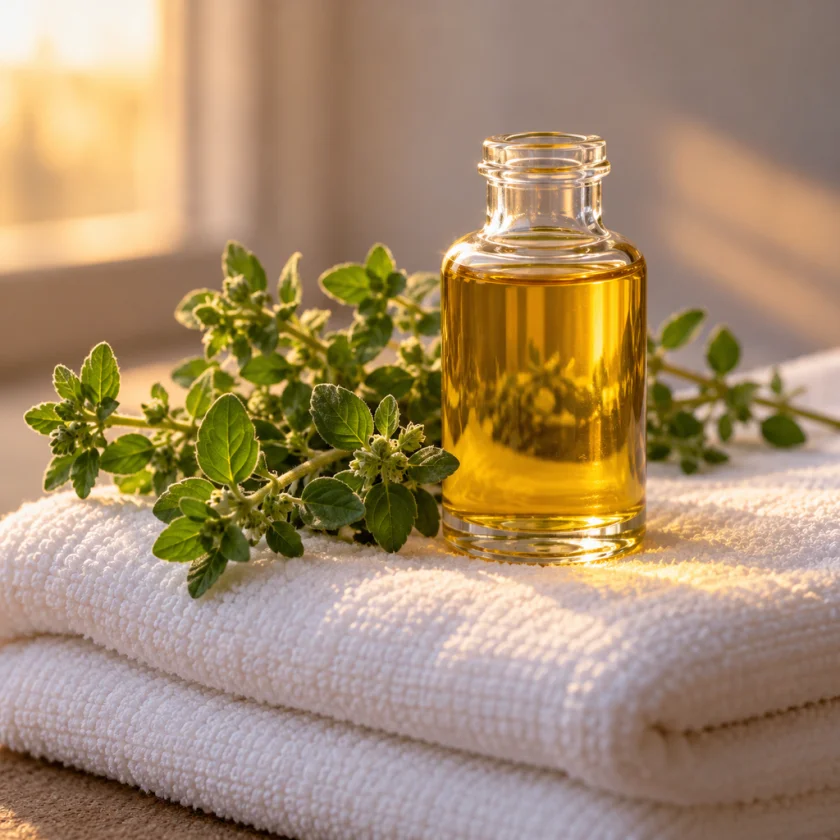
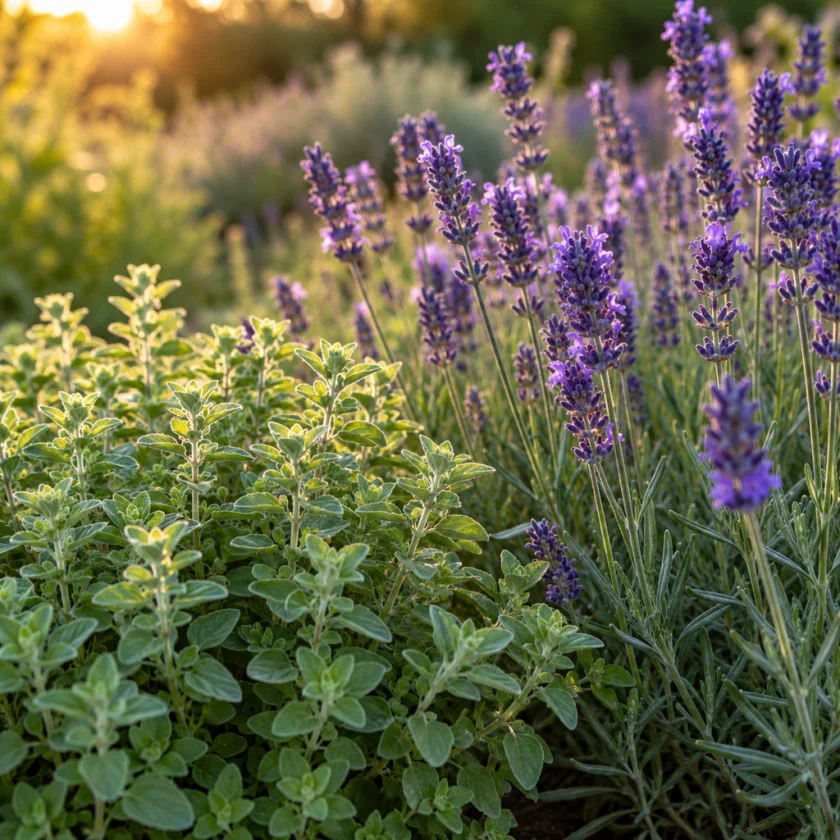
Sweet marjoram (Origanum majorana) has a settled place in the aromatherapy world as a “relaxing” oil. It appears in almost every commercial blend sold for stress, tension, sleep and muscular aches, usually alongside lavender. In herbal tea traditions it plays the same role — a mild, quieting evening infusion, grouped with chamomile and lemon balm rather than with anything stimulating.
Here is the interesting part, and it is genuinely a surprise given how thin marjoram's evidence base is elsewhere: the pain claims on this page have better human evidence than the sleep claims. Two randomized, controlled trials of topical aromatic creams that contained marjoram reported benefits over a control cream — better neck function in neck pain, and shorter-lasting period pain — and a third study reported reductions in blood pressure and salivary cortisol during 24 hours of inhaling a marjoram-containing blend. Those are actual human trials with control groups, which is more than marjoram's digestive tradition can claim.
And here is the catch that runs through the whole page: in every one of those trials, marjoram arrived inside a blend. Never alone. When a mixture of three or four essential oils outperforms a control cream, you have learned something about the mixture and nothing about how the credit divides. In each of these blends, lavender — the oil with by far the largest independent trial base — was also present. This is the central limitation, we will keep returning to it, and no honest reading of the marjoram aromatherapy literature can get around it.
Table of Contents
- The Relaxing-Oil Tradition
- What Aromatherapy Can Actually Be Tested For
- The Neck Pain Trial
- The Period Pain Trial
- Blood Pressure and Cortisol
- The Blend Problem
- Massage, Touch and Why They Confound Everything
- Marjoram Tea as a Bedtime Drink
- Plausible Mechanisms for Calm
- The Herbs With Better Sleep Evidence
- Traditional Preparation and Safety Facts
- Key Research Papers
- Connections
- Featured Videos
The Relaxing-Oil Tradition
Evidence tier: traditional use only.
Marjoram's calming reputation has two strands, and they are worth separating because they involve completely different preparations.
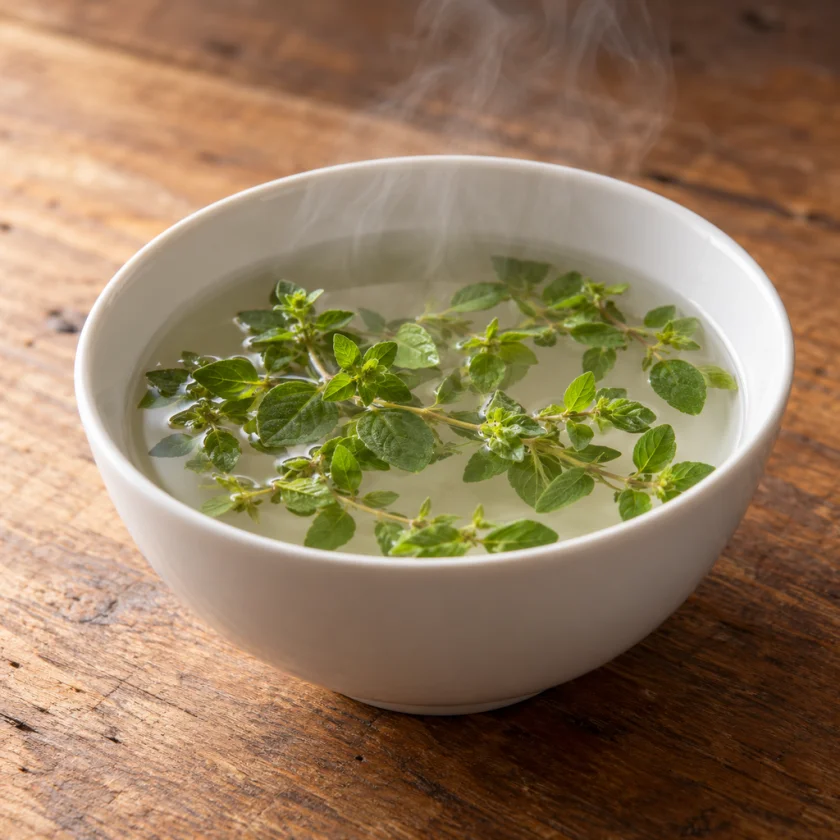
The first is the tea. In Mediterranean, Levantine and Central European folk practice, a warm marjoram infusion in the evening was a quieting drink — taken for nerves, restlessness, tension headache and difficulty settling to sleep. It sits in the same category as chamomile, lemon balm and lime blossom: gentle, safe, nobody claiming it knocks you out.
The second is the essential oil, and this strand is much more recent than most marketing implies. Marjoram's status as a classic “relaxing” oil comes largely from twentieth-century aromatherapy practice, where oils were classified by perceived energetic effect — warming, cooling, stimulating, sedating. Marjoram was filed as warming and sedating, and it has stayed there. That classification is a professional tradition built on practitioner observation, not a laboratory finding, and it is worth knowing that the pedigree is decades rather than centuries deep.
There is also a historical curiosity: in classical Greece marjoram was associated with Aphrodite and with funerary rites, woven into wreaths for both weddings and graves. Charming, and no evidence of anything — but it does show how long this plant has been treated as emotionally significant rather than merely edible.
What Aromatherapy Can Actually Be Tested For
Before the trials, a word about why aromatherapy research is so hard to interpret. This is not a dismissal — it is the reason the good trials on this page had to work so hard.
- You cannot blind a smell. Participants know they are smelling something, and often what. Expectation is a powerful driver of self-reported relaxation and pain, so studies that measure only how people feel are measuring expectation plus effect and cannot separate them. This is why the objective measures — blood pressure, salivary cortisol, range of motion — carry more weight in this literature than questionnaire scores.
- The control is a design problem. Against no treatment, aromatherapy always wins, because the ritual alone does something. Against an inert but pleasant-smelling control, the comparison gets meaningful. Against a carrier oil in a massage, you at least isolate the aroma from the touch.
- Route matters enormously. Inhalation, topical application with massage, and topical application without massage are three different interventions with three different mechanisms. Results do not transfer between them.
- Blends are the norm in practice and a liability in research. Practitioners blend because they believe combinations work better. Researchers who test what practitioners actually use inherit an uninterpretable result about the components.
Given all that, the trials below are better than the field's average, and we will credit them for what they show while being clear about what they do not.
The Neck Pain Trial
Evidence tier: randomized clinical trial — of a blend.
Ou and colleagues published The effectiveness of essential oils for patients with neck pain: a randomized controlled study in the Journal of Alternative and Complementary Medicine in 2014. Sixty participants with a history of neck pain applied 2 g a day of a 3% cream containing essential oils — marjoram, black pepper, lavender and peppermint — to the affected area themselves for 4 weeks, while the control group applied an unscented cream. Pain scores (visual analogue scale) improved significantly in both groups; the aromatic cream group did better on pressure-pain tolerance, on the Neck Disability Index and on neck range of motion measured with a motion-analysis system.
Why this is a decent study:
- The control was the cream base itself, so the comparison isolates the oils rather than the act of rubbing something on your neck.
- It included an objective-ish outcome. Range of motion is harder to talk yourself into than a pain score.
- Chronic neck pain is a real, common, poorly served problem, and a cheap topical option with a good safety profile has genuine practical value.
Why it does not establish anything about marjoram:
- Four oils. Peppermint's menthol produces a well-understood cooling counter-irritant effect on skin — that alone is a plausible complete explanation for a topical pain result. Black pepper oil is warming and locally rubefacient. Lavender has the largest independent evidence base of the four. Marjoram is the component with the least individual support, which makes it the least likely primary driver rather than the most.
- Single trial, modest size. Not replicated, and topical pain studies are prone to inflated effects for the reasons above.
The fair conclusion: in this one trial, a topical cream containing marjoram improved neck function more than a plain cream did, while self-reported pain improved in both groups. Attributing the benefit to the marjoram in it goes beyond what the trial can support.
The Period Pain Trial
Evidence tier: randomized, double-blind clinical trial — of a blend.
The same research group published Pain relief assessment by aromatic essential oil massage on outpatients with primary dysmenorrhea: a randomized, double-blind clinical trial in the Journal of Obstetrics and Gynaecology Research in 2012. Forty-eight women with primary dysmenorrhea — painful periods without an underlying gynaecological cause — massaged the lower abdomen daily, from the end of one period to the start of the next, with an unscented cream containing 3% lavender, clary sage and marjoram essential oils (2:1:1). The control group massaged with a cream carrying a synthetic fragrance. Pain scores fell significantly in both groups after one cycle; in the essential-oil group the duration of pain fell from 2.4 to 1.8 days.
This one is methodologically the better of the two. It was described as double-blind, the control group did the same self-massage with a synthetically scented cream, and dysmenorrhea gives you a naturally repeating cycle to measure across.
The same structural limitation applies, with the same suspect. Lavender has been tested on its own for dysmenorrhea and for anxiety more than any other essential oil, and it is present here. Clary sage carries its own traditional gynaecological reputation. Marjoram is the third component, and there is no way to divide a blend's effect after the fact.
Two further honest notes. Abdominal massage by itself plausibly relieves menstrual cramping — through warmth, pressure and the gate-control effect of touch on pain transmission — and both groups got the massage, so the trial compares the essential oils against a synthetic fragrance rather than against massage alone. That is to its credit. But this is one trial, and primary dysmenorrhea has a well-documented large placebo response, so a single positive result is encouraging rather than conclusive.
Practically: lower-abdominal massage with a diluted aromatic cream is cheap and is used as a comfort measure for period pain, and in this trial the essential-oil cream shortened the days of pain. Marjoram is a legitimate ingredient in such a blend. It is not the reason the blend works, as far as anyone knows.
Blood Pressure and Cortisol
Evidence tier: clinical trial — of an inhaled blend.
Kim and colleagues published Essential Oil Inhalation on Blood Pressure and Salivary Cortisol Levels in Prehypertensive and Hypertensive Subjects in Evidence-Based Complementary and Alternative Medicine in 2012. Eighty-three participants with raised blood pressure were assigned to inhale a blend of lavender, ylang-ylang, marjoram and neroli for 24 hours, an artificial fragrance, or nothing. Home blood pressure, daytime blood pressure on 24-hour monitoring and salivary cortisol fell in the essential-oil group compared with both control groups; night-time blood pressure did not differ.
What makes this study worth citing is that both outcomes are objective. Blood pressure and salivary cortisol cannot be talked up by an enthusiastic participant, which sidesteps the biggest weakness of aromatherapy research. If inhaling a pleasant aroma genuinely reduces sympathetic nervous activity, blood pressure and cortisol are exactly where you would expect to see it, and this is consistent with a real relaxation response.
What it does not establish:
- Blend again. Marjoram was one component among several. Same problem, third time.
- 24 hours, not months. The study measured blood pressure during a 24-hour exposure. That is not the same as lowering average blood pressure over months, which is the thing that reduces cardiovascular risk, and the study did not test any change to blood-pressure medication.
- Small and unreplicated for this specific blend.
The broader literature on inhaled aromatics and acute stress markers is reasonably consistent in direction and small in magnitude, and mostly explicable as a relaxation response rather than a pharmacological one. That is not nothing — a reliable way to trigger a relaxation response is useful. It is just not a blood pressure treatment.
The Blend Problem
Three trials, three blends, and lavender in all three. It is worth stating the logical situation precisely, because it recurs across the whole essential-oil literature.
Suppose a blend of oils A, B, C and D beats a placebo. Any of the following is consistent with that result: A does everything and B, C and D are inert; D does everything; each contributes a quarter; two contribute and two slightly interfere; or the combined aroma is more pleasant than any single oil, and pleasantness is the whole mechanism. Nothing in a blend trial distinguishes these. To isolate marjoram you would need a trial comparing marjoram alone against a matched placebo — and, ideally, against the blend without marjoram in it. That study has not been done.
Why do practitioners blend anyway? Partly belief in synergy, partly because blends smell better, partly tradition. None of those are bad reasons for practice, and they are ruinous for inference.
What this means in practice is more cheerful than it sounds: the blends are what were tested, so the evidence that exists applies to marjoram-containing blends for tension or aching muscles. No trial shows marjoram on its own to be the active ingredient.
Massage, Touch and Why They Confound Everything
Two of the three trials involved rubbing something into skin, so it is worth being clear about how much of the effect that alone could explain.
Touch is analgesic through well-described physiology. Mechanoreceptor input travels on large, fast fibres and inhibits pain transmission at the spinal cord — the gate-control mechanism, and the reason rubbing a knock helps. Massage also increases local blood flow, reduces muscle tone, and reliably lowers self-reported anxiety. Warmth adds its own effect. For chronic neck pain and for menstrual cramping, massage without any oil at all has evidence behind it.
In both trials the control group applied a cream in the same way as the oil group — a synthetically scented cream massaged into the abdomen in the period-pain trial, an unscented cream applied by the participants themselves in the neck-pain trial — which is why they are worth citing. But it reframes the size of the claim. The aromatic component was an increment on top of a touch-and-cream routine that both groups shared, and pain fell in both groups in both trials. For marjoram oil used at home on a tense neck, the rubbing itself plausibly does more than the marjoram.
Marjoram Tea as a Bedtime Drink
Evidence tier: traditional use only.
Now the honest part. There is no clinical trial of marjoram tea for sleep, anxiety or mood. None. Not a negative trial — an absent one. Everything you read about marjoram tea helping you sleep is traditional use, extrapolation from the aromatherapy blend studies, or repetition.
Which does not make it a bad idea, and it is worth being precise about why. A warm, unsweetened, caffeine-free drink taken at a consistent time in the evening is a legitimate sleep-hygiene intervention on its own. It signals the transition out of the day, it displaces alcohol or a late coffee, it slows you down for ten minutes, and it involves sitting still. Sleep researchers call that a wind-down routine. If a marjoram infusion is what makes that routine happen for you, it is doing real work — just not necessarily pharmacological work.
For chronic insomnia, the treatment with the strongest evidence by a wide margin is cognitive behavioural therapy for insomnia (CBT-I), which outperforms sleep medication over the long run and is increasingly available in app and online formats. A tea is a piece of a wind-down routine; it is not a treatment for a sleep disorder.
Plausible Mechanisms for Calm
Evidence tier: preliminary and speculative.
If marjoram does have a genuine calming action, the candidate mechanisms are these — all hypotheses, none demonstrated for O. majorana in humans.
- Olfactory routing to the limbic system. The olfactory nerve is unusual: it reaches the amygdala and hippocampus with very few synapses in between, bypassing the thalamic relay that other senses use. That gives smell an unusually direct line to emotional processing and memory, and it is the least controversial mechanism available to aromatherapy. It also implies the effect is substantially about association and pleasantness — a smell you like calms you partly because you like it. That is a real effect, not a fake one.
- Terpene effects on gamma-aminobutyric acid (GABA) signalling. Several monoterpenes, including linalool, have been reported to modulate GABAergic transmission in animal and cell models — the same broad system benzodiazepines act on, though far more weakly. Marjoram oil contains linalool, though it is a minor constituent rather than a dominant one; lavender oil is much richer in it, which is a plausible part of why lavender has the stronger evidence.
- Systemic absorption through skin and lungs. Inhaled and topically applied terpenes are absorbed and can be measured in blood. Whether the resulting concentrations are pharmacologically meaningful in the central nervous system is unresolved and probably differs between compounds.
- Autonomic effects of the relaxation response itself. Slow breathing, sitting down, warmth and a pleasant smell reduce sympathetic tone. This mechanism requires nothing specific from marjoram, and it may well account for most of what the inhalation studies measured.
Notice that two of the four mechanisms do not depend on marjoram's chemistry at all. Any explanation of the aromatherapy findings has to reckon with that.
The Herbs With Better Sleep Evidence
If sleep or anxiety is your actual goal, marjoram is not the herb with the best case. Ranked honestly by human evidence:
- Lavender — the strongest of the group. Standardised oral lavender oil preparations have been tested against placebo for anxiety in multiple randomized trials, and inhaled lavender has the largest sleep literature of any essential oil. Of the aromatic oils it has the most evidence — and it is in all three of the marjoram blend trials.
- Valerian — the most-studied sleep herb, with genuinely mixed results across many trials. Better documented than marjoram, and not as good as its reputation.
- Lemon Balm — a mint-family cousin with real, if small, human data on stress and sleep quality, often combined with valerian.
- Chamomile — the classic evening tea, with a modest but existing set of human trials for anxiety and sleep quality.
- Passionflower — some small randomized data for anxiety and sleep.
- Marjoram — no trials for sleep, no trials for anxiety, three blend trials touching pain and acute stress markers.
That ordering is not an argument against marjoram. It is an argument for honesty about where it stands.
Traditional Preparation and Safety Facts
The tea
- The traditional infusion is a teaspoon of dried sweet marjoram, or a few fresh sprigs, per cup of just-boiled water, covered and steeped five to ten minutes, then strained — uncovered, the aromatics leave with the steam.
- It is traditionally taken thirty to sixty minutes before bed, as part of a consistent wind-down. Consistency is doing more work than the herb.
- Sweet marjoram is Origanum majorana. “Wild marjoram” is oregano and makes a much harsher tea.
The essential oil
- Inhalation: a few drops on a tissue, in a diffuser, or in a bowl of hot water. This is the lowest-risk way it is used.
- Topical: aromatherapy practice dilutes it to roughly one to three percent in a carrier oil — about six to eighteen drops per 30 ml — with a patch test on a small area and a day's wait first. Broken skin, eyes and mucous membranes are the places it irritates most.
- Not for swallowing. Essential oils are not concentrated teas — distillation leaves the water-soluble compounds behind entirely — and ingesting them can injure mucous membranes. There is no established internal dose.
- Drowsiness: for anyone it makes drowsy, the effect matters for driving and operating machinery. A claimed sedative effect cuts both ways.
Cautions
- Pregnancy — medicinal doses untested. Culinary marjoram in food is ordinary food use. Strong teas, extracts and the essential oil carry marjoram's traditional emmenagogue reputation — historical use to bring on menstruation. The tradition has never been tested either way, and there is no safety data for medicinal doses in pregnancy. This applies to the abdominal-massage use above as well.
- Anticoagulants — theoretical interaction. Aromatic Lamiaceae constituents affect platelet function in laboratory conditions, and dried marjoram contributes vitamin K, which matters directly for warfarin control. No bleeding events have been documented from marjoram. Warfarin control depends on a steady vitamin K intake, so a large change in how much marjoram is eaten can shift it.
- Sedatives, sleep medication and alcohol. If marjoram has any sedative action, it could in principle add to theirs. There are no clinical reports of this happening, but with benzodiazepines, Z-drugs, sedating antihistamines or other central depressants the theoretical effect is additive.
- Blood pressure medication. The inhalation study reported daytime blood-pressure reductions during 24 hours of inhaling a marjoram-containing blend. Any additive effect with blood-pressure medicines would be expected to be small; it has not been studied.
- Skin sensitivity. Any essential oil can sensitise skin with repeated use; redness, itching or a rash are the first signs.
- Depression, anxiety disorders and chronic pain are medical conditions with effective treatments. Aromatherapy is a comfort measure that can sit alongside them — not a replacement. Thoughts of self-harm are an emergency that crisis services and emergency departments handle at any hour; a tea is not a treatment for them.
- Children and pets. Culinary marjoram is ordinary food for children; essential oils taken by mouth are not safe for them. Cats metabolise terpenes poorly, so a diffuser in a room a cat cannot leave exposes it continuously.
Key Research Papers
Each citation gives the title, journal and year, and ends with its PubMed or DOI link; the last entries are open PubMed topic searches.
- Randomized clinical trial, blend — Ou MC, Lee YF, Li CC, Wu SK. The effectiveness of essential oils for patients with neck pain: a randomized controlled study. Journal of Alternative and Complementary Medicine, 2014;20(10):771-9. Self-applied cream containing marjoram, black pepper, lavender and peppermint oils for neck pain, against an unscented cream. — PubMed PMID: 25192562
- Randomized double-blind clinical trial, blend — Ou MC, Hsu TF, Lai AC, Lin YT, Lin CC. Pain relief assessment by aromatic essential oil massage on outpatients with primary dysmenorrhea: a randomized, double-blind clinical trial. Journal of Obstetrics and Gynaecology Research, 2012;38(5):817-22. Lavender, clary sage and marjoram in unscented cream, massaged on the lower abdomen, against a synthetic-fragrance cream. — PubMed PMID: 22435409
- Clinical trial, inhaled blend — Kim IH, Kim C, Seong K, Hur MH, Lim HM, Lee MS. Essential Oil Inhalation on Blood Pressure and Salivary Cortisol Levels in Prehypertensive and Hypertensive Subjects. Evidence-Based Complementary and Alternative Medicine, 2012;2012:984203. Objective outcomes, marjoram-containing blend. — PubMed PMID: 23259002
- Review — Bina F, Rahimi R. Sweet Marjoram: A Review of Ethnopharmacology, Phytochemistry, and Biological Activities. Journal of Evidence-Based Complementary & Alternative Medicine, 2017;22(1):175-185. Where the nervous-system claims sit in the overall O. majorana picture. — PubMed PMID: 27231340
- Preliminary (in vitro) — Mossa ATH, Nawwar GAM. Free radical scavenging and antiacetylcholinesterase activities of Origanum majorana L. essential oil. Human & Experimental Toxicology, 2011;30(10):1501-13. The only marjoram paper touching a neurologically relevant enzyme — a chemistry finding, not a cognitive one. — PubMed PMID: 21239482
- Preliminary (chemistry) — Vera RR, Chane-Ming J. Chemical composition of the essential oil of marjoram (Origanum majorana L.) from Reunion Island. Food Chemistry, 1999;66:143-145. Establishes that linalool is a minor rather than dominant constituent of marjoram oil — relevant to the GABA hypothesis. — doi:10.1016/s0308-8146(98)00018-1
- Randomized clinical trial, marjoram alone, other endpoint — Haj-Husein I, Tukan S, Alkazaleh F. The effect of marjoram (Origanum majorana) tea on the hormonal profile of women with polycystic ovary syndrome: a randomised controlled pilot study. Journal of Human Nutrition and Dietetics, 2016;29(1):105-11. The only trial of marjoram on its own in humans — and its endpoints were metabolic, not psychological. — PubMed PMID: 25662759
- Open topic search — confirm the absence for yourself: marjoram, sleep, anxiety and sedation — a very short list, which is the point.
- Open topic search — the comparison oil with the real evidence: lavender aromatherapy for anxiety, randomized trials
- Open topic search — the mechanism most likely behind the calming reports: linalool, GABA and inhaled anxiolysis
- Open topic search — what actually treats chronic insomnia: CBT for insomnia, randomized trials
- Open topic search — the touch component of the massage trials: massage therapy for chronic neck pain
Connections
- All Herbs
- Marjoram — the main page: botany, chemistry, culinary use.
- Marjoram Benefits Deep Dive — hub for all four evidence reviews.
- Hormonal Balance and Polycystic Ovary Syndrome — the only trial of marjoram on its own.
- Digestive Health — the evening-tea tradition's other half.
- Antimicrobial and Antioxidant Effects — what the essential oil does and does not do.
- Lavender — present in all three blend trials, and the aromatic with the strongest evidence.
- Lavender Benefits — the anxiety and sleep trial literature in detail.
- Valerian — the most-studied sleep herb, with genuinely mixed results.
- Valerian Benefits — the trials, including the disappointing ones.
- Lemon Balm — mint-family cousin with better stress and sleep data.
- Lemon Balm Benefits — a fair comparison for marjoram's calming claim.
- Chamomile — the classic evening infusion.
- Passionflower — small randomized data for anxiety and sleep.
- Peppermint — the menthol counter-irritant in the neck pain cream.
- Sage — relative of the clary sage used in the dysmenorrhea blend.
- Insomnia — and why cognitive behavioural therapy for insomnia (CBT-I), not tea, is the treatment.
- Anxiety — the condition aromatherapy is most often reached for.
- Depression — a medical condition, not a mood to diffuse away.
- Hypertension — context for the blood-pressure findings.
- Migraine — where topical aromatic preparations are also used.
- Magnesium — the mineral most often paired with sleep and muscle-tension complaints.
- Covered in depth on its own page: Aromatherapy
Safety and disclaimer. This article is educational and is not medical advice. Marjoram has no clinical trials for sleep, anxiety or mood, and the pain and blood-pressure findings described here come from trials of essential-oil blends in which marjoram was one of several ingredients — they do not establish an effect of marjoram itself. Aromatherapy is a comfort measure, not a treatment for insomnia, anxiety, depression, chronic pain or high blood pressure, and it is not a replacement for effective care for any of them. Medicinal doses of marjoram are untested in pregnancy; essential oils are diluted for topical use and are not swallowed; a steady intake matters for people taking warfarin; theoretical additive effects exist with sedatives and blood-pressure medication. Thoughts of self-harm are an emergency that doctors and crisis services handle at any hour.